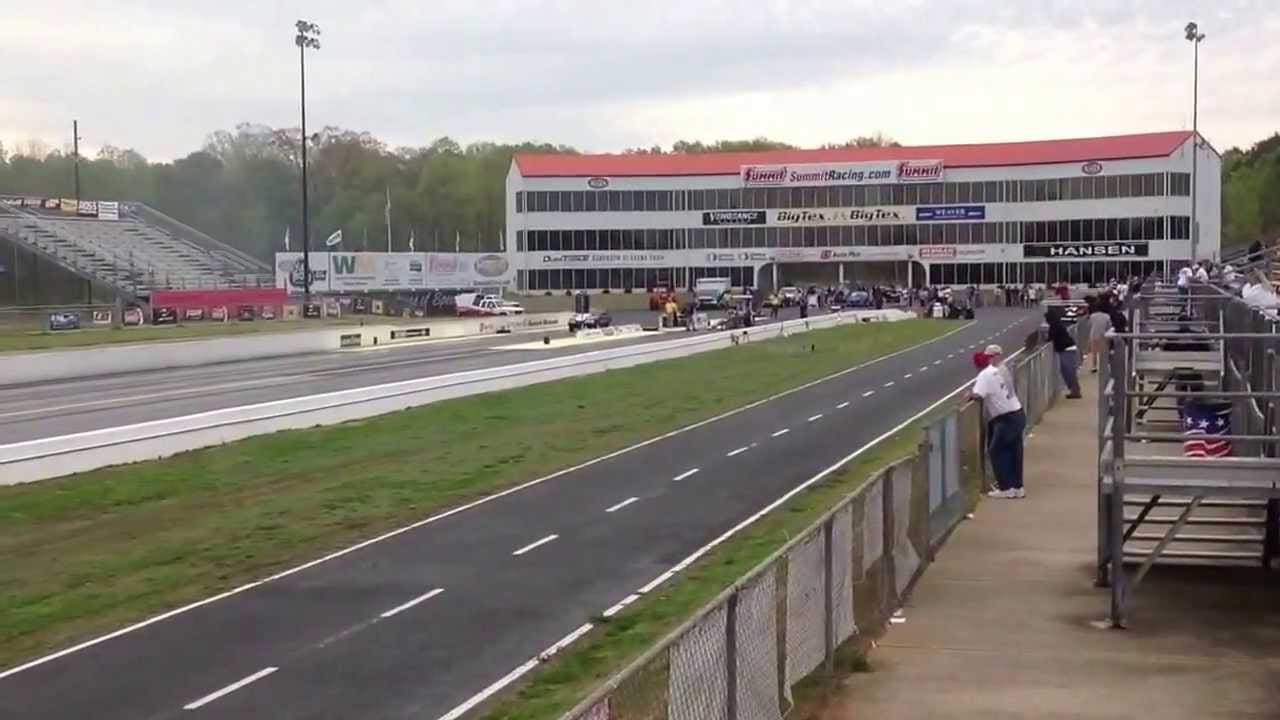

The discussion could only happen after the track was gone. With Atlanta Dragway shuttered in favor of a proposed battery manufacturing facility, the real story began to surface only after the gates were locked and the concrete went quiet.
Atlanta Dragway did not simply close. It was allowed to close, after decades of existing within a political and commercial ecosystem that protected it only as long as it served a purpose beyond racing.
For years, the public narrative surrounding Atlanta Dragway leaned on familiar explanations: aging infrastructure, market pressures, and shifting demographics. Those explanations proved useful, particularly because they framed the decision as inevitable rather than elective.
The more uncomfortable reality is that Atlanta Dragway functioned as a political asset for far longer than it functioned as a business. When that asset no longer aligned with broader development priorities, institutional protection evaporated.
The first dirt was moved toward what would become Atlanta Dragway in 1968, though it was third owner Gene Bennett who finally succeeded in turning vision into reality. Even then, calling it an “Atlanta” drag strip was always something of a misnomer, as the facility sat roughly 68 miles northeast of the city proper.
What the track lacked in geography, it made up for in strategic value. Atlanta Dragway was coveted by the late Larry Carrier, founder and president of the International Hot Rod Association, at a time when sanctioning bodies were competing as much in boardrooms as they were on racetracks.
“Larry Carrier wanted a drag strip in Atlanta badly,” drag racing historian Bret Kepner once noted.
Carrier had just secured R.J. Reynolds Tobacco Co. and its Winston brand as a title sponsor and needed a modern, impressive facility to entertain executives. Atlanta Dragway fit the bill, even if profitability was never guaranteed.
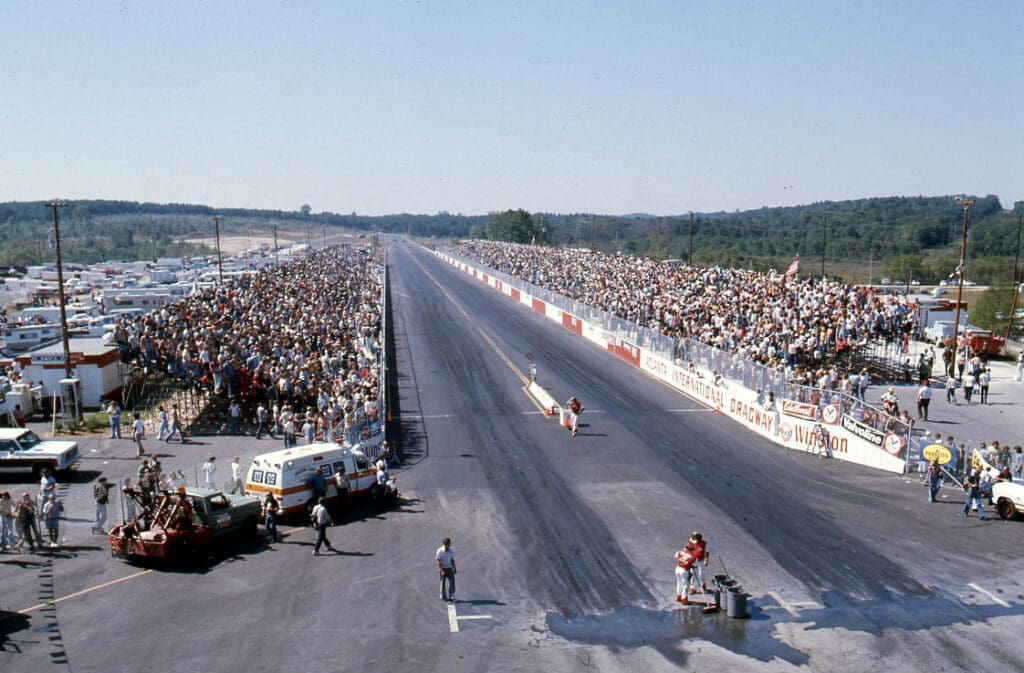
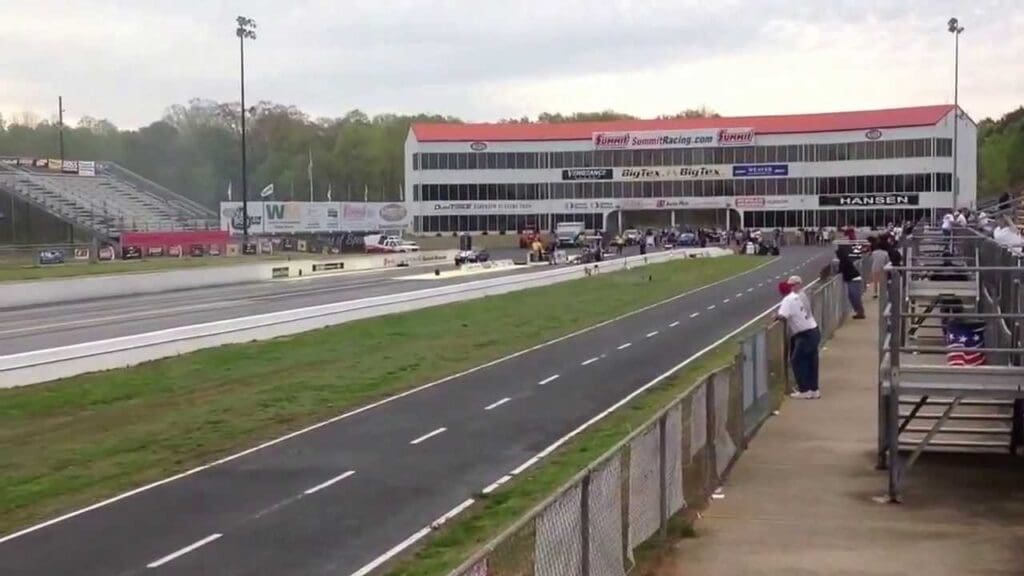
Built with specifications similar to Rockingham and Darlington, Atlanta Dragway featured a large tower and grandstands so close to the racing surface that fans felt immersed in the violence and speed of the sport. The facility hosted its first IHRA national event in the spring of 1976.
That alignment changed in July 1980, when Norman “Moose” Pearah took over the track and moved it from IHRA to NHRA. The inaugural NHRA Southern Nationals followed in April 1981, replacing the date long reserved for IHRA’s Dixie Nationals.
For all its visual appeal and marquee events, Atlanta Dragway was never a major profit center. Insiders from the era consistently describe it as a facility that survived on necessity rather than margin.
“Nobody was making big money by running Atlanta Dragway, but the location was something NHRA really needed to impress the Winston upper management,” Kepner said.

“At that point, the IHRA brought their Winston brass into Rockingham, and the NHRA brought theirs into Atlanta,” Kepner continued. “The RJR executives didn’t care what letter was on the gate.”
That détente ended when Billy Meyer built Texas Motorplex and created a bespoke showcase for R.J. Reynolds. When Meyer’s ill-fated purchase of IHRA followed in 1988, the Winston All-Stars event migrated to Atlanta Dragway, ushering in a brief reinvention under promoter Steve Earwood.
Earwood revamped the facility and rebranded it as The New Atlanta Dragway, though his tenure was short. He soon joined an ownership group that acquired Rockingham Dragway, taking the Winston All-Stars event with him.
Atlanta Dragway passed through multiple hands before Gary Brown ultimately sold the facility to NHRA in 1993. Whether that purchase was made to protect the land from commercial development was never publicly stated, but the timing raised questions even then.
The track found itself briefly relevant again in 2002, when Atlanta-based Coca-Cola assumed series sponsorship after R.J. Reynolds was forced out of motorsports.
“The place was always packed for national events, largely because of promotional tickets distributed in advance,” Kepner explained.
“Paid tickets were often the minority,” he added.
That insulation vanished after the pandemic-affected season and Coca-Cola’s departure from NHRA. With Bristol and Charlotte drawing from the same regional audience, Atlanta Dragway no longer held strategic value within the national-event ecosystem.
Once that calculation shifted, the facility’s historical importance carried little weight in the final decision.
The 318-acre property was sold to Terra Commerce LLC, and after 46 years of drag racing history, Atlanta Dragway appeared destined to become another entry in a growing ledger of repurposed motorsports land.
Then, just as quietly as it disappeared from the calendar, the narrative surrounding Atlanta Dragway began to change.
In recent days, Banks County officials voted in favor of returning the property to zoning that permits motorsports competition, a move that effectively reopened a door many assumed had been permanently sealed.
Around the same time, sources within the sport indicated that IHRA has reportedly purchased the Atlanta Dragway facility, though no formal announcement has been made by the previous ownership or the sanctioning body.
Those same sources suggest the track is being positioned for a return to competition on a to-be-announced date as part of a much-revised IHRA schedule.
The absence of official confirmation has been deliberate. Unlike its closure, which unfolded with minimal public explanation, Atlanta Dragway’s potential reentry into the sport is moving cautiously.
Zoning decisions, political alignment, and long-term planning have replaced urgency as the guiding forces behind the facility’s future.
That timing is not insignificant. IHRA is approaching its second season amid significant expansions.
Losing it in in 1980 reflected an era when leverage outweighed loyalty. Regaining it, should it officially occur, would reflect a different calculation entirely.
If Atlanta Dragway returns to IHRA where it first began, it will not be because nostalgia prevailed. It will be because the conditions that once made the track expendable no longer apply.
Atlanta Dragway disappeared when it no longer served those in position to protect it.
Its return, should it come, would suggest the balance of power around it has shifted once again.