Royce Miller was not standing at a dragstrip when another task was crossed off the list for Maryland International Raceway’s first NHRA national event. He was inside an Amish machine shop less than five miles from Budds Creek, watching a metal gate take shape for emergency access.


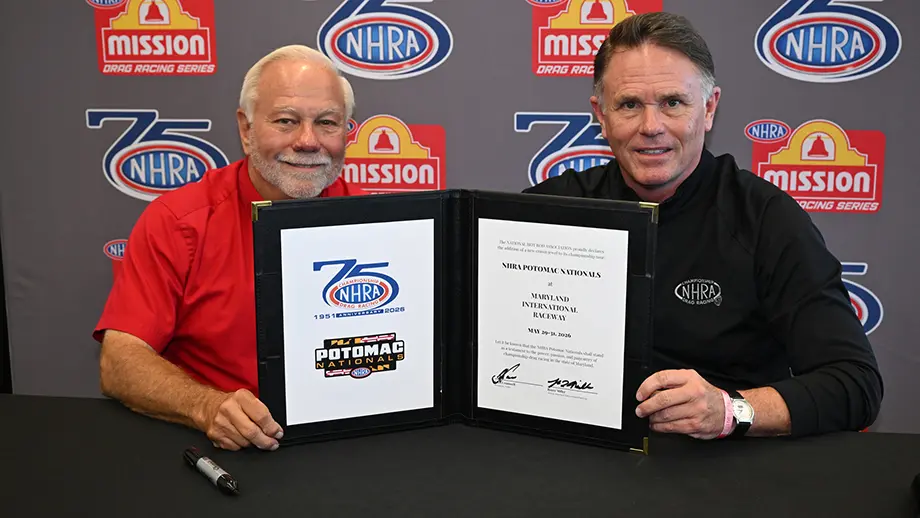
The gate is one of dozens of details Miller is managing as Maryland International Raceway prepares to host the NHRA Potomac Nationals on May 29–31, 2026, bringing the NHRA Mission Food Series to the facility for the first time.


For Miller, a former championship drag racer turned track owner, the workload was already heavy before NHRA entered the picture. The 2026 season was shaping up as one of the busiest in the track’s history.
“I have 108 race days on my schedule for next year,” Miller said.


The national event was added on top of that schedule, layering NHRA construction requirements, safety upgrades, and logistical planning onto a calendar already filled with regulatory compliance, infrastructure projects, and staffing challenges.


None of the work has been abstract or delegated from a distance. Miller has remained directly involved in everything from emergency-access design to environmental remediation.


That included addressing fuel-storage compliance after state regulators examined capacity at the facility.

Miller said the Maryland Department of the Environment determined the track exceeded 10,000 gallons of fuel storage, placing it under requirements similar to a tank farm. Rather than retrofit outdated infrastructure, Miller opted to replace tanks and reduce overall capacity.


“I’m in the process of we had to get a new tank that has a multi compartment so that I can pull out some tanks to just get my total capacity under 10,000, which we’re compliant with,” Miller said.


The decision required removing a roof, extracting tanks, and reconfiguring systems that had been in place for decades. It also added time and cost during an already crowded offseason.


Environmental upgrades extended beyond fuel storage. Miller said waste oil tanks were added and covered to prevent water intrusion into secondary containment areas.


At the same time, the facility’s aging playground — more than 30 years old — was replaced. Miller said those improvements were part of maintaining a track that operates year-round, not just during major events.


Away from the racetrack, Miller was also advancing construction on a personal home project that predated the NHRA opportunity. That effort required daily oversight alongside his responsibilities at MIR.


“I got the building permit yesterday for that project,” Miller said.

Staffing added another layer of pressure. Miller said the track remains short-handed, with plans to hire additional full-time employees now that the new year is here.


Despite those constraints, infrastructure upgrades at the racetrack could not wait. Miller said work on walls, wiring, and safety systems quickly became the dominant focus.


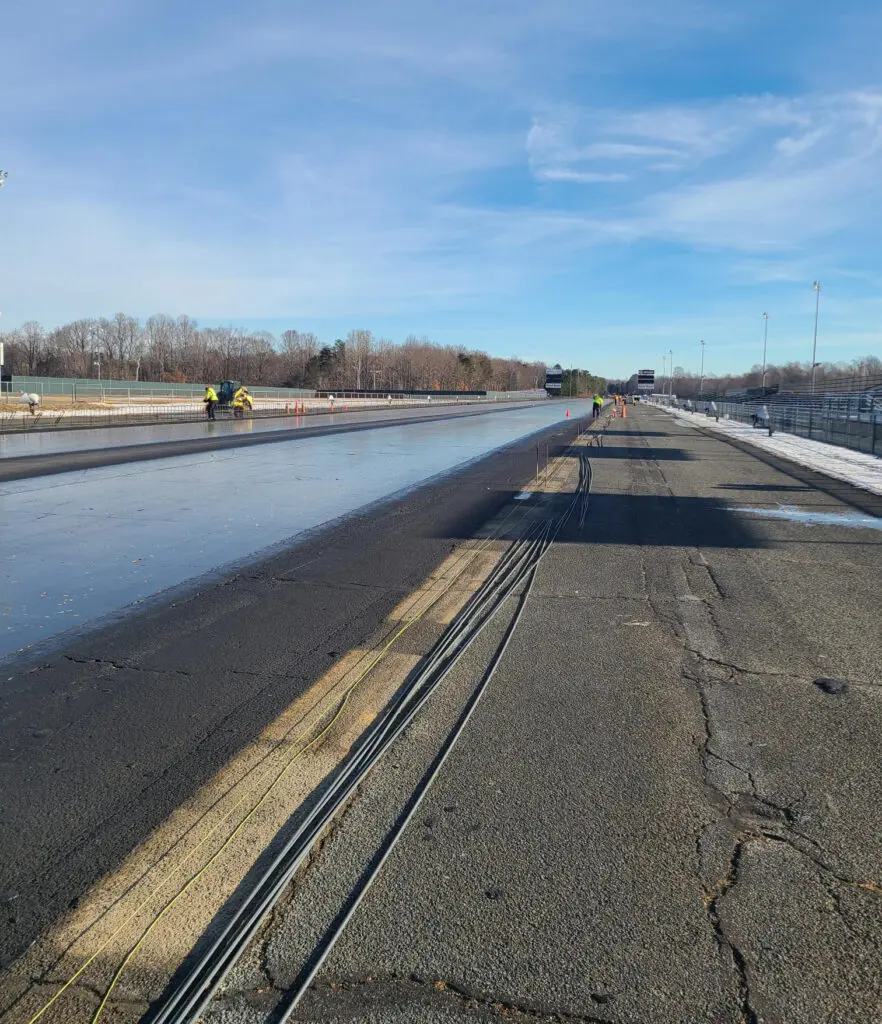
“The timing system wiring here was … put in … in ’91 or ’92,” Miller said.


With new walls and structures under construction, he decided it was time to rewire the system entirely.


The new configuration will route conduit along exterior walls, bringing MIR in line with modern track layouts and improving long-term serviceability.


NHRA officials have remained involved throughout the process. Miller said construction has taken priority while logistics for the national event continue to be refined.


Against that backdrop, the year itself opened with unexpected turbulence.


During the weekend of the NHRA Gatornationals, the International Hot Rod Association issued a release stating it had reached an agreement in principle to purchase several historic facilities, including Maryland International Raceway.


Shortly afterward, management at MIR issued a statement clarifying that the track had not been purchased and that Miller remained its owner and operator.

IHRA later announced plans to stage the President’s Cup at MIR as part of a proposed schedule. That event was eventually canceled amid conflicting statements and uncertainty surrounding the arrangement.
Miller did not dwell publicly on the episode. His focus, he said, remained on operating the racetrack and preparing for the season ahead.


By the time NHRA finalized plans for the Potomac Nationals, Miller was already deep into infrastructure upgrades, environmental compliance work, and safety improvements required for 2026.


Geography played a role in the NHRA decision. With changes at Maple Grove Raceway and uncertainty elsewhere, Miller said Mid-Atlantic fans have had fewer opportunities to attend NHRA national events.


“If you want to watch an NHRA race, you got to go south to Rockingham or Charlotte and north to Epping, New Hampshire,” Miller said.


Preparing for fuel-car competition required specific safety upgrades. Miller said the most critical change involved track walls.


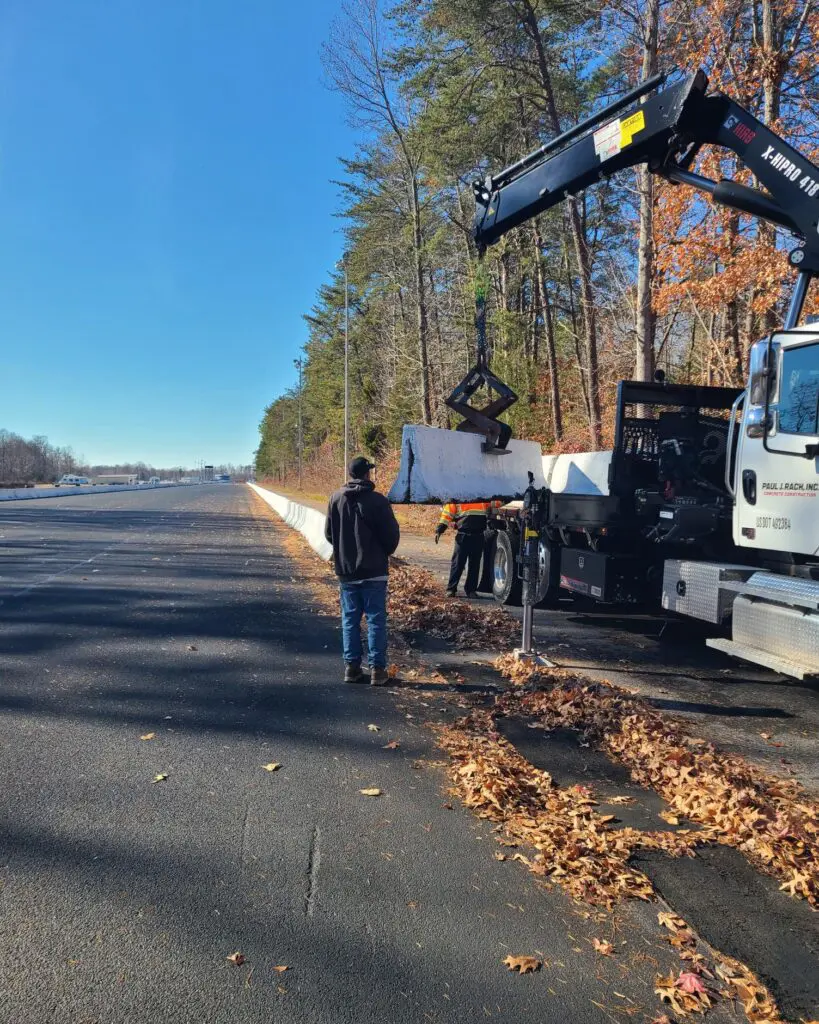
“For the fuel cars, you have to have 39-inch or taller walls,” Miller said.


MIR’s existing Jersey barriers measured 32 inches, prompting the installation of poured concrete walls extending the length of the racing surface. The upgrades include expanded catch systems, gravel traps, debris fencing, and dual nets.

Miller noted the facility already exceeds shutdown-area requirements. With more than 3,000 feet of shutdown, MIR ranks among the longer tracks on the NHRA schedule.


Parking will not be an issue. Miller owns farmland adjacent to the track that will be used for satellite parking, a system already proven during large events.


That same approach has worked during the World Cup, MIR’s largest annual race, and will be used again for the Potomac Nationals.


Pit space presents a more complex challenge. Miller acknowledged limitations during the inaugural year as layouts are finalized for professional teams, vendors, and sportsman competitors.


“There will be some limitation on the sportsman cars,” Miller said.


Long-term plans involve incremental expansion. Miller said future years will focus on pushing property boundaries and adding usable space where possible.


Community reaction to the NHRA announcement has been overwhelmingly positive. Local officials, Miller said, quickly embraced the event and its economic impact.


“All of our county executives and county commissioners are all on board,” Miller said.


Even small details have required hands-on attention. That included Miller’s visit to the Amish machine shop.


“They’re not hooked to the grid. They don’t have electric,” Miller said. “All of their equipment is air over hydraulic.”


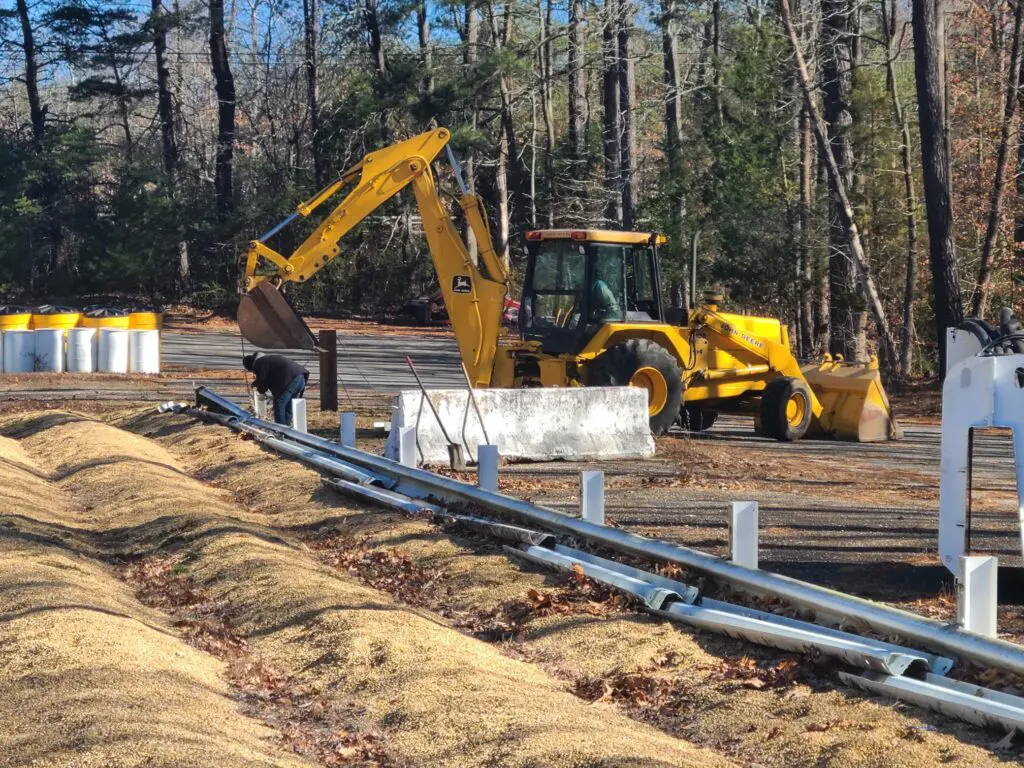
The shop is fabricating a metal gate near the ET shack to improve emergency access. Miller said additional openings near the starting line will improve ingress and egress for fire and rescue vehicles.


Those improvements will remain long after the national event concludes. Miller said the goal is to maximize what the facility can offer within its physical footprint.


“If there’s any negative that we have, we do have some limitations as far as physical size,” Miller said.


Looking ahead, Miller has identified the next major upgrade. He hopes to replace concrete from the water box to the 700-foot mark.


“We’re trying to save all of our ducats,” Miller said. Support from racers, fans, and sponsors will determine the timeline.


For Miller, the moment carries personal meaning. He remembers what the property looked like when he took over in 1990.


“It looked like a deserted airport,” Miller said. “And so I’m proud to be able to have taken the facility to the point that we can host an NHRA national event at.”

Share the Insights?

Click here to share the article.

ad space x ad space

ad space x ad space

Competition Plus Team

Since our inception, we have been passionately dedicated to delivering the most accurate, timely, and compelling content in the world of drag racing. Our readers depend on us for the latest news, in-depth features, expert analysis, and exclusive interviews that connect you to the sport’s pulse.

Sign up for our newsletters and email list.

This field is for validation purposes and should be left unchanged.
Name

FROM AMISH MACHINE SHOP TO NHRA BIG SHOW, MILLER READIES MIR FOR NATIONAL DEBUT

Royce Miller was not standing at a dragstrip when another task was crossed off the list for Maryland International Raceway’s first NHRA national event. He was inside an Amish machine shop less than five miles from Budds Creek, watching a metal gate take shape for emergency access.


The gate is one of dozens of details Miller is managing as Maryland International Raceway prepares to host the NHRA Potomac Nationals on May 29–31, 2026, bringing the NHRA Mission Food Series to the facility for the first time.


For Miller, a former championship drag racer turned track owner, the workload was already heavy before NHRA entered the picture. The 2026 season was shaping up as one of the busiest in the track’s history.

“I have 108 race days on my schedule for next year,” Miller said.


The national event was added on top of that schedule, layering NHRA construction requirements, safety upgrades, and logistical planning onto a calendar already filled with regulatory compliance, infrastructure projects, and staffing challenges.


None of the work has been abstract or delegated from a distance. Miller has remained directly involved in everything from emergency-access design to environmental remediation.


That included addressing fuel-storage compliance after state regulators examined capacity at the facility.

Miller said the Maryland Department of the Environment determined the track exceeded 10,000 gallons of fuel storage, placing it under requirements similar to a tank farm. Rather than retrofit outdated infrastructure, Miller opted to replace tanks and reduce overall capacity.


“I’m in the process of we had to get a new tank that has a multi compartment so that I can pull out some tanks to just get my total capacity under 10,000, which we’re compliant with,” Miller said.


The decision required removing a roof, extracting tanks, and reconfiguring systems that had been in place for decades. It also added time and cost during an already crowded offseason.


Environmental upgrades extended beyond fuel storage. Miller said waste oil tanks were added and covered to prevent water intrusion into secondary containment areas.


At the same time, the facility’s aging playground — more than 30 years old — was replaced. Miller said those improvements were part of maintaining a track that operates year-round, not just during major events.


Away from the racetrack, Miller was also advancing construction on a personal home project that predated the NHRA opportunity. That effort required daily oversight alongside his responsibilities at MIR.


“I got the building permit yesterday for that project,” Miller said.

Staffing added another layer of pressure. Miller said the track remains short-handed, with plans to hire additional full-time employees now that the new year is here.


Despite those constraints, infrastructure upgrades at the racetrack could not wait. Miller said work on walls, wiring, and safety systems quickly became the dominant focus.


“The timing system wiring here was … put in … in ’91 or ’92,” Miller said.


With new walls and structures under construction, he decided it was time to rewire the system entirely.


The new configuration will route conduit along exterior walls, bringing MIR in line with modern track layouts and improving long-term serviceability.


NHRA officials have remained involved throughout the process. Miller said construction has taken priority while logistics for the national event continue to be refined.


Against that backdrop, the year itself opened with unexpected turbulence.


During the weekend of the NHRA Gatornationals, the International Hot Rod Association issued a release stating it had reached an agreement in principle to purchase several historic facilities, including Maryland International Raceway.


Shortly afterward, management at MIR issued a statement clarifying that the track had not been purchased and that Miller remained its owner and operator.

IHRA later announced plans to stage the President’s Cup at MIR as part of a proposed schedule. That event was eventually canceled amid conflicting statements and uncertainty surrounding the arrangement.
Miller did not dwell publicly on the episode. His focus, he said, remained on operating the racetrack and preparing for the season ahead.


By the time NHRA finalized plans for the Potomac Nationals, Miller was already deep into infrastructure upgrades, environmental compliance work, and safety improvements required for 2026.


Geography played a role in the NHRA decision. With changes at Maple Grove Raceway and uncertainty elsewhere, Miller said Mid-Atlantic fans have had fewer opportunities to attend NHRA national events.


“If you want to watch an NHRA race, you got to go south to Rockingham or Charlotte and north to Epping, New Hampshire,” Miller said.


Preparing for fuel-car competition required specific safety upgrades. Miller said the most critical change involved track walls.


“For the fuel cars, you have to have 39-inch or taller walls,” Miller said.


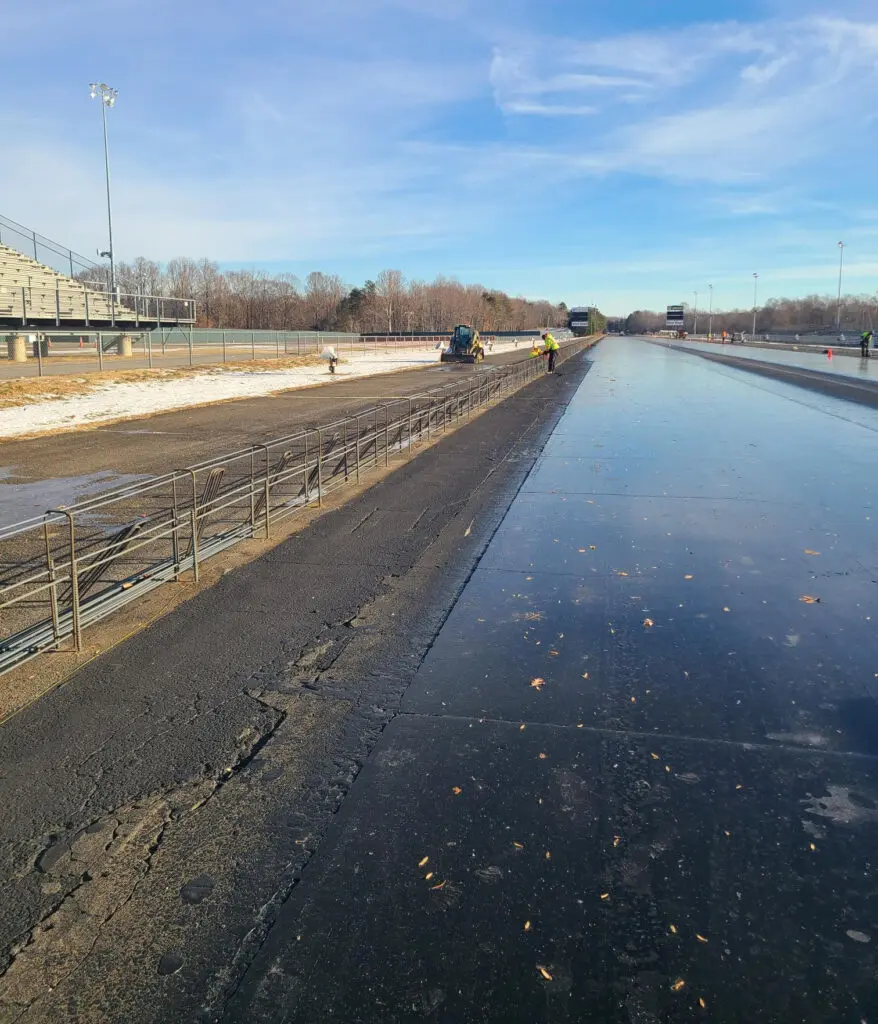
MIR’s existing Jersey barriers measured 32 inches, prompting the installation of poured concrete walls extending the length of the racing surface. The upgrades include expanded catch systems, gravel traps, debris fencing, and dual nets.

Miller noted the facility already exceeds shutdown-area requirements. With more than 3,000 feet of shutdown, MIR ranks among the longer tracks on the NHRA schedule.


Parking will not be an issue. Miller owns farmland adjacent to the track that will be used for satellite parking, a system already proven during large events.


That same approach has worked during the World Cup, MIR’s largest annual race, and will be used again for the Potomac Nationals.


Pit space presents a more complex challenge. Miller acknowledged limitations during the inaugural year as layouts are finalized for professional teams, vendors, and sportsman competitors.


“There will be some limitation on the sportsman cars,” Miller said.


Long-term plans involve incremental expansion. Miller said future years will focus on pushing property boundaries and adding usable space where possible.


Community reaction to the NHRA announcement has been overwhelmingly positive. Local officials, Miller said, quickly embraced the event and its economic impact.


“All of our county executives and county commissioners are all on board,” Miller said.


Even small details have required hands-on attention. That included Miller’s visit to the Amish machine shop.


“They’re not hooked to the grid. They don’t have electric,” Miller said. “All of their equipment is air over hydraulic.”


The shop is fabricating a metal gate near the ET shack to improve emergency access. Miller said additional openings near the starting line will improve ingress and egress for fire and rescue vehicles.


Those improvements will remain long after the national event concludes. Miller said the goal is to maximize what the facility can offer within its physical footprint.


“If there’s any negative that we have, we do have some limitations as far as physical size,” Miller said.


Looking ahead, Miller has identified the next major upgrade. He hopes to replace concrete from the water box to the 700-foot mark.


“We’re trying to save all of our ducats,” Miller said. Support from racers, fans, and sponsors will determine the timeline.


For Miller, the moment carries personal meaning. He remembers what the property looked like when he took over in 1990.


“It looked like a deserted airport,” Miller said. “And so I’m proud to be able to have taken the facility to the point that we can host an NHRA national event at.”

Picture of John Doe

John Doe

Lorem ipsum dolor sit amet consectetur adipiscing elit dolor

More Posts

Send Us A Message

Picture of Bobby Bennett
Bobby Bennett
Thank you for joining us on this journey. Your support and trust inspire us every day to deliver the best in drag racing journalism. We are excited about the future and look forward to continuing to serve you with the same dedication and passion that has defined CompetitionPlus.com from the very beginning.

Don’t miss these other exciting stories!

Explore more action packed posts on Competition Plus, where we dive into the latest in Drag Racing News. Discover a range of topics, from race coverage to in-depth interviews, to keep you informed and entertained.