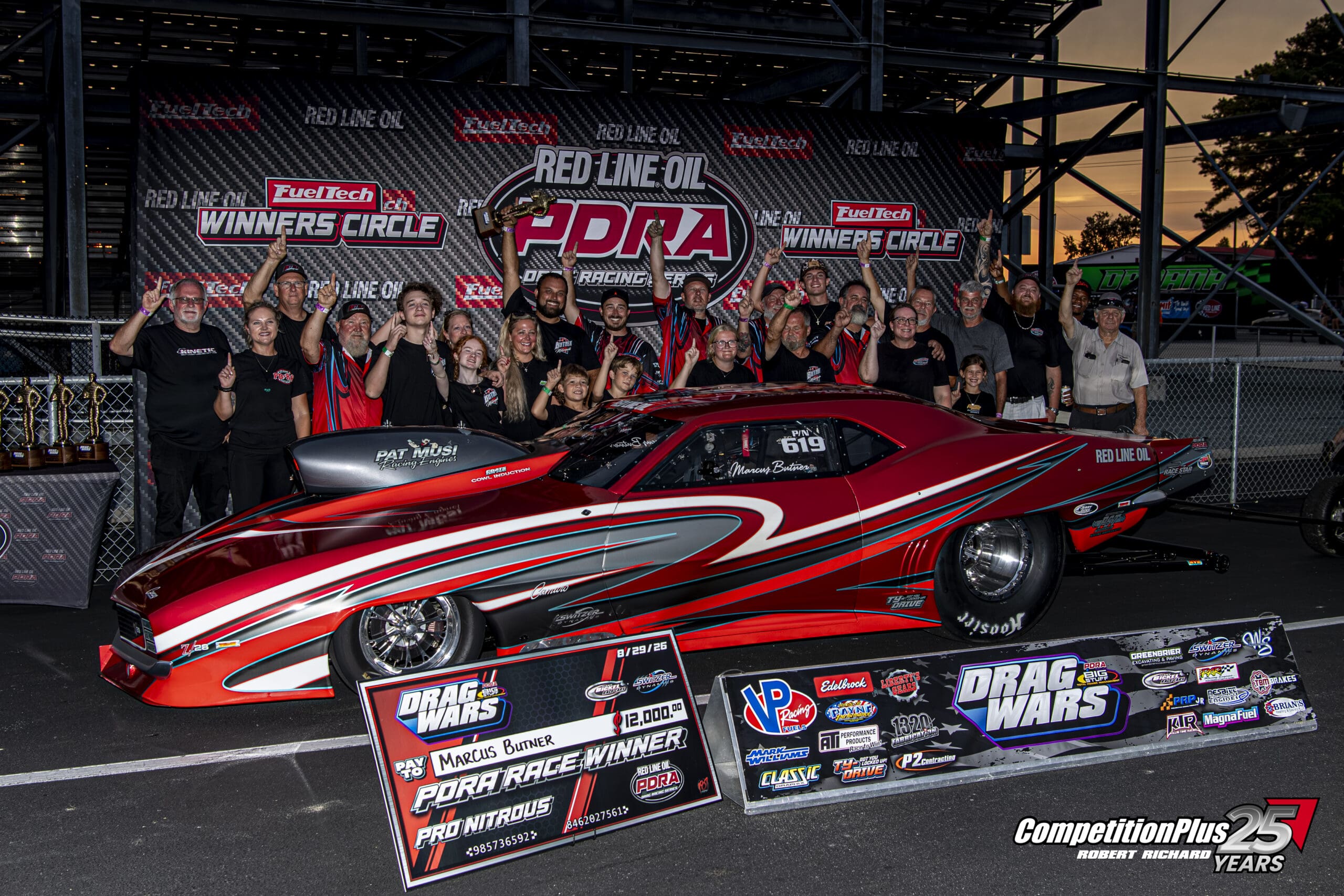
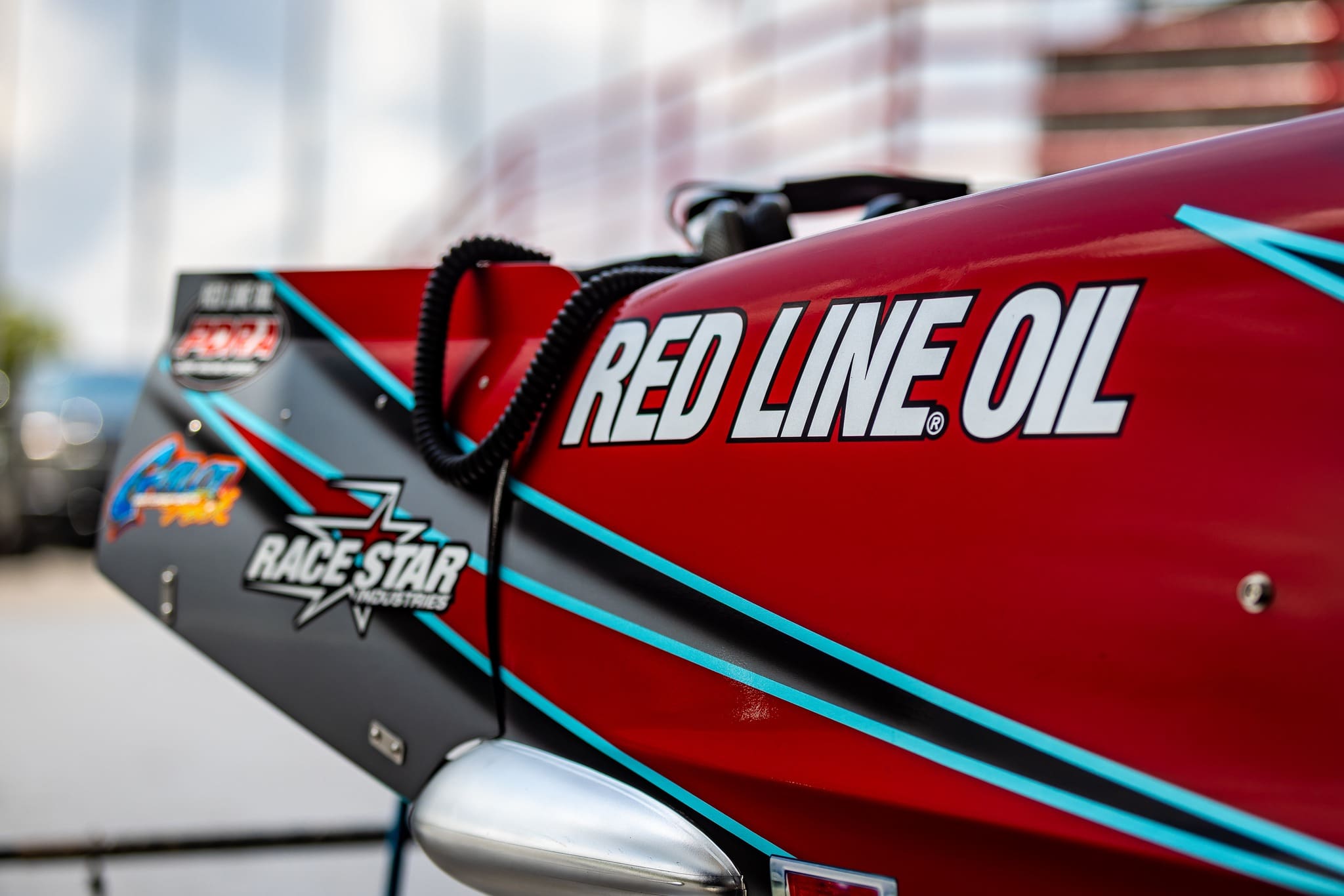

For Mark Beatty, the most misunderstood part of modern drag racing sponsorship is the belief that brands are still searching for teams to fund. As Brand Director for Red Line Oil at Phillips 66, Beatty says the responsibility has shifted decisively to racers to prove value, alignment and return.

Beatty considers the conversation essential reading for racers who want to survive in today’s sponsorship economy. The landscape, he said, has evolved rapidly over the last decade, and nostalgia for the old model no longer pays the bills.

At the core of the change is a simple reality. Brands are no longer chasing opportunities; they are filtering them.

“So first off, in this day and age companies, and businesses, and people in my position, we’re not sitting around looking for people, places, or things to sponsor,” Beatty said. “There’s so many opportunities out there that it’s not even funny.”

That volume forces selectivity. Racers, Beatty said, must rethink how they approach sponsorship entirely.

“So I think what matters, and I’ve told this to a few people in the past, is the fact that if you’re going to go to a brand and try and ask for sponsorship, you should really start looking at the brands that you do business with,” he said.
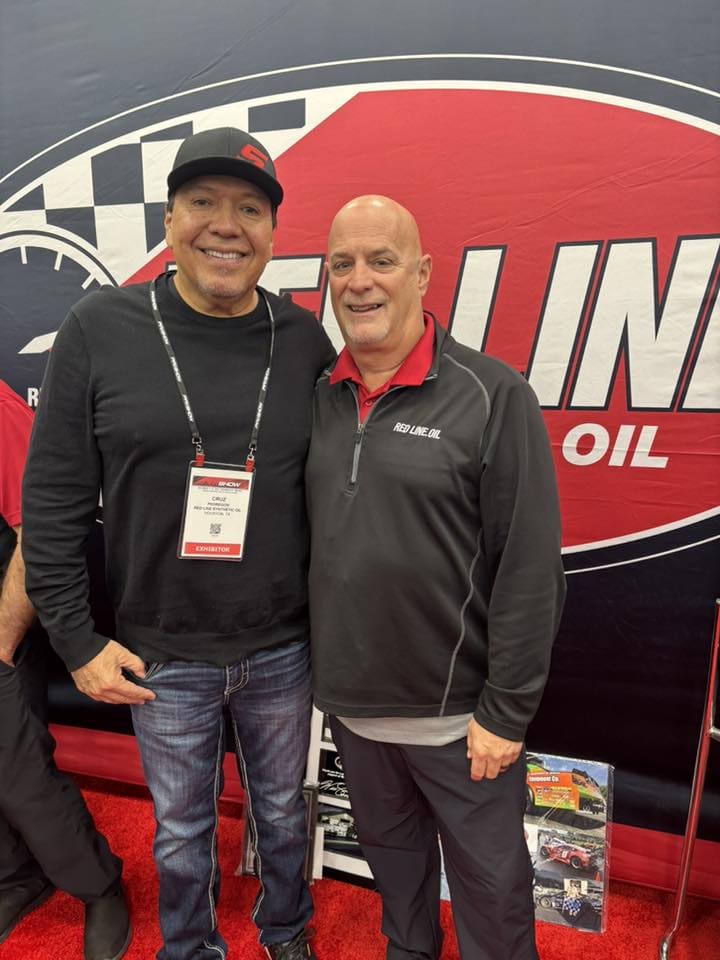

Beatty traces that philosophy to a lesson learned outside motorsports. Early in his career, while running a sign shop, he encountered a principle that reshaped his thinking on business relationships.

“Long time ago, I had a businessman teach me a lesson,” Beatty said. “Matter of fact, his name was Tim Leiweke and he was in charge of the Denver Nuggets and the Colorado Avalanche at the time.”

After Beatty completed work for him, Leiweke delayed payment until Beatty purchased a ticket to a Nuggets game. The transaction was symbolic, not transactional.

“He said, ‘You know, Mark, I do business with those that do business with me,’” Beatty said. “It wasn’t the fact that he wanted me to buy a ticket, it was the fact that he was just trying to teach me a business principle that has stuck to me to this day.”

That principle, Beatty said, applies directly to drag racing sponsorship. Cold outreach without prior support or connection rarely resonates.

“If you’ve never bought a single product from a company, if you’ve never supported the company in the past, and just out of the blue, you reach out to them and you want sponsorship, kind of a tough rope,” Beatty said.

Drag racing, he added, remains a relationship-driven sport.

“This industry is built on relationships, this industry is built on friendships, and it’s built on things doing things together,” Beatty said. “So the number one thing is just make sure you’re asking the right people the right questions.”

Competitive success alone, Beatty said, is no longer a defining credential. Winning does not automatically translate into sponsorship value.

“No, it does not,” Beatty said when addressing the assumption that championships equal marketability.

On-track performance still carries importance, particularly in series with television or streaming exposure. But Beatty said it represents only part of a broader evaluation.

“What happens on the track is obviously very important,” he said. “But so much of it is what happens off of the track. It’s partnering up with the right type of people.”

For Red Line Oil, people matter more than impressions alone. Beatty said his program relies on racers and teams to serve as ambassadors in spaces advertising budgets cannot always reach.

“I don’t have the budget to scream the loudest compared to some of our competitors,” Beatty said. “So I rely on people, on teams, or riders, or drivers that I partner up with.”

Those partners extend the brand’s reach organically.

“They’re my voice, they take me to places I can’t afford to go,” Beatty said. “I can’t afford to buy my way into every Dyno room. I can’t afford to buy my way into the back door of every single trailer out there.”

The most valuable moments, Beatty said, happen away from the starting line. In the pits, credibility is built one interaction at a time.

“When racers are pitted together and one racer’s having a problem, and one of my Team Red Line Oil folks goes into the trailer and tries to solve it, I know that they’re taking Red Line with them,” Beatty said.

Those interactions, he said, create trust that advertising alone cannot manufacture.

“They’re saying, ‘Hey, have you ever tried Red Line?’ ‘Hey, let me get you some Red Line to try,’” Beatty said. “Or whatever the case may be.”

Because Red Line Oil is a consumable product, those moments carry even greater importance. Usage, replenishment and firsthand experience define brand loyalty.

“So what happens on the track is important, but what happens off the track, in the pits, day to day is just as important,” Beatty said. “Off the track matters tremendously.”

The sponsorship model itself has also evolved. Impression-based sponsorship still exists, Beatty said, but it no longer stands alone as a justification.

“It hasn’t gone away, but it’s definitely changed,” Beatty said.

Every product carries an internal cost, even when it is given away.

“A free quart of oil isn’t free to me,” Beatty said. “I have to account for that discounted price I just gave a racer or a race team.”

Those costs must be justified to leadership. Business-to-business value, Beatty said, provides the clearest explanation.

“If there’s a B2B element in there, it makes it really easy for me to go to upper management,” Beatty said. “Because on the backside of it, this particular team brought us this engine builder, or brought us this part store, or brought us this distribution opportunity.”

B2B relationships, he said, provide measurable outcomes.

“So B2B is obviously the easiest way for a brand to qualify what a sponsorship program is worth,” Beatty said.

Impressions still matter, particularly in the digital space. Beatty said Red Line Oil actively tracks social media output across its sponsored teams.

“I’ve teamed up with a company that monitors the social media accounts of every single person that’s on Team Red Line Oil,” Beatty said. “And they assign it an earned media value.”

That data allows the brand to evaluate exposure with precision.

“At any given time, I could look at whatever team I want to look at and I can see what type of an earned media value that team has brought me,” Beatty said.

Social metrics, however, are only part of the equation.

“I’m not going to say it doesn’t matter because obviously it does,” Beatty said. “But it’s not any one thing. It’s a combination of both or a combination of all of the above.”

Beatty said digital reach has surpassed traditional print in accessibility, though not necessarily in credibility. He remains an advocate for storytelling in all its forms.

“I’m old school. I love print,” Beatty said. “To me, there’s just nothing better than looking and seeing something in print.”

Print, he said, now extends beyond paper.

“That print can be either on paper, or that print can be in a story on a worthy page, or channel, or website,” Beatty said. “And that to me will always have a huge amount of value.”

For racers, however, access to those platforms can be limited. Social media offers control and immediacy.

“That’s when social is something they control,” Beatty said. “It’s something that they can be active in. And so, yeah, it does matter.”

Entry into Team Red Line Oil, Beatty said, follows a defined but revealing process. Applications are accepted annually from Sept. 1 through the end of October.

“Folks can go to our website, and click on sponsorship, and fill out the application,” Beatty said.

Two factors stand out immediately. Social media presence is one.

“Obviously, social media matters to me,” Beatty said.

The other is understanding who a racer is beyond competition.

“I’m looking at what series they run in, and also I’m trying to look and see and learn as much as I can with how they function in this world outside of racing,” Beatty said.

That evaluation includes both professional and personal platforms.

“A lot of times, racers have a social channel personal, and then they have a social channel that they run their racing out of,” Beatty said. “And I look at both.”

Character, Beatty said, is visible long before a contract is signed.

“That’s the easiest way for me to see what the character of a person is,” Beatty said. “Along with making sure that they’re active.”


For Beatty, the message is clear. Sponsorship in drag racing is no longer about who asks first, but who proves they belong.

Share the Insights?

Click here to share the article.

ad space x ad space

ad space x ad space

Competition Plus Team

Since our inception, we have been passionately dedicated to delivering the most accurate, timely, and compelling content in the world of drag racing. Our readers depend on us for the latest news, in-depth features, expert analysis, and exclusive interviews that connect you to the sport’s pulse.

Sign up for our newsletters and email list.

This field is for validation purposes and should be left unchanged.
Name

RED LINE OIL’S MARK BEATTY EXPLAINS HOW DRAG RACING SPONSORSHIP HAS CHANGED

For Mark Beatty, the most misunderstood part of modern drag racing sponsorship is the belief that brands are still searching for teams to fund. As Brand Director for Red Line Oil at Phillips 66, Beatty says the responsibility has shifted decisively to racers to prove value, alignment and return.

Beatty considers the conversation essential reading for racers who want to survive in today’s sponsorship economy. The landscape, he said, has evolved rapidly over the last decade, and nostalgia for the old model no longer pays the bills.

At the core of the change is a simple reality. Brands are no longer chasing opportunities; they are filtering them.

“So first off, in this day and age companies, and businesses, and people in my position, we’re not sitting around looking for people, places, or things to sponsor,” Beatty said. “There’s so many opportunities out there that it’s not even funny.”

That volume forces selectivity. Racers, Beatty said, must rethink how they approach sponsorship entirely.

“So I think what matters, and I’ve told this to a few people in the past, is the fact that if you’re going to go to a brand and try and ask for sponsorship, you should really start looking at the brands that you do business with,” he said.
Beatty traces that philosophy to a lesson learned outside motorsports. Early in his career, while running a sign shop, he encountered a principle that reshaped his thinking on business relationships.

“Long time ago, I had a businessman teach me a lesson,” Beatty said. “Matter of fact, his name was Tim Leiweke and he was in charge of the Denver Nuggets and the Colorado Avalanche at the time.”

After Beatty completed work for him, Leiweke delayed payment until Beatty purchased a ticket to a Nuggets game. The transaction was symbolic, not transactional.

“He said, ‘You know, Mark, I do business with those that do business with me,’” Beatty said. “It wasn’t the fact that he wanted me to buy a ticket, it was the fact that he was just trying to teach me a business principle that has stuck to me to this day.”

That principle, Beatty said, applies directly to drag racing sponsorship. Cold outreach without prior support or connection rarely resonates.

“If you’ve never bought a single product from a company, if you’ve never supported the company in the past, and just out of the blue, you reach out to them and you want sponsorship, kind of a tough rope,” Beatty said.

Drag racing, he added, remains a relationship-driven sport.

“This industry is built on relationships, this industry is built on friendships, and it’s built on things doing things together,” Beatty said. “So the number one thing is just make sure you’re asking the right people the right questions.”
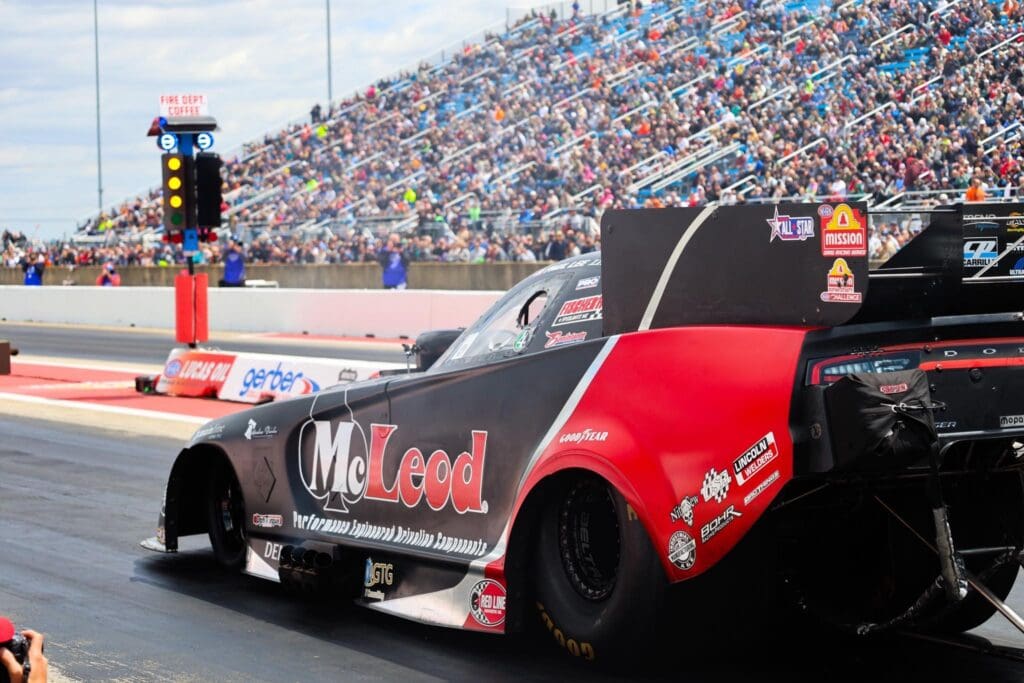
Competitive success alone, Beatty said, is no longer a defining credential. Winning does not automatically translate into sponsorship value.

“No, it does not,” Beatty said when addressing the assumption that championships equal marketability.

On-track performance still carries importance, particularly in series with television or streaming exposure. But Beatty said it represents only part of a broader evaluation.

“What happens on the track is obviously very important,” he said. “But so much of it is what happens off of the track. It’s partnering up with the right type of people.”

For Red Line Oil, people matter more than impressions alone. Beatty said his program relies on racers and teams to serve as ambassadors in spaces advertising budgets cannot always reach.

“I don’t have the budget to scream the loudest compared to some of our competitors,” Beatty said. “So I rely on people, on teams, or riders, or drivers that I partner up with.”

Those partners extend the brand’s reach organically.

“They’re my voice, they take me to places I can’t afford to go,” Beatty said. “I can’t afford to buy my way into every Dyno room. I can’t afford to buy my way into the back door of every single trailer out there.”


The most valuable moments, Beatty said, happen away from the starting line. In the pits, credibility is built one interaction at a time.

“When racers are pitted together and one racer’s having a problem, and one of my Team Red Line Oil folks goes into the trailer and tries to solve it, I know that they’re taking Red Line with them,” Beatty said.

Those interactions, he said, create trust that advertising alone cannot manufacture.

“They’re saying, ‘Hey, have you ever tried Red Line?’ ‘Hey, let me get you some Red Line to try,’” Beatty said. “Or whatever the case may be.”

Because Red Line Oil is a consumable product, those moments carry even greater importance. Usage, replenishment and firsthand experience define brand loyalty.

“So what happens on the track is important, but what happens off the track, in the pits, day to day is just as important,” Beatty said. “Off the track matters tremendously.”
The sponsorship model itself has also evolved. Impression-based sponsorship still exists, Beatty said, but it no longer stands alone as a justification.

“It hasn’t gone away, but it’s definitely changed,” Beatty said.

Every product carries an internal cost, even when it is given away.

“A free quart of oil isn’t free to me,” Beatty said. “I have to account for that discounted price I just gave a racer or a race team.”

Those costs must be justified to leadership. Business-to-business value, Beatty said, provides the clearest explanation.

“If there’s a B2B element in there, it makes it really easy for me to go to upper management,” Beatty said. “Because on the backside of it, this particular team brought us this engine builder, or brought us this part store, or brought us this distribution opportunity.”

B2B relationships, he said, provide measurable outcomes.

“So B2B is obviously the easiest way for a brand to qualify what a sponsorship program is worth,” Beatty said.
Impressions still matter, particularly in the digital space. Beatty said Red Line Oil actively tracks social media output across its sponsored teams.

“I’ve teamed up with a company that monitors the social media accounts of every single person that’s on Team Red Line Oil,” Beatty said. “And they assign it an earned media value.”

That data allows the brand to evaluate exposure with precision.

“At any given time, I could look at whatever team I want to look at and I can see what type of an earned media value that team has brought me,” Beatty said.

Social metrics, however, are only part of the equation.

“I’m not going to say it doesn’t matter because obviously it does,” Beatty said. “But it’s not any one thing. It’s a combination of both or a combination of all of the above.”

Beatty said digital reach has surpassed traditional print in accessibility, though not necessarily in credibility. He remains an advocate for storytelling in all its forms.

“I’m old school. I love print,” Beatty said. “To me, there’s just nothing better than looking and seeing something in print.”

Print, he said, now extends beyond paper.

“That print can be either on paper, or that print can be in a story on a worthy page, or channel, or website,” Beatty said. “And that to me will always have a huge amount of value.”

For racers, however, access to those platforms can be limited. Social media offers control and immediacy.

“That’s when social is something they control,” Beatty said. “It’s something that they can be active in. And so, yeah, it does matter.”
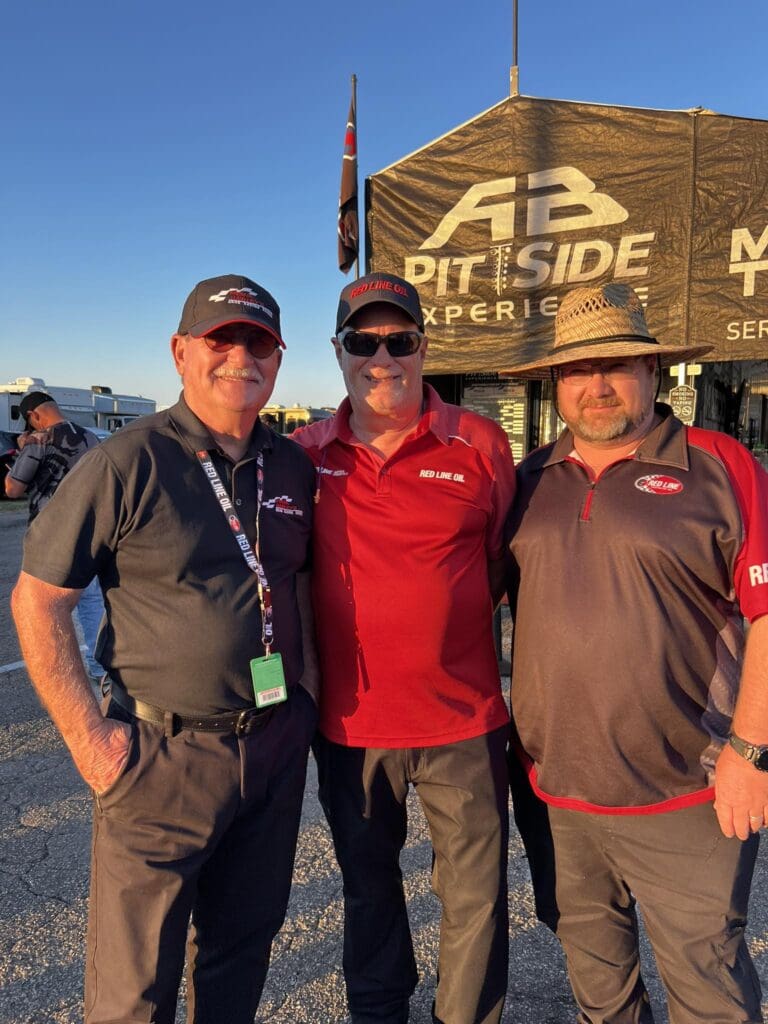
Entry into Team Red Line Oil, Beatty said, follows a defined but revealing process. Applications are accepted annually from Sept. 1 through the end of October.

“Folks can go to our website, and click on sponsorship, and fill out the application,” Beatty said.

Two factors stand out immediately. Social media presence is one.

“Obviously, social media matters to me,” Beatty said.

The other is understanding who a racer is beyond competition.

“I’m looking at what series they run in, and also I’m trying to look and see and learn as much as I can with how they function in this world outside of racing,” Beatty said.

That evaluation includes both professional and personal platforms.

“A lot of times, racers have a social channel personal, and then they have a social channel that they run their racing out of,” Beatty said. “And I look at both.”

Character, Beatty said, is visible long before a contract is signed.

“That’s the easiest way for me to see what the character of a person is,” Beatty said. “Along with making sure that they’re active.”


For Beatty, the message is clear. Sponsorship in drag racing is no longer about who asks first, but who proves they belong.

Picture of John Doe

John Doe

Lorem ipsum dolor sit amet consectetur adipiscing elit dolor

More Posts

Send Us A Message

Picture of Bobby Bennett
Bobby Bennett
Thank you for joining us on this journey. Your support and trust inspire us every day to deliver the best in drag racing journalism. We are excited about the future and look forward to continuing to serve you with the same dedication and passion that has defined CompetitionPlus.com from the very beginning.

Don’t miss these other exciting stories!

Explore more action packed posts on Competition Plus, where we dive into the latest in Drag Racing News. Discover a range of topics, from race coverage to in-depth interviews, to keep you informed and entertained.