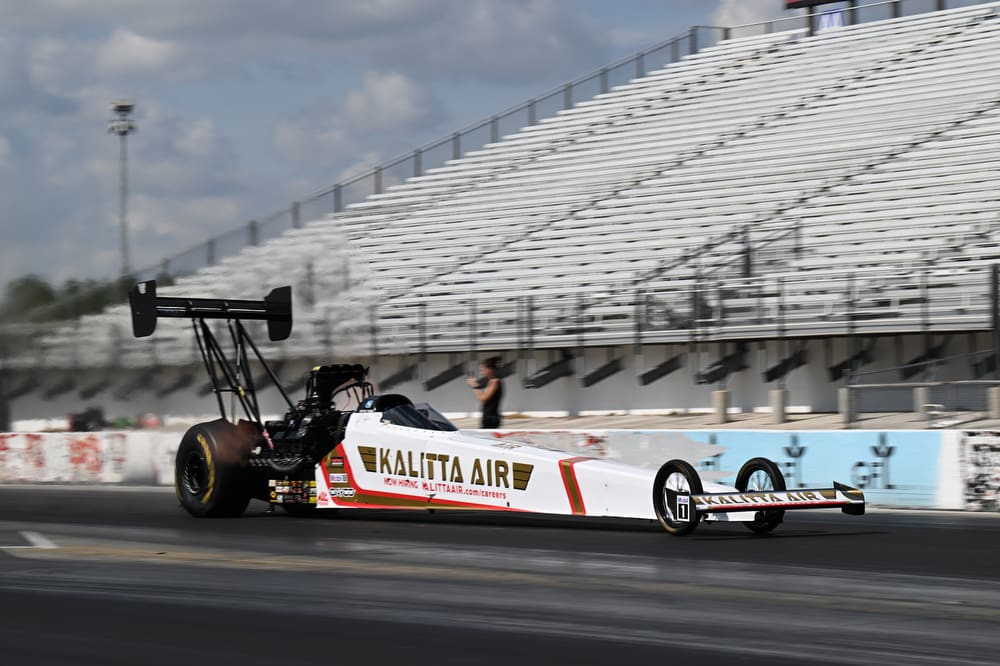
Shawn Langdon left Gainesville Raceway with the fastest speed recorded during Professional Racers Organization preseason testing.
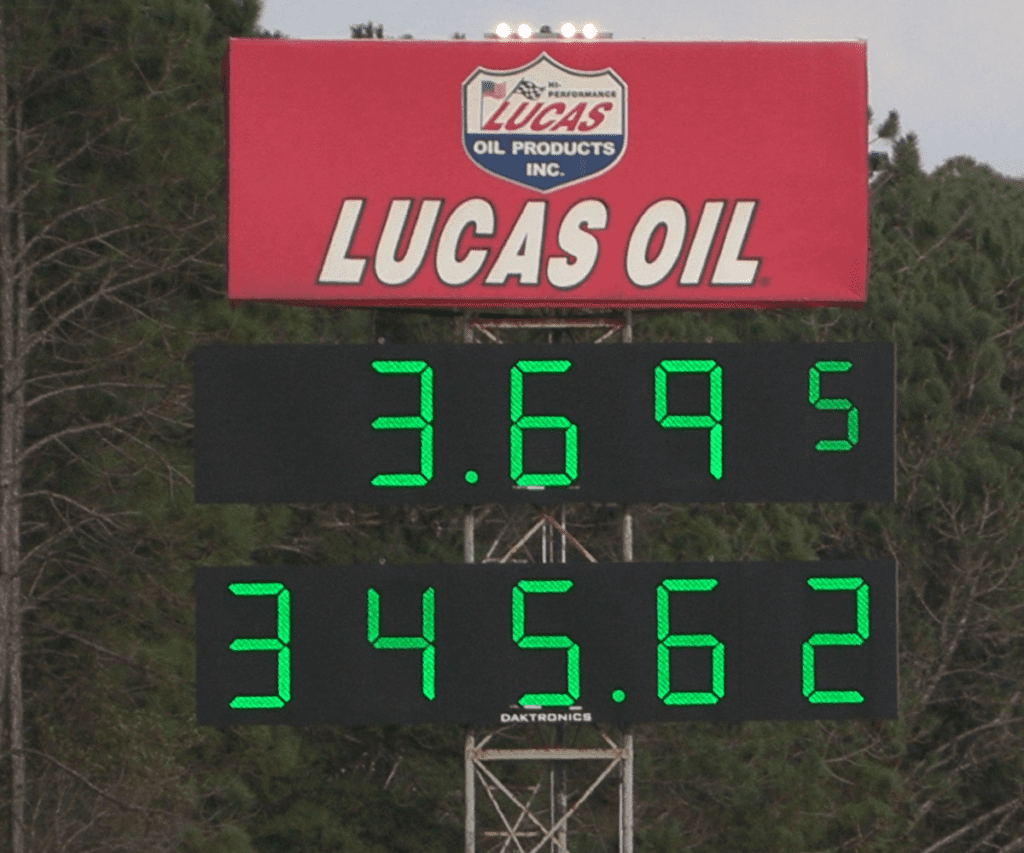
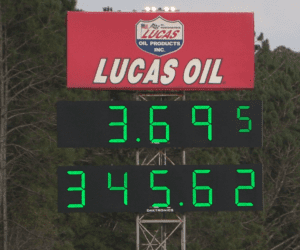
On Thursday, Langdon blasted to 345 mph, closing his three-day session with a run that underscored his team’s top-end power heading into the NHRA Gatornationals.
The speed came one day after Langdon had already posted a 3.621-second elapsed time, the quickest 1,000-foot run of the test.
If Wednesday established quickness, Thursday confirmed outright speed.
The 345-mph charge put an emphatic finish on a controlled test plan.
Langdon’s team had no intention of running Friday, choosing instead to leave Gainesville with its objectives met.
Asked what it felt like to reach 345 mph, Langdon did not hesitate.
“Fast as f***. I guess a great way to cap off testing the car’s been… It’s been throwing out crazy good numbers and so it’s awesome to see. It’s rewarding for the guys. The guys are obviously super excited, felt like we’ve had a really good car the last couple years, been trying to work on a couple areas in the car and trying to fine tune a couple areas and just feel like it’s really starting to show its potential.”
The performance was not the result of a last-minute gamble.
It reflected preparation and a specific evaluation schedule for a car that had limited prior runs.
Langdon explained the dragster had originally been assembled last season as a spare and had not yet accumulated meaningful laps.
“Yeah, our initial plan is this was a car that was put together last year that was a spare car and we just didn’t have any runs on it, but it’s basically all the same… Most of the same stuff as last year. And so we had meant to test this at some point, didn’t get opportunity to, but our race car from last year is now our spare car. So we just really needed to test out a couple parts and pieces and then just make a couple laps to gain a little confidence before the national. And so our plan was to run Tuesday, Wednesday, Thursday. Friday was our optional if we needed it. And then the Tuesday, Wednesday before the national was our secondary optional if we needed it. If we run into any issues.”
The decision to stop after Thursday was deliberate.
Langdon likened the approach to walking away from a hot gambling table before momentum turns.
He credited crew chief Brian and the team’s emphasis on preparation and detail.
“It’s one thing that Brian was big on coming over to the team a couple years ago, is just like he always says, it’s just every little thing matters and it’s all in how you prepare and it’s all in how you are organized and just every little thing matters and just when things are right, things are great. And so it’s just, right now everything’s clicking and everything’s good, so we just try to carry the momentum going into the national.”
The 345-mph run carried an unusual incremental profile.
Langdon said the car registered 298 mph at the eighth-mile before surging on the back half of the track.
“On this run, it was 298,” Langdon said of the eighth-mile speed.
The softer early numbers were not an indication of lost performance.
Langdon revealed the run featured an early cylinder bobble that altered the acceleration curve.
“So it was down a little bit. And so our run, our 362 run where it went 341, it actually broke a fuel line at like 750 feet. So it was down a few mile an hour and that run probably should have gone close to 345 if not 345, had it run all the way through because actually you could see on the G meter that it was falling off down there once the fuel line broke. This run, it actually had bobbled a cylinder early in the run. So it just had a lot more time to accelerate. And that’s why the early incremental numbers were a little bit slower and it only went to 69 because had it not done, it probably could have gone 66 or seven or so.”
The difference showed up in the final charge.
“Just had more time to accelerate. That’s why it picked up 47 miles an hour instead of the traditional 42, 43,” he said.
Gainesville has long been a proving ground for speed milestones.
From Kenny Bernstein’s 300-mph breakthrough to Langdon’s 345-mph surge, the facility continues to produce barrier-stretching performances.
Despite the headline numbers, Langdon framed the achievement within the volatility of nitro racing.
He cautioned that momentum in this sport can shift quickly.
“Well, we all know in this sport, it’s easy come, easy go. So you just appreciate the good times and keep your head down and work hard through the bad times.”
Testing numbers do not award points.
But 345 mph commands attention in any Top Fuel pit area.
Langdon now heads into the NHRA Gatornationals as the fastest driver of the PRO Test week and the quickest earlier in the session.
If Thursday’s speed translates under race conditions, Gainesville may have already revealed the tone-setter for the 2026 Top Fuel season.
Share the Insights?
Click here to share the article.
CLICK HERE
Facebook
Twitter
LinkedIn
ad space x ad space
ad space x ad space
Competition Plus Team
Since our inception, we have been passionately dedicated to delivering the most accurate, timely, and compelling content in the world of drag racing. Our readers depend on us for the latest news, in-depth features, expert analysis, and exclusive interviews that connect you to the sport’s pulse.
Shawn Langdon left Gainesville Raceway with the fastest speed recorded during Professional Racers Organization preseason testing.
On Thursday, Langdon blasted to 345 mph, closing his three-day session with a run that underscored his team’s top-end power heading into the NHRA Gatornationals.
The speed came one day after Langdon had already posted a 3.621-second elapsed time, the quickest 1,000-foot run of the test.
If Wednesday established quickness, Thursday confirmed outright speed.
The 345-mph charge put an emphatic finish on a controlled test plan.
Langdon’s team had no intention of running Friday, choosing instead to leave Gainesville with its objectives met.
Asked what it felt like to reach 345 mph, Langdon did not hesitate.
“Fast as f***. I guess a great way to cap off testing the car’s been… It’s been throwing out crazy good numbers and so it’s awesome to see. It’s rewarding for the guys. The guys are obviously super excited, felt like we’ve had a really good car the last couple years, been trying to work on a couple areas in the car and trying to fine tune a couple areas and just feel like it’s really starting to show its potential.”
The performance was not the result of a last-minute gamble.
It reflected preparation and a specific evaluation schedule for a car that had limited prior runs.
Langdon explained the dragster had originally been assembled last season as a spare and had not yet accumulated meaningful laps.
“Yeah, our initial plan is this was a car that was put together last year that was a spare car and we just didn’t have any runs on it, but it’s basically all the same… Most of the same stuff as last year. And so we had meant to test this at some point, didn’t get opportunity to, but our race car from last year is now our spare car. So we just really needed to test out a couple parts and pieces and then just make a couple laps to gain a little confidence before the national. And so our plan was to run Tuesday, Wednesday, Thursday. Friday was our optional if we needed it. And then the Tuesday, Wednesday before the national was our secondary optional if we needed it. If we run into any issues.”
The decision to stop after Thursday was deliberate.
Langdon likened the approach to walking away from a hot gambling table before momentum turns.
He credited crew chief Brian and the team’s emphasis on preparation and detail.
“It’s one thing that Brian was big on coming over to the team a couple years ago, is just like he always says, it’s just every little thing matters and it’s all in how you prepare and it’s all in how you are organized and just every little thing matters and just when things are right, things are great. And so it’s just, right now everything’s clicking and everything’s good, so we just try to carry the momentum going into the national.”
The 345-mph run carried an unusual incremental profile.
Langdon said the car registered 298 mph at the eighth-mile before surging on the back half of the track.
“On this run, it was 298,” Langdon said of the eighth-mile speed.
The softer early numbers were not an indication of lost performance.
Langdon revealed the run featured an early cylinder bobble that altered the acceleration curve.
“So it was down a little bit. And so our run, our 362 run where it went 341, it actually broke a fuel line at like 750 feet. So it was down a few mile an hour and that run probably should have gone close to 345 if not 345, had it run all the way through because actually you could see on the G meter that it was falling off down there once the fuel line broke. This run, it actually had bobbled a cylinder early in the run. So it just had a lot more time to accelerate. And that’s why the early incremental numbers were a little bit slower and it only went to 69 because had it not done, it probably could have gone 66 or seven or so.”
The difference showed up in the final charge.
“Just had more time to accelerate. That’s why it picked up 47 miles an hour instead of the traditional 42, 43,” he said.
Gainesville has long been a proving ground for speed milestones.
From Kenny Bernstein’s 300-mph breakthrough to Langdon’s 345-mph surge, the facility continues to produce barrier-stretching performances.
Despite the headline numbers, Langdon framed the achievement within the volatility of nitro racing.
He cautioned that momentum in this sport can shift quickly.
“Well, we all know in this sport, it’s easy come, easy go. So you just appreciate the good times and keep your head down and work hard through the bad times.”
Testing numbers do not award points.
But 345 mph commands attention in any Top Fuel pit area.
Langdon now heads into the NHRA Gatornationals as the fastest driver of the PRO Test week and the quickest earlier in the session.
If Thursday’s speed translates under race conditions, Gainesville may have already revealed the tone-setter for the 2026 Top Fuel season.
John Doe
Lorem ipsum dolor sit amet consectetur adipiscing elit dolor
Thank you for joining us on this journey. Your support and trust inspire us every day to deliver the best in drag racing journalism. We are excited about the future and look forward to continuing to serve you with the same dedication and passion that has defined CompetitionPlus.com from the very beginning.
Don’t miss these other exciting stories!
Explore more action packed posts on Competition Plus, where we dive into the latest in Drag Racing News. Discover a range of topics, from race coverage to in-depth interviews, to keep you informed and entertained.
Shawn Langdon left Gainesville Raceway with the fastest speed recorded during Professional Racers Organization preseason testing. On Thursday, Langdon blasted to 345 mph, closing his