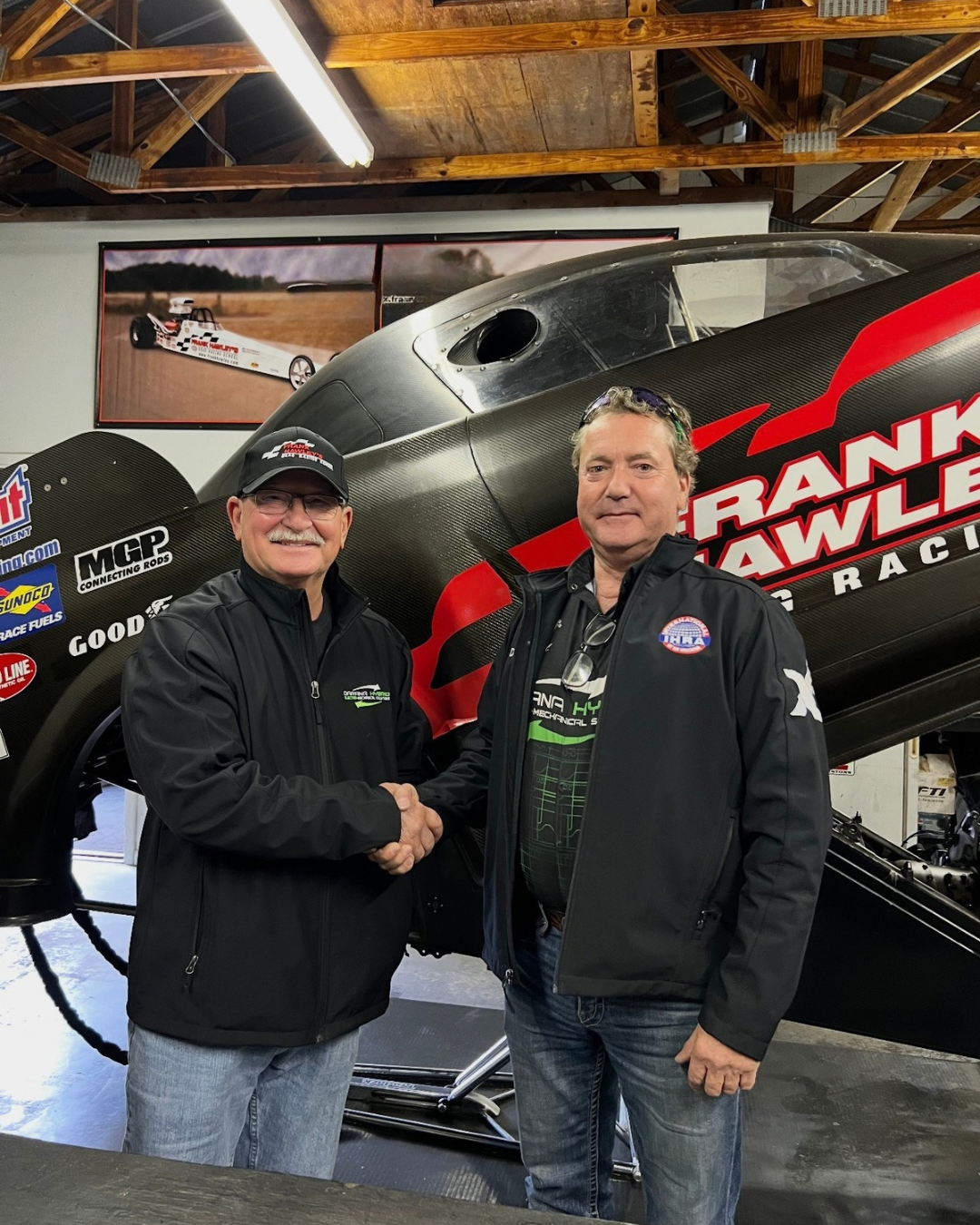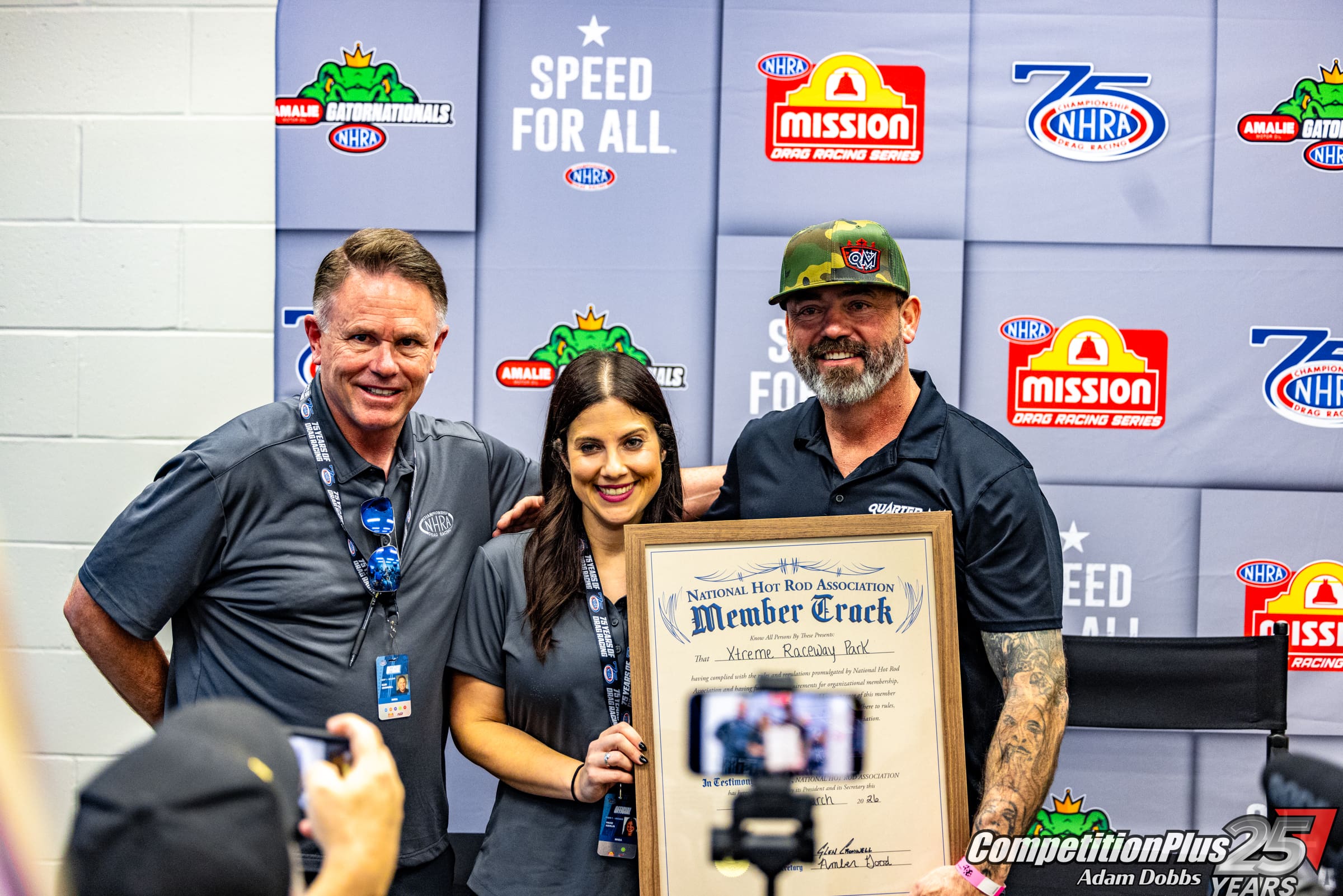

If NHRA is serious about exploring professional eighth-mile drag racing, Clyde Scott and his purpose-built Xtreme Raceway Park are positioning themselves as a willing laboratory. The all-concrete facility outside Dallas became the latest addition to the NHRA-sanctioned lineup during an announcement at the season-opening Gatornationals.

The move represented more than a simple sanctioning agreement. It underscored a growing willingness by NHRA leadership to challenge long-standing assumptions about track length, market reach and how to grow the sport’s national footprint.

Scott’s facility has long been tailored to the realities of modern grassroots racing. Its compact design was intentional, built to maximize fan engagement while minimizing operational strain.

“So the reason it was built the way it was is because a really big track, say this facility is a great facility, but to have it full of people every single week that the weather will allow you, it’s hard to do,” Scott said. “So we kind of wanted to make it smaller scale, bring everything in close and tight.”

That philosophy reflects broader industry trends. As NHRA examines new venues and formats, eighth-mile competition has emerged as a viable complement to traditional quarter-mile racing.

Scott acknowledged his personal connection to the format’s practicality. “I was always an eighth-mile racer. And be truthful with you, I was because I couldn’t afford the other half of the track.”

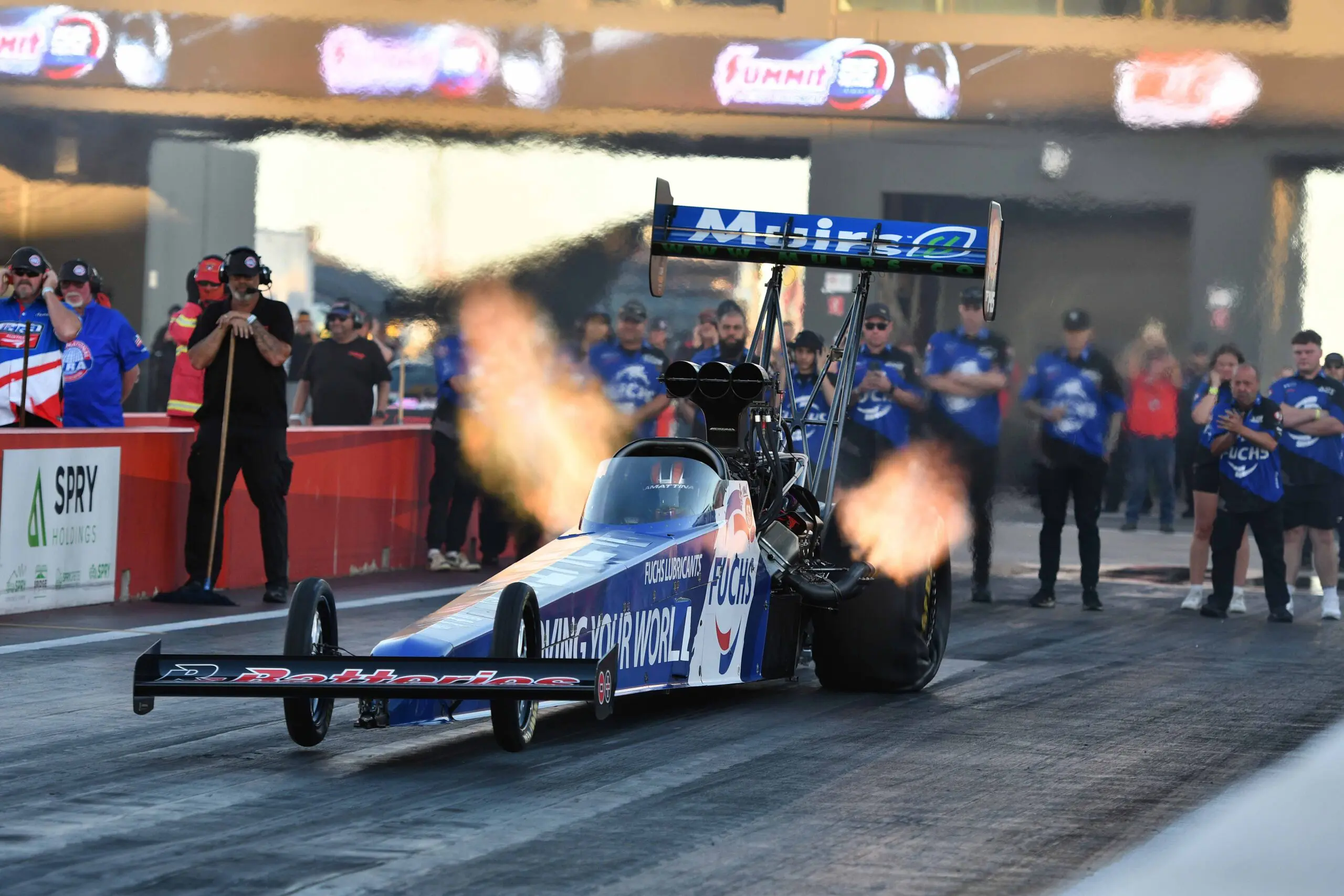
His track, which spans 2,750 feet with a full concrete racing surface and pits, has already attracted significant nitro testing activity. Teams preparing for Top Fuel and Funny Car events at nearby Texas Motorplex have quietly used the venue as a proving ground.
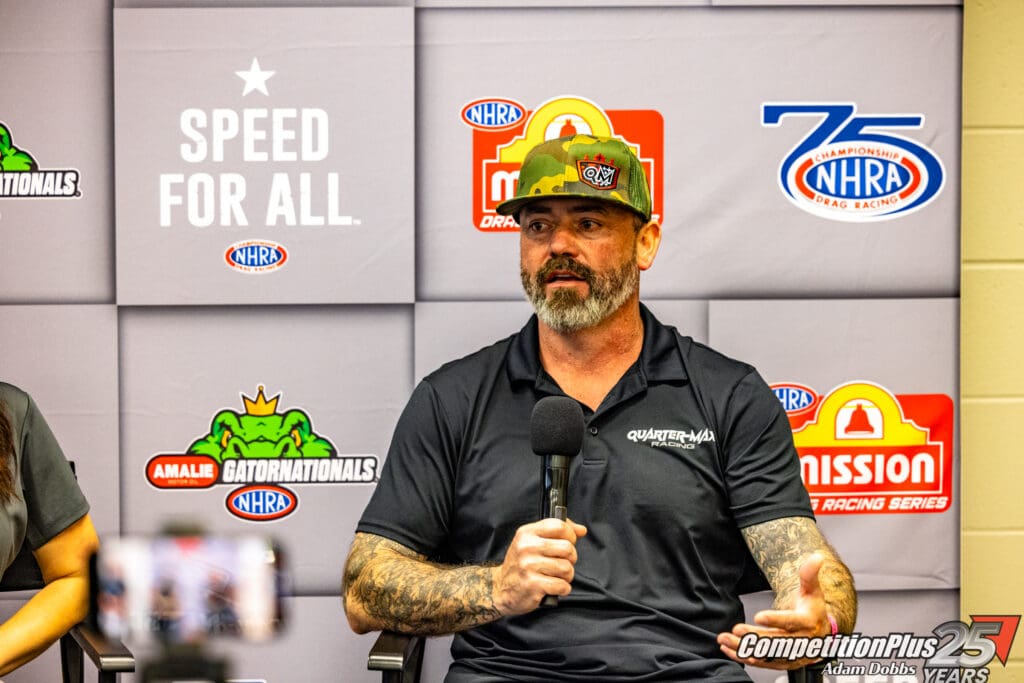

“We’ve had people go 250, I think. You’d have to ask Galen. 256 today,” Scott said. “The track is 2,750 feet long and we only raced 660 feet and it’s all concrete, as you know.”

NHRA President Glen Cromwell suggested the organization’s evolving strategy could align with such facilities. He emphasized that innovation would be critical if the sport is to maintain relevance in changing entertainment markets.

“For us to grow a sport of NHRA drag racing, we all have to be open-minded,” Cromwell said. “We can’t do things the same way.”

The sanctioning body has already signaled its appetite for experimentation by adding new national-event markets and exploring alternative showcase concepts. An eighth-mile professional event, once considered radical, is now part of that conversation.

Scott indicated he would embrace the opportunity without hesitation. “So yeah, we wouldn’t have a problem. We put something together, we’ll race anything.”

His enthusiasm is rooted not only in facility capabilities but also in the competitive parity such a move could create. “Now we’re not the smaller size track no more. Now we’re even playing field, right?”

The case for eighth-mile racing has been bolstered by the popularity of Pro Modified competition in shorter formats. Scott pointed to packed grandstands at major eighth-mile showcases as evidence of sustained fan interest.

“I think eighth mile is kind of where a lot of stuff’s going,” he said. “I mean, you’re shutting them off at a thousand-foot now, so why not shut them off at 660?”

NHRA’s leadership stopped short of confirming specific plans but left the door open. Cromwell framed the conversation as part of a broader mandate to evolve while safeguarding safety standards.

“Obviously safety being number one,” Cromwell said. “But for us to grow a sport of NHRA drag racing, we all have to be open-minded.”

His remarks suggested a strategic balancing act between tradition and innovation. The organization’s willingness to evaluate unconventional ideas signals an acknowledgment that drag racing’s future may depend on adaptability.

The addition of Xtreme Raceway Park to the NHRA member track network further reinforces that message. It represents a partnership built on shared priorities rather than simple geographic expansion.

“This is great to have you as part of the family because that gives us the opportunity to grow,” Cromwell said. “The ones that are successful are the ones that are all in, and he is all in.”

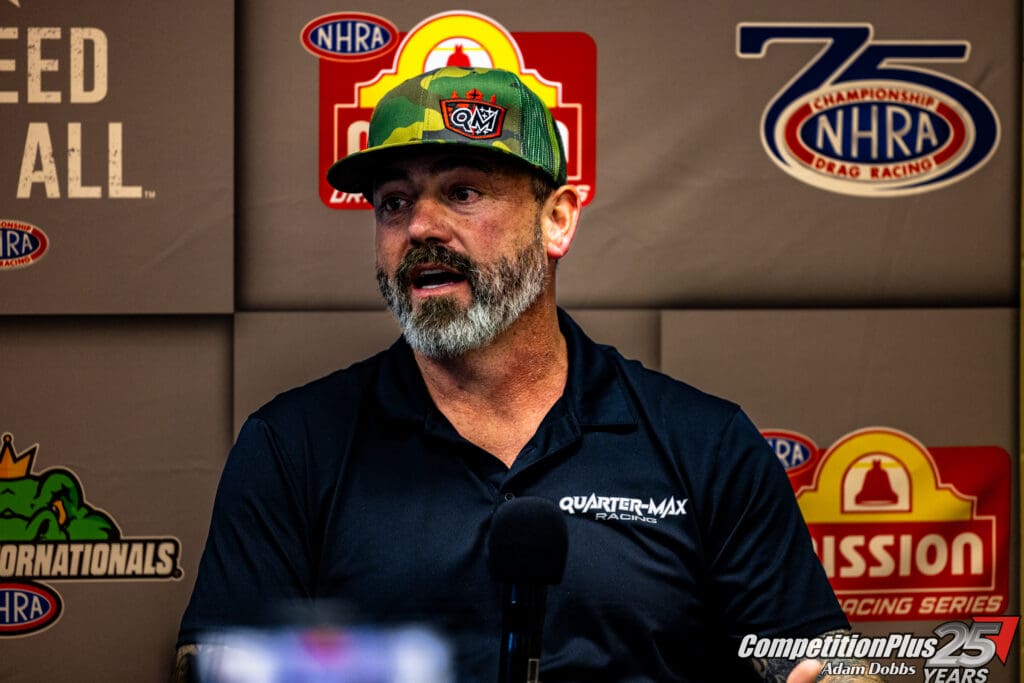
Scott’s involvement extends beyond facility operations. Through his QuarterMax Chassis brand, he will sponsor a program recognizing sportsman legends during NHRA’s 75th anniversary season.

The initiative aims to honor grassroots competitors who have sustained the sport’s foundation. Scott views that recognition as essential to drag racing’s long-term health.

“Your sportsman guys, your day in and your day out people that go to the racetrack, that’s who fills the seats,” he said. “You got to take care of the guys that run them classes.”

The facility’s recent history underscores its grassroots pedigree. For eight years, it served as host to the IHRA Bracket World Finals, cementing its reputation as a destination for high-level sportsman competition.

NHRA officials believe the track’s culture aligns with their strategic priorities. That alignment, they argue, could help bridge the gap between national-event spectacle and grassroots participation.

Cromwell credited internal leadership for facilitating the partnership. He highlighted Division 4 services coordinator Paige Hamlin’s role in building the relationship over several years.

“I am so proud and I’m just honored to have her as part of our team because she is amazing,” Cromwell said. “The way she treats people and the way she cares about our customers is unbelievable.”

Hamlin described the agreement as a culmination of long-standing personal and professional connections. She emphasized the sense of continuity between past experiences and the organization’s future direction.

“It’s really great to finally have this full circle moment where we’re all one family,” Hamlin said. “And I couldn’t be more grateful to be a part of the NHRA family as well.”

Scott echoed that sentiment while reflecting on his childhood memories of attending NHRA events. Those experiences, he said, fueled both his passion for racing and his commitment to facility development.

“NHRA is kind of what we grew up with,” Scott said. “Feeling the vibration of the cars, that’s what started my exhausting habit of loving race cars.”

The partnership also creates new competitive opportunities for regional racers. Texas has long been a fertile ground for bracket racing talent, and Scott believes affiliation with NHRA will elevate those competitors onto a broader stage.

“That gives them an opportunity to showcase the skills that we haven’t given them a platform to do it at,” he said.

His confidence stems from consistent success by racers who frequent the venue. “We have literally, I think, some of the best, if not the best on earth.”

NHRA leadership sees that depth of talent as mutually beneficial. By strengthening grassroots competition, the organization hopes to cultivate future stars in Top Fuel, Funny Car and Pro Stock.

Scott’s long-term vision extends beyond regional impact. He envisions the facility serving as both a testing hub and potential showcase venue should NHRA ultimately embrace eighth-mile professional competition.

“I’ll touch on this real quick if you don’t mind,” Scott said. “I’m hopeful and I’m going to push and I’m going to try to get help to bring some of the stuff to XRP.”

Whether that vision becomes reality remains uncertain. Yet the willingness to entertain such possibilities signals a shift in how NHRA approaches growth and innovation.

Scott’s pragmatic approach reflects the economic realities facing modern motorsports promoters. By emphasizing flexibility and accessibility, he believes venues like his can help sustain drag racing’s relevance.

“If we’re going to do it the same way over and over and over, you’re not going to get anything to change,” Cromwell said. “Our team at NHRA, we’re going to try new things.”

For Scott, the opportunity to host professional nitro competition in any format would validate years of strategic investment. It would also reinforce his belief that innovation and tradition can coexist within the sport’s evolving landscape.

“I just think that that would be really good,” Scott said. “We’re still a baseball diamond, we just moved the fence in.”

As NHRA navigates its milestone anniversary season and contemplates the next era of drag racing, Xtreme Raceway Park stands as both a partner and a proving ground. And Scott, never one to shy from bold ideas, captured his outlook with a line that reflects both his ambition and the sport’s enduring spirit.

“We’ll race anything,” he said. “Bring bobsleds — we’ll race something.”

Share the Insights?

Click here to share the article.

ad space x ad space

ad space x ad space

Competition Plus Team

Since our inception, we have been passionately dedicated to delivering the most accurate, timely, and compelling content in the world of drag racing. Our readers depend on us for the latest news, in-depth features, expert analysis, and exclusive interviews that connect you to the sport’s pulse.

Sign up for our newsletters and email list.

This field is for validation purposes and should be left unchanged.
Name

COULD XTREME RACEWAY PARK LEAD NHRA INTO GIVING PROFESSIONAL EIGHTH-MILE DRAG RACING A TRY?

If NHRA is serious about exploring professional eighth-mile drag racing, Clyde Scott and his purpose-built Xtreme Raceway Park are positioning themselves as a willing laboratory. The all-concrete facility outside Dallas became the latest addition to the NHRA-sanctioned lineup during an announcement at the season-opening Gatornationals.

The move represented more than a simple sanctioning agreement. It underscored a growing willingness by NHRA leadership to challenge long-standing assumptions about track length, market reach and how to grow the sport’s national footprint.

Scott’s facility has long been tailored to the realities of modern grassroots racing. Its compact design was intentional, built to maximize fan engagement while minimizing operational strain.

“So the reason it was built the way it was is because a really big track, say this facility is a great facility, but to have it full of people every single week that the weather will allow you, it’s hard to do,” Scott said. “So we kind of wanted to make it smaller scale, bring everything in close and tight.”

That philosophy reflects broader industry trends. As NHRA examines new venues and formats, eighth-mile competition has emerged as a viable complement to traditional quarter-mile racing.

Scott acknowledged his personal connection to the format’s practicality. “I was always an eighth-mile racer. And be truthful with you, I was because I couldn’t afford the other half of the track.”

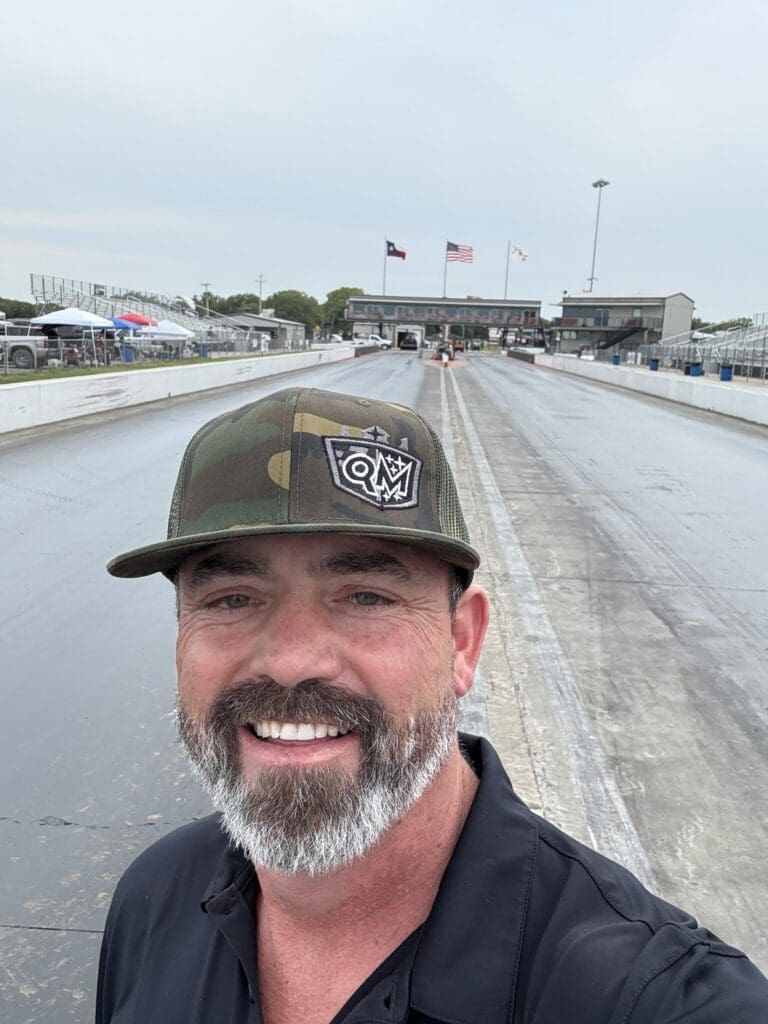
His track, which spans 2,750 feet with a full concrete racing surface and pits, has already attracted significant nitro testing activity. Teams preparing for Top Fuel and Funny Car events at nearby Texas Motorplex have quietly used the venue as a proving ground.
“We’ve had people go 250, I think. You’d have to ask Galen. 256 today,” Scott said. “The track is 2,750 feet long and we only raced 660 feet and it’s all concrete, as you know.”

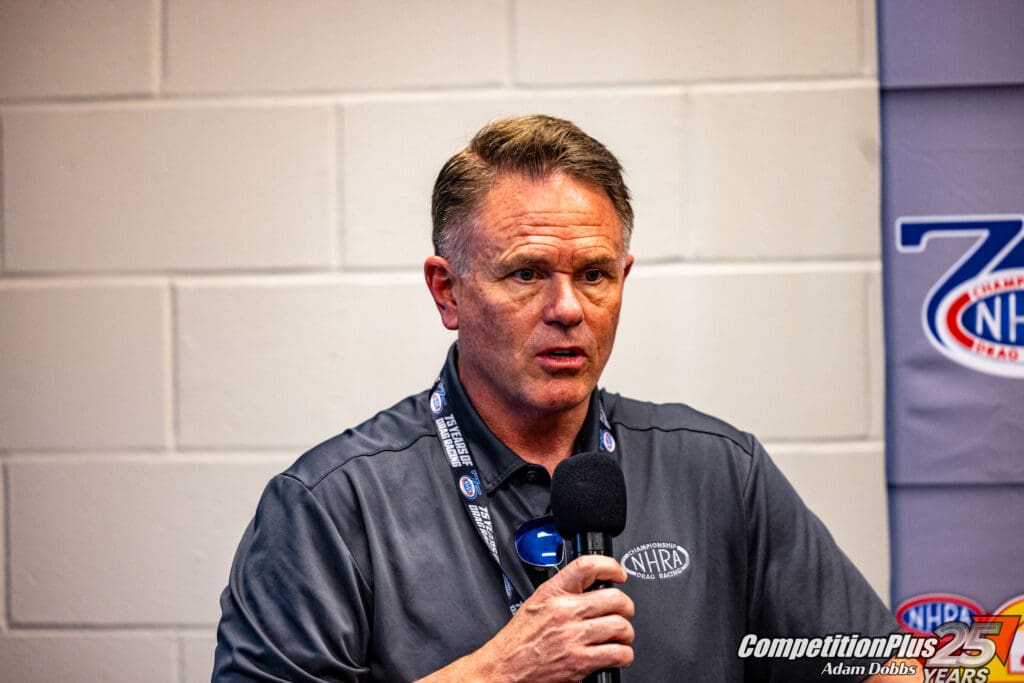
NHRA President Glen Cromwell suggested the organization’s evolving strategy could align with such facilities. He emphasized that innovation would be critical if the sport is to maintain relevance in changing entertainment markets.

“For us to grow a sport of NHRA drag racing, we all have to be open-minded,” Cromwell said. “We can’t do things the same way.”

The sanctioning body has already signaled its appetite for experimentation by adding new national-event markets and exploring alternative showcase concepts. An eighth-mile professional event, once considered radical, is now part of that conversation.

Scott indicated he would embrace the opportunity without hesitation. “So yeah, we wouldn’t have a problem. We put something together, we’ll race anything.”

His enthusiasm is rooted not only in facility capabilities but also in the competitive parity such a move could create. “Now we’re not the smaller size track no more. Now we’re even playing field, right?”
The case for eighth-mile racing has been bolstered by the popularity of Pro Modified competition in shorter formats. Scott pointed to packed grandstands at major eighth-mile showcases as evidence of sustained fan interest.

“I think eighth mile is kind of where a lot of stuff’s going,” he said. “I mean, you’re shutting them off at a thousand-foot now, so why not shut them off at 660?”

NHRA’s leadership stopped short of confirming specific plans but left the door open. Cromwell framed the conversation as part of a broader mandate to evolve while safeguarding safety standards.

“Obviously safety being number one,” Cromwell said. “But for us to grow a sport of NHRA drag racing, we all have to be open-minded.”

His remarks suggested a strategic balancing act between tradition and innovation. The organization’s willingness to evaluate unconventional ideas signals an acknowledgment that drag racing’s future may depend on adaptability.

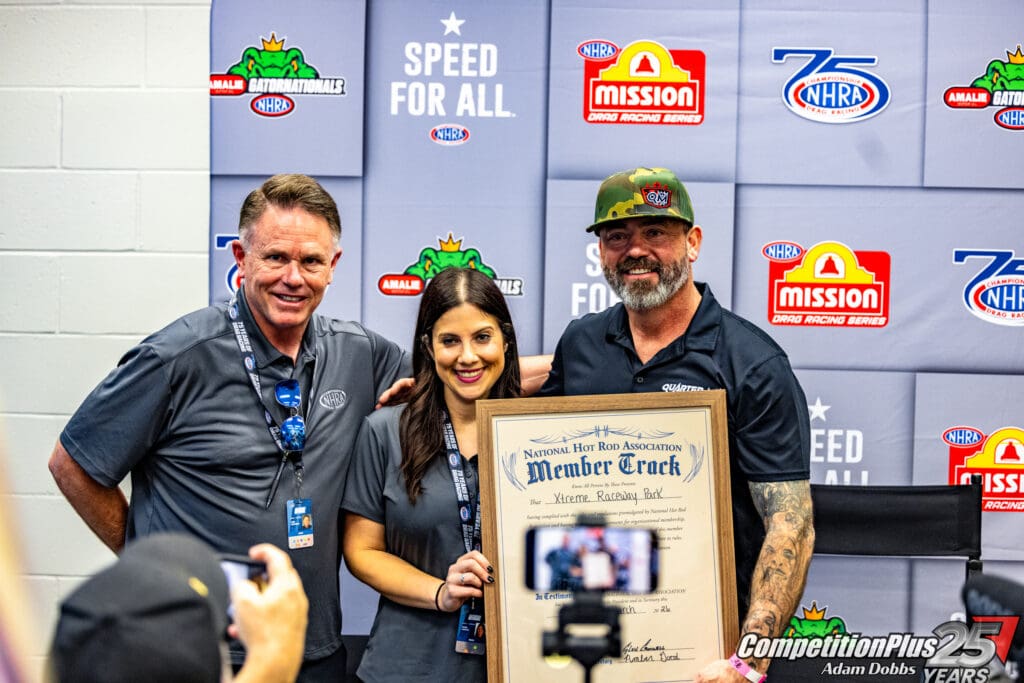
The addition of Xtreme Raceway Park to the NHRA member track network further reinforces that message. It represents a partnership built on shared priorities rather than simple geographic expansion.

“This is great to have you as part of the family because that gives us the opportunity to grow,” Cromwell said. “The ones that are successful are the ones that are all in, and he is all in.”

Scott’s involvement extends beyond facility operations. Through his QuarterMax Chassis brand, he will sponsor a program recognizing sportsman legends during NHRA’s 75th anniversary season.

The initiative aims to honor grassroots competitors who have sustained the sport’s foundation. Scott views that recognition as essential to drag racing’s long-term health.

“Your sportsman guys, your day in and your day out people that go to the racetrack, that’s who fills the seats,” he said. “You got to take care of the guys that run them classes.”

The facility’s recent history underscores its grassroots pedigree. For eight years, it served as host to the IHRA Bracket World Finals, cementing its reputation as a destination for high-level sportsman competition.

NHRA officials believe the track’s culture aligns with their strategic priorities. That alignment, they argue, could help bridge the gap between national-event spectacle and grassroots participation.
Cromwell credited internal leadership for facilitating the partnership. He highlighted Division 4 services coordinator Paige Hamlin’s role in building the relationship over several years.

“I am so proud and I’m just honored to have her as part of our team because she is amazing,” Cromwell said. “The way she treats people and the way she cares about our customers is unbelievable.”

Hamlin described the agreement as a culmination of long-standing personal and professional connections. She emphasized the sense of continuity between past experiences and the organization’s future direction.

“It’s really great to finally have this full circle moment where we’re all one family,” Hamlin said. “And I couldn’t be more grateful to be a part of the NHRA family as well.”

Scott echoed that sentiment while reflecting on his childhood memories of attending NHRA events. Those experiences, he said, fueled both his passion for racing and his commitment to facility development.

“NHRA is kind of what we grew up with,” Scott said. “Feeling the vibration of the cars, that’s what started my exhausting habit of loving race cars.”
The partnership also creates new competitive opportunities for regional racers. Texas has long been a fertile ground for bracket racing talent, and Scott believes affiliation with NHRA will elevate those competitors onto a broader stage.

“That gives them an opportunity to showcase the skills that we haven’t given them a platform to do it at,” he said.

His confidence stems from consistent success by racers who frequent the venue. “We have literally, I think, some of the best, if not the best on earth.”

NHRA leadership sees that depth of talent as mutually beneficial. By strengthening grassroots competition, the organization hopes to cultivate future stars in Top Fuel, Funny Car and Pro Stock.

Scott’s long-term vision extends beyond regional impact. He envisions the facility serving as both a testing hub and potential showcase venue should NHRA ultimately embrace eighth-mile professional competition.

“I’ll touch on this real quick if you don’t mind,” Scott said. “I’m hopeful and I’m going to push and I’m going to try to get help to bring some of the stuff to XRP.”
Whether that vision becomes reality remains uncertain. Yet the willingness to entertain such possibilities signals a shift in how NHRA approaches growth and innovation.

Scott’s pragmatic approach reflects the economic realities facing modern motorsports promoters. By emphasizing flexibility and accessibility, he believes venues like his can help sustain drag racing’s relevance.

“If we’re going to do it the same way over and over and over, you’re not going to get anything to change,” Cromwell said. “Our team at NHRA, we’re going to try new things.”

For Scott, the opportunity to host professional nitro competition in any format would validate years of strategic investment. It would also reinforce his belief that innovation and tradition can coexist within the sport’s evolving landscape.

“I just think that that would be really good,” Scott said. “We’re still a baseball diamond, we just moved the fence in.”

As NHRA navigates its milestone anniversary season and contemplates the next era of drag racing, Xtreme Raceway Park stands as both a partner and a proving ground. And Scott, never one to shy from bold ideas, captured his outlook with a line that reflects both his ambition and the sport’s enduring spirit.

“We’ll race anything,” he said. “Bring bobsleds — we’ll race something.”

Picture of John Doe

John Doe

Lorem ipsum dolor sit amet consectetur adipiscing elit dolor

More Posts

Send Us A Message

Picture of Bobby Bennett
Bobby Bennett
Thank you for joining us on this journey. Your support and trust inspire us every day to deliver the best in drag racing journalism. We are excited about the future and look forward to continuing to serve you with the same dedication and passion that has defined CompetitionPlus.com from the very beginning.

Don’t miss these other exciting stories!

Explore more action packed posts on Competition Plus, where we dive into the latest in Drag Racing News. Discover a range of topics, from race coverage to in-depth interviews, to keep you informed and entertained.