Introduction
Drag racing cars are purpose-built or heavily modified vehicles engineered specifically for straight-line acceleration competitions, representing some of the fastest accelerating machines ever created. These vehicles range from 11,000-horsepower top fuel dragsters capable of covering a quarter-mile in under four seconds to modified street cars competing in bracket racing formats at local tracks.
This guide covers the complete spectrum of drag racing vehicle categories, from professional nitro cars to sportsman-level competitors, excluding oval track and road course racing vehicles. Whether you’re a racing enthusiast researching your first build, a spectator wanting to understand what you’re watching at the drag strip, or an automotive fan fascinated by high-performance engineering, this content addresses the fundamentals you need to know.
Drag racing cars divide into distinct categories based on power output, fuel type, chassis construction, and modification level—from top fuel cars producing over 11,000 horsepower on nitromethane to pro stock cars running spec gasoline through naturally aspirated engines, with sportsman classes accommodating virtually any car from vintage muscle cars to sport compact cars.
By the end of this guide, you’ll understand:
- The major categories of professional and sportsman drag racing vehicles
- Performance specifications and technical requirements for each class
- Safety regulations and sanctioning body frameworks
- Cost considerations across different competition levels
- Practical steps for entering drag racing competition
Understanding Drag Racing Cars
Drag racing is a form of motorsport where cars or motorcycles race head-to-head to reach a designated finish line before their opponents..
Drag racing cars are specialized vehicles optimized for maximum acceleration over standardized distances—typically 1/8 mile, 1/4 mile (1,320 feet), or 1,000-foot courses. Unlike road racing vehicles designed for cornering and endurance, these machines focus exclusively on straight-line speed, making them relevant both to motorsports competition and automotive performance development that eventually filters into production vehicles.
Purpose-Built vs Modified Vehicles
Purpose-built drag racing cars feature ground-up construction using a sophisticated tube chassis, specialized suspension geometry, and components designed exclusively for acceleration. Top fuel dragsters and alcohol funny cars exemplify this approach, with their same chromoly steel chassis, carbon fiber body panels, and four link rear suspension systems engineered without compromise for straight-line performance.
Modified vehicles begin as ordinary passenger vehicles or production cars, then receive progressive upgrades. This category includes everything from lightly modified street cars retaining a full factory interior to highly modified race cars sharing only the original body shell with their stock origins. The modification spectrum allows racers compete at various budget levels while maintaining recognizable vehicle identities.
Safety and Regulation Framework
The National Hot Rod Association (NHRA) and International Hot Rod Association (IHRA) establish comprehensive safety and technical regulations governing drag racing competition. These sanctioning bodies specify minimum vehicle weights, required safety equipment, chassis modifications standards, and engine combinations permitted in each class. Fuel injection systems are allowed and are a standard feature in many competitively tuned engines, reflecting both technological advancement and regulation compliance.
Regulations divide vehicles into professional and sportsman categories, with professional classes requiring purpose built tube chassis construction, certified roll cages, on-board fire suppression, and parachute systems for high-speed deceleration. Understanding these requirements becomes essential before selecting a competition class, as safety certification directly impacts both vehicle construction and operating costs.
Professional Drag Racing Car Categories
Professional drag racing represents the pinnacle of straight-line acceleration, featuring the most technologically advanced machines in motorsports. These fuel cars and alcohol-burning competitors require substantial financial investment, specialized crews, and purpose-built facilities for competition.
Top Fuel Dragsters
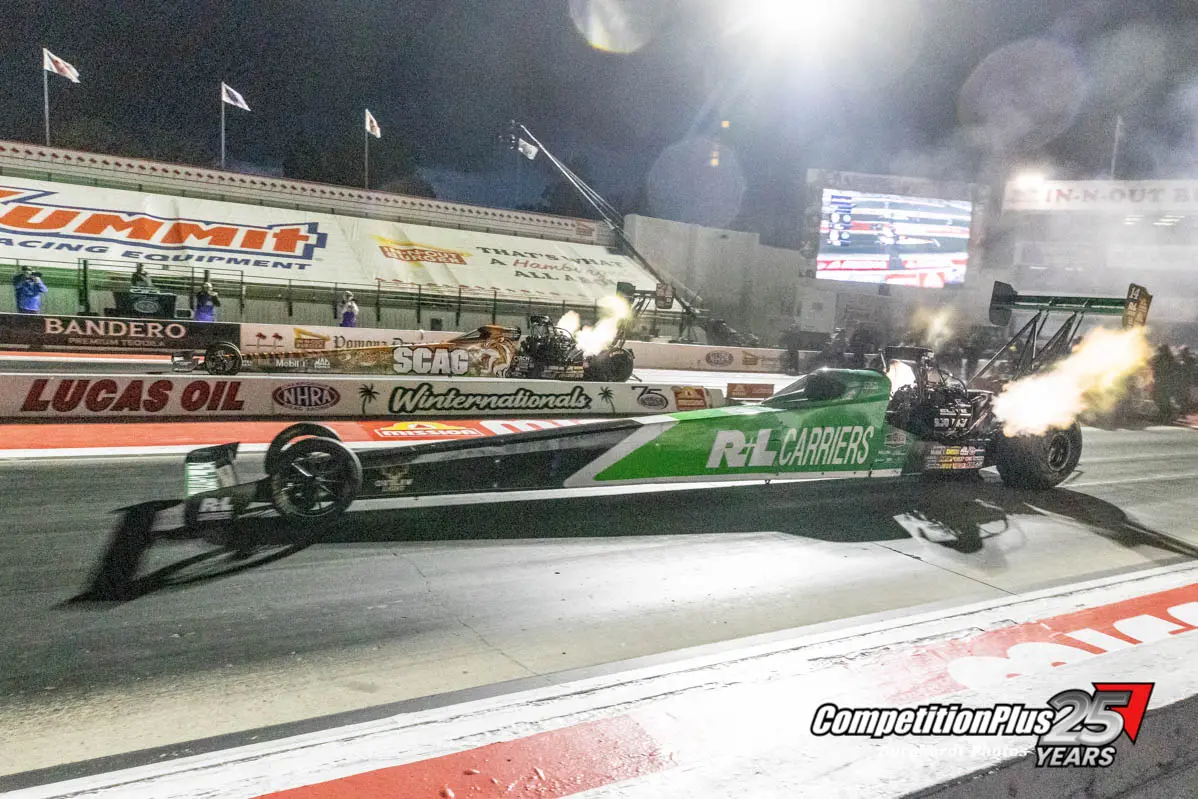
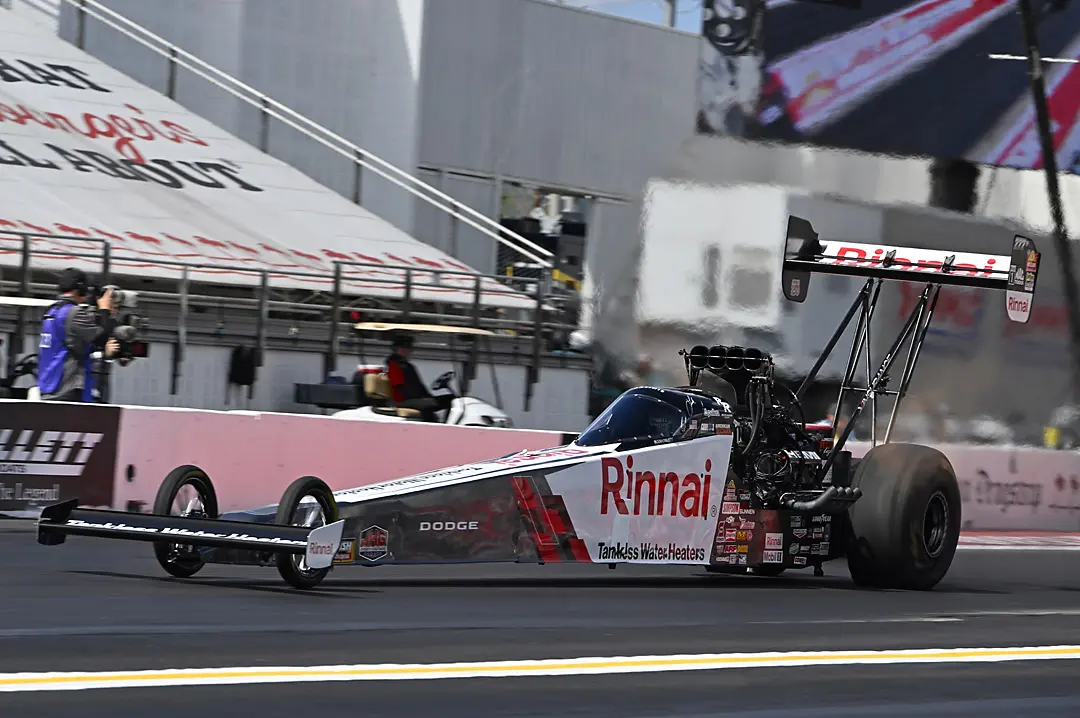
Top fuel dragsters stand as the fastest accelerating machines in motorsports, producing over 11,000 horsepower from supercharged 500-cubic-inch engines derived from the famed Chrysler Hemi engine architecture. These injected nitro cars consume approximately 15 gallons of nitromethane per quarter-mile pass, generating forces exceeding 5 Gs during launch while mounted on huge Goodyear rear slicks up to 18 inches wide.
Modern fuel dragsters evolved from front engine nostalgia dragsters after Don Garlits pioneered the rear-engine configuration in 1971, placing the nitro burning engines behind the driver for improved safety. Current top fuel counterparts achieve elapsed times around 3.6-3.7 seconds at terminal speeds exceeding 330 mph, requiring parachute deployment for deceleration from these velocities.
Funny Cars
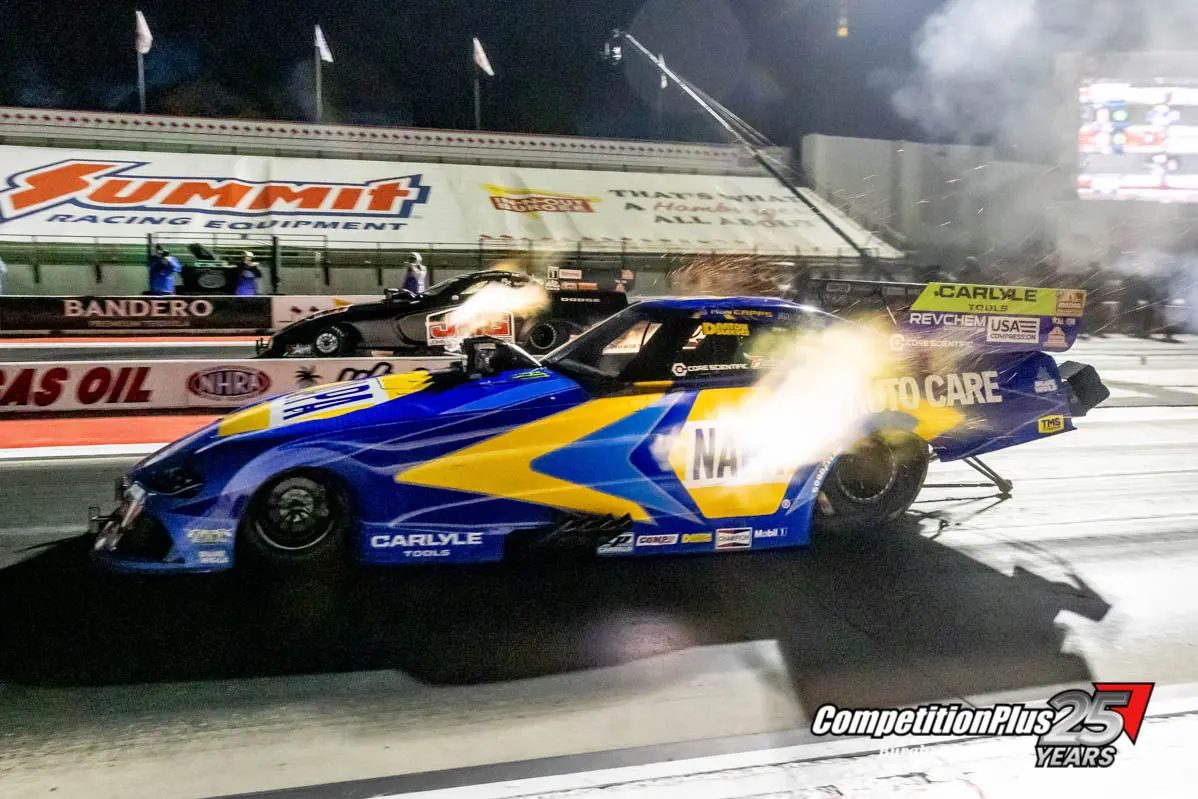
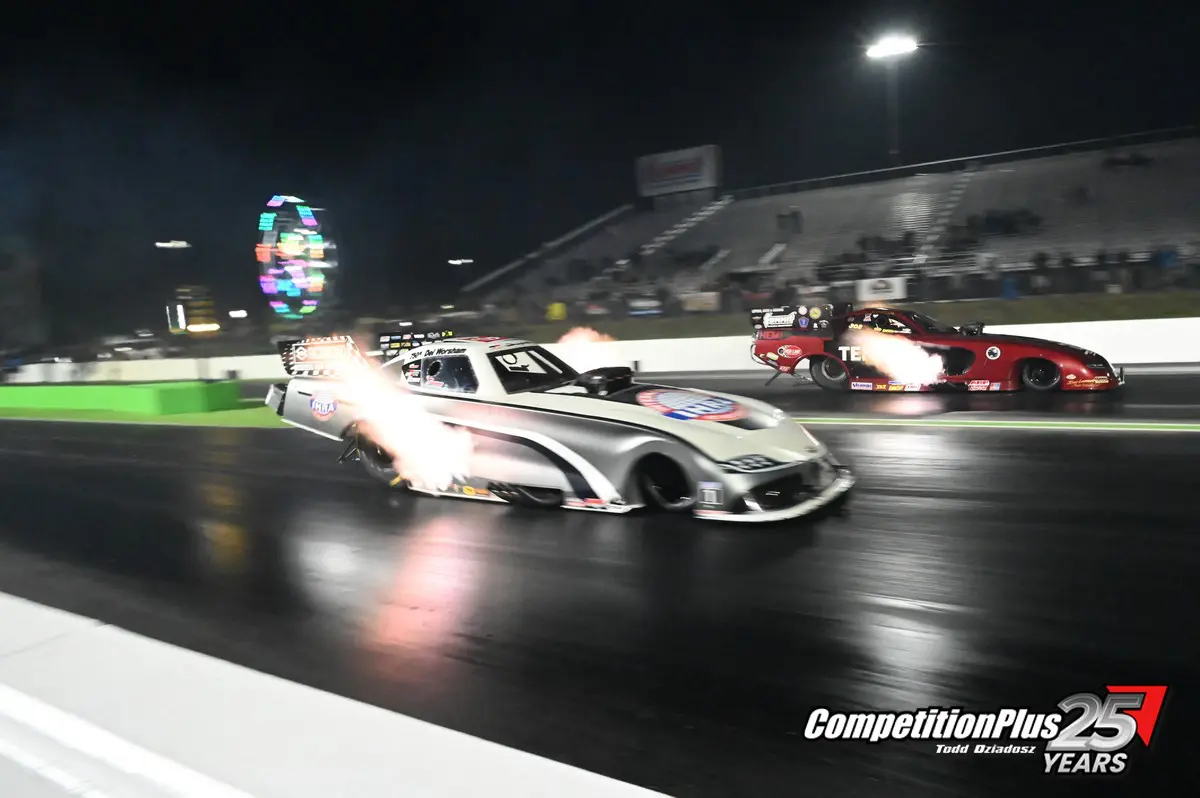
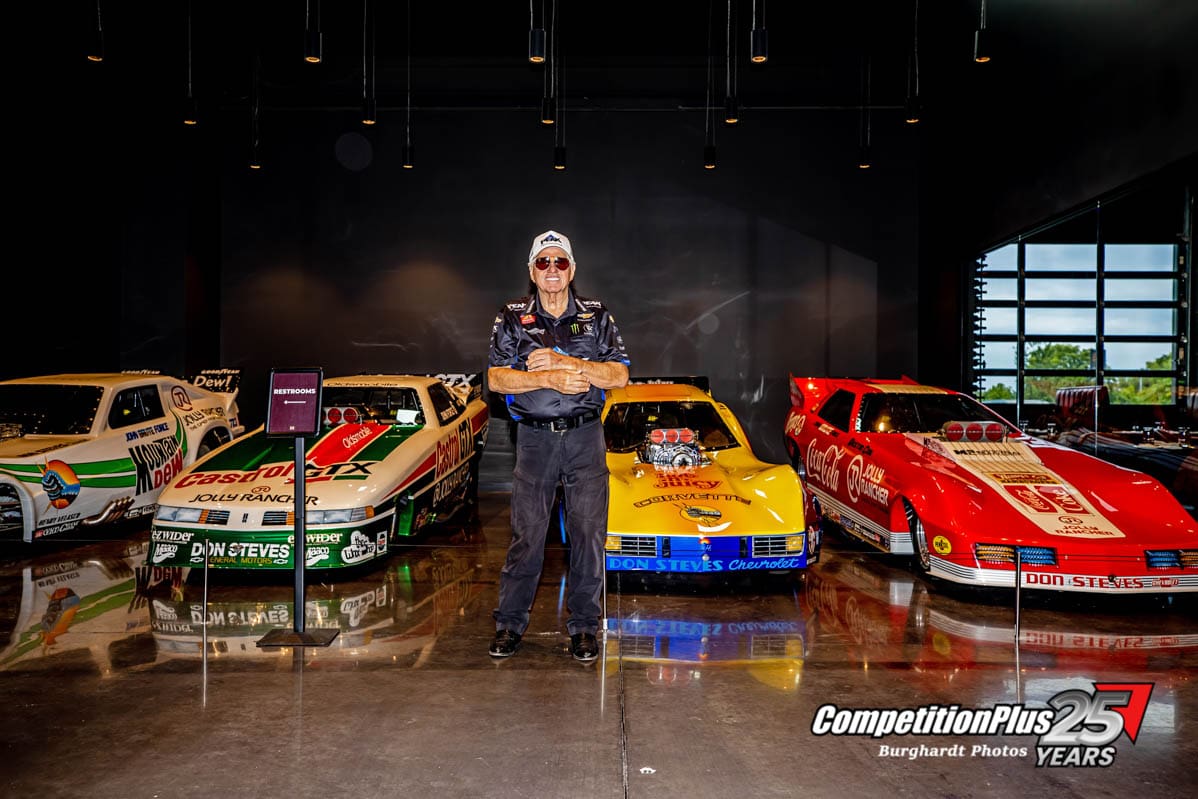
Funny cars combine top fuel-level power with primarily full bodied cars featuring carbon fiber replica bodies resembling production vehicles like Dodge Chargers and Chevrolet Camaros. These highly modified vehicles share the supercharged methanol burning engine technology with fuel counterparts but package this power beneath an aerodynamically enhanced replica body shell.
Alcohol funny car bodies and their nitro-burning counterparts both utilize the same chromoly steel chassis as top fuel dragsters, with the carbon fiber body panels providing both aerodynamic benefits and spectacular visual appeal. Funny cars achieve similar performance to fuel dragsters, with elapsed times in the 3.8-3.9 second range at speeds exceeding 330 mph, while creating the dramatic wheelie launches fans associate with professional drag racing.
Top alcohol funny cars represent a step below the nitro classes, using a supercharged methanol burning engine rather than nitromethane. Top Alcohol Funny Cars are restricted to methanol fuel, which distinguishes them from their nitro-burning counterparts, and can achieve quarter-mile performances in the 5.5-second range at speeds over 260 mph. These alcohol funny cars deliver approximately 4,000 horsepower while providing a pathway for aspiring professional drivers. The alcohol funny car similar configuration to Top Fuel Funny Cars makes them excellent development platforms.
Pro Stock Cars
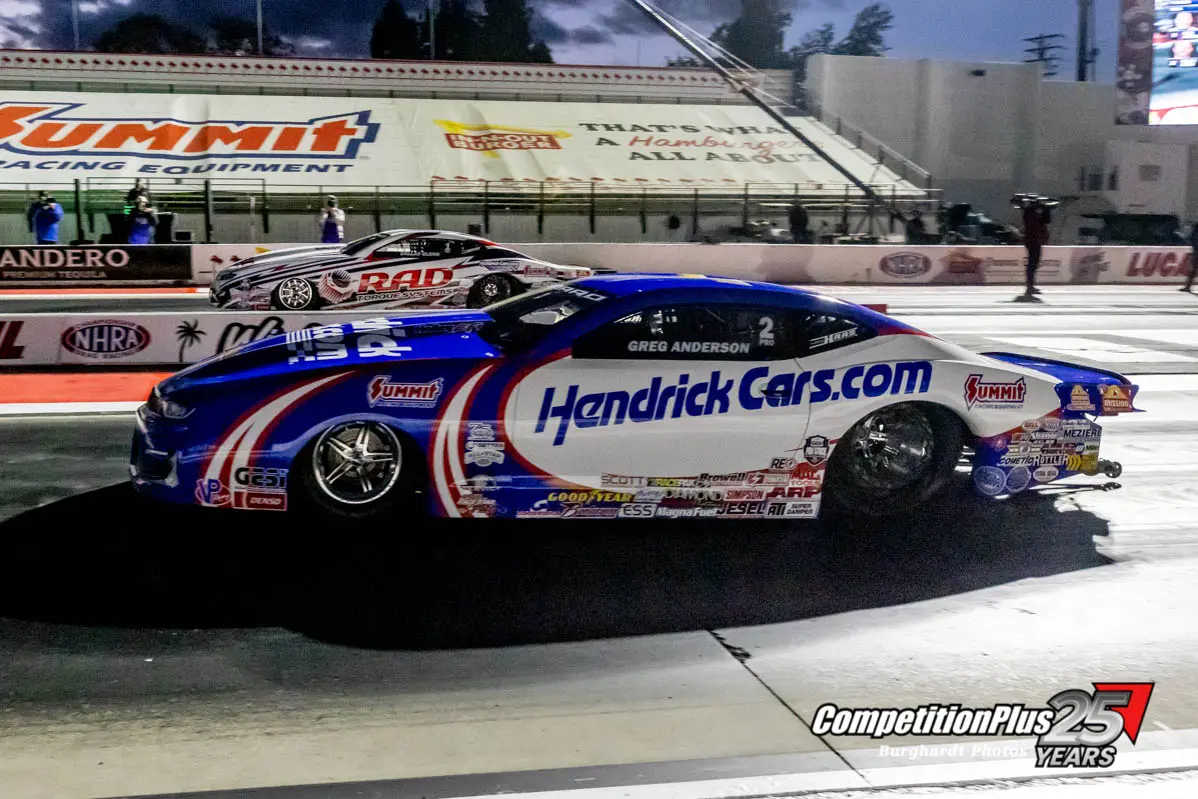
Pro stock cars embody the “factory hot rods” concept, featuring naturally aspirated pro stock engines producing 1,400-1,500 horsepower without superchargers or nitrous oxide. These competitive pro stock car entries use spec gasoline and must retain stock cylinder heads and the correct engine block for their body style, emphasizing tuning precision over raw power advantages.
Pro stock engines represent the ultimate development of naturally aspirated V8 technology, with primarily late model sedans like late model Ford Mustangs and Chevrolet Camaros serving as body platforms. Performance reaches 6.5-second elapsed times at approximately 215 mph, with victory margins often measured in thousandths of a second due to parity rules that create exceptionally close competition.
Professional categories establish a clear performance hierarchy: top fuel cars and funny cars dominate with sub-4-second passes, while pro stock cars demonstrate that driver skill and precision tuning can create compelling competition even without unlimited horsepower. Pro stock motorcycle adds two-wheel competition to the professional ranks, with turbocharged and nitrous-equipped bikes achieving 6.8-second passes at 195+ mph. In Pro Stock Motorcycle, only spec gasoline is allowed as the only fuel, and fuel injection is permitted, ensuring fair competition.
Sportsman and Bracket Racing Cars
Sportsman drag racing provides competitive opportunities for racers at every budget level, from weekend hobbyists to semi-professional competitors. These classes accommodate highly modified vehicles, vintage muscle cars, sport compact cars, and even lightly modified street machines through structured classification systems.
Classification System
Sportsman racing employs several methods to ensure competitive equity among diverse vehicles:
- Weight-to-power ratios – Divides total car weight by engine displacement or horsepower rating to establish competitive groupings
- Factory shipping weight calculations – Divides factory shipping weight by cubic inches for stock-based classes
- Index systems – Establishes target elapsed times (e.g., 8.90 seconds) that competitors attempt to match without running faster
- Dial-in brackets – Allows racers to predict their elapsed time, with closer-to-dial performances winning regardless of absolute speed
- Modification level classifications – Groups vehicles by degree of departure from stock configuration
This traditional bracket racing format enables virtually any car to compete, from six cylinder cars to supercharged cars, with victory determined by consistency rather than outright speed.
Popular Sportsman Classes
| Class | Typical ET Range | Modification Level | Competition Format |
|---|---|---|---|
| Super Stock | 9.5-12.0 seconds | Engine mods within factory specs, stock cylinder heads | Index racing |
| Stock | 10.0-14.0 seconds | Minor engine mods, close to factory shipping weight | Index racing |
| Super Comp | 8.90 index | Significant engine mods, purpose-built chassis or open wheel | Index racing |
| Super Gas | 9.90 index | Full-bodied cars, chassis modifications | Index racing |
| Super Street | 10.90 index | Street-legal vehicles, moderate modifications | Index racing |
| Top Sportsman | 6.0-7.5 seconds | Highly modified race cars | Heads-up elimination |
Super street racers compete using primarily full bodied cars with varying modification levels, while top alcohol dragsters and trucks race alongside cars in appropriate classes. Top Alcohol Dragsters may use either a supercharged methanol-burning engine or an injected nitromethane combination, with weights generally between 1,975 and 2,125 pounds. The diversity accommodates most cars from street roadsters to purpose-built racers, with well built car consistency often more important than peak performance.
Selecting the right class requires matching your vehicle’s capabilities and budget to competitive requirements—a rotary powered cars enthusiast might target import classes, while someone with vintage muscle cars could find homes in Super Stock or nostalgia categories.
Drag Racing Organizations
Drag racing organizations are the backbone of the sport, providing structure, safety, and a competitive framework for racers and fans alike. The National Hot Rod Association (NHRA) stands as the largest and most influential body in North America, organizing premier events and overseeing a wide range of classes, from the thunderous Top Fuel dragsters and Funny Cars to the precision-driven Pro Stock and Pro Stock Motorcycle categories. The NHRA’s comprehensive rulebook ensures that every aspect of drag racing—from vehicle specifications to safety protocols—is standardized, allowing racers compete on a level playing field.
Beyond the NHRA, several other organizations contribute to the sport’s diversity and reach. The International Hot Rod Association (IHRA) offers its own series of events and classes, often serving as a proving ground for up-and-coming drivers and innovative vehicle builds. The Professional Drag Racers Association (PDRA) focuses on heads-up super classes and high-performance doorslammers, while the National Muscle Car Association (NMCA) celebrates the legacy of American muscle with events tailored to vintage and modern factory hot rods.
These organizations not only enforce technical and safety standards but also foster a sense of community among racers, teams, and fans. By providing clear class structures—such as Top Fuel, Funny Car, Pro Stock, and Pro Stock Motorcycle—they make it possible for virtually any car, from highly modified vehicles to stock-bodied entries, to find a place on the drag strip. Whether you’re drawn to the spectacle of nitro-burning fuel cars or the close competition of pro stock motorcycle racing, these sanctioning bodies ensure that drag racing remains safe, fair, and thrilling for all involved.
History of Drag Racing
The history of drag racing is a story of innovation, passion, and relentless pursuit of speed. Emerging in the 1940s, the sport was shaped by World War II veterans who brought mechanical skills and a thirst for competition to the abandoned airstrips of postwar America. Early drag racing events were informal, with drivers pitting everything from stripped-down hot rods to factory sedans against each other in straight-line sprints.
The formation of the National Hot Rod Association (NHRA) in 1951 marked a turning point, introducing standardized rules and safety measures that transformed drag racing into an organized motorsport. The NHRA’s influence led to the creation of distinct classes, such as Top Fuel, Alcohol Funny Cars, and Super Stock, each catering to different types of vehicles and levels of modification. The introduction of safety equipment—helmets, seatbelts, and later, roll cages—helped protect drivers as speeds increased and competition intensified.
The 1960s and 1970s saw the rise of professional drag racing, with legendary drivers like Don Garlits and Shirley Muldowney pushing the limits of both technology and public imagination. Funny cars, with their wild body styles and supercharged engines, became icons of the era, while alcohol funny cars and Super Stock classes offered accessible entry points for aspiring racers. By the 1980s, drag racing had become a global phenomenon, with events held across the United States, Europe, and Australia.
Today, drag racing continues to evolve, blending tradition with cutting-edge engineering. From the raw power of Top Fuel dragsters to the precision of Super Stock and the spectacle of alcohol funny cars, the sport’s rich history is celebrated at every event, connecting generations of fans and competitors around the world.
Drag Racing Culture
Drag racing culture is as dynamic and diverse as the cars that thunder down the strip. At its core, the culture is built on a shared passion for speed, innovation, and friendly competition. Fans flock to events not just to witness the raw power of top fuel cars and funny cars, but to immerse themselves in an atmosphere charged with excitement and camaraderie. The pit areas buzz with activity as teams fine-tune highly modified vehicles, from rotary powered cars and factory hot rods to competitive pro stock cars and fuel cars, each representing a unique blend of engineering and creativity.
The sport’s appeal extends beyond the track. Drag racing has inspired a vibrant community of enthusiasts who express their love for the sport through custom builds, car shows, and a thriving aftermarket industry. Merchandise—ranging from t-shirts and hats to die-cast models of iconic funny cars and top fuel cars—allows fans to showcase their allegiance. The culture also embraces the diversity of vehicles, with everything from vintage muscle cars to the latest supercharged methanol burning engine builds drawing admiration.
Media has played a significant role in shaping drag racing culture. Films, television shows, and video games have brought the spectacle of pro stock cars, fuel cars, and highly modified vehicles to a global audience, fueling interest and inspiring new generations of racers. The sense of community is further strengthened by online forums, social media groups, and local clubs, where knowledge and stories are shared among both newcomers and seasoned veterans.
Ultimately, drag racing culture thrives on the thrill of competition, the pursuit of innovation, and the celebration of automotive diversity. Whether you’re drawn to the scream of a rotary powered car, the heritage of factory hot rods, or the cutting-edge technology of top fuel cars, the culture welcomes all who share a love for the sport and its ever-evolving machines.
Common Challenges and Solutions
Budget and Cost Management
Professional drag racing requires substantial investment—top fuel cars demand seven-figure seasonal budgets—but sportsman racing offers accessible entry points. Consider purchasing race ready trim vehicles from retiring competitors rather than building from scratch, as used racers often include safety equipment and proven combinations. Gradual upgrades allow spreading costs over multiple seasons, and many successful competitors began with lightly modified street cars in bracket racing before advancing to faster classes.
Safety Equipment and Certification
Meeting safety requirements within budget constraints requires prioritization. Begin with mandatory items—certified helmets, fire suits, and harness systems—then address chassis certification based on target elapsed times. NHRA and IHRA rulebooks specify exact requirements at each performance level, allowing you to budget precisely. Many tracks offer technical inspection days where officials identify specific compliance needs before competition.
Choosing the Right Class
Matching vehicle capabilities to competitive class requirements demands honest assessment of your car’s potential. Research actual competitive times in your target class, not just minimum requirements. A model vehicle meeting class minimums may struggle against fully developed competition. Consider classes where your engine combinations provide advantages, and recognize that significant engine modifications may push you into faster classes with corresponding safety and equipment requirements.
Conclusion and Next Steps
Drag racing cars span an remarkable performance spectrum, from professional 11,000-horsepower nitro cars achieving 330+ mph to weekend bracket racers competing at virtually unlimited variety of speeds and styles. Whether your interest lies in the most technologically advanced machines or accessible sportsman competition, the sport offers structured pathways for participation at every level.
To begin your drag racing journey:
- Visit a local drag strip during test-and-tune sessions to observe vehicle preparation and staging procedures
- Research NHRA or IHRA rulebooks for classes matching your vehicle type and budget
- Connect with local racing clubs or organizations for mentorship and shared resources
- Consider attending a drag racing school for safety training and driving technique development
- Start in beginner-friendly bracket racing before advancing to faster competition
Related topics worth exploring include engine building for your target class, chassis setup and suspension tuning, and driver development programs offered by professional racing schools. Many successful professional drivers began in sportsman competition, making local bracket racing an excellent foundation for advancement.
Additional Resources
- NHRA Rulebook (nhra.com) and IHRA Technical Guidelines for complete class requirements and safety specifications
- Local drag strip websites for test-and-tune schedules, bracket racing events, and club contacts
- CompetitionPlus.com for industry news and technical discussions