Originally published January 4, 2010
In Part 2 of Pro Modified: Two Decades of Thrills, we focused on the World’s Fastest Group and how the racers sought a niche in which to gain match race bookings. We also focused on the performance milestones with the races to the six second and 200 mph barriers. We closed with the introduction of a new management at the IHRA and the continued progress of the Quick Eight program.
In the third installment, we will look into the natural rivalry the movement created, the impact that a major nitrous company founder had on the class, how Pro Modified was named, the announcement of the class and its exhibition introduction.
THE WAR TO END ALL WARS – NITROUS VS. BLOWER
Peaceful coexistence was nothing more than wishful thinking when it came to the nitrous versus supercharger combination racing in the Quick Eights, the
formative years of Pro Modified. The nitrous to blown ratio at the time was roughly nine to one on the IHRA tour and even lesser in the southeastern Quick Eight events.
If you had a supercharger, you might as well have been a leper.
There might have been a blown car in the mix from time to time, but in the southeast, the blown cars were largely “California” cars and that stuff just didn’t fly out on the east coast where most of the IHRA races were. And, the nitrous cars didn’t really concern themselves with the racers with the appendage protruding from the hood.
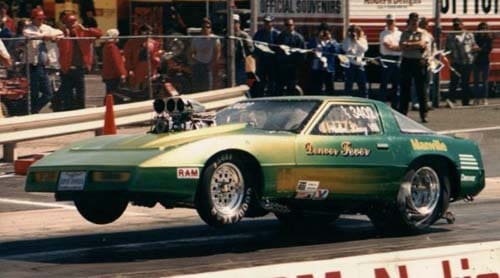
There was Walter Henry, a Vietnam Veteran and Baltimore, Md.-transplant, living in Huntersville, NC, fought tooth and nail for inclusion into the new style of racing being run in his backyard. When the nitrous racers and IHRA Quick Eight racers excluded him, Henry still ran the races and if he had to, he’d bracket race at nearly 200 miles per hour with his jade green Corvette.
“Walter was one of those individuals that didn’t understand the word conservative,” said friend and fellow fast doorslammer racer Charles Carpenter. “He held nothing back and what was on his mind got said. There were no buffers and no restraints. You just had to know Walter to know how he was. He had been through a lot in life and when you understand that, you understand his reasoning into situations in life. He was a true racer and didn’t get the accolades that he deserved.”
SIDEBAR – THE WILD BUNCH AND THEIR CONTRIBUTION
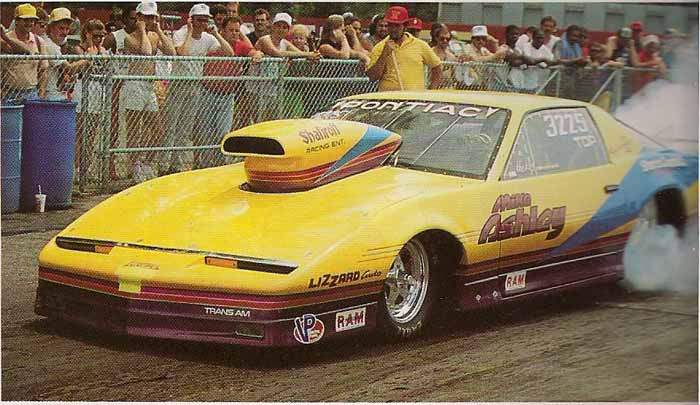
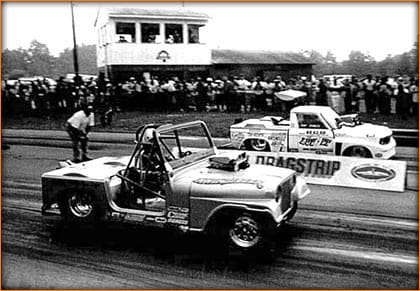
The mere notion of anchoring supercharged, alcohol burning engines within the confines of a full-bodied doorslammer was a practice described as volatile, but that didn’t stop a dedicated group of thrill-seekers from pursuing the rush. Their self-appointed name, the Wild Bunch, was an accurate description of the image they conveyed. How else could you explain a group that would dare bolt a blown, alcohol burning motor into a Chevy Luv Truck, a Nissan 300 ZX or if those weren’t radical enough, a Jeep CJ-5?
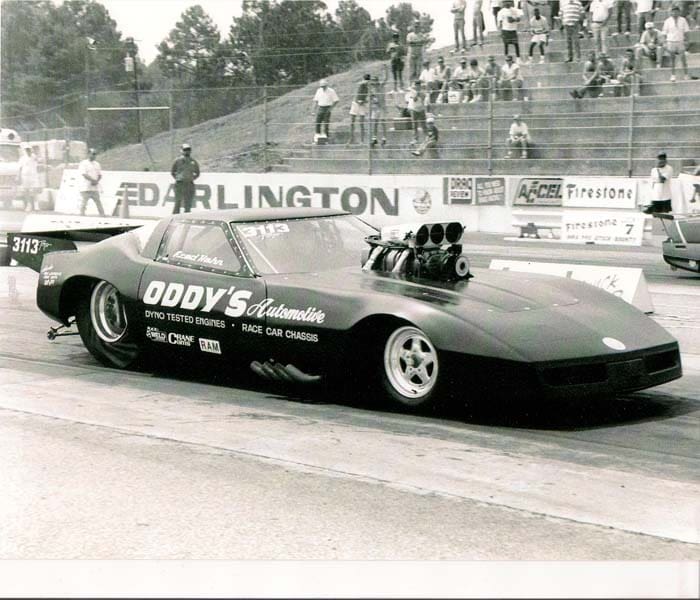
Those accolades went to the other blower racers like Tommy “The Who” Howes and Fred Hahn, driver for longtime supercharged tuner Jim Oddy.
While the nitrous cars were honing in on the first six-second run, it was Howes, a noted member of the Wild Bunch group, running a supercharger, who stepped up making the first six second pass during Top Sportsman qualifying at the IHRA Summer Nationals in Atco, NJ. Almost a year and a half later, during the final IHRA national event of the 1989 season, Hahn stunned the Top Sportsman contingent with a 6.69 elapsed time, almost two tenths quicker than they’d established weeks prior in a Quick Eight during the IHRA U.S. Open Nationals in Darlington, SC. The quickest nitrous car at the time was a mid-6.90.
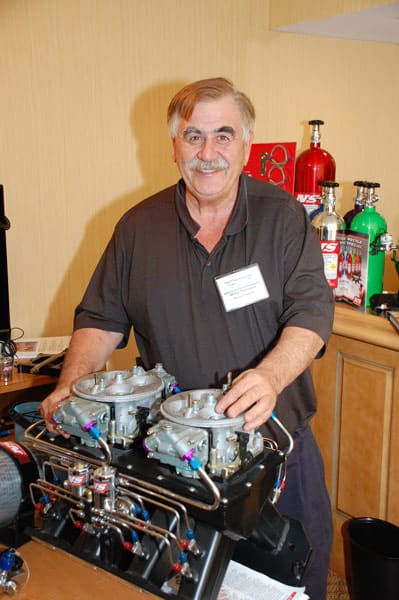
By that point, Mike Thermos, owner of Nitrous Oxide Systems, pointed out that the fast doorslammer movement was headed in a dangerous direction.
“I personally didn’t have anything against Tommy Howes, but we just didn’t want the class to go in that direction,” Thermos admitted. “We wanted the class to be more along the lines of modified Pro Stockers and not BB/Funny Cars. We let the blown guys in and they were fun to battle. I could see the hitters coming in to take the candy away from the kids and that’s why I fought so hard to keep the blower cars out.”
That fight even extended to the Quick Eight events in the southeast and in one of the lesser publicized confrontations Henry was denied Quick Eight participation at an IHRA WCS [points] race in Shuffletown, NC early in 1989.
A group of nitrous racers gathered together to prevent Henry’s participation in the Quick Eight despite his qualification within the eight quickest full-bodied cars in the Top Sportsman eliminator. In the end, the vote favored Henry’s participation by a 5 – 3 margin. Ironically, it was Scotty Cannon, a nitrous racer who detested the supercharged cars from participation, who cast the deciding vote along with the comment, “Even though I believe the blower cars had an unfair advantage, I’m not going to vote to keep a man from racing.”
Many of the racers in those early years tolerated Henry, but those who got to know him understood that while Henry wasn’t a realistic threat to their new style of racing, the potential was there.
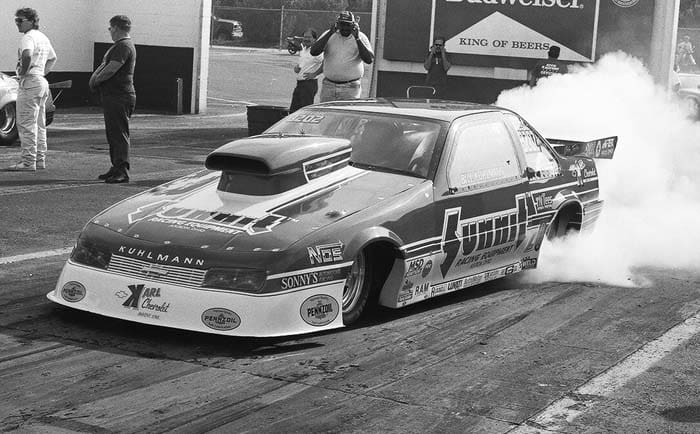
“I was able to see inside of Walter’s program and I will say that he was a pioneer without knowing he was a pioneer. He didn’t have the best equipment and was racing stock Chevrolet blocks and steel heads,” said Bill Kuhlmann, a diehard nitrous advocate in those early days. “Walter was the only guy who would get really mad when he saw an advantage going to a nitrous car. The promoters had to go by the numbers and those numbers favored the nitrous cars. There weren’t many blown cars.”
And because the majority didn’t see Henry as a threat, he gained a foot in the door early on.
“While Walter was a great guy and everyone liked him, because his car wasn’t really competitive, that opened the door,” said Scott Shafiroff, a team owner whose car was driven by Gordy Hmiel. “Those blower cars were different, loud and all over the place. They were a good attraction but they weren’t a threat to overtake anyone out there.”
Ed Hoover said some of those early nitrous and blower debates bordered on fisticuffs.
“I saw it almost come to blows at times,” Hoover admitted. “Whenever you had the majority in the nitrous cars running quite a bit behind the two or three blower cars there, it could get kind of heated. When they let Walter Henry in to run, that just opened the door.”
A NEGATIVE TURNS INTO A HUGE POSITIVE
Mike Thermos gets an overwhelming amount of credit for advancing the fast Top Sportsman doorslammer racers into a professional division. However, for the Huntington Beach, Ca.-based nitrous oxide company owner, what many could have construed as a huge negative turned into positive for his company and especially those fast doorslammers growing in popularity east of the Mississippi River.
Many of the leading nitro-burning Funny Car drivers utilized Thermos’ Nitrous Oxide Systems [NOS] units as a legal part of their combination during the 1982 season. Fearing safety reasons and escalating operating costs the NHRA banned the use of the power adder.
Thermos didn’t fret the sanctioning body’s decision. Instead he took up a new residence with a new style of racing picking up steam on the east coast.
“We were lucky,” Thermos, a former nitro Funny Car team owner, said. “We [he and partner Dale Smith] were just a couple of guys working out of our garage. Getting banned by the NHRA was the best thing that ever happened to us.”
Thermos knew that if nitrous became the widespread trick of the month that a score of the leading manufacturers would adopt a similar product and overwhelm their fledgling company.
Thermos and the NOS group began to focus on other areas where nitrous was legal, namely the American Hot Rod Association Pro Stock division and the IHRA’s quick-progressing Quick 32 program that had changed names four times from 1979 until 1985.
He believed there was something special about nitrous-injected doorslammers and later became enthralled in the progress of the IHRA’s special cars.
“I saw this as the ultimate street-based drag racing category,” said Thermos. “The class had the potential to be a hit because these cars drew from all the manufacturers. It was in our best interests to sponsor this class because they average race fan could go out and buy our product for their street car. It wasn’t like a blown application where they were racers who were going to buy their product anyway. We counted on the racers running well with our product to influence the street-driven consumers the confidence to try our product on their engines.”
Thermos used the performance of those racers to create “hero” ads and it was those promo efforts that created the larger than life images. The leading Top Sportsman racers were being touted in ads alongside those of the leading professional drag racers.
From 1986 until 1989, it was rare to thumb through a drag racing magazine and not see a Thermos-inspired full page advertisement. Thermos even advertised in the fledgling Competition Plus printed magazine, the predecessor to this website.
“We were able to place those ads because the company was doing well,” Thermos said. “We didn’t have to advertise how good our product was.
“We were able to establish ourselves because we were able to go through the backdoor at the IHRA where no one really noticed. Heck, we were just a bunch of hillbillies building these nitrous kits. What they didn’t know is that we were selling millions of dollars worth of nitrous kits to the speed shops. By the time they figured it out, we’d established ourselves.”
That business strength was enough for Thermos to leverage the sanctioning body for a playground to showcase his customer’s talents. That playground was the heads-up, no breakout style shootouts on Saturday night.
Initially, Thermos said the he had to do some selling on the idea of doorslammers other than Pro Stockers racing heads up with no breakout on a pro-tree.
“I flew out there many times to meet with Ted Jones about the Quick Eight stuff and those meetings didn’t happen for one reason or another,” Thermos said. “Finally he provided his blessings for a Quick Four.”
SIDE BAR – PRO MODIFIED ON THE WEST COAST
Pro Modified’s ancestry on the west coast can be traced back to as early as the 1970s and ironically came out of the early Pro Gas movement. And, while scan0001the IHRA has boasted the first of the Top Sportsman style racing, the idea actually begin earlier than that over in the AHRA with the Top Comp division.
But, when it came to heads up fast doorslammers, the Pro Gassers at Redding Dragway fit the bill of an early form of Pro Modified.
Dave Dorman, at Redding Dragway in 1971, staged a Pro Gas event that hosted the likes of Northern California hitters Dave Riolo, Bob Bunker, Tom Thornhill and Wayne Torkelson, four drivers who would be the west coast pioneers of fast doorslammer racing. Prior to that, he booked the group in as an eight-car, no breakout show and called them Pro Gas because in his words, “I could only afford gassers.”
Thermos agreed to pay the winner $500 and while that wasn’t a huge sum of money, it was more than the IHRA was willing to pay at the time.
“Ted put the responsibility of making it all happen in my hands,” Thermos said.
And for Thermos, it was all about show.
“You never knew what you were going to get,” Thermos explained. “One run might have a Willys against a Pro Stock style car and the next might have a blown late model Corvette against a mountain motor ’55 Chevy. There was so much variety in the class and that’s what made it exciting. Every color of the rainbow and style of race car came out of the back of the staging lanes. But I knew as soon as the blown cars were allowed in to compete, that would eventually change the face of the class.”
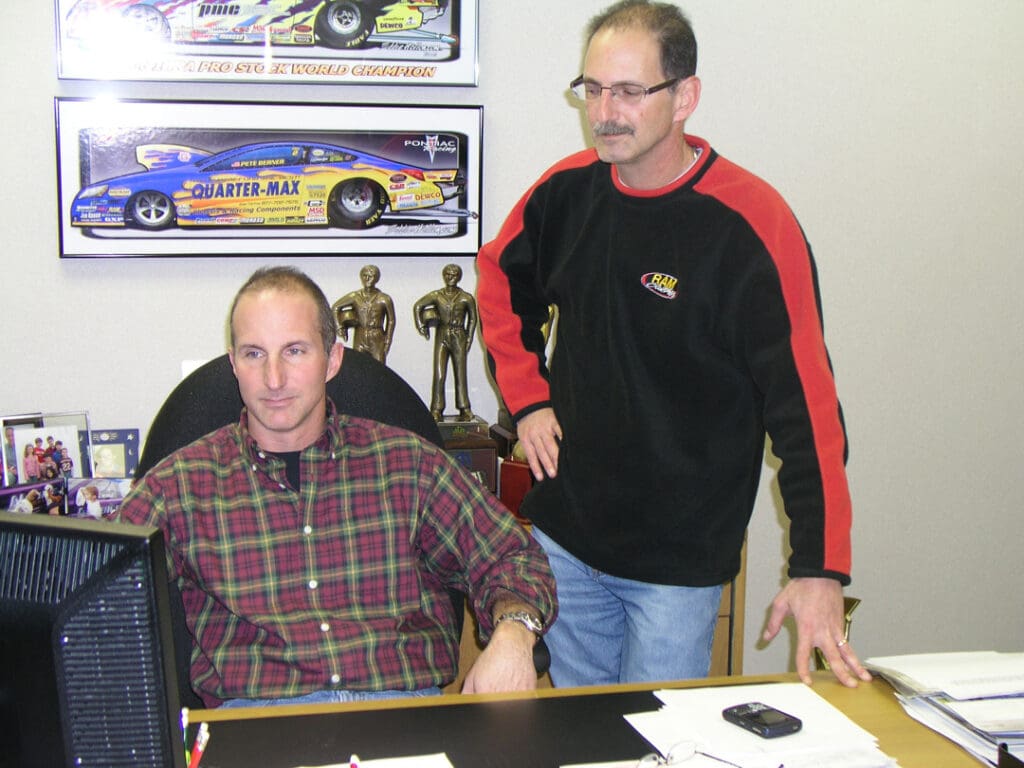
And during a meeting of the racers and the rule makers during the 1989 IHRA Spring Nationals, it was Thermos’ words that would emerge prophetic; at least that’s how Pat Norcia of RAM Clutches sees it.
“Everyone was sympathetic towards Walter Henry because he ran the standard roots blower and big block Chevrolet,” Norcia recalled. “Mike Thermos was adamant about not allowing the blown cars to run a high-helix supercharger and a Hemi. Mike predicted if they let a high-helix in with a Hemi that it would ruin the class. He predicted that a Brad Anderson combination would come in and take over the class. Look what’s happened today.”
WHAT’S IN A NAME?
There were no high level corporate meetings, nor was there a high dollar public relations or advertising agency to create the name. Instead there was an impromptu gathering in the tower late one night during the 1989 IHRA Fall Nationals in Bristol, Tenn. There were two announcers and a high level IHRA official in the then Thunder Valley Dragway tower in Bristol, Tenn., mulling over names of the forthcoming professional doorslammer classification.
The trio was comprised of national event announcers Bret Kepner and Ed O’Reilly and then IHRA VP Ted Jones.
“No one had any real position in the decision making but Ted, and rightfully so because he was the one risking everything,” Kepner said.
So how did Pro Modified become Pro Modified?
The logic of the IHRA’s thought process was based on their three main branches of racing eliminators. There was the stock branch which began with Stock then Super Stock and the professional Pro Stock. The ROD designation was limited to the three indexed-pro tree divisions. Modified was an untapped branch in the professional sense.
There was Modified and at the time, Factory Modified, a heads-up sportsman division based on pounds-per-cubic inch factory. Pro Modified made for the perfect professional extension.
“Pro Modified actually was a name that no one protested in the meetings,” Kepner added. “If someone had protested Pro Modified, the class could have become mountain motor, stump pullers from hell.”
The name stuck.
Other names bantered around included Pro Stalgia, Pro Nostalgia and Pro Outlaw.
“Those names didn’t mean anything but to the three people in that room,” Kepner admitted. “Walk up to your butcher and tell him you run a Pro Stalgia car and guess what his response would have been. At least with the word Modified in there, you had something people could relate to.”
IHRA’s house publication Drag Review launched a name the class competition but in the end, it was Kepner’s name and reasoning that was selected.
Initially the name didn’t go over well with some of the racers, who first heard of the name at an exhibition event in Atco, NJ, showcasing the class as a professional division.
“It was the first place that we ever heard the term Pro Modified,” Kuhlmann said. “I personally didn’t prefer the name. We needed something special. I felt the term Pro this and Pro that was worn out. I always felt like we needed something special and unique like the boats had Thunderboats or World of Outlaws. We just needed something different. Some of those guys who just weren’t marketing minded, took it for what it was.”
“I always felt that the name fit the class,” admitted Ed Hoover. “There were quite a few of us running modified Pro Stock style cars out there. Not everyone had an old ’55 Chevy or something like that. I guess you could have called us Pro Doorslammer but that just didn’t have the kind of impact that Pro Modified did.”
Regardless of what name the new eliminator was given, there were those who didn’t like the idea and the opposition came from the highest level of the sanctioning body.
“I caught the biggest hell from Jim Ruth, the IHRA President,” admitted Jones. “He went nuts after Fred Hahn and Jim Oddy ran that 6.69. All of a sudden that run made the Pro Stockers look slow. I don’t mind telling you that he was on my case big time over that class just by saying the class was going to be considered professional. He just couldn’t handle the name having the designation professional in any part of it.
‘He was afraid that when the Pro Stock class came to the line that everyone would get up and go buy a hotdog if they ran after the Pro Modifieds.”

EXHIBITING THE NEW CLASS, AND THE TRAGEDY THAT ENSUED
There isn’t a mention in the IHRA’s media guide. And in the leading drag racing publications, there were only small blurbs in the news sections.
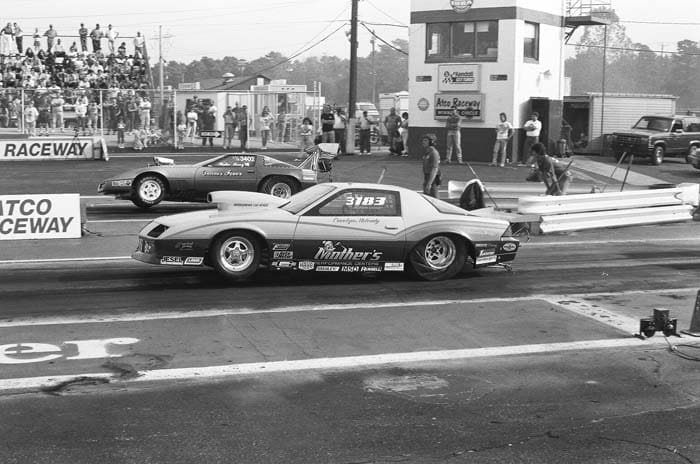
However, to the most diehard of drag racing fans, October 28 and 29, 1989, represents more than just another IHRA World Championship Series points event in Atco, NJ. This event represented an introduction to Pro Modified with a 16-car exhibition event. There were no points at stake, just the honor of earning the No. 1 designation on the winner’s car for the inaugural season and the $4,000 winner’s purse.
Just days earlier, the IHRA had officially announced the name of the class in an issue of Drag Review as well as the rules for the class, and was en route to the printer when the race was being conducted.
The flyer for the event listed the class as simply “Pro 16”.
“Ever since I came on the scene in 1987 and watched Kuhlmann run the 200, I fell into this whole excitement and as a west coast guy, we always had a lot of racing excitement out there,” said Don Gillespie, then a freelance photographer and writer on assignment at the event. “But, seeing this whole thing unfold and the excitement on the faces of those people in an area that didn’t experience a lot of that was priceless. It was really big on a race-to-race basis. This was the center of the drag racing universe for this period of time.”
“When the race started, there was a very positive feeling throughout the place,” added Ted Jones, IHRA VP of Operations. “Everybody was up and excited about the event. We felt like we were on the cusp of something really big.”
However, one run on race day would forever cast a pall on the event.
Walter Henry, one of the proponents of the supercharged combination in the new Pro Modified class, was fatally injured during an elimination run. Multiple witnesses confirmed that Henry lost control of his Corvette when a tire got into the grass recovery area between the track and the retaining wall. His car put tires into the grass and when he wrestled the car back onto the asphalt, it crossed lanes, went airborne and t-boned one of the scoreboard beams. Henry died instantly of massive internal injuries.
Lane Green, in the opposite lane, had experienced tire shake early in the run and lifted. Had he been alongside of Henry, the accident could have been a two-car crash.
What few people knew is that last race was to be the final one for Henry, who had planned to retire and hand over the driving chores to his son Gary.
SIDEBAR – TWO BROTHERS, ONE VISION: THE RAM TOP PERFORMER CHALLENGE
Brothers Pat and Mike Norcia had a vision of what the Top Sportsman doorslammer could be and in the fall of 1987 decided to put their family’s clutch company’s money where their thoughts were. They approached then IHRA Vice President of Operations Ted Jones with a plan of paying a hefty prize to the winner of a Quick Eight shootout comprised of cars that had accrued points throughout the season based on qualifying.
Thus was born the RAM Top Performer Challenge.
“This was about the time the Quick Four and Quick Eight stuff was starting with Mike Thermos and Ted loved the idea for our program,” said Pat Norcia.
The initial plan called for a $5,000 first place prize and the program was open to everyone, including roadsters and dragsters. You had to run what you “brung” and in this case hope you “brung” more than enough.
There is debate amongst the witnesses of the horrific crash whether it was a mechanical issue that kept the car running full throttle in the grass or whether Henry refused to lift. The one thing they all agree on is that the accident was tough to witness.
“I was the first guy down to him and the first one back to his wife,” said Bill Kuhlmann, who jumped on a four-wheeler after sitting back in the staging lanes. “Watching the accident happen and knowing what had transpired, and knowing Walter the way I did – it was tough to race the rest of that day.”
Kuhlmann had grown to become close friends with Henry, a decorated Vietnam Veteran who had served two tours of duty as a helicopter pilot with the 7th Air Cavalry. The rest of the day served as a grim reminder for Kuhlmann how volatile this kind of racing could be.
“Going down that track, and shifting into high gear, I’d look over at that scoreboard pole see the green paint where he impacted,” Kuhlmann added. “It sent the most eerie feeling over me. And usually at the end of the race, it’s the race winner who is one of the last ones to leave.
PART 4 – The first “official” race, Chasing the first championship, Advancements made in technology, The Cannonball Express