
Funny Car rookies don’t get introductions. They get examinations — loud, violent, unforgiving tests that measure not just talent, but durability.
Spencer Hyde learned quickly that the class doesn’t care about potential. It only recognizes those who can survive long enough to become dangerous.
A year ago, Hyde was still searching for comfort in a nitro Funny Car. Now he is beginning to shape his own competitive identity, one built less on flash and more on resilience.
“Funny Cars are hard to drive,” Hyde said after making them look manageable on a furnace-like opening day at Firebird Motorsports Park.
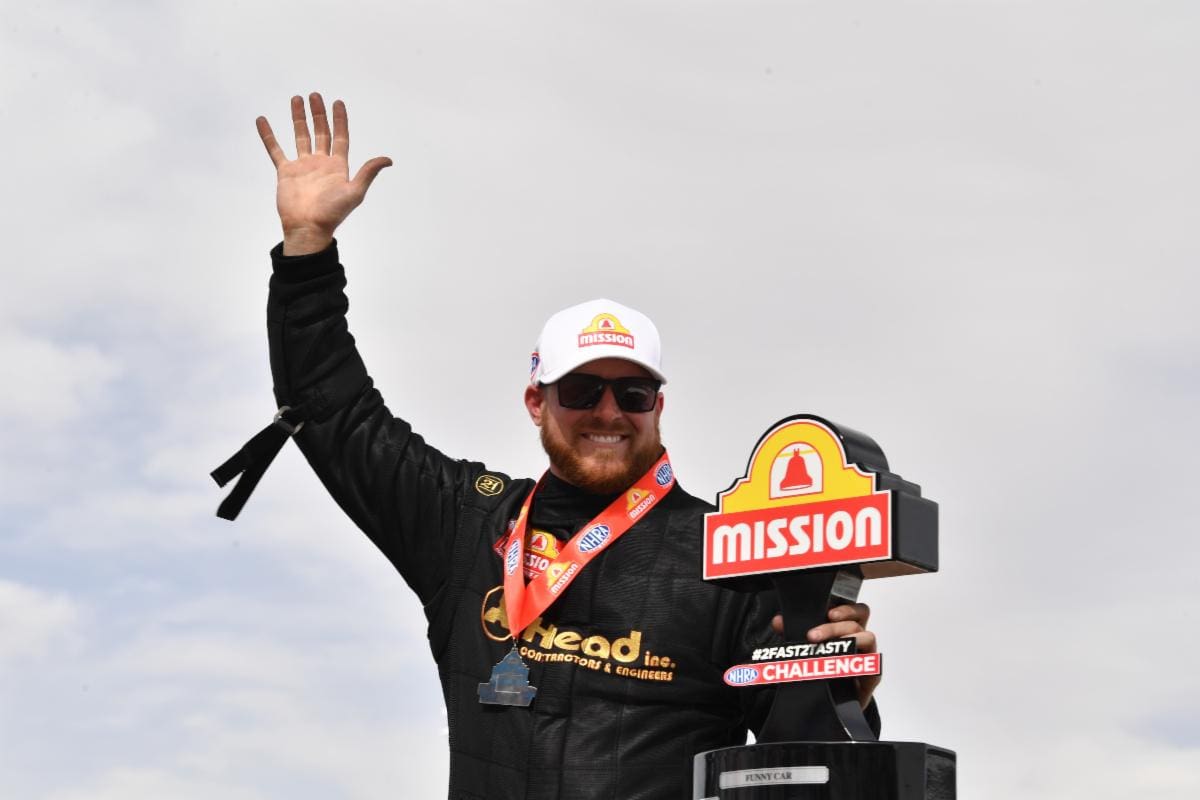
That reality remains unchanged even as his results improve. Hyde’s second career No. 1 qualifying effort at the NHRA Arizona Nationals was not a breakthrough moment as much as it was a confirmation of steady evolution.
The performance reflected months of hard lessons absorbed under the guidance of veteran owner and crew chief Jim Head. In an era driven by engineering aggression and corporate expectations, Head remains a reminder that nitro racing was once defined by survival first, speed second.


Hyde’s rookie season began with DNQs that threatened to define him before he had the opportunity to define himself. Those early missteps were as much about unfamiliarity as they were about the brutal pace of the Funny Car learning curve.
The transition from Pro Modified competition demanded new instincts and a willingness to accept discomfort. Hyde was forced to recalibrate how he reacted to a car that behaved less like a machine and more like a living force.
“We should have qualified fourth or fifth in Gainesville,” Hyde said. “It was just an unfortunate event that’s up to inexperience.”
Those experiences formed the foundation of his development. Rather than being discouraged, Hyde embraced the discomfort as part of a larger education.
The process was accelerated by Head’s uncompromising expectations. His approach reflects decades of observation in a class where overconfidence has often been punished.
“I think pretty good,” Hyde said of their working relationship. “We hit it off personality wise right away.”
Head’s reputation for blunt communication has long preceded him. Hyde learned quickly that understanding the intent behind the words mattered more than the delivery.
“People take what he says a little bit too personal,” Hyde said. “But he’s one of the smartest people I’ve ever met.”
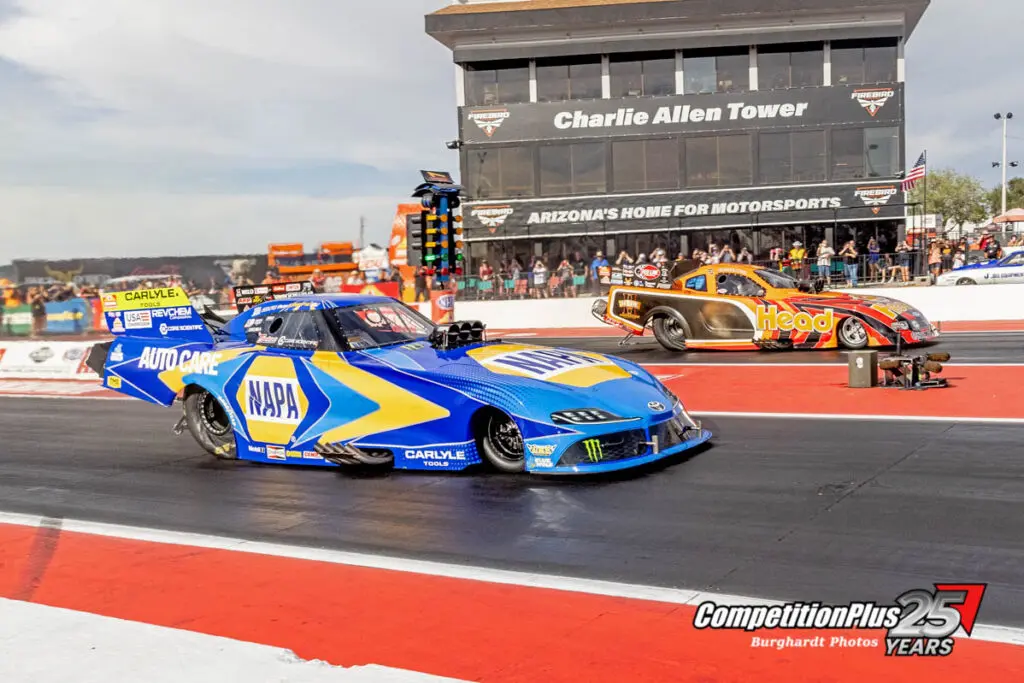
Head’s philosophy emphasizes durability in ways that sometimes run counter to modern performance trends. In an environment where top-end speed often defines headlines, he prioritizes structural integrity and calculated risk.
The result is a Funny Car program that occasionally appears conservative on the time sheet but remains competitive over the course of an event. Hyde’s car carries additional safety components that add weight, a deliberate tradeoff rooted in experience.
“Our car’s a hundred pounds overweight because we have things in there that are just safer,” Hyde said. “Jim wants it that way.”
That discipline has produced consistency rather than volatility. Hyde has learned that longevity in nitro racing often comes from restraint rather than ambition.
The approach has also helped shape him into a driver who processes information before reacting. In Funny Car, that ability can be the difference between surviving a run and simply enduring it.
Hyde’s career path differs from many of his peers in ways that extend beyond technical philosophy. His responsibilities outside the cockpit reinforce a blue-collar mindset that influences how he approaches racing.
Unlike fully funded drivers whose schedules revolve around sponsorship activation, Hyde continues to balance competition with his family’s construction business in Canada. The dual commitment creates a rhythm that demands efficiency and focus.
“I left Phoenix on a red-eye Sunday night and went right from the airport to the office,” Hyde said. “That’s just how I have to do it.”
The contrast with more corporate-backed programs is evident. Hyde recognizes the value of promotional obligations while acknowledging that his current reality requires a different approach.
“I look at a guy like Ron Capps and Maddi Gordon,” Hyde said. “The stuff they do through the week for their sponsors is amazing.”
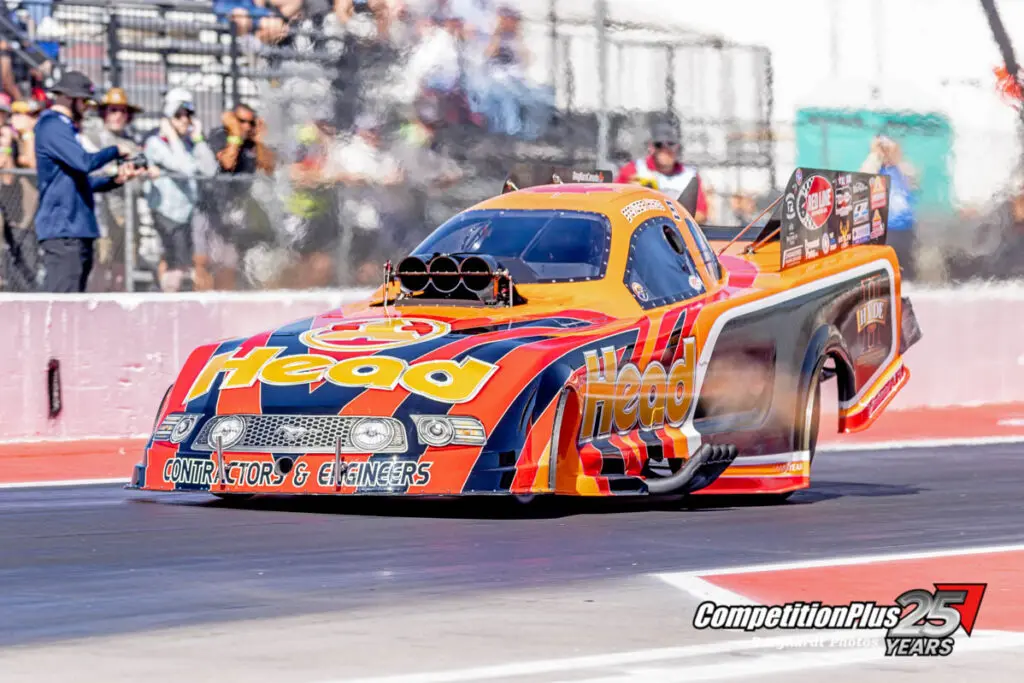
On track, Hyde’s reputation is evolving from promising newcomer to specialist in adverse conditions. Hot, low-grip surfaces such as those encountered in Phoenix reward drivers who can maintain composure while others chase performance.
He has begun to demonstrate an ability to manage chaos rather than fight it. That skill set, developed through repetition and experience, has become a defining characteristic of his sophomore campaign.
“I would like to think so,” Hyde said when asked if he thrives on difficult tracks. “But there’s some good drivers out there.”
The acknowledgement reflects both humility and awareness of the competition. Funny Car remains one of the most talent-dense categories in professional motorsports.
“You look at Austin Prock … J.R. Todd’s really good. Ron Capps is really good. Hagan’s really good,” Hyde said. “I like to believe that I can drive them as good as anybody.”
Confidence has grown incrementally with each run. Hyde estimates it required dozens of passes before the unpredictable behavior of the car became something he could anticipate rather than fear.
“It took me 40 or 50 runs to really get comfortable,” he said. “Now everything feels the way it should.”

The statistical trajectory supports the narrative of progression. Hyde has already accumulated four round wins in the opening two races of the current season, surpassing the pace he established as a rookie.
Last year it took seven events to reach that milestone. By season’s end, he had secured a Countdown berth and a top-10 finish in points.
“We ended up in the top 10 and finished ninth,” Hyde said. “Happy overall with the progression.”
Those results have recalibrated expectations entering his second full campaign. Hyde now approaches each event with the belief that he can compete with the category’s established leaders rather than simply survive their pace.
“We’re second in points right now and one round out of first,” Hyde said. “So it’s all good.”

In Funny Car, survival is often the first victory. For Spencer Hyde, survival has evolved into belief — the kind forged through discomfort and sustained by discipline.
The lessons learned the hard way now shape how he approaches every round, especially when the racetrack becomes hostile and outcomes are decided by composure rather than horsepower. Hyde understands those moments require more than confidence.
“When the track gets hot and greasy, these things move around like crazy,” Hyde said. “There’s not a lot you can do but try and keep them in the middle.”
Hyde no longer measures success by simply qualifying. The objective now is execution when the margin for error shrinks and instinct becomes the most valuable asset a driver can possess.
“I know that I’m a good driver,” Hyde said. “I just don’t like to spout off about it.”
Funny Cars are not machines a driver conquers. They are forces that demand respect, and Hyde has learned that long-term success depends less on domination than on coexistence.
“You don’t conquer Funny Cars,” Hyde said. “You just get better at living with them.”