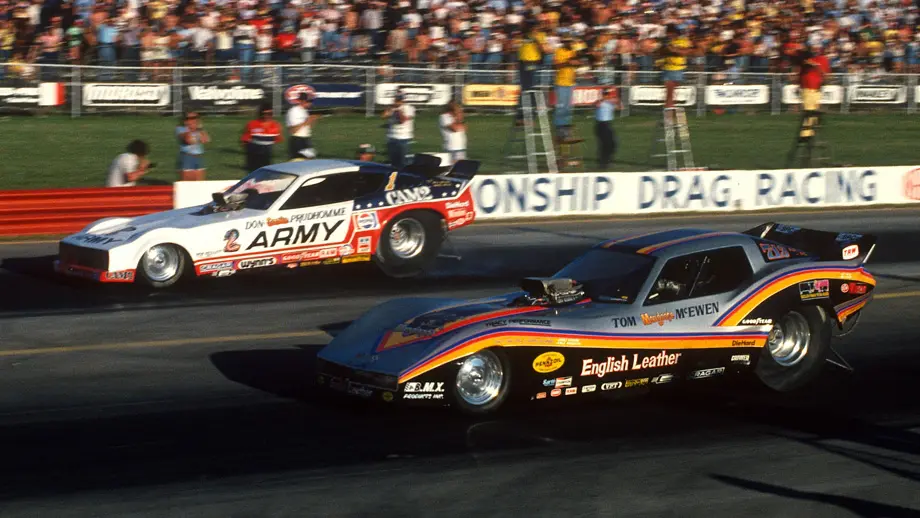

Don “The Snake” Prudhomme didn’t set out to build history. He was too busy chasing win lights to realize he and a handful of racers were laying the groundwork for a class that would one day reach 1,000 races. This weekend at In-N-Out Burger Pomona Dragstrip, the NHRA’s Funny Car category reaches that milestone, a number that reflects longevity but doesn’t fully capture the culture that created it.

For Prudhomme, the significance isn’t tied to the number as much as what it represents — a transformation from barnstorming show to corporate-backed spectacle. “I’ll tell you what’s really great for me is with this whole Funny Car thing first started, Mongoose and myself, we were very much involved with it, when I look back on it, it was really great times,” Prudhomme said. “There’s a lot that has changed since then, they have 10, 15 on a car, crew members that are getting paid and crew chiefs that are making a fortune. Nobody got paid in our day. To see a 1000th race come around, it’s pretty impressive.”

That contrast defines how Prudhomme measures the sport’s evolution, not as a loss, but as a trade-off. What once thrived on personality and hustle has become a technical, high-dollar operation built on precision and sustainability. “But I’m probably more impressed with the young people and so on that’s been able to make a living out of the sport because of… I’d have to see because of what Mongoose did when he brought Hot Wheels into drag racing,” Prudhomme said, pointing to the moment Funny Car became more than just a traveling show.

Still, Prudhomme doesn’t romanticize the past without acknowledging its grit. He remembers it as unpredictable and raw, where access to the fans mattered as much as performance on the track. “On Facebook and all that stuff, I look at pictures in there. I forget that I even owned the cars. I mean, I’ve had so many. I’ve had a hell of a run,” Prudhomme said. “I mean, more than anything for me in drag racing, is I don’t like it nearly as much. I like all the guys and the Beadles and the Mongooses and the Jungle Jims and all those guys that started.”

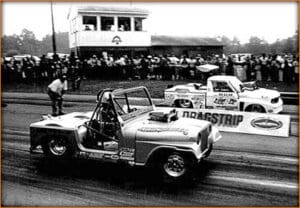
Those early years were built far from national events, shaped instead on small tracks across the country where racers brought the show directly to the fans. Prudhomme said those barnstorming days defined Funny Car’s popularity and helped establish its identity. “I think what made us so popular is because we went to these little tracks all around the country. We’d run 70 dates sometimes,” Prudhomme said. “And we’d put on a show in some little chicken s*** drag strip with no guardrails, but we raced each other and put on a hell of a show.”

That connection created what Prudhomme describes as something deeper than a fan base. It became a culture that carried the class forward through decades of change. “Funny cars by far were the most popular class by far,” Prudhomme said. “Yeah, that’s a good way to put it. Yeah. Yeah. We were, yeah, cult following. Yeah, pretty much.”


If there’s one element Prudhomme believes has faded, it’s not the speed or the competition, but the theater that once defined Funny Car. He points to the showmanship — the burnouts, the flames, the unpredictability — as the heartbeat of the class during its rise. “I’ll be honest with you, man. I was watching a film the other day of the Blue Max racing against Bruce Larson,” Prudhomme said. “Both of them did these badass burnouts with flames coming out the pipes and they’re backing up, bah, bah, bah.”

That memory still resonates with him decades later, not because of the result, but because of the experience it created. “They go back to the starting line and come forward and do a dry burnout out there. And, f***, I got chills on my arm from it. It’s like, D***, that’s cool,” Prudhomme said. “Then come back and put some glue down the tires and hit it again. That’s what made funny car racing.”

Modern Funny Car operates under a different reality, one driven by precision and cost control. Prudhomme acknowledges the technical advancements but draws a clear line between eras. “I don’t miss this stuff with the clutch disk are so important. The clutch disk are so important so the guys start the car up, they got to push them into the water box,” Prudhomme said. “They don’t want to get any heat on the clutch. When we did it, we effin’ murdered the clutch. So it’s apples and oranges.”

That evolution has created opportunity, but it has also raised the barrier to entry. The sport that once thrived on hustle now requires substantial backing to compete at the highest level. “I’m glad they’re having a good time. I’m glad that… I hate that the cost of racing now is so ridiculous that you got to be a millionaire to participate,” Prudhomme said.

That bridge between eras is where Tim Wilkerson now stands, having lived one chapter as a driver and now writing another as a tuner and father. He won the 500th Funny Car race, a milestone that barely registered at the time because of the weekly grind of competition. “To tell you the truth, I really never thought about it. You’re there every weekend racing, trying to do the best you can for the team and the sponsors,” Wilkerson said. “It’s just part of it.”

Now, the 1,000th race carries a different meaning, especially with his son Daniel in position to compete for it. The possibility of a first career win aligning with a historic milestone is not lost on him. “Oh, God. Yeah, we’ll lose it, that’s for sure,” Wilkerson said. “So you hate to say that miracles happen, but it would probably be a miracle, but we’re going to win one someday.”

The emotion behind that moment is balanced by the reality of the sport, where success is earned in small increments. Wilkerson understands both sides, having experienced the highs and now guiding the next generation. “I hope I can stay alive long enough to see it happen,” he added.

Even without driving, Wilkerson hasn’t lost his edge. He remains deeply involved in the performance side, pushing his son with the same intensity he once applied to himself. “Oh yeah. No, I’m up his ass, believe me. Yeah, I don’t let him off the hook,” Wilkerson said. “I show him runs that I made all the time… if I’d string a half a dozen of them together, I’d get my ET slips out and say, ‘Look at this.’”

That dynamic reflects a blend of mentorship and competition, rooted in a lifelong passion for speed. “You can’t fake going 330 miles an hour. That’s a cool thing to get to do,” Wilkerson said. “But really, I’ve just always been a motorhead.”

That same passion carries into the current generation, where drivers like Ron Capps represent both continuity and evolution within Funny Car. Entering Pomona, Capps understands the significance of the moment, not just as a competitor, but as someone who has witnessed the sport’s growth firsthand. “We’ve talked about celebrating 75 years of NHRA in 2026 for quite some time now,” Capps said. “And I can’t think of a track with more legacy or that better signifies the history of our sport than Pomona.”

The alignment of venue and milestone adds another layer to an already historic event. For Capps, it’s an opportunity to become part of the same lineage he grew up watching. “How cool that it lines up where this weekend is the 1,000th Funny Car race,” Capps said. “I’ve been lucky enough to not only be a part of some of the big ones, but also to have had a front row seat to some incredible matchups.”

Those matchups include names like Prudhomme, whose influence still shapes the class today. The connection between generations remains one of Funny Car’s defining traits, even as the sport continues to evolve. “The Winternationals is one of the most historic events, so you really couldn’t have drawn it up better,” Capps said.

In the end, the 1,000th Funny Car race isn’t defined by who wins it. It’s defined by how it got here, carried forward by racers who built it, sustained it, and continue to shape it.

“That’s what made funny car racing,” Prudhomme concluded.

Share the Insights?

Click here to share the article.

ad space x ad space

ad space x ad space

Competition Plus Team

Since our inception, we have been passionately dedicated to delivering the most accurate, timely, and compelling content in the world of drag racing. Our readers depend on us for the latest news, in-depth features, expert analysis, and exclusive interviews that connect you to the sport’s pulse.

Sign up for our newsletters and email list.

This field is for validation purposes and should be left unchanged.
Name

FROM SHOWMANSHIP TO SURVIVAL: FUNNY CAR’S 1,000TH RACE BUILT ON THE FOUNDATION OF THE LEGENDS

Don “The Snake” Prudhomme didn’t set out to build history. He was too busy chasing win lights to realize he and a handful of racers were laying the groundwork for a class that would one day reach 1,000 races. This weekend at In-N-Out Burger Pomona Dragstrip, the NHRA’s Funny Car category reaches that milestone, a number that reflects longevity but doesn’t fully capture the culture that created it.

For Prudhomme, the significance isn’t tied to the number as much as what it represents — a transformation from barnstorming show to corporate-backed spectacle. “I’ll tell you what’s really great for me is with this whole Funny Car thing first started, Mongoose and myself, we were very much involved with it, when I look back on it, it was really great times,” Prudhomme said. “There’s a lot that has changed since then, they have 10, 15 on a car, crew members that are getting paid and crew chiefs that are making a fortune. Nobody got paid in our day. To see a 1000th race come around, it’s pretty impressive.”

That contrast defines how Prudhomme measures the sport’s evolution, not as a loss, but as a trade-off. What once thrived on personality and hustle has become a technical, high-dollar operation built on precision and sustainability. “But I’m probably more impressed with the young people and so on that’s been able to make a living out of the sport because of… I’d have to see because of what Mongoose did when he brought Hot Wheels into drag racing,” Prudhomme said, pointing to the moment Funny Car became more than just a traveling show.

Still, Prudhomme doesn’t romanticize the past without acknowledging its grit. He remembers it as unpredictable and raw, where access to the fans mattered as much as performance on the track. “On Facebook and all that stuff, I look at pictures in there. I forget that I even owned the cars. I mean, I’ve had so many. I’ve had a hell of a run,” Prudhomme said. “I mean, more than anything for me in drag racing, is I don’t like it nearly as much. I like all the guys and the Beadles and the Mongooses and the Jungle Jims and all those guys that started.”

Those early years were built far from national events, shaped instead on small tracks across the country where racers brought the show directly to the fans. Prudhomme said those barnstorming days defined Funny Car’s popularity and helped establish its identity. “I think what made us so popular is because we went to these little tracks all around the country. We’d run 70 dates sometimes,” Prudhomme said. “And we’d put on a show in some little chicken s*** drag strip with no guardrails, but we raced each other and put on a hell of a show.”

That connection created what Prudhomme describes as something deeper than a fan base. It became a culture that carried the class forward through decades of change. “Funny cars by far were the most popular class by far,” Prudhomme said. “Yeah, that’s a good way to put it. Yeah. Yeah. We were, yeah, cult following. Yeah, pretty much.”
If there’s one element Prudhomme believes has faded, it’s not the speed or the competition, but the theater that once defined Funny Car. He points to the showmanship — the burnouts, the flames, the unpredictability — as the heartbeat of the class during its rise. “I’ll be honest with you, man. I was watching a film the other day of the Blue Max racing against Bruce Larson,” Prudhomme said. “Both of them did these badass burnouts with flames coming out the pipes and they’re backing up, bah, bah, bah.”

That memory still resonates with him decades later, not because of the result, but because of the experience it created. “They go back to the starting line and come forward and do a dry burnout out there. And, f***, I got chills on my arm from it. It’s like, D***, that’s cool,” Prudhomme said. “Then come back and put some glue down the tires and hit it again. That’s what made funny car racing.”

Modern Funny Car operates under a different reality, one driven by precision and cost control. Prudhomme acknowledges the technical advancements but draws a clear line between eras. “I don’t miss this stuff with the clutch disk are so important. The clutch disk are so important so the guys start the car up, they got to push them into the water box,” Prudhomme said. “They don’t want to get any heat on the clutch. When we did it, we effin’ murdered the clutch. So it’s apples and oranges.”

That evolution has created opportunity, but it has also raised the barrier to entry. The sport that once thrived on hustle now requires substantial backing to compete at the highest level. “I’m glad they’re having a good time. I’m glad that… I hate that the cost of racing now is so ridiculous that you got to be a millionaire to participate,” Prudhomme said.
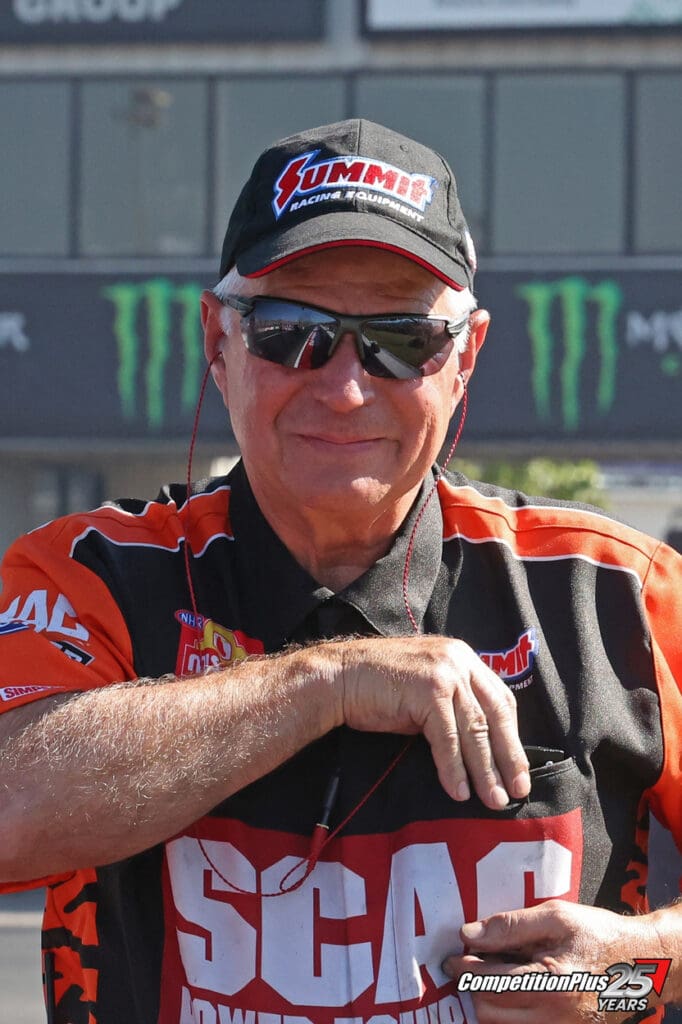
That bridge between eras is where Tim Wilkerson now stands, having lived one chapter as a driver and now writing another as a tuner and father. He won the 500th Funny Car race, a milestone that barely registered at the time because of the weekly grind of competition. “To tell you the truth, I really never thought about it. You’re there every weekend racing, trying to do the best you can for the team and the sponsors,” Wilkerson said. “It’s just part of it.”

Now, the 1,000th race carries a different meaning, especially with his son Daniel in position to compete for it. The possibility of a first career win aligning with a historic milestone is not lost on him. “Oh, God. Yeah, we’ll lose it, that’s for sure,” Wilkerson said. “So you hate to say that miracles happen, but it would probably be a miracle, but we’re going to win one someday.”

The emotion behind that moment is balanced by the reality of the sport, where success is earned in small increments. Wilkerson understands both sides, having experienced the highs and now guiding the next generation. “I hope I can stay alive long enough to see it happen,” he added.

Even without driving, Wilkerson hasn’t lost his edge. He remains deeply involved in the performance side, pushing his son with the same intensity he once applied to himself. “Oh yeah. No, I’m up his ass, believe me. Yeah, I don’t let him off the hook,” Wilkerson said. “I show him runs that I made all the time… if I’d string a half a dozen of them together, I’d get my ET slips out and say, ‘Look at this.’”

That dynamic reflects a blend of mentorship and competition, rooted in a lifelong passion for speed. “You can’t fake going 330 miles an hour. That’s a cool thing to get to do,” Wilkerson said. “But really, I’ve just always been a motorhead.”
That same passion carries into the current generation, where drivers like Ron Capps represent both continuity and evolution within Funny Car. Entering Pomona, Capps understands the significance of the moment, not just as a competitor, but as someone who has witnessed the sport’s growth firsthand. “We’ve talked about celebrating 75 years of NHRA in 2026 for quite some time now,” Capps said. “And I can’t think of a track with more legacy or that better signifies the history of our sport than Pomona.”

The alignment of venue and milestone adds another layer to an already historic event. For Capps, it’s an opportunity to become part of the same lineage he grew up watching. “How cool that it lines up where this weekend is the 1,000th Funny Car race,” Capps said. “I’ve been lucky enough to not only be a part of some of the big ones, but also to have had a front row seat to some incredible matchups.”

Those matchups include names like Prudhomme, whose influence still shapes the class today. The connection between generations remains one of Funny Car’s defining traits, even as the sport continues to evolve. “The Winternationals is one of the most historic events, so you really couldn’t have drawn it up better,” Capps said.

In the end, the 1,000th Funny Car race isn’t defined by who wins it. It’s defined by how it got here, carried forward by racers who built it, sustained it, and continue to shape it.

“That’s what made funny car racing,” Prudhomme concluded.

Picture of John Doe

John Doe

Lorem ipsum dolor sit amet consectetur adipiscing elit dolor

More Posts

Send Us A Message

Picture of Bobby Bennett
Bobby Bennett
Thank you for joining us on this journey. Your support and trust inspire us every day to deliver the best in drag racing journalism. We are excited about the future and look forward to continuing to serve you with the same dedication and passion that has defined CompetitionPlus.com from the very beginning.

Don’t miss these other exciting stories!

Explore more action packed posts on Competition Plus, where we dive into the latest in Drag Racing News. Discover a range of topics, from race coverage to in-depth interviews, to keep you informed and entertained.