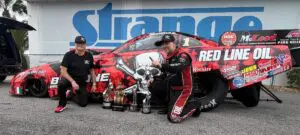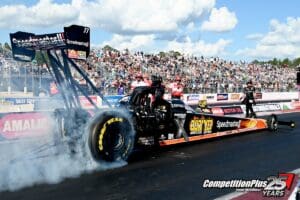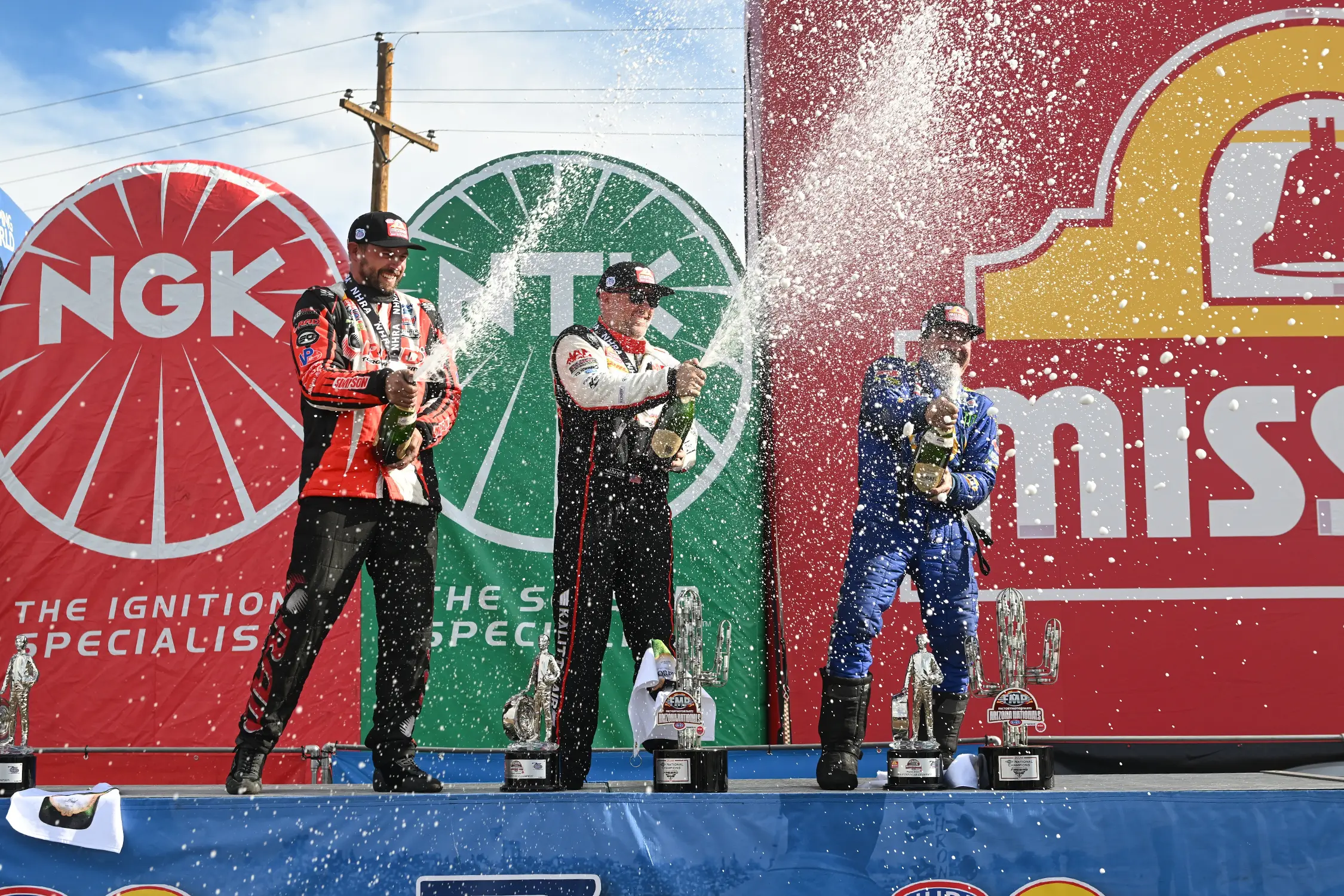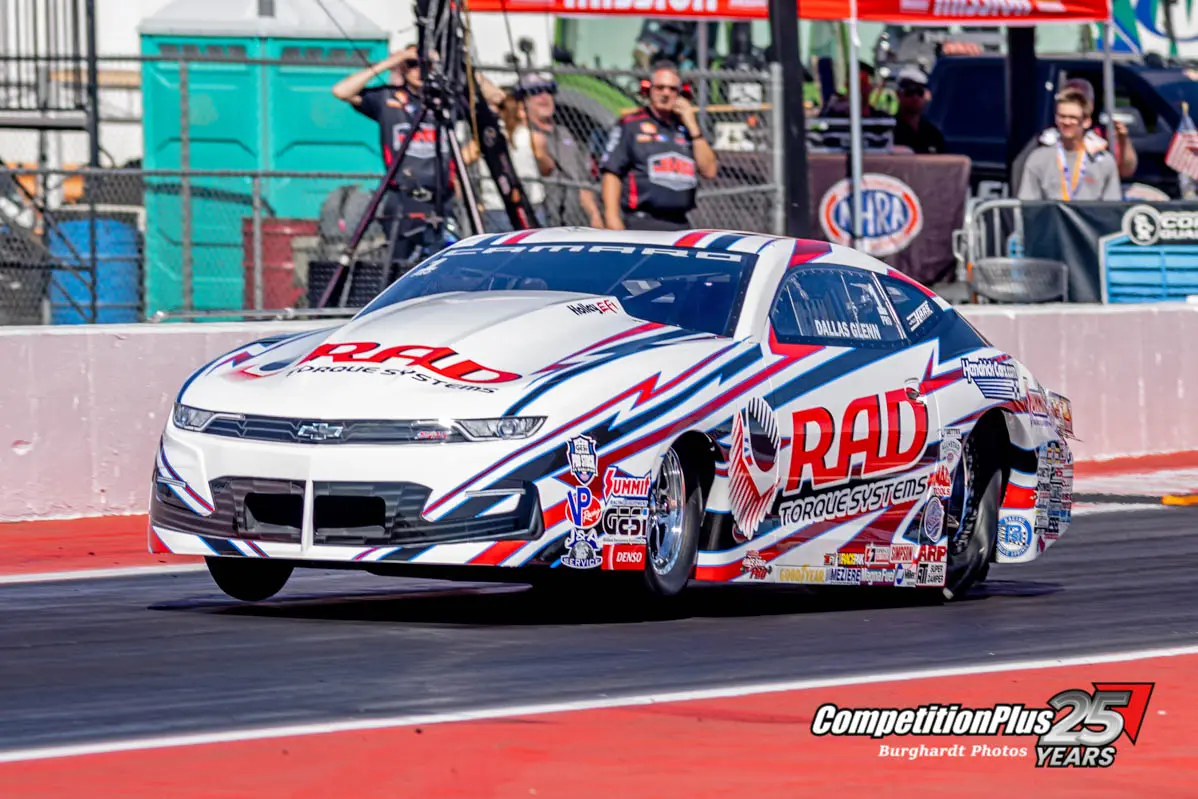
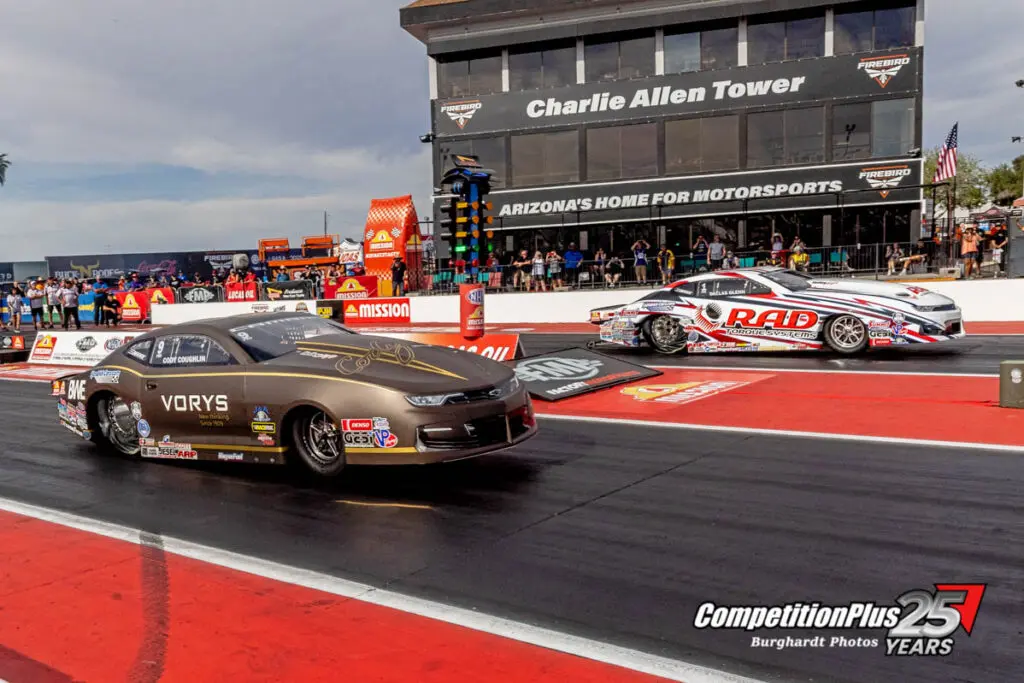
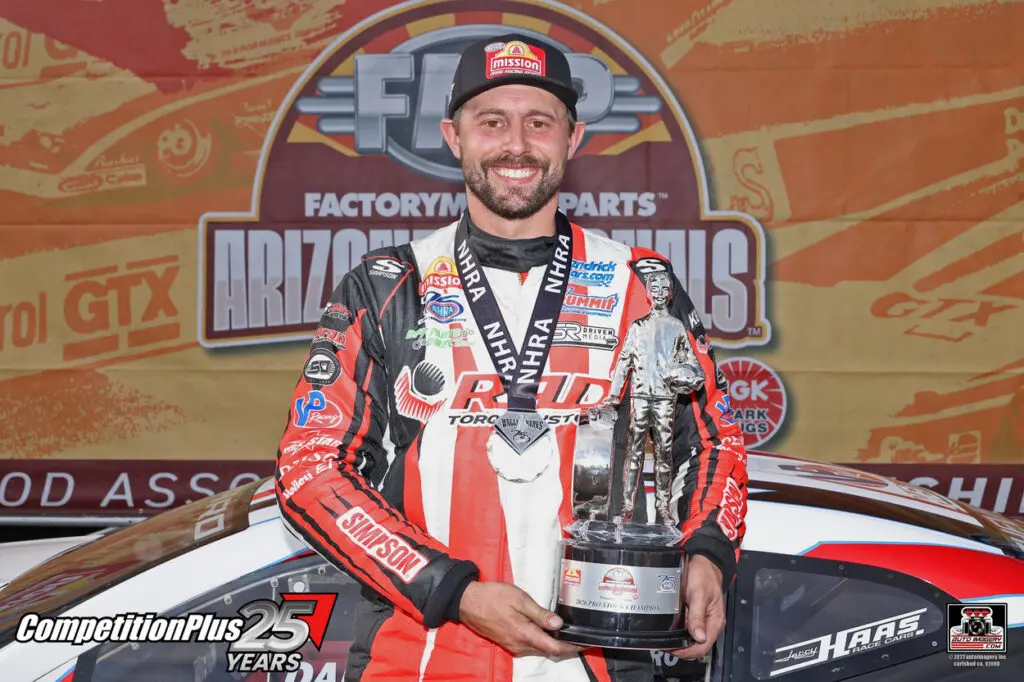
Dallas Glenn erased the sting of last year’s final-round disappointment at Firebird Motorsports Park, delivering a wire-to-wire Pro Stock victory Sunday at the NHRA Arizona Nationals. The reigning world champion posted a 6.627-second pass at 206.39 mph in his RAD Torque Systems Chevrolet Camaro to defeat Cody Coughlin and secure his first win of the 2026 season.
The triumph capped a clean sweep for Glenn, who also captured the Mission #2Fast2Tasty Challenge on Saturday. His performance underscored the consistency that has defined his rapid ascent within the Pro Stock ranks.
A year removed from a red-light loss to KB Titan Racing teammate Greg Anderson in Phoenix, Glenn showed no signs of hesitation on race day. He cut a .027 reaction time in the final round and maintained control from launch to finish.
The victory marked Glenn’s first career win at the Phoenix facility and the 22nd of his career. It also propelled him into the points lead during NHRA’s 75th anniversary season.
Glenn advanced to the final by defeating Stephen Bell, Matt Latino and Greg Stanfield. He recorded the quickest elapsed time in each of the final three elimination rounds.
His ability to perform under punishing desert conditions highlighted both driver discipline and team execution. Temperatures throughout the weekend challenged competitors across the professional categories.
“It feels really good,” Glenn said. “Last year was very ugly and it was all caused by a mistake on my part and then my malfunction on Greg’s part. So to come here and do a much better job for the fans, I don’t know how they can sit out there in that heat. At least I get shade and some AC back at the pit.”
Glenn acknowledged Phoenix had been a target event since the start of the season. The presence of commemorative trophies celebrating NHRA’s milestone year added motivation.
“I was looking at the … When we were right before driving here and I was like, okay, I definitely screwed up last year and I really want to win Phoenix,” Glenn said. “I’ve never won there before. At least never won the Phoenix race at Phoenix.”
He added that the prospect of collecting a special 75th-anniversary Wally trophy carried added significance. The victory allowed him to settle into the season with reduced internal pressure.
“So take the pressure off for the rest of the season,” Glenn said. “I definitely feel like I have a lot less pressure on me this year. I feel way more relaxed on race day.”
Glenn emphasized the importance of maintaining composure while balancing competitive expectations. His focus remains on executing rounds rather than dwelling on championship implications.
“I know what I can do and just trying to go out there and have fun and click some rounds off,” he said.
The weekend’s high temperatures created a technical challenge for drivers and crew chiefs. Track conditions evolved rapidly as heat reduced available traction.
“Well, I mean, obviously the track gets super hot and greasy and the grip goes down,” Glenn said. “The crew chiefs definitely struggle to make sure the cars go down the track.”
Glenn pointed to unpredictable matchups and altered tuning strategies as evidence of the demanding environment. Teams were forced to balance performance ambitions against the need for stability.
“They want to go as fast as they can but they need to back it down to make sure that it goes down,” Glenn said. “Because they’re backing it down and taking gear and clutch and leave and moving weight, it makes the cars react slower.”
The resulting changes affected driver timing and rhythm. Adjustments to gearing and clutch application required constant recalibration behind the wheel.
“When all of a sudden everything kind of gets all out of sync and out of whack, it definitely challenges you,” he said. “But it’s a constant battle.”
Glenn credited the collective experience of Pro Stock crew chiefs for navigating the weekend’s difficulties. He noted that his car improved as track temperatures climbed.
“I felt like the hotter it got the better my car got,” Glenn said.
Managing physical endurance also became a factor for drivers competing in multiple elimination rounds. Hydration and preparation were essential to maintaining concentration.
“Yeah, you definitely learn how to stay hydrated,” Glenn said. “I don’t know how much water I’ve had today, but it’s been a lot.”
He compared the dry desert heat to more humid racing environments, noting differences in how conditions impact driver fatigue. The experience reinforced the importance of preparation and adaptability.
“I don’t feel like I sweat as much as when it’s 85, like in Gainesville,” Glenn said. “Either that or I kind of just fried everything and now I’m just kind of a little more used to it.”
Glenn referenced past incidents in the category as reminders of the risks posed by extreme conditions. The lessons inform both his physical preparation and on-track strategy.
“You need to make sure that you stay cool, you stay hydrated,” he said. “You don’t want to have any episodes like Justin Ashley did a few years ago.”
The Phoenix surface also created scenarios where driver skill became increasingly decisive. Reduced traction heightened the likelihood of throttle management battles.
“Whenever the track goes away this much and there’s always that risk of having a classic pedal fest in Pro Stock,” Glenn said. “It definitely makes it harder to cut a light.”
Reaction-time averages across the field reflected the challenging environment. Glenn viewed the circumstances as an opportunity to rely on experience and adaptability.
“As long as you see the tree, you see the light come on you, there’s really no risk of being red,” he said. “So it’s just a matter of trying to figure out how can I get off this pedal as fast as possible.”
Even with the demanding conditions, Glenn delivered one of the day’s sharpest reaction times in the final. He considered the performance relative to the slower early-round track conditions.
“When they told me I was 27, I mean, honestly, I thought I killed it in the semis and they told me I was 40,” Glenn said. “I was like, ‘What do I got to do?’”
He explained that reaction times must be evaluated within the context of track performance and setup adjustments. Under better conditions, the same reaction might register more competitively.
“If I take that same exact reaction time, but maybe first round or a session where the conditions are far better, then that 027 turns into a low teen,” Glenn said.
Looking ahead, Glenn remains focused on sustaining momentum through the remainder of the season. His confidence has grown following his 2025 championship breakthrough.
“Oh, definitely,” Glenn said. “I’ve kind of shown, even though I’ve always known that I could do it, but now I’ve shown myself that I can do it.”
He emphasized the continued development of his team’s equipment and preparation. Small performance gains remain a priority as competition tightens.
“Everybody at the shop works so hard and we’ve still managed to make small gains,” Glenn said. “So hopefully we can continue to improve and continue to carry the momentum and just keep having fun.”
Coughlin, who reached his second career final round after defeating Eric Latino, Chris McGaha and Jeg Coughlin Jr., left Phoenix still searching for his first victory. Glenn, meanwhile, departed with both redemption and renewed belief in his championship defense.