
Originally published April 2009 | Updated for archival republication following Force’s 2025 retirement
Even now, John Force still signs plenty of autographs.
The lines are shorter than they once were and the pace slower, but the scene remains familiar. Fans still gather at the rope line, waiting patiently for a moment with a driver who reshaped drag racing for more than four decades.
There was a time when those ropes barely held. Eight fans deep, sometimes more, arms stretched forward as Force moved methodically down the line, sharpie in hand, carrying expectation and gratitude in equal measure.
Long before his June 2024 accident, which resulted in a traumatic brain injury, and well before his retirement in November 2025, Force understood what those moments meant. The habit of giving back to the fans was ingrained early.
“I have to take care of the fans,” Force said.
Some days, even late in his career, fans received a full autograph, carefully written and legible. Other days, especially when energy ran thin, they walked away with the familiar initials: “JF.”
Those shorthand signatures eventually outnumbered the full ones. Fans never complained.

They lingered anyway, sometimes for an hour near the back of the hauler, hoping for a handshake or a brief exchange before drifting away, satisfied they had reconnected with someone who felt personal to them.
Force has always had that effect.
What made those moments meaningful was the memory of a very different time. Force often reminded this writer that there was once a season when he would have paid someone to ask for his autograph.
The problem, as he liked to point out, was simple. He had no money. And he had even fewer fans.
In those days, drivers who leaked oil on the race track didn’t draw much attention. Known simply as “leakers,” they raced without much fanfare.
Force didn’t care.
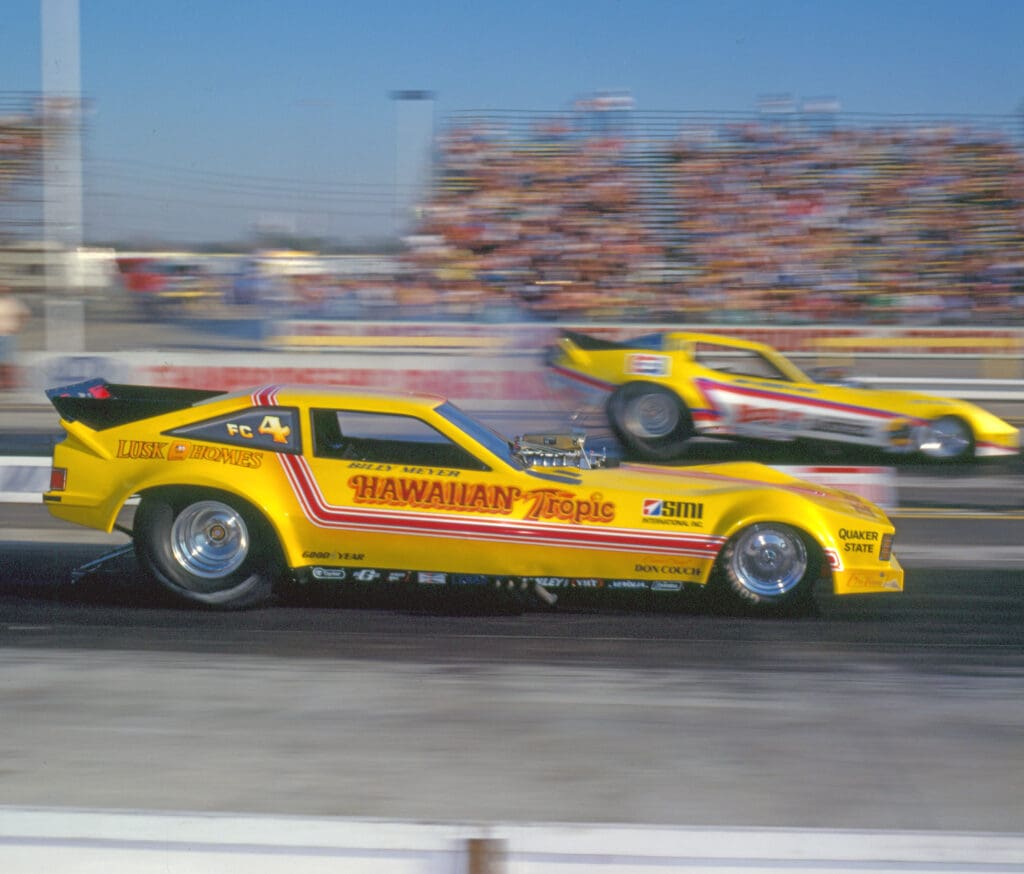
More than 30 years ago, Force made a seat-of-the-pants decision to chase an NHRA Winston championship. It proved to be both the worst and best decision he had made to that point in his career.
He barely had the resources to run half the schedule. Yet the effort produced his first career top-10 points finish and launched a run that eventually grew to 24 consecutive top-10 seasons.

That first year on tour remained especially meaningful.
Among the many firsts was the first time a fan walked into his pit area and asked for an autograph.
“They didn’t know any better,” Force said.
By 2009, Force was signing more autographs in a single weekend than he had during the entire 1979 season. After nearly 200 autographs in a 30-minute span, he laughed at how dramatically things had changed.
“Most of them were trying to drag me through the ropes [back then], now I’m trying to get away from them to do other things like an interview with you,” Force said.
“That’s good, that’s what the fans are all about. They’re everything to me now,” he continued. “There are just so many and I try to take care of them the best I can.”
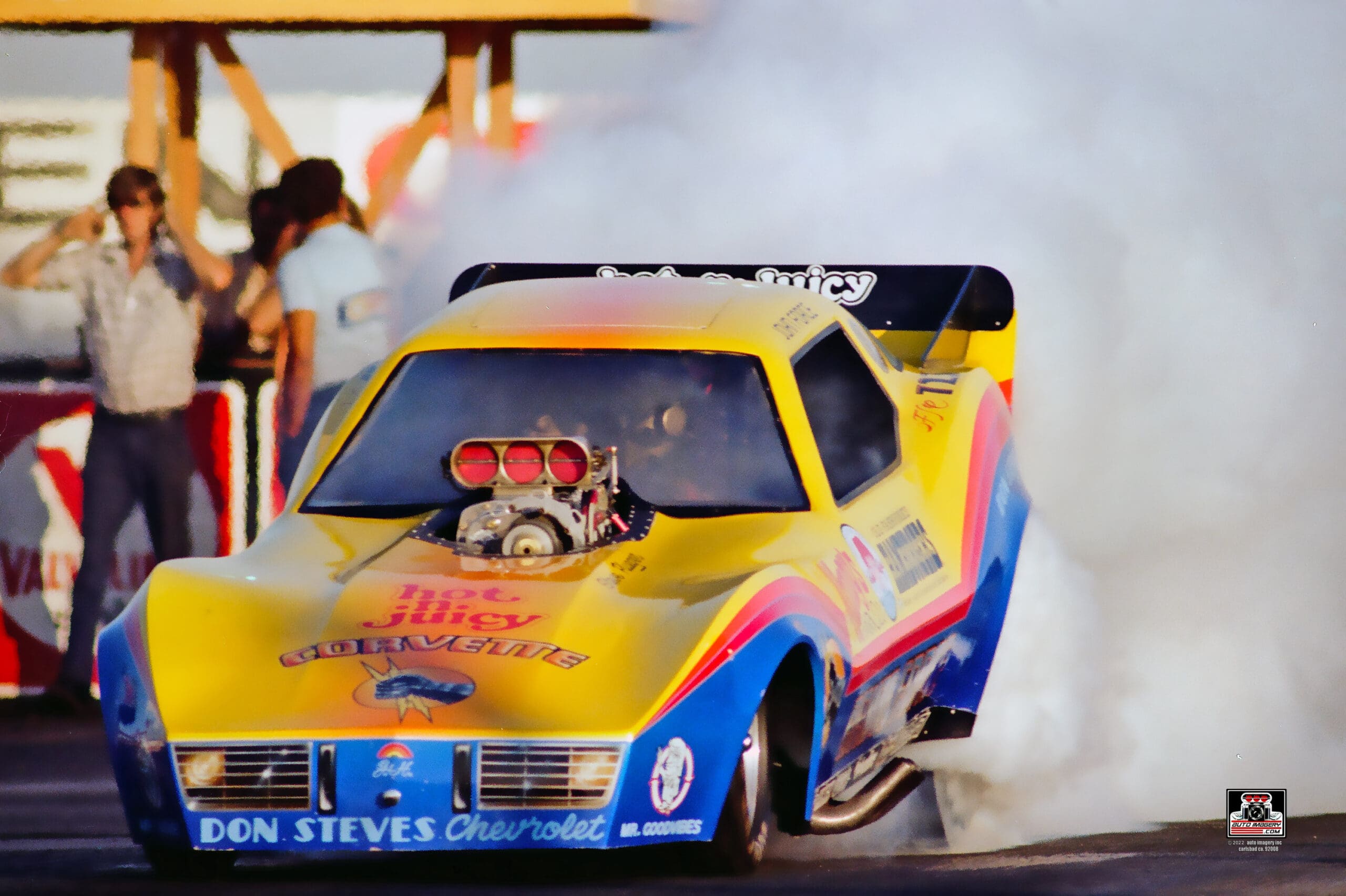
Back then, Force often had more sponsors than fans, including a Wendy’s Hot & Juicy Hamburgers deal he admits was driven more by free food than cash.
“I really never thought drag racing would be what it is today back in 1979, what I can remember of 1979,” Force said.
Selective memory is part of Force’s storytelling charm. Some moments remain private. Others became legend — including the time he dressed as the Wendy’s girl at a sponsor appearance when the scheduled performer failed to show.

Travel stories were just as memorable. A faulty exhaust system once melted his wife’s shoes to the floorboard of the tow vehicle, later repaired with sheet metal cut from a discarded Bank of America sign. The leftover metal eventually became a spoiler, prompting a local newspaper to announce Force had landed new sponsorship.
Force begged, borrowed, and did everything short of stealing to stay on the road. Often, prize money was already earmarked to pay debts incurred simply to reach the event.
“I had hocked everything,” Force said. “I borrowed a great deal of money and I guess he thought I wasn’t going to pay – he thought I was going to cheat him. So he sent a guy named the ‘Quarter Bender’ to get me.
“He was a great guy but what I didn’t realize is that this guy was an ex-C.I.A. or something,” Force added. “When they said he could bend quarters, he could bend quarters. Ole John Force was going to fight this guy.”
That plan ended quickly, thanks to intervention from family and friends and a late but successful repayment.
As risky as his finances were, Force’s crew structure was equally unconventional. Tuning decisions were sometimes influenced by fans leaning over the ropes.
“We didn’t even have uniforms,” Force said. “We had Wendy’s store t-shirts. No one in those days knew what a square hamburger was. It was something new.”
Force’s first career round win came against Tom “Mongoose” McEwen, followed by his first final-round appearance at the NHRA Cajun Nationals. A broken transmission ended that run, but belief had already taken hold.
“I’ll never forget that it was my big chance at a win,” Force said. “The transmission broke … it really didn’t matter because I would have probably lost anyway.”
Force finished runner-up again later that season at the NHRA Summernationals in Englishtown, N.J., losing to Raymond Beadle, another future champion.
Few could have predicted what followed — except perhaps Force himself.
That self-awareness surfaced late in the 1979 season at the NHRA World Finals, when Force accidentally left the starting line in high gear. Despite the mistake, he still managed to defeat Tom Ridings, setting the stage for a revealing top-end interview.
In the shutdown area, announcer Steve Evans offered an observation that resonated beyond the run.
“It takes a heck of a guy to admit when he makes a mistake,” Evans said.
Force didn’t hesitate.
“I’m a heck of a guy.”
The humor landed instantly. Long before championships, before packed rope lines, and before the sport knew exactly what to make of him, it was moments like that — honest, unfiltered, and self-aware — that turned John Force into a fan favorite.
It was the same smile he carried back to the rope line, marker in hand, taking care of the fans who once stood eight deep — and before that, barely showed up at all.