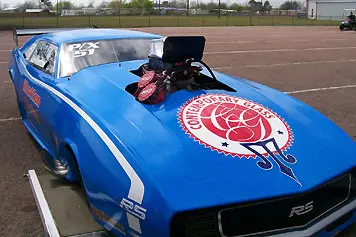

In the formative years, Pro Modified was built on a two-power adder system, nitrous oxide and carburetors versus supercharged and alcohol. And while that battle created the foundation for the volatile doorslammer class, it wasn’t what Ted Jones originally had in mind. Jones knew nitro was what sold tickets. 

But first, the back story. 

Jones, serving as IHRA Vice President under Larry Carrier, helped shape the class in the 1990s while working within Jim Ruth’s leadership structure. His fingerprints are on nearly every early decision that turned a Top Sportsman offshoot into one of drag racing’s most unpredictable professional divisions.

What often gets lost in the retelling is how much of Pro Modified’s creation was born out of necessity. With Winston leaving the sport, IHRA needed something to move the needle and establish its own identity.

“That, and we wanted our own stars and our own class,” Jones said. “I introduced Top Sportsman, which was totally different, but I saw ET Bracket Racing growing like crazy and we’re still running Stock and Super Stock and Modified and stuff like that.”

Jones wasn’t chasing a trend — he was reacting to one. Door cars were getting quicker, more aggressive, and increasingly difficult to keep contained within traditional sportsman categories.

“So, I saw a possible future there, because some of these guys were getting really fast with door slammers,” Jones said. “So, I introduced Top Sportsman, it went over great, and here came the Charlie Carpenters and Robbie Vandegrifts and the Scotty Cannons and all these people that really made it in Top Sportsman.”

That early success set the stage for something bigger, something that would eventually define IHRA’s identity in the professional ranks. By opening the door to nitrous oxide and encouraging innovation, Jones unintentionally created a proving ground for Pro Modified.
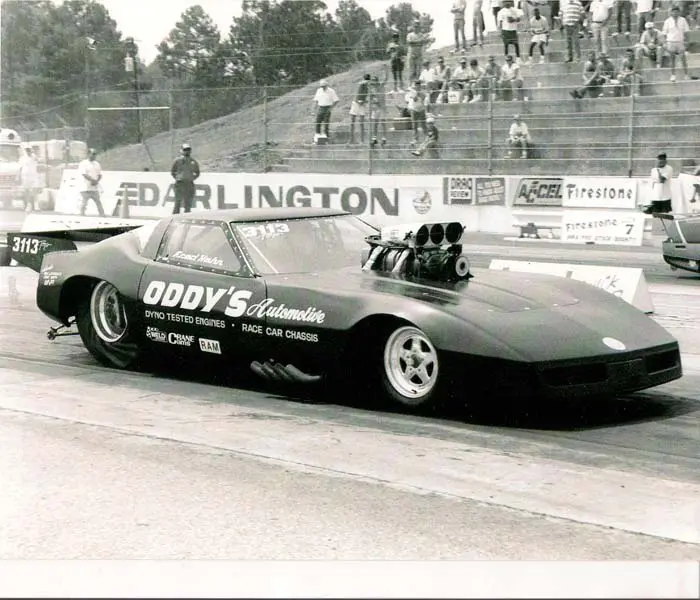

The shift from concept to class came when sponsorship and showmanship aligned. Mike Thermos of NOS recognized the potential and brought a format that elevated both visibility and stakes.

“Because I legalized nitrous oxide, here came Mike Thermos from NOS and he wanted to do something,” Jones said. “He said, ‘Listen, why don’t we have a shootout on Saturday night? I’ll sponsor it. A quick eight shootout of the top eight qualifiers.’”

Jones saw the opportunity immediately, especially when Thermos backed the idea financially. The Quick Eight shootout became the catalyst that pushed the category into legitimacy.

“‘Yeah, that’s cool. [Thermos said] I’ll put up the money,’” Jones recalled. “I liked that even better, and so we did, and I could see that could be a new class.”

That moment marked the transition from exhibition to evolution. Pro Modified wasn’t officially born yet, but the blueprint was already taking shape in real time.

“So, immediately I started making plans to try and do that,” Jones said. “Now, it was combustible at first.”

And combustible proved to be an understatement once the combinations collided on equal footing. The class had its reality check almost immediately.

The first true test of parity came at Bristol, where the balance between nitrous and supercharged combinations was exposed in one run. It was the moment Jones realized the challenge ahead wasn’t creating the class — it was controlling it.

“As Bret Kepner told the story, the first time the blown alcohol car showed up, everything else was nitrous, and it was Bristol,” Jones said. “Freddie Hahn comes up for his first pass, and only his first pass ever he goes two-tenths quicker than the rest of the field.”

From the tower, Jones didn’t need a second run to understand the implications. The gap was too large, and the reaction from competitors was inevitable.

“Kepner said, ‘Ted Jones only said two words. Oh, s***,’ because I knew it was coming,” Jones added. “The nitrous guys are going to be going berserk.”

Parity became the immediate priority, and it would remain a defining characteristic of the class moving forward. The balance between combinations wasn’t optional — it was survival.

“We knew we had to make it fair, and we did,” Jones said.

But even as the nitrous-versus-blower formula took hold, it only represented part of what Jones believed the class could become.

One combination, however, was never part of that vision.

Jones never saw turbochargers as a fit for what he was building, and his reasoning wasn’t theoretical. It came from experience — one that nearly derailed another category.

“I was afraid of them because of my adventure in Pro Stock with the little Buick turbocharge,” Jones said. “That was my worst nightmare ever and almost ruined the whole class.”

Even now, with turbocharged combinations proving their place in modern Pro Modified, that skepticism hasn’t fully faded.

“I realized the turbos are working now, although Ricky just putting one in I still can’t believe,” Jones said. “But I was afraid of them. I really was.”

For Jones, the concern was always about potential — not what they were, but what they could become.

Instead, Jones’ vision went in a completely different direction — one that would have pushed Pro Modified far beyond its already volatile identity.

His idea wasn’t to subtract from the class, but to add to it. And what he wanted to add was something rarely associated with doorslammer racing.

“My plan was to introduce injected on nitro,” Jones said. “I pictured Scotty Cannon pulling to the line with the velocity stack sticking out of the hood and the wheelies and the smell of nitromethane and the water in the eyes and everything.”

It was a vision built on sensation as much as competition — one that would have hit fans with everything at once.


Jones believed that combination of nitrous and injected nitro would have pushed Pro Modified into a category unlike anything drag racing had seen.

“Here’s a guy over here purging his nitrous on this side, and I could see that that would be a tremendous mix,” Jones said. “To this day it would be cool. Put some nitromethane in there.”

He understood the risk, but he also believed the blueprint already existed to make it work.

“Yes, you have to control it, but they had already done the research,” Jones said. “They’ve got parity in that class, so do your research and introduce that.”

And in the end, that’s the version of Pro Modified that never made it to the starting line — not because it couldn’t work, but because no one ever took it that far.

“To this day,” Jones said, “it would be cool.”

Share the Insights?

Click here to share the article.

ad space x ad space

ad space x ad space

Competition Plus Team

Since our inception, we have been passionately dedicated to delivering the most accurate, timely, and compelling content in the world of drag racing. Our readers depend on us for the latest news, in-depth features, expert analysis, and exclusive interviews that connect you to the sport’s pulse.

Sign up for our newsletters and email list.

This field is for validation purposes and should be left unchanged.
Name

JONES’ ORIGINAL VISION FOR PRO MODIFIED WAS BIGGER, LOUDER — AND FAR MORE VOLATILE THAN WHAT EMERGED

In the formative years, Pro Modified was built on a two-power adder system, nitrous oxide and carburetors versus supercharged and alcohol. And while that battle created the foundation for the volatile doorslammer class, it wasn’t what Ted Jones originally had in mind. Jones knew nitro was what sold tickets. 

But first, the back story. 

Jones, serving as IHRA Vice President under Larry Carrier, helped shape the class in the 1990s while working within Jim Ruth’s leadership structure. His fingerprints are on nearly every early decision that turned a Top Sportsman offshoot into one of drag racing’s most unpredictable professional divisions.

What often gets lost in the retelling is how much of Pro Modified’s creation was born out of necessity. With Winston leaving the sport, IHRA needed something to move the needle and establish its own identity.

“That, and we wanted our own stars and our own class,” Jones said. “I introduced Top Sportsman, which was totally different, but I saw ET Bracket Racing growing like crazy and we’re still running Stock and Super Stock and Modified and stuff like that.”

Jones wasn’t chasing a trend — he was reacting to one. Door cars were getting quicker, more aggressive, and increasingly difficult to keep contained within traditional sportsman categories.

“So, I saw a possible future there, because some of these guys were getting really fast with door slammers,” Jones said. “So, I introduced Top Sportsman, it went over great, and here came the Charlie Carpenters and Robbie Vandegrifts and the Scotty Cannons and all these people that really made it in Top Sportsman.”

That early success set the stage for something bigger, something that would eventually define IHRA’s identity in the professional ranks. By opening the door to nitrous oxide and encouraging innovation, Jones unintentionally created a proving ground for Pro Modified.
The shift from concept to class came when sponsorship and showmanship aligned. Mike Thermos of NOS recognized the potential and brought a format that elevated both visibility and stakes.

“Because I legalized nitrous oxide, here came Mike Thermos from NOS and he wanted to do something,” Jones said. “He said, ‘Listen, why don’t we have a shootout on Saturday night? I’ll sponsor it. A quick eight shootout of the top eight qualifiers.’”

Jones saw the opportunity immediately, especially when Thermos backed the idea financially. The Quick Eight shootout became the catalyst that pushed the category into legitimacy.

“‘Yeah, that’s cool. [Thermos said] I’ll put up the money,’” Jones recalled. “I liked that even better, and so we did, and I could see that could be a new class.”

That moment marked the transition from exhibition to evolution. Pro Modified wasn’t officially born yet, but the blueprint was already taking shape in real time.

“So, immediately I started making plans to try and do that,” Jones said. “Now, it was combustible at first.”

And combustible proved to be an understatement once the combinations collided on equal footing. The class had its reality check almost immediately.
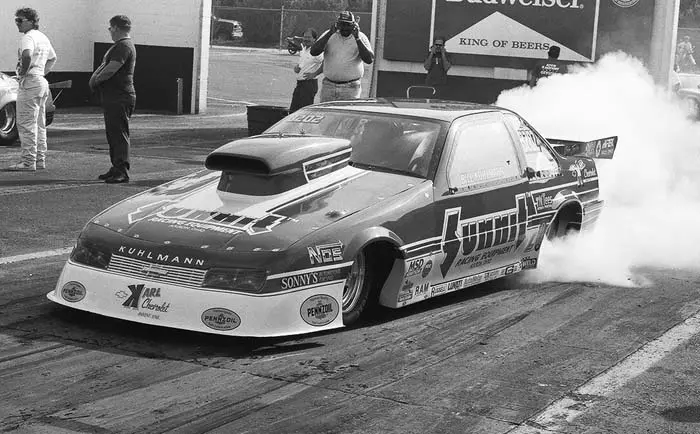
The first true test of parity came at Bristol, where the balance between nitrous and supercharged combinations was exposed in one run. It was the moment Jones realized the challenge ahead wasn’t creating the class — it was controlling it.

“As Bret Kepner told the story, the first time the blown alcohol car showed up, everything else was nitrous, and it was Bristol,” Jones said. “Freddie Hahn comes up for his first pass, and only his first pass ever he goes two-tenths quicker than the rest of the field.”

From the tower, Jones didn’t need a second run to understand the implications. The gap was too large, and the reaction from competitors was inevitable.

“Kepner said, ‘Ted Jones only said two words. Oh, s***,’ because I knew it was coming,” Jones added. “The nitrous guys are going to be going berserk.”

Parity became the immediate priority, and it would remain a defining characteristic of the class moving forward. The balance between combinations wasn’t optional — it was survival.

“We knew we had to make it fair, and we did,” Jones said.

But even as the nitrous-versus-blower formula took hold, it only represented part of what Jones believed the class could become.
One combination, however, was never part of that vision.

Jones never saw turbochargers as a fit for what he was building, and his reasoning wasn’t theoretical. It came from experience — one that nearly derailed another category.

“I was afraid of them because of my adventure in Pro Stock with the little Buick turbocharge,” Jones said. “That was my worst nightmare ever and almost ruined the whole class.”

Even now, with turbocharged combinations proving their place in modern Pro Modified, that skepticism hasn’t fully faded.

“I realized the turbos are working now, although Ricky just putting one in I still can’t believe,” Jones said. “But I was afraid of them. I really was.”

For Jones, the concern was always about potential — not what they were, but what they could become.

Instead, Jones’ vision went in a completely different direction — one that would have pushed Pro Modified far beyond its already volatile identity.

His idea wasn’t to subtract from the class, but to add to it. And what he wanted to add was something rarely associated with doorslammer racing.

“My plan was to introduce injected on nitro,” Jones said. “I pictured Scotty Cannon pulling to the line with the velocity stack sticking out of the hood and the wheelies and the smell of nitromethane and the water in the eyes and everything.”

It was a vision built on sensation as much as competition — one that would have hit fans with everything at once.

 

Jones believed that combination of nitrous and injected nitro would have pushed Pro Modified into a category unlike anything drag racing had seen.

“Here’s a guy over here purging his nitrous on this side, and I could see that that would be a tremendous mix,” Jones said. “To this day it would be cool. Put some nitromethane in there.”

He understood the risk, but he also believed the blueprint already existed to make it work.

“Yes, you have to control it, but they had already done the research,” Jones said. “They’ve got parity in that class, so do your research and introduce that.”

And in the end, that’s the version of Pro Modified that never made it to the starting line — not because it couldn’t work, but because no one ever took it that far.

“To this day,” Jones said, “it would be cool.”

Picture of John Doe

John Doe

Lorem ipsum dolor sit amet consectetur adipiscing elit dolor

More Posts

Send Us A Message

Picture of Bobby Bennett
Bobby Bennett
Thank you for joining us on this journey. Your support and trust inspire us every day to deliver the best in drag racing journalism. We are excited about the future and look forward to continuing to serve you with the same dedication and passion that has defined CompetitionPlus.com from the very beginning.

Don’t miss these other exciting stories!

Explore more action packed posts on Competition Plus, where we dive into the latest in Drag Racing News. Discover a range of topics, from race coverage to in-depth interviews, to keep you informed and entertained.