
The NHRA is preparing to bring back Modified Production—one of drag racing’s most beloved but long-absent classes—under a new format within Competition Eliminator. The decision marks the first official return of the class since Modified Eliminator was disbanded at the end of the 1981 season.


When NHRA ended Modified Eliminator, its classes were divided between Super Stock and Competition Eliminator. Modified Production combinations were moved to Super Stock, where they raced on a breakout system. The move drew sharp criticism from purists who argued the decision diluted the true intent of Modified racing.


CompetitionPlus.com spoke with NHRA Competition Director Lonnie Grim, who confirmed the sanctioning body is finalizing plans to reintroduce Modified Production within Competition Eliminator as what he called a “paragraph class.” The new structure, Grim said, is designed to both protect existing competitors and attract new racers interested in traditional stick-shift racing.


“We are considering these additions in Comp Eliminator currently as protection for existing classes,” Grim told CompetitionPlus.com. “Modified Production isn’t running in C Econo—it’s Modified Production. It’s not finding its way into something else that’s been successful or even not being run.”


He added that these new categories will exist independently within Comp Eliminator rules, creating their own parameters without disrupting current classes. “The specifics that surround the introduction of something new is very protective of the customers that are already in that category,” Grim said. “But nobody asks any questions. They just hear a rumor and go crazy without the details.”


When asked directly if Modified Production would officially debut next season, Grim confirmed the direction. “That does look like where we are headed,” he said.


The new class will honor many of the original Modified Production traditions. According to Grim, the category will be restricted to manual transmissions only, with no automatics allowed. Engines will be small-bore, small-block combinations, and no big blocks will be permitted.
 

“It’s stick only,” Grim said. “It’s a small bore space, center lines, no big blocks, so there’s no automatics.”


As for class designations, the alphabet structure will run from A through E Modified Production, a nod to the format used decades ago. Grim also confirmed that cars will be limited to 1981 and older body styles, ensuring the vehicles retain a true period look and feel.


“It’s ’81 and back,” he said. “There’s a year limitation for body styles.”


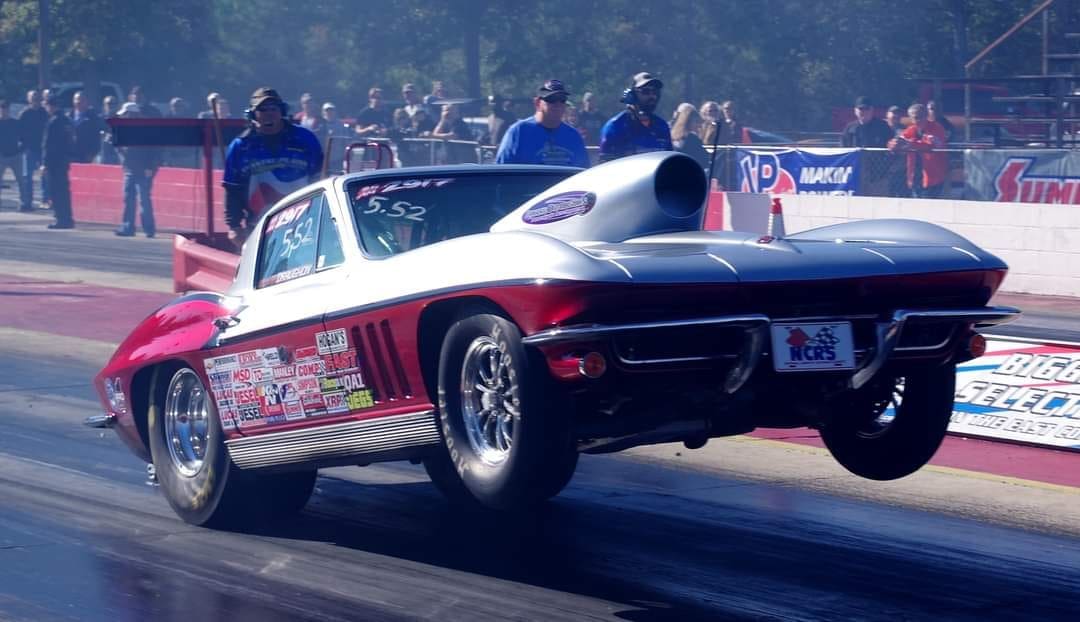
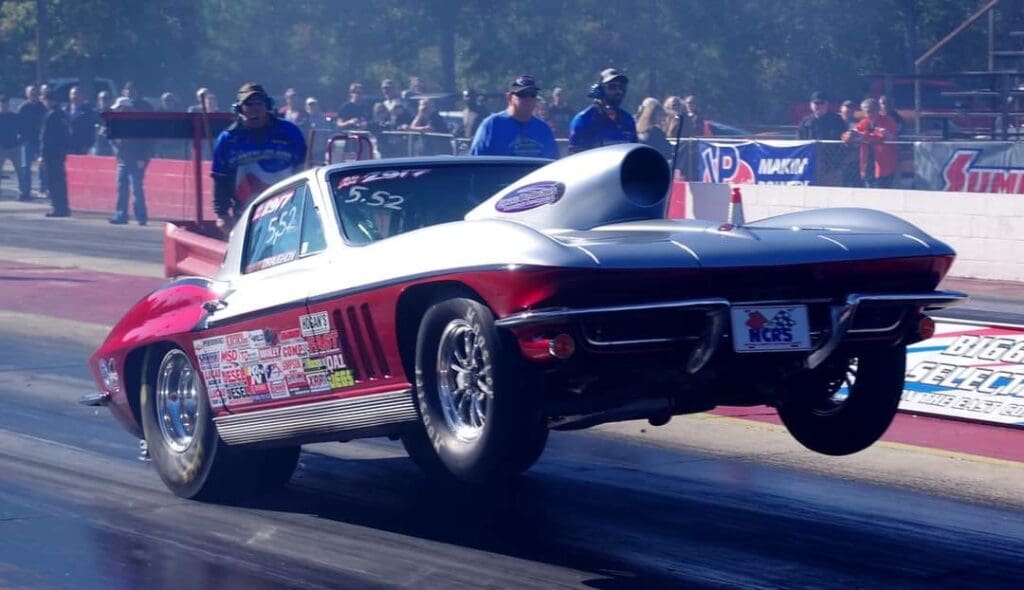
Count NHRA Division 2 racer Ronnie Yopp Jr. among those eager for the official rollout. Yopp, who campaigns a 1962 Corvette that previously ran as a Super Stock/B Modified, said he’s ready to bring his car home to its proper roots.


His Corvette features a 300-cubic-inch engine built by Tim Freeman and regularly competes in the popular Carolina Classic Modified Production series headed by Robbie and Tabitha Draughon. Yopp said he had already been preparing for this development after hearing rumors that NHRA was exploring the return of Modified Production.


Yopp entered the NHRA Division 2 event at Rockingham as an H/Altered entry, despite knowing he’d be at a major disadvantage. Even so, he managed to run a small amount under the index — an achievement he considered a personal win.


“I’m pretty excited. I’m so excited that I ran the last Division 2 race at Rockingham,” Yopp said. “I upgraded my license and I actually ran Comp. I’m preparing for next year by having my license and getting that one grade point so I can enter a national event next year without having to worry about getting a grade point at the beginning of the year.”

Beyond nostalgia, NHRA’s goal is to use Modified Production as a strategic growth tool for Comp Eliminator. The division has long been one of NHRA’s most technically diverse but participation-challenged categories. By reintroducing a fan-favorite class rooted in factory-appearing, manual-shift cars, NHRA hopes to reconnect with traditional racers while safeguarding current competitors.


“Anything we’re introducing to Comp now, we’re trying to do it not by throwing something into C Altered or a dragster,” Grim said. “Most people hear a whisper about something new coming to Comp and ask, ‘Is that going to affect my class?’ The answer is no.”


Grim also said NHRA has made internal policy changes to help manage new entries fairly. In years past, competition indexes were sometimes set incorrectly, leading to performance imbalances. Under new guidelines, NHRA will make swift adjustments if necessary.

“If we introduce something into Comp and miss the index as to what it needed to be, we’ll change it on Monday,” Grim explained. “We’re very mindful that people have spent years of effort and money to get their cars where they are, and we want to protect that.”


Asked whether the move might “right a wrong” from 1982—when Modified was split between two eliminators—Grim said the intent isn’t about revising history. “It probably would’ve been a better choice at that time,” he said. “I think the way the cars were constructed and still are to this day, Modified Production did more resemble a Super Stock car. But we have interest in making Comp as healthy as it can be and giving new customers opportunities to participate.”


While rules are still being finalized, several core components are already established. Most cars will feature a two-by-three back half chassis (not mandatory), rack-and-pinion steering, and NHRA-approved cylinder heads with no billet components allowed in the upper categories.


A source close to the rule-development process told CompetitionPlus.com that A and B classes will allow canted or inline heads, while C through E will use only NHRA-accepted, non-billet castings.


“The biggest thing is just getting people, especially Comp Eliminator participants, to understand that the things we’d like to bring to the category are not going to affect what already exists,” Grim said. “We’re not trying to introduce anything into something existing unless it makes absolute sense.”


Although the initial focus is on Modified Production, Grim hinted other heritage categories could eventually return in similar form. “There’s a lot of ideas on the table,” he said. “Things don’t move along as quick as we’d like sometimes, but we managed to focus on and get these rules put together.”


Share the Insights?

Click here to share the article.

ad space x ad space

ad space x ad space

Competition Plus Team

Since our inception, we have been passionately dedicated to delivering the most accurate, timely, and compelling content in the world of drag racing. Our readers depend on us for the latest news, in-depth features, expert analysis, and exclusive interviews that connect you to the sport’s pulse.

Sign up for our newsletters and email list.

This field is for validation purposes and should be left unchanged.
Name

NHRA BRINGING BACK MODIFIED PRODUCTION TO RACE IN COMP

The NHRA is preparing to bring back Modified Production—one of drag racing’s most beloved but long-absent classes—under a new format within Competition Eliminator. The decision marks the first official return of the class since Modified Eliminator was disbanded at the end of the 1981 season.


When NHRA ended Modified Eliminator, its classes were divided between Super Stock and Competition Eliminator. Modified Production combinations were moved to Super Stock, where they raced on a breakout system. The move drew sharp criticism from purists who argued the decision diluted the true intent of Modified racing.


CompetitionPlus.com spoke with NHRA Competition Director Lonnie Grim, who confirmed the sanctioning body is finalizing plans to reintroduce Modified Production within Competition Eliminator as what he called a “paragraph class.” The new structure, Grim said, is designed to both protect existing competitors and attract new racers interested in traditional stick-shift racing.


“We are considering these additions in Comp Eliminator currently as protection for existing classes,” Grim told CompetitionPlus.com. “Modified Production isn’t running in C Econo—it’s Modified Production. It’s not finding its way into something else that’s been successful or even not being run.”


He added that these new categories will exist independently within Comp Eliminator rules, creating their own parameters without disrupting current classes. “The specifics that surround the introduction of something new is very protective of the customers that are already in that category,” Grim said. “But nobody asks any questions. They just hear a rumor and go crazy without the details.”


When asked directly if Modified Production would officially debut next season, Grim confirmed the direction. “That does look like where we are headed,” he said.


The new class will honor many of the original Modified Production traditions. According to Grim, the category will be restricted to manual transmissions only, with no automatics allowed. Engines will be small-bore, small-block combinations, and no big blocks will be permitted.


“It’s stick only,” Grim said. “It’s a small bore space, center lines, no big blocks, so there’s no automatics.”


As for class designations, the alphabet structure will run from A through E Modified Production, a nod to the format used decades ago. Grim also confirmed that cars will be limited to 1981 and older body styles, ensuring the vehicles retain a true period look and feel.


“It’s ’81 and back,” he said. “There’s a year limitation for body styles.”


Count NHRA Division 2 racer Ronnie Yopp Jr. among those eager for the official rollout. Yopp, who campaigns a 1962 Corvette that previously ran as a Super Stock/B Modified, said he’s ready to bring his car home to its proper roots.


His Corvette features a 300-cubic-inch engine built by Tim Freeman and regularly competes in the popular Carolina Classic Modified Production series headed by Robbie and Tabitha Draughon. Yopp said he had already been preparing for this development after hearing rumors that NHRA was exploring the return of Modified Production.


Yopp entered the NHRA Division 2 event at Rockingham as an H/Altered entry, despite knowing he’d be at a major disadvantage. Even so, he managed to run a small amount under the index — an achievement he considered a personal win.


“I’m pretty excited. I’m so excited that I ran the last Division 2 race at Rockingham,” Yopp said. “I upgraded my license and I actually ran Comp. I’m preparing for next year by having my license and getting that one grade point so I can enter a national event next year without having to worry about getting a grade point at the beginning of the year.”

Beyond nostalgia, NHRA’s goal is to use Modified Production as a strategic growth tool for Comp Eliminator. The division has long been one of NHRA’s most technically diverse but participation-challenged categories. By reintroducing a fan-favorite class rooted in factory-appearing, manual-shift cars, NHRA hopes to reconnect with traditional racers while safeguarding current competitors.


“Anything we’re introducing to Comp now, we’re trying to do it not by throwing something into C Altered or a dragster,” Grim said. “Most people hear a whisper about something new coming to Comp and ask, ‘Is that going to affect my class?’ The answer is no.”


Grim also said NHRA has made internal policy changes to help manage new entries fairly. In years past, competition indexes were sometimes set incorrectly, leading to performance imbalances. Under new guidelines, NHRA will make swift adjustments if necessary.

“If we introduce something into Comp and miss the index as to what it needed to be, we’ll change it on Monday,” Grim explained. “We’re very mindful that people have spent years of effort and money to get their cars where they are, and we want to protect that.”


Asked whether the move might “right a wrong” from 1982—when Modified was split between two eliminators—Grim said the intent isn’t about revising history. “It probably would’ve been a better choice at that time,” he said. “I think the way the cars were constructed and still are to this day, Modified Production did more resemble a Super Stock car. But we have interest in making Comp as healthy as it can be and giving new customers opportunities to participate.”


While rules are still being finalized, several core components are already established. Most cars will feature a two-by-three back half chassis (not mandatory), rack-and-pinion steering, and NHRA-approved cylinder heads with no billet components allowed in the upper categories.


A source close to the rule-development process told CompetitionPlus.com that A and B classes will allow canted or inline heads, while C through E will use only NHRA-accepted, non-billet castings.


“The biggest thing is just getting people, especially Comp Eliminator participants, to understand that the things we’d like to bring to the category are not going to affect what already exists,” Grim said. “We’re not trying to introduce anything into something existing unless it makes absolute sense.”


Although the initial focus is on Modified Production, Grim hinted other heritage categories could eventually return in similar form. “There’s a lot of ideas on the table,” he said. “Things don’t move along as quick as we’d like sometimes, but we managed to focus on and get these rules put together.”

Picture of John Doe

John Doe

Lorem ipsum dolor sit amet consectetur adipiscing elit dolor

More Posts

Send Us A Message

Picture of Bobby Bennett
Bobby Bennett
Thank you for joining us on this journey. Your support and trust inspire us every day to deliver the best in drag racing journalism. We are excited about the future and look forward to continuing to serve you with the same dedication and passion that has defined CompetitionPlus.com from the very beginning.

Don’t miss these other exciting stories!

Explore more action packed posts on Competition Plus, where we dive into the latest in Drag Racing News. Discover a range of topics, from race coverage to in-depth interviews, to keep you informed and entertained.