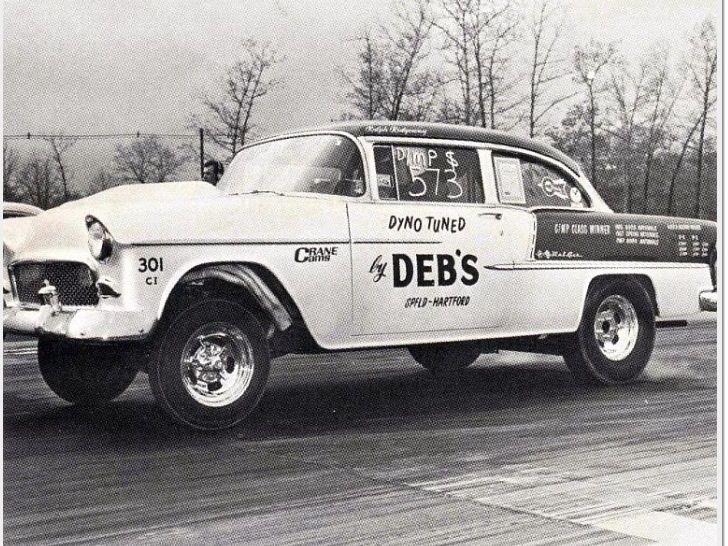

NHRA’s decision to reintroduce Modified Production as a paragraph classification, no-breakout category for pre-1981 cars has revived questions about the class’s origins. The move has also reopened a broader discussion about how the category emerged as a solution to one of drag racing’s earliest structural problems.

The revived version is not to be confused with the later Super Stock/Modified concept. Instead, it reaches back to a period when Modified Production existed to give street-based hot rods a competitive home without forcing them into professionalized categories.

Understanding why the class mattered — and why its return resonates — requires revisiting drag racing’s formative years. In that era, rulebooks often struggled to keep pace with how racers actually built their cars.

That tension was most visible in the contrasting philosophies of NHRA and the American Hot Rod Association. According to drag racing historian Bret Kepner, the difference was not theoretical but structural.

Kepner said AHRA tech director Vance Brady and NHRA tech director Farmer Dismuke approached class construction from opposite ends of the spectrum.

“The conversations that they had were really interesting because Vance was looking at it from this amazingly complex, but brilliantly simple collection of 500 classes, whereas Dismuke was working with about 80 in NHRA,” Kepner said.

“If you didn’t fit in Super Stock A through Super Stock T, Dismuke didn’t care. You had to fit into one of our classes.”

Kepner said AHRA’s philosophy prioritized accommodation over restriction. If a racer arrived with something unconventional, the sanctioning body tried to find a place for it rather than turn it away.

“AHRA’s position was, ‘We have a class for you. It doesn’t matter what you bring,’” Kepner said. “And AHRA had some outrageous classes.”
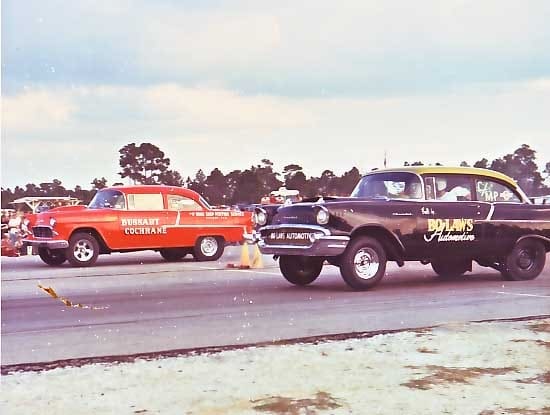

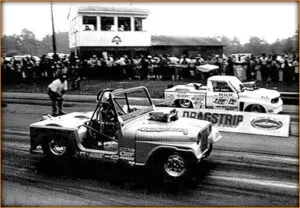
Jim Hill Photo

Among the most memorable examples of that approach were the van divisions, which existed in both stock and optional forms. The optional categories allowed limited modification while still preserving a clear identity within the rulebook.

“One of my favorite classes were the van optional classes,” Kepner said. “I think there was A, B and C. There were also the stock van classes, A, B and C.”

That level of specificity was intentional. From an announcer’s standpoint, Kepner said AHRA’s classifications were designed to explain a car before it ever reached the starting line.

“The best thing about it from an announcer standpoint is when a car came around the bend to the water box and you are in the tower and you look at the windshield and you see the class,” Kepner said.

To casual fans, those combinations of letters and numbers could seem confusing. To those who understood the system, they were precise.

“To most people, AHRA classes were confusing because there were so many characters in the class designation,” Kepner said.

To insiders, those characters told the full story of a car’s construction, intent, and limitations. Each letter mattered because it answered a rules question.

“As soon as you looked at that classification, presuming you knew what you were doing, you knew everything you needed to know about that car,” Kepner said.

That same desire to clearly define what a car was — and where it belonged — ultimately shaped the creation of Modified Production. The class was designed to give modified, street-based cars a logical home using classification clarity rather than exclusion.

Modified Production filled a widening gap that had developed in the early 1960s. At the time, racers often found themselves squeezed between stock-based categories and rapidly professionalizing Gas classes.

“From 1950 through 1955, you had stock cars, hot cars, and the only thing in between was Super Stock,” Kepner said. “Beyond that were the Gas, Coupes and Sedan classes.”

The Gas classes were built for a specific racer — the dedicated hot rodder. They were not designed for casual engine swaps or evolving street combinations.

“There was no class for someone who took a 1932 Ford and installed a Chevrolet engine,” Kepner said. “And that was what hot rodding had become.”

By the mid-1960s, Gas classes had evolved into professional match-race attractions. That success had unintended consequences.

“So the guy with the true street-driven car no longer had a place,” Kepner said. “The most authentic hot rodder was effectively pushed out.”

Modified Production emerged as a corrective. It allowed engine swaps while preserving manufacturer identity.

“So Tice created Modified Production,” Kepner said. “It allowed you to swap engines, but you had to keep the same brand.”

The cars retained street equipment and legality, at least initially. For a time, the formula worked as intended.

“All of a sudden, the guy with the modified street car had a place to race,” Kepner said.

That balance did not last. Factory involvement soon followed and changed the class’s competitive landscape.

“In 1967, after Chrysler said they were no longer selling Funny Cars through dealerships, drivers like Dick Landy and Ronnie Sox moved into Modified Production,” Kepner said. “That changed the landscape.”

Even those factory-backed drivers recognized the contradiction. Several publicly acknowledged they did not belong in the category.

“I have several interviews of Ronnie Sox and Dick Landy saying, ‘We are not in favor of us running Modified Production. That is not a class for us,’” Kepner said.

The ripple effects were lasting. Kepner said Modified Production helped pave the way for heads-up Super Stock, further AHRA experimentation, and eventually Pro Stock.

“The AHRA started the Modified Production class in 1963,” Kepner said. “In January of 1964, NHRA introduced its own Modified Production categories.”

The ethics of that adoption remain debated. The outcome is harder to dispute.

“It may have been questionable, but it was also a smart business decision,” Kepner said.

NHRA’s modern revival of Modified Production echoes that same tension. It is both a nod to history and an acknowledgment that the sport still benefits when rules are written for hot rodders first.

By restoring the class to its pre-1981 roots and removing breakout formats, NHRA is revisiting a concept that once prevented an entire segment of racers from being left behind. History suggests Modified Production succeeds when it remembers exactly who it was built for.

Share the Insights?

Click here to share the article.

ad space x ad space

ad space x ad space

Competition Plus Team

Since our inception, we have been passionately dedicated to delivering the most accurate, timely, and compelling content in the world of drag racing. Our readers depend on us for the latest news, in-depth features, expert analysis, and exclusive interviews that connect you to the sport’s pulse.

Sign up for our newsletters and email list.

This field is for validation purposes and should be left unchanged.
Name

NHRA’S RETURN OF MODIFIED PRODUCTION REOPENS A DEEP CHAPTER IN DRAG RACING HISTORY

NHRA’s decision to reintroduce Modified Production as a paragraph classification, no-breakout category for pre-1981 cars has revived questions about the class’s origins. The move has also reopened a broader discussion about how the category emerged as a solution to one of drag racing’s earliest structural problems.

The revived version is not to be confused with the later Super Stock/Modified concept. Instead, it reaches back to a period when Modified Production existed to give street-based hot rods a competitive home without forcing them into professionalized categories.

Understanding why the class mattered — and why its return resonates — requires revisiting drag racing’s formative years. In that era, rulebooks often struggled to keep pace with how racers actually built their cars.

That tension was most visible in the contrasting philosophies of NHRA and the American Hot Rod Association. According to drag racing historian Bret Kepner, the difference was not theoretical but structural.

Kepner said AHRA tech director Vance Brady and NHRA tech director Farmer Dismuke approached class construction from opposite ends of the spectrum.

“The conversations that they had were really interesting because Vance was looking at it from this amazingly complex, but brilliantly simple collection of 500 classes, whereas Dismuke was working with about 80 in NHRA,” Kepner said.

“If you didn’t fit in Super Stock A through Super Stock T, Dismuke didn’t care. You had to fit into one of our classes.”

Kepner said AHRA’s philosophy prioritized accommodation over restriction. If a racer arrived with something unconventional, the sanctioning body tried to find a place for it rather than turn it away.

“AHRA’s position was, ‘We have a class for you. It doesn’t matter what you bring,’” Kepner said. “And AHRA had some outrageous classes.”

Jim Hill Photo

Among the most memorable examples of that approach were the van divisions, which existed in both stock and optional forms. The optional categories allowed limited modification while still preserving a clear identity within the rulebook.

“One of my favorite classes were the van optional classes,” Kepner said. “I think there was A, B and C. There were also the stock van classes, A, B and C.”

That level of specificity was intentional. From an announcer’s standpoint, Kepner said AHRA’s classifications were designed to explain a car before it ever reached the starting line.

“The best thing about it from an announcer standpoint is when a car came around the bend to the water box and you are in the tower and you look at the windshield and you see the class,” Kepner said.

To casual fans, those combinations of letters and numbers could seem confusing. To those who understood the system, they were precise.

“To most people, AHRA classes were confusing because there were so many characters in the class designation,” Kepner said.

To insiders, those characters told the full story of a car’s construction, intent, and limitations. Each letter mattered because it answered a rules question.

“As soon as you looked at that classification, presuming you knew what you were doing, you knew everything you needed to know about that car,” Kepner said.

That same desire to clearly define what a car was — and where it belonged — ultimately shaped the creation of Modified Production. The class was designed to give modified, street-based cars a logical home using classification clarity rather than exclusion.

Modified Production filled a widening gap that had developed in the early 1960s. At the time, racers often found themselves squeezed between stock-based categories and rapidly professionalizing Gas classes.

“From 1950 through 1955, you had stock cars, hot cars, and the only thing in between was Super Stock,” Kepner said. “Beyond that were the Gas, Coupes and Sedan classes.”

The Gas classes were built for a specific racer — the dedicated hot rodder. They were not designed for casual engine swaps or evolving street combinations.

“There was no class for someone who took a 1932 Ford and installed a Chevrolet engine,” Kepner said. “And that was what hot rodding had become.”

By the mid-1960s, Gas classes had evolved into professional match-race attractions. That success had unintended consequences.

“So the guy with the true street-driven car no longer had a place,” Kepner said. “The most authentic hot rodder was effectively pushed out.”

Modified Production emerged as a corrective. It allowed engine swaps while preserving manufacturer identity.

“So Tice created Modified Production,” Kepner said. “It allowed you to swap engines, but you had to keep the same brand.”

The cars retained street equipment and legality, at least initially. For a time, the formula worked as intended.

“All of a sudden, the guy with the modified street car had a place to race,” Kepner said.
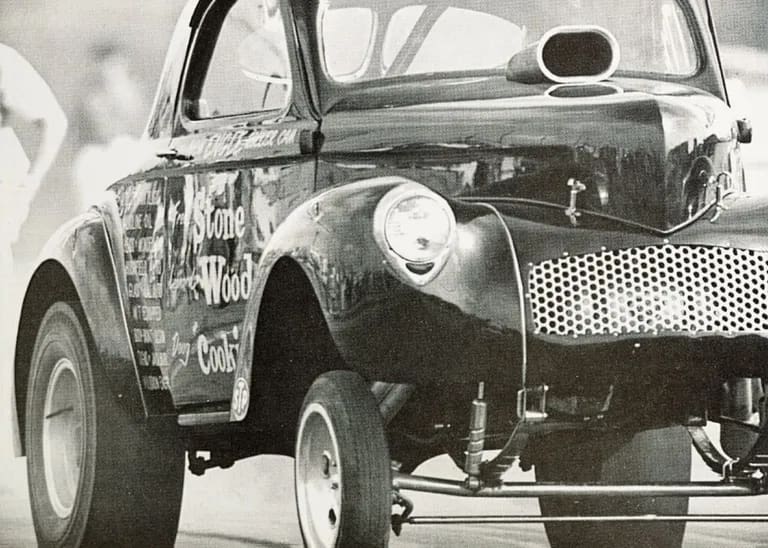
That balance did not last. Factory involvement soon followed and changed the class’s competitive landscape.

“In 1967, after Chrysler said they were no longer selling Funny Cars through dealerships, drivers like Dick Landy and Ronnie Sox moved into Modified Production,” Kepner said. “That changed the landscape.”

Even those factory-backed drivers recognized the contradiction. Several publicly acknowledged they did not belong in the category.

“I have several interviews of Ronnie Sox and Dick Landy saying, ‘We are not in favor of us running Modified Production. That is not a class for us,’” Kepner said.

The ripple effects were lasting. Kepner said Modified Production helped pave the way for heads-up Super Stock, further AHRA experimentation, and eventually Pro Stock.

“The AHRA started the Modified Production class in 1963,” Kepner said. “In January of 1964, NHRA introduced its own Modified Production categories.”

The ethics of that adoption remain debated. The outcome is harder to dispute.

“It may have been questionable, but it was also a smart business decision,” Kepner said.

NHRA’s modern revival of Modified Production echoes that same tension. It is both a nod to history and an acknowledgment that the sport still benefits when rules are written for hot rodders first.

By restoring the class to its pre-1981 roots and removing breakout formats, NHRA is revisiting a concept that once prevented an entire segment of racers from being left behind. History suggests Modified Production succeeds when it remembers exactly who it was built for.
Picture of John Doe

John Doe

Lorem ipsum dolor sit amet consectetur adipiscing elit dolor

More Posts

Send Us A Message

Picture of Bobby Bennett
Bobby Bennett
Thank you for joining us on this journey. Your support and trust inspire us every day to deliver the best in drag racing journalism. We are excited about the future and look forward to continuing to serve you with the same dedication and passion that has defined CompetitionPlus.com from the very beginning.

Don’t miss these other exciting stories!

Explore more action packed posts on Competition Plus, where we dive into the latest in Drag Racing News. Discover a range of topics, from race coverage to in-depth interviews, to keep you informed and entertained.

Josh Hart