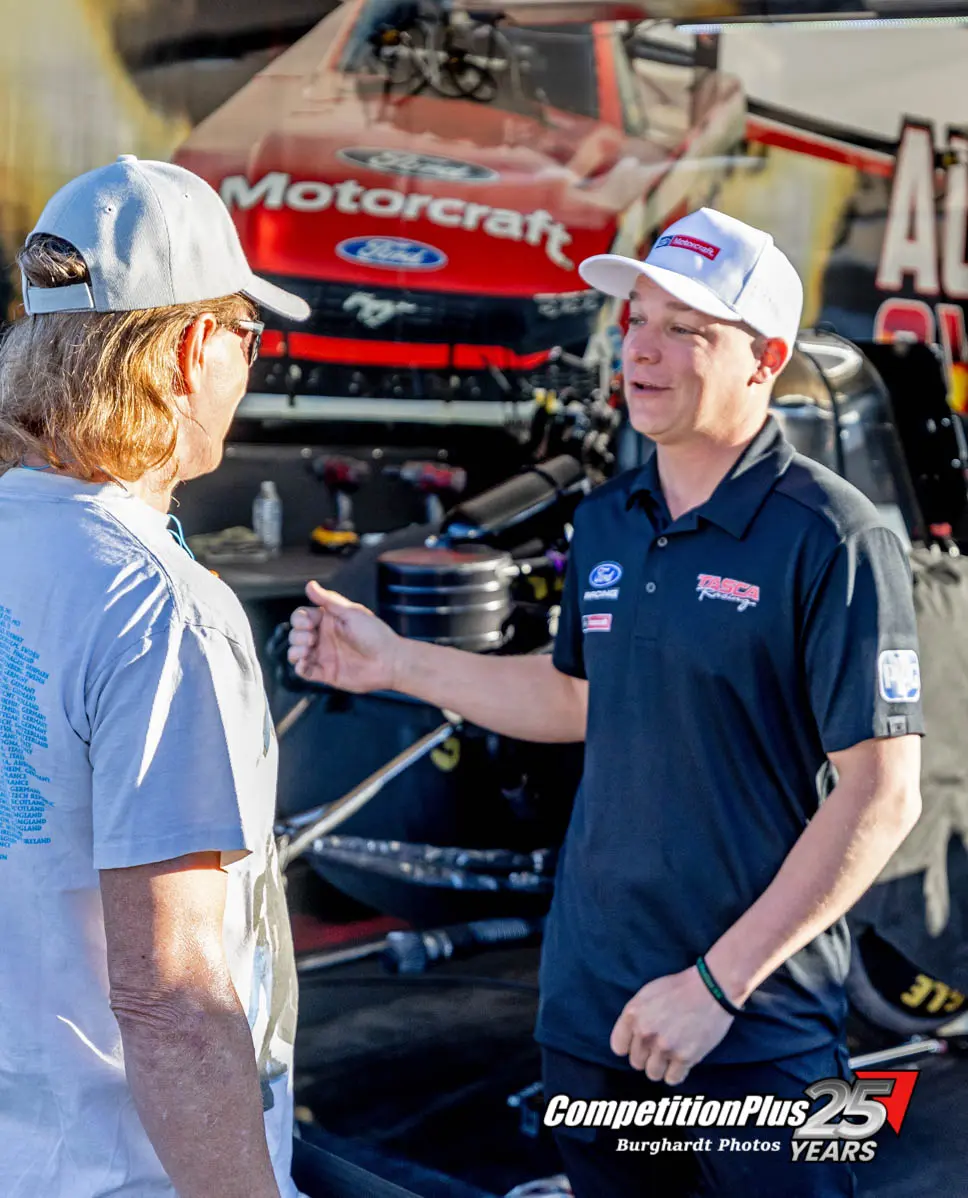

A Funny Car team that measured success in championships now finds itself measured by questions.
Austin Prock knew the transition from John Force Racing to Tasca Racing and the new combination would come with challenges. What he didn’t expect was how quickly the conversation would shift from winning races to wondering what went wrong.
The numbers have not changed who they are. The perception has.
Through two events of the NHRA Mission Foods Drag Racing Series, the results have yet to reflect the expectations attached to a reigning Funny Car champion and a proven team. That gap has fueled a narrative that Prock is well aware of, even if he refuses to entertain it.
The early returns are also out of character. In his first two seasons, Prock had won three rounds of competition heading into the third event and had never experienced a Funny Car DNQ until the season-opener in Gainesville.
“We haven’t been winning, but we have been making progress,” Prock said. “That’s what we need to keep focused on right now.”
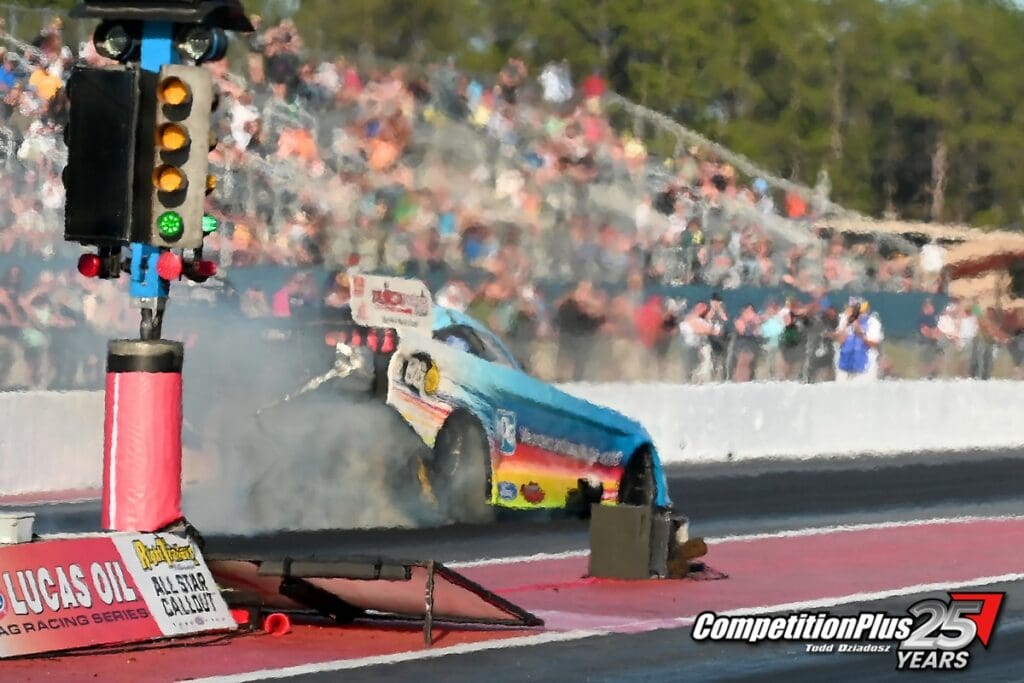

The early-season struggles are not rooted in a lack of capability. Instead, Prock points to logistical delays that disrupted the team’s ability to roll out the combination it intended to debut.
“We were supposed to have the package that we wanted to race with going into Gainesville test,” Prock said. “The Thursday before Phoenix was the day that everything finally showed up.”
Even then, the delivery was incomplete. The team has been forced to compete without the full inventory needed to execute its plan.
“It’s the package that we want, but we don’t have enough to race on it quite yet,” Prock said. “That’s what’s really put us behind the eight-ball.”
Rather than refining performance, the group has been building a baseline in real time. That process has required patience from a team not accustomed to waiting.
“It’s definitely been tough, it’s been a difficult learning curve,” Prock said. “But by the end of this, all of us are going to be more intelligent.”
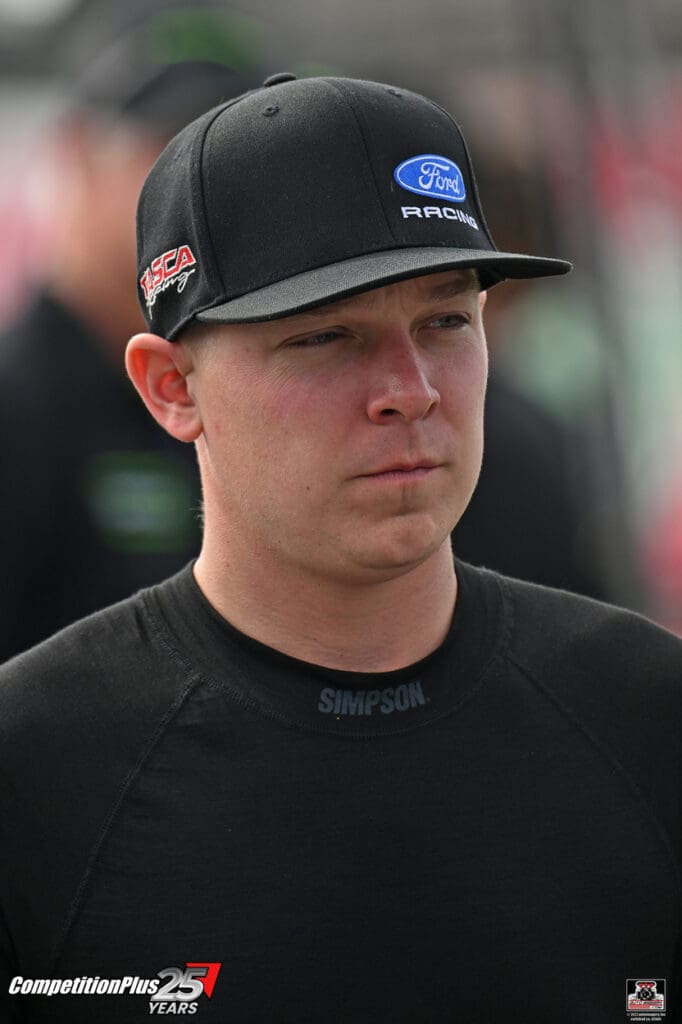
For a team wired to win, patience is not a natural instinct. In Funny Car, progress without results can feel like falling behind.
“We’re competitive. That’s why we race,” Prock said. “If you don’t win, you fail. There’s really no in between.”
Still, Prock insists the internal indicators show a team moving in the right direction. The performance trends, he said, are beginning to align with expectations.
“All the squiggly lines on the computer screen are starting to look like more what we’re used to,” Prock said. “The Prock Rocket looked like it was coming back into its normal form.”
The belief inside the team has not wavered. They are not searching for answers as much as they are waiting for everything to connect.
“When you learn the wrong thing, it’s just as valuable as learning the right thing,” Prock said.

The outside reaction, however, has not waited for that connection. In a results-driven class, opinions form quickly and tend to arrive with conviction.
Prock hears it, but he does not carry it. His focus remains fixed on performance rather than commentary.
“None of that matters at the end of the day,” Prock said. “Us retaliating to what these people are saying, it’s not going to make this race car perform any better.”
He believes the narrative will correct itself the same way it always does — through results. When that happens, the noise will disappear just as quickly as it arrived.
“What’s going to end all of this is start turning on win lights,” Prock said. “As soon as we start winning, there’s going to be crickets.”
Until then, the team remains focused inward. The response, he said, belongs on the racetrack.
“There’s no point in us letting them get under our skin,” Prock said. “Their opinion does not matter to us.”

Inside the team, the strain has come from the grind rather than internal division. The effort required to build a competitive program has been constant and demanding.
“This whole team, we’re beat, we’re worn out,” Prock said. “We’ve been working our ass off since we walked in the door here.”
Time off has been limited, and the schedule has been relentless. The pace has carried from offseason preparation directly into testing and race weekends.
“These two days that the crew guys are getting off right now are the first two days they’ve had off since we walked in the door here three or four months ago,” Prock said.
The workload has tested patience at times, particularly when results have not matched effort. Prock acknowledged the reality while keeping it grounded in perspective.
“All winter long, we were working 15 to 18 hour days, seven days a week,” he said. “It’s been a grind.”
That environment, he added, requires control over what can be controlled. Attitude, in his view, is where that begins.
“When s*** don’t go right, they wake up, they got a bad attitude,” Prock said. “You just got to work through it.”
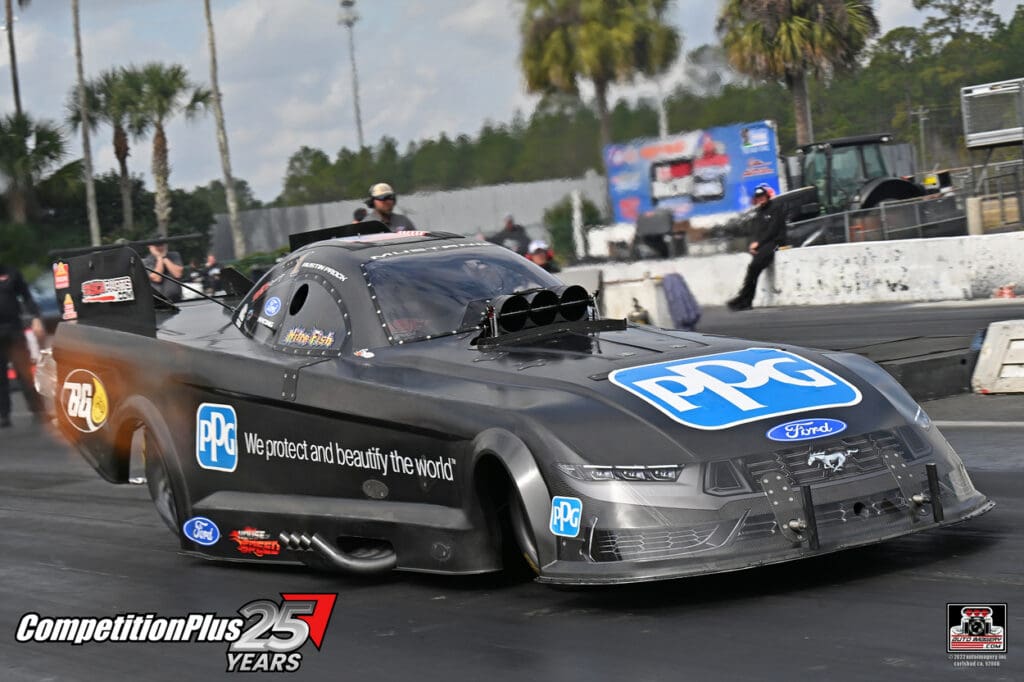
Prock has taken responsibility for setting that tone. As the driver, he understands that his mindset influences the entire team.
“My attitude dictates a lot of what everybody’s attitude is in the pits,” Prock said. “If I go in there and I have a positive attitude and I have fun, it’s going to leap throughout the team.”
That realization led to a reset in Phoenix. After months of pressure, Prock made a conscious decision to approach the weekend differently.
“I was just over being stressed out,” Prock said. “I had enough.”
The change allowed him to reconnect with the reason he competes. For the first time in months, the experience felt natural again.
“Phoenix was the first time I had fun at the racetrack in a long time,” Prock said.

The scrutiny surrounding the team has extended beyond results into perception following the offseason move. Prock addressed that directly, separating performance from character.
“We’re good people. A lot of haters out there, and they just don’t know anything,” Prock said. “Everybody’s got a right to their opinion.”
For him, the reputation inside the pits carries more weight than anything said outside of it. That standard has not changed.
“You can ask anybody in the pits, ‘What do you think about the Procks?’” Prock said. “Ninety-nine percent of them will go, ‘That’s a good family.’”
The focus remains unchanged. The objective is still to win.
“Our job is to come out here and make this Ford win races,” Prock said. “We’re not focused on anything on the Internet.”

In Funny Car, perception can shift as quickly as results. A team that once defined success can just as easily find itself defending it.
For Prock, the early struggles are not evidence of decline but part of a process. The expectation inside the team has not changed, even if the timeline has.
They are not searching for belief. They are waiting for the results to match it.
“And all of a sudden they’re just going to get a left blow here shortly,” Prock said. “It’s coming.”