
by David Hakim
The International Hot Rod Association is again disrupting the drag racing landscape. Following a track-acquisition binge and the purchase of multiple sanctioning bodies — including a Stock Car Series, Offshore Powerboat Series, Pro Watercraft Racing, and fellow drag racing organization WDRA — IHRA is re-emerging as a legitimate option in the motorsports marketplace.
Once considered defunct, the organization is rebuilding momentum both on and off paved surfaces. A recent announcement regarding Pro Stock competition has drawn particular attention within the drag racing community.
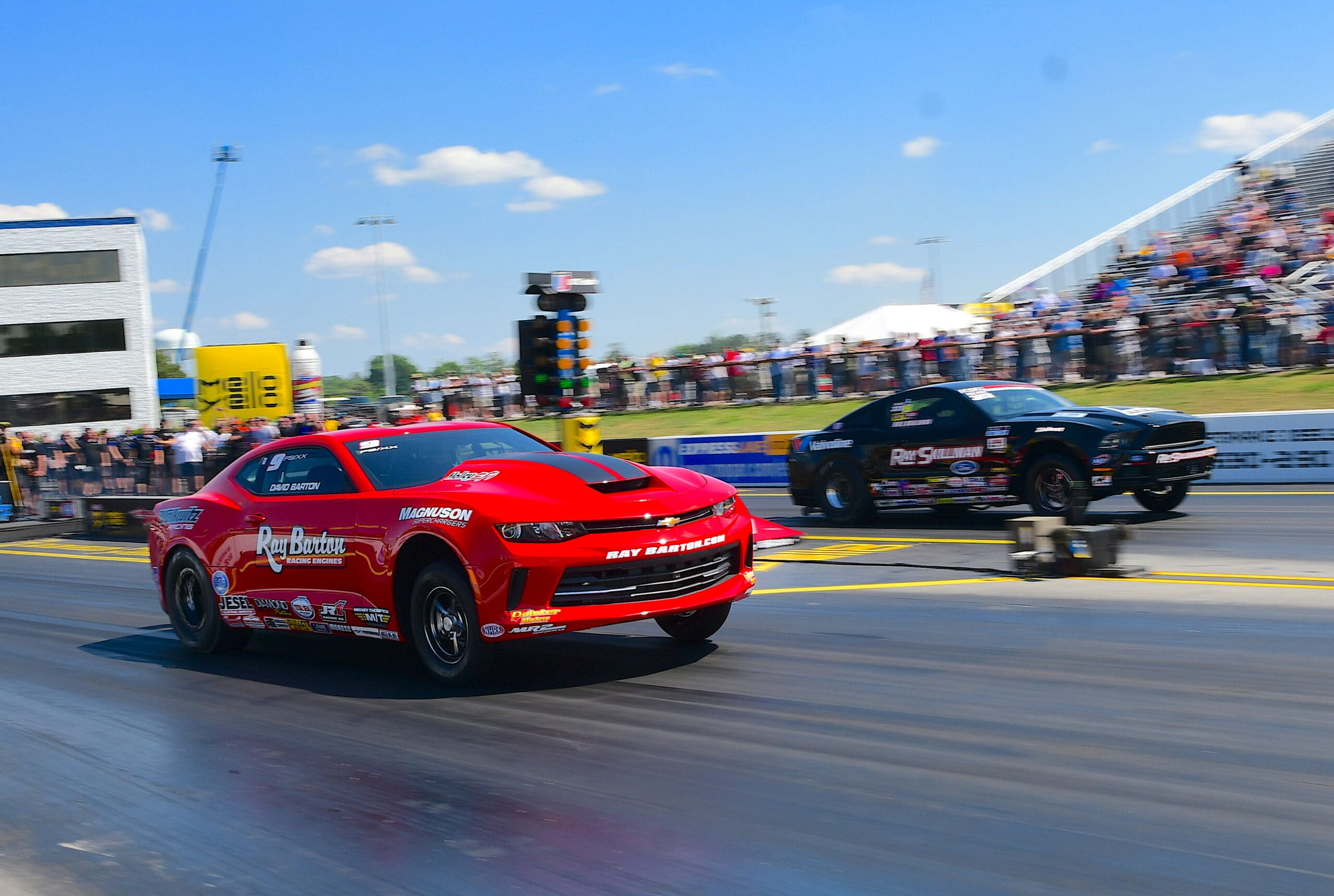
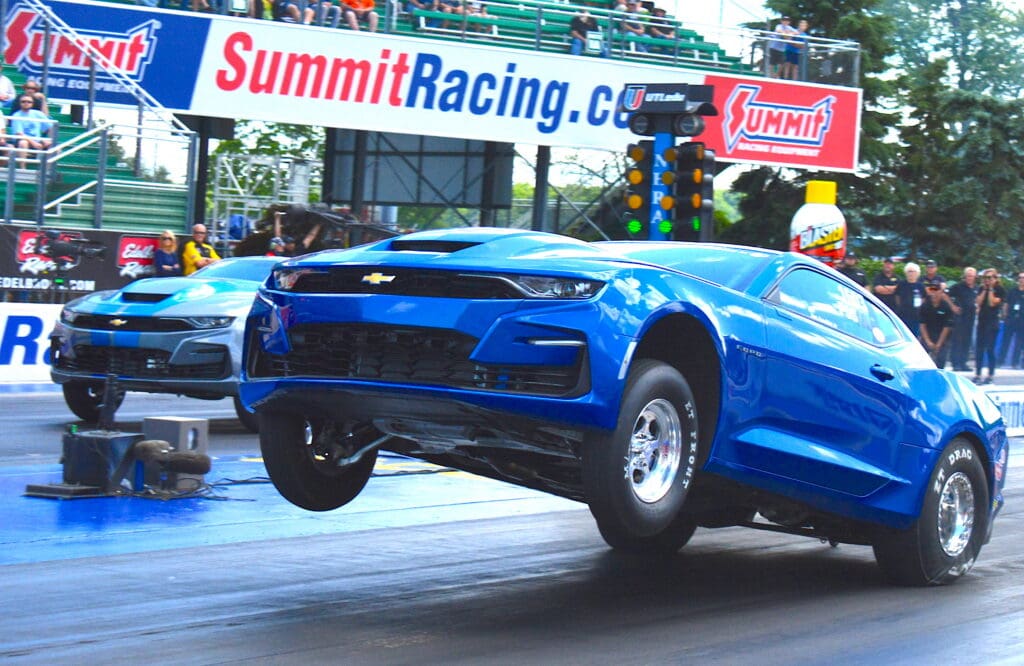
On Jan. 29, 2025, IHRA issued a release announcing that IHRA Pro Stock will replace the Factory Stock Showdown (F.S.S.) category beginning with the 2026 season. The move comes as Factory Stock Showdown has gained popularity in recent years, featuring supercharged Chevrolet COPO Camaros, Ford Cobra Jet Mustangs, and Dodge Challenger Drag Paks in heads-up competition.
IHRA is increasing prize money for the class while elevating its status within the organization’s premier championship platforms, including the Outlaw Nitro Series and Triple Crown Series.
As stated in the IHRA release:
“The International Hot Rod Association (IHRA) announced today that IHRA Pro Stock will officially replace the Factory Stock Showdown (F.S.S.) category beginning with the 2026 season. The IHRA Pro Stock class will feature factory-built, supercharged platforms, including the Chevrolet COPO Camaro, Dodge Drag Pak, and Ford Mustang Cobra Jet.
“IHRA leadership views this move as a natural progression and strengthening of professional drag racing within the organization, aligning with the association’s long-term vision for growth, competitiveness, and national relevance. The class has been built to preserve factory identity while delivering a high-performance, fan-focused racing product.”
One of the lingering concerns surrounding Factory Stock Showdown has been parity, particularly rules governing weight adjustments and pulley changes when one combination appears to gain an advantage. Similar complaints have previously been raised by Chevrolet, Ford, and Mopar competitors when such adjustments were implemented by the NHRA Tech Department.
To address how parity will be enforced under IHRA Pro Stock, IHRA National Tech Director Josh Hamming outlined the organization’s approach to policing the rules.
“The rules will be on par with NHRA’s Factory Stock Showdown class, so a racer can run both sanction bodies with no hassles,” Hamming said. “We’ll maintain the same basic guidelines and will be checking blowers, pulleys, and other items. We’ll be looking at ETs and the front and back splits and make sure the COPOs, Cobra Jets, and Drag Paks are within three to five hundredths of each other.
“Since we really can’t add weight due to the cage certification, we’ll make pulley changes as needed. We’ll treat this as a Pro class, and all races will be quarter-mile except for our event at Galot Motorsports Park, which will be eighth-mile.”
The announcement is significant for racers and fans seeking production-based cars competing in a professional, heads-up format.
“Having a professional class that best represents what fans can purchase from their local car dealership is important and more relatable to fans and casual onlookers,” said Scott “Woody” Woodruff of IHRA. “It’s also very important to have part numbers the OEMs can track and see tangible sales. That’s how manufacturers see value. They want sales and customer interaction that turns into sales, and that’s what this class is all about.”
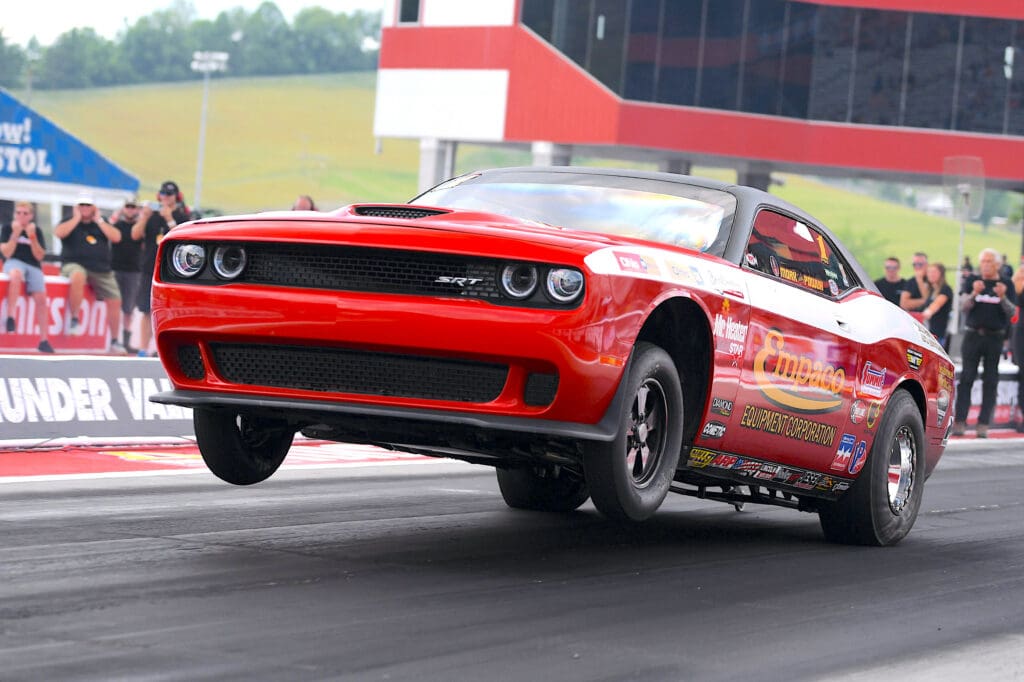
Two-time NHRA Factory Stock Showdown world champion Mark Pawuk views the IHRA move as a positive step. The Challenger Drag Pak driver credited the class with reigniting his passion for drag racing.
“When I started running Factory Stock Showdown for Don Schumacher back in 2018, the class inspired me to get back into drag racing,” Pawuk said. “Factory Stock Showdown reminded me of the early days of Pro Stock when all the Detroit manufacturers were involved.
“I think it’s pretty cool that IHRA is calling it Pro Stock, and it’s also cool they’ve increased the purse and bonuses they’ve put together for the class. I assume the IHRA will follow the same rules as the NHRA has for Factory Stock Showdown. Regardless, I’ll try to run a few IHRA events, but I’ll still race NHRA as I’m going for a three-peat.”
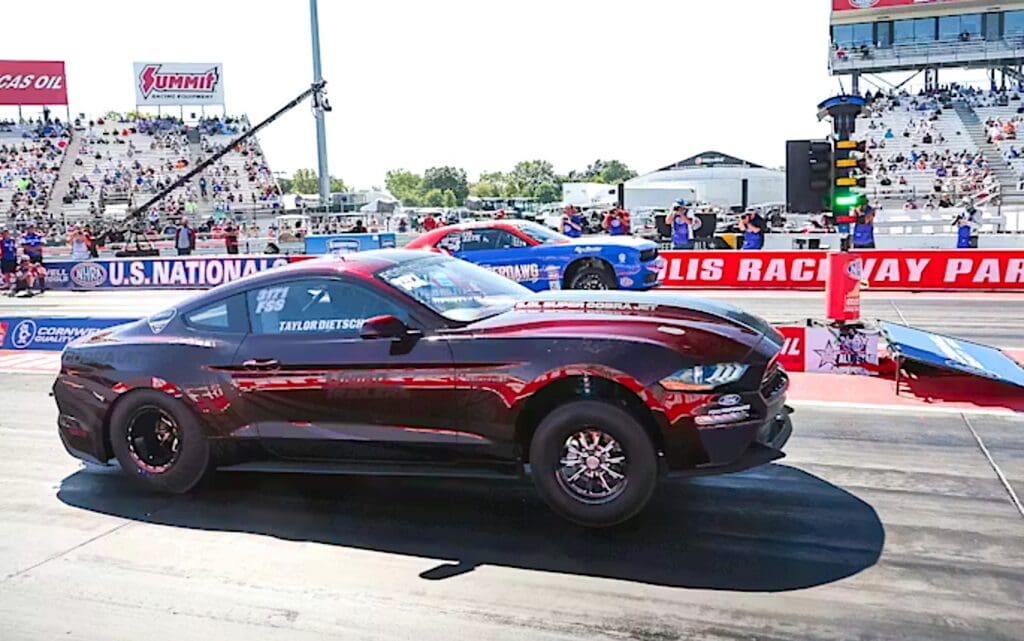
Jason Dietsch, another NHRA Factory Stock Showdown competitor, also plans to compete in IHRA Pro Stock. Alongside his son Taylor, Dietsch has fielded supercharged Ford Cobra Jet Mustangs in a class dominated by Camaros, with occasional Challengers in the mix.
In 2024, Dietsch captured a rare double victory at the Gerber Collision and Glass Route 66 NHRA Nationals in Joliet, Illinois, winning both a rain-delayed Gatornationals final on Saturday and the Route 66 event on Sunday. Taylor Dietsch added to the family’s success by earning a Factory Stock Showdown victory at the NHRA U.S. Nationals.
“When I started racing this class in 2016, the plan was to make it the new Pro Stock,” Dietsch said. “Now, in 2026, the class is getting the recognition it deserves. Darryl Cuttell and the whole IHRA staff are betting big on our class, and I’m excited to see where this can go.”
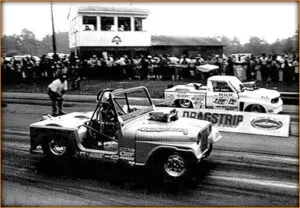
Historically, Pro Stock has long been an IHRA fan favorite, predating the 500-cubic-inch and Mountain Motor eras. In the early 1970s, many NHRA regulars and independent Pro Stock teams competed in IHRA due to more favorable weight breaks for Chrysler HEMI and big-block Chevrolet engines compared to those imposed by rival organizations.
The impact of IHRA Pro Stock’s return will begin to take shape as the 2026 season opens next month at Darana Motorsports Park in Benson, North Carolina. With an emphasis on showroom-appearing vehicles competing heads-up using production-based engine architectures, IHRA has positioned Pro Stock for renewed relevance among fans.