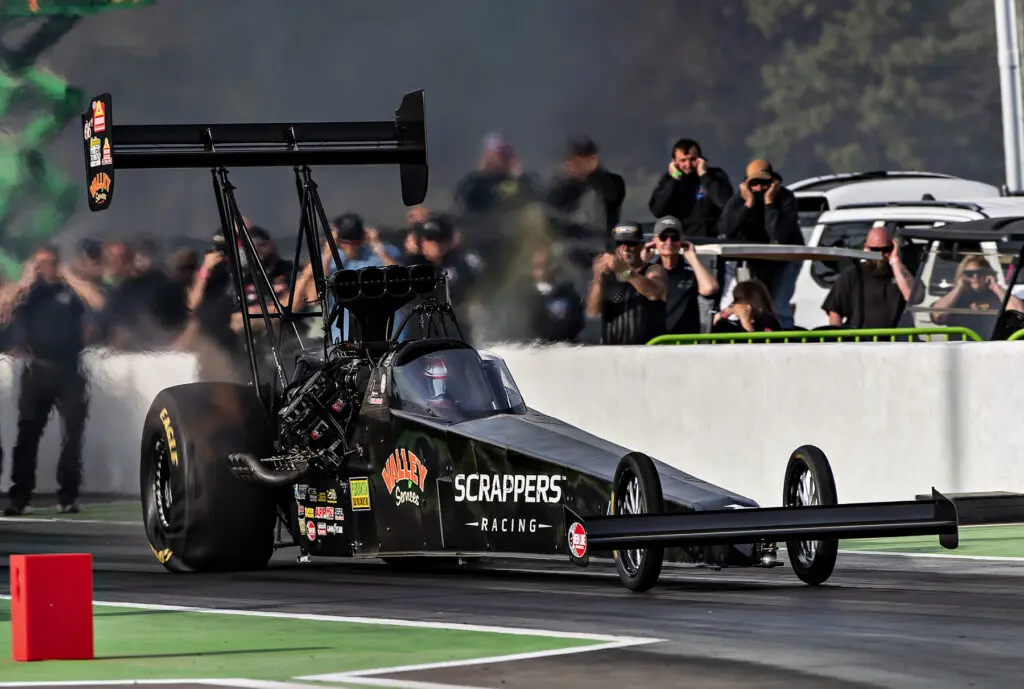
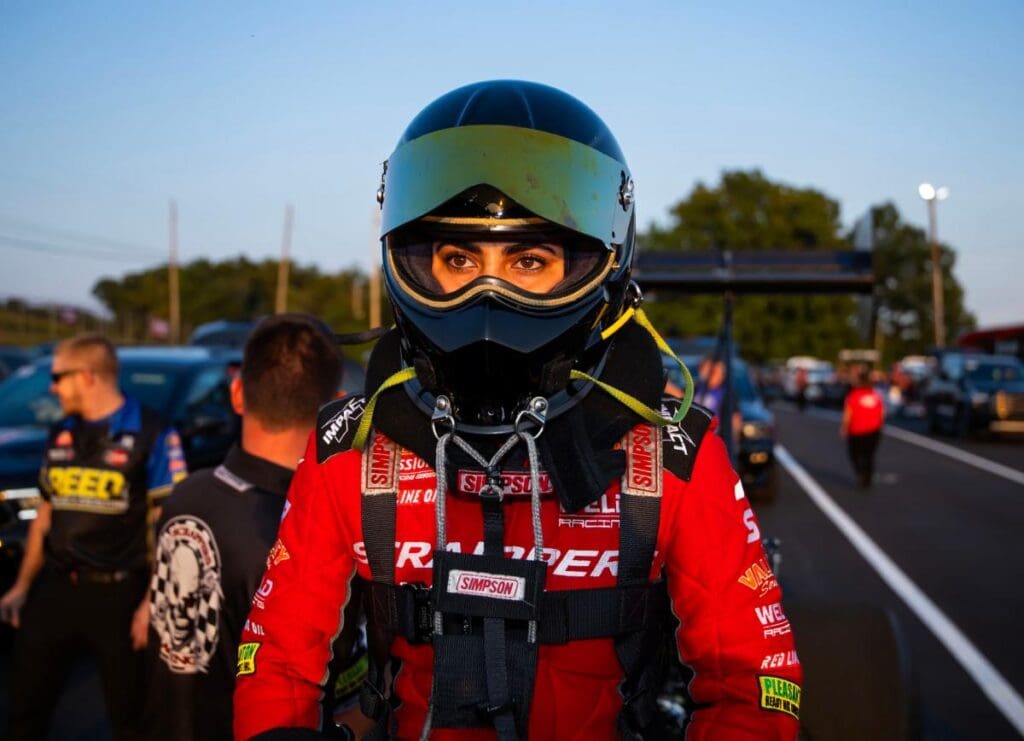
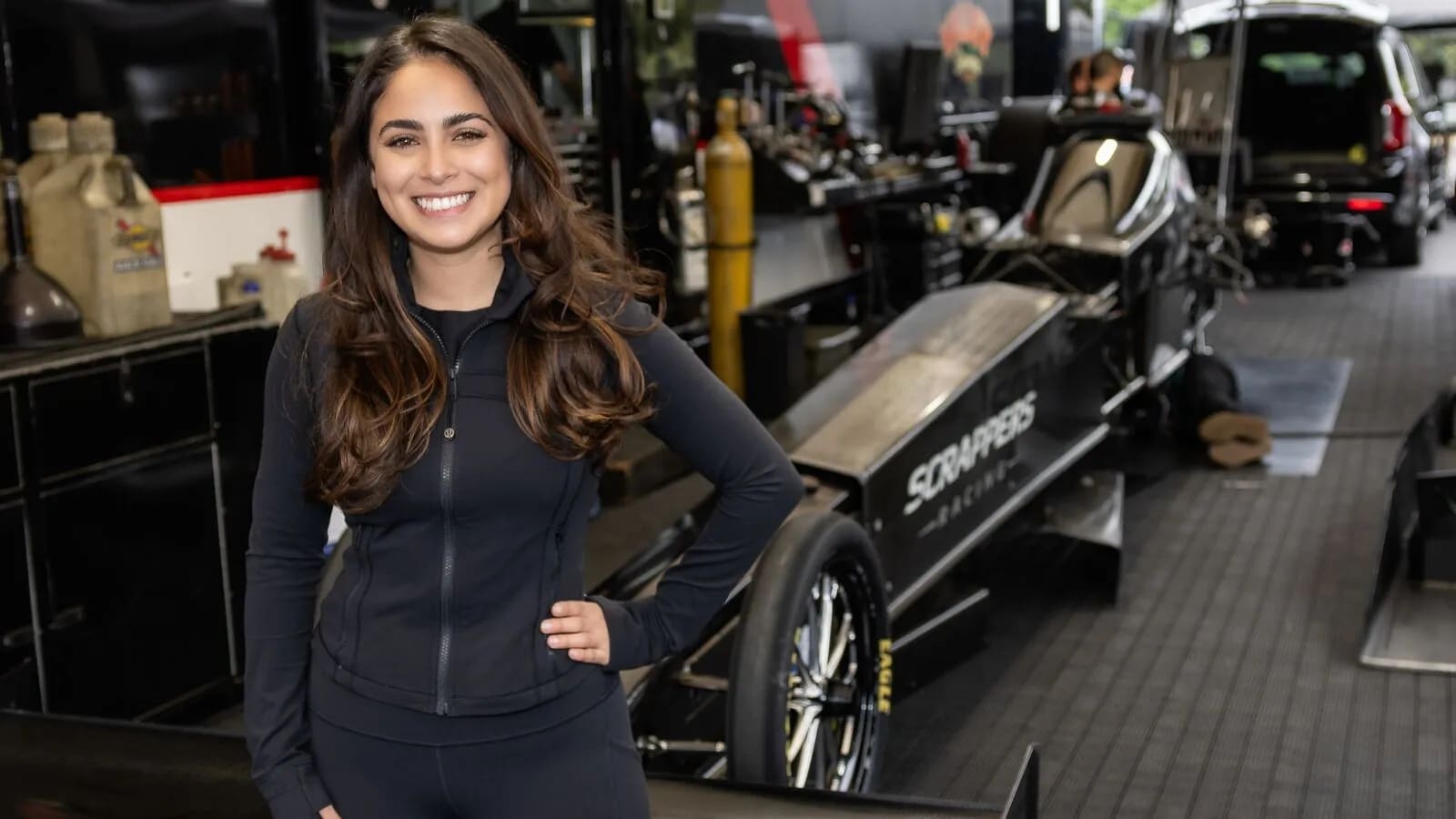
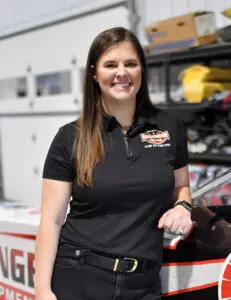
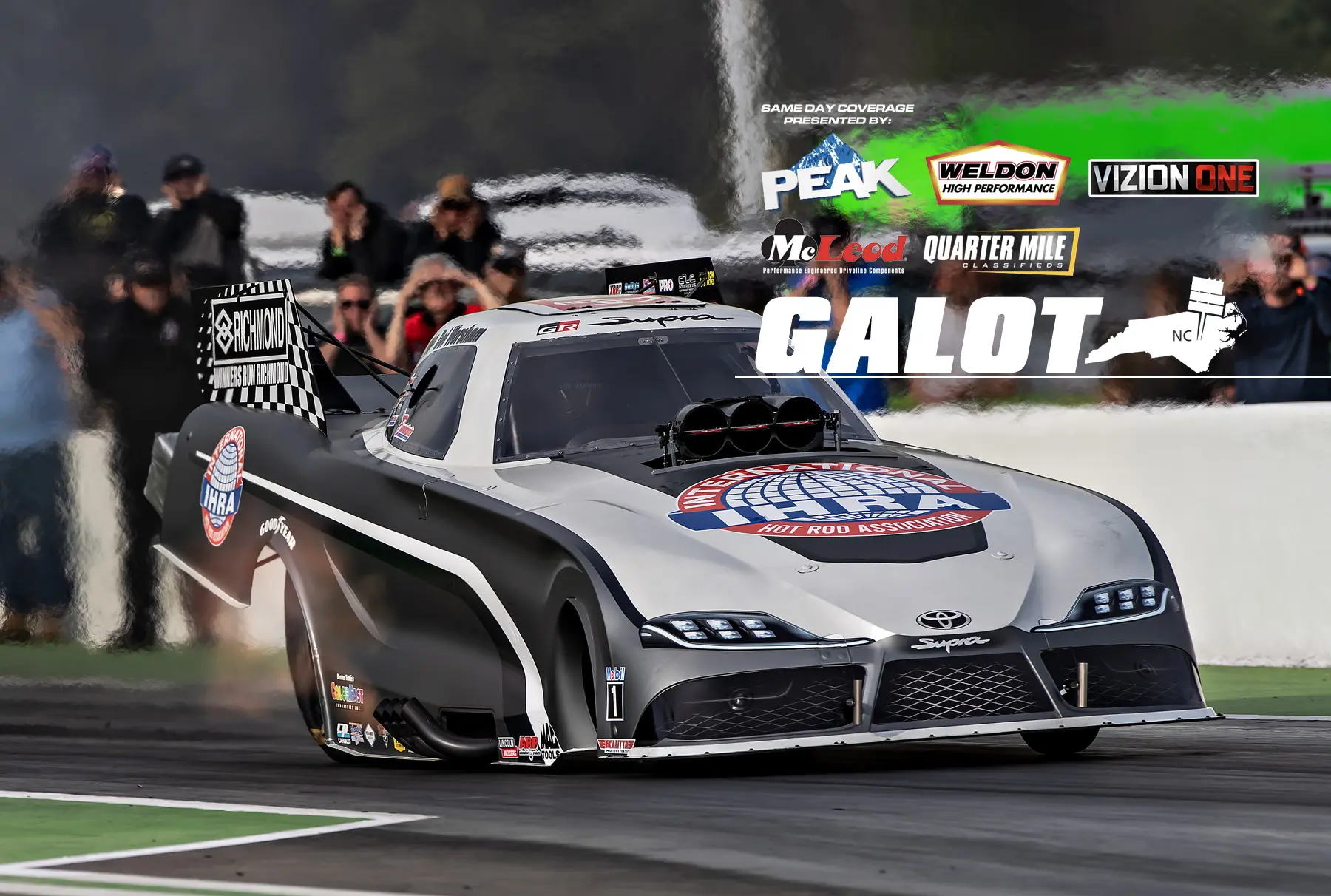
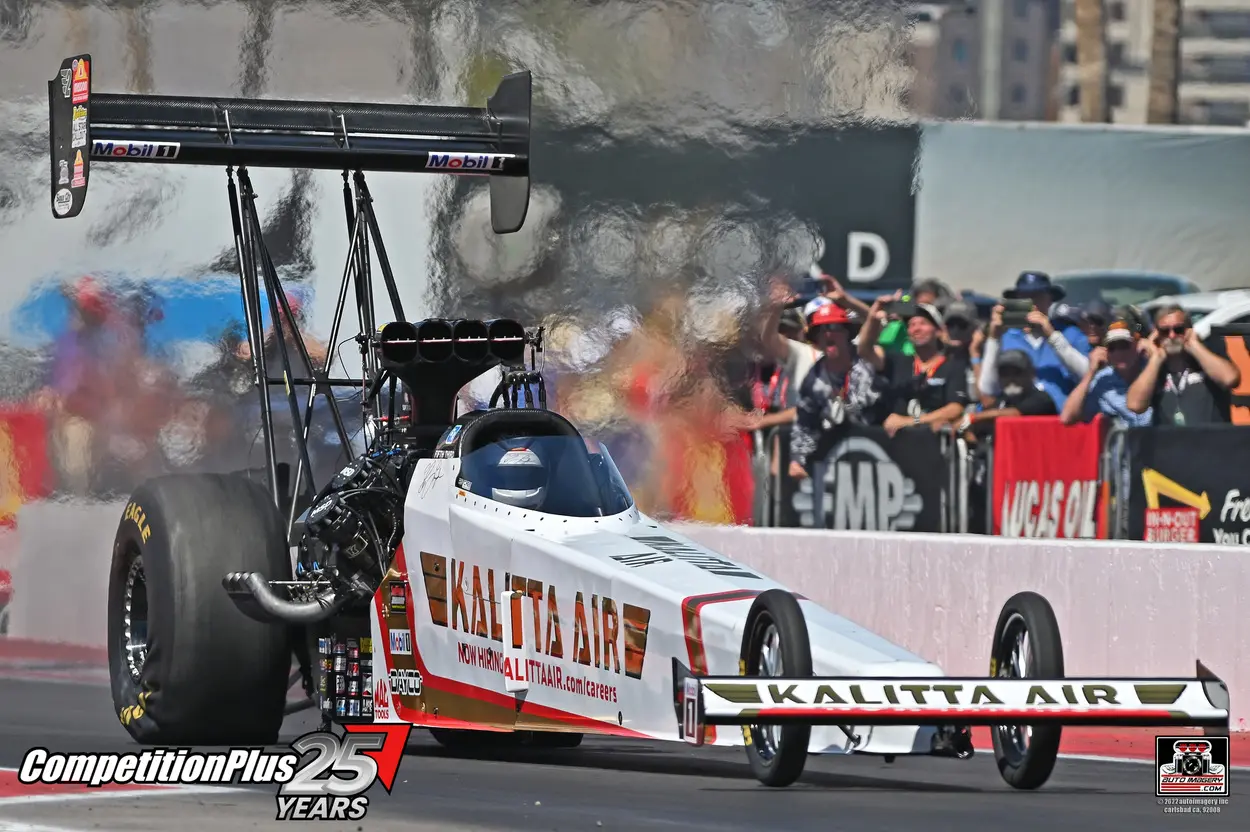
Jasmine Salinas has heard the skepticism about eighth-mile drag racing. Friday night at Durana Motorsports Park in Dunn, North Carolina, she delivered a response measured in elapsed time and physical toll.
Salinas powered to a 3.004-second pass at 285.59 mph, the quickest run in IHRA eighth-mile Top Fuel history. The effort positioned her as the provisional No. 1 qualifier and set up a first-round elimination matchup against Kyle Satenstein.
Her performance also underscored the growing stakes of IHRA’s 2026 Outlaw Nitro Series, which features a $13.6 million championship points fund. With increased purses and a Triple Crown incentive, early-season statements carry amplified significance.
For Salinas, the record-setting run delivered both validation and revelation. The violent physics of eighth-mile acceleration introduced a new dimension to her driving experience.
“That was pretty badass. First time running 1/8 mile and that run knocked the wind out of me,” Salinas said. “When we were going and we just looked over the computer and we got about three Gs on the run and then parachutes came out and it was about negative three Gs.”
She described the physical impact as unlike anything she has encountered in longer-distance racing. The abrupt transition from acceleration to deceleration compressed the experience into a brutal sequence measured in fractions of a second.
“So there was a swing of seven Gs right at the top end and that knocked the wind out of me,” she said. “My back was hurting and I got at the top end. I was like, ‘Oh my God.’”
Her account added nuance to the ongoing debate between traditionalists and advocates of shorter race distances. While some view eighth-mile racing as abbreviated spectacle, Salinas suggested the condensed format intensifies both technical precision and physical demands.
“And Gary Pritchett just ran after me and I looked at him and he’s like, ‘I got the wind knocked out of me too,’” Salinas said. “And I was like, ‘Dude, you’re a much bigger guy.’”
The experience reshaped her perspective on the discipline. Salinas indicated the compressed time frame forces heightened concentration from launch to shutdown.
“So it’s such a wild experience,” she said. “I think that just kind of knocked everything for everybody, questioning whether they need to come watch 1000 foot or 1/8 mile racing.”
She emphasized that the format’s intensity may surprise competitors accustomed to longer runs. The rapid sequence of mechanical and sensory cues demands constant engagement from the cockpit.
“Everything has its own thing that makes it unique and special, I’ve never experienced anything like that running 1000 foot,” Salinas said. “So I think I’m hooked right now.”
Her comments reflected a broader trend within the IHRA’s rejuvenated competition structure. The sanctioning body’s renewed emphasis on spectacle and competitive parity has increased interest among both drivers and fans.
Salinas also linked her performance to incremental gains made during early-season testing. The team treated previous outings as developmental sessions aimed at refining tune-up consistency.
“Oh yeah, absolutely,” she said. “I knew the run obviously was going to be shorter. So you know when you’re running 1000 foot, your brain slows down and you can start kind of feeling the other things happening in the race car.”
In the eighth-mile format, she explained, the compressed timeline eliminates that margin for reflection. Drivers must process mechanical feedback while reacting instantly to changing conditions.
“But you know from the starting line all the way to 660, there’s still a lot going on in that car,” Salinas said. “Me not running full season all the time, being in and out of the car every now and then.”
The breakthrough also carried personal resonance tied to her family’s legacy in nitro racing. Her father, Mike Salinas, became the first recognized Top Fuel driver to record a three-second eighth-mile run.
“I called him immediately after and he was all excited,” She said.
The generational connection amplified the emotional weight of her achievement. Salinas said she could sense her father’s pride even from a distance.
“I could hear him smiling through the phone,” she said. “But yeah, he was trying to come out to this race and now he’s regretting that he didn’t come out.”
As eliminations approach, Salinas remains focused on translating qualifying success into championship momentum. With the IHRA’s expanded points structure in play, early-round victories carry implications that extend beyond a single weekend.
The physical strain of her record-setting pass served as a reminder of the discipline’s unforgiving nature. Short-track nitro racing demands both resilience and adaptability.
“Everybody that’s running 1000 foot, they need to come out here and try this 1/8 mile stuff because I’ve never had the wind knocked out of me like that before and that was a pretty wild ride,” Salinas concluded.
Share the Insights?
Click here to share the article.
CLICK HERE
Facebook
Twitter
LinkedIn
ad space x ad space
ad space x ad space
Competition Plus Team
Since our inception, we have been passionately dedicated to delivering the most accurate, timely, and compelling content in the world of drag racing. Our readers depend on us for the latest news, in-depth features, expert analysis, and exclusive interviews that connect you to the sport’s pulse.
Jasmine Salinas has heard the skepticism about eighth-mile drag racing. Friday night at Durana Motorsports Park in Dunn, North Carolina, she delivered a response measured in elapsed time and physical toll.
Salinas powered to a 3.004-second pass at 285.59 mph, the quickest run in IHRA eighth-mile Top Fuel history. The effort positioned her as the provisional No. 1 qualifier and set up a first-round elimination matchup against Kyle Satenstein.
Her performance also underscored the growing stakes of IHRA’s 2026 Outlaw Nitro Series, which features a $13.6 million championship points fund. With increased purses and a Triple Crown incentive, early-season statements carry amplified significance.
For Salinas, the record-setting run delivered both validation and revelation. The violent physics of eighth-mile acceleration introduced a new dimension to her driving experience.
“That was pretty badass. First time running 1/8 mile and that run knocked the wind out of me,” Salinas said. “When we were going and we just looked over the computer and we got about three Gs on the run and then parachutes came out and it was about negative three Gs.”
She described the physical impact as unlike anything she has encountered in longer-distance racing. The abrupt transition from acceleration to deceleration compressed the experience into a brutal sequence measured in fractions of a second.
“So there was a swing of seven Gs right at the top end and that knocked the wind out of me,” she said. “My back was hurting and I got at the top end. I was like, ‘Oh my God.’”
Her account added nuance to the ongoing debate between traditionalists and advocates of shorter race distances. While some view eighth-mile racing as abbreviated spectacle, Salinas suggested the condensed format intensifies both technical precision and physical demands.
“And Gary Pritchett just ran after me and I looked at him and he’s like, ‘I got the wind knocked out of me too,’” Salinas said. “And I was like, ‘Dude, you’re a much bigger guy.’”
The experience reshaped her perspective on the discipline. Salinas indicated the compressed time frame forces heightened concentration from launch to shutdown.
“So it’s such a wild experience,” she said. “I think that just kind of knocked everything for everybody, questioning whether they need to come watch 1000 foot or 1/8 mile racing.”
She emphasized that the format’s intensity may surprise competitors accustomed to longer runs. The rapid sequence of mechanical and sensory cues demands constant engagement from the cockpit.
“Everything has its own thing that makes it unique and special, I’ve never experienced anything like that running 1000 foot,” Salinas said. “So I think I’m hooked right now.”
Her comments reflected a broader trend within the IHRA’s rejuvenated competition structure. The sanctioning body’s renewed emphasis on spectacle and competitive parity has increased interest among both drivers and fans.
Salinas also linked her performance to incremental gains made during early-season testing. The team treated previous outings as developmental sessions aimed at refining tune-up consistency.
“Oh yeah, absolutely,” she said. “I knew the run obviously was going to be shorter. So you know when you’re running 1000 foot, your brain slows down and you can start kind of feeling the other things happening in the race car.”
In the eighth-mile format, she explained, the compressed timeline eliminates that margin for reflection. Drivers must process mechanical feedback while reacting instantly to changing conditions.
“But you know from the starting line all the way to 660, there’s still a lot going on in that car,” Salinas said. “Me not running full season all the time, being in and out of the car every now and then.”
The breakthrough also carried personal resonance tied to her family’s legacy in nitro racing. Her father, Mike Salinas, became the first recognized Top Fuel driver to record a three-second eighth-mile run.
“I called him immediately after and he was all excited,” She said.
The generational connection amplified the emotional weight of her achievement. Salinas said she could sense her father’s pride even from a distance.
“I could hear him smiling through the phone,” she said. “But yeah, he was trying to come out to this race and now he’s regretting that he didn’t come out.”
As eliminations approach, Salinas remains focused on translating qualifying success into championship momentum. With the IHRA’s expanded points structure in play, early-round victories carry implications that extend beyond a single weekend.
The physical strain of her record-setting pass served as a reminder of the discipline’s unforgiving nature. Short-track nitro racing demands both resilience and adaptability.
“Everybody that’s running 1000 foot, they need to come out here and try this 1/8 mile stuff because I’ve never had the wind knocked out of me like that before and that was a pretty wild ride,” Salinas concluded.
John Doe
Lorem ipsum dolor sit amet consectetur adipiscing elit dolor
Thank you for joining us on this journey. Your support and trust inspire us every day to deliver the best in drag racing journalism. We are excited about the future and look forward to continuing to serve you with the same dedication and passion that has defined CompetitionPlus.com from the very beginning.
Don’t miss these other exciting stories!
Explore more action packed posts on Competition Plus, where we dive into the latest in Drag Racing News. Discover a range of topics, from race coverage to in-depth interviews, to keep you informed and entertained.
Jasmine Salinas has heard the skepticism about eighth-mile drag racing. Friday night at Durana Motorsports Park in Dunn, North Carolina, she delivered a response measured