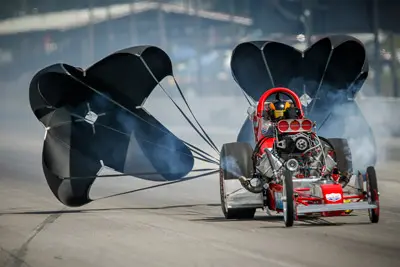
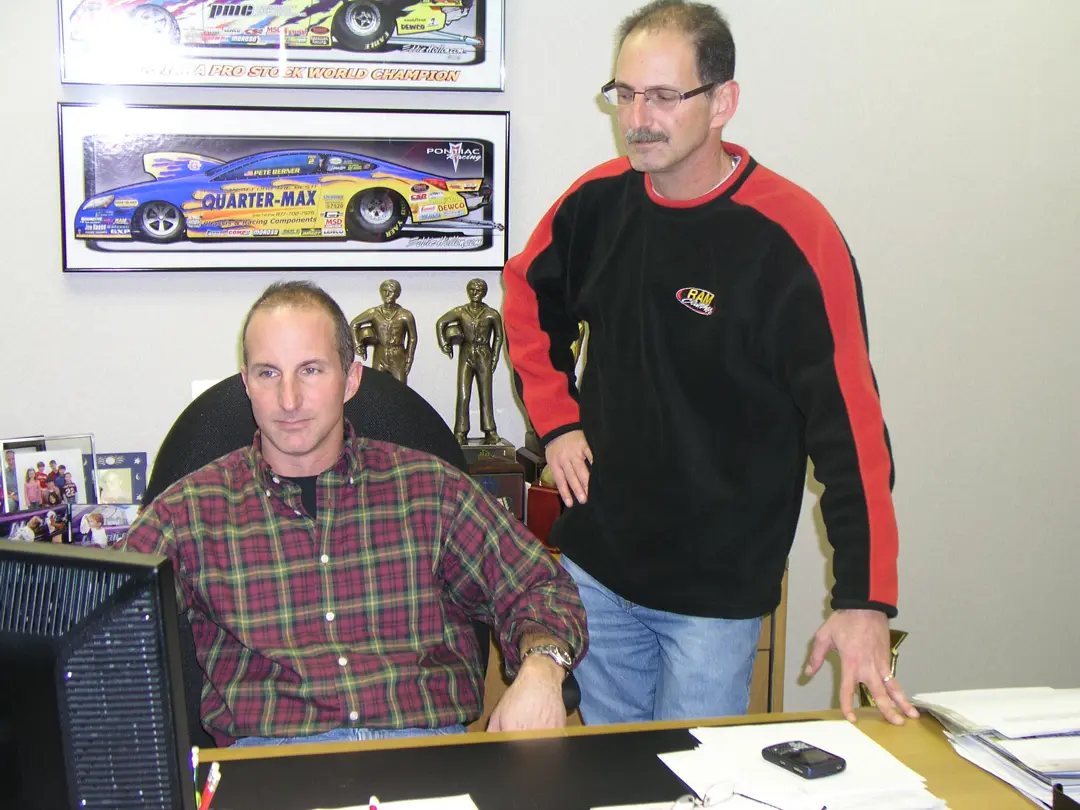
Jon Frank never intended to document drag racing history. He was simply a fan with a video camera, recording weekends at tracks near his Dayton, Ohio, home during the 1980s, with no expectation that anyone beyond himself would ever see the footage.


Frank does not describe himself as a superfan or historian. He insists he was just another spectator in the grandstands, capturing what unfolded in front of him because he enjoyed being there and wanted something to watch when the weekend was over.


That modest view contrasts sharply with how his footage is now received. Hundreds of fans regularly seek out his growing online archive for its unfiltered look at drag racing’s raw sights and sounds, complete with natural track noise and announcers calling the action without polish or post-production.


Frank’s videos feature long stretches of uninterrupted racing, giving viewers context that modern highlight packages often lack. The collection includes both NHRA and IHRA competition, some of it rarely seen since it was never televised.


Among the most notable pieces is footage from the untelevised 1985 IHRA Spring Nationals at Thunder Valley Dragway in Bristol, Tennessee. At the time, Frank had no reason to believe the tape would one day matter beyond his own living room.


If someone had told him in 1985 that fans would one day obsess over that footage, Frank said he would have dismissed the idea outright. “I would say everybody’s glad to be there,” he said. “Everybody was pretty excited. Everybody was on their feet all the time and yelling and waving their hands, rooting for their drivers.”

The atmosphere at Thunder Valley made a lasting impression on him, even then. “Especially the sound at the track and everything was something different for a lot of people,” Frank said. “Especially for me, that was the only time I ever went.”


Frank assumed the tapes would remain personal keepsakes, something to revisit privately. “Probably wouldn’t have believed it,” he said. “I would’ve figured that nobody would probably ever see these.”


He never considered the recordings historical or archival in nature. “I’d just take them home and watch them myself and didn’t ever really think about it being historical or anything,” Frank said.


That perspective changed decades later when online video platforms gave the footage a second life. Frank credits digital sharing for allowing people to finally see what local and regional drag racing looked and sounded like 40 years ago.


“Yes, it makes me feel pretty good,” he said. “I’m really overwhelmed at the support and the reaction a lot of people have.”


The response quickly became personal for viewers. “A lot of people have a lot of comments and talk about cars they used to race or ‘That’s my dad’ or ‘That’s my uncle oiling down the starting line,’” Frank said. “Sometimes they’d really get a kick out of them.”


For many viewers, the videos fill in gaps left by limited television coverage of the era. “A lot of people never really got to see what happened way back then 40 years ago,” Frank said.


As the audience grew, so did requests. Viewers began asking if he had specific races, tracks, or cars preserved on tape, prompting Frank to dig deeper into his archive.


He tries to share what he can, though time and tape quality present limits. “Some of my old VHS tapes didn’t survive the 25-year storage before I was able to get them on DVD, but most of them are still watchable,” he said.


The growing interest surprised him because drag racing was not widely shared among his peers. “A lot of people I know don’t really know much about drag racing,” Frank said. “So it’s hard to really even keep a conversation going.”


That realization made the online response more meaningful. It revealed a larger audience that shared his memories, even if they had been scattered across the country.


Frank estimates he recorded well over 100 videotapes, most of them two-hour VHS cassettes. The volume grew quickly at major events, where he filmed from morning until night.


“When I went to a national event, I would be there for four or five days,” he said, noting he typically recorded about two tapes per day.


That pace added up. Frank estimates he captured at least 20 hours of coverage for events such as the U.S. Nationals, documenting not just racing but the rhythm of the event itself.


The commitment reflected how central drag racing was to his life. Frank said the sport was not a casual hobby but the anchor around which he planned his time off.


“I mainly went to Kil-Kare in Xenia, started in the late ’70s and then through the ’80s, I was there about every week,” he said, describing a routine that shaped his understanding of grassroots racing.


His first major national event came in 1980 at the Spring Nationals in Columbus. “I was really overwhelmed at all the cars and it was just like a giant car show,” Frank said.


He recalled immaculate equipment and performance far beyond what he saw at local tracks. “Everybody went fast and it was really quite a step up from a local track,” he said.


That experience became an annual tradition. Frank attended the Columbus event every year from 1980 through 2006, rarely missing completely, even as life responsibilities grew.


He also committed to the U.S. Nationals beginning in 1982, often using vacation time from work to attend. “That would be my vacation,” Frank said.


Despite the volume of material, the tapes sat untouched for decades. “The oldest ones from 1985, they sat in boxes until 2010,” Frank said.


Concerned about deterioration, he began transferring them. “I bought a VHS DVD recorder and I dubbed everything that I could onto DVD,” he said, fearing further decay.


Some tapes required physical repair just to play. “Some of the tapes broke and some of them, I took the VHS cassette apart and spliced the tape back together,” Frank said.


Others were lost entirely, but he kept everything he could. “I still have all of the original VHS tapes,” he said, along with television broadcasts he recorded during the 1980s.


“I never recorded over them, so I still have a lot of drag racing shows,” Frank said, though he is unsure how many remain usable. “I didn’t throw anything away.”

 

Uploading the footage brought immediate feedback, and the first positive reactions caught him off guard. “I was really surprised,” he said.


“It made me feel like there were some other people on the same page about how I felt about this obsession,” Frank added, referring to long days spent filming nonstop.


Frank traced his move to video back to photography in the early 1980s. “I took a lot of photographs from ’82 to ’84,” he said, before realizing video could capture everything instead of a single frame.


“If I had a video camera, then I wouldn’t have to be trying to get that exact shot,” Frank said, explaining the shift. The result was comprehensive coverage rather than selective highlights.


That approach now defines the appeal of his channel. “I’m really glad a lot of people enjoy watching the old tapes and the old footage,” he said.


He never anticipated the reach. “I just never really thought that it would have quite the impact that it did,” Frank said.


As of his last check, his channel was nearing 1,000 subscribers. “I think I checked a while ago, it was at 959,” he said.


The number itself matters less than the engagement, though he welcomes growth. When the possibility of reaching 10,000 was mentioned, Frank responded simply, “That sounds pretty good.”


 

Share the Insights?

Click here to share the article.

ad space x ad space

ad space x ad space

Competition Plus Team

Since our inception, we have been passionately dedicated to delivering the most accurate, timely, and compelling content in the world of drag racing. Our readers depend on us for the latest news, in-depth features, expert analysis, and exclusive interviews that connect you to the sport’s pulse.

Sign up for our newsletters and email list.

This field is for validation purposes and should be left unchanged.
Name

THE FAN WHO HIT RECORD: JON FRANK’S ACCIDENTAL ARCHIVE OF 1980S DRAG RACING

Jon Frank never intended to document drag racing history. He was simply a fan with a video camera, recording weekends at tracks near his Dayton, Ohio, home during the 1980s, with no expectation that anyone beyond himself would ever see the footage.


Frank does not describe himself as a superfan or historian. He insists he was just another spectator in the grandstands, capturing what unfolded in front of him because he enjoyed being there and wanted something to watch when the weekend was over.


That modest view contrasts sharply with how his footage is now received. Hundreds of fans regularly seek out his growing online archive for its unfiltered look at drag racing’s raw sights and sounds, complete with natural track noise and announcers calling the action without polish or post-production.


Frank’s videos feature long stretches of uninterrupted racing, giving viewers context that modern highlight packages often lack. The collection includes both NHRA and IHRA competition, some of it rarely seen since it was never televised.


Among the most notable pieces is footage from the untelevised 1985 IHRA Spring Nationals at Thunder Valley Dragway in Bristol, Tennessee. At the time, Frank had no reason to believe the tape would one day matter beyond his own living room.


If someone had told him in 1985 that fans would one day obsess over that footage, Frank said he would have dismissed the idea outright. “I would say everybody’s glad to be there,” he said. “Everybody was pretty excited. Everybody was on their feet all the time and yelling and waving their hands, rooting for their drivers.”

The atmosphere at Thunder Valley made a lasting impression on him, even then. “Especially the sound at the track and everything was something different for a lot of people,” Frank said. “Especially for me, that was the only time I ever went.”


Frank assumed the tapes would remain personal keepsakes, something to revisit privately. “Probably wouldn’t have believed it,” he said. “I would’ve figured that nobody would probably ever see these.”


He never considered the recordings historical or archival in nature. “I’d just take them home and watch them myself and didn’t ever really think about it being historical or anything,” Frank said.


That perspective changed decades later when online video platforms gave the footage a second life. Frank credits digital sharing for allowing people to finally see what local and regional drag racing looked and sounded like 40 years ago.


“Yes, it makes me feel pretty good,” he said. “I’m really overwhelmed at the support and the reaction a lot of people have.”


The response quickly became personal for viewers. “A lot of people have a lot of comments and talk about cars they used to race or ‘That’s my dad’ or ‘That’s my uncle oiling down the starting line,’” Frank said. “Sometimes they’d really get a kick out of them.”


For many viewers, the videos fill in gaps left by limited television coverage of the era. “A lot of people never really got to see what happened way back then 40 years ago,” Frank said.


As the audience grew, so did requests. Viewers began asking if he had specific races, tracks, or cars preserved on tape, prompting Frank to dig deeper into his archive.


He tries to share what he can, though time and tape quality present limits. “Some of my old VHS tapes didn’t survive the 25-year storage before I was able to get them on DVD, but most of them are still watchable,” he said.


The growing interest surprised him because drag racing was not widely shared among his peers. “A lot of people I know don’t really know much about drag racing,” Frank said. “So it’s hard to really even keep a conversation going.”


That realization made the online response more meaningful. It revealed a larger audience that shared his memories, even if they had been scattered across the country.


Frank estimates he recorded well over 100 videotapes, most of them two-hour VHS cassettes. The volume grew quickly at major events, where he filmed from morning until night.


“When I went to a national event, I would be there for four or five days,” he said, noting he typically recorded about two tapes per day.


That pace added up. Frank estimates he captured at least 20 hours of coverage for events such as the U.S. Nationals, documenting not just racing but the rhythm of the event itself.


The commitment reflected how central drag racing was to his life. Frank said the sport was not a casual hobby but the anchor around which he planned his time off.


“I mainly went to Kil-Kare in Xenia, started in the late ’70s and then through the ’80s, I was there about every week,” he said, describing a routine that shaped his understanding of grassroots racing.


His first major national event came in 1980 at the Spring Nationals in Columbus. “I was really overwhelmed at all the cars and it was just like a giant car show,” Frank said.


He recalled immaculate equipment and performance far beyond what he saw at local tracks. “Everybody went fast and it was really quite a step up from a local track,” he said.


That experience became an annual tradition. Frank attended the Columbus event every year from 1980 through 2006, rarely missing completely, even as life responsibilities grew.


He also committed to the U.S. Nationals beginning in 1982, often using vacation time from work to attend. “That would be my vacation,” Frank said.


Despite the volume of material, the tapes sat untouched for decades. “The oldest ones from 1985, they sat in boxes until 2010,” Frank said.


Concerned about deterioration, he began transferring them. “I bought a VHS DVD recorder and I dubbed everything that I could onto DVD,” he said, fearing further decay.


Some tapes required physical repair just to play. “Some of the tapes broke and some of them, I took the VHS cassette apart and spliced the tape back together,” Frank said.


Others were lost entirely, but he kept everything he could. “I still have all of the original VHS tapes,” he said, along with television broadcasts he recorded during the 1980s.


“I never recorded over them, so I still have a lot of drag racing shows,” Frank said, though he is unsure how many remain usable. “I didn’t throw anything away.”


Uploading the footage brought immediate feedback, and the first positive reactions caught him off guard. “I was really surprised,” he said.


“It made me feel like there were some other people on the same page about how I felt about this obsession,” Frank added, referring to long days spent filming nonstop.


Frank traced his move to video back to photography in the early 1980s. “I took a lot of photographs from ’82 to ’84,” he said, before realizing video could capture everything instead of a single frame.


“If I had a video camera, then I wouldn’t have to be trying to get that exact shot,” Frank said, explaining the shift. The result was comprehensive coverage rather than selective highlights.


That approach now defines the appeal of his channel. “I’m really glad a lot of people enjoy watching the old tapes and the old footage,” he said.


He never anticipated the reach. “I just never really thought that it would have quite the impact that it did,” Frank said.


As of his last check, his channel was nearing 1,000 subscribers. “I think I checked a while ago, it was at 959,” he said.


The number itself matters less than the engagement, though he welcomes growth. When the possibility of reaching 10,000 was mentioned, Frank responded simply, “That sounds pretty good.”

 

Picture of John Doe

John Doe

Lorem ipsum dolor sit amet consectetur adipiscing elit dolor

More Posts

Send Us A Message

Picture of Bobby Bennett
Bobby Bennett
Thank you for joining us on this journey. Your support and trust inspire us every day to deliver the best in drag racing journalism. We are excited about the future and look forward to continuing to serve you with the same dedication and passion that has defined CompetitionPlus.com from the very beginning.

Don’t miss these other exciting stories!

Explore more action packed posts on Competition Plus, where we dive into the latest in Drag Racing News. Discover a range of topics, from race coverage to in-depth interviews, to keep you informed and entertained.