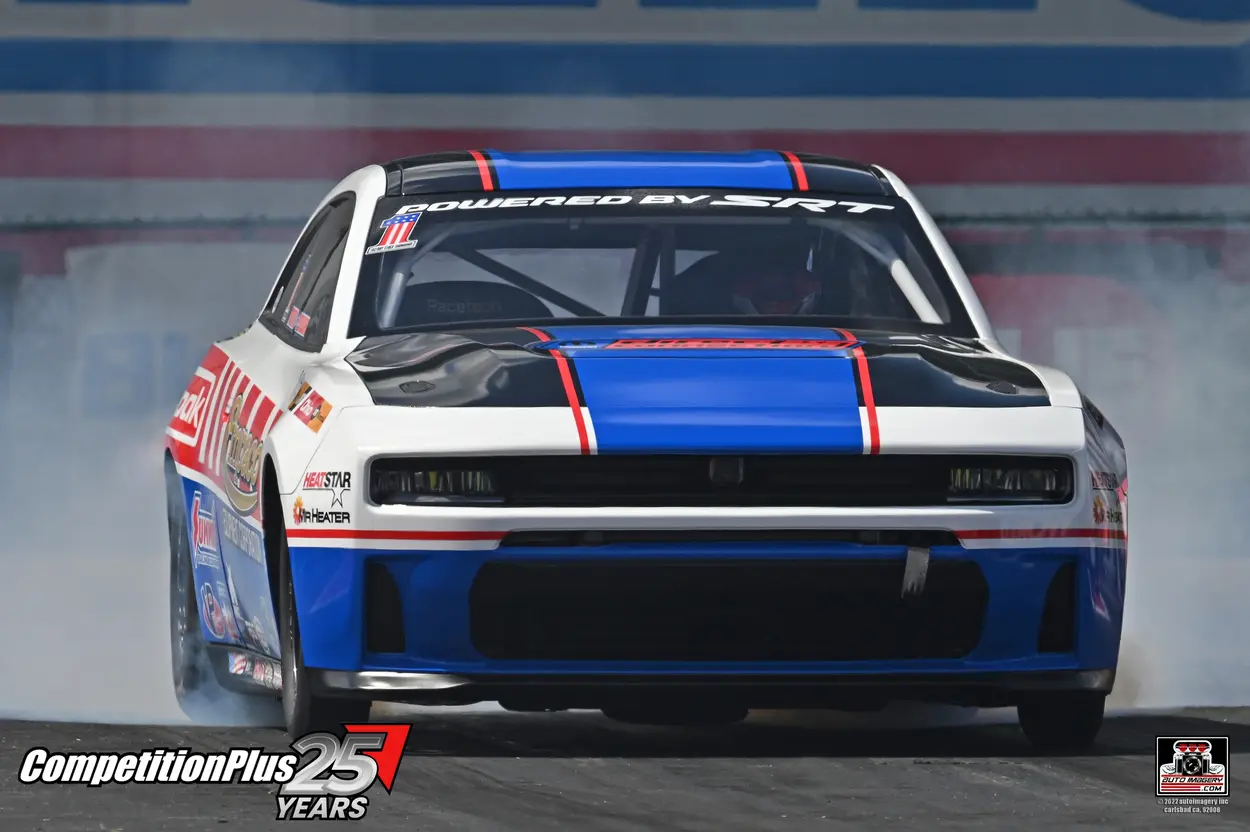

The return of Modified Production to NHRA’s Competition Eliminator category in 2026 is not a rulebook adjustment—it is the culmination of four decades of stubborn passion from racers who refused to let their class die. At the center are stick-shift loyalists who kept the spirit alive in garages, nostalgia meets and independent series long after NHRA shut Modified Eliminator down in 1981.


Back then, NHRA redirected Modified’s core combinations into Comp and Super Stock. Modified Production cars landed in Super Stock, where drivers were forced into dial-ins and breakouts instead of index racing with a clutch pedal. To the racers who had lived and breathed high-rpm shifting and weight-per-cubic-inch strategy, the shift felt like a demotion.


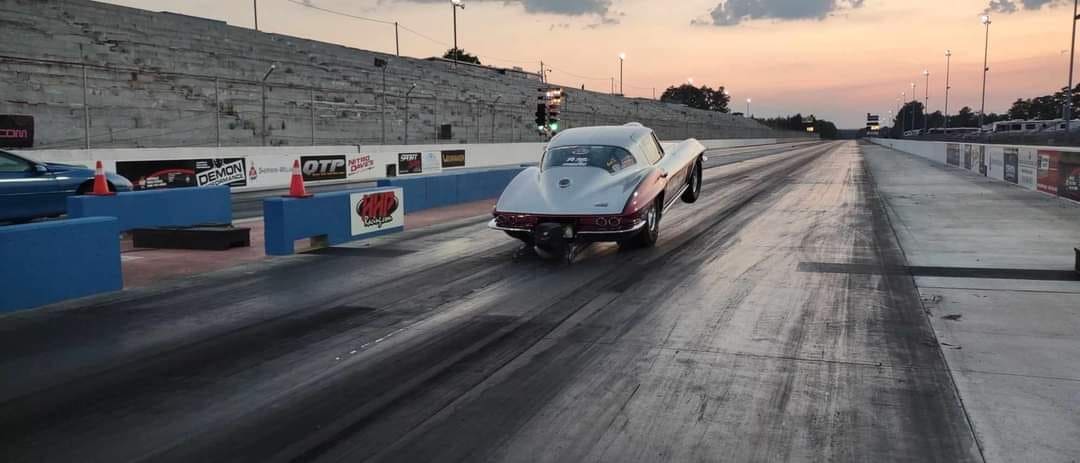
The fight to reclaim identity began in 2023, when Robbie and Tabitha Draughon created the Carolina Classic Modified Production Series (CCMP), running the old combinations in Comp-style, no-breakout fashion. For three seasons they worked the grassroots, building car count and building momentum.


Their most important breakthrough came at a divisional race at Darlington Dragway. “We were at Farmington and we was in the staging lanes and me and Steve Johnson and Strawberry Dixon were there talking,” Robbie recalled. “I said, ‘Man, we got Comp level power in these things… Wouldn’t it be cool if we could run Comp with these cars?’”


Tabitha secured the stage. She negotiated with Division 2 officials to fold a CCMP date into NHRA’s Darlington divisional, giving the vintage stick-shift cars a national-rulebook audience. “She made a deal with Cody Savage to keep CCMP on that date and just run it at NHRA Race,” Robbie said. “That’s how we got there, where we could get it in front of them to present it.”


The message landed immediately. “We had more CCMP cars there than they had Comp cars,” Robbie said. “You’d go there and say, ‘Hey, we can double your car count overnight.’”


But what sold the concept wasn’t quantity—it was presence. “It seemed like every time we were up there, everybody’s at the start line watching,” Robbie said. “People wanted to see what was going on with it.”
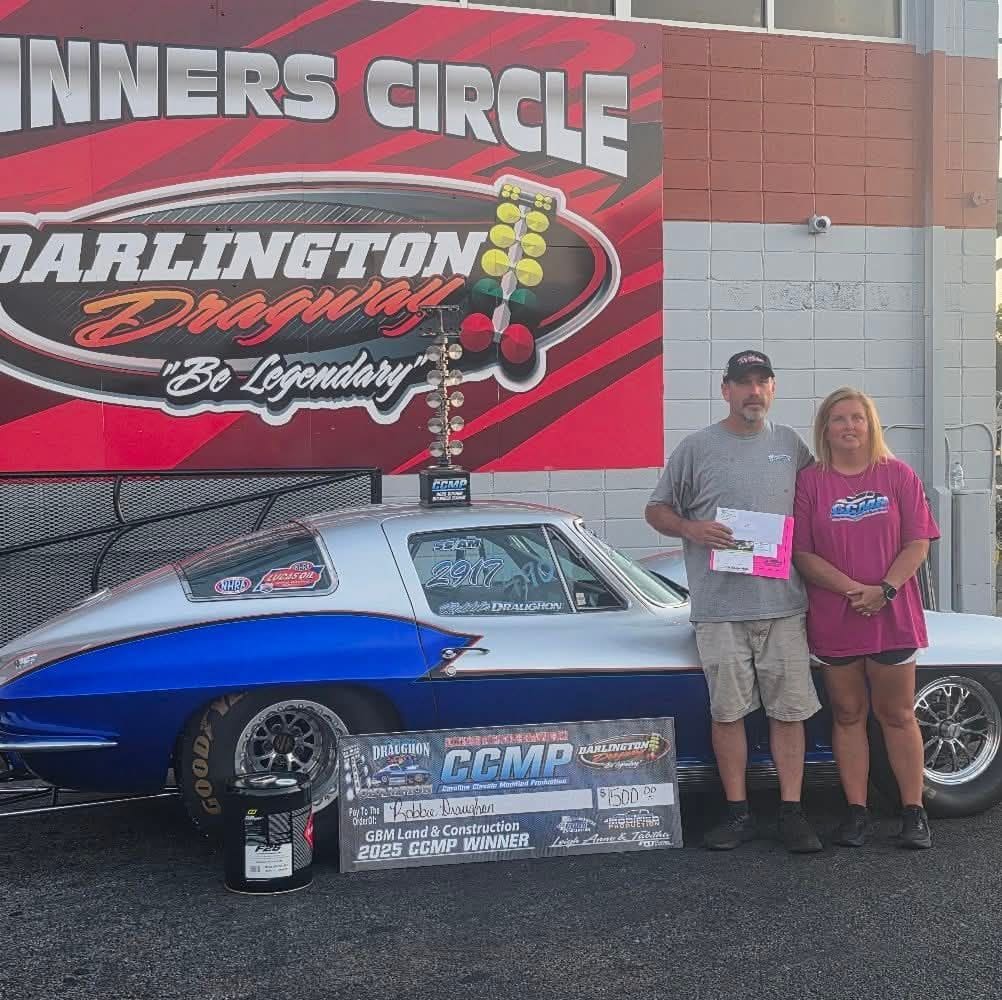
 

Robbie insists the group didn’t change their approach just because NHRA was watching. “I was so caught up trying to win the race, I wasn’t worried about anything else,” he said. “It’s me and Steve Johnson in a dog fight every week.”


For him, the heartbeat of Modified Production has always been index racing without a breakout. “I always wanted to run off index with no breakout one way or the other,” he said. “We’ve done it for three years now with CCMP, and now we’re going to get to do it with NHRA.”


Their Darlington appearance caught the attention of NHRA tech official Joe Lease, who had first seen CCMP earlier in the season. “He really saw what we were trying to do,” Robbie said. Lease became the internal advocate the class needed.


Lease arranged a meeting at the Charlotte national event with the Draughons and NHRA Tech Director Lonnie Grim.


“We talked in length about what the rules needed to be,” Robbie said. “He was on board from the start.”


Lease drafted the early rules. “He gave me a rough draft at Rockingham… He hit the nail on the head,” Robbie said. “We just wanted to keep it where the old cars were relevant.”


That required drawing a line at 1981—the same year Modified Eliminator was disbanded. “Third-gen Camaros… they’d have run away with the class,” Robbie said. “We wanted to keep it where the old cars were competitive.”


If interest grows, Robbie believes more heritage combinations could follow. “If there’s enough interest, I’m sure they’d love to see a full 32-car field,” he said. “If they could get indexes for them, I don’t see why not.”


For second-generation racer Ronnie Yopp Jr., the final November announcement was the realization of years of hope. “Immediately I was extremely happy,” he said. “That was what we’d been wanting to do since CCMP started.”


He remembers the Darlington showcase vividly. “We were an exhibition class… but that was where we had five cars show up, and NHRA was there on the starting line watching us run,” Yopp said. “The sound of the motors… letting the clutch out, shifting… it really excited him.”


Tabitha didn’t hesitate to make her case. “She told them to their face, ‘See, if you had Modified Production in Comp, we would more than double the car count,’” he said.


Yopp admits the temptation to bring back old-school theatrics—a big burnout followed by a hard dry hop. But modern clutch technology made that risky. “With these new clutch setups… you get enough heat in the clutch doing the burnout,” he said. “You don’t need more heat when you’re getting ready to make a run.”


Still, he wonders what might have been. “I went red in first round… I probably should have” done the dry hop, he said.


By Saturday night, momentum had shifted. “She got a really good vibe things were going our way,” Yopp said. “He was another step up the tree.”


The CCMP format shaped the NHRA blueprint. “We only have A through E… so that’s why F was not included,” Yopp said. “And we didn’t want automatics… If it’s going to be a modified car, it should have a stick in it.”


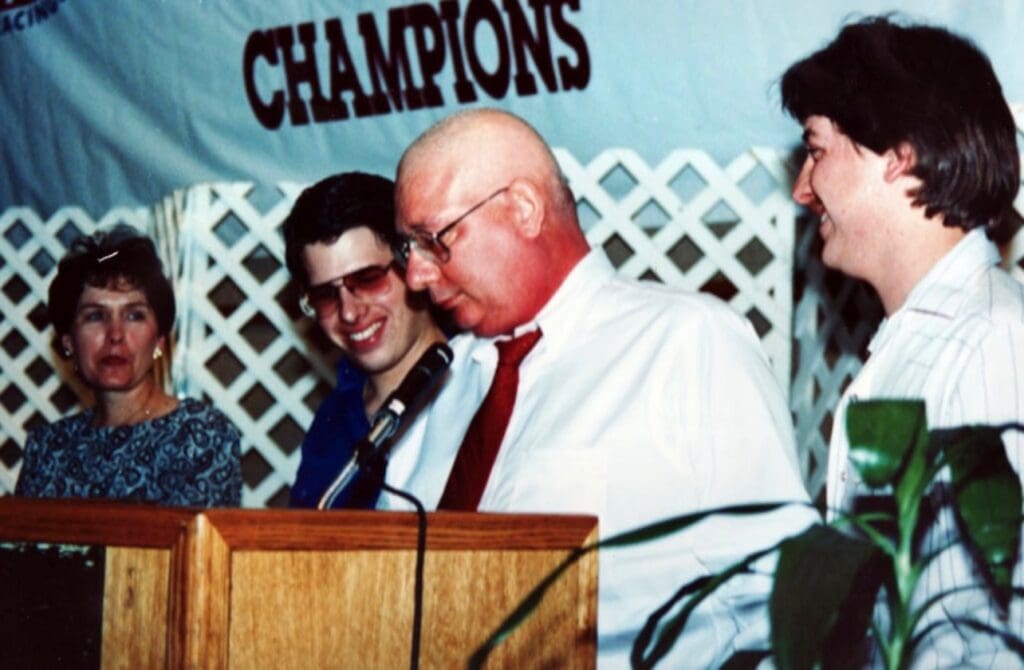
Scott and Jeff Benham join their father Crawford Benham, as he is inducted in the NHRA D4 Hall of Fame. The elder Benham was a two-time Modified Eliminator winner, who competed in the class up until it was disbanded in 1981. The sons are considering a possible return to Comp Eliminator.

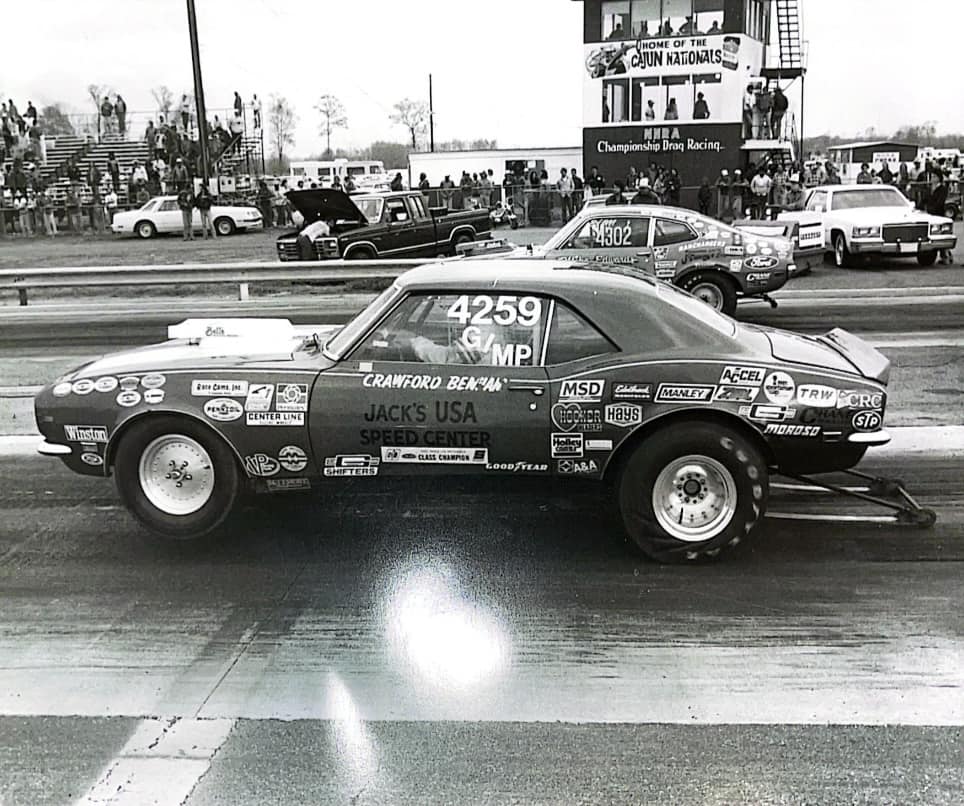
No family represents the soul of Modified Production more than the Benhams. Their father, Crawford Benham, won the 1980 U.S. Nationals in G/Modified Production and was part of one of the toughest Modified programs in the country at East Tex Dragway.


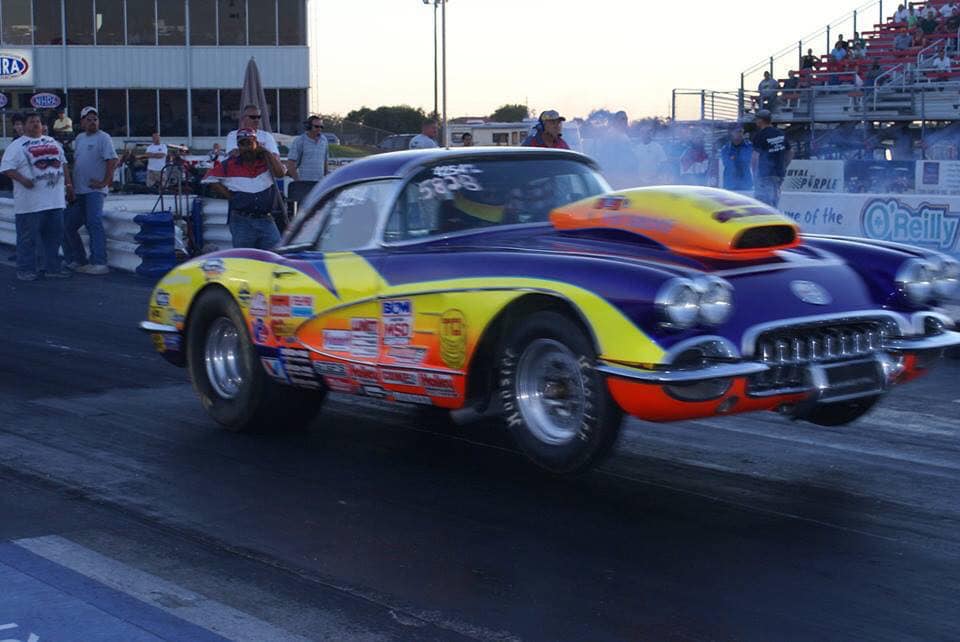
Today, Scott and Jeff Benham keep their family legacy stored in a 1959 Corvette that has been parked for years. “We’ve got a car that’s been sitting a long time,” Scott said. “It’s going to need quite a bit of work… but the history on the car is pretty cool.”


The Corvette last ran as a Super Stock B/Modified entry and once held the national record. But early clutch durability made long races difficult. “Back then the clutches wouldn’t last… so I put an automatic in it and won the first race out,” Scott said.


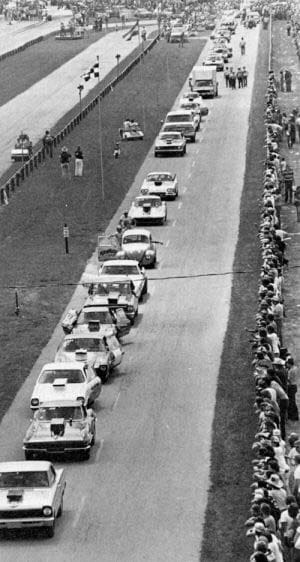
Nothing shaped them more than what happened at Indy in 1981. When NHRA told Modified racers their class would be eliminated, dozens of them staged a protest. During Top Fuel eliminations at the U.S. Nationals, they paraded their Modified cars down the Indianapolis Raceway Park return road—slow, loud, defiant.


Scott watched it unfold. “Man, it felt like the world was ending,” he said. “They ripped the rug out from underneath you.”


Jeff rode in one of the cars. His father refused to participate, worried about hurting his engine. “I knew they were killing the class and I was upset about it,” Jeff said. “It was a bad deal. A lot of those cars had nowhere to go.”


With Comp financially out of reach and Modified gone, the Benhams settled into Super Stock. “We moved down,” Scott said. “But it wasn’t the same.”


Scott still remembers how he learned to drive. “Pull in the water box, put it in third and let the clutch out about 7,000,” his father told him. The first hard dry hop revealed the lesson. “It about ripped my head off… I guess that’s what he’s talking about.”


That’s why the Corvette won’t come out unless the indexes make sense. “We want to be competitive,” he said. “If the indexes don’t allow that, then we’ll have to think along other lines.”


Jeff shared the same reaction when he saw Modified Production’s return announced. “I thought it was pretty cool,” he said. “We’ve had that car sitting a long time… I called my brother and said, ‘Hey, I got an idea.’”


Alongside the car sits a Buick-headed small block built for a Super Stock plan that was never completed. “We de-stroked it… got the motor together, dynoed it,” Jeff said. “Then I got the Pro Mod bug… and it’s been sitting ever since.”


Their original G/Modified Camaro—a real ’68 Z/28—also disappeared after the class was killed. “He wanted $6,000 for it,” Jeff said. “Now I kick myself.”


For the Benhams, the new rules represent redemption. “It definitely got us watching,” Jeff said.


NHRA’s Modified Production section designates classes A/MP through E/MP for 1981-and-earlier factory production cars on a minimum 96-inch wheelbase. Classes are based strictly on weight-per-cubic-inch, ranging from A/MP’s 7.50–8.49 lbs/cube to E/MP’s 11.50–12.49.


Engines must be naturally aspirated, production-based and the same make as the car, with no aluminum blocks. Induction allows two four-barrels or three two-barrels. Splayed-valve V8 heads are legal in A and B; canted or inline in C through E.


Automatics are prohibited. Cars must run three- to five-speed manuals shifted solely by the driver—no air, no hydraulic, no electric assists. Clutchless manuals are allowed; planetary transmissions are not.


Chassis rules require stock frames or approved subframes, with moderate rear-section modifications. Roll cages and parachutes (A and B) are mandatory. Interiors must retain factory-style dashes, carpet and door panels, while bodies must keep stock contours with steel panels except for the hood.


And to the racers who never stopped believing, the rules bring more than a class—they bring closure. “People love hearing those stick shift cars go down through there,” Yopp said. “That’s for sure.”


Share the Insights?

Click here to share the article.

ad space x ad space

ad space x ad space

Competition Plus Team

Since our inception, we have been passionately dedicated to delivering the most accurate, timely, and compelling content in the world of drag racing. Our readers depend on us for the latest news, in-depth features, expert analysis, and exclusive interviews that connect you to the sport’s pulse.

Sign up for our newsletters and email list.

This field is for validation purposes and should be left unchanged.
Name

THE PASSION THAT BROUGHT MODIFIED PRODUCTION BACK TO NHRA COMP

The return of Modified Production to NHRA’s Competition Eliminator category in 2026 is not a rulebook adjustment—it is the culmination of four decades of stubborn passion from racers who refused to let their class die. At the center are stick-shift loyalists who kept the spirit alive in garages, nostalgia meets and independent series long after NHRA shut Modified Eliminator down in 1981.


Back then, NHRA redirected Modified’s core combinations into Comp and Super Stock. Modified Production cars landed in Super Stock, where drivers were forced into dial-ins and breakouts instead of index racing with a clutch pedal. To the racers who had lived and breathed high-rpm shifting and weight-per-cubic-inch strategy, the shift felt like a demotion.


The fight to reclaim identity began in 2023, when Robbie and Tabitha Draughon created the Carolina Classic Modified Production Series (CCMP), running the old combinations in Comp-style, no-breakout fashion. For three seasons they worked the grassroots, building car count and building momentum.


Their most important breakthrough came at a divisional race at Darlington Dragway. “We were at Farmington and we was in the staging lanes and me and Steve Johnson and Strawberry Dixon were there talking,” Robbie recalled. “I said, ‘Man, we got Comp level power in these things… Wouldn’t it be cool if we could run Comp with these cars?’”


Tabitha secured the stage. She negotiated with Division 2 officials to fold a CCMP date into NHRA’s Darlington divisional, giving the vintage stick-shift cars a national-rulebook audience. “She made a deal with Cody Savage to keep CCMP on that date and just run it at NHRA Race,” Robbie said. “That’s how we got there, where we could get it in front of them to present it.”


The message landed immediately. “We had more CCMP cars there than they had Comp cars,” Robbie said. “You’d go there and say, ‘Hey, we can double your car count overnight.’”


But what sold the concept wasn’t quantity—it was presence. “It seemed like every time we were up there, everybody’s at the start line watching,” Robbie said. “People wanted to see what was going on with it.”
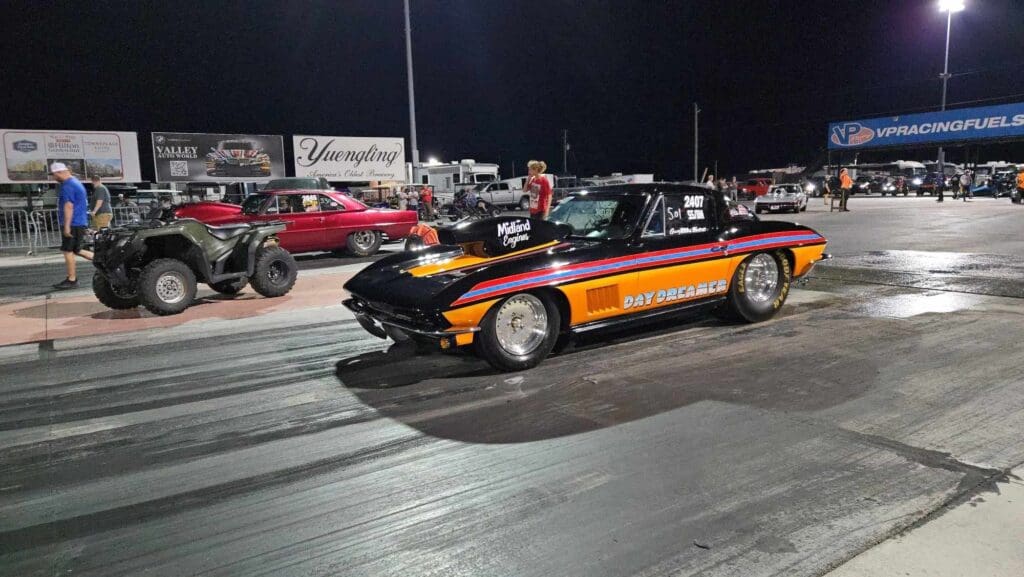
 

Robbie insists the group didn’t change their approach just because NHRA was watching. “I was so caught up trying to win the race, I wasn’t worried about anything else,” he said. “It’s me and Steve Johnson in a dog fight every week.”


For him, the heartbeat of Modified Production has always been index racing without a breakout. “I always wanted to run off index with no breakout one way or the other,” he said. “We’ve done it for three years now with CCMP, and now we’re going to get to do it with NHRA.”


Their Darlington appearance caught the attention of NHRA tech official Joe Lease, who had first seen CCMP earlier in the season. “He really saw what we were trying to do,” Robbie said. Lease became the internal advocate the class needed.


Lease arranged a meeting at the Charlotte national event with the Draughons and NHRA Tech Director Lonnie Grim.


“We talked in length about what the rules needed to be,” Robbie said. “He was on board from the start.”


Lease drafted the early rules. “He gave me a rough draft at Rockingham… He hit the nail on the head,” Robbie said. “We just wanted to keep it where the old cars were relevant.”


That required drawing a line at 1981—the same year Modified Eliminator was disbanded. “Third-gen Camaros… they’d have run away with the class,” Robbie said. “We wanted to keep it where the old cars were competitive.”


If interest grows, Robbie believes more heritage combinations could follow. “If there’s enough interest, I’m sure they’d love to see a full 32-car field,” he said. “If they could get indexes for them, I don’t see why not.”


For second-generation racer Ronnie Yopp Jr., the final November announcement was the realization of years of hope. “Immediately I was extremely happy,” he said. “That was what we’d been wanting to do since CCMP started.”


He remembers the Darlington showcase vividly. “We were an exhibition class… but that was where we had five cars show up, and NHRA was there on the starting line watching us run,” Yopp said. “The sound of the motors… letting the clutch out, shifting… it really excited him.”


Tabitha didn’t hesitate to make her case. “She told them to their face, ‘See, if you had Modified Production in Comp, we would more than double the car count,’” he said.


Yopp admits the temptation to bring back old-school theatrics—a big burnout followed by a hard dry hop. But modern clutch technology made that risky. “With these new clutch setups… you get enough heat in the clutch doing the burnout,” he said. “You don’t need more heat when you’re getting ready to make a run.”


Still, he wonders what might have been. “I went red in first round… I probably should have” done the dry hop, he said.


By Saturday night, momentum had shifted. “She got a really good vibe things were going our way,” Yopp said. “He was another step up the tree.”


The CCMP format shaped the NHRA blueprint. “We only have A through E… so that’s why F was not included,” Yopp said. “And we didn’t want automatics… If it’s going to be a modified car, it should have a stick in it.”
 

Scott and Jeff Benham join their father Crawford Benham, as he is inducted in the NHRA D4 Hall of Fame. The elder Benham was a two-time Modified Eliminator winner, who competed in the class up until it was disbanded in 1981. The sons are considering a possible return to Comp Eliminator.

No family represents the soul of Modified Production more than the Benhams. Their father, Crawford Benham, won the 1980 U.S. Nationals in G/Modified Production and was part of one of the toughest Modified programs in the country at East Tex Dragway.


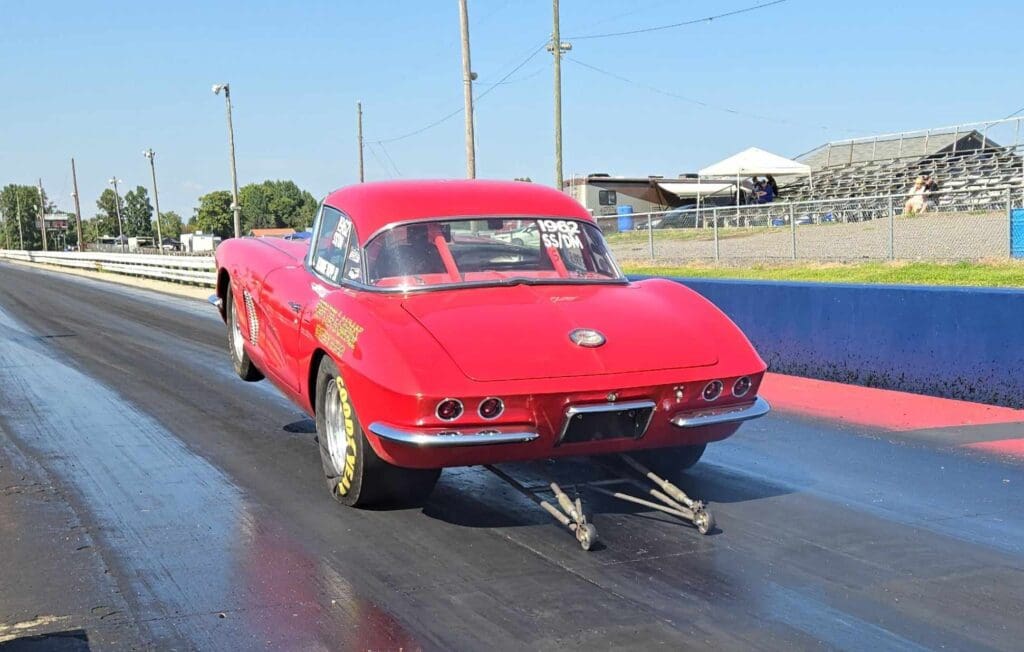
Today, Scott and Jeff Benham keep their family legacy stored in a 1959 Corvette that has been parked for years. “We’ve got a car that’s been sitting a long time,” Scott said. “It’s going to need quite a bit of work… but the history on the car is pretty cool.”


The Corvette last ran as a Super Stock B/Modified entry and once held the national record. But early clutch durability made long races difficult. “Back then the clutches wouldn’t last… so I put an automatic in it and won the first race out,” Scott said.


Nothing shaped them more than what happened at Indy in 1981. When NHRA told Modified racers their class would be eliminated, dozens of them staged a protest. During Top Fuel eliminations at the U.S. Nationals, they paraded their Modified cars down the Indianapolis Raceway Park return road—slow, loud, defiant.


Scott watched it unfold. “Man, it felt like the world was ending,” he said. “They ripped the rug out from underneath you.”


Jeff rode in one of the cars. His father refused to participate, worried about hurting his engine. “I knew they were killing the class and I was upset about it,” Jeff said. “It was a bad deal. A lot of those cars had nowhere to go.”


With Comp financially out of reach and Modified gone, the Benhams settled into Super Stock. “We moved down,” Scott said. “But it wasn’t the same.”

 

Scott still remembers how he learned to drive. “Pull in the water box, put it in third and let the clutch out about 7,000,” his father told him. The first hard dry hop revealed the lesson. “It about ripped my head off… I guess that’s what he’s talking about.”


That’s why the Corvette won’t come out unless the indexes make sense. “We want to be competitive,” he said. “If the indexes don’t allow that, then we’ll have to think along other lines.”


Jeff shared the same reaction when he saw Modified Production’s return announced. “I thought it was pretty cool,” he said. “We’ve had that car sitting a long time… I called my brother and said, ‘Hey, I got an idea.’”


Alongside the car sits a Buick-headed small block built for a Super Stock plan that was never completed. “We de-stroked it… got the motor together, dynoed it,” Jeff said. “Then I got the Pro Mod bug… and it’s been sitting ever since.”


Their original G/Modified Camaro—a real ’68 Z/28—also disappeared after the class was killed. “He wanted $6,000 for it,” Jeff said. “Now I kick myself.”


For the Benhams, the new rules represent redemption. “It definitely got us watching,” Jeff said.

 

NHRA’s Modified Production section designates classes A/MP through E/MP for 1981-and-earlier factory production cars on a minimum 96-inch wheelbase. Classes are based strictly on weight-per-cubic-inch, ranging from A/MP’s 7.50–8.49 lbs/cube to E/MP’s 11.50–12.49.


Engines must be naturally aspirated, production-based and the same make as the car, with no aluminum blocks. Induction allows two four-barrels or three two-barrels. Splayed-valve V8 heads are legal in A and B; canted or inline in C through E.


Automatics are prohibited. Cars must run three- to five-speed manuals shifted solely by the driver—no air, no hydraulic, no electric assists. Clutchless manuals are allowed; planetary transmissions are not.


Chassis rules require stock frames or approved subframes, with moderate rear-section modifications. Roll cages and parachutes (A and B) are mandatory. Interiors must retain factory-style dashes, carpet and door panels, while bodies must keep stock contours with steel panels except for the hood.


And to the racers who never stopped believing, the rules bring more than a class—they bring closure. “People love hearing those stick shift cars go down through there,” Yopp said. “That’s for sure.”


 

Picture of John Doe

John Doe

Lorem ipsum dolor sit amet consectetur adipiscing elit dolor

More Posts

Send Us A Message

Picture of Bobby Bennett
Bobby Bennett
Thank you for joining us on this journey. Your support and trust inspire us every day to deliver the best in drag racing journalism. We are excited about the future and look forward to continuing to serve you with the same dedication and passion that has defined CompetitionPlus.com from the very beginning.

Don’t miss these other exciting stories!

Explore more action packed posts on Competition Plus, where we dive into the latest in Drag Racing News. Discover a range of topics, from race coverage to in-depth interviews, to keep you informed and entertained.