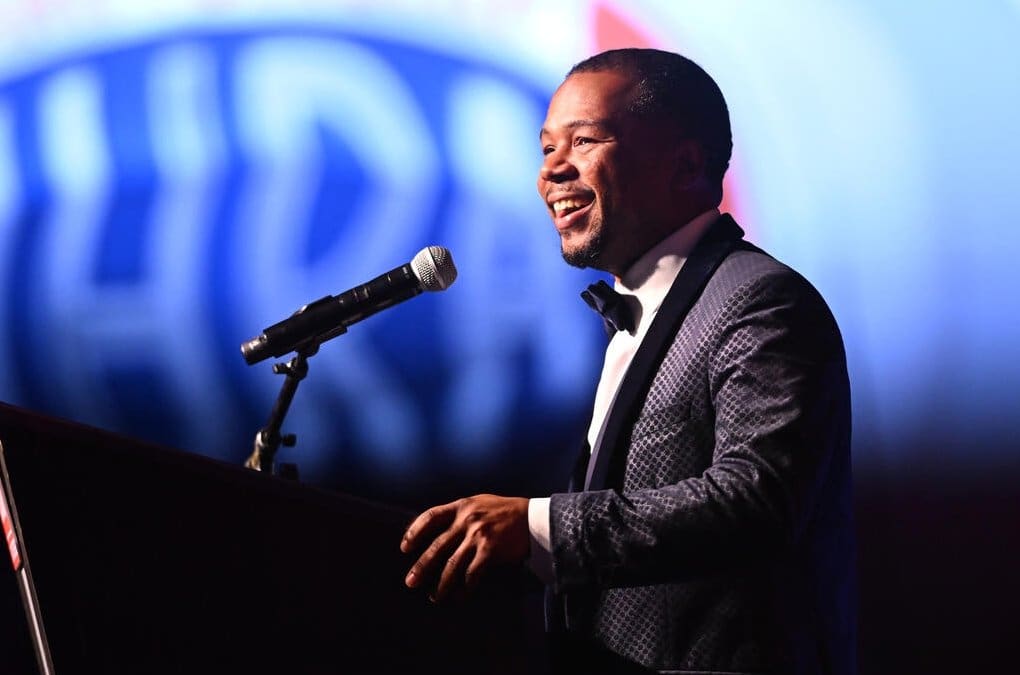

When newly crowned NHRA Pro Stock Motorcycle world champion Richard Gadson stepped to the podium last Monday night, the room had no idea what was coming. Years of swallowed pain, buried memories, and quiet battles rose to the surface all at once.


Almost two years earlier, Gadson had been sitting in the dark corners of financial and emotional collapse. No one reaches a championship stage easily, but the road he traveled was steep enough to bury most people. His journey wasn’t defined by winning rounds—it was defined by surviving years that felt unwinnable.


What he delivered that night wasn’t an “I told you so.” It wasn’t revenge or vindication. It was a testimony about survival, faith, and endurance. It was a declaration of “never give up, never stop staring down adversity until it blinks.”


Days later, he was still processing the moment. Still replaying the faces in the crowd. Still moved by the weight of speaking truth he had kept hidden most of his life.


“So my father passed away when I was six years old,” Gadson said. “My dad was the reason for the season as far as motorcycles, if you want to call it… And my mom, as strong of a woman as she is, as amazing of a woman she is… she had a hard time providing from a financial standpoint.”
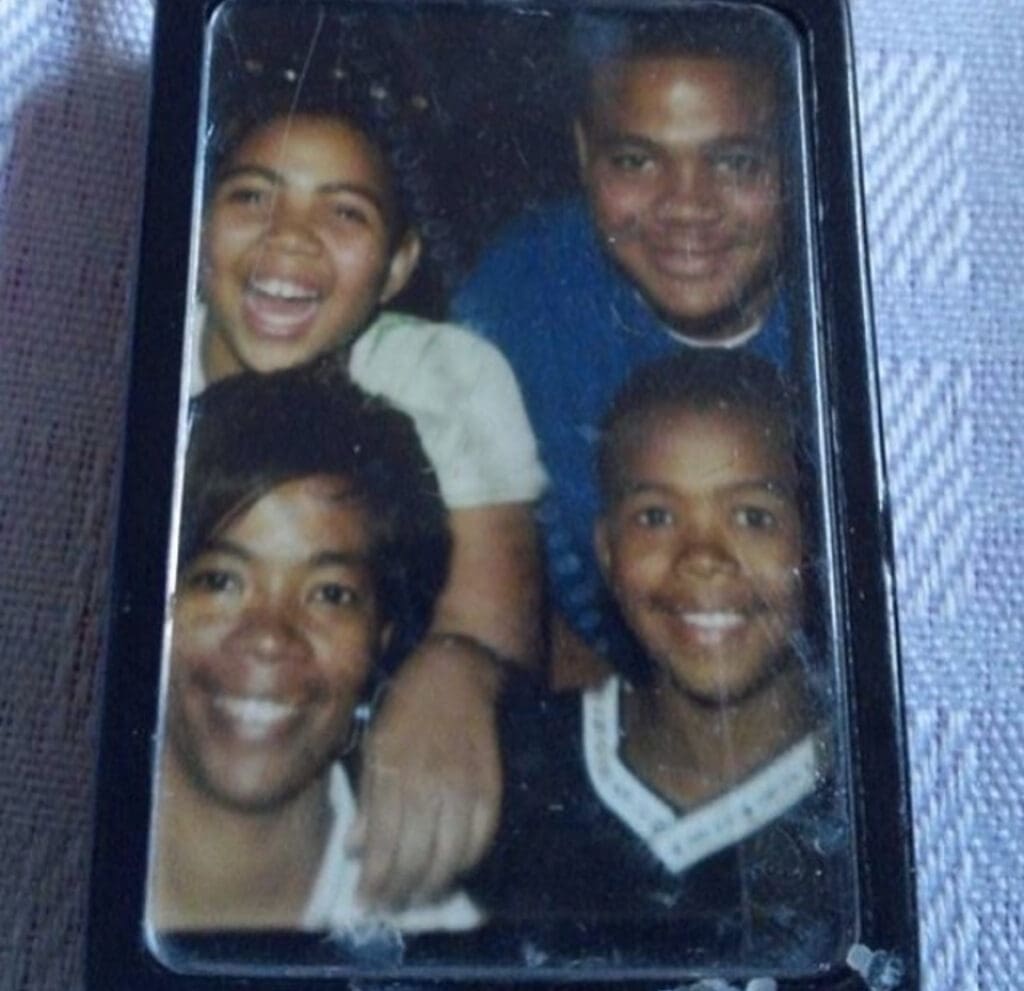
His father’s death was the moment the ground shifted beneath the family. The emotional void was painful enough, but the financial collapse that followed was a blow his mother carried largely alone. Stability vanished overnight, and Richard’s childhood became a cycle of temporary roofs and sudden moves.


“We moved around a lot,” he said. “We lived with family members… we got put out of a lot of places.”


For many kids, moving means inconvenience. For Richard, moving meant uncertainty, loss, and constant reinvention. Between changing schools and changing neighborhoods, consistency was something other children had—not him.


And in the middle of all of it was his mother, working to exhaustion for wages that barely covered necessities. She was doing everything she could to hold the line for her children, and Richard saw the fear behind her strength even when she tried to hide it.


“She made a lot of sacrifices,” he said. “We lost our provider… it was always tough.”


That silent strain shaped him. It taught him resilience, yes—but it also taught him to internalize pain, to keep the weight off others, to push forward even when the bottom was falling out.


Then came the promise that would change the trajectory of his life. In the front row of his father’s funeral, his uncle knelt to the children with a commitment big enough to steady them.


“He said, ‘I promise to be like a father to you guys. I promise to keep you with me.’ And he delivered on that promise.”


Racing didn’t simply enter Gadson’s life through passion—it entered through protection. In a neighborhood where distractions could become temptations and temptations could become consequences, his uncle treated racing as Richard’s shield.


“They treated it like my anti-drug,” he said. “‘You got to have A’s and B’s in school to go racing.’ And they meant that.”


It wasn’t just discipline. It was love. It was structure in a life that had none. Racing gave him a lane to stay in—literally and figuratively.


“I remember I got a C one time, and it was in art class, and they didn’t let me go to a Virginia race,” he said. “That was the last time that happened.”


But the moment that changed everything came without warning. It happened on a school night, when his uncle casually asked if he wanted to ride along to Atco Raceway. He’d been to the track plenty of times, but never on the bike.


“I didn’t know that I was going to ride,” he said.


His uncle reached into the trailer and handed him a racing suit—one discarded by a small-statured student who had outgrown it. It wasn’t planned, it wasn’t ceremonial, it wasn’t even discussed. It was simply his uncle saying,
Let’s see what the boy can do.


“He was like, ‘I bet you this will work for Richard.’”


The next thing he knew, a 13- or 14-year-old Gadson was sitting on his uncle’s 600 Supersport motorcycle, trying to calm his hands, his heartbeat, and the shock of the moment.


“I rode his 600… and I did everything perfect,” he said. “The burnout… the staging procedure… it didn’t look like I was a rookie.”


He wasn’t fast, but he was composed. More importantly, he was alive in a way he never had been before.


“I went to school the next day… I showed everybody,” he said. “That was the biggest thing I had ever done in my life up to that point.”


He felt something he rarely felt anywhere else: belonging. Stability. Identity. Something clicked inside him the moment the visor shut.


“So finally… here I am with my suit and helmet,” he said. “That’s what I remember thinking and feeling like I’m one of those superheroes.”


Racing became more than a passion—it became an escape hatch from the emotional and financial chaos at home. It became therapy. It became purpose.


“Absolutely, 100%,” Gadson said. “I chased racing probably more than most people chase anything.”


But pursuing that release came with its own sacrifices. “I sacrificed girlfriends, jobs… If I asked to go racing and a job wouldn’t give me the day off, I quit,” he said. “I missed birthdays, funerals, graduations. Any and everything that took me away from my happy place, I missed it—from my best friends, from my family members, my siblings, from everybody chasing this.”


And yet he chased on, believing that someday the people he loved would understand why.


“One day they’d understand,” he said. “And I think… they finally do.”


Even those who believed in him often didn’t understand the way he navigated life. To them, he wasn’t honoring the lesson of responsibility his mother modeled. But Richard saw it differently: he wasn’t running from her teachings, he was trying to build something better for her.


“Yeah, it was definitely not responsible and definitely counterproductive,” he admitted. “They wanted me to be more stable… and I messed up my life in a big way.”


He had grown up watching his mother hold the world together with very little. She absorbed stress so her children didn’t have to feel it. She hid the fear, the anxiety, the exhaustion. Richard adopted the same pattern—bearing burdens silently to avoid adding to hers.


“I never told her what I was going through,” he said.


And even when he was broke, scared, and hanging on by threads, he kept pushing because he couldn’t bear the idea of adding more weight to her already heavy world.


His survival instincts—the refusal to quit, the willingness to take risks, the grit that powered his racing—were the very traits forged in the shadow of her sacrifices.


“I’d be damned if I’m going to work this hard and get here and not tell the story.”

PT. 2 - THE BREAKTHROUGH (COMING NOV. 25)

Share the Insights?

Click here to share the article.

ad space x ad space

ad space x ad space

Competition Plus Team

Since our inception, we have been passionately dedicated to delivering the most accurate, timely, and compelling content in the world of drag racing. Our readers depend on us for the latest news, in-depth features, expert analysis, and exclusive interviews that connect you to the sport’s pulse.

Sign up for our newsletters and email list.

This field is for validation purposes and should be left unchanged.
Name

THE RICHARD GADSON STORY, PT. 1: THE WEIGHT HE CARRIED

When newly crowned NHRA Pro Stock Motorcycle world champion Richard Gadson stepped to the podium last Monday night, the room had no idea what was coming. Years of swallowed pain, buried memories, and quiet battles rose to the surface all at once.


Almost two years earlier, Gadson had been sitting in the dark corners of financial and emotional collapse. No one reaches a championship stage easily, but the road he traveled was steep enough to bury most people. His journey wasn’t defined by winning rounds—it was defined by surviving years that felt unwinnable.


What he delivered that night wasn’t an “I told you so.” It wasn’t revenge or vindication. It was a testimony about survival, faith, and endurance. It was a declaration of “never give up, never stop staring down adversity until it blinks.”


Days later, he was still processing the moment. Still replaying the faces in the crowd. Still moved by the weight of speaking truth he had kept hidden most of his life.


“So my father passed away when I was six years old,” Gadson said. “My dad was the reason for the season as far as motorcycles, if you want to call it… And my mom, as strong of a woman as she is, as amazing of a woman she is… she had a hard time providing from a financial standpoint.”

His father’s death was the moment the ground shifted beneath the family. The emotional void was painful enough, but the financial collapse that followed was a blow his mother carried largely alone. Stability vanished overnight, and Richard’s childhood became a cycle of temporary roofs and sudden moves.


“We moved around a lot,” he said. “We lived with family members… we got put out of a lot of places.”


For many kids, moving means inconvenience. For Richard, moving meant uncertainty, loss, and constant reinvention. Between changing schools and changing neighborhoods, consistency was something other children had—not him.


And in the middle of all of it was his mother, working to exhaustion for wages that barely covered necessities. She was doing everything she could to hold the line for her children, and Richard saw the fear behind her strength even when she tried to hide it.


“She made a lot of sacrifices,” he said. “We lost our provider… it was always tough.”


That silent strain shaped him. It taught him resilience, yes—but it also taught him to internalize pain, to keep the weight off others, to push forward even when the bottom was falling out.

 

Then came the promise that would change the trajectory of his life. In the front row of his father’s funeral, his uncle knelt to the children with a commitment big enough to steady them.


“He said, ‘I promise to be like a father to you guys. I promise to keep you with me.’ And he delivered on that promise.”


Racing didn’t simply enter Gadson’s life through passion—it entered through protection. In a neighborhood where distractions could become temptations and temptations could become consequences, his uncle treated racing as Richard’s shield.


“They treated it like my anti-drug,” he said. “‘You got to have A’s and B’s in school to go racing.’ And they meant that.”


It wasn’t just discipline. It was love. It was structure in a life that had none. Racing gave him a lane to stay in—literally and figuratively.


“I remember I got a C one time, and it was in art class, and they didn’t let me go to a Virginia race,” he said. “That was the last time that happened.”


But the moment that changed everything came without warning. It happened on a school night, when his uncle casually asked if he wanted to ride along to Atco Raceway. He’d been to the track plenty of times, but never on the bike.


“I didn’t know that I was going to ride,” he said.


His uncle reached into the trailer and handed him a racing suit—one discarded by a small-statured student who had outgrown it. It wasn’t planned, it wasn’t ceremonial, it wasn’t even discussed. It was simply his uncle saying,
Let’s see what the boy can do.


“He was like, ‘I bet you this will work for Richard.’”


The next thing he knew, a 13- or 14-year-old Gadson was sitting on his uncle’s 600 Supersport motorcycle, trying to calm his hands, his heartbeat, and the shock of the moment.


“I rode his 600… and I did everything perfect,” he said. “The burnout… the staging procedure… it didn’t look like I was a rookie.”


He wasn’t fast, but he was composed. More importantly, he was alive in a way he never had been before.


“I went to school the next day… I showed everybody,” he said. “That was the biggest thing I had ever done in my life up to that point.”

 

He felt something he rarely felt anywhere else: belonging. Stability. Identity. Something clicked inside him the moment the visor shut.


“So finally… here I am with my suit and helmet,” he said. “That’s what I remember thinking and feeling like I’m one of those superheroes.”


Racing became more than a passion—it became an escape hatch from the emotional and financial chaos at home. It became therapy. It became purpose.


“Absolutely, 100%,” Gadson said. “I chased racing probably more than most people chase anything.”


But pursuing that release came with its own sacrifices. “I sacrificed girlfriends, jobs… If I asked to go racing and a job wouldn’t give me the day off, I quit,” he said. “I missed birthdays, funerals, graduations. Any and everything that took me away from my happy place, I missed it—from my best friends, from my family members, my siblings, from everybody chasing this.”


And yet he chased on, believing that someday the people he loved would understand why.


“One day they’d understand,” he said. “And I think… they finally do.”


Even those who believed in him often didn’t understand the way he navigated life. To them, he wasn’t honoring the lesson of responsibility his mother modeled. But Richard saw it differently: he wasn’t running from her teachings, he was trying to build something better for her.


“Yeah, it was definitely not responsible and definitely counterproductive,” he admitted. “They wanted me to be more stable… and I messed up my life in a big way.”


He had grown up watching his mother hold the world together with very little. She absorbed stress so her children didn’t have to feel it. She hid the fear, the anxiety, the exhaustion. Richard adopted the same pattern—bearing burdens silently to avoid adding to hers.


“I never told her what I was going through,” he said.


And even when he was broke, scared, and hanging on by threads, he kept pushing because he couldn’t bear the idea of adding more weight to her already heavy world.


His survival instincts—the refusal to quit, the willingness to take risks, the grit that powered his racing—were the very traits forged in the shadow of her sacrifices.


“I’d be damned if I’m going to work this hard and get here and not tell the story.”

PT. 2 - THE BREAKTHROUGH (COMING NOV. 25)

Picture of John Doe

John Doe

Lorem ipsum dolor sit amet consectetur adipiscing elit dolor

More Posts

Send Us A Message

Picture of Bobby Bennett
Bobby Bennett
Thank you for joining us on this journey. Your support and trust inspire us every day to deliver the best in drag racing journalism. We are excited about the future and look forward to continuing to serve you with the same dedication and passion that has defined CompetitionPlus.com from the very beginning.

Don’t miss these other exciting stories!

Explore more action packed posts on Competition Plus, where we dive into the latest in Drag Racing News. Discover a range of topics, from race coverage to in-depth interviews, to keep you informed and entertained.