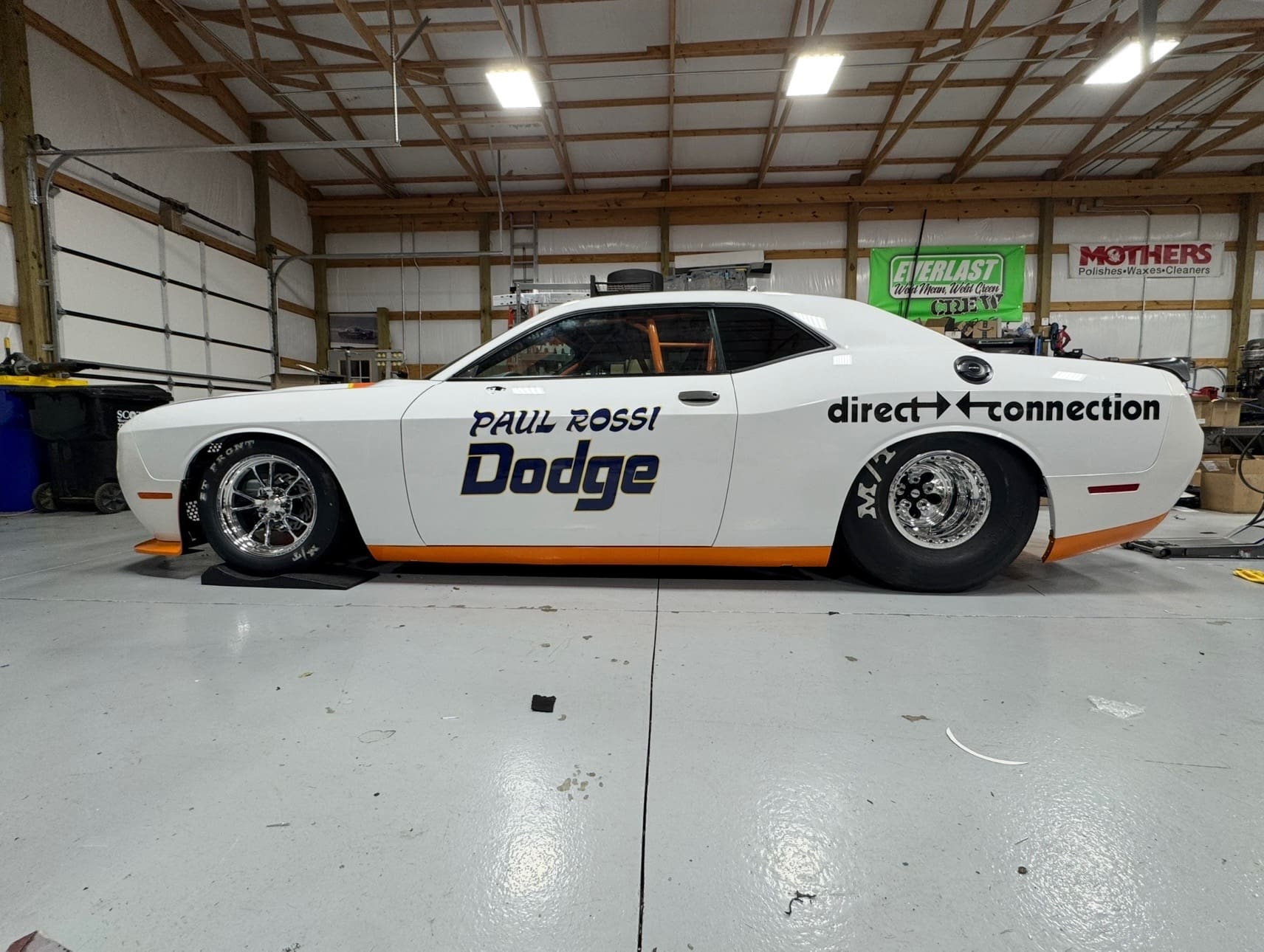

After years of shaping his identity in Factory Stock and the now-defunct Factory X category, Geoff Turk is redirecting his racing program toward Competition Eliminator. The move places Turk behind the scenes and returns his iconic Blackbird Challenger lineage to competition in a very different form.

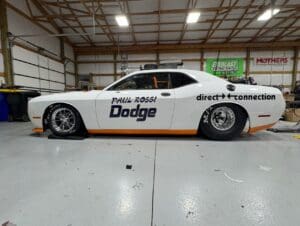
Turk’s new effort centers on a DD/Altered (7.60 index) Dodge Challenger built as a tribute to legendary Super Stock racer Paul Rossi. The car will be driven by Tony Mandella, while Turk steps away from the cockpit following a serious crash in 2023 that ended his driving career.

The Challenger’s path to Competition Eliminator was not the original plan. Instead, it reflects a recalibration driven by rule realities, performance ceilings, and Turk’s willingness to publicly own a costly miscalculation.

“We’re very, very excited about it because of all the reasons starting with it’s powered by a Gen III Hemi in Comp Eliminator,” Turk said. “There haven’t been too many Gen III Hemis that I’m aware of that have succeeded in Comp Eliminator, but we’re going to see if we can’t be one of them.”

The car was initially conceived as a Super Stocker tied to Rossi’s long-discussed comeback. Turk, Tony Mandella, and Phil Mandella built the all-steel Challenger to Super Stock rules, complete with a 6.50 chassis and weight-reduction efforts that pushed the limits of the rulebook.

“What happened was we built a car, Phil Mandella Racing,” Turk said. “Tony and Phil and I worked pretty hard together on producing a car that was a Paul Rossi-themed car that we had intended to run in Super Stock.”

The Mandella-built chassis was designed to be as light as possible within the constraints of the class. Turk said the experience and inventory of the Mandella operation gave him confidence the foundation would be competitive.
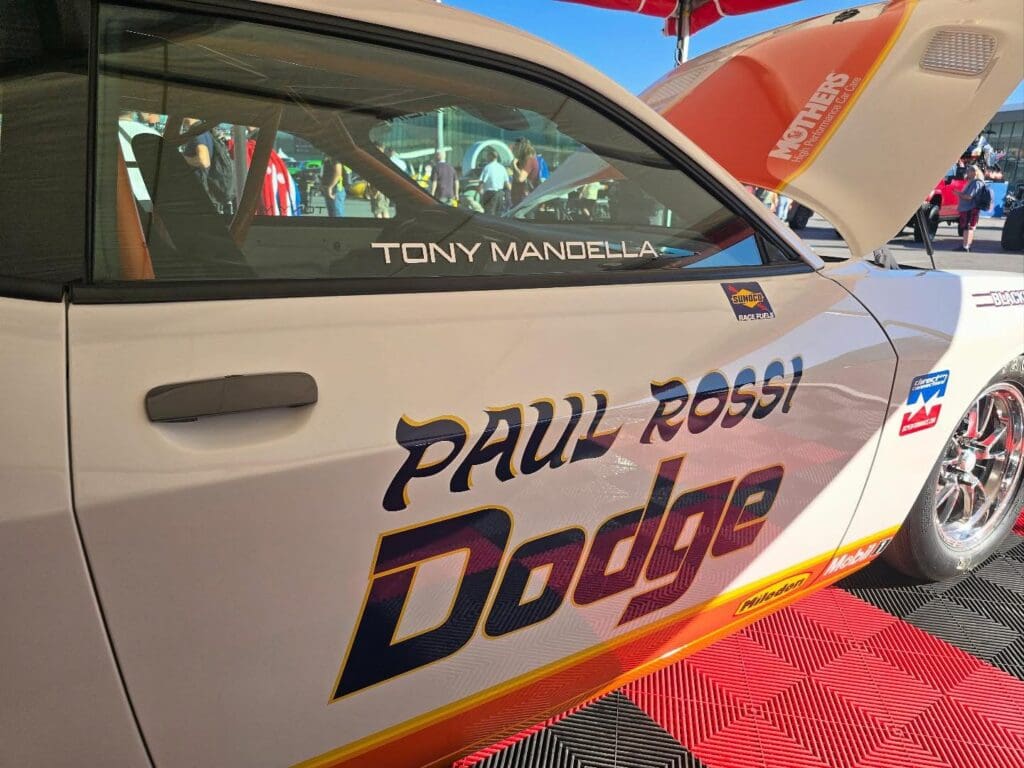
The Challenger was assembled in a shared shop space while Phil Mandella Racing awaited completion of its permanent facility in Franklin. That proximity allowed constant collaboration as the program took shape.

The plan, at the time, was aggressive. Turk intended to install a high-winding, Factory Showdown-style Gen III Hemi and chase performance benchmarks no Super Stocker had reached.

The problem emerged only after Turk revisited the rulebook and his own math. The Super Stock weight minimum proved heavier than anticipated.

“Well, we were going to have to weigh 3,320 in Super Stock,” Turk said. “That was about 170 pounds more than I wanted to weigh.”

Turk acknowledged the mistake publicly and without deflection. He said he failed to include the mandatory 170-pound driver weight in his initial calculations.

“If you really want to know the truth, and I don’t care if you print this, I’m the one who made the mistake,” Turk said. “I forgot to add the 170-pound driver weight.”

Rather than obscure the error, Turk leaned into transparency. He said the realization forced a broader reassessment of the project’s purpose.

Beyond weight, the engine package faced additional limitations under Super Stock rules. Turk said pulley restrictions and blower regulations significantly reduced the Gen III Hemi’s potential.

“What’s neutered is they won’t let you run the pulley that is now allowed in Factory Showdown,” Turk said. “You have to run a bigger pulley.”

He also addressed long-standing enforcement inconsistencies that previously masked the true performance gap.

“A stock blower is going to run three-tenths of a second slower than a modified blower,” Turk said. “We know what the difference is.”

Turk estimated the Factory Showdown version of the engine produces roughly 150 more horsepower than its Super Stock counterpart. That disparity, combined with the added weight, undermined the project’s original goal.

The result would have been a technically impressive Super Stocker with limited upside. Turk said the car could have run 7.30s or 7.40s, but the effort no longer justified the return.

“It might still be the fastest Super Stocker,” Turk said. “But it’s only going to be a 7.30, 7.40 car.”

“The only guy who would have the mindset like that is me,” he added.

It was Phil Mandella who first pushed for a different direction. From the beginning, Mandella saw Competition Eliminator as the Challenger’s natural home.

“Even from day one, Phil was like, ‘Man, we ought to put this car in comp,’” Turk said.

After revisiting the rules and acknowledging his error, Turk reversed course. He said the data ultimately supported Mandella’s instincts.

“I went and looked at my mistakes,” Turk said. “And I came back and said, ‘You know what? Phil, you were right all along.’”

Competition Eliminator allowed the car to run at 2,750 pounds, closely matching its original design intent. The Challenger would remain all steel and retain its Super Stock-legal chassis, an uncommon combination in Comp.

“We could do things like carbon fiber everywhere,” Turk said. “We don’t think we’re going to have to.”

The rule flexibility also unlocked Turk’s creativity as an engine builder. Comp regulations permit extensive internal modifications unavailable in Super Stock.

“With that freedom, I get to do a bunch of new stuff,” Turk said. “That’s very appealing.”

Turk said the car should be competitive immediately using a known Factory Showdown-style engine combination. The target is the 7.60 index in DD/Altered.

“We think we can do that,” Turk said. “Plus, we’re pretty confident we can tickle the magic six-second zone.”

The longer-term vision extends even further. Competition Eliminator allows billet blocks, billet cylinder heads, and a wide range of development paths.

“Small cubic-inch, high-winding, supercharged Hemis in a car that looks like a Super Stock Challenger running sixes sounds pretty sexy to me,” Turk said.

Driving duties will fall to Tony Mandella. Turk made clear the decision required little debate.

“You got brain-damaged, drove-it-into-the-wall Geoff,” Turk said. “And you got Tony Mandella, damn near won a world championship three times.”

Mandella’s experience and consistency made him the obvious choice. Turk said his role now shifts fully to development and execution.

The Challenger will retain its Paul Rossi tribute identity despite the class change. Turk emphasized the homage remains central to the project.

“The intent is to leave it a Paul Rossi-themed car,” Turk said. “Paul will be welcome and likely be at the track with us.”

Turk acknowledged that ambition alone does not guarantee results. Performance claims must be backed up on the racetrack.

“It’s easy to say you’re going to run 7.0s,” Turk said. “It’s a lot harder to do it.”

The move to Comp also solves a long-standing limitation Turk faced with tire rules. Larger tires allow full use of modern supercharged power.

In Factory Showdown and Factory X, Turk was constrained by narrow tires and drivetrain rules. Managing power rather than deploying it defined much of the challenge.

“In this class, of course, we can have big, giant tires,” Turk said. “You get to use all the power you’re making.”

Turk cited recent experience with large-tire cars as proof of concept. One example was a Whipple-supercharged Barracuda that immediately delivered strong results.

“The second pass, it was 1.10 60-foots,” Turk said. “Ran 4.60s, 4.70s in the eighth with a 3,100-pound all-steel car.”

Those gains, Turk said, more than offset weight differences compared to previous programs. Improved traction alone changes the equation.

“The 60-foot improvement will offset 200 pounds easy,” Turk said.

Initial testing will use an older engine with nearly 40 passes already logged. Turk said it provides a baseline before deeper development begins.

“We’re going to put that engine in the car and see what we can do,” Turk said. “Then we’ll build better engines down the road.”

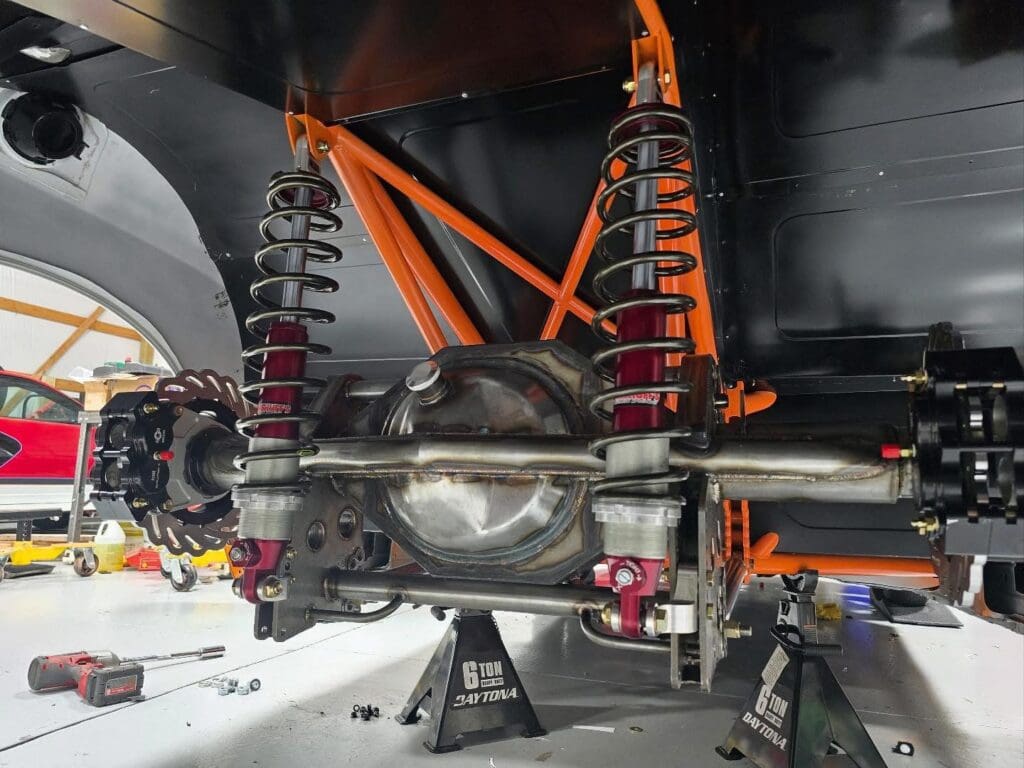
Tire selection remains undecided, though Turk confirmed they will be substantially larger than anything used in his recent Factory programs. The suspension, built by the Mandellas, is designed to support it.

The Challenger will run an automatic transmission. Despite Turk’s preference for manuals in other projects, simplicity won out for this effort.

“Here we’re just going to stick with an automatic,” Turk said.

For Turk, the shift to Competition Eliminator represents both reinvention and continuity. The Challenger’s look honors the past, while its mission points firmly forward.


The program now moves from theory to execution. As Turk noted, the real verdict will come when the car stages and the numbers speak for themselves.

Share the Insights?

Click here to share the article.

ad space x ad space

ad space x ad space

Competition Plus Team

Since our inception, we have been passionately dedicated to delivering the most accurate, timely, and compelling content in the world of drag racing. Our readers depend on us for the latest news, in-depth features, expert analysis, and exclusive interviews that connect you to the sport’s pulse.

Sign up for our newsletters and email list.

This field is for validation purposes and should be left unchanged.
Name

TURK SHIFTS DIRECTION, TARGETS COMPETITION ELIMINATOR WITH ROSSI-TRIBUTE CHALLENGER

After years of shaping his identity in Factory Stock and the now-defunct Factory X category, Geoff Turk is redirecting his racing program toward Competition Eliminator. The move places Turk behind the scenes and returns his iconic Blackbird Challenger lineage to competition in a very different form.

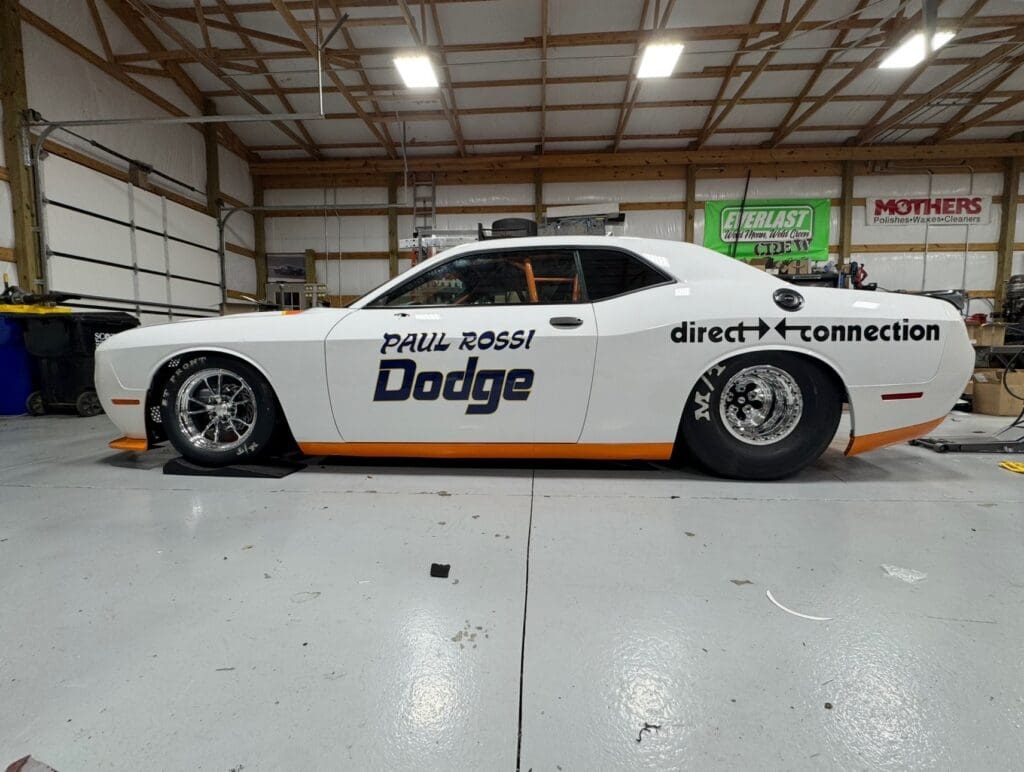
Turk’s new effort centers on a DD/Altered (7.60 index) Dodge Challenger built as a tribute to legendary Super Stock racer Paul Rossi. The car will be driven by Tony Mandella, while Turk steps away from the cockpit following a serious crash in 2023 that ended his driving career.

The Challenger’s path to Competition Eliminator was not the original plan. Instead, it reflects a recalibration driven by rule realities, performance ceilings, and Turk’s willingness to publicly own a costly miscalculation.

“We’re very, very excited about it because of all the reasons starting with it’s powered by a Gen III Hemi in Comp Eliminator,” Turk said. “There haven’t been too many Gen III Hemis that I’m aware of that have succeeded in Comp Eliminator, but we’re going to see if we can’t be one of them.”

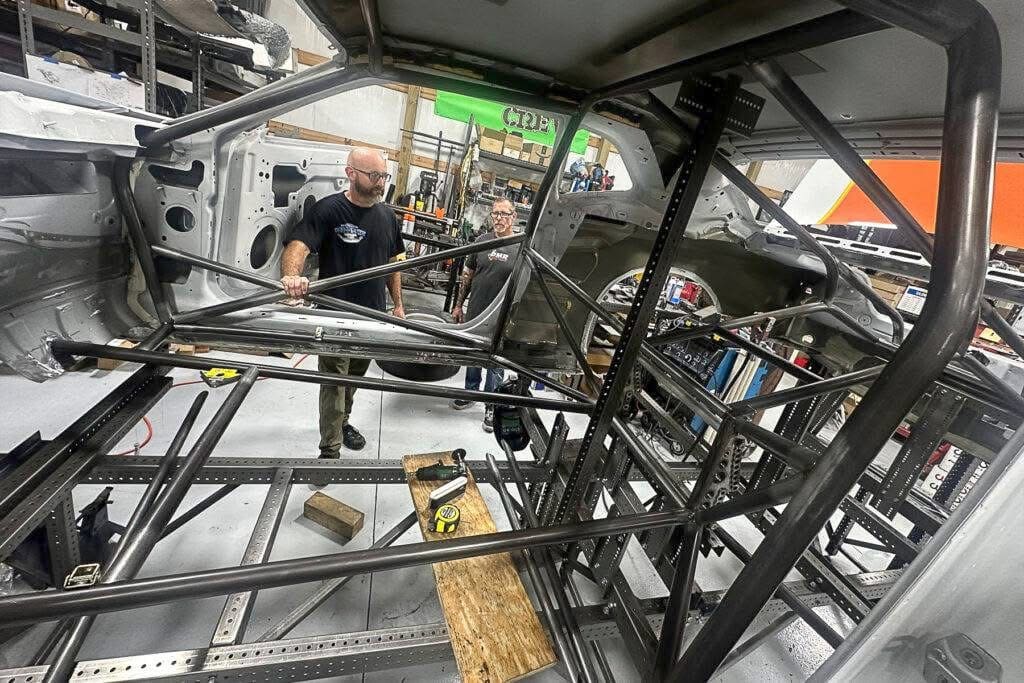
The car was initially conceived as a Super Stocker tied to Rossi’s long-discussed comeback. Turk, Tony Mandella, and Phil Mandella built the all-steel Challenger to Super Stock rules, complete with a 6.50 chassis and weight-reduction efforts that pushed the limits of the rulebook.

“What happened was we built a car, Phil Mandella Racing,” Turk said. “Tony and Phil and I worked pretty hard together on producing a car that was a Paul Rossi-themed car that we had intended to run in Super Stock.”

The Mandella-built chassis was designed to be as light as possible within the constraints of the class. Turk said the experience and inventory of the Mandella operation gave him confidence the foundation would be competitive.
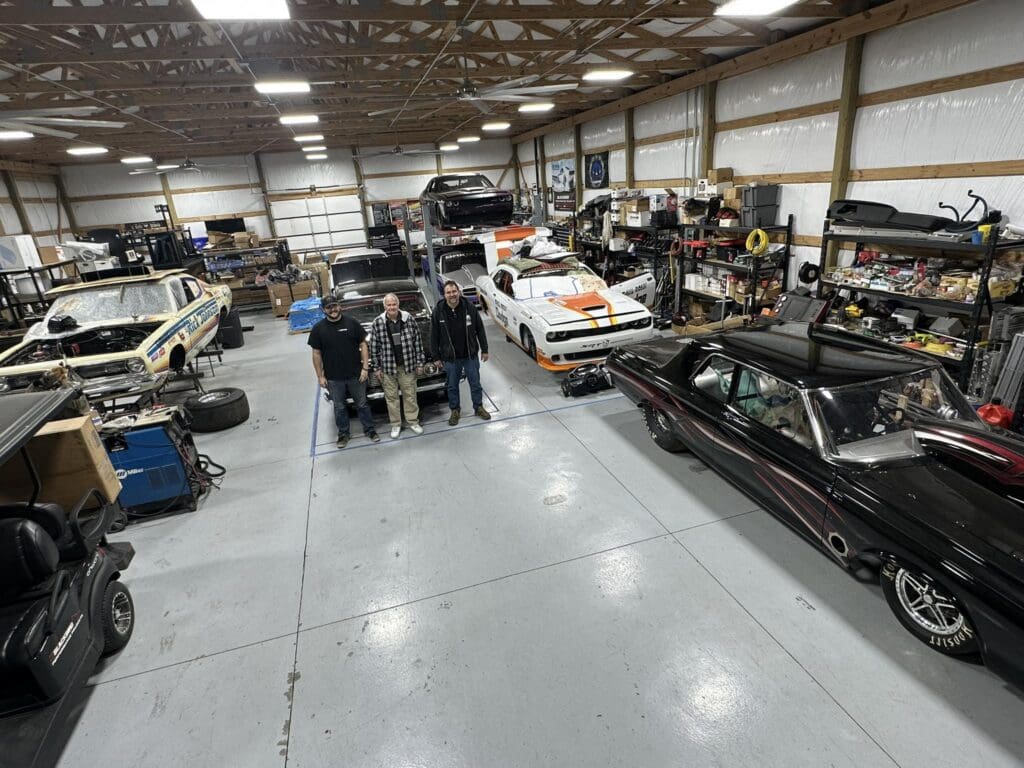
The Challenger was assembled in a shared shop space while Phil Mandella Racing awaited completion of its permanent facility in Franklin. That proximity allowed constant collaboration as the program took shape.

The plan, at the time, was aggressive. Turk intended to install a high-winding, Factory Showdown-style Gen III Hemi and chase performance benchmarks no Super Stocker had reached.

The problem emerged only after Turk revisited the rulebook and his own math. The Super Stock weight minimum proved heavier than anticipated.

“Well, we were going to have to weigh 3,320 in Super Stock,” Turk said. “That was about 170 pounds more than I wanted to weigh.”

Turk acknowledged the mistake publicly and without deflection. He said he failed to include the mandatory 170-pound driver weight in his initial calculations.

“If you really want to know the truth, and I don’t care if you print this, I’m the one who made the mistake,” Turk said. “I forgot to add the 170-pound driver weight.”

Rather than obscure the error, Turk leaned into transparency. He said the realization forced a broader reassessment of the project’s purpose.
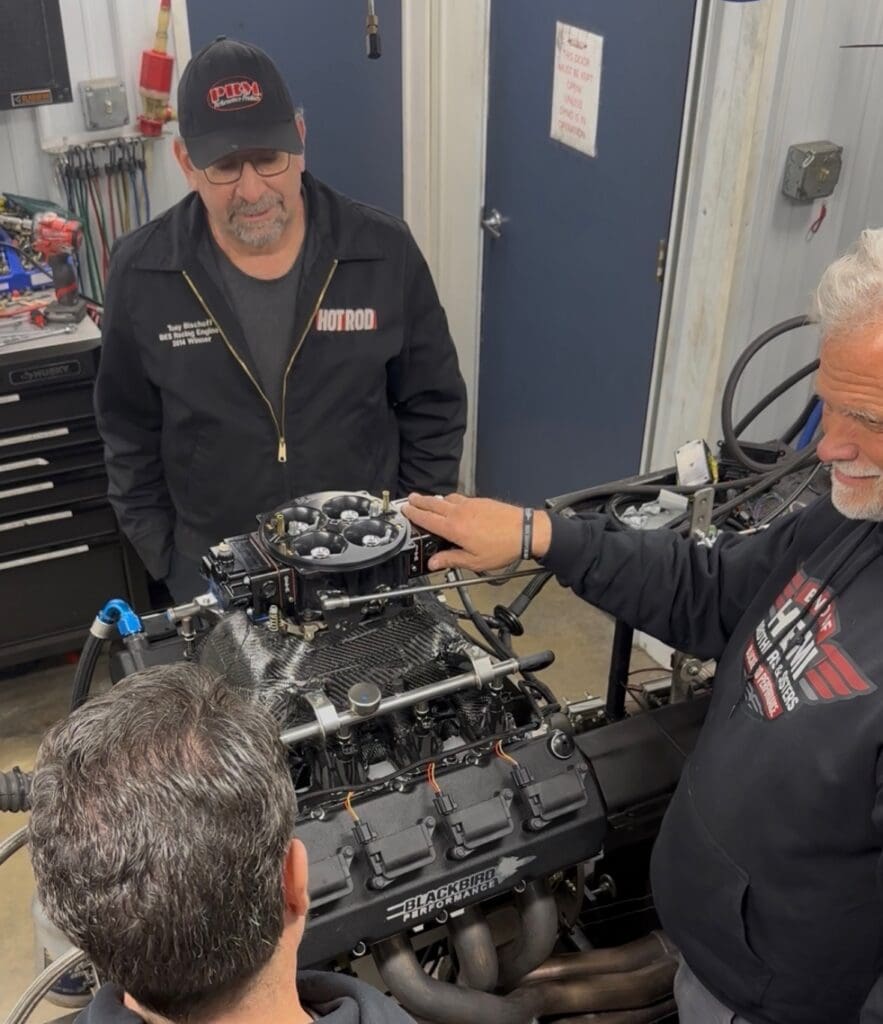

Beyond weight, the engine package faced additional limitations under Super Stock rules. Turk said pulley restrictions and blower regulations significantly reduced the Gen III Hemi’s potential.

“What’s neutered is they won’t let you run the pulley that is now allowed in Factory Showdown,” Turk said. “You have to run a bigger pulley.”

He also addressed long-standing enforcement inconsistencies that previously masked the true performance gap.

“A stock blower is going to run three-tenths of a second slower than a modified blower,” Turk said. “We know what the difference is.”

Turk estimated the Factory Showdown version of the engine produces roughly 150 more horsepower than its Super Stock counterpart. That disparity, combined with the added weight, undermined the project’s original goal.

The result would have been a technically impressive Super Stocker with limited upside. Turk said the car could have run 7.30s or 7.40s, but the effort no longer justified the return.

“It might still be the fastest Super Stocker,” Turk said. “But it’s only going to be a 7.30, 7.40 car.”
“The only guy who would have the mindset like that is me,” he added.

It was Phil Mandella who first pushed for a different direction. From the beginning, Mandella saw Competition Eliminator as the Challenger’s natural home.

“Even from day one, Phil was like, ‘Man, we ought to put this car in comp,’” Turk said.

After revisiting the rules and acknowledging his error, Turk reversed course. He said the data ultimately supported Mandella’s instincts.

“I went and looked at my mistakes,” Turk said. “And I came back and said, ‘You know what? Phil, you were right all along.’”

Competition Eliminator allowed the car to run at 2,750 pounds, closely matching its original design intent. The Challenger would remain all steel and retain its Super Stock-legal chassis, an uncommon combination in Comp.

“We could do things like carbon fiber everywhere,” Turk said. “We don’t think we’re going to have to.”
The rule flexibility also unlocked Turk’s creativity as an engine builder. Comp regulations permit extensive internal modifications unavailable in Super Stock.

“With that freedom, I get to do a bunch of new stuff,” Turk said. “That’s very appealing.”

Turk said the car should be competitive immediately using a known Factory Showdown-style engine combination. The target is the 7.60 index in DD/Altered.

“We think we can do that,” Turk said. “Plus, we’re pretty confident we can tickle the magic six-second zone.”

The longer-term vision extends even further. Competition Eliminator allows billet blocks, billet cylinder heads, and a wide range of development paths.

“Small cubic-inch, high-winding, supercharged Hemis in a car that looks like a Super Stock Challenger running sixes sounds pretty sexy to me,” Turk said.

Driving duties will fall to Tony Mandella. Turk made clear the decision required little debate.

“You got brain-damaged, drove-it-into-the-wall Geoff,” Turk said. “And you got Tony Mandella, damn near won a world championship three times.”

Mandella’s experience and consistency made him the obvious choice. Turk said his role now shifts fully to development and execution.

The Challenger will retain its Paul Rossi tribute identity despite the class change. Turk emphasized the homage remains central to the project.

“The intent is to leave it a Paul Rossi-themed car,” Turk said. “Paul will be welcome and likely be at the track with us.”

Turk acknowledged that ambition alone does not guarantee results. Performance claims must be backed up on the racetrack.

“It’s easy to say you’re going to run 7.0s,” Turk said. “It’s a lot harder to do it.”

The move to Comp also solves a long-standing limitation Turk faced with tire rules. Larger tires allow full use of modern supercharged power.

In Factory Showdown and Factory X, Turk was constrained by narrow tires and drivetrain rules. Managing power rather than deploying it defined much of the challenge.

“In this class, of course, we can have big, giant tires,” Turk said. “You get to use all the power you’re making.”

Turk cited recent experience with large-tire cars as proof of concept. One example was a Whipple-supercharged Barracuda that immediately delivered strong results.

“The second pass, it was 1.10 60-foots,” Turk said. “Ran 4.60s, 4.70s in the eighth with a 3,100-pound all-steel car.”

Those gains, Turk said, more than offset weight differences compared to previous programs. Improved traction alone changes the equation.
“The 60-foot improvement will offset 200 pounds easy,” Turk said.

Initial testing will use an older engine with nearly 40 passes already logged. Turk said it provides a baseline before deeper development begins.

“We’re going to put that engine in the car and see what we can do,” Turk said. “Then we’ll build better engines down the road.”

Tire selection remains undecided, though Turk confirmed they will be substantially larger than anything used in his recent Factory programs. The suspension, built by the Mandellas, is designed to support it.

The Challenger will run an automatic transmission. Despite Turk’s preference for manuals in other projects, simplicity won out for this effort.

“Here we’re just going to stick with an automatic,” Turk said.

For Turk, the shift to Competition Eliminator represents both reinvention and continuity. The Challenger’s look honors the past, while its mission points firmly forward.


The program now moves from theory to execution. As Turk noted, the real verdict will come when the car stages and the numbers speak for themselves.


Picture of John Doe

John Doe

Lorem ipsum dolor sit amet consectetur adipiscing elit dolor

More Posts

Send Us A Message

Picture of Bobby Bennett
Bobby Bennett
Thank you for joining us on this journey. Your support and trust inspire us every day to deliver the best in drag racing journalism. We are excited about the future and look forward to continuing to serve you with the same dedication and passion that has defined CompetitionPlus.com from the very beginning.

Don’t miss these other exciting stories!

Explore more action packed posts on Competition Plus, where we dive into the latest in Drag Racing News. Discover a range of topics, from race coverage to in-depth interviews, to keep you informed and entertained.