
Noah Carmichael, Mighty Mack contributed to this article. 

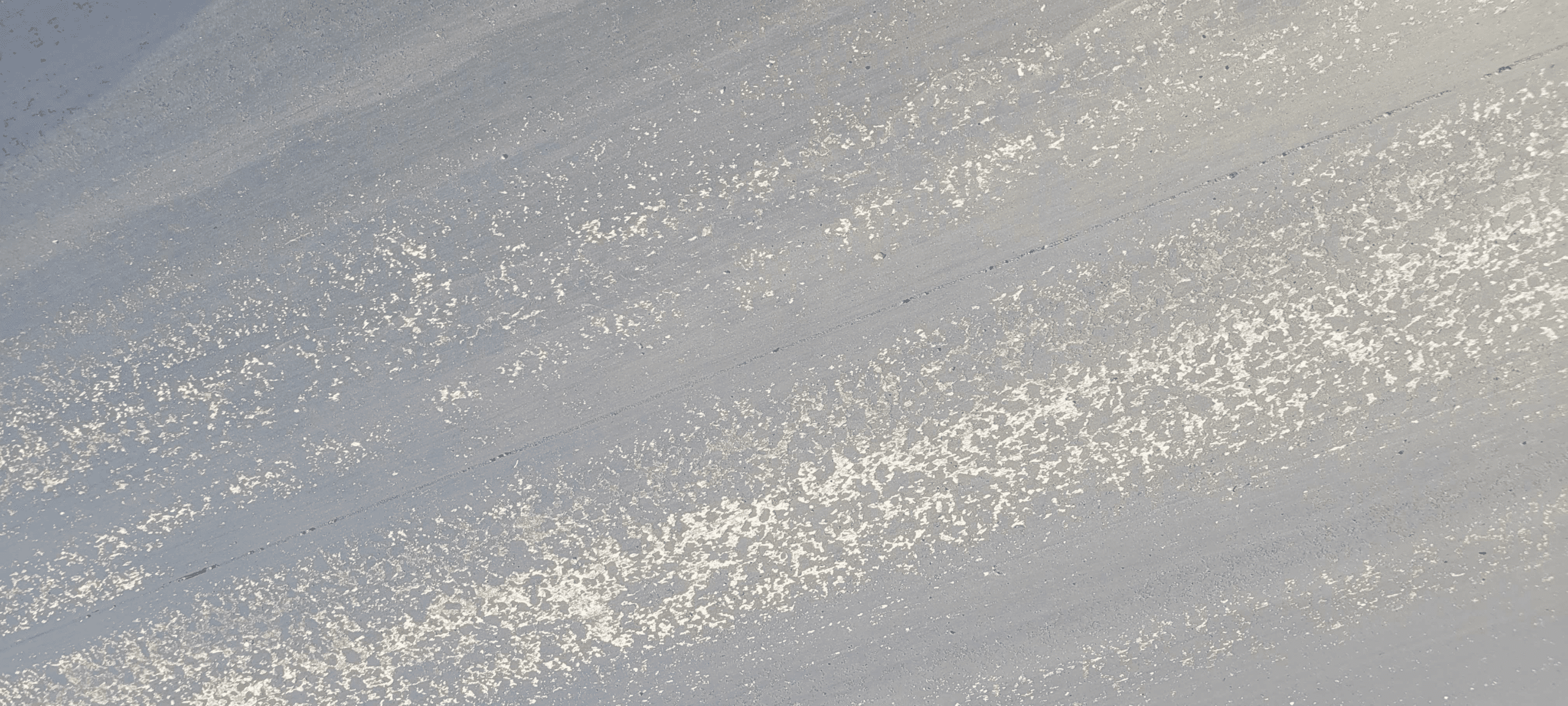
If Gainesville Raceway were a middle-aged man on Sunday, he would have worn a hat to hide the bald spots. The racing surface developed patches where rubber refused to stick, creating problems for machines trying to harness enormous power during the NHRA Gatornationals.

The traction issues persisted throughout the weekend and became most evident during Sunday’s final eliminations. Drivers and crew chiefs were forced to confront a racing surface that behaved differently than the one many had tested on just weeks earlier. But it was not a new situation, it had existed in testing with reportedly more traction compound used in the PRO test to combat the issues.

For the nitro categories, the trouble began just past the Christmas tree. The first portion of the track — where cars transition from controlled launch to full acceleration — became the most unpredictable part of the racing surface.

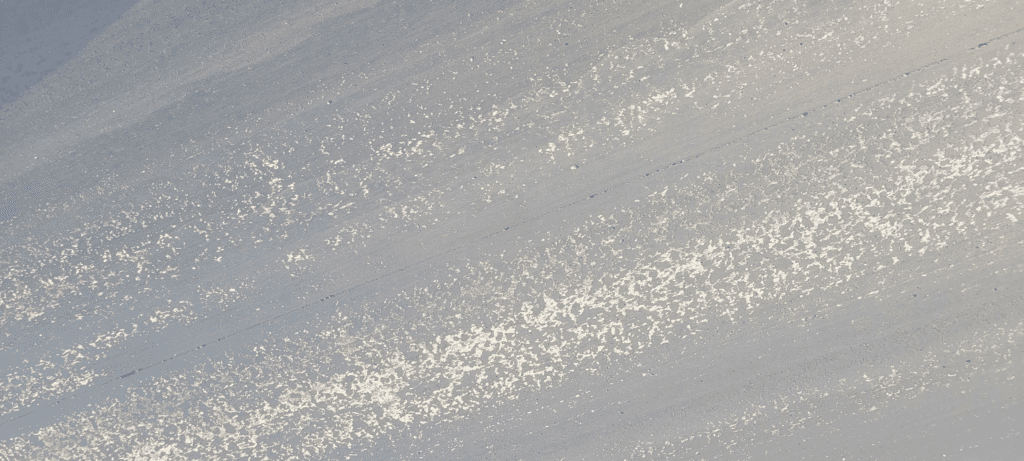
Teams identified the early section of the track as the most problematic. From roughly 60 feet to about 180 feet, bald patches formed where rubber failed to adhere consistently to the concrete.

Track officials and NHRA’s Safety Safari worked throughout the event attempting to stabilize the surface. Despite those efforts, the traction window continued to evolve as temperatures rose and more runs were made.

As eliminations progressed, teams found themselves tuning around conditions rather than chasing maximum performance. The result was a weekend defined less by raw speed and more by the ability to adapt.
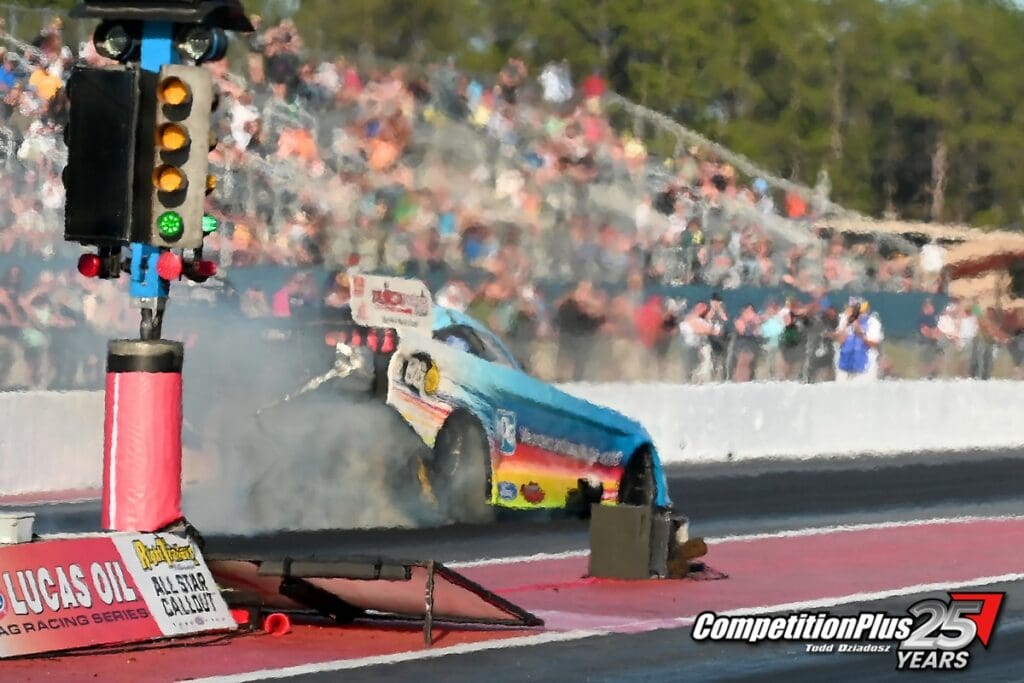

Funny Car teams quickly realized the surface would require constant adjustments. Todd Smith, assistant crew chief for J.R. Todd, acknowledged the difficult area of the racetrack after Todd advanced through the opening round.

“Well, we were obviously trying to run good,” Smith said, following the team’s first round victory. “We had a 93, 94, something like that plugged in it, but there’s a tough spot in the track out there.”

“Everybody’s having to deal with it,” Smith continued. “We thought we made adjustments for it.”

“It almost made it through, but it still came loose,” Smith said. “So there’s still more work to do, but glad we got the round win. Go to the next one.”

Drivers largely relied on their crew chiefs to guide them through the difficult section of track. Once the car left the starting line, there was little the driver could do except react.

Top Fuel driver Tony Stewart said the conditions placed the emphasis squarely on the tuning decisions made before the car launched.

“I don’t think about it as much as some of the other people do that are just pure drag race people,” Stewart said. “Because to me it’s like we’re still all running on the same racetrack.”

“So it’s literally goes back to those two crew chiefs,” Stewart continued. “They see those conditions up there, whether it’s good or bad, and it’s their job to make the car go down the racetrack.”

Stewart said the driver’s role does not change once the car leaves the starting line. The challenge lies in preparing the combination to survive the problem areas.

“It’s not something where I can change what I’m doing, driving the car to make it go through those spots,” Stewart said. “You just hit the gas wide open and just be able to react to whatever happens after that.”

“But for the crew chiefs, it’s definitely been a challenge,” Stewart added. “It’s been a big topic of conversation.”

Some teams even experimented with unconventional staging positions in the lane to avoid the worst sections of the track. Veteran Top Fuel driver Clay Millican said crews looked for any possible advantage.

“Well, if we have cloud cover, it won’t be as big an issue,” Millican said. “They had me staging from one side of the lane to the other, you know, to avoid it,” Millican continued. “Hopefully they fill in and continue to fill in.”

“Obviously, both of our cars made full pulls yesterday,” Millican said. “But if you catch one at the wrong time, it will certainly lead to tire smoke.”

Millican said teams understood that improvements to a racing surface sometimes come with early challenges.

“You can’t be mad when a company spends money on trying to make their racetrack better,” he said. “And sometimes it’s a challenge until it gets there.”

Top Fuel legend Tony Schumacher viewed the conditions as another test of experience and adaptability. Difficult tracks, he said, often reward teams that adjust quickest.

“I think it’s a challenge for everybody,” Schumacher said. “So it’s hard to get them moving,” Schumacher continued. “It’s hard to make the car run down the track if you can’t get it running early. That first 150 feet, the only way they’re going to fix it is to grind it and redo it. But this is what we got today.”

“This is what we have tomorrow,” he added. “And that’s what we’ve got to operate under.”

Schumacher said difficult conditions often reward teams capable of adapting rather than chasing perfect runs.

“So no matter what the conditions are, they’re the same for everybody,” Schumacher said. “Better drivers are going to be able to navigate through there, and I love that, man.”

Noah Carmichael, Mighty Mack Photo

The traction challenges extended beyond the nitro classes. Drivers in Pro Stock and Pro Stock Motorcycle also encountered a surface that behaved differently than it had during preseason testing.

Pro Stock veteran Greg Anderson said teams recognized early that the weekend would demand patience and adaptation.

“It’s absolutely been a challenge,” Anderson said. “And I’m not going to lie, we struggled through testing it.”

“It was a different race surface than we’re used to,” Anderson continued. “But you know what?”

“It’s the same racing surface that everybody’s got to race on,” Anderson said. “You’ve got to figure it out.”

“And I think we’re very, very close to figuring it out,” Anderson added.

While many teams spent the weekend trying to tune around Gainesville’s bald spots, at least one driver suggested the solution was simpler.

Top Fuel winner Josh Hart, who qualified No. 1 on Friday night and carried that momentum through eliminations Sunday, believed the challenge ultimately came down to adapting to the conditions rather than blaming them.

“I would say they just need to work on their tune up and stop complaining about the race surface because clearly we’ve got it figured out,” Hart said Friday night.

“And my slowest run was 338 mile an hour under full power in testing,” Hart added. “And that was faster than my career best when I owned my own team.”

Share the Insights?

Click here to share the article.

ad space x ad space

ad space x ad space

Competition Plus Team

Since our inception, we have been passionately dedicated to delivering the most accurate, timely, and compelling content in the world of drag racing. Our readers depend on us for the latest news, in-depth features, expert analysis, and exclusive interviews that connect you to the sport’s pulse.

Sign up for our newsletters and email list.

This field is for validation purposes and should be left unchanged.
Name

WHAT WAS WRONG WITH THE NHRA GATORNATIONALS RACING SURFACE? HERE’S WHAT WAS GOING ON AT GAINESVILLE RACEWAY

Noah Carmichael, Mighty Mack contributed to this article. 

If Gainesville Raceway were a middle-aged man on Sunday, he would have worn a hat to hide the bald spots. The racing surface developed patches where rubber refused to stick, creating problems for machines trying to harness enormous power during the NHRA Gatornationals.

The traction issues persisted throughout the weekend and became most evident during Sunday’s final eliminations. Drivers and crew chiefs were forced to confront a racing surface that behaved differently than the one many had tested on just weeks earlier. But it was not a new situation, it had existed in testing with reportedly more traction compound used in the PRO test to combat the issues.

For the nitro categories, the trouble began just past the Christmas tree. The first portion of the track — where cars transition from controlled launch to full acceleration — became the most unpredictable part of the racing surface.

Teams identified the early section of the track as the most problematic. From roughly 60 feet to about 180 feet, bald patches formed where rubber failed to adhere consistently to the concrete.

Track officials and NHRA’s Safety Safari worked throughout the event attempting to stabilize the surface. Despite those efforts, the traction window continued to evolve as temperatures rose and more runs were made.

As eliminations progressed, teams found themselves tuning around conditions rather than chasing maximum performance. The result was a weekend defined less by raw speed and more by the ability to adapt.
Funny Car teams quickly realized the surface would require constant adjustments. Todd Smith, assistant crew chief for J.R. Todd, acknowledged the difficult area of the racetrack after Todd advanced through the opening round.

“Well, we were obviously trying to run good,” Smith said, following the team’s first round victory. “We had a 93, 94, something like that plugged in it, but there’s a tough spot in the track out there.”

“Everybody’s having to deal with it,” Smith continued. “We thought we made adjustments for it.”

“It almost made it through, but it still came loose,” Smith said. “So there’s still more work to do, but glad we got the round win. Go to the next one.”

Drivers largely relied on their crew chiefs to guide them through the difficult section of track. Once the car left the starting line, there was little the driver could do except react.

Top Fuel driver Tony Stewart said the conditions placed the emphasis squarely on the tuning decisions made before the car launched.

“I don’t think about it as much as some of the other people do that are just pure drag race people,” Stewart said. “Because to me it’s like we’re still all running on the same racetrack.”

“So it’s literally goes back to those two crew chiefs,” Stewart continued. “They see those conditions up there, whether it’s good or bad, and it’s their job to make the car go down the racetrack.”
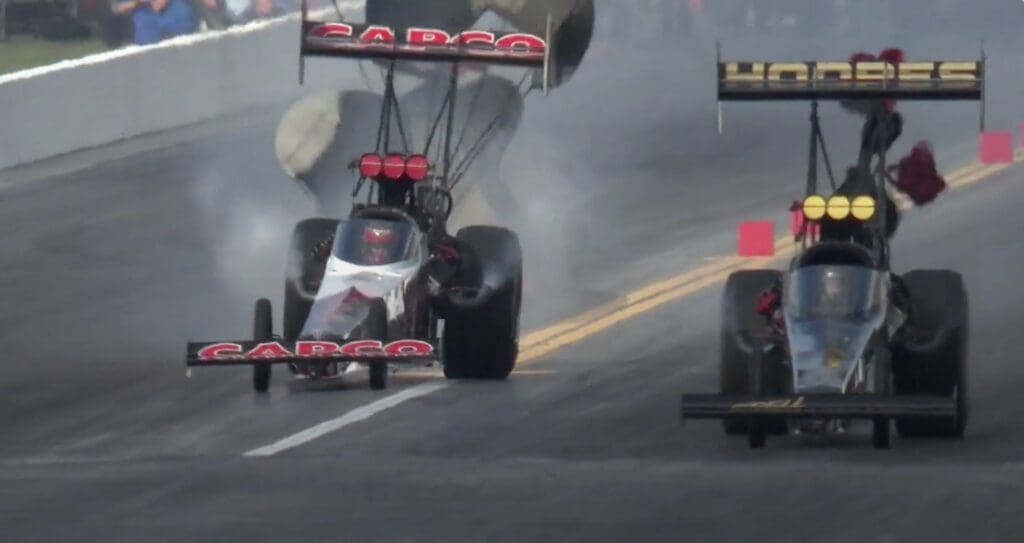
Stewart said the driver’s role does not change once the car leaves the starting line. The challenge lies in preparing the combination to survive the problem areas.

“It’s not something where I can change what I’m doing, driving the car to make it go through those spots,” Stewart said. “You just hit the gas wide open and just be able to react to whatever happens after that.”

“But for the crew chiefs, it’s definitely been a challenge,” Stewart added. “It’s been a big topic of conversation.”

Some teams even experimented with unconventional staging positions in the lane to avoid the worst sections of the track. Veteran Top Fuel driver Clay Millican said crews looked for any possible advantage.

“Well, if we have cloud cover, it won’t be as big an issue,” Millican said. “They had me staging from one side of the lane to the other, you know, to avoid it,” Millican continued. “Hopefully they fill in and continue to fill in.”

“Obviously, both of our cars made full pulls yesterday,” Millican said. “But if you catch one at the wrong time, it will certainly lead to tire smoke.”

Millican said teams understood that improvements to a racing surface sometimes come with early challenges.

“You can’t be mad when a company spends money on trying to make their racetrack better,” he said. “And sometimes it’s a challenge until it gets there.”

Top Fuel legend Tony Schumacher viewed the conditions as another test of experience and adaptability. Difficult tracks, he said, often reward teams that adjust quickest.

“I think it’s a challenge for everybody,” Schumacher said. “So it’s hard to get them moving,” Schumacher continued. “It’s hard to make the car run down the track if you can’t get it running early. That first 150 feet, the only way they’re going to fix it is to grind it and redo it. But this is what we got today.”

“This is what we have tomorrow,” he added. “And that’s what we’ve got to operate under.”

Schumacher said difficult conditions often reward teams capable of adapting rather than chasing perfect runs.

“So no matter what the conditions are, they’re the same for everybody,” Schumacher said. “Better drivers are going to be able to navigate through there, and I love that, man.”
Noah Carmichael, Mighty Mack Photo

The traction challenges extended beyond the nitro classes. Drivers in Pro Stock and Pro Stock Motorcycle also encountered a surface that behaved differently than it had during preseason testing.

Pro Stock veteran Greg Anderson said teams recognized early that the weekend would demand patience and adaptation.

“It’s absolutely been a challenge,” Anderson said. “And I’m not going to lie, we struggled through testing it.”

“It was a different race surface than we’re used to,” Anderson continued. “But you know what?”

“It’s the same racing surface that everybody’s got to race on,” Anderson said. “You’ve got to figure it out.”

“And I think we’re very, very close to figuring it out,” Anderson added.

While many teams spent the weekend trying to tune around Gainesville’s bald spots, at least one driver suggested the solution was simpler.

Top Fuel winner Josh Hart, who qualified No. 1 on Friday night and carried that momentum through eliminations Sunday, believed the challenge ultimately came down to adapting to the conditions rather than blaming them.

“I would say they just need to work on their tune up and stop complaining about the race surface because clearly we’ve got it figured out,” Hart said Friday night.

“And my slowest run was 338 mile an hour under full power in testing,” Hart added. “And that was faster than my career best when I owned my own team.”


Picture of John Doe

John Doe

Lorem ipsum dolor sit amet consectetur adipiscing elit dolor

More Posts

Send Us A Message

Picture of Bobby Bennett
Bobby Bennett
Thank you for joining us on this journey. Your support and trust inspire us every day to deliver the best in drag racing journalism. We are excited about the future and look forward to continuing to serve you with the same dedication and passion that has defined CompetitionPlus.com from the very beginning.

Don’t miss these other exciting stories!

Explore more action packed posts on Competition Plus, where we dive into the latest in Drag Racing News. Discover a range of topics, from race coverage to in-depth interviews, to keep you informed and entertained.