Ed Wilson never set out to be remembered as one of Pro Modified’s early pioneers. He just refused to leave.
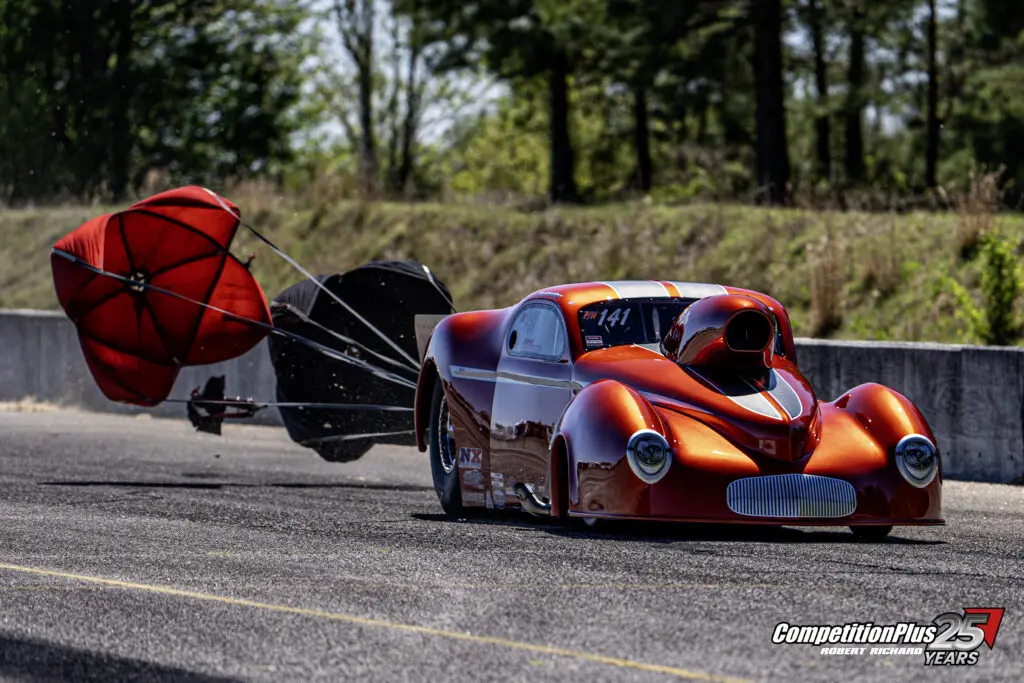
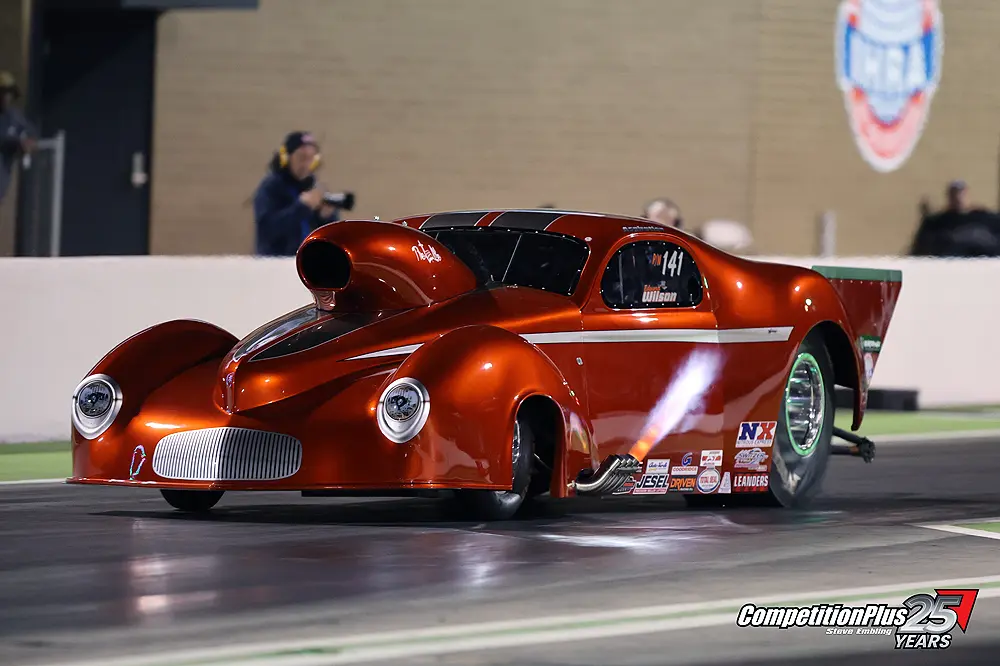
Long before the class became polished, professional and expensive, Wilson was one of the racers figuring it out in real time. His latest wheels-up run at the IHRA season-opener at Darana Motorsports Park in Dunn, N.C., didn’t introduce him — it reminded everyone he never went anywhere.

“Well, I don’t know. This is the best run I’ve ever made,” Wilson said. “I had been that quick to the 330 before, but I’d never … I mean, I’m still working out this combination.”
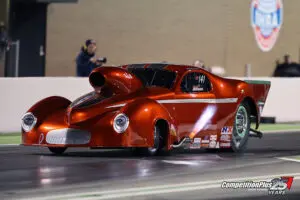
That combination — a Gene Fulton-powered, nitrous-injected 1941 Willys — fits Wilson’s career the same way his approach always has. It’s not built to follow trends. It’s built to survive them.
Before Pro Modified had structure, it had racers like Wilson.
Shuffletown Dragway. Quick Eight fields. Hand-built cars. No blueprint.
“I’ve always probably been the smallest pony out here,” Wilson said. “Even back then guys had 632s, 615s, 672s. I had a little 523 with one Nitro System.”
That wasn’t an underdog story to him. That was just how it was done.
Wilson didn’t come into the class with engineering credentials or corporate backing. He came in the way most early Pro Mod racers did — figuring it out himself.
“I tell people I can’t do nothing,” Wilson said. “I didn’t give myself the abilities to do what I’m doing. I feel like God’s just shined on me with blessings.”
That mindset shaped everything about his program.
“If I didn’t do everything at this car, I wired this car, I plumbed this car,” Wilson said. “Everything that happens to this car, I do it because I can’t afford it.”
It wasn’t a philosophy. It was necessity.
One of his defining cars, a brown 1981 Camaro, became a rolling example of how far determination could stretch limited resources.
“That was a stock block, 523 motor,” Wilson said. “I had ran that motor so much, I had honed it to 150 over.”
Breaking parts wasn’t failure. It was part of the cycle.
And in that era, racers didn’t just compete against each other — they helped each other stay in the game.
“Sam Snyder carried my car home with him, put a window in it for me, fixed my doors,” Wilson said. “He brought the car back that Sunday for the Quick 8.”
That was Pro Modified before it had a business model.
“People were just so enthusiastic,” Wilson said. “They jumping up over the fence, just congratulating you as you come back down return road.”
Even when Wilson did something that should have forced attention, it didn’t always come with recognition.
In 2016, he ran 3.74 seconds at 199 mph with a 5.2-liter engine — a number that didn’t fit what people expected from a program like his.
“Gene and them said, ‘Ain’t nobody even know who won the race. They just talking about what you doing,’” Wilson said.
That’s been his career.
Not always the headline. Always part of the story.
“This is a miracle for somebody like me to be here competing against these guys,” Wilson said. “Today, I’ve already won.”
The modern Pro Modified class doesn’t look like the one Wilson came up in. It’s faster, cleaner, and far more calculated.
But his Willys still carries the fingerprints of that earlier version — the one built on effort instead of infrastructure.
“I never dreamed even when I started building this car, I’d run a real Pro Mod,” Wilson said. “I said, ‘This could be a Top Sportsman car.’”
That perspective hasn’t changed.
The IHRA debut run — front end hanging, timing beams guessing — wasn’t the story. It was the reminder.
Wilson isn’t chasing relevance. He’s proof of where the class came from.
“I’m just an old redneck country boy that loved race cars,” Wilson said.