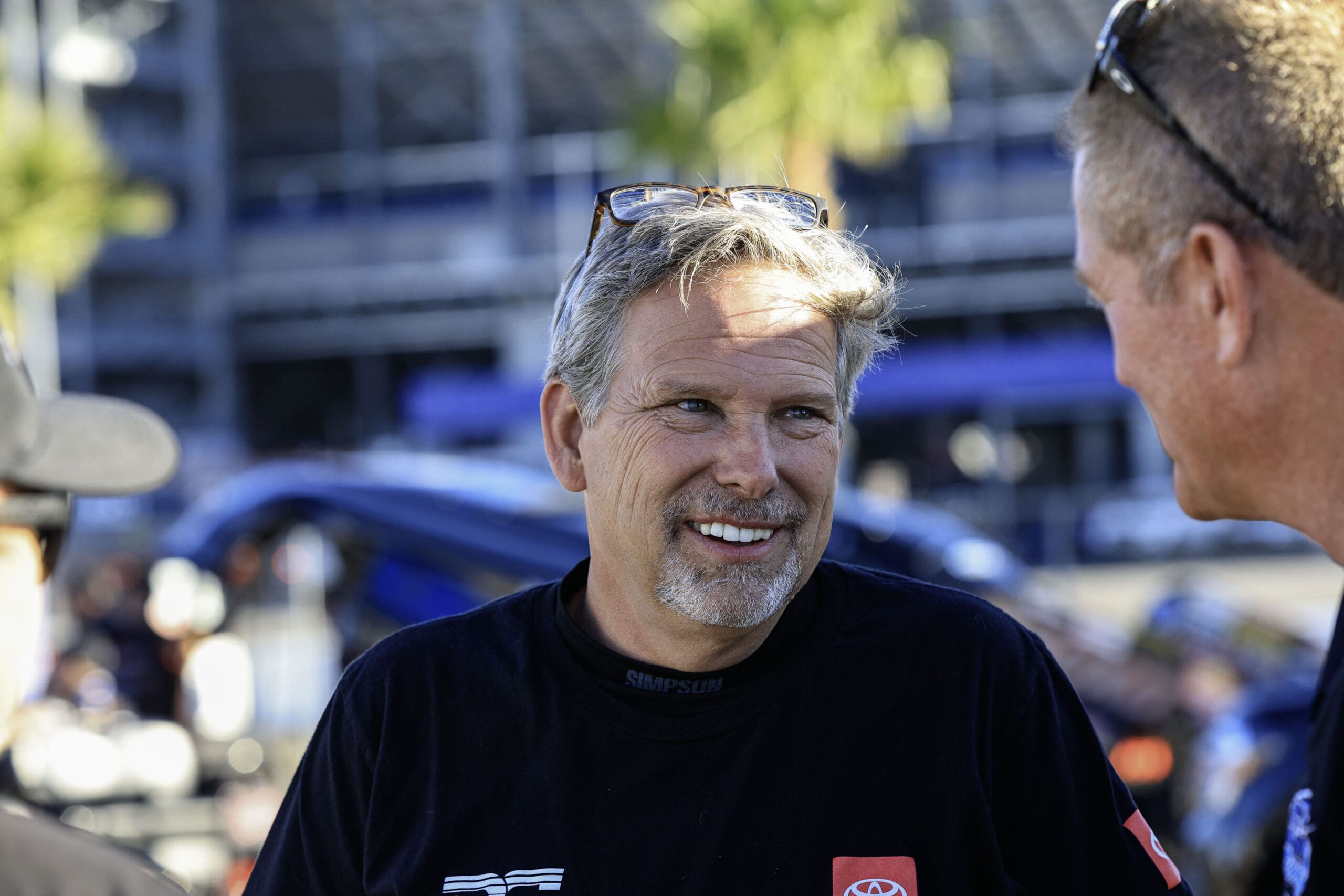

Last season, Del Worsham raced as if a championship were on the line, advancing to the final round at every event during IHRA’s return campaign. Had a points program existed, his performance would have positioned him for a second career series title.
As the rejuvenated IHRA launches its second modern-era season March 20, 2026, Worsham enters with a different objective. This time, he has a championship to chase and a defined path to measure his progress.
“Wow. Hopefully it won’t be any different other than keeping track of the points, keeping tally on the points,” Worsham said. “But obviously there’s going to be more competition this year, I’m sure.”
Series leadership has raised financial incentives and expanded the Outlaw Nitro Series structure. Those changes are expected to intensify participation across Top Fuel and Funny Car ranks.
The IHRA’s 2026 Outlaw Nitro Series carries a $13.6 million purse structure, including substantial championship payouts that make a full-season campaign financially meaningful. For Worsham, the opportunity transforms consistency from a point of pride into a potential career-defining payday.
“Darryl, he’s raised the stakes up here financially and with the races and by offering a championship,” Worsham said. “So that’s going to attract more competitors.”
Worsham’s approach to the season remains rooted in consistency rather than spectacle. His emphasis centers on execution and minimizing mistakes over a long campaign.
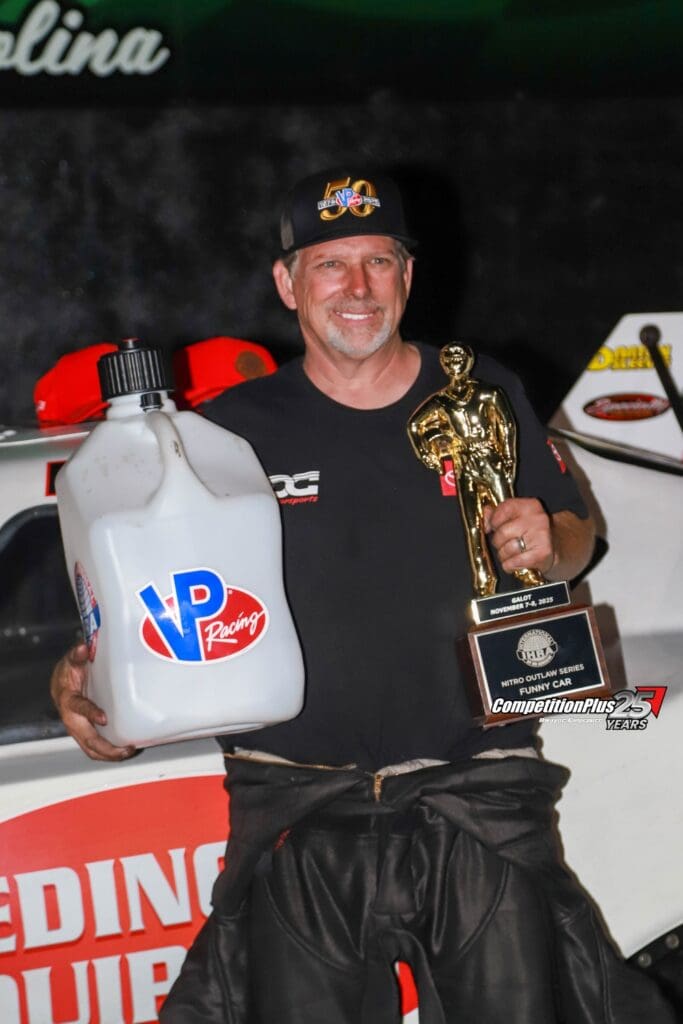

“You can bet everyone has stepped up their game for this season,” Worsham said. “So I’m sure it’s going to be tougher.”
The veteran driver intends to replicate the mindset that carried him through IHRA’s return schedule. That means maintaining composure, finishing rounds, and forcing competitors to beat him rather than self-inflicted setbacks deciding outcomes.
“I’m going to go into this year kind of the same way I did last year,” Worsham said. “Make sure I’m having fun and just finish racing hard and making sure I get down the track, up and down the racetrack, and minimize mistakes.”
His experience across multiple sanctioning bodies has shaped that philosophy. Worsham has long been a driver who measures success through adaptability rather than affiliation.
“And hopefully I can go out there and just kind of make these guys beat me,” Worsham said. “So we’ll see how it works out.”
The IHRA schedule also reintroduced Worsham to venues he had never visited or had not seen in decades. That sense of rediscovery provided a connection to his formative years in the sport.
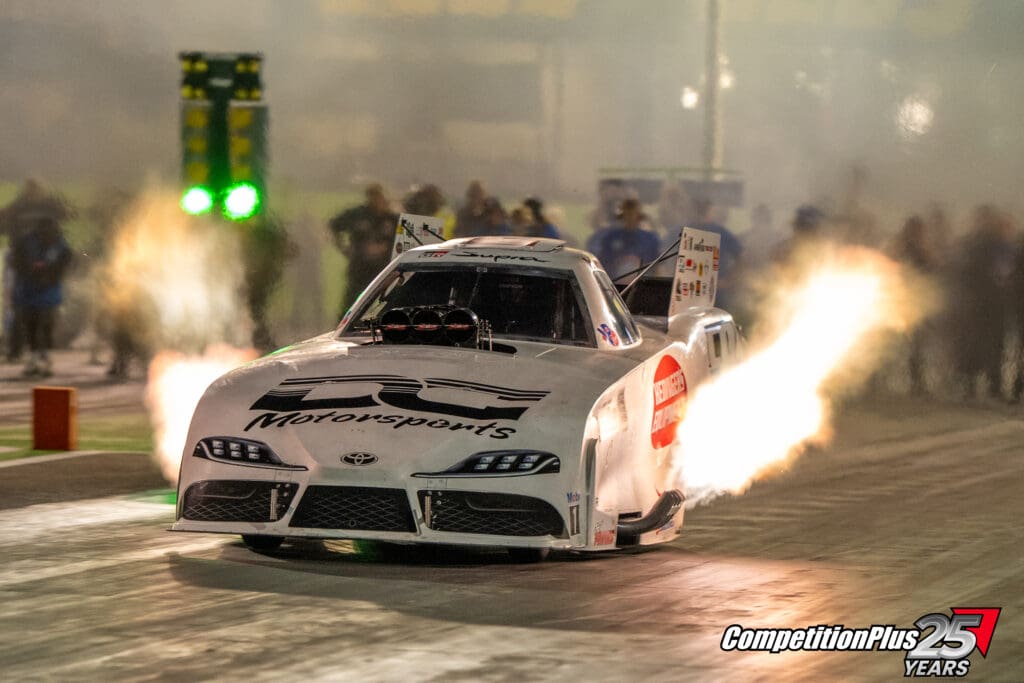
“I definitely had fun last year,” Worsham said. “It was fun going to some of these … There were tracks I raced at last year that, believe it or not, in all my years of racing, I’d never even been to.”
Dragway 42 became one of those defining stops. The Ohio facility offered a new perspective for a driver accustomed to national-tour familiarity.
“I’ve heard of it, but I’d never personally been there,” Worsham said. “So getting to go to tracks like Dragway 42 … was definitely exciting.”
The return to previously contested venues also reinforced nostalgia. Worsham noted that revisiting tracks absent from his itinerary for decades underscored the cyclical nature of drag racing careers.
“Hadn’t raced Columbus or Milan in 20 years, and that was fun going back there and racing again,” Worsham said. “So that was pretty fun.”
That environment rekindled grassroots sensibilities often overshadowed by major-league logistics. Worsham described the IHRA setting as a reminder of earlier chapters in his career.
“It just brought back a grassroots style of racing that reminded me of when I started,” Worsham said. “I was running around all these little tracks.”
The ability to combine competition with financial reward provided an additional incentive. Worsham framed the balance as a return to fundamentals with modern stakes.
“Now I’ll be racing and making money and having fun,” Worsham said.
This season also introduces logistical shifts uncommon in his previous schedules. The decision to prioritize IHRA events requires bypassing familiar national stops.
The IHRA season-opener conflicts with the second stop on the NHRA tour at Firebird Raceway just outside of Phoenix.
“Well, I live in California, but I keep my race team in Indiana,” Worsham said. “So I’m going to fly over Phoenix to go there for sure.”
The absence from Phoenix, long a staple of his annual routine, marks a symbolic break. Worsham’s history at the Arizona venue dates to its earliest days.
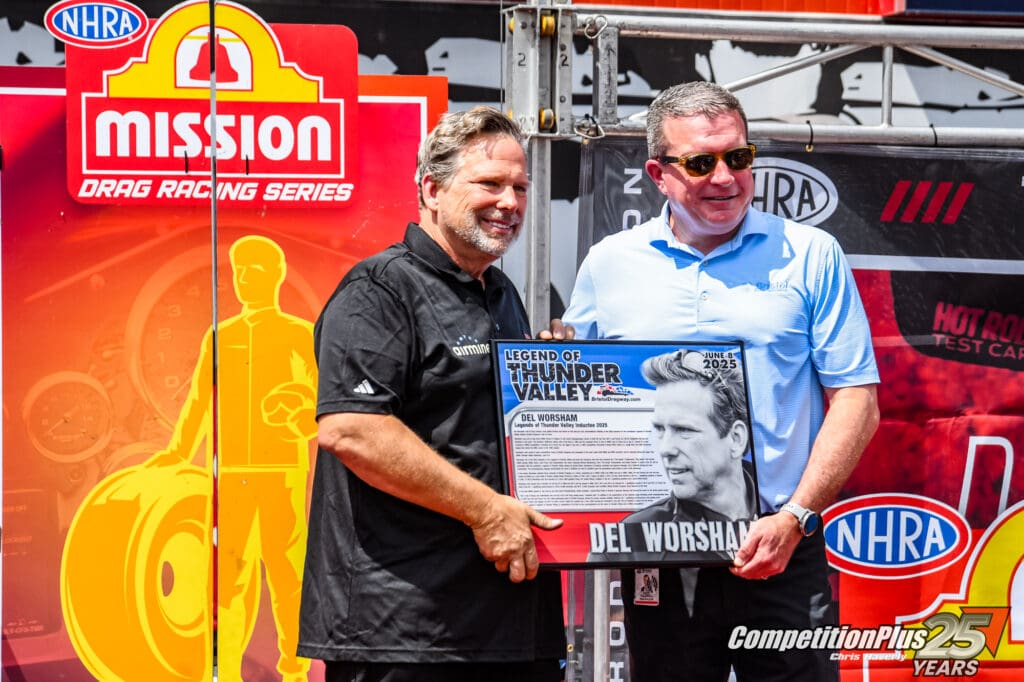
“It’s kind of strange not going to Phoenix,” Worsham said. “I’ve been to Phoenix, I think every year since I can remember, since they opened the track.”
He vividly recalls attending the facility’s inaugural race. That memory reinforces the longevity of his involvement in Top Fuel and Funny Car competition.
“I went to the first drag race in Phoenix, way back, I think it was in 1984,” Worsham said. “And yeah, here we are.”
The contrast between traditional stops and IHRA commitments underscores the evolving competitive landscape. Worsham recognizes the significance of racing on a different national stage while others remain aligned elsewhere.
“It’s definitely going to be different knowing that everybody’s racing a national event in Phoenix and I’m racing in a national event in Benson or North Carolina,” Worsham said.
Despite those adjustments, Worsham remains fully invested in IHRA’s direction.
“I’m excited about it,” Worsham said. “I’m excited to get the year started and get the IHRA season started.”
His commitment extends beyond short-term participation. Worsham indicated a clear intention to evaluate his standing after dedicating full effort to the campaign.
“I’m all in with IHRA right now,” Worsham said. “So I’m going to give this all I have and just see where I end up.”
Observers have questioned whether his stature creates an advantage in a rebuilding series. Worsham acknowledged that perception while contextualizing his own development.
“Well, I wasn’t always a big fish in the small pond,” Worsham said.
His résumé includes victories and championships in larger competitive environments.
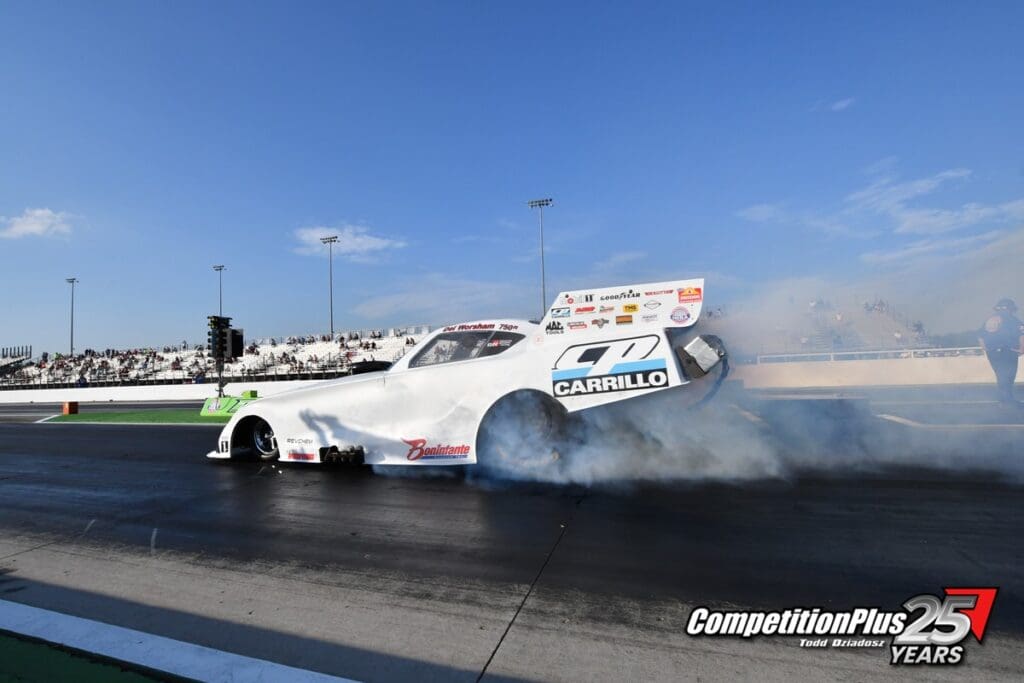
“I know it does,” Worsham said. “It kind of looks that way because I don’t know if there’s even anybody else in the categories that even won an NHRA national event except for myself, much less a championship.”
Still, he views the situation as cyclical rather than definitive. Worsham noted that early in his career he frequently occupied the opposite role.
“When I started and I grew up and I was racing, I’d go to these events and I was definitely the small fish in big ponds at times,” Worsham said.
“And I was still able to win and pull it out, whether it was Atlanta or Englishtown back in the day,” Worsham said.
Victories at historically competitive venues reinforced his belief in adaptability. He cited those experiences as validation of a mindset built on perseverance rather than circumstance.

“It makes it that much more exciting,” Worsham said. “And I think it’s good.”
Worsham considers the evolving IHRA field beneficial to both the series and his own ambitions. He emphasized the importance of competitive depth to validate results.
“It’s good for IHRA,” Worsham said. “I think it’s good for myself and I think it’s good for the sport.”
His benchmark for success remains rooted in earned achievement.
“To make sure that the level of competition is where it should be,” Worsham said. “To make sure when you win a race, you know you earned it.”
The veteran’s career trajectory reflects fluctuations between peak resources and leaner operations.
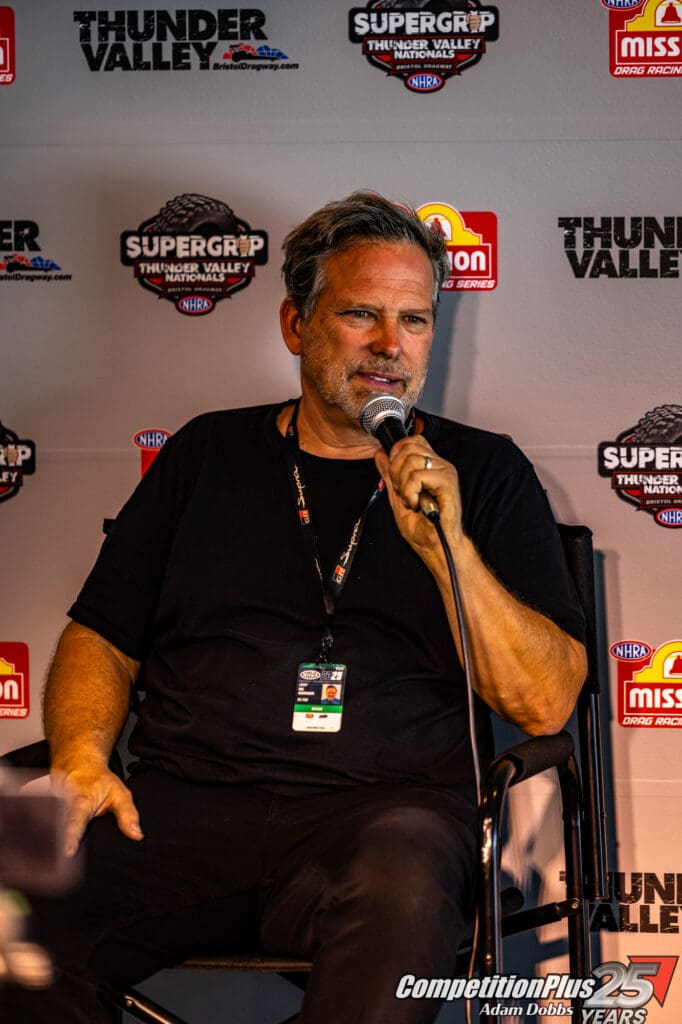
“I’ve been on all sides,” Worsham said. “Years ago, I’ve gone from eating sushi and flying on Lear jets to barely putting cheese on my burgers and going to races.”
Such contrasts have shaped his appreciation for the present phase. Worsham described his current environment as both fulfilling and challenging.
“So I’ve experienced all sides of racing,” Worsham said. “And I’m enjoying myself right now.”
He anticipates increased pressure as competitors escalate their preparation.
“And I don’t expect the competition to be easy at all,” Worsham said.
“I suspect these guys are going to be bringing the best stuff they have at me and I’ll be bringing them to them and we’ll see where we all land,” Worsham said.