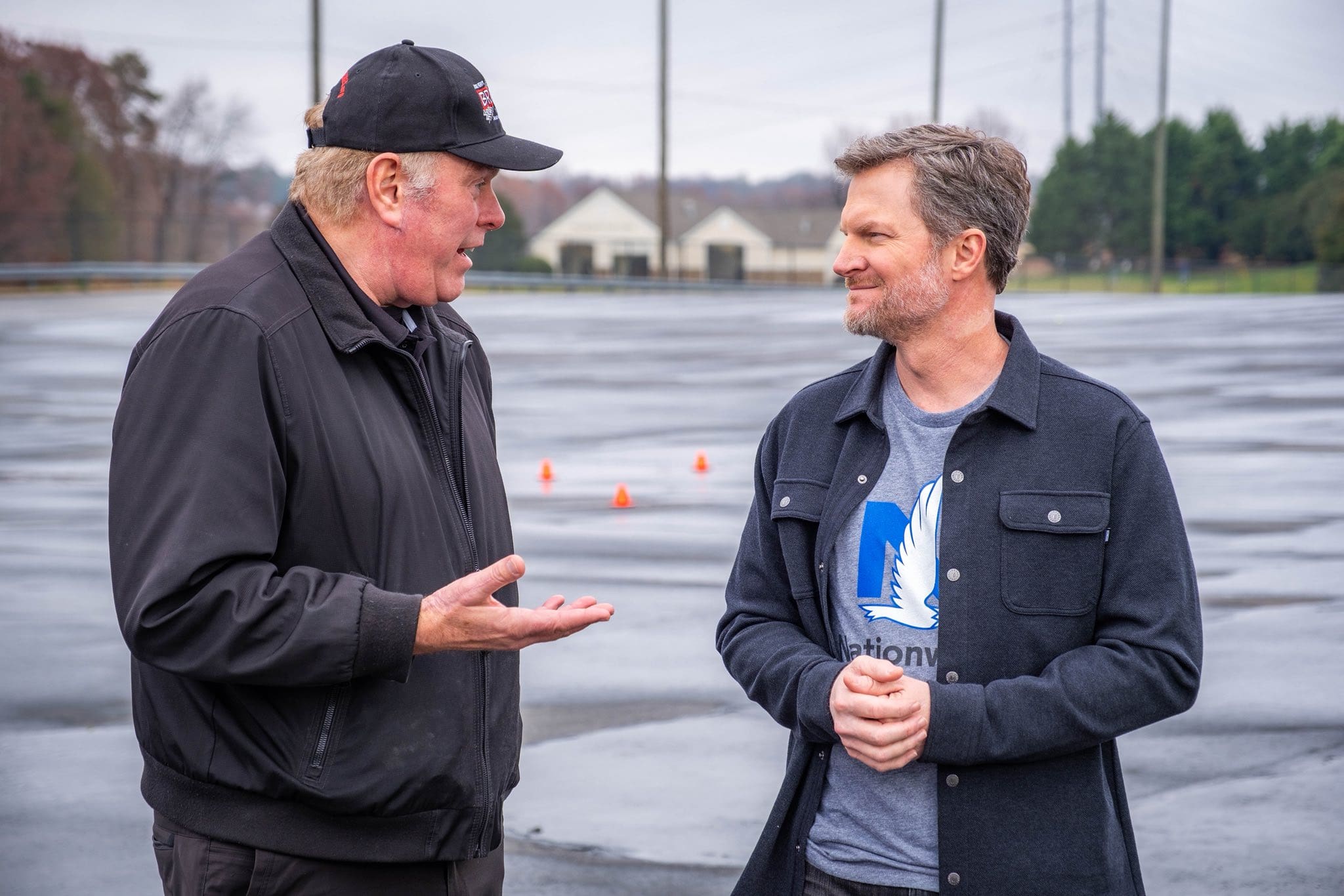

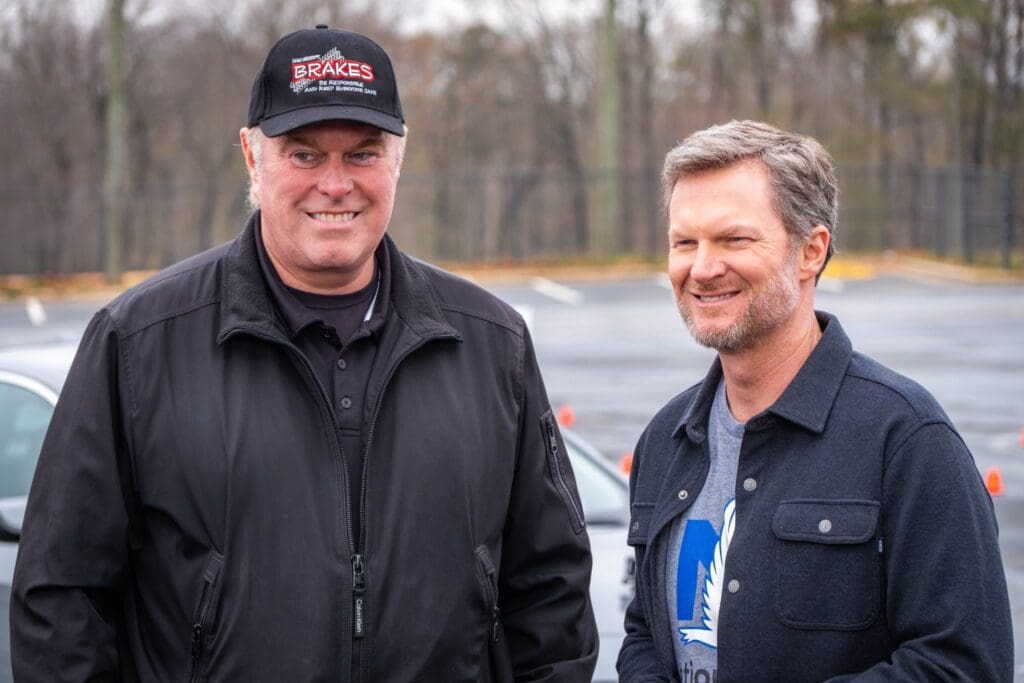
Doug Herbert’s B.R.A.K.E.S. teen driver training program has become the foundation of a new nationwide effort to curb distracted driving among teenagers, pairing hands-on instruction with incentive-based technology. The initiative brings together Herbert’s long-running safety mission, Nationwide’s Focused Driving Rewards program, and the influence of NASCAR Hall of Famer Dale Earnhardt Jr..
The campaign launches during Teen Driving Awareness Month and centers on a simple directive aimed at new drivers: put the phone down while driving. By grounding the message in Herbert’s training curriculum, organizers are emphasizing prevention through education rather than punishment.
Doug Herbert founded B.R.A.K.E.S. after losing his sons in a 2008 crash caused by a teen driver impaired by prescription drugs. Since then, the free national program has trained tens of thousands of teens and parents using real-world scenarios designed to prepare young drivers for emergencies they are likely to face on public roads.
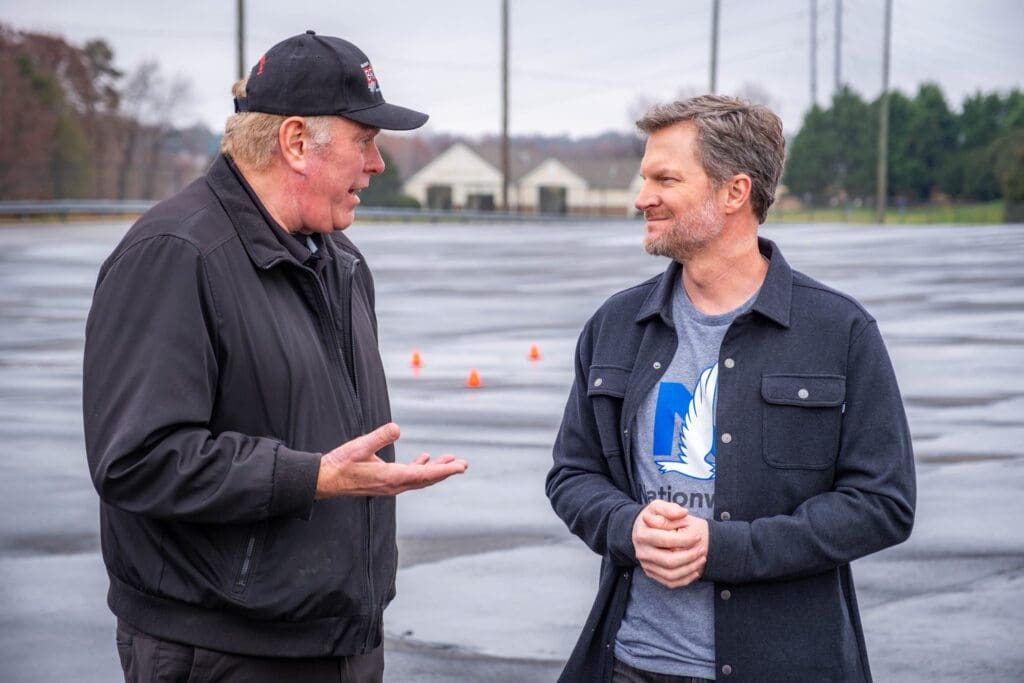
Filmed on a closed driving course designed by B.R.A.K.E.S. instructors near Charlotte, North Carolina, the multimedia campaign follows a parent-and-teen pair as they work through controlled exercises. Professional instructors guide participants through braking, car control, and situational awareness while reinforcing the dangers of distraction.
Earnhardt appears throughout the campaign to connect Herbert’s instruction with everyday driving decisions families face. His involvement is intended to broaden the reach of the program without shifting attention away from the educational core built by B.R.A.K.E.S.
“As a parent, I know how important it is to set the right example behind the wheel,” Earnhardt said. “This partnership with Nationwide is about giving families practical tools to build safer habits and rewarding them for doing the right thing.”
The effort also integrates Nationwide’s Focused Driving Rewards program, which tracks phone-handling behavior through a mobile app and rewards drivers for keeping their phones out of use. Points earned for distraction-free driving can be redeemed for gift cards, reinforcing habits taught in the classroom and on the track.


Nationwide data underscores why Herbert’s program remains central to the strategy. A recent survey found that only four in 10 parents rate their teen’s driving as “very good” or “excellent,” while 42 percent list distracted driving as one of their top concerns.
“Every mile matters when it comes to teen safety,” said Chris Lee, Nationwide’s vice president of Personal Lines Auto. “Partnering with Dale Jr. helps us amplify a simple but powerful message: put the phone down when you’re behind the wheel. With programs like Focused Driving Rewards, families have a practical way to reinforce that message and see real results.”
The Focused Driving Rewards program is open to all drivers and does not require a Nationwide insurance policy. Participants can earn up to $60 every six months by maintaining phone-free driving habits, with the program tracking only phone-handling events rather than broader driving behavior.
Nationwide reports that since the program expanded to more than 40 states in 2025, 38 percent of enrolled participants reduced phone distraction. Those drivers averaged a 39 percent reduction, a result the company attributes to the program’s narrow focus and ease of understanding.
For Herbert, pairing incentives with training reflects an evolution of B.R.A.K.E.S. rather than a departure from its mission. The classroom and skidpad lessons are designed to start conversations at home, while technology extends those lessons beyond the training day.
Research cited by Nationwide suggests parents are receptive to that combination. Eighty-two percent of parents surveyed said they would enroll their teen in a program that rewards safe driving, with improved safety habits cited as the primary motivation.
“Driving is a big milestone for teens, and it’s natural for parents to feel a little anxious,” Lee said. “With the right tools and open conversations, families can ease some of that worry and help teens build confidence behind the wheel. Every trip becomes a chance to practice and reinforce safe driving habits.”
As distracted driving remains a leading factor in crashes involving young drivers, organizers say Herbert’s B.R.A.K.E.S. program provides the structure that makes broader campaigns credible. The partnership positions education, reinforcement, and accountability as complementary tools rather than competing solutions.