Drag racing did not begin in 1953. What began that season was something far more consequential: the moment the sport separated itself from the dry lakes tradition and began defining its own identity under national structure.
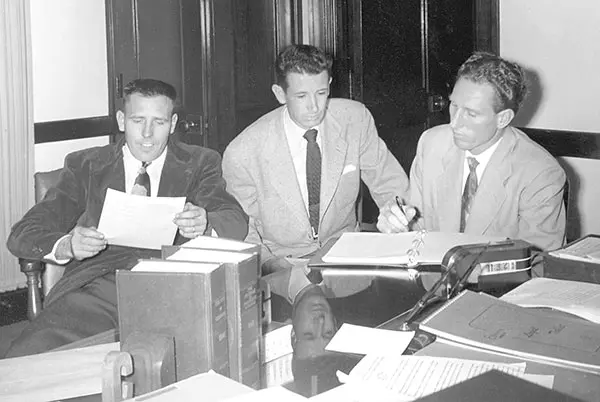
“The National Hot Rod Association wasn’t created for drag racing,” said Bret Kepner, a noted drag racing historian. “In 1951, Wally Parks wanted to unite car clubs across the country. Drag racing came later — because that’s where the racers went.”
That distinction matters. The NHRA was formed to federate car clubs, not to sanction quarter-mile competition.
In postwar America, every city had multiple independent clubs, often viewed by local authorities as a nuisance. Street racing was widespread, and hot rodding carried a reputation problem.
Through his leadership with the Southern California Timing Association, Parks had already seen how consolidation could work. Timing associations allowed clubs to retain identity while operating under a unified rulebook.
“The goal was legitimacy,” Kepner said. “Get the clubs recognized, get them organized, and get them off the street.”
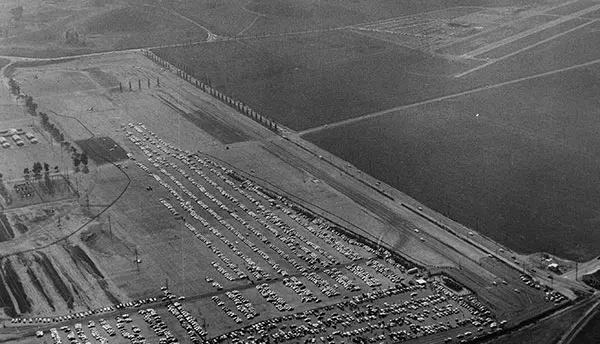
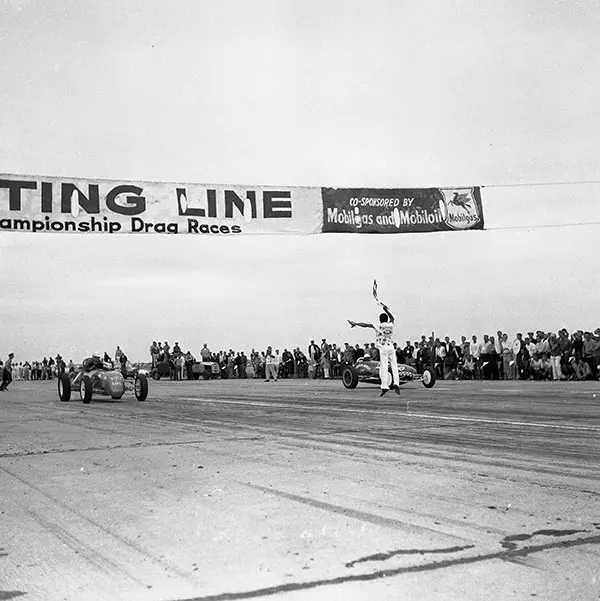
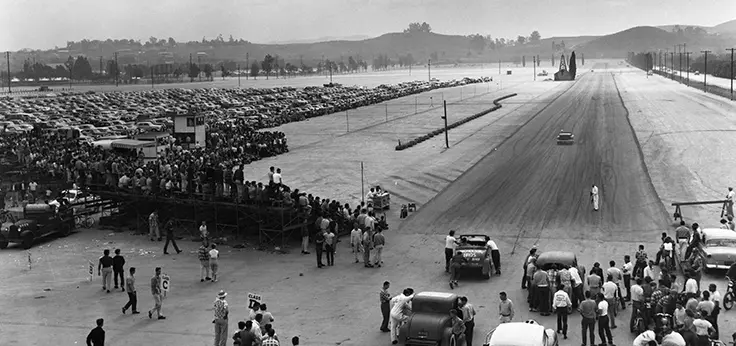
By the early 1950s, drag racing had emerged organically as the preferred outlet for competition. It required little infrastructure, delivered clear winners, and could be staged on repurposed airstrips across the country.
“There was a lot of drag racing happening before NHRA ever held its first race,” Kepner said. “By the time they got involved in 1953, it was already everywhere.”
And it was already organized.
The Automobile Timing Association of America (ATAA) owned sanctioned drag racing from 1952 until NHRA acquired it in 1957. ATAA operated the World Series, widely regarded as the first true national drag racing event, and sanctioned many of the largest tracks in the country.
Second only to ATAA in early sanctioning reach was NASCAR, which began sanctioning drag strips throughout the East in 1952 and staged major events, including early Winter Nationals, as soon as 1953.
NHRA did not enter a vacuum. It entered competition.
What separated NHRA was not that it was first. It was that it applied a broader federation philosophy to drag racing, one rooted in standardization and national cohesion.
When NHRA formally stepped into drag racing in 1953, it borrowed heavily from existing class structures. Early categories mirrored those developed at Bonneville and on the dry lakes.
Stock, Modified, Roadster, and Unlimited classifications provided immediate credibility because they were familiar. But they were not born of drag racing.
Bonneville classes were built around purpose-built competition vehicles. Early drag racing was not.
The first true break from that philosophy came with the Gas Coupe and Sedan class.
“Gas Coupe and Sedan was created for the average hot rodder,” Kepner said. “Closed cars, motor swaps, gasoline fuel. These were street cars that raced.”
Unlike the inherited Bonneville categories, Gas Coupe and Sedan acknowledged what early drag racing actually represented. These were dual-purpose machines driven on the street and raced on weekends.
It was drag racing’s first class designed specifically for its own environment rather than adapted from another discipline.
That shift was subtle, but it was significant. Gas Coupe and Sedan embodied accessibility.
It gave the motor-swapped street car a defined place in organized competition. In 1953, that philosophy worked.
Classes existed to include.
As drag racing grew in popularity, however, success altered the landscape. Innovation accelerated and costs rose.

The Gas Coupe and Sedan class evolved from a haven for street-driven hot rods into a battleground for increasingly specialized machines.
“What started as the hot rod class became something else,” Kepner said. “The original guy still showed up — he just didn’t belong anymore.”
The transformation was not intentional. It was the natural byproduct of growth.
But it introduced a tension that has followed drag racing for decades: how to balance accessibility with escalation.
The 1953 season represents the moment organized drag racing found its structure. It was not about inventing the sport.


It was about organizing it.
“The NHRA didn’t create drag racing,” Kepner said. “It organized it.”
Borrowed structure, adapted classes, and the creation of Gas Coupe and Sedan as a distinctly drag-racing solution defined the early years of sanctioned competition.
As the sport continues to evolve, the lesson from 1953 remains clear. Growth is inevitable. Escalation follows innovation. But drag racing’s foundation was built on giving participants a place to race.
That principle took hold when NHRA entered the quarter-mile in 1953. Preserving it remains the sport’s enduring challenge.