
Competition Plus’ Water-Cooler Topics From The Professional Racing Organization [PRO] Testing in Gainesville, FL
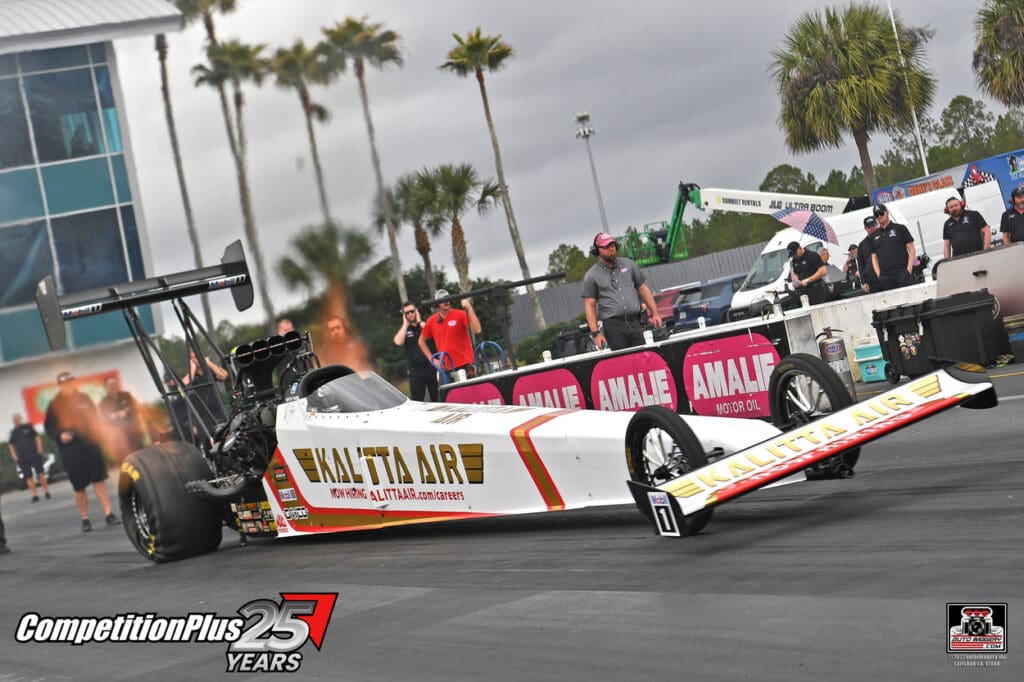
1 – THE STAR OF THE SHOW – Shawn Langdon didn’t just headline testing — he reset the conversation.
During the Professional Racers Organization preseason test, the Kalitta Motorsports driver produced both the quickest elapsed time and the fastest speed of the week – and perhaps establishing himself as the one to chase entering the new NHRA season.
First came the number that carried historical weight: 3.621 seconds to 1,000 feet. The run was not an official national record, but it was the quickest pass recorded during preseason testing and immediately tightened the focus around Top Fuel performance.
“Feels very rewarding,” Langdon said. “Very, very happy for my team, happy for the guys.”
If the 3.621 demanded attention, the speed number changed the tone.
On a later run, Langdon blasted to 345 mph — the fastest speed recorded during the test session, as well as the highest speed every by an NHRA vehicle. In a category where gains are measured in thousandths, pushing into the mid-340s suggests more than incremental progress.
The runs came on different days, but they combined to frame the week. One highlighted elapsed-time precision, the other showcased raw power and efficiency.
Langdon did not treat either as a finish line.
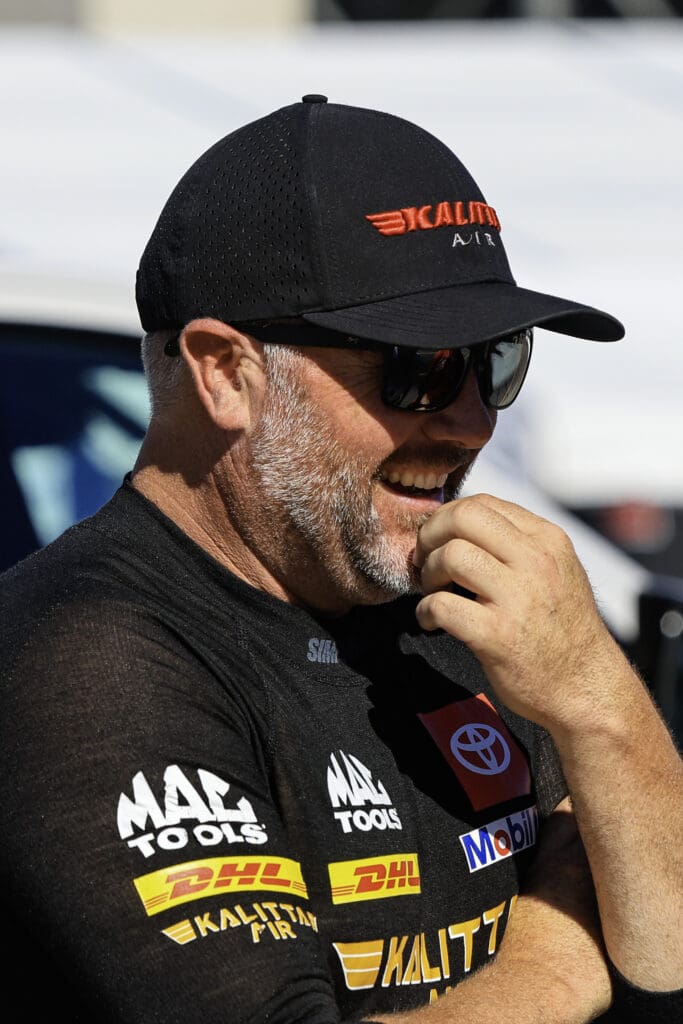
Earlier in the test, he trailed teammate Doug Kalitta on the speed charts before blasting to the top. That progression reflected a team dialing in combinations rather than chasing headlines.
“It’s always nice to come out testing in good shape,” Langdon said. “We worked hard in the offseason.”
Testing offers the first public indicator of winter development. For Kalitta Motorsports, the numbers suggested readiness.
The 3.621 run underscored how refined current Top Fuel combinations have become, with clutch management and power delivery producing controlled aggression rather than volatility. The 345-mph blast hinted that teams may be exploring the outer edge of aerodynamic balance and engine efficiency.
Gainesville has a history of milestone moments. This one arrived before qualifying for the upcoming, season-opening Gatornationals began.
Langdon, however, sounded less interested in the history and more interested in the ceiling: “There’s some left. There’s definitely some left.”
He didn’t say it like a warning. He said it like a promise for the Gatornationals, set for March 5-8.
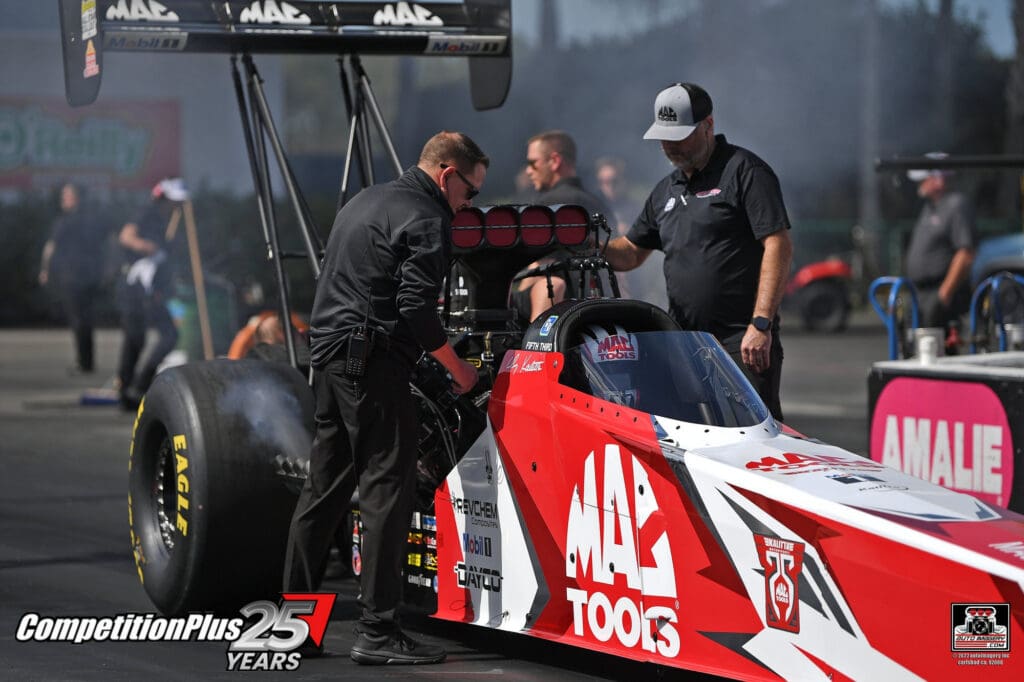
2 – TEST WEEK: FROM DATA GATHERING TO DECLARATIONS – Three days. Three different tones. One performance bar that kept moving.
Tuesday opened the Professional Racers Organization test session with Doug Kalitta setting the early Top Fuel standard. His 3.691 at 315.56 mph led the first 65 runs of the day and marked the quickest elapsed time of the session.
Shawn Langdon joined his Kalitta Motorsports teammate with a 3.699 later in the afternoon. They were the only dragsters to dip into the 3.60 range on opening day.
Josh Hart countered with top-end muscle, blasting to 340.47 mph on his first full pull and backing it up at 340.22 mph. The early tone was clear: elapsed time belonged to Kalitta, speed to Hart.
In Funny Car, J.R. Todd paced the category with a 3.861 at 338.00 mph in his Toyota GR Supra. Alexis DeJoria (3.994), Matt Hagan (3.958), Ron Capps (4.000), and Dan Wilkerson (4.062) focused on measured shutoff passes as teams worked through early setups.
Wednesday escalated.
On pass No. 87 of 102 runs, Langdon delivered a 3.621 at 341.85 mph — the quickest elapsed time ever recorded in preseason Top Fuel testing. The number was unofficial in record terms, but it instantly reset the bar.
“Feels very rewarding,” Langdon said. “Very, very happy for my team, happy for the guys.”
Doug Kalitta followed with a 3.668 at 339.45, while Justin Ashley added a 3.707 at 337.07. Billy Torrence (3.713), and Antron Brown (3.724) remained in the mid-3.70s as the class tightened.
Funny Car saw Jordan Vandergriff lead Wednesday with a 3.866 at 331.69 mph. Jack Beckman (3.867) and Todd (3.871) kept the category tightly stacked.
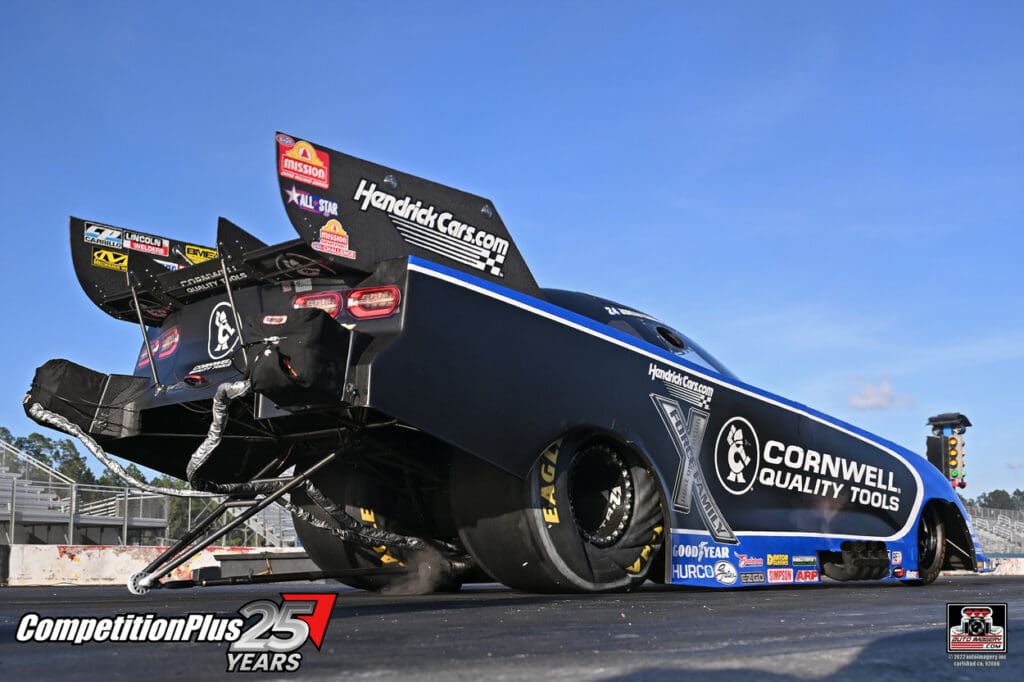
Thursday turned into a finishing punch.
Austin Prock delivered the quickest Funny Car run of the day at 3.878, 329.91, mph in his new role for team owner Bob Tasca III. Jordan Vandergriff, new to the John Force Racing stable, followed at 3.886, with Beckman close behind at 3.887.
“Really proud,” Prock said after the run. “Worked through some difficult times over the last few months and especially these last two days with this race car.”
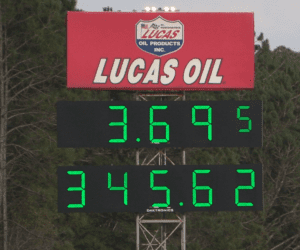
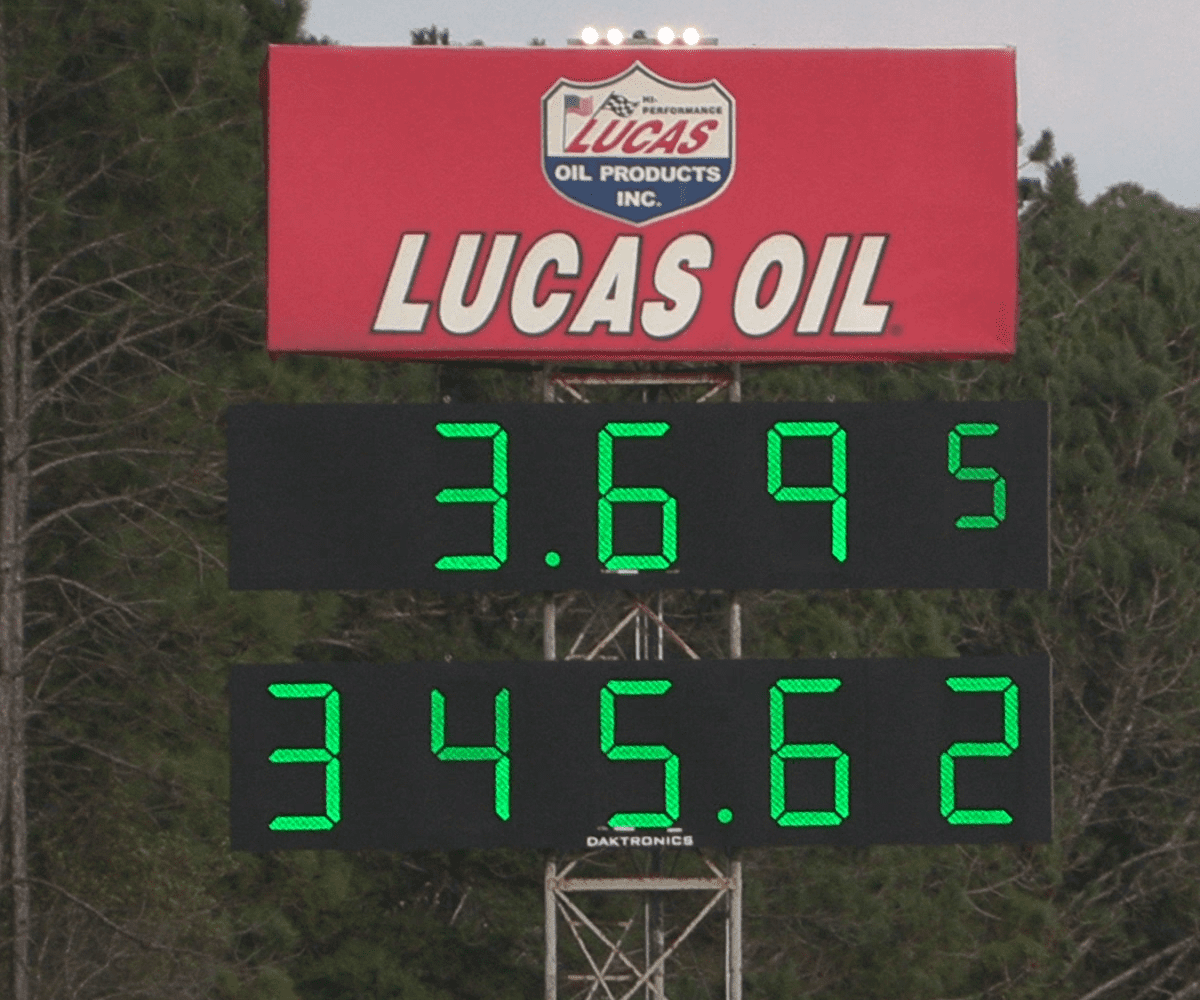
In Top Fuel, Kalitta reclaimed the elapsed-time lead for the day with a 3.659 at 340.47 mph. Langdon answered with a 3.695 — but at 345.62 mph, the fastest speed of the entire session.
Tony Stewart (3.718), Billy Torrence (3.726), and Justin Ashley (3.727) remained in the 3.70 window as teams stretched combinations deeper into full pulls.
Across three days, the numbers moved from exploratory to declarative.
Kalitta set the opening tone. Prock delivered the Funny Car breakthrough. But the week ultimately belonged to Langdon, who owned both ends of the spectrum — the quickest elapsed time and the fastest speed.
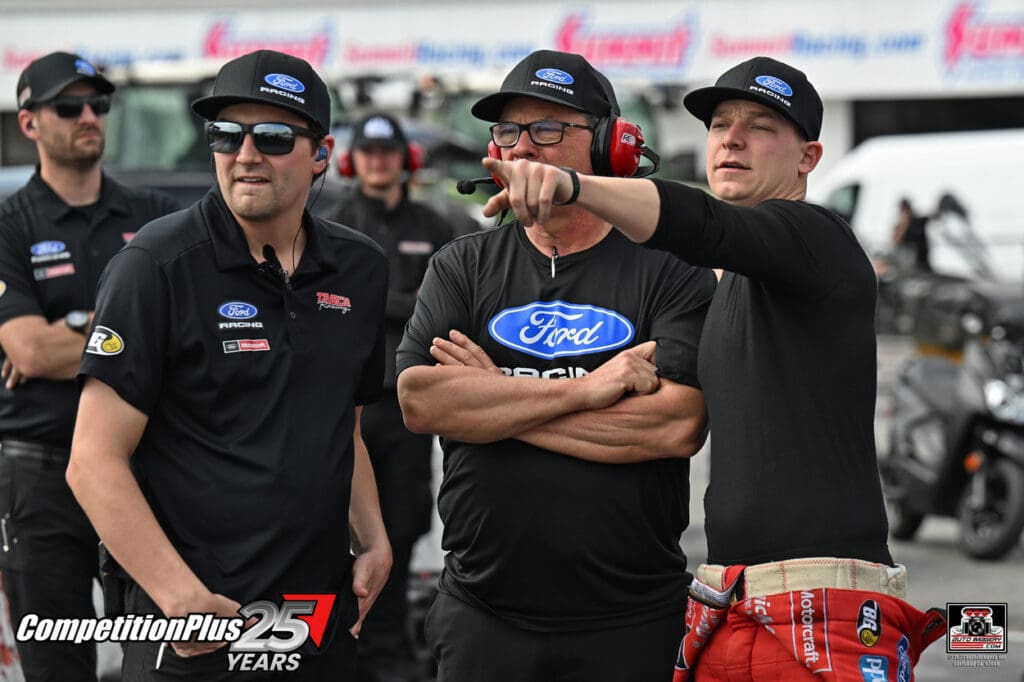
3 – THE ‘OL ROPE-A-DOPE — It never looks smooth at first.
A Jimmy Prock-tuned Funny Car will show its teeth in testing, fight through visible issues, and then — almost on cue — lay down a run that reminds the pit area why patience matters.
That reminder came Thursday.
Austin Prock delivered the quickest Funny Car run of the day in the Tasca Racing Ford Mustang, halting two days of uneven results and signaling that the rebuilt combination is beginning to respond. The number followed overnight adjustments and steady refinement rather than wholesale changes.
This version of the “Prock Rocket” is not a carryover program from the family’s tenure at John Force Racing. Prock and his group effectively rebuilt Tasca’s operation over the winter, compressing what he described as nearly a year’s worth of development into two months. New components and new processes replaced reliance on an established tuning notebook.
“We’ve got a long way to go,” Prock said, “but we’re going to make this operation really nice and we’re going to put it in the winner’s circle for them.”
Early runs showed the growing pains.
Severe clutch issues marked the opening attempt, followed by another pass that was complicated by a hanging throttle. The team responded by working through the data rather than chasing numbers.
“Never count us out,” Prock said. “If we’re struggling, this group is really intelligent and we can work through about anything.”
By Thursday morning, the Mustang was on pace for a 3.84-second elapsed time before Prock shut it off at 660 feet. Even with the lift, the car ran to an 3.87 at the stripe, the quickest Funny Car pass of the day.
“Worked through some difficult times over the last few months and especially these last two days with this race car, and really proud of this team,” Prock said. “That’s quite the feat to be able to roll out here this morning on track to run 84 and finish the day with an 87.”
Tasca Racing owner Bob Tasca III views the early gains as validation of the offseason move.
“It’s about winning, it’s about bringing the best people together, and that’s what we’ve done here,” Tasca said.
Testing sheets don’t award trophies.
But when a Prock-tuned car finds its footing, history suggests the rest of the field pays attention.
“We’re going to keep our heads down, keep working,” Prock said. “But this is an outstanding start for this Ford.”

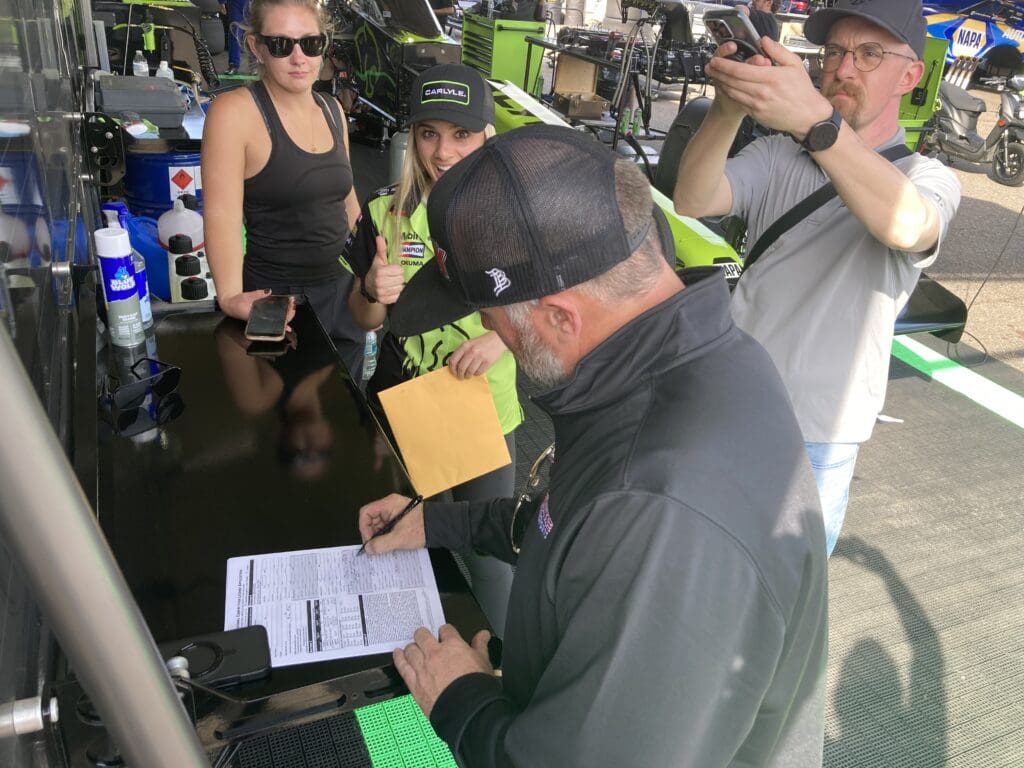
4 – SHE’S A BONA FIDE TOP FUEL DRIVER – Maddi Gordon climbed out of her dragster grinning, not gasping – and that might be the clearest sign she belongs in Top Fuel.
The rookie secured her license Thursday with a 3.834-second pass at 318.89 mph – her first career 300-mph blast.
Four veteran drivers — Ron Capps, Shawn Langdon, Clay Millican, and Brittany Force — signed off on her credentials. NHRA requires licensed competitors to approve rookie applicants as part of the process.
“Oh my … I’m just so stoked,” Gordon said. “I had confidence we’d get it done, but it’s just so nice to have it done.”
The milestone capped a week that began with Gordon driving a Top Fuel dragster for the first time. Monday introduced the cockpit, and Tuesday delivered her first full hit under power.
“I am kind of speechless, to be honest,” she said after that initial run. “I think Ron and Rob did such a good job of preparing me and, ‘It’s going to be insane, insane, insane.’ So I felt like I was preparing for insane and it was all that they said it was.”
She admitted nerves surfaced before that debut pass.
“I would say about 45 minutes before we ran, I wasn’t sure if I was going to throw up,” she said. “Oh, my gosh, I was so nervous.”
Early runs were deliberately short, with the engine shut off at 330 feet to focus on procedures.
“I got a lot to learn and we didn’t even get to the best part,” Gordon said. “Everything’s new on this car.”
By Thursday, the numbers matched the progression. The 318.89-mph speed confirmed she could handle the shutdown area and checklist cleanly.
“Go 300 miles an hour, I went faster than I’ve ever gone at the eighth mile,” she said. “It is amazing.”
Even after earning her license, Gordon was already thinking about reaction time.
“Now we can go out there and I can try to cut a light,” she said. “I just wanted to make sure I saw yellow when we got a time slip and we could keep it.”
Licensed at 318 mph, she left Gainesville sounding less like a rookie and more like someone already chasing the next improvement.
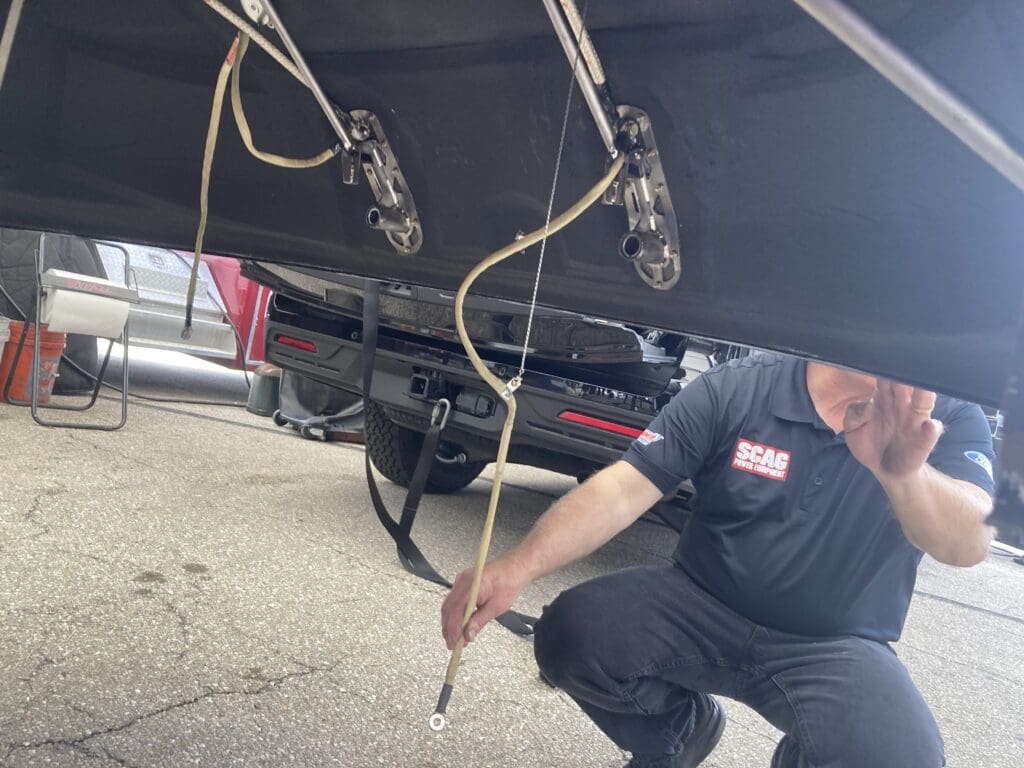
5 – WILKERSON’S ENERGY THEORY – “We’re trying to get rid of the energy.”
Tim Wilkerson isn’t redesigning his Funny Car to hold together harder, he’s redesigning it to let go smarter.
The veteran driver and chassis builder Murf McKinney unveiled a new body-tethering concept aimed at managing explosion force rather than resisting it. The idea is to allow the body to rise briefly, then control its return.
“So we decided we were going to try to get rid of the energy by allowing the body to blow up about three foot,” Wilkerson said.
The system anchors two Kevlar tethers at the nose of the car while retaining the traditional rear hinge. The design limits vertical travel without trying to clamp the body in place.
“… Like old-style blow ups,” Wilkerson said.
That reference is intentional. Earlier-era Funny Cars often lifted and settled instead of fragmenting under pressure, and worse, collapsing into the driver’s lap and on his/her hands and arms.
“If you ever remember seeing an old style blow up, it’d blow up in the body, come up in the air a little bit, mmm, back down, it would go, right?” he said.
The redesign follows a season in which multiple high-profile explosions reignited concerns about latch durability and body separation. In several incidents, front latches were destroyed while energy moved unpredictably through the structure.
Wilkerson questions whether reinforcing the latch addresses the real issue.
“I told them, I said, ‘How many times have you seen one of these things blow up bad when the front latches were still worth a crap?’” he said. “They’re always violated so bad, sometimes you can’t even get them out.”
Instead of asking the latch to absorb everything, Wilkerson expects the body to rise — and be restrained.
“If it blows up, that thing’s coming up in the air and we’re going to catch it on the way up, we hope.”
The material remains unchanged.
“Kevlar,” Wilkerson said. “They’re just a Kevlar rope.”
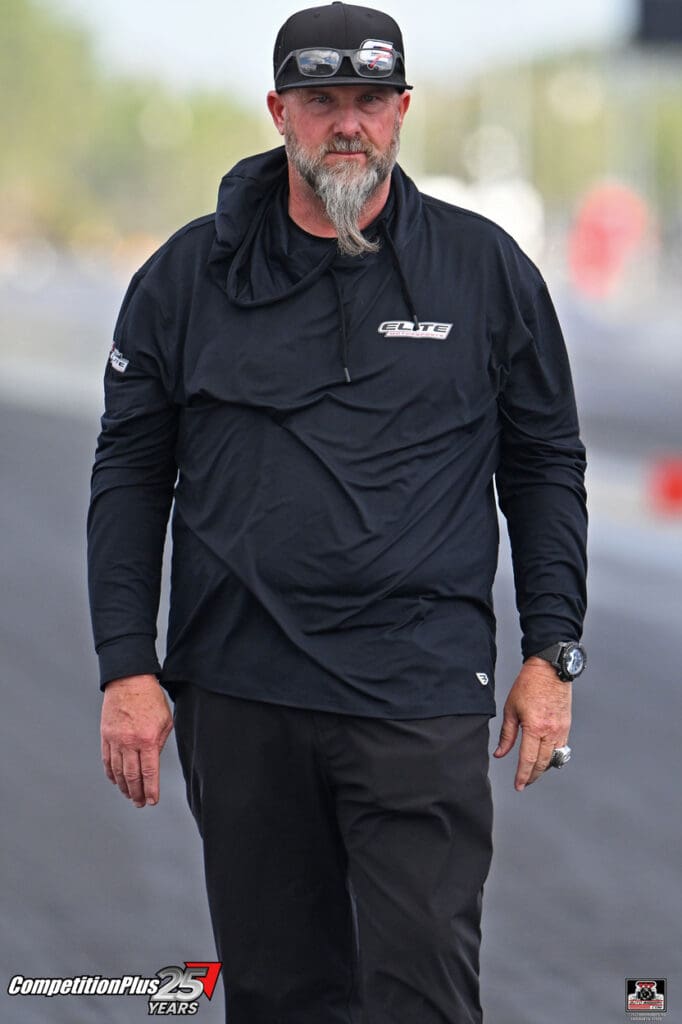
6 – HIGH HORSEPOWER JUGGLING ACT – Richard Freeman didn’t ease into full-time Top Fuel ownership. He launched it while managing six Pro Stock cars at the same test session.
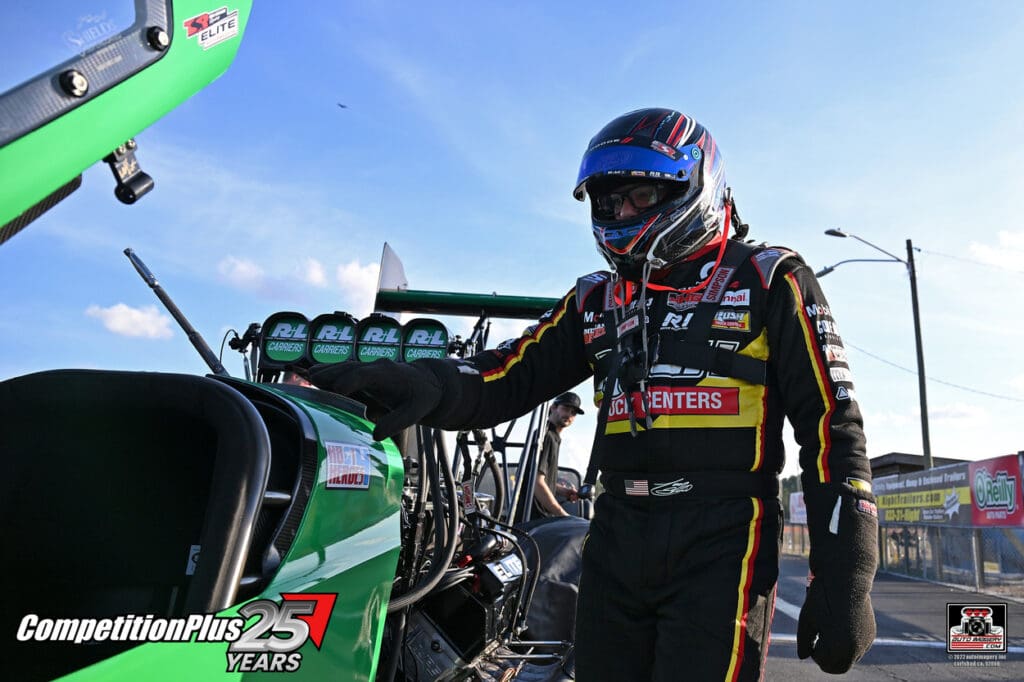
Freeman’s new R+L Carriers-backed Top Fuel dragster made its first full runs in Gainesville with Tony Stewart behind the wheel. At the same time, the Elite Motorsports owner continued overseeing a half-dozen Pro Stock entries, splitting his days between nitro data and valvetrain checks.
The workload was relentless.
For four consecutive days, Freeman rotated between two categories, two sets of crew chiefs, and two completely different operating philosophies. The balancing act stretched both manpower and budget.
“Yeah, I don’t have enough money to eat,” Freeman said with a laugh. “We’re spending it like it’s water over here.”
The humor masked a serious commitment.
Freeman’s group built two new Top Fuel cars during the offseason, compressing development into a narrow window before preseason testing. The first full pass in Gainesville delivered a 3.71-second run at nearly 337 mph — the fastest Stewart has ever been in a dragster.
“Man, couldn’t be happier with the performance of that car,” Freeman said. “First full pull, it went 371 at almost 337.”
The early number validated months of preparation by crew chiefs Mike Green and Joe Barlam, along with Dustin Davis.
“Got the right group of guys over there,” Freeman said.
Freeman emphasized that the objective wasn’t immediate dominance.
“We’re not concerned with being No. 1 qualifier or hurting parts to do it,” he said. “We want to learn, and we want to try to do this a different way.”
Even as nitro entered the fold, Pro Stock remained his foundation.
“This is my passion, Pro Stock is,” Freeman said. “It’s what I’ve loved.”
The Top Fuel expansion came because of Stewart’s availability.
“My opportunity to do Top Fuel comes from having the opportunity for Tony to drive,” Freeman said.
Launching a fuel car is expensive. Launching one while managing six others is something else entirely.
“Those cars, they’re money eating, money hungry,” Freeman said.

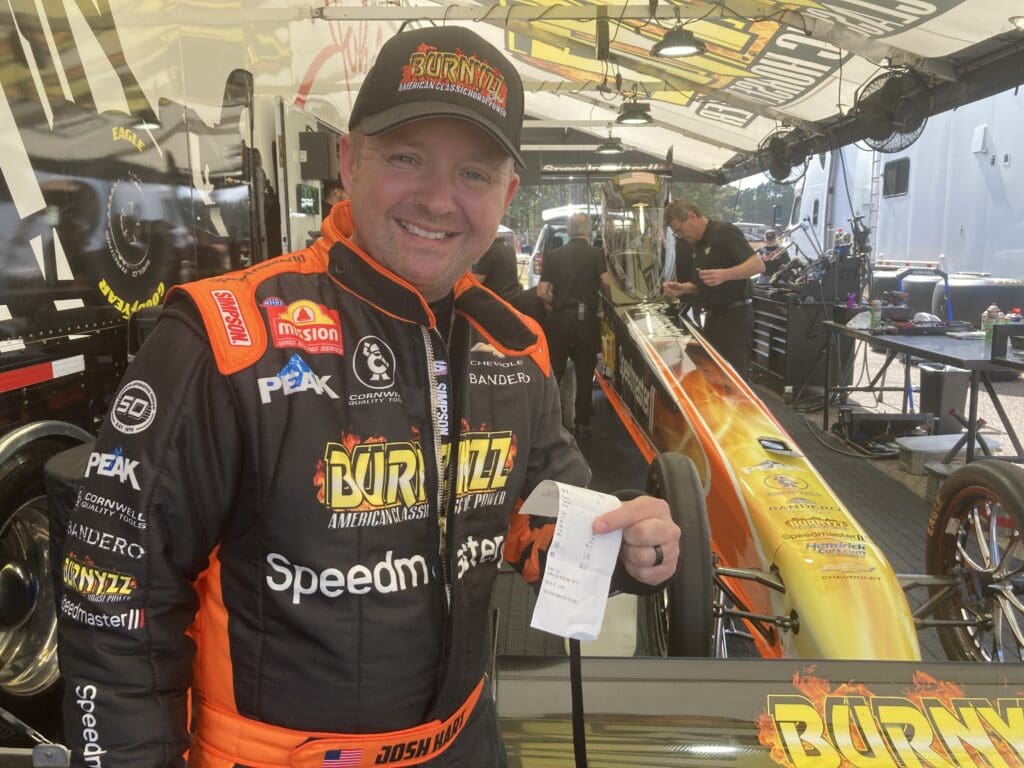
7 – NOTHING LIKE A GOOD FIRST IMPRESSION – Josh Hart didn’t ease into his John Force Racing debut. He opened it at 340 mph.
Hart made the first full pass of the Professional Racers Organization test session and immediately raised eyebrows with a 340.4-mph blast — the first run of the week and the fastest speed of the opening day. He backed it up with another 340-mph pass, turning a debut into a declaration.
“To be the first in the lanes, first down the track first, right out of the box, 340.4 – can’t put it into words, man,” Hart said. “It was smooth. It was straight.”
The run marked Hart’s first pass in a canopy-style dragster, a change that he said altered both the feel and awareness inside the cockpit. The difference was immediate.
“It was so much smoother and quieter,” Hart said. “Kind of feel like you’re more aware of what’s going on with the car. It’s not so loud and obnoxious.”
The most dramatic moment came after the finish line.
“You’re used to going with the thrust,” Hart said. “You’re not used to the chutes hitting that hard. So you almost see stars a little bit when the chutes come out.”
Even that didn’t temper his reaction.
“Epic feeling,” he said. “So it’s going to be a good year.”
Hart acknowledged that the 340-mph number had been looming. Reaching it on the first run of testing, however, wasn’t scripted.
“I knew it was going to be awesome,” he said. “No disappointment at all. I’m over-the-moon excited.”
The debut also marked a transition into a new cockpit environment, one he now says he wishes he had embraced earlier.
“Absolutely,” Hart said, when asked if he would have switched to a canopy car sooner had he known the difference.
The comfort and composure inside the car stood out as much as the number on the board.
“They’ve done a great job getting it ready for me,” Hart said. “So you slide right in there, and as long as I can do my job, I think we’re going to have an awesome year.”
For a driver making his first official laps with John Force Racing, the statement came quickly and cleanly.
“I think this is going to be my year,” Hart said.
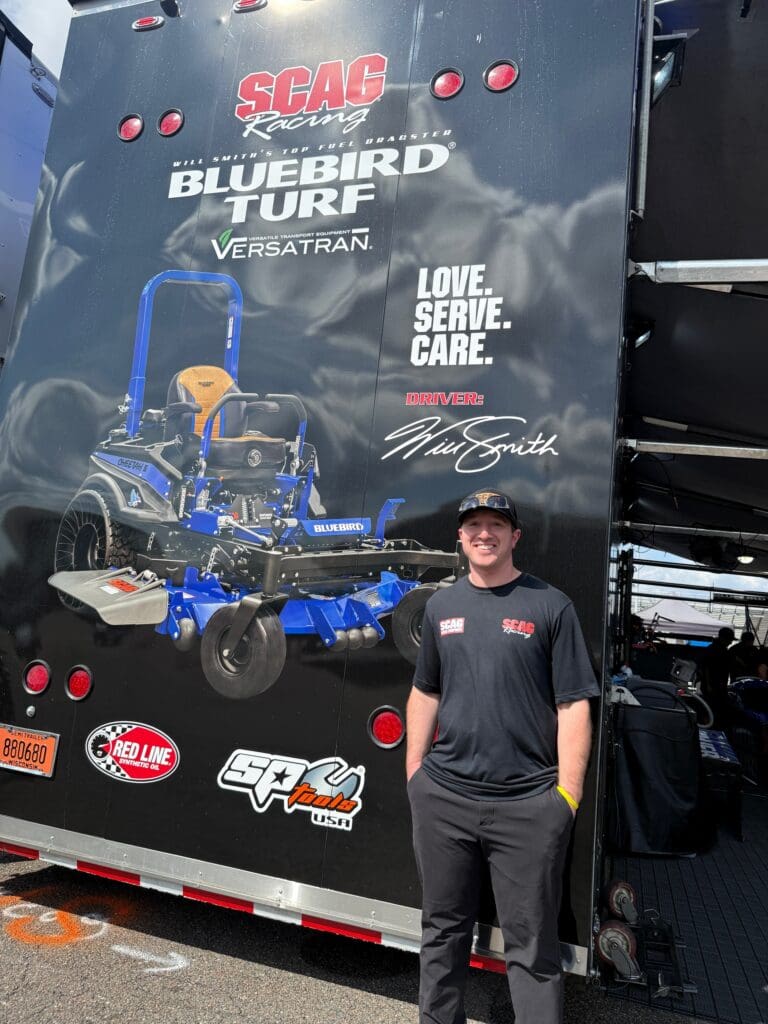
8 – THE BIGGER PICTURE – Justin Ashley logged more than routine preseason laps.
He tested his own Scag Power Equipment Top Fuel dragster while also shaking down Will Smith’s Bluebird-sponsored entry as Smith recovers from a recent medical procedure.
The weekend marked Ashley’s first experience pulling double duty in the Top Fuel category. He approached it as an added opportunity rather than added pressure.
“Every lap I get a chance to drive a race car is a lap that gives me some kind of advantage over the competition,” he said.
Ashley’s primary focus remained his own team, which entered the test session under new leadership with crew chief Tommy DeLago and several new crew members. The personnel changes represented one of the most significant shifts of his Top Fuel career.
“This is definitely different,” Ashley said. “We were fortunate to keep a really good group together for a long time.”
He viewed the transition as part of the competitive cycle.
“This is the nature of the sport,” Ashley said. “This is a business and this happens.”
While adapting to internal changes, Ashley also provided feedback on Smith’s newly assembled car and crew.
“The car is essentially brand new, and they just put it all together,” Ashley said. “I have to give him credit. It’s pretty amazing that they made it here.”
Ashley emphasized communication as central to helping Smith’s program progress.
“I think that communication between myself and Will and the rest of their guys on the team is going to be crucial for them moving forward,” he said.
Beyond mechanics and data, Ashley noted similarities between their career paths.
“I spent a lot of time working through the sport looking for the opportunity that I’ve been blessed enough to have,” Ashley said. “Same thing with Will Smith.”
Ashley described Smith as humble and grateful, qualities he values in a teammate.
“He really is a great guy,” Ashley said. “He’s polite, he’s courteous, he’s humble.”

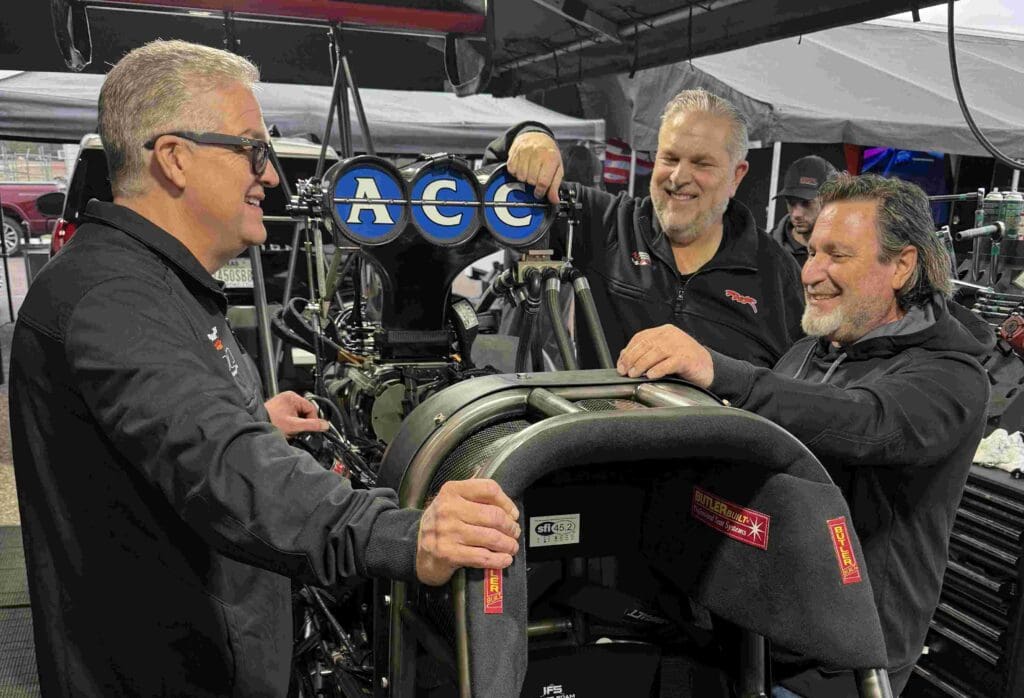
9 – MAMA SAID DON’T KNOCK YOU OUT – For years, the Oberhofer brothers settled disagreements the old-fashioned way.
Now mama said don’t knock you out — so they tune Top Fuel dragsters instead.
Rick Ware Racing has reunited Jim and Jon Oberhofer to lead its Top Fuel programs for Tony Schumacher and Clay Millican, pairing the siblings alongside veteran tuner Nicky Boninfante in what amounts to a three-crew-chief operation.
The brothers grew up in drag racing, working with their father before building championship résumés of their own, most prominently at Kalitta Motorsports. Between them are multiple NHRA championships and U.S. Nationals victories.
But hardware wasn’t the only thing forged early.
“Definitely Jim O,” Jon said when asked who won more fights growing up. “He was always bigger than me.”
Time and perspective reshaped that dynamic.
“Ever since our sister died, we decided that we’re never going to argue again,” Jon said.
Now the conversations revolve around clutch application and power management instead of backyard wrestling matches.
“We’ve got one goal, we want to put Clay and Tony in the winner’s circle,” Jim said. “We don’t care how we do it.”
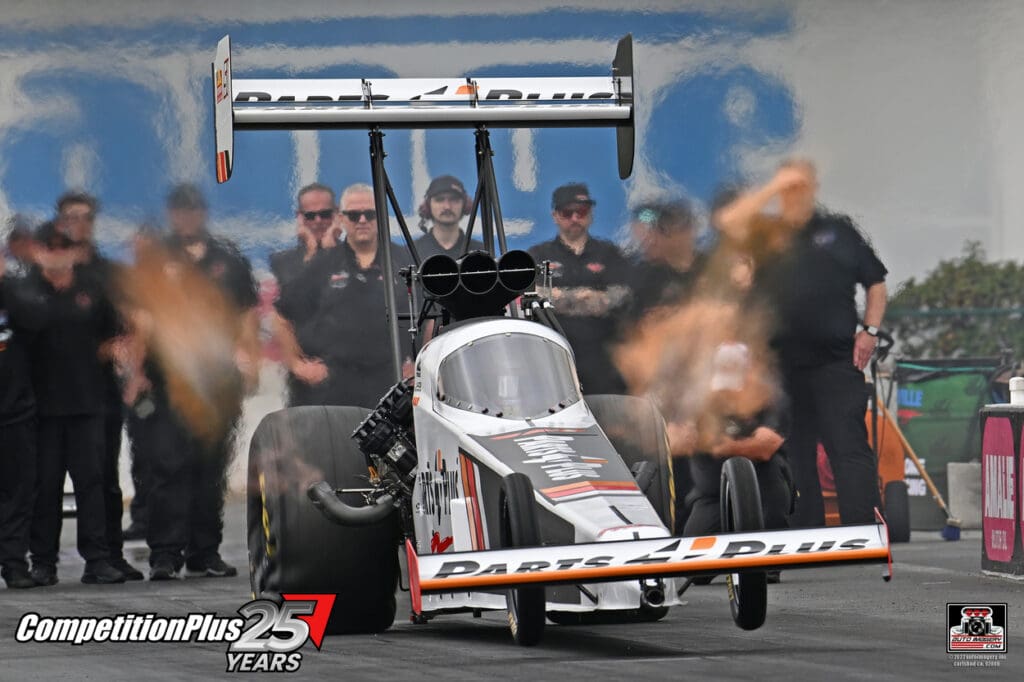
The reunion carries a twist.
For years, Jim tuned the Connie Kalitta-owned dragster against Schumacher’s Army-sponsored vehicles, and too often watched Schumacher win.
“After all these years with Tony, we obviously had our rivalries back in the day,” Jim said. “So now to be on his side and him racing with us, I’m actually really enjoying him.”
Schumacher noticed the irony when he first walked into the shop.
“Tony’s like, ‘Boy, this is awkward,’” Jim said. “Because we might’ve threatened Tony once or twice over the years.”
Boninfante, who joined the team in 2024, now bridges both Top Fuel entries and, in Jim’s words, serves as the buffer.
“Nicky said that he had to be in between us in case my brother and I wanted to fight with each other,” Jim said. “But we’re too old for that anymore. My mom won’t allow it.”
For Jon, the opportunity nearly didn’t happen.
“I was at a point where I didn’t want to race anymore,” he said. “And then now that I’ve had the opportunity to come over here, it’s been special to me.”
10 – VALUE IN REPETITION, NOT DISTANCE – The scoreboard didn’t tell the Pro Stock story in Gainesville.
While nitro cars stretched to the 1,000-foot clocks, Pro Stock teams clicked their engines off early, gathering data in transitions and high gear without chasing full-track numbers. For Erica Enders, that was enough.
“We’re getting all of the data that we need from high gear on, it’s just horsepower,” Enders said. “We are fine-tuning down low in our transitions where we got our teeth kicked in last year.”
The six-time champion approached the preseason test as repetition over recognition.
After not racing Pro Stock since October, Enders said the session helped reestablish rhythm inside the three-pedal car.
“As grueling as testing can be, it’s definitely nice to knock the rust off, not just as a driver but as a team and get back in the groove of things,” she said.
Short runs still created meaningful moments.
On one pass, Enders drove through tire shake by pulling second gear, trusting feel over instrumentation.
“It’s just seat time that gets you to the point where you know what you can drive through and you know when to throw the white flag,” she said.
The veteran said that instinct cannot be simulated.
“My instruments are lying to me, now I have to use my butt, the feel of my butt and my brain to overcome what’s happening,” Enders said. “That’s what I love about testing is you just get to practice on all of that stuff.”
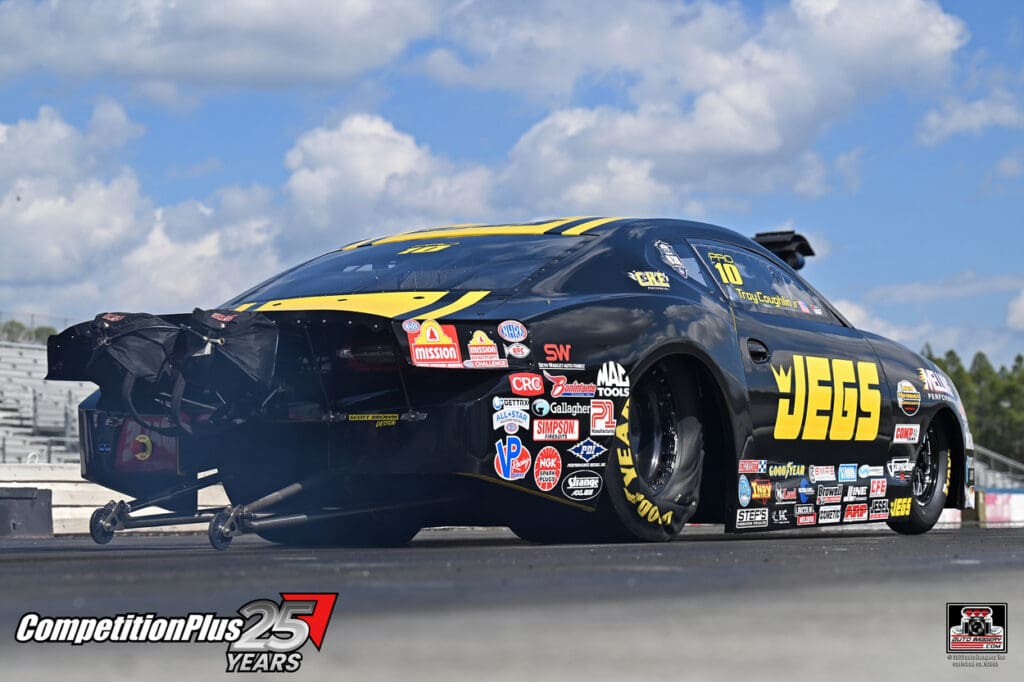
Between rounds, Enders remained hands-on, servicing the engine before reviewing data.
“Every run I service the motor with the guys and then I go up in the crew chief lounge to go over the run,” she said. “Despite what the internet says, I’m definitely, definitely a worker.”
The shortened distance did not change her preference for race length.
“No,” Enders said. “Real race cars go to the quarter-mile.”
But February testing was never about the finish line.
“This is my 23rd year and I feel like every run I learn something,” she said. “There’s something I could have done better and there’s something my crew chiefs could have done better.”