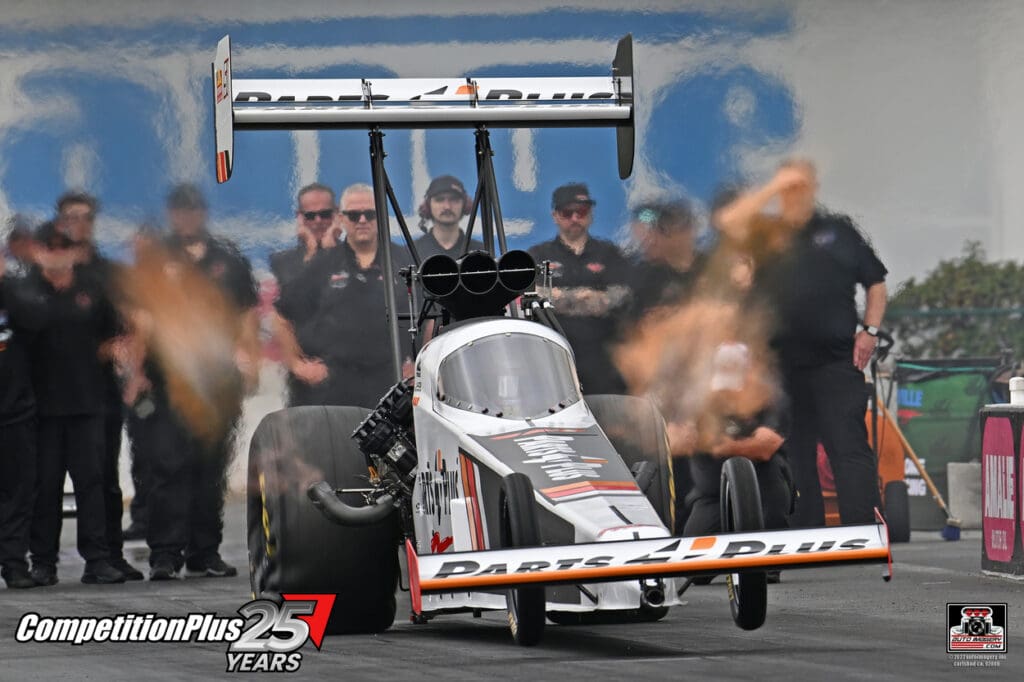
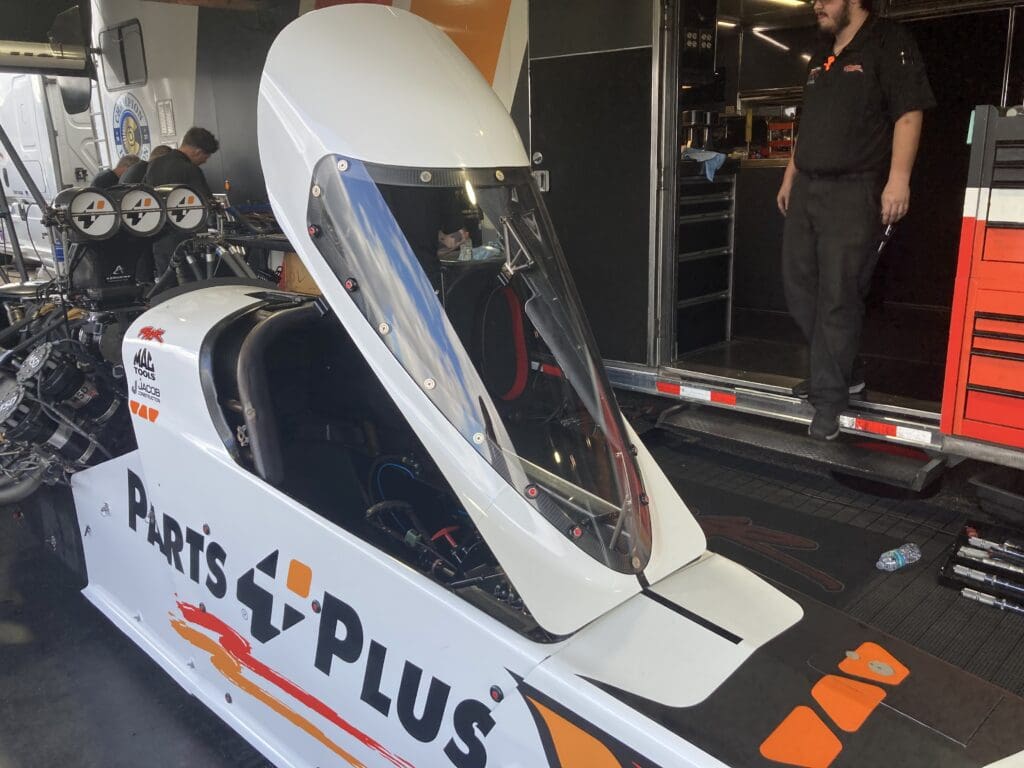
Getting used to the noise of silence has become Clay Millican’s newest challenge.

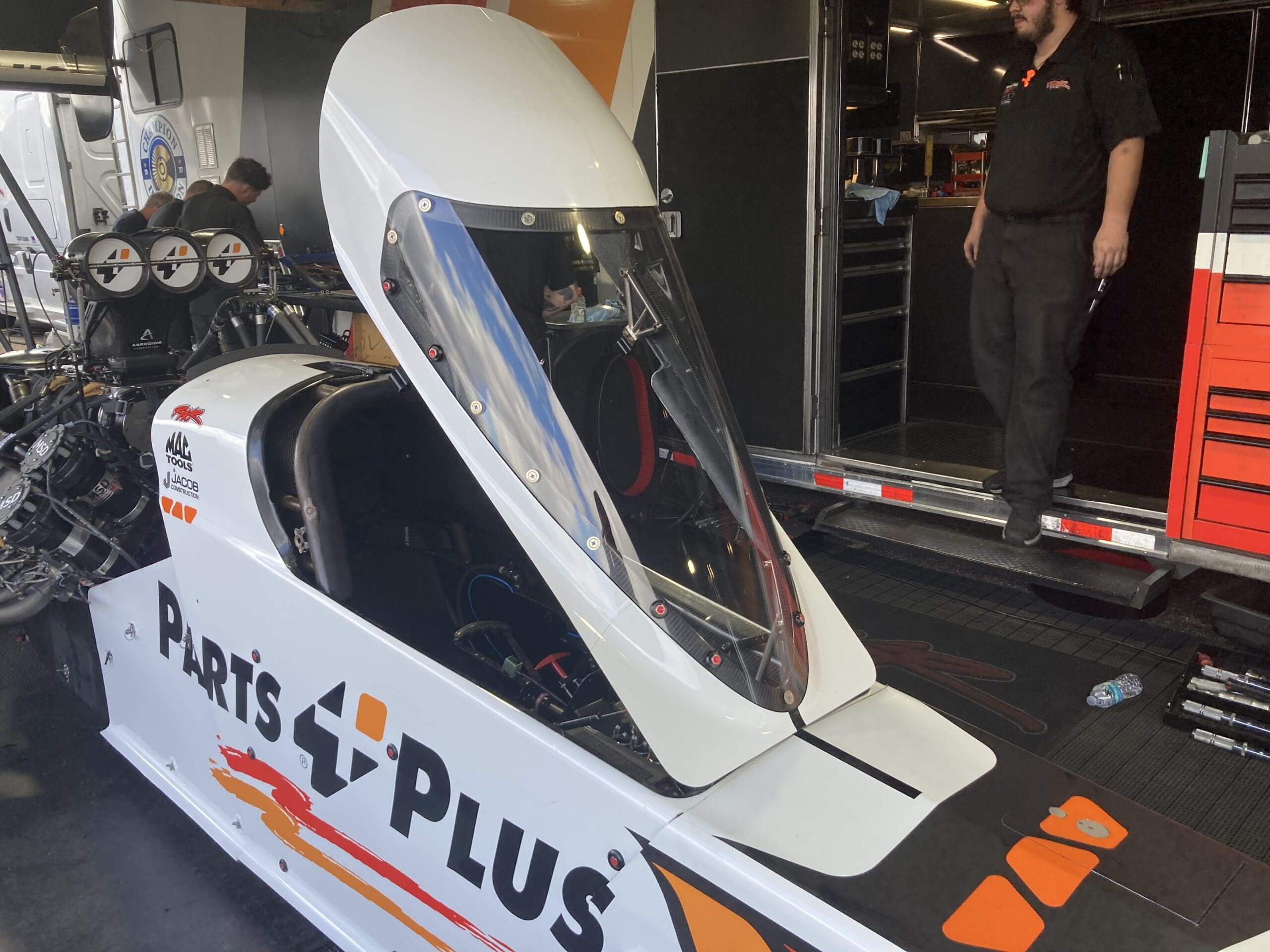
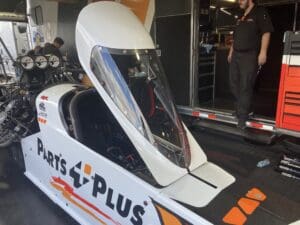
After two days of testing his Parts Plus Top Fuel dragster with a closed canopy, the veteran driver said the altered cockpit has required a recalibration of instincts sharpened over nearly three decades.

“I’m learning. I’m learning,” Millican said. “It’s certainly different. I’ve done said this a million times and I’m going to keep saying it, I’ve been wearing the same pair of shoes for 27 years and they were broke in. So 28 year I got a new pair of shoes and it’s going to take a little break-in period. But it’s different. But so far, so good.”

Millican never considered what a Top Fuel dragster with mufflers might resemble, but the enclosed cockpit offers a close comparison.

The 11,000-horsepower engine still delivers its familiar thrust, yet the canopy softens the sensory blast drivers traditionally use to interpret performance.

“I have told the kids that work on this thing, I said, ‘I’m not jumping out of here telling y’all, y’all got to put the old body back on just yet,’” Millican said. “So it is the same car I drove last year, so when I’m sitting in there, feels like home. When they shut the lid, I’m like, I got a ball cap on now and I won’t usually wear a ball cap.”

Millican enters 2026 after a sixth-place finish in the 2025 NHRA Top Fuel standings.

His season included one victory, two runner-up finishes, two semifinal appearances, one No. 1 qualifier and a 20-18 round record.

Those numbers reflect competitiveness in a class where thousandths determine outcomes.

They also underscore why driver comfort inside the cockpit matters across a long season.

Testing at Gainesville Raceway has centered on adaptation rather than headline elapsed times.

For Millican, that means retraining senses long tied to sound and vibration at more than 330 mph.

“It is quiet. It is definitely quiet, and I’m learning that it’ll take a little while to get used to how quiet it is because whether you realize it or not your ears are attached to what I call your butt-o-meter and that’s how you drive these things,” Millican said.

In Top Fuel, instinct is built on feel as much as sight.

Muting one cue shifts that balance and forces adjustment.

The canopy’s primary function is safety, offering added protection from debris and fire in a class defined by explosive power.

Millican acknowledged the quieter cockpit carries a secondary benefit.

“But I needed it to be a little quieter,” Millican said. “My hearing is terrible and we’re going to protect it a little bit, making it quieter.”

That protection could extend beyond a single season and into the later stages of his career.

The car itself remains the same combination that produced consistent results last year.

That continuity allows Millican to focus solely on adapting to the enclosure rather than relearning the entire package.

He has not requested a return to the previous body configuration.

For a driver with 19 career Top Fuel victories, evolution is part of the job.

The category has changed repeatedly during his tenure, from clutch setups to tire development and track preparation.

The closed canopy is the latest adjustment in a career built on adaptation.

If silence sharpens focus while preserving his hearing, it may become an asset rather than an obstacle.

“It is quiet. It is definitely quiet,” Millican said. “But so far, so good.”

Share the Insights?

Click here to share the article.

ad space x ad space

ad space x ad space

Competition Plus Team

Since our inception, we have been passionately dedicated to delivering the most accurate, timely, and compelling content in the world of drag racing. Our readers depend on us for the latest news, in-depth features, expert analysis, and exclusive interviews that connect you to the sport’s pulse.

Sign up for our newsletters and email list.

This field is for validation purposes and should be left unchanged.
Name

MILLICAN ADJUSTING TO CLOSED CANOPY AS 2026 TOP FUEL SEASON APPROACHES

Getting used to the noise of silence has become Clay Millican’s newest challenge.

After two days of testing his Parts Plus Top Fuel dragster with a closed canopy, the veteran driver said the altered cockpit has required a recalibration of instincts sharpened over nearly three decades.
“I’m learning. I’m learning,” Millican said. “It’s certainly different. I’ve done said this a million times and I’m going to keep saying it, I’ve been wearing the same pair of shoes for 27 years and they were broke in. So 28 year I got a new pair of shoes and it’s going to take a little break-in period. But it’s different. But so far, so good.”

Millican never considered what a Top Fuel dragster with mufflers might resemble, but the enclosed cockpit offers a close comparison.

The 11,000-horsepower engine still delivers its familiar thrust, yet the canopy softens the sensory blast drivers traditionally use to interpret performance.

“I have told the kids that work on this thing, I said, ‘I’m not jumping out of here telling y’all, y’all got to put the old body back on just yet,’” Millican said. “So it is the same car I drove last year, so when I’m sitting in there, feels like home. When they shut the lid, I’m like, I got a ball cap on now and I won’t usually wear a ball cap.”

Millican enters 2026 after a sixth-place finish in the 2025 NHRA Top Fuel standings.

His season included one victory, two runner-up finishes, two semifinal appearances, one No. 1 qualifier and a 20-18 round record.

Those numbers reflect competitiveness in a class where thousandths determine outcomes.

They also underscore why driver comfort inside the cockpit matters across a long season.

Testing at Gainesville Raceway has centered on adaptation rather than headline elapsed times.

For Millican, that means retraining senses long tied to sound and vibration at more than 330 mph.

“It is quiet. It is definitely quiet, and I’m learning that it’ll take a little while to get used to how quiet it is because whether you realize it or not your ears are attached to what I call your butt-o-meter and that’s how you drive these things,” Millican said.

In Top Fuel, instinct is built on feel as much as sight.

Muting one cue shifts that balance and forces adjustment.

The canopy’s primary function is safety, offering added protection from debris and fire in a class defined by explosive power.

Millican acknowledged the quieter cockpit carries a secondary benefit.

“But I needed it to be a little quieter,” Millican said. “My hearing is terrible and we’re going to protect it a little bit, making it quieter.”

That protection could extend beyond a single season and into the later stages of his career.

The car itself remains the same combination that produced consistent results last year.

That continuity allows Millican to focus solely on adapting to the enclosure rather than relearning the entire package.

He has not requested a return to the previous body configuration.

For a driver with 19 career Top Fuel victories, evolution is part of the job.

The category has changed repeatedly during his tenure, from clutch setups to tire development and track preparation.

The closed canopy is the latest adjustment in a career built on adaptation.

If silence sharpens focus while preserving his hearing, it may become an asset rather than an obstacle.

“It is quiet. It is definitely quiet,” Millican said. “But so far, so good.”

Picture of John Doe

John Doe

Lorem ipsum dolor sit amet consectetur adipiscing elit dolor

More Posts

Send Us A Message

Picture of Bobby Bennett
Bobby Bennett
Thank you for joining us on this journey. Your support and trust inspire us every day to deliver the best in drag racing journalism. We are excited about the future and look forward to continuing to serve you with the same dedication and passion that has defined CompetitionPlus.com from the very beginning.

Don’t miss these other exciting stories!

Explore more action packed posts on Competition Plus, where we dive into the latest in Drag Racing News. Discover a range of topics, from race coverage to in-depth interviews, to keep you informed and entertained.