

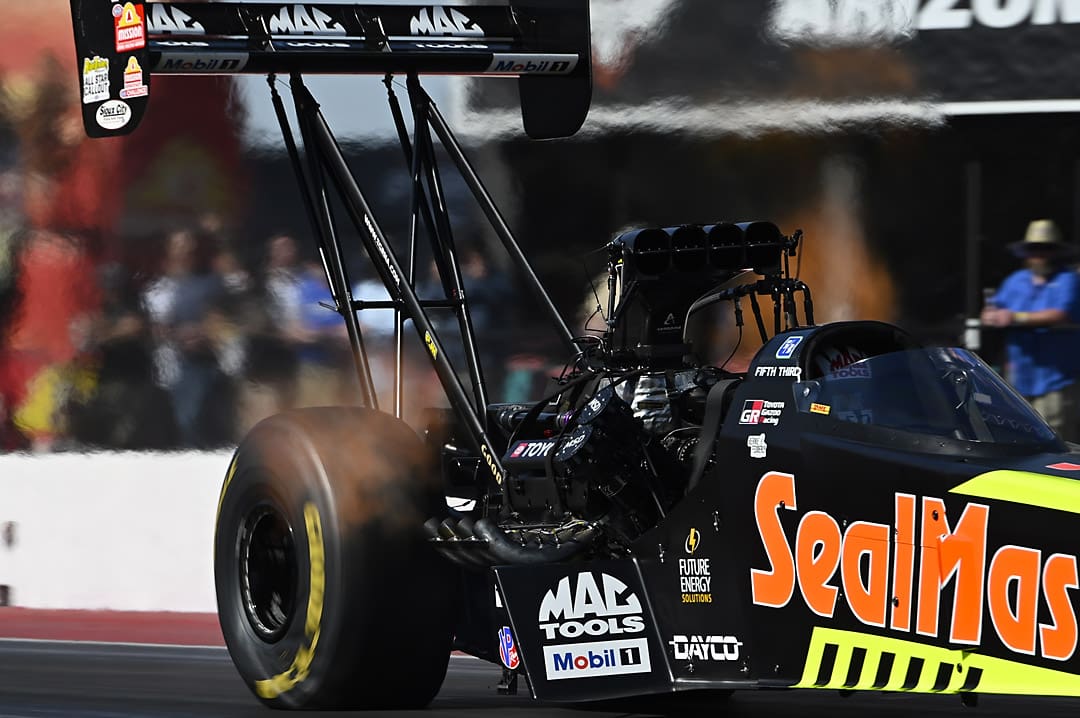

This weekend’s NHRA Arizona Nationals will test the limits of modern nitro tuning as extreme desert heat reshapes competitive expectations. With ambient temperatures forecast to exceed 100 degrees and track temperatures projected to approach 150, NHRA officials moved the Mission Foods Drag Racing Series schedule earlier to mitigate the harshest conditions.
The adjustment reflects a recognition that extreme heat fundamentally alters how Top Fuel and Funny Car teams approach performance. By shifting sessions to earlier in the day, officials aim to reduce risk while preserving competitive integrity.
Friday qualifying will begin at 9:30 a.m. local time with Pro Stock, followed by Funny Car and Top Fuel. The second session is scheduled for noon, marking a departure from traditional late-day scheduling.
Saturday’s program opens at 10 a.m. with Top Fuel before moving through Funny Car and Pro Stock. The final qualifying session and the first Mission #2Fast2Tasty Challenge bonus race of the season are slated to begin at 12:30 p.m.
Sunday eliminations have also been moved forward, with first-round competition set for 10 a.m. The revised timetable underscores the challenges posed by a racing surface expected to punish aggressive setups.
For tuners, the Arizona Nationals represents less a showcase of peak performance and more a study in restraint. Determining how much power can be safely applied without overwhelming traction or mechanical stability will define the weekend.
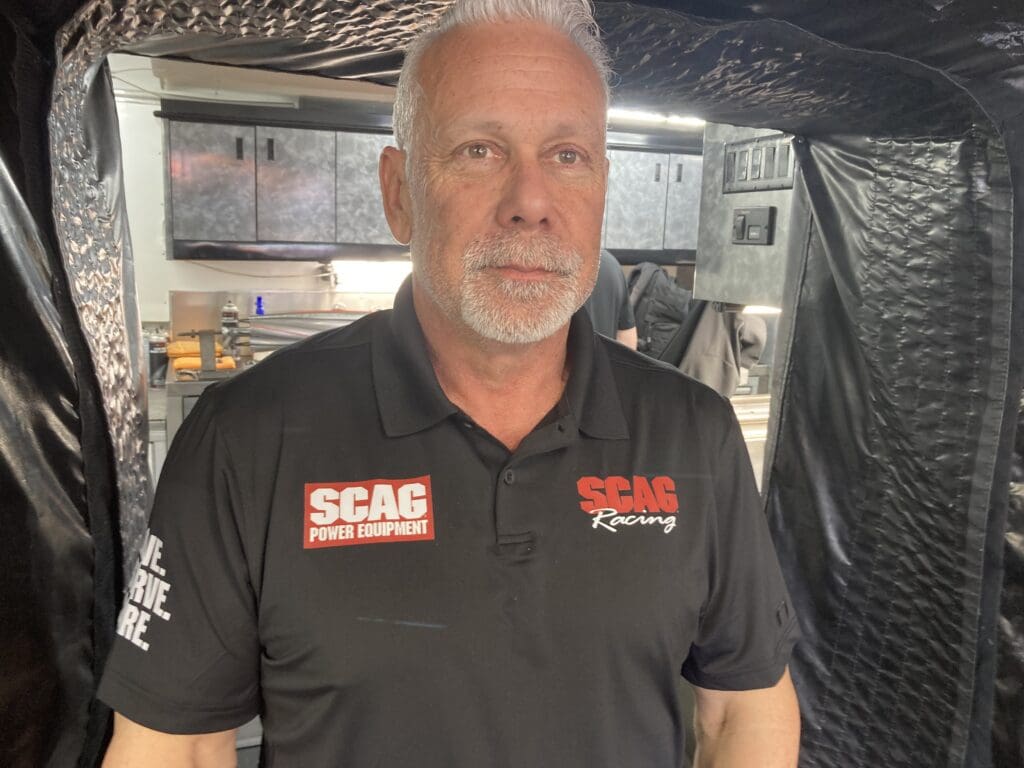


Few are more immersed in that balancing act than SCAG Top Fuel crew chief Tommy DeLago, who began preparing for Phoenix by analyzing past events contested under similarly brutal conditions.
“Well, we’re all going to take an estimated guess, but I went back and looked at some places that were really hot,” DeLago said. “You could take like last year in Norwalk, you got up to 136 degrees in the track.”
DeLago expects Phoenix could surpass those figures, particularly as the weekend progresses. “We think it’ll be even hotter than that later on race day,” he said.
His approach draws from previous success in extreme environments. “We did pretty good in Bristol a few years ago where we won both races,” DeLago explained.
At the core of his strategy is the delicate relationship between clutch management and engine output. “The issue will be to, is your clutch smooth enough and can you calm the power down enough to make clutch application friendly?”
Simply reducing clutch pressure can create new problems. “You can get to the point where you just keep taking clutch out of it … and if you don’t mesh the horsepower to it, the motor just keeps staying higher and higher RPM,” he said.
That interaction requires coordinated adjustments across multiple systems. “So you kind of got to calm the power down and the clutch all at the same time.”
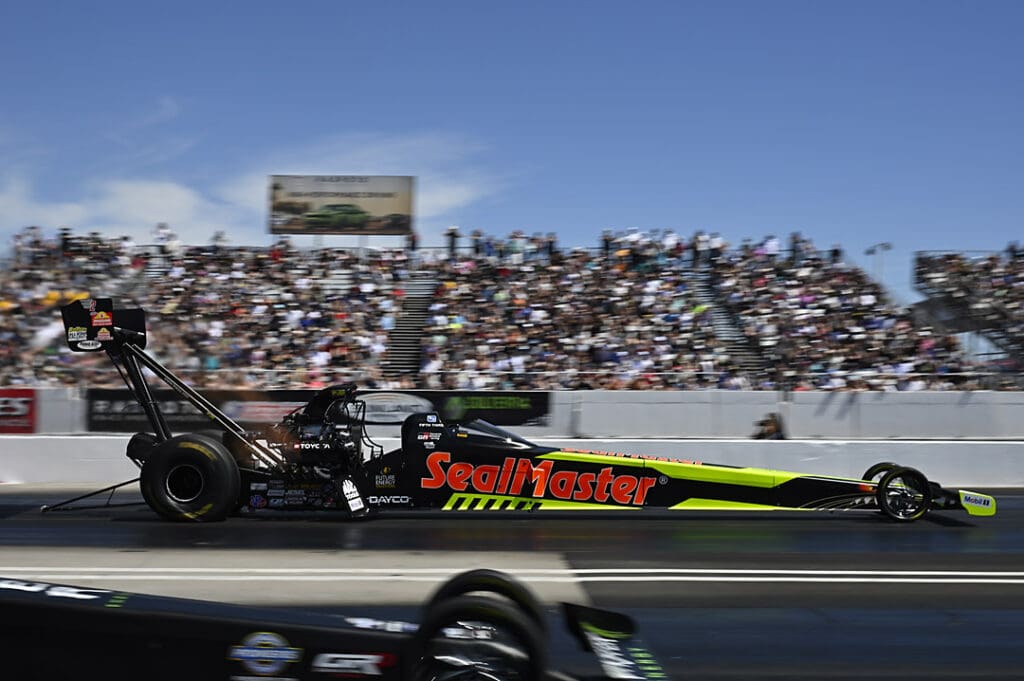
DeLago expects teams to remove measurable power while preserving balance. “I’d say … you’re probably going to have to take somewhere between 600 to 1,000 horsepower out of it.”
The objective is torque management rather than outright reduction. “You don’t need to take away 60 percent. Just want to take away … you want to kill some of the torque.”
Veteran nitro tuner John Medlen, now consulting on the Antron Brown Matco Tools Top Fuel operation, views extreme heat as a discipline exercise rather than a technical mystery. “When it gets like that, you’re not trying to be heroes,” Medlen said. “You’re trying to make smart decisions and get down the racetrack.”
He believes extreme conditions strip tuning down to fundamentals. “You’ve got to simplify what you’re doing,” Medlen said. “When the track gets that hot, it doesn’t take much to get in trouble.”
Experience, he added, often becomes more valuable than data. “You start relying on things you’ve learned over time instead of what the computer is telling you,” Medlen said.
Aggressive tuning choices rarely survive prolonged exposure to extreme heat. “If you get aggressive in those conditions, it will usually show you pretty quick that you made the wrong choice,” he said.


Kalitta Motorsports crew chief Dickie Venables shares that outlook, describing Phoenix as a race where restraint becomes the defining strategy. “A lot of luck involved,” Venables said. “You just got to … pull a lot of clutch off of it and you have to pull power out of the engine.”
Relying on a single adjustment is not viable. “You typically can’t do it all with clutch because the engine … beats the clutch up too bad,” he said.
Venables will rely on recent data from similarly challenging conditions. “We’ve got data to look back on,” he said.
Extreme heat could compromise traction across the entire racing surface. “Most likely in Phoenix, it’s not going to be very good the whole way,” he said.
He cautioned fans not to expect record-setting runs. “Most likely we’re not going to see anything like that.”
For Venables, the competitive objective becomes straightforward. “I always call it just, it’s a survival type race.”
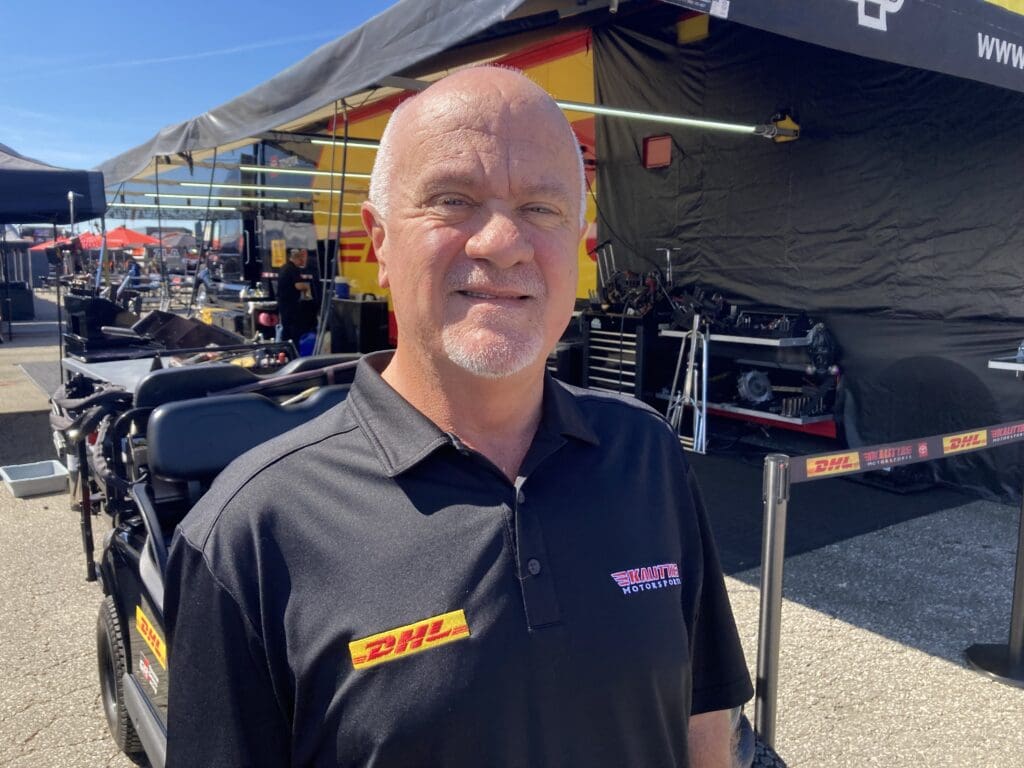

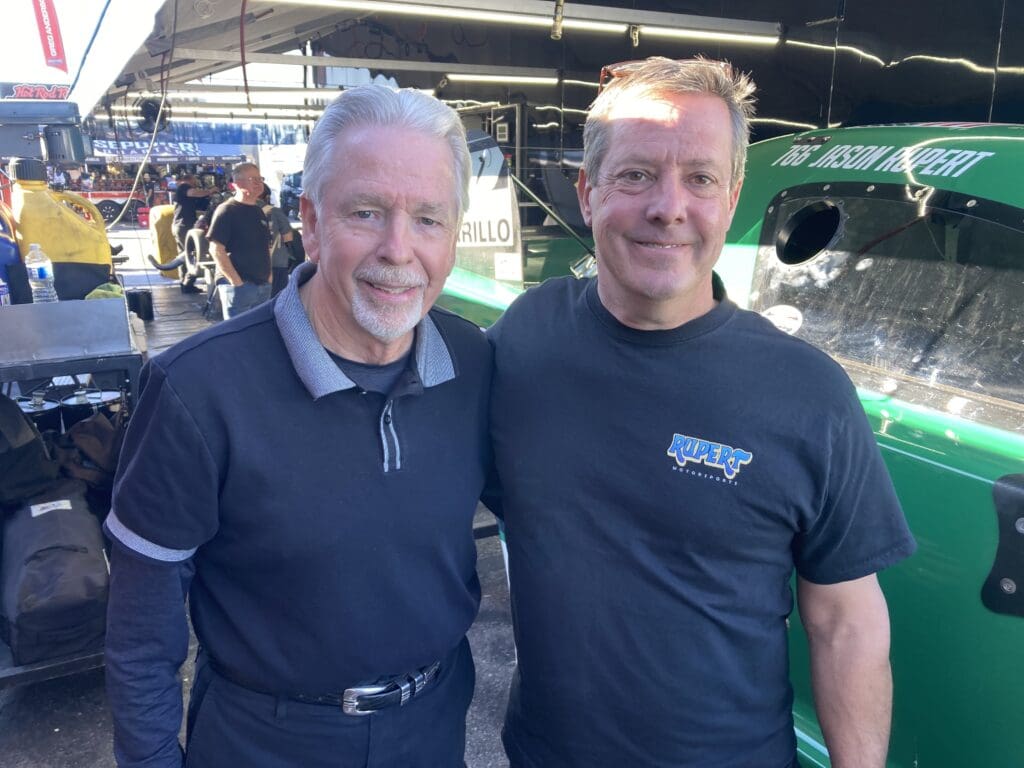
International Drag Racing Hall of Fame inductee Rahn Tobler brings a similar perspective shaped by decades of match racing and championship-level tuning. Assisting Jason Rupert’s fuel Funny Car effort, Tobler believes adaptability will determine success.
“Well, you just have to be willing and able to slow your car down,” Tobler said. “I think a lot of these guys nowadays … built such a powerful, such an all conquering thing that sometimes it’s hard to slow down.”
Clutch configuration becomes critical as temperatures rise. “Sometimes when you add that six disc in there, you can’t slow it down enough,” he said.
Fuel delivery must be adjusted in concert with mechanical changes. “When you do slow that clutch down, you have to also slow down the fuel delivery,” Tobler said.
His preparation began weeks before teams arrived in Phoenix. “As a crew chief … I start looking at the weather a month out,” he said.
Extreme conditions can produce unpredictable outcomes. “It might be one of these weekends where you see one of the big show cars … go home upset.”
For Tobler, survival races reward restraint rather than outright performance. Teams willing to accept slower numbers in exchange for consistency often remain in contention.
Medlen frequently illustrates that philosophy through a story shared by veteran Funny Car driver Al Segrini, whose career included match races on surfaces far less forgiving than modern national events. The anecdote involves Jungle Jim Liberman making an unconventional clutch adjustment before running on a notoriously slick Capitol Raceway surface.
“That son of a b**** was out there … and doesn’t turn the tire, and goes straight down Broadway,” Segrini recalled.
Curiosity led Segrini to inspect the clutch setup, where he discovered an unexpected configuration. “I get around and I see one finger with one little piece of counterweight on it, and nothing else,” he said.
The moment reinforced a principle Medlen still applies today — that clutch and engine behavior must be viewed as a single system. “You got to understand that if you got a motor to hit and it goes to 8,500, you just added weight on the counterweights,” Segrini explained.
As the Arizona Nationals unfolds under desert heat, the outcome may hinge less on outright performance than on the ability to adapt when conditions become hostile. In extreme environments, experience often becomes the most valuable tuning tool.
“You don’t beat a hot racetrack — you negotiate with it,” Medlen surmised.




























STEVE EARWOOD: WHY IHRA’S BIGGEST CHALLENGE WASN’T PASSION, IT WAS THE BUSINESS OF DRAG RACING