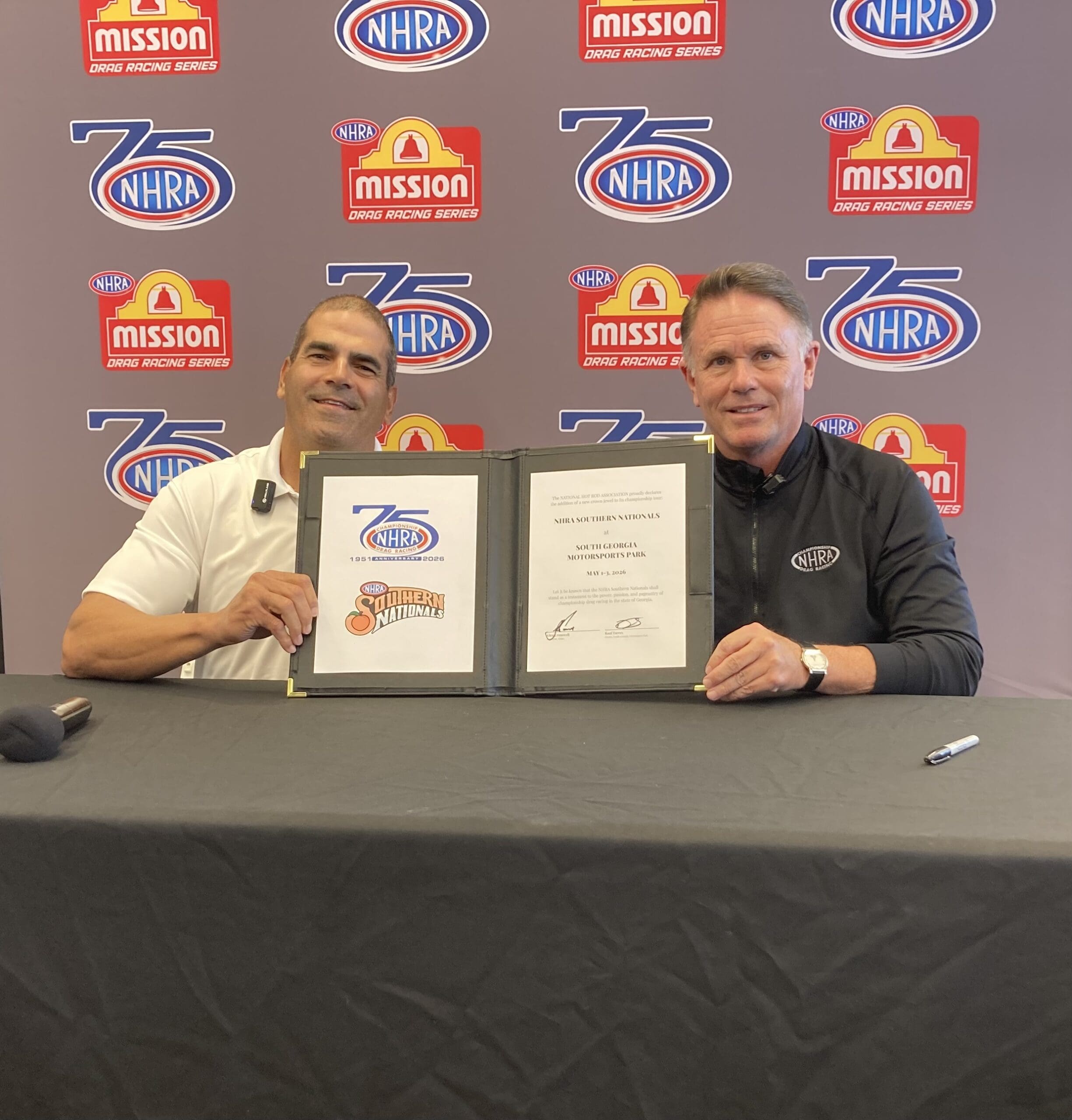

Raul Torres ought to be nervous, not sleeping at night with more apprehension oozing from his demeanor than one would expect. Instead, the first-time NHRA national event track owner has chosen to be as cool as the other side of the pillow.
That calm at South Georgia Motorsports Park, outside Valdosta, Ga., is not denial. It comes from months of tearing into a facility, checking off one demanding project after another, and reaching the point where the hardest work for the NHRA Southern Nationals, set for May 1-3, is finally behind him.
“The level of anxiety is relatively low, to be honest,” Torres said. “Ever since we announced the date for the Southern Nationals coming to SGMP, we’ve been getting ready. We didn’t snooze on it. We didn’t delay ourselves. We got the work right away. And as of five days ago, we’ve completed every last task that’s been on our list for the last eight months or nine months.”
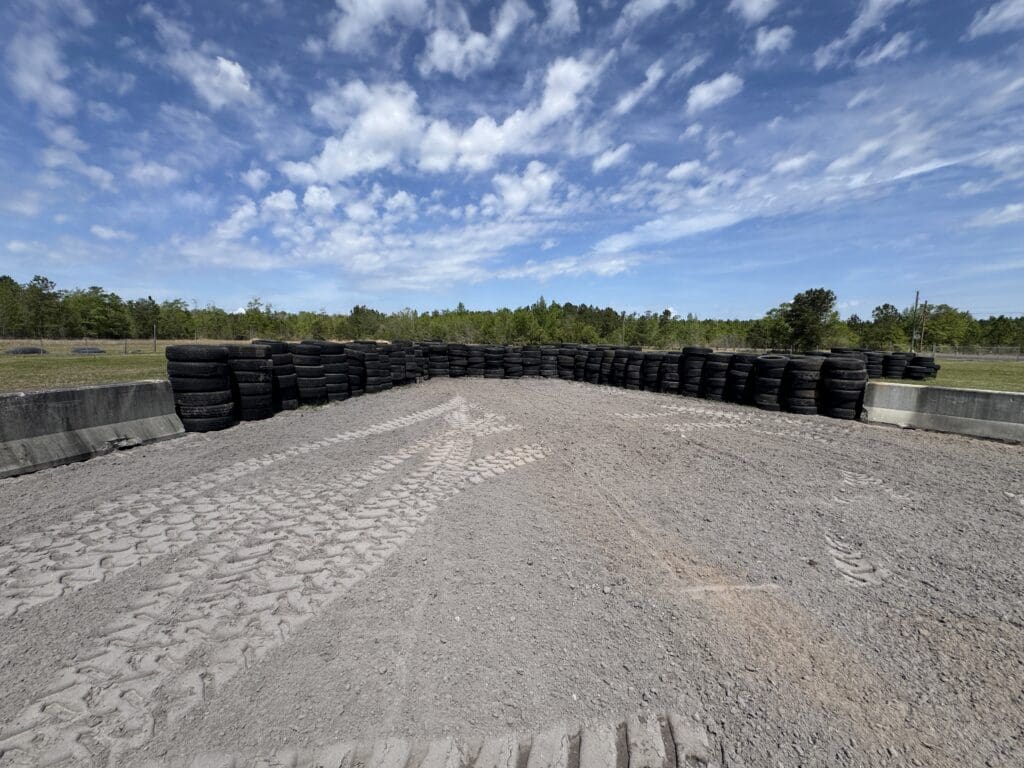
That confidence was not there from the opening moments of construction. Torres said the first reality check came almost immediately when he and his team started tackling the wall project, a massive undertaking that forced them to confront the true size of what hosting a Mission Foods Drag Racing Series event really meant.
“The first obstacle was raising the wall 6,600 feet,” Torres said. “And about five minutes into it, I said, ‘Oh my God, what did we put ourselves into?’ There was an extensive amount of work that needed to be done to the wall to raise it and prepare it and build it and form it.”
The numbers only made it look worse. Torres said the original pace of drilling put the project on a timeline that was unacceptable, with 1,650 holes to drill and 16-inch rebar to install before the job could move forward.
“So we found a solution to it, a better option,” Torres said. “But when we started that initial task, according to those numbers, and Don O’Neal, my GM, and I are very numbers-oriented, when we did the math, we said, ‘Oh my God, this is going to take us over three months just to do the drills, just to do the holes.’ But we got past that fairly quick, finished that early January, and we’ve been rocking and rolling ever since.”
Finishing the wall did more than satisfy a requirement. It gave the track ownership a sense that if it could clear the largest safety and construction hurdle, everything else could be attacked with the same persistence.
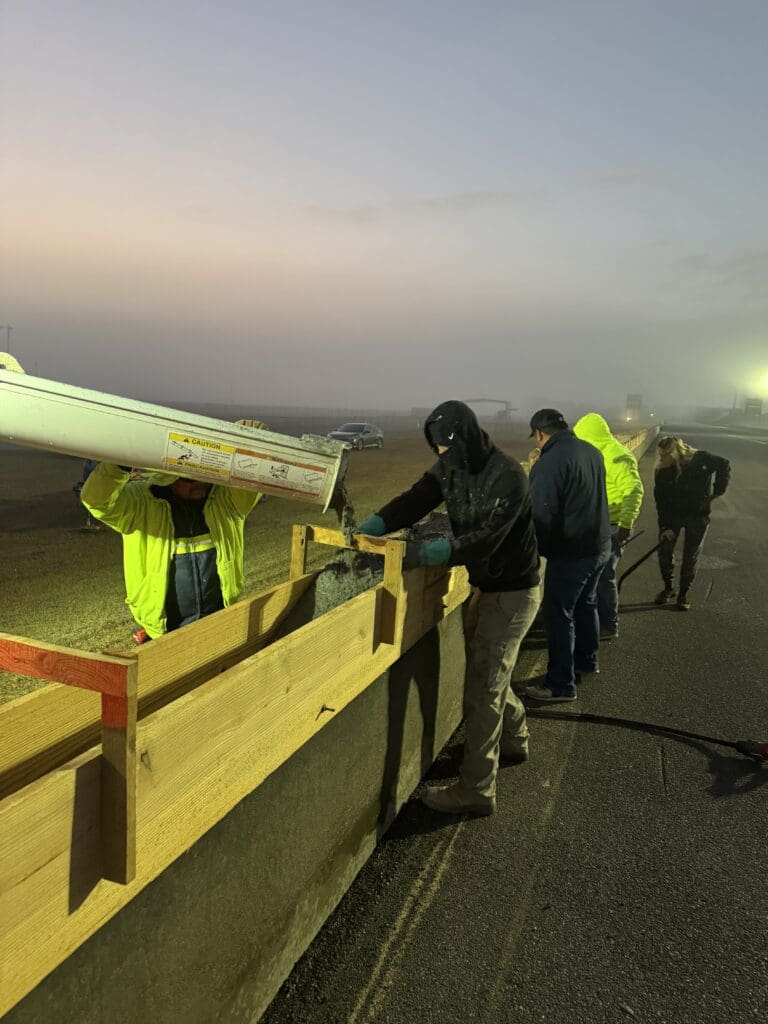

“It wasn’t as easy as pie, but we were certainly happy it was behind us,” Torres said. “It was certainly a ton of labor. We had, at times, a dozen workers helping us building it at different times. But once we got past that, it sort of put some steam, put some fuel in our fire knowing if we got past that, we could get past just about anything that’s coming our way.”
Even Mother Nature, which can sabotage the best-laid construction plan, did not do much damage beyond a few cold mornings. Torres said the only real setbacks came when temperatures dipped too low to pour concrete, a problem he called minor compared to what could have gone wrong over the winter.
“She listened to us fairly well this year and has been extremely obedient, to be honest with you,” Torres said. “The cold was the only problem we faced a couple of times as we’ve been pouring concrete in different areas of the racetrack or at the race facility, not necessarily the surface, but you can’t pour concrete when it’s 23 degrees. So that’s the only setbacks we had, and that was maybe two or three times, and that’s about it.”
The next delicate job involved moving the scoreboards 25 feet farther from the racing surface and making sure the timing system survived the transition. That was the kind of work where one mistake could undo weeks of progress, because the track could not afford a timing failure once national event competition arrived.
“We had to move them 25 feet away from the race surface there from the wall,” Torres said. “And that is another task that we’re on eggshells about because the entire timing system connects to the scoreboard, obviously, and there’s some sensors at the 1320. And so every last one of those lines, and if you know about timing systems and Compulink, they’re little microscopic telephone lines.”
Torres said that job consumed what should have been Christmas break, but it gave him one more reason to believe the facility had already survived its most anxious moments. By the time the track hosted its first January test-and-tune, the system worked the way it was supposed to, and the list of unknowns got shorter.
“But we did that during our Christmas break, which we didn’t have a break,” Torres said. “We worked through the Christmas break and come early January on our first test and tune, they worked flawlessly. And that’s why the anxiety level is relatively low because we’re now past those bigger challenges. Now all we’ve got to do is make sure everyone has fun when they visit our property here May 1st through the 3rd. And that to me is a very welcome challenge.”
Torres knows better than to believe preparation eliminates mistakes. What it does, in his mind, is reduce the odds of being surprised by something preventable, which is why daily conversations with Don O’Neal cover everything from refrigerated trailers to medical support and keeping 20,000 pounds of ice on the property.
“Only time will tell, but we’re certainly prepared,” Torres said. “We’ve crossed our Ts and dotted our Is and we’ll drop the ball on something and say, ‘My God, we go over this every day and how did we miss this? Or how did we forget about that?’ But I mean, we, Don O’Neal and I talk on a daily basis and go over execution plans from extra refrigerated tractor trailers to having 20,000 pounds of ice on the property at all times, to setting up a hospitality tent, EMS tents.”
He has not had to figure it out alone. Torres said he has leaned on experienced operators such as Ozzy Moya at Orlando Speed World, Jodie at Gainesville, and Kurt at TVC, people who understand both NHRA procedure and the details that can decide whether a national event feels polished or patched together.
“We have a very good relationship with Ozzy Moya and Orlando Speed World,” Torres said. “We reach out to Jodie at Gainesville on a regular basis. I mean, she’s as good as it gets and she’s been a great asset to have because she’s dealt with the Gatornationals for a very long time. And prior to that, she ran the Southern Nationals and she goes on throughout the country and helps NHRA put on an event.”
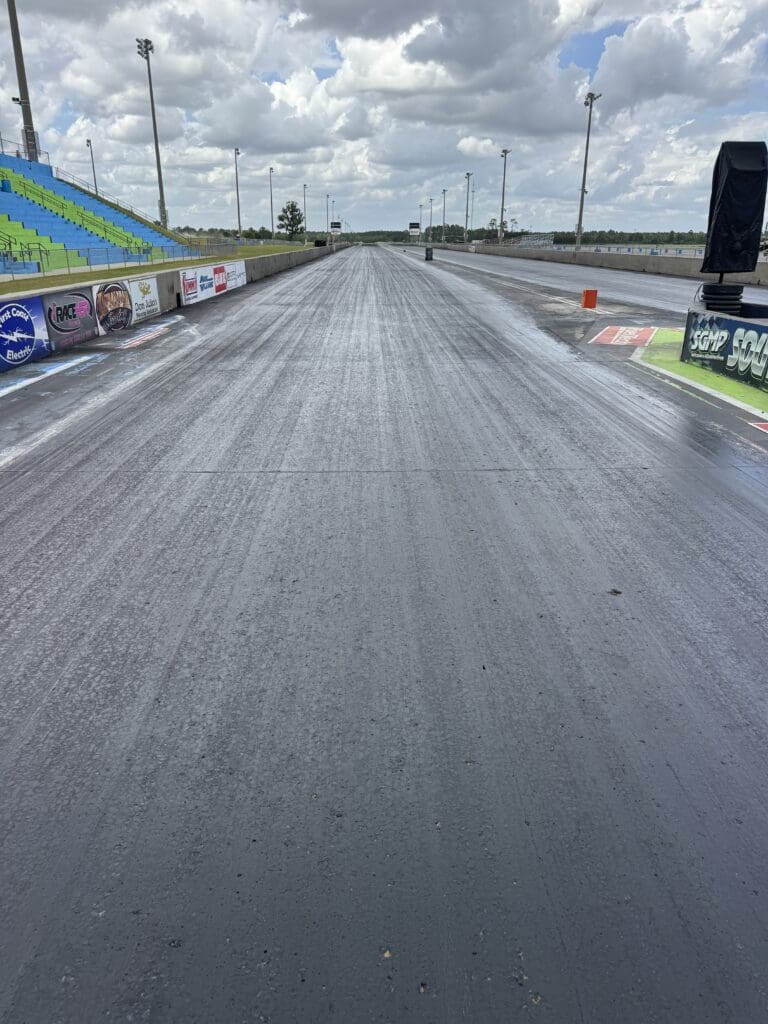
That advice has been especially valuable because South Georgia Motorsports Park is not simply hosting a larger race. It is also remaking its racing surface to comply with NHRA requirements, swapping away from the compound it normally uses and rebuilding the lane preparation from the concrete up.
“I like to say here and there, nothing has changed except for everything,” Torres said. “We are an LC7 racetrack. We’re a VP track and for the national event under contract, we have to use PJ1. So there cannot be an ounce of LC7 on the racetrack because the Top Fuel and Funny Car and their tires and how they react to it and stuff like that.”
The result, Torres said, looked almost shocking to anyone familiar with the place. A week and a half earlier, he said, the strip looked more like a no-prep venue than a facility preparing for one of the most demanding forms of professional drag racing.
“If you would’ve visited our facility a week and a half ago, you’d be in awe,” Torres said. “You’d think we’d be running a no prep race because we had to reduce, I don’t know, 10 years of glue and rubber to bare concrete. We’ve brought it down to bare concrete and now we’re in the process of building it back up with PJ1, which is what NHRA requires we use.”
That kind of work has not scared away fans. Torres said ticket demand has been strong enough that some sections were already sold out weeks ahead of the event, with VIP camping gone and phone inquiries overwhelmingly tied to the Southern Nationals.
“Ticket sales are doing well,” Torres said. “A couple of weeks ago, they were, I think, at 40% sold out and that was well above average how far it was from the event. And as it gets closer, it ramps up in sales. I don’t have an exact number, but we all suspect because of the demand and the cause and the inquiries, it’s certainly going to sell out.”

Torres is already thinking beyond a single weekend, which says as much about his outlook as any construction checklist. He said more grandstands and future upgrades are in the plans regardless of whether the event sells out, because a successful national event should be the start of something larger instead of a one-time celebration.
“That’s already in the plans, whether it sells out or not,” Torres said. “I’ve got big visions and if it doesn’t sell out, we’re going to figure out why it didn’t sell out, but more grandstands and more improvements are already in the plans. I’d love to bring back a media suite like we used to have, VIP suites over the grandstands, but all that takes a whole lot of money and some time as well. And we want to walk before we could run.”
The fan experience, however, will be judged long before anyone settles into a seat. Torres said ingress and egress have been treated as seriously as track preparation, with the Georgia Department of Transportation, Cook County law enforcement and fire officials, NHRA staff, and track personnel working through the traffic plan for a property that sits just off Interstate 75 and spans 350 acres.
“We’ve met several times, about a dozen of us from different organizations from the Georgia Department of Transportation, the Cook County Sheriff’s Department, Cook County Fire Department, NHRA and my staff have met several times to figure this out and come up with a solution and a plan,” Torres said. “Those that come in from the south enter one gate, those that come in from the north enter through a completely different gate. There’s going to be three gates that are open at the very same time.”

That preparation also includes using parts of the property that have never been fully tapped, even during the track’s biggest independent events. Torres believes NHRA’s staffing support and the facility’s available land will help avoid the kind of parking and traffic headaches that can sour a fan before the first pair fires.
“A lot of folks forget we’re on 350 acres,” Torres said. “There’s 2 huge parcels that we’ve never used, even for large events that bring in 10, 12,000 spectators, like Lights Out. We’ve had plenty of room for parking at Lights Out with 10 and 12,000 spectators, so we don’t foresee it being a problem, especially as prepared as we are with officers at every intersection leading to the facility.”
And once the race is over, Torres wants leaving to feel just as organized as arriving. That, in his view, is part of hosting a national event the right way, because fans remember the bottlenecks and confusion almost as much as they remember the side-by-side runs.
“As you leave the south gate, you only could go in one direction,” Torres said. “That eliminates the guessing or the stop and trying to figure out, am I going straight, am I going left, am I going right? If you’ve got cones and you’ve got directions and someone pointing you in one direction, it’s going to allow folks to leave the property hopefully within 15, 20 minutes at any given time.”
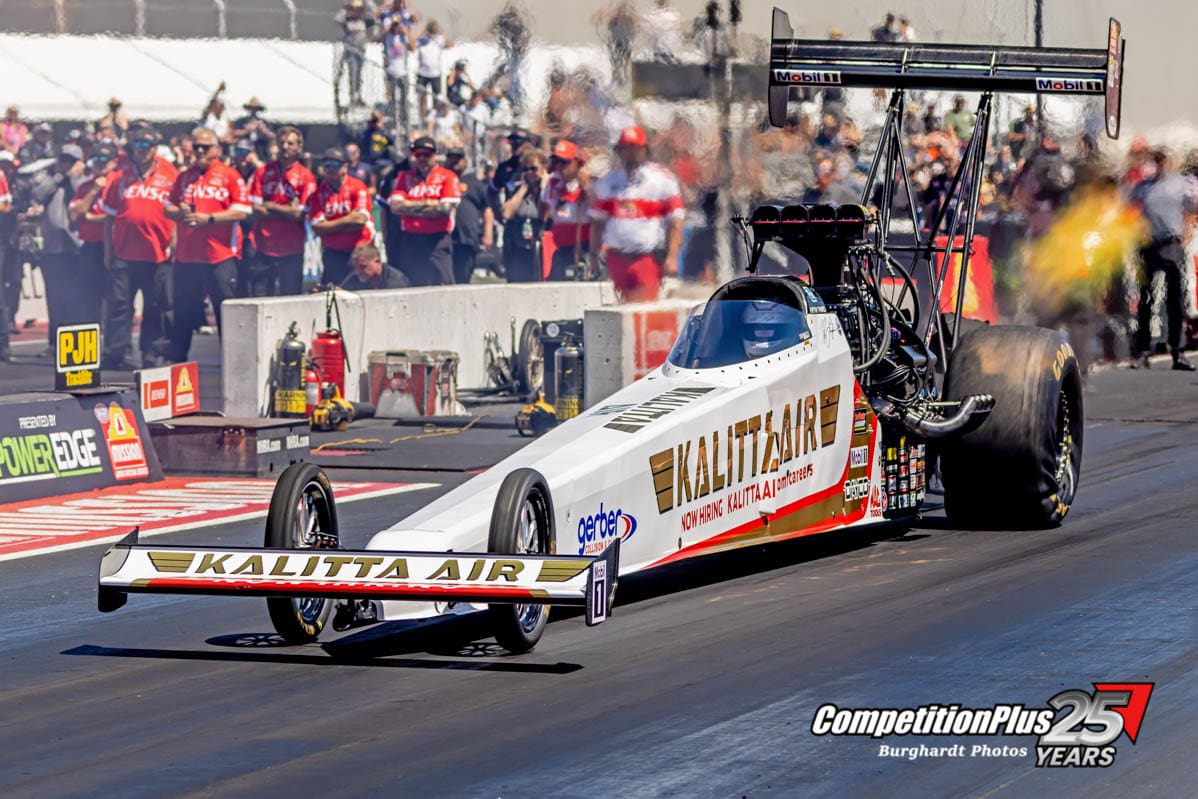
Torres understands that when the first pair of Top Fuel dragsters roll to the line, the months of preparation won’t matter nearly as much as the next four seconds. That’s when the facility stops being a project and starts being judged.
And for all the work that’s gone into South Georgia Motorsports Park — the concrete, the wiring, the surface, the planning — Torres isn’t pretending otherwise.
“This is the first one, so we know it’s not going to be perfect,” Torres said. “But we’ve done everything we can do to be ready. Now it’s time to open the gates and see how good we really are.”