by A.J. England
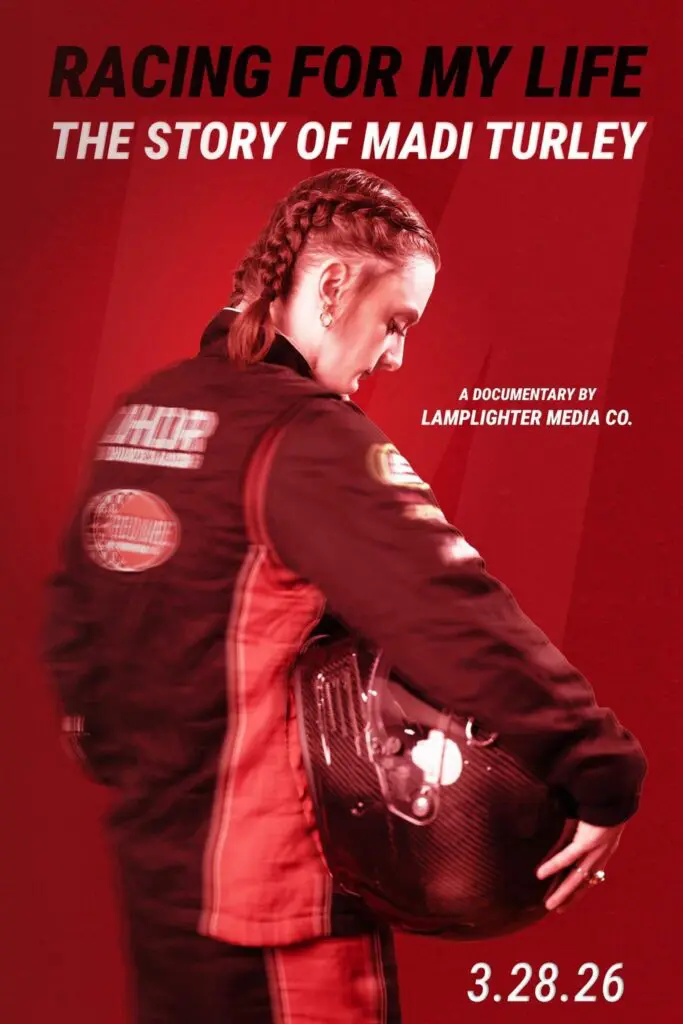
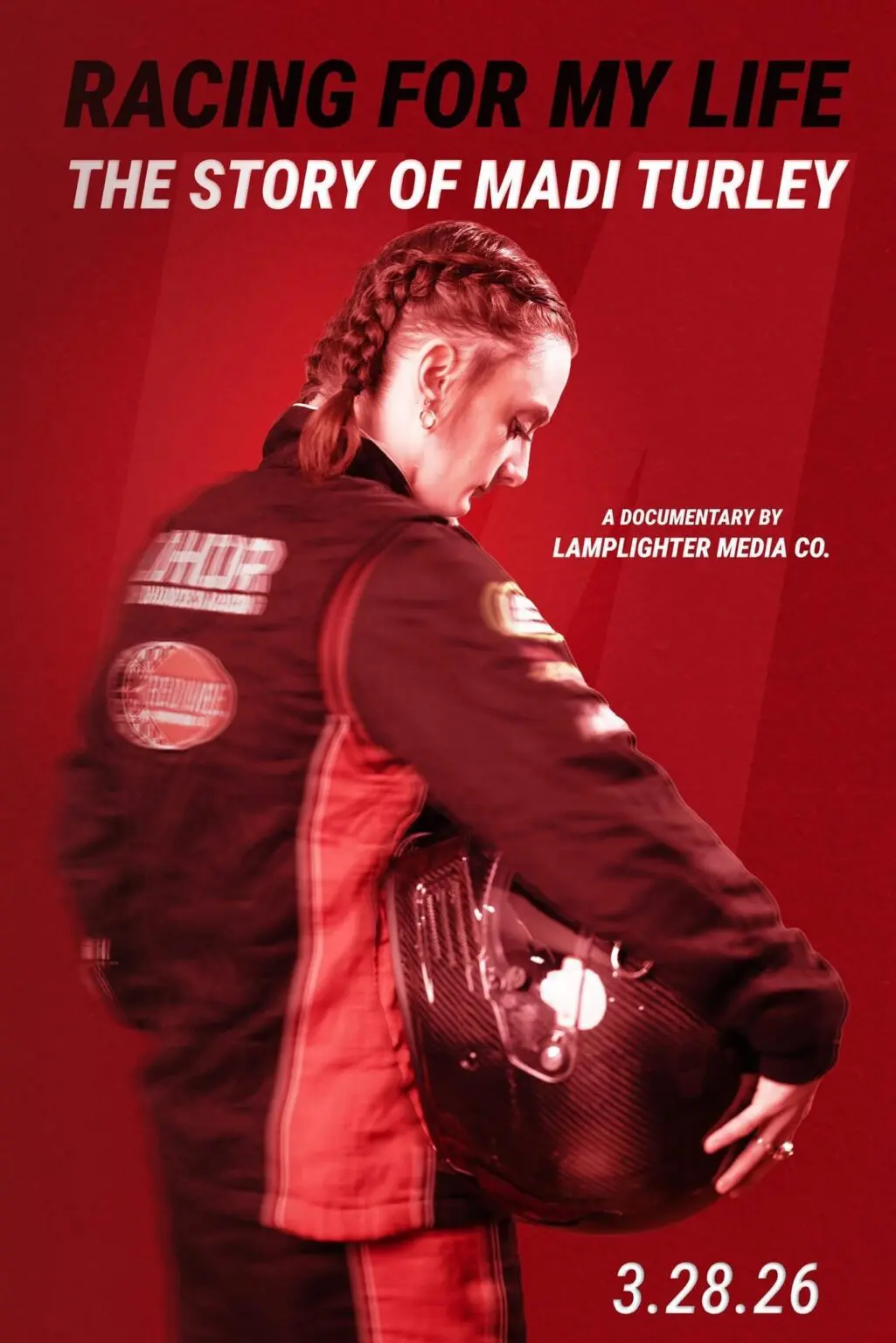
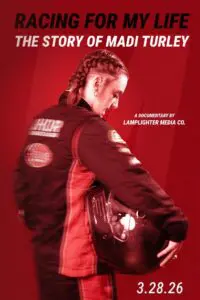
Racing For My Life is a straightforward, no-frills documentary that relies on honesty rather than cinematic flash. It tells the story of Madi Turley, known as Mopar Madi, a young drag racer from Tennessee who defies every norm in a sport dominated by older men.
Drag racing remains overwhelmingly male, with few women and even fewer drivers as young as Turley. Madi stands out even more: at 4’10” and around 80 pounds, she is a fraction of the size of most competitors.
Yet in her short career she has already proven she belongs. Racing a 2012 Dodge Challenger R/T powered by a 5.7-liter HEMI that competes in street classes, she has run low 8’s in the eighth-mile.
After finishing second in bracket racing on her very first event day, family friend Doug Collins dubbed her Mopar Madi and the name stuck. Through David Davies’ Developmental Driver Program she has gained sponsorships, guidance from top NHRA drivers including Geoff Turk, Mark Pawuk, and Alan Scruggs, and a clear path forward.
Her goals include racing Factory Stock Showdown, winning a Wally, competing at Roadkill Nights, and attending SEMA.
The film opens with Madi’s dramatic entry into the world. During pregnancy her mother Kennetha sensed something was wrong from the first trimester.
Doctors repeatedly delivered grim news, possible open spine, missing organs, severe developmental issues, and urged termination, warning the baby would likely never walk, talk, or have any quality of life.
Kennetha and Mark (Madi’s father) continued, both sharing that God spoke to them directly during the pregnancy. Complications mounted: strange odors, painful kicks, shifting diagnoses about kidneys and bladder.
At 24 weeks, with an amniotic sac too small, Madi was born prematurely on August 13, 2006, weighing 2 pounds 9 ounces and measuring just 15 inches.
She spent 66 days in the NICU, nearly dying on day three. Over the next five years she logged more than 200 hospital days.
At one year old she survived a near-fatal reaction to a live virus vaccine. Doctors gave her three hours to live.
The film emotionally offers the family a platform to share their emotions in these intimate moments for the first time ever.
Madi battled idiopathic thrombocytopenia (ITP), hepatitis, dyslexia, dysgraphia, and learning disorders. It took two years of physical therapy to walk, six years of occupational therapy, and two years of vision therapy.
Her mother quit her job to homeschool and provide full-time care. Family testimony delivers the film’s most powerful sections.
Recollections of the premature birth, the fragile newborn who was literally hurt by touch, the endless hospital stays, and the emotional weight of constant medical scrutiny are raw and challenging to listen to.
Madi’s own reflections on growing up feeling watched and tested add depth, turning the story from simple survival into a portrait of building identity amid lifelong disruption.
Racing arrives as the turning point. Madi’s first track experience came in her dad’s Challenger, followed by a ride in a Hellcat driven by Joe Frazier ‘HELLCAT Joe’.
At 15, while at ZMAX Dragway, she learned about the Junior Street program for young drivers. She got her permit, the family bought a local Challenger R/T (complete with a surprise tuner), and she passed her licensing runs with ease.

On that same day she entered bracket racing with almost no experience and finished second. For Madi, the drag strip was escape.

It is healing, freedom, and the place where she feels fully herself and capable. Her father recalls in the story that as a near infant Madi told him how much she loved the overwhelming smells of nitro and burnt rubber at the racetrack.

Faith threads through every chapter. For this devout Christian family, belief is not added drama but the genuine framework for enduring pain, finding purpose, and giving thanks.
It feels authentic rather than performative.
The documentary’s structure is simple and testimony-driven, moving chronologically from birth through medical battles to racing success.
It never shies from the fact that faith will always be more important than speed on race day.
Some deeper themes remain lightly explored. Still, these limits are overshadowed by the film’s sincerity.
It does not try to dazzle; it bears honest witness to a fighter who has never let pain define her limits.
What stays with you is Madi in her Challenger. Tiny but fearless, carrying years of hardship onto the track and smiling when the lights come down.
In a male-dominated sport, she embodies the spirit of the Sisterhood of Muscle while proving courage can be quiet and healing imperfect.
This documentary showcases a tough subject of health adversity tucked in next to the warmest sports dream you’ve ever heard.
Honesty earns every emotion. After watching ‘Racing For My Life’ you will look at the next morning you are blessed with just a little differently.
That’s kinda the point, isn’t it?