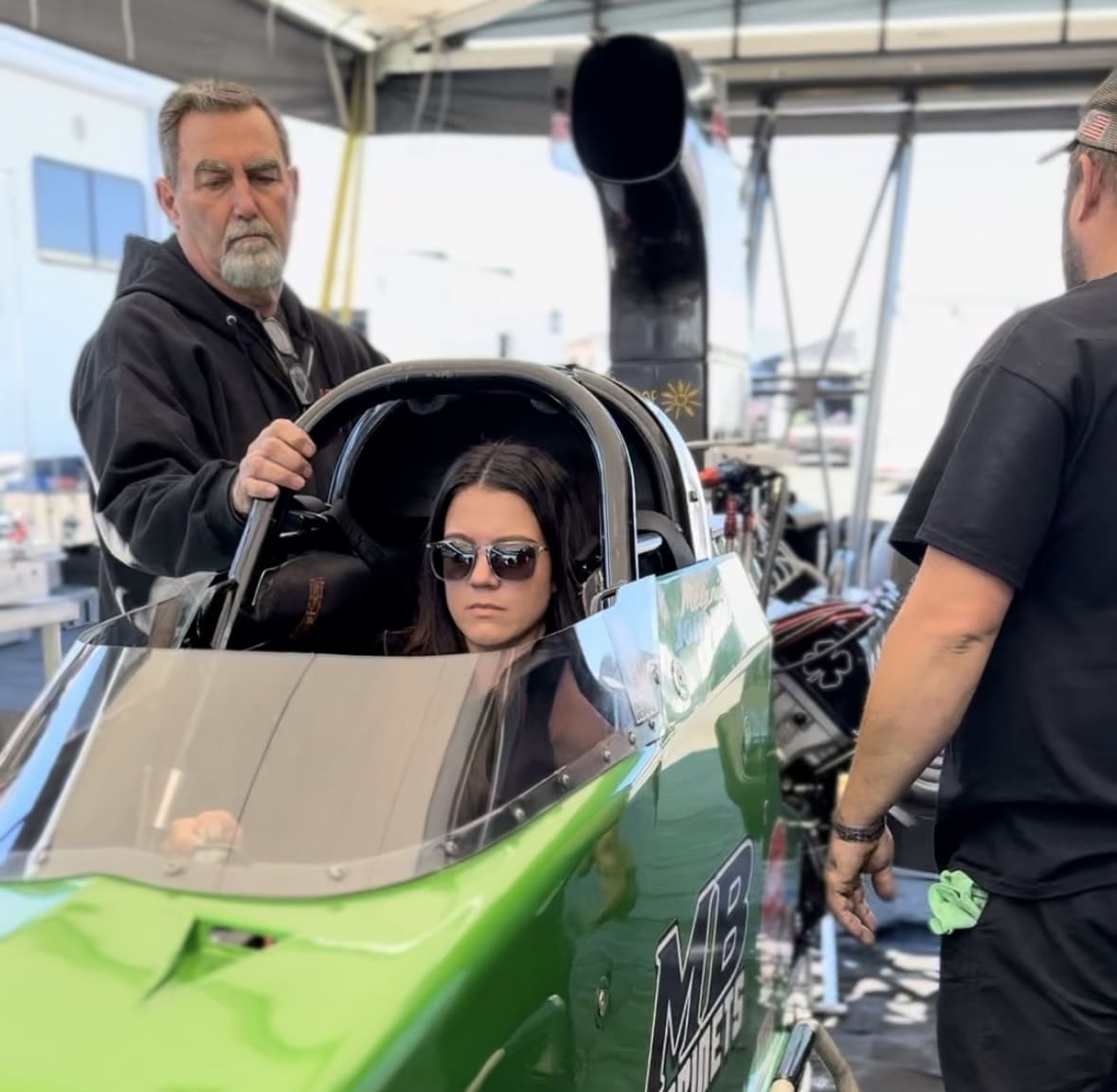

Melanie Johnson was born with it — the competitive gene. It runs deep in the Johnson family, passed down from her father, legendary tuner Alan Johnson, and shaped by the legacy of her late uncle, Blaine Johnson.

An accomplished athlete long before she ever climbed into a race car, Johnson didn’t need a dragstrip to find competition. In her world, even a board game could turn into something worth winning.

“I don’t remember ever not being competitive,” Johnson said. “I’m an only child, so growing up I would play board games or play with my parents or friends, and my parents never let me win. So, I think that was part of it. You aren’t given anything, you got to earn it, you got to learn how to be strategic. And it’s just as basic as a board game or a card game. They wanted me to learn how to win.”

That lesson, learned at a kitchen table instead of a starting line, became the foundation for everything that followed. It also came with an early understanding that even a famous last name would not carry her across the finish line.

Johnson laughs when asked what it’s like competing against her father, a man known across drag racing as one of the sharpest tuning minds the sport has ever seen. To her, those moments are less about reputation and more about connection.

“We have actually played Monopoly a few times,” Johnson said. “It was pretty fun. I can’t explain it. Everybody knows my dad is Alan Johnson tuning extraordinaire. And to me, it’s just playing a board game with my dad and having laughs and making ridiculous counteroffers and bidding on properties and stuff. Just fun.”

Those games rarely ended with a winner. They ended when both sides decided enough was enough.
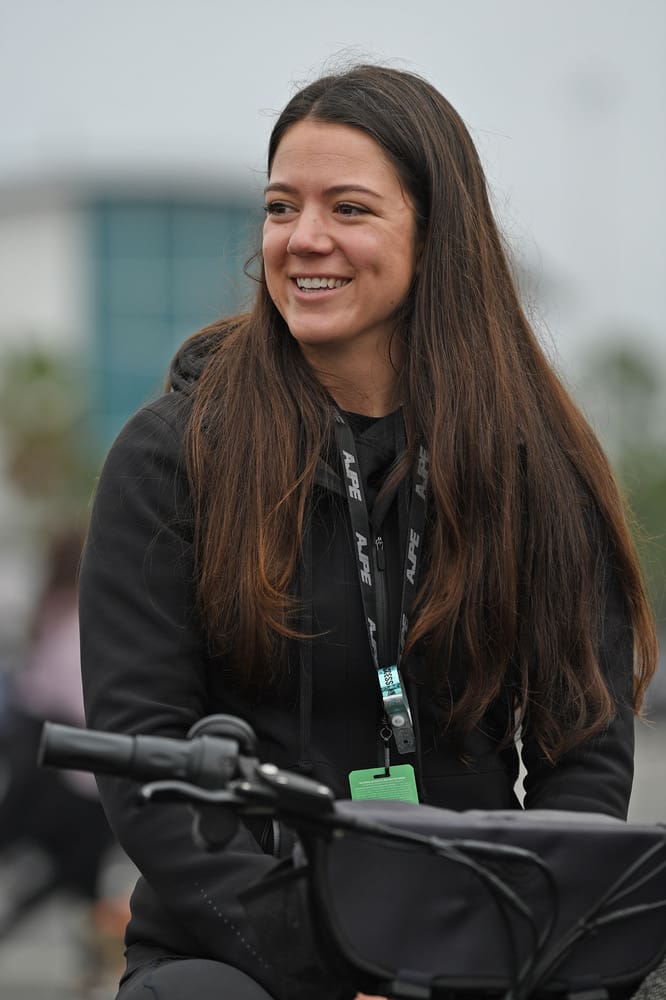
“We played one New Year’s Eve just to pass some time,” Johnson said. “I think we played for four hours and we were kind of at a stalemate and decided, yeah, we won’t finish this game. Ready to go to bed.”

The point wasn’t victory. It was learning how to compete, how to think, and how to endure.

Johnson carried that mindset into athletics, building her foundation in softball before advancing to javelin at Arizona State University. Different sports, same demand — focus, discipline, and the ability to execute when it matters.

“I think it is everything,” Johnson said. “I didn’t grow up doing junior dragsters, but I certainly learned the focus and the discipline that it takes to be a good driver through those other sports that I played growing up.”

Softball sharpened her ability to process information quickly, a skill that now translates directly into Top Fuel and Funny Car.

“In softball, you have to have that focus for such quick amounts of time,” Johnson said. “You’re out on the field and in between pitches, you’re kind of just reviewing, okay, this hitter might go this way. And I played center field, so I’m just constantly running these scenarios through my head and being prepared for anything.”

That constant preparation, she said, mirrors what a driver must do before the car ever moves.

The connection goes deeper than reaction time. Johnson credits visualization — a skill developed across multiple sports — as one of the most valuable tools she carries into the cockpit.

“We don’t have a simulator in drag racing,” Johnson said. “So, you’re running all the scenarios through your head, you’re running your procedure, getting prepared mentally.”

“And I think visualization was such a key part of softball… and same with javelin,” she added. “Before you go out on the runway to make a run, you’re visualizing each step. You’re visualizing that movement of your arm and hitting the block at the end and all the technique.”

“For an athlete, that’s how many more hours of practice can you get mentally to prepare for that moment,” Johnson said. “So, yeah, I think that definitely helped develop that tool that I can use to this day.”

Still, for all the tools she developed, Johnson spent much of her life working to separate her identity from the name that came before her. Growing up in Santa Maria, California, meant being recognized before she ever had the chance to define herself.

“That’s been huge my entire life,” Johnson said. “I grew up in a small town… and everybody there knew who my dad was. And that’s great most of the time, but… in school and in youth sports, the other parents would kind of go, ‘Oh, that’s Alan Johnson on the fence line over there.’”

That awareness led to a deliberate decision to step outside of it.

She left home for college, choosing an environment where her last name didn’t introduce her. The move was less about distance and more about identity.

“I think it’s one of the main reasons that I went out of state for college,” Johnson said. “Nobody knew where I came from. Nobody really cares when you get to a college with 80,000 students and you just kind of make your own way.”

That experience gave her something she didn’t have before — separation. It allowed her to return to drag racing with clarity about who she is and why she’s there.

“And I think that gives me the confidence to actually be back in the racing world and know, hey, I’m here for me and I’m doing this for me,” Johnson said. “It’s so cool that I get to be out here with my dad, but really I’m trying to build my own legacy.”

At the same time, she has never distanced herself from the family history that shaped her. For Johnson, the goal is not to step away from it, but to carry it forward.

“I’m always going to come back to… this was my dad and my Uncle Blaine’s passion,” Johnson said. “They did such amazing things and I want to continue that.”

That balance — independence without detachment — defines where she stands now.

Few drivers enter the sport with the kind of access Johnson has had to its inner workings. Years spent around her father have provided insight that goes beyond what most drivers ever learn.

“I have learned so much more than I could even put into words about how the engines work and the clutch works and the whole car works partially just by osmosis,” Johnson said. “Being around my dad, sitting behind him in the trailer, watching him do tuning calculations and watching weather and all that.”

But that knowledge didn’t come passively. It came from curiosity, questions, and a desire to understand what drove the man behind the reputation.

“I’ve asked him tons and tons of questions my whole life because I wanted to understand it,” Johnson said. “As a kid, you want to be involved in and know what’s going on in your parents’ life and you want to relate to them.”

That understanding now shows up behind the wheel. It gives her the ability to interpret what the car is doing and respond with confidence.

“It’s always fun after a day at the track, I’m riding back to the hotel with my dad and I’m just asking him like, ‘Oh, what happened on that run? Did you get all of it?’” Johnson said. “And he can articulate to me because I know a lot about how these cars run.”

“I can feel that tire quiver, tire shake and stay on top of this,” she added. “And I think that also goes into my confidence as a driver and knowing what’s going on behind me with that engine.”

Even with that background, Johnson is realistic about her path forward. The question, as it was posed to her, was simple — does she see her future turning the wrenches or driving the car?

In a sport where tuning at the highest level is reserved for a select few, her father exists in even rarer company. The level of instinct, calculation, and feel required to tune a Top Fuel or Funny Car at a championship level is something less than a fraction of a percent ever truly master, a standard Alan Johnson has spent a career defining.

“I don’t know if I have exactly the aptitude to tune a car,” Johnson said. “I’m very business-minded and I understand the mechanics of it, but I certainly don’t have the level of mechanical aptitude that my dad does. He’s a genius.”

Her focus, for now, remains behind the wheel, even if the idea of the two roles intersecting still carries weight.

“Oh, I’ve definitely envisioned that, and that would be the dream come true,” Johnson said. “I don’t care what car it is. It could be a super comp car. My dad tuning, it would be just awesome.”

For Johnson, that vision is more than opportunity. It’s alignment — everything she has learned meeting everything she has yet to prove.

That possibility lingers as both motivation and destination.

That relationship has never been built on pressure. It has been built on presence, even if that presence came in moments instead of seasons.

“My whole life, through sports, he’s been such a great sounding board,” Johnson said. “He’s not that overpowered parent that’s yelling tips from the sidelines at a softball game. He’s quiet, he’s reserved and just very encouraging and gives constructive feedback when I need it.”

Those moments, she said, mattered more because they weren’t constant.

“I think a lot of the time, I always played my best when he was around because he didn’t get to come to all of my sporting events growing up,” Johnson said. “So, it was really special to have him there when he had an off weekend for racing.”

For Melanie Johnson, the competitive drive may have been inherited. The expectations certainly were.

But the path forward — that part, she insists, is hers to define.

“And I think that’s what I’m chasing now,” Johnson said. “Not just being part of it — but proving I belong in it.”

Share the Insights?

Click here to share the article.

ad space x ad space

ad space x ad space

Competition Plus Team

Since our inception, we have been passionately dedicated to delivering the most accurate, timely, and compelling content in the world of drag racing. Our readers depend on us for the latest news, in-depth features, expert analysis, and exclusive interviews that connect you to the sport’s pulse.

Sign up for our newsletters and email list.

This field is for validation purposes and should be left unchanged.
Name

BORN TO COMPETE: MELANIE JOHNSON FORGES HER OWN IDENTITY IN A RACING DYNASTY

Melanie Johnson was born with it — the competitive gene. It runs deep in the Johnson family, passed down from her father, legendary tuner Alan Johnson, and shaped by the legacy of her late uncle, Blaine Johnson.

An accomplished athlete long before she ever climbed into a race car, Johnson didn’t need a dragstrip to find competition. In her world, even a board game could turn into something worth winning.

“I don’t remember ever not being competitive,” Johnson said. “I’m an only child, so growing up I would play board games or play with my parents or friends, and my parents never let me win. So, I think that was part of it. You aren’t given anything, you got to earn it, you got to learn how to be strategic. And it’s just as basic as a board game or a card game. They wanted me to learn how to win.”

That lesson, learned at a kitchen table instead of a starting line, became the foundation for everything that followed. It also came with an early understanding that even a famous last name would not carry her across the finish line.

Johnson laughs when asked what it’s like competing against her father, a man known across drag racing as one of the sharpest tuning minds the sport has ever seen. To her, those moments are less about reputation and more about connection.

“We have actually played Monopoly a few times,” Johnson said. “It was pretty fun. I can’t explain it. Everybody knows my dad is Alan Johnson tuning extraordinaire. And to me, it’s just playing a board game with my dad and having laughs and making ridiculous counteroffers and bidding on properties and stuff. Just fun.”

Those games rarely ended with a winner. They ended when both sides decided enough was enough.

“We played one New Year’s Eve just to pass some time,” Johnson said. “I think we played for four hours and we were kind of at a stalemate and decided, yeah, we won’t finish this game. Ready to go to bed.”

The point wasn’t victory. It was learning how to compete, how to think, and how to endure.

Johnson carried that mindset into athletics, building her foundation in softball before advancing to javelin at Arizona State University. Different sports, same demand — focus, discipline, and the ability to execute when it matters.

“I think it is everything,” Johnson said. “I didn’t grow up doing junior dragsters, but I certainly learned the focus and the discipline that it takes to be a good driver through those other sports that I played growing up.”

Softball sharpened her ability to process information quickly, a skill that now translates directly into Top Fuel and Funny Car.

“In softball, you have to have that focus for such quick amounts of time,” Johnson said. “You’re out on the field and in between pitches, you’re kind of just reviewing, okay, this hitter might go this way. And I played center field, so I’m just constantly running these scenarios through my head and being prepared for anything.”

That constant preparation, she said, mirrors what a driver must do before the car ever moves.
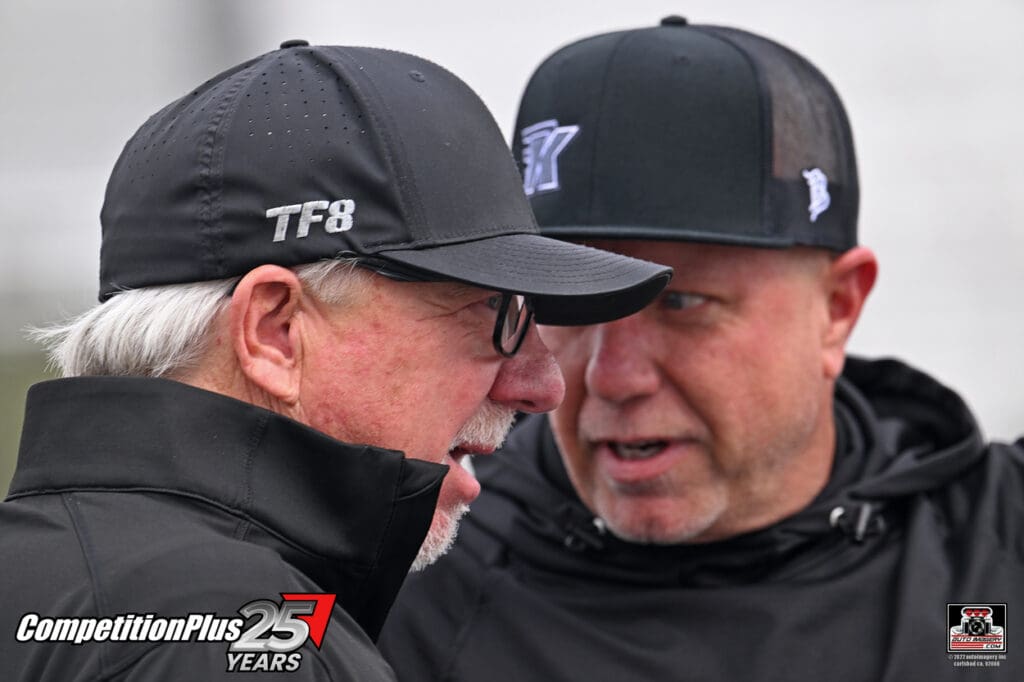
The connection goes deeper than reaction time. Johnson credits visualization — a skill developed across multiple sports — as one of the most valuable tools she carries into the cockpit.

“We don’t have a simulator in drag racing,” Johnson said. “So, you’re running all the scenarios through your head, you’re running your procedure, getting prepared mentally.”

“And I think visualization was such a key part of softball… and same with javelin,” she added. “Before you go out on the runway to make a run, you’re visualizing each step. You’re visualizing that movement of your arm and hitting the block at the end and all the technique.”

“For an athlete, that’s how many more hours of practice can you get mentally to prepare for that moment,” Johnson said. “So, yeah, I think that definitely helped develop that tool that I can use to this day.”

Still, for all the tools she developed, Johnson spent much of her life working to separate her identity from the name that came before her. Growing up in Santa Maria, California, meant being recognized before she ever had the chance to define herself.

“That’s been huge my entire life,” Johnson said. “I grew up in a small town… and everybody there knew who my dad was. And that’s great most of the time, but… in school and in youth sports, the other parents would kind of go, ‘Oh, that’s Alan Johnson on the fence line over there.’”

That awareness led to a deliberate decision to step outside of it.
She left home for college, choosing an environment where her last name didn’t introduce her. The move was less about distance and more about identity.

“I think it’s one of the main reasons that I went out of state for college,” Johnson said. “Nobody knew where I came from. Nobody really cares when you get to a college with 80,000 students and you just kind of make your own way.”

That experience gave her something she didn’t have before — separation. It allowed her to return to drag racing with clarity about who she is and why she’s there.

“And I think that gives me the confidence to actually be back in the racing world and know, hey, I’m here for me and I’m doing this for me,” Johnson said. “It’s so cool that I get to be out here with my dad, but really I’m trying to build my own legacy.”

At the same time, she has never distanced herself from the family history that shaped her. For Johnson, the goal is not to step away from it, but to carry it forward.

“I’m always going to come back to… this was my dad and my Uncle Blaine’s passion,” Johnson said. “They did such amazing things and I want to continue that.”

That balance — independence without detachment — defines where she stands now.
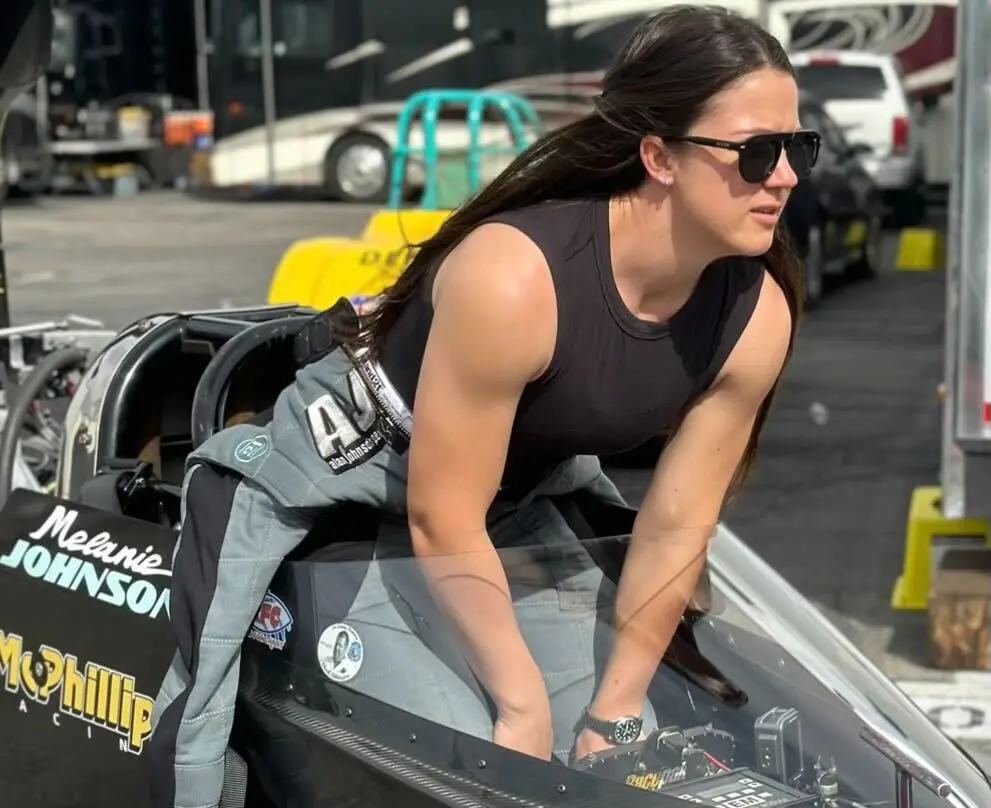
Few drivers enter the sport with the kind of access Johnson has had to its inner workings. Years spent around her father have provided insight that goes beyond what most drivers ever learn.

“I have learned so much more than I could even put into words about how the engines work and the clutch works and the whole car works partially just by osmosis,” Johnson said. “Being around my dad, sitting behind him in the trailer, watching him do tuning calculations and watching weather and all that.”

But that knowledge didn’t come passively. It came from curiosity, questions, and a desire to understand what drove the man behind the reputation.

“I’ve asked him tons and tons of questions my whole life because I wanted to understand it,” Johnson said. “As a kid, you want to be involved in and know what’s going on in your parents’ life and you want to relate to them.”

That understanding now shows up behind the wheel. It gives her the ability to interpret what the car is doing and respond with confidence.

“It’s always fun after a day at the track, I’m riding back to the hotel with my dad and I’m just asking him like, ‘Oh, what happened on that run? Did you get all of it?’” Johnson said. “And he can articulate to me because I know a lot about how these cars run.”

“I can feel that tire quiver, tire shake and stay on top of this,” she added. “And I think that also goes into my confidence as a driver and knowing what’s going on behind me with that engine.”

Even with that background, Johnson is realistic about her path forward. The question, as it was posed to her, was simple — does she see her future turning the wrenches or driving the car?

In a sport where tuning at the highest level is reserved for a select few, her father exists in even rarer company. The level of instinct, calculation, and feel required to tune a Top Fuel or Funny Car at a championship level is something less than a fraction of a percent ever truly master, a standard Alan Johnson has spent a career defining.

“I don’t know if I have exactly the aptitude to tune a car,” Johnson said. “I’m very business-minded and I understand the mechanics of it, but I certainly don’t have the level of mechanical aptitude that my dad does. He’s a genius.”

Her focus, for now, remains behind the wheel, even if the idea of the two roles intersecting still carries weight.

“Oh, I’ve definitely envisioned that, and that would be the dream come true,” Johnson said. “I don’t care what car it is. It could be a super comp car. My dad tuning, it would be just awesome.”

For Johnson, that vision is more than opportunity. It’s alignment — everything she has learned meeting everything she has yet to prove.

That possibility lingers as both motivation and destination.
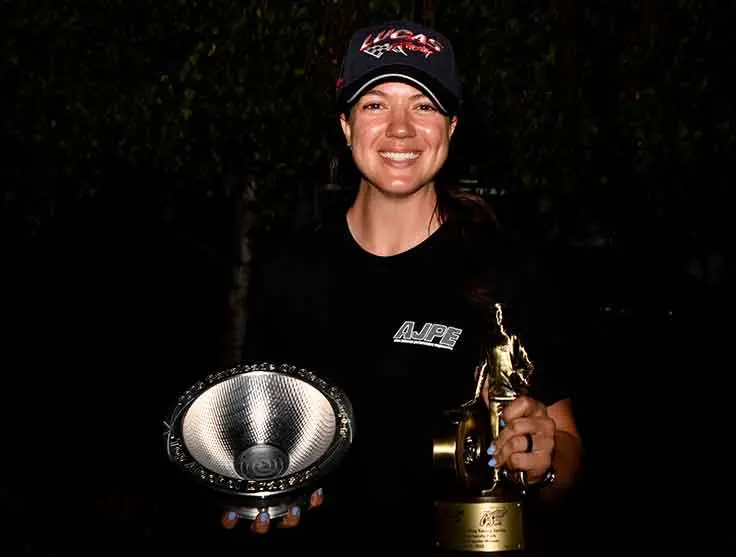
That relationship has never been built on pressure. It has been built on presence, even if that presence came in moments instead of seasons.

“My whole life, through sports, he’s been such a great sounding board,” Johnson said. “He’s not that overpowered parent that’s yelling tips from the sidelines at a softball game. He’s quiet, he’s reserved and just very encouraging and gives constructive feedback when I need it.”

Those moments, she said, mattered more because they weren’t constant.

“I think a lot of the time, I always played my best when he was around because he didn’t get to come to all of my sporting events growing up,” Johnson said. “So, it was really special to have him there when he had an off weekend for racing.”

For Melanie Johnson, the competitive drive may have been inherited. The expectations certainly were.

But the path forward — that part, she insists, is hers to define.

“And I think that’s what I’m chasing now,” Johnson said. “Not just being part of it — but proving I belong in it.”


Picture of John Doe

John Doe

Lorem ipsum dolor sit amet consectetur adipiscing elit dolor

More Posts

Send Us A Message

Picture of Bobby Bennett
Bobby Bennett
Thank you for joining us on this journey. Your support and trust inspire us every day to deliver the best in drag racing journalism. We are excited about the future and look forward to continuing to serve you with the same dedication and passion that has defined CompetitionPlus.com from the very beginning.

Don’t miss these other exciting stories!

Explore more action packed posts on Competition Plus, where we dive into the latest in Drag Racing News. Discover a range of topics, from race coverage to in-depth interviews, to keep you informed and entertained.