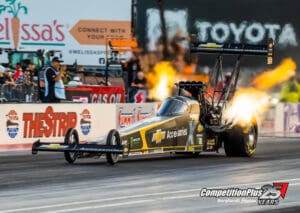
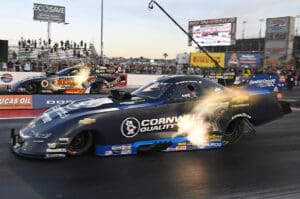
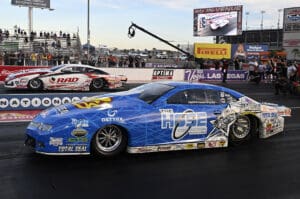
The fictional speech delivered by Rocky Balboa about resilience and moving forward has long resonated beyond boxing. For Top Fuel racer Doug Foley, it mirrors a career built on persistence, accountability, and surviving setbacks that smaller teams feel more sharply than most.
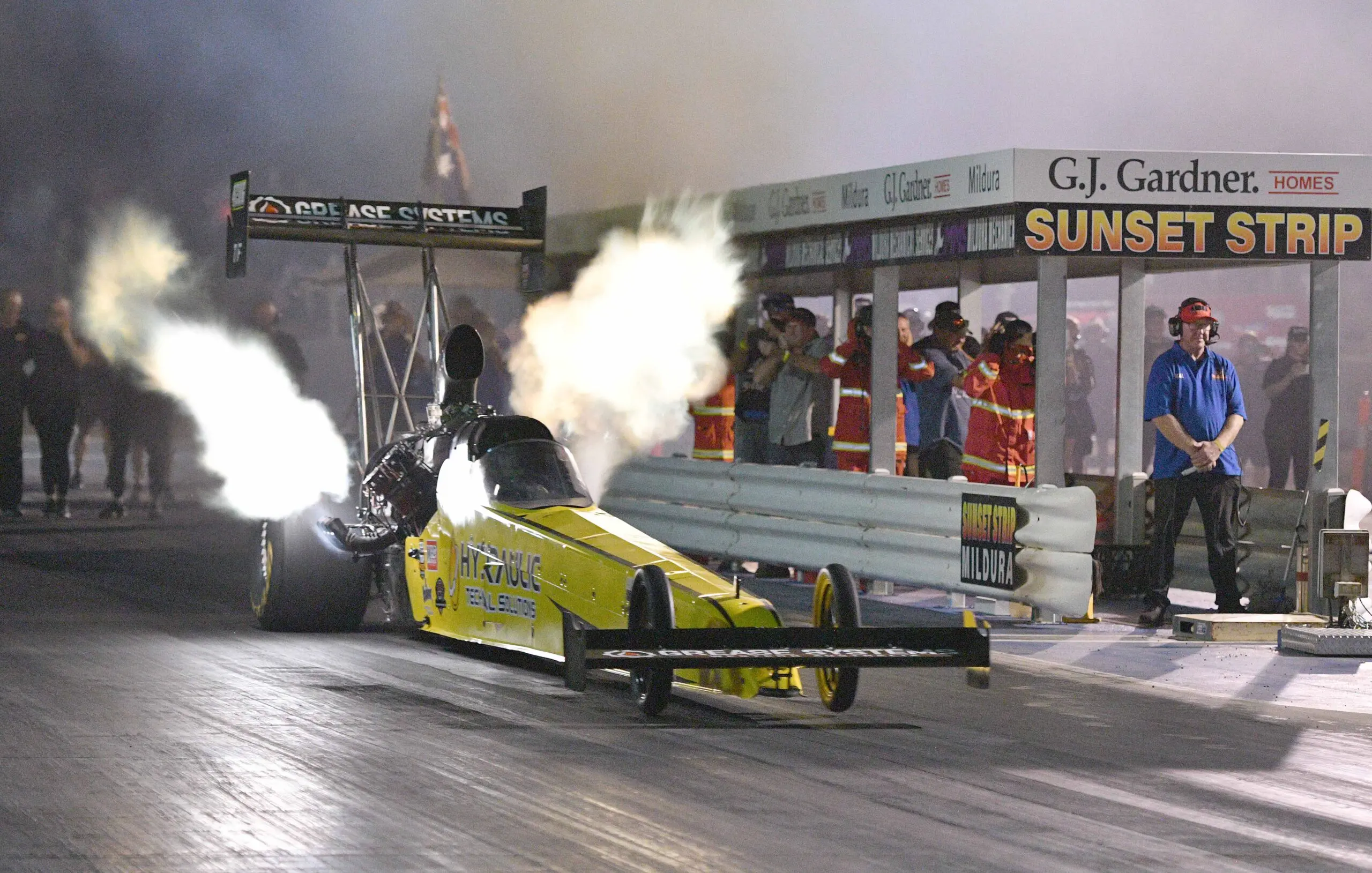
Foley’s latest test came at the IHRA season finale at Darana Motorsports Park, where his dragster lost traction early in the run and made contact with the retaining wall. The crash ended his weekend immediately and shifted the team’s focus from racing ambitions to survival and recovery.
What could have been a breaking point instead became another proving ground. Foley said the accident strengthened his resolve and clarified the work ahead as the team prepares for 2026.
The immediate damage was not limited to bent tubing and broken components. Foley said the crash erased momentum that had been built over several seasons of steady improvement.
“Well, again, going to a race that you think, ‘Hey, listen, we should be competitive and if we’re competitive, we’ll be in the semis minimum, the finals hopefully,’” Foley said. “And you go from that to not even qualifying.”
For a team that prides itself on consistency, the result was jarring. Foley said missing the show entirely was not something his operation had experienced in five years.

The financial consequences were unavoidable and immediate. Foley estimated the mistake cost at least $50,000, a figure that carries very different weight for independent teams.
“And so that’s something that we have to deal with,” Foley said. “There’s no such thing as an extra 50 grand.”
The timing could not have been worse. Foley explained the crash diverted resources from finishing a brand-new PBRC chassis that had already been designated as the team’s next primary car.
“We had already moved into our primary spot in the shop before we even went to GALOT,” Foley said. “That kind of went to s***, just like the weekend did.”
Repairs to the damaged dragster required front-half and back-half work, consuming winter funds that had been carefully planned. Foley said offseason budgeting does not allow for surprise expenses of that magnitude.
Race fans often overlook how fragile that balance can be for teams outside the sport’s elite. Foley said crashes do not simply end races; they reroute entire seasons.
“Oh, absolutely,” Foley said when asked how such incidents affect smaller teams. “It changes the entire course.”
The emotional swing was as sharp as the financial one. Foley described driving home defeated, knowing the true cost had yet to fully reveal itself.

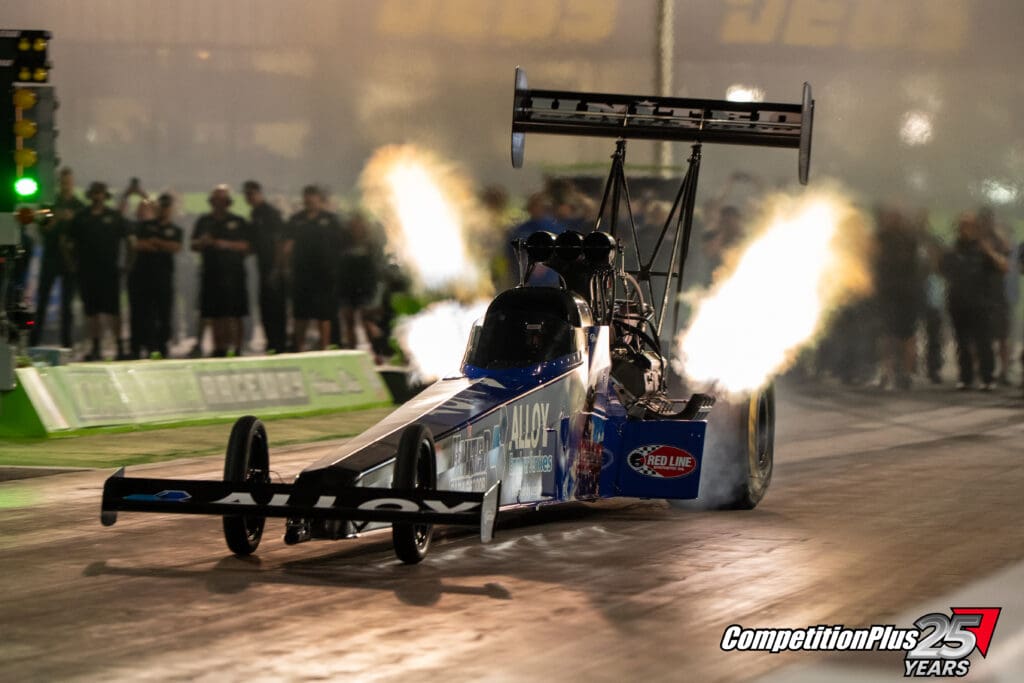
“That was an unusual one because it totally killed the motor,” Foley said. “It beat a lot of s*** up.”
Foley did not deflect responsibility. He said the accident was driver error, a reality he accepted as both driver and team owner.
“My number one job is to be a team owner and the driving is just an extra thing,” Foley said. “As far as a team owner goes, that’s a disaster just prior to going into the offseason.”
Asked to explain what went wrong, Foley pointed to the unforgiving nature of Top Fuel machinery. Even the smallest throttle input can produce violent results.
“When I pulled my foot back, there was still a percentage of throttle,” Foley said. “A lot of people don’t even realize how violent those things are.”
Foley detailed how little throttle opening is required to generate massive engine speed during burnouts. An opening of roughly an eighth-inch can translate to thousands of RPM.
“To realize that an eighth-inch, it’s already at 6,600 RPMs,” Foley said. “It was just a mistake on my part.”
He said the car shook the tire as he came off the gas, and momentum did the rest. The wheels never turned significantly, but in Top Fuel, that distinction does not matter.
“You have to be a 1,000 percent aware at all times,” Foley said. “It just happens, and I’m the one who will pay for it.”

The aftermath forced the team into triage mode. While the crash was severe, Foley said the chassis itself was salvageable.
“That car will be in service next year,” Foley said. “Whether it’s a primary car or a secondary car, that is a car that we will have back.”
That reality offered some relief but no easy answers. The offseason, often described as a reset, is shorter and more demanding than fans realize.
“We ran until November and we crashed a car,” Foley said. “That gave us a project to take completely apart and go through all the parts.”
Re-certification, inspections, and shipping consumed weeks. Foley said parts began returning only as the calendar closed in on January.
Time is the team’s most limited resource. Unlike major operations, Foley’s crew does not have eight to ten full-time employees.
“We have to look at what time allows for,” Foley said. “What is the best way to go about it?”
January 5 looms as a critical decision point. Foley said that date effectively marks the beginning of the 2026 season, when hard choices must be finalized.
“We put the wheels in motion so we had options,” Foley said. “Then we have to come January 5th and start making decisions.”
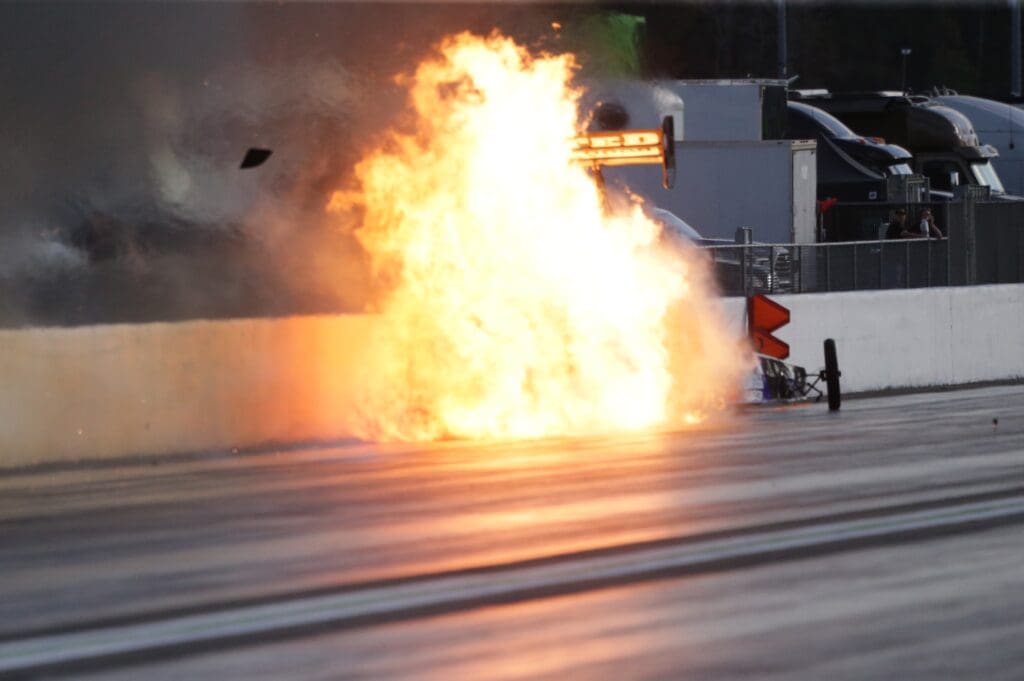
Those decisions are driven by finances as much as performance. Foley said there is no easy way to replace the money lost in the crash.
“It’s not like you just go to the machine and print more money,” Foley said. “If there were sponsors willing to give you 50 grand anytime you made a phone call, then that’s what we would do.”
Instead, sacrifices become necessary. Foley said the team will likely skip certain test sessions to control costs.
“Probably have to just take the test session off the schedule,” Foley said. “It’s just not much of a choice.”
He referenced extended test outings that can quietly exceed six figures in expenses. For smaller teams, those reality checks can be sobering.
“You’ll have a reality check when you go to events like that,” Foley said. “You see your bank account just diminish.”
Foley said scaling back testing early in the year helps preserve resources. Adjustments may include shorter pre-event sessions rather than full test programs.
“By not going in February, that’ll help on some of the cost expenses,” Foley said. “We’ll just back off and try and figure it out.”
January 5 also marks a mental reset. Foley said it is when crews return from brief breaks and refocus on the grind ahead.
“Our guys work their a** off and they’re committed,” Foley said. “Then everybody hits it back again on the fifth.”

Physically, Foley said he fared better than in his previous major crash in 2006. While the incident looked violent, he said the impact was less severe due to lower speed.
“That was a bad one,” Foley said of the earlier crash. “This one wasn’t half as hard.”
Still, the toll was real. Foley said adrenaline can mask injuries in the moment, only for pain to surface later.
“It’s easy when the adrenaline’s pumping to say, ‘I’m fine,’” Foley said. “And then later on you sit there and say, ‘D***.’”
As he gets older, Foley acknowledged the risks weigh heavier. Aches linger longer, and recovery is less forgiving.
“It does make you think,” Foley said. “But it’s a sport that I love.”
That love remains the constant thread through crashes, budgets, and rebuilds. Foley said his goal is simple: stay involved, compete honestly, and keep moving forward.
“I just want to be out there and enjoy the sport,” Foley said. “And do everything we can.”
Like the movie line that frames his mindset, Foley’s career has never been about avoiding knockdowns. It has been about standing back up, even when the cost is high and the climb is steep.