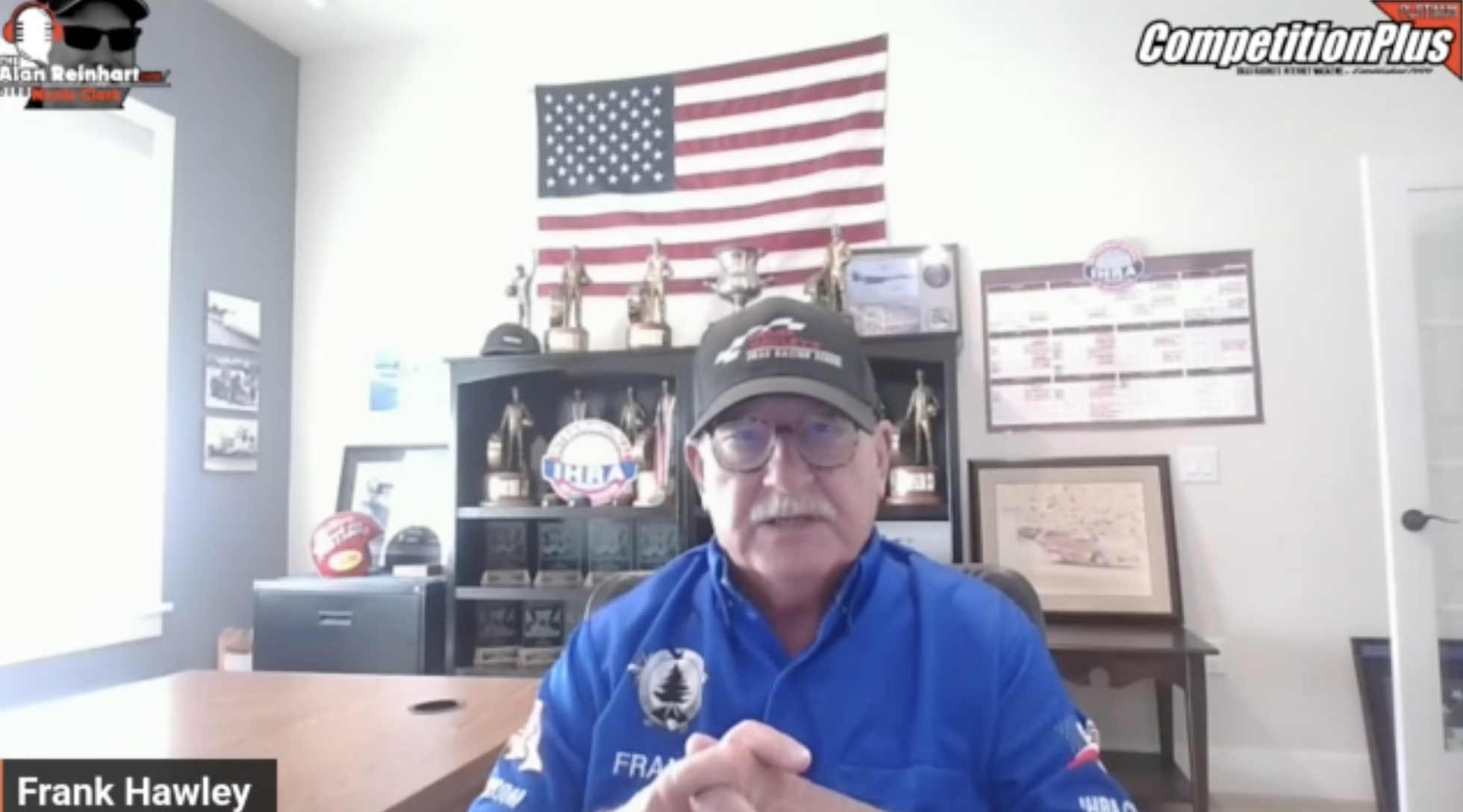

Buddy Hull promised his family he would not return to a fuel Funny Car until he believed he could survive its worst-case moments. Five months after his Sonoma explosion injured his left hand and left him without access to the car’s controls, Hull says he is honoring that promise by engineering what he calls a fully enclosed “driver body shield” that he believes will prevent the failures that trapped him last summer.


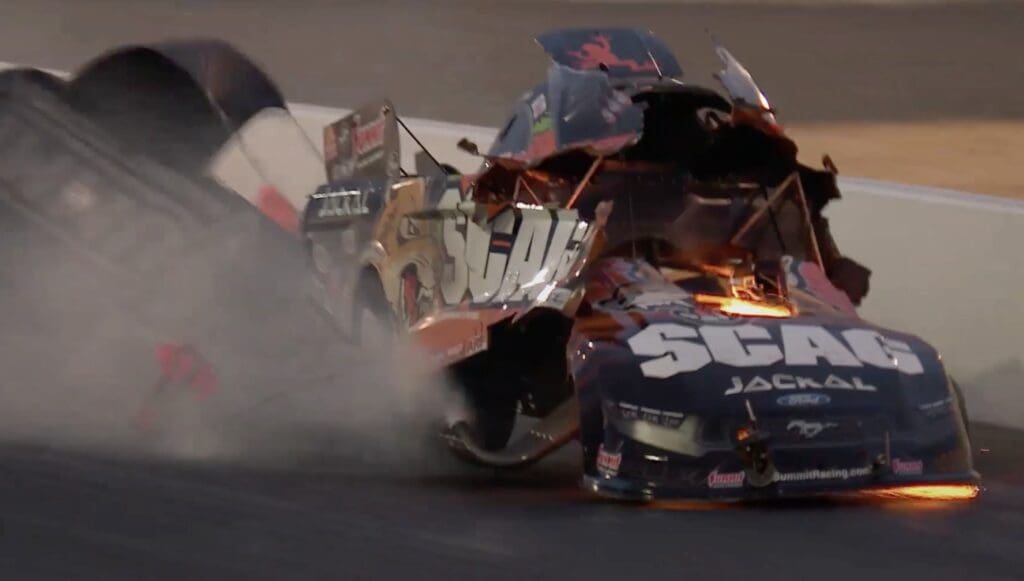
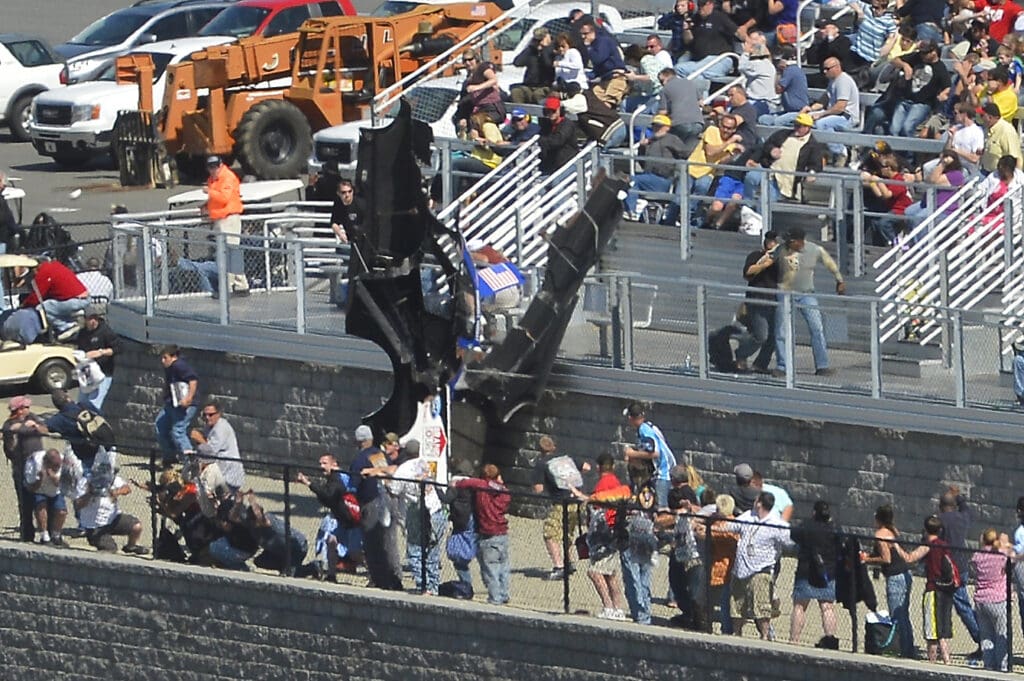
Hull’s accident occurred when his Funny Car exploded and the firewall blew over the hand shield, crushing his hands and blocking the steering wheel, fuel lever and brake handle. He said the moment he lost control of the car shaped every decision he made afterward.


His new protective system arrives during a broader safety reevaluation in the Funny Car community, which has examined cockpit vulnerabilities and the limitations of current body tether designs. Earlier this month, NHRA approved Tim Wilkerson and Murf McKinney’s plan to develop a revised 2026 tethering system designed to prevent bodies from collapsing into the driver’s line of sight.


Hull supports that work but said his solution needed to go beyond tethers. “Funny cars offer up opportunity for that motor and all the parts in the body to hurt us,” Hull said. “I learned that firsthand.”


Impact Safety gear protected Hull throughout the fire, and he said none of his equipment failed. “I’m head to toe in Impact,” Hull said. “Praise Jesus I had them on my team.”
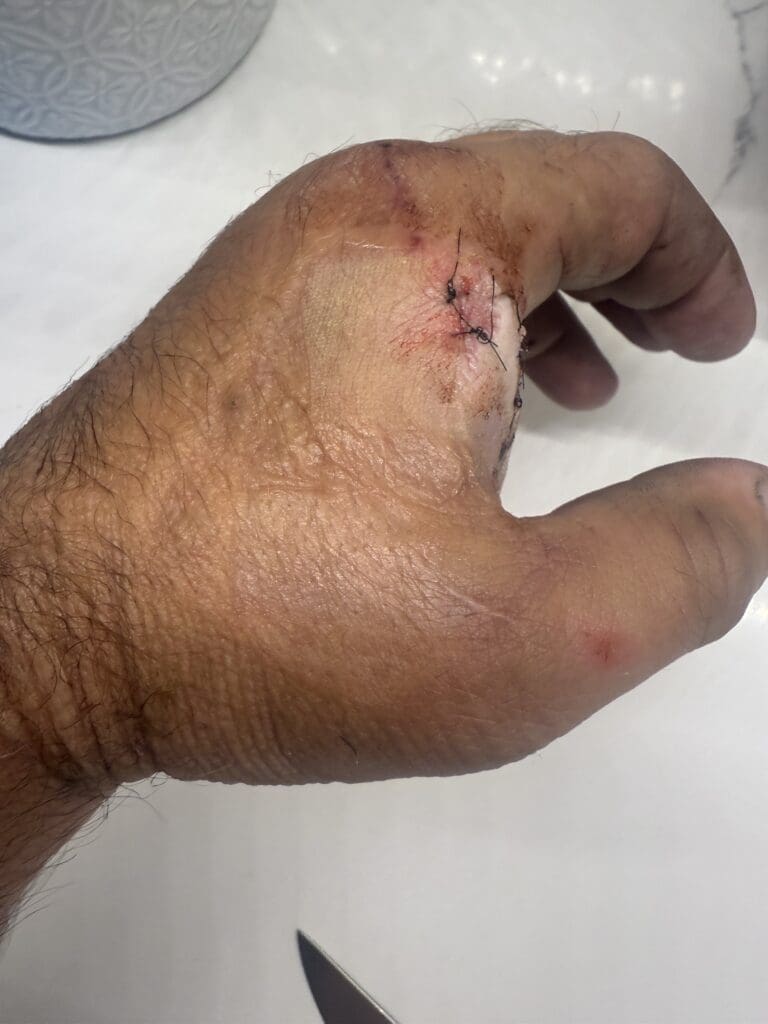

 

Buddy Hull's smashed and severly damaged hand was the impetus for the full body design he took to the NHRA.
Ron Lewis Photo

Two decades ago, the original body tether mandate followed Robert Hight’s body launching into the Pomona grandstands. Hull said that change kept spectators safe but created new risks for the driver inside the car.


“When that body gets held to the race car and you blow up, it obstructs the driver’s view,” Hull said. “That’s not good.”


He also pointed to incidents involving John Force and Ron Capps, where the body collapsed into the tires after explosions and forced cars into the wall. Hull said those failures showed that tether systems must protect fans without compromising driver control.


The Wilkerson–McKinney system approved by NHRA attempts to redirect explosive force upward while giving the body a controlled path away from the cockpit. “That way the force and the explosion can escape better,” Hull said. “Which is a really positive thing.”


But Hull said what happened to him required addressing the cockpit itself. The firewall intrusion, not the body collapse, caused his loss of control. “That firewall came all the way up and over the hand shield and hit my hands,” Hull said. “It was in between me and the steering wheel, the fuel lever, and the brake handle.”


He returned home determined to keep a driver from ever facing that situation again.


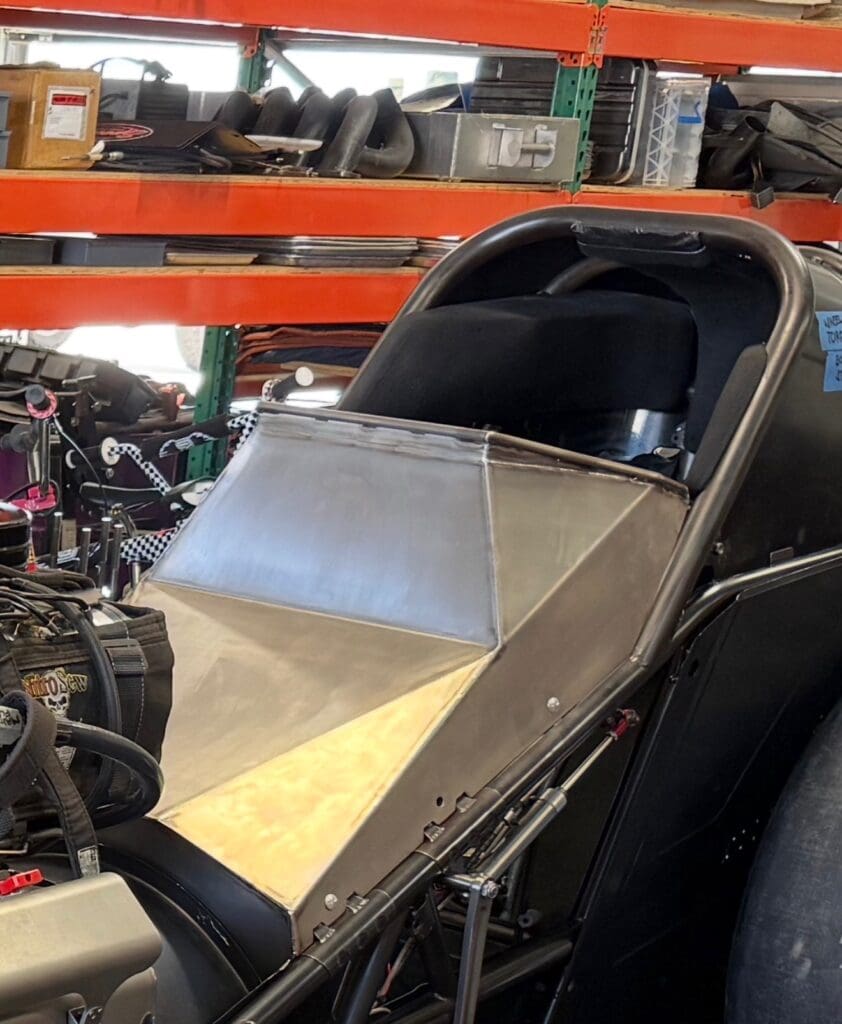
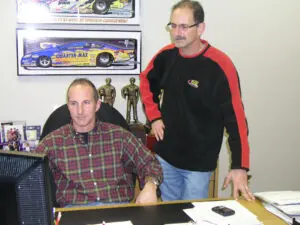
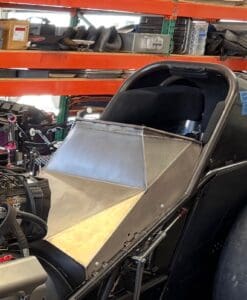
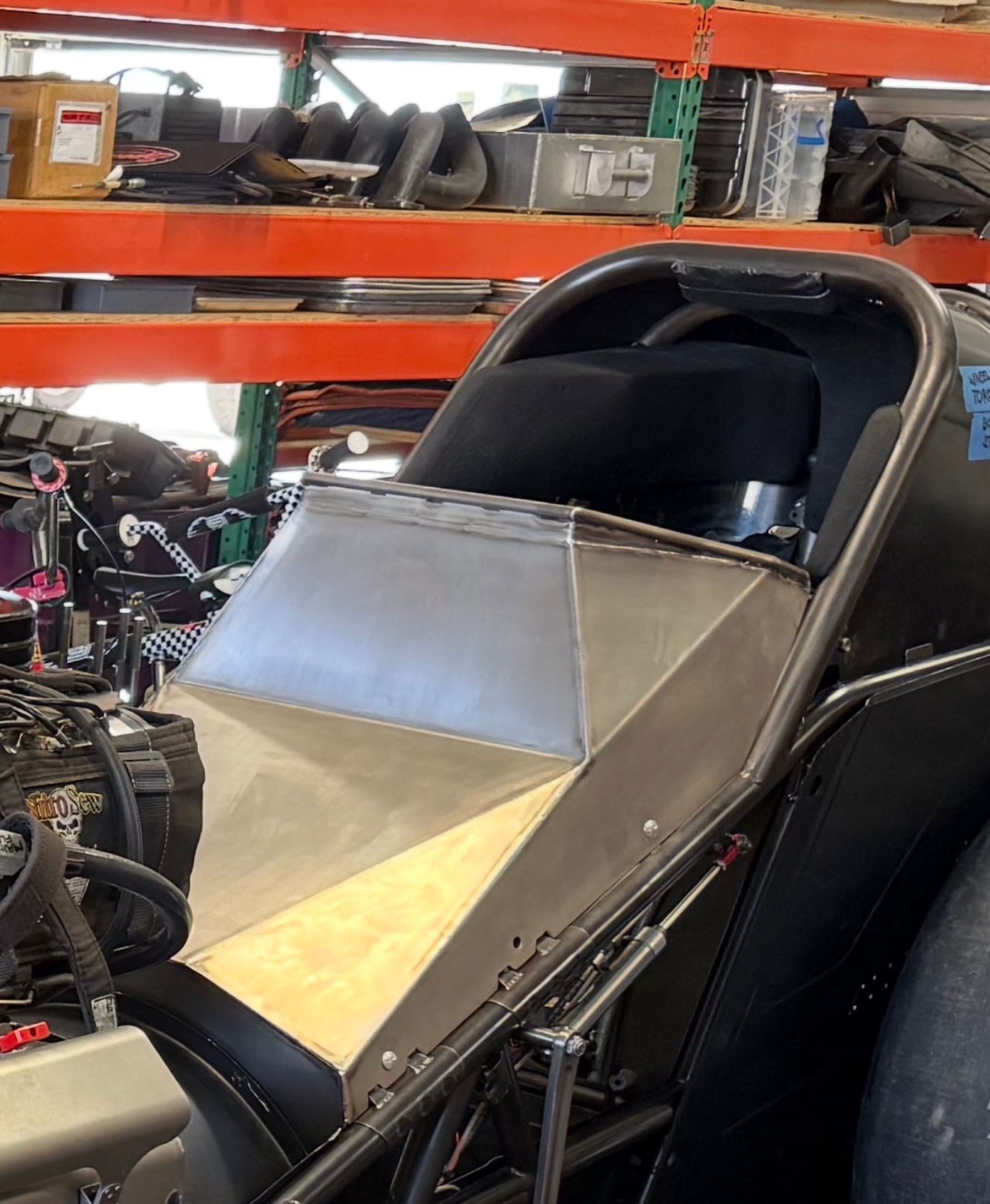
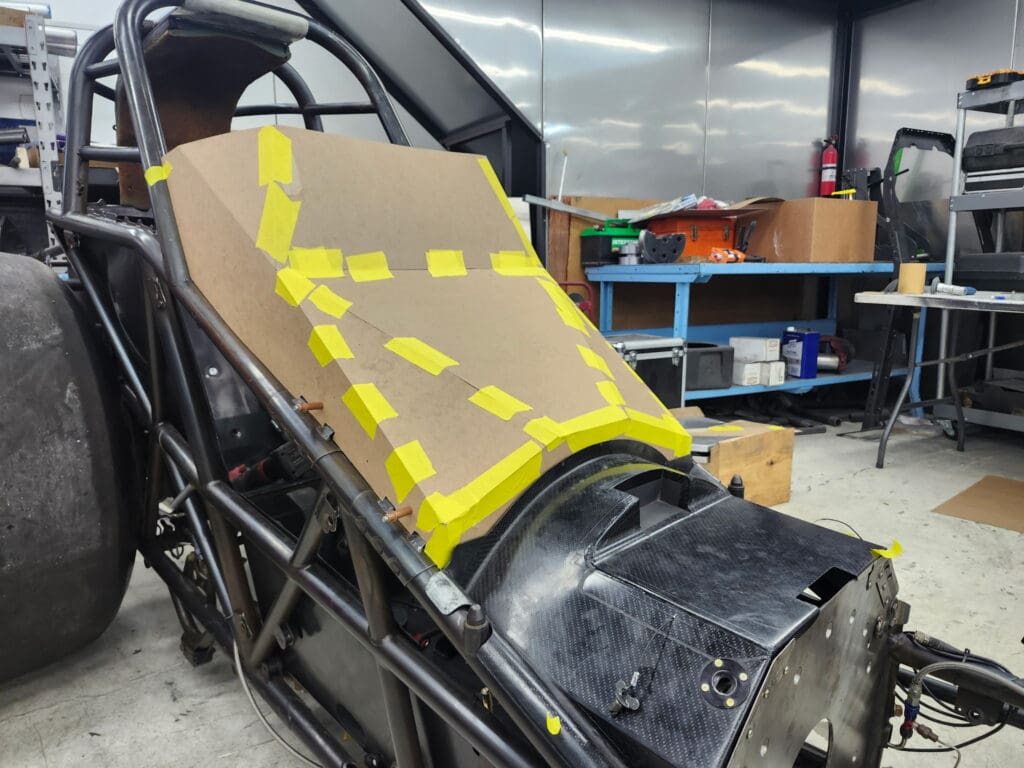
The original prototype was designed by Hull when he was still on the sidelines injured from the Sonoma crash.

SIDEBAR – WILKERSON–MCKINNEY 2026 TETHER SYSTEM


NHRA’s approval of Tim Wilkerson and Murf McKinney’s 2026 Funny Car tether system marks the sanctioning body’s most significant tether update in more than a decade. The redesign aims to correct a long-recognized flaw in the current setup: when an engine explosion occurs, the composite body often collapses against the chassis and blocks the driver’s visibility. In some cases, including crashes involving John Force and Ron Capps, the body has even folded into the tires and pushed cars into the wall.


The new tether concept focuses on controlling the body’s motion, not just restraining it. Updated attachment points and directional geometry guide the body upward and away from the cockpit during an explosion. The system also works with an expanded burst panel, giving explosive pressure from blower or manifold failures a defined escape route instead of forcing the body downward onto the driver.


NHRA’s approval clears the way for controlled testing and refinement ahead of proposed 2026 implementation.


READ THE FULL ARTICLE


Standing over a Funny Car chassis in his shop, Hull began sketching a new idea. “I said to myself, ‘Why don’t we build a full-body shield rather than just a hand shield?’” he said. His previous guard was only a small deflector.


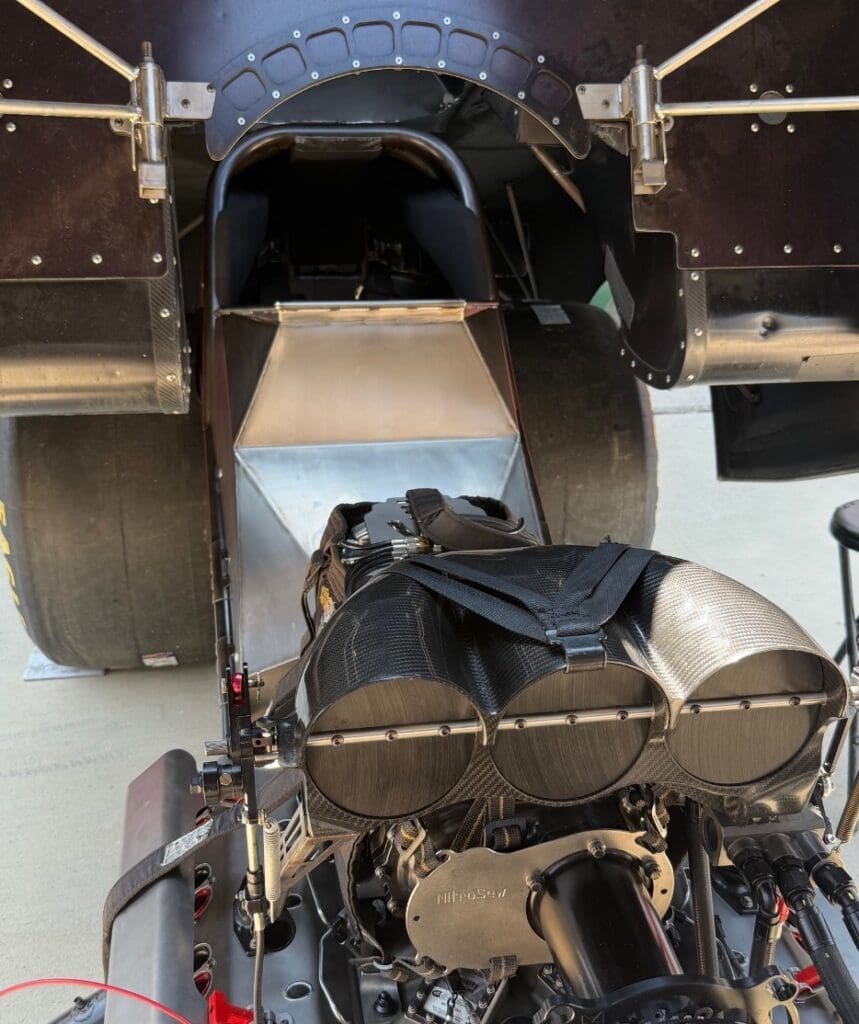
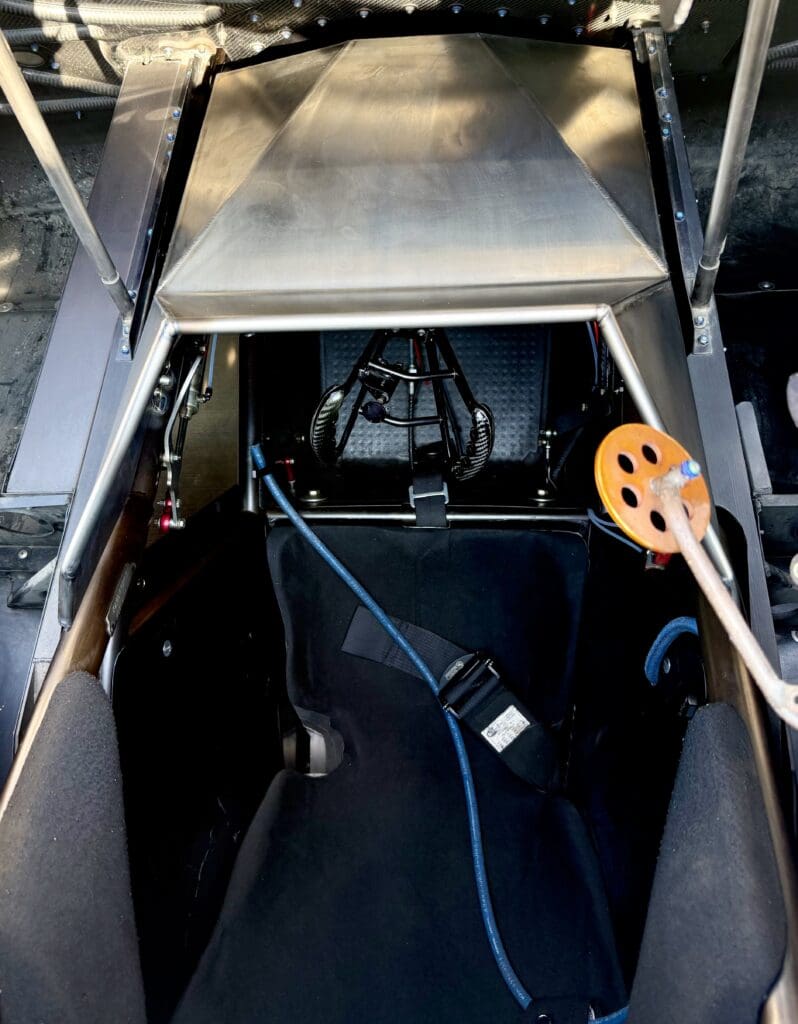
The redesigned enclosure aligns with the frame rails, rises up the top hoop and reaches the midpoint of the driver’s upper arm. “Full-body shield means that the driver is fully encompassed,” Hull said.


The leading edge stops around chin height to preserve the driver’s field of vision. “The driver still has full view,” Hull said. “They can still see everything they need to see.”


Hull constructed the prototype from 0.078 titanium with multiple structural bends for rigidity. “The one I personally built is overkill,” he said. “It’s made out of 0.078 titanium and has a lot of different structural bends to make it super strong.”


He then added a three-eighths-inch titanium tube around the perimeter to reinforce the leading edge. “It’s a very, very sturdy piece,” Hull said. “It should allow the driver to be protected properly moving forward.”


Hull said the purpose of the shield is simple: even during an explosion, the driver must remain in control. “The driver still has the steering wheel, still has the brake handle, still has the fuel lever,” Hull said. “This new device should 100% allow that.”


He also studied debris intrusion after watching Ron Capps’ crash in which a header tube entered the cockpit during a wall impact. The incident led Hull and Nitrosew’s Dave Brown to begin developing a lower-frame barrier to block debris during side impacts. “It will tie around the frame rails and keep debris from coming in on the driver,” Hull said.


Hull also evaluated leg-bucket designs used in other classes, which encase a driver’s legs in Kevlar, carbon fiber or titanium. “All those improvements are something I feel is extremely necessary to be made,” Hull said. “You really can’t offer enough safety for any driver.”


He involved NHRA Safety Safari staff early in the process. To ensure compliance, he referenced the Top Fuel rule requiring an 18-inch driver opening at the roll cage. “I used that number as a start point,” Hull said.


He then performed escape drills with the shield installed. “I made sure I could get out easy,” Hull said. “And actually get out easier than before.”


Hull believes every Funny Car should adopt a version of the shield, though he said cage differences require flexibility. “Every Funny Car cage is different,” Hull said. “There needs to be some leeway there.”


He added that the current terminology no longer fits. “In my opinion, the hand shield term needs to be thrown out and it needs to be called a body shield,” Hull said.


Hull continues to experience stiffness in his injured hand, particularly in cold weather, though his grip strength has returned above the average for his age. “My hand will never be shaped the same again,” Hull said. “It works, that’s all I care about.”


He said the injury included two broken bones and a penetrating wound caused by a high-velocity fastener that tore through his glove. “Something went through my glove, through my hand, and out the other side of the glove,” Hull said.


Hull believes his former powerlifting background helped protect the structure of his hand. “If my hands weren’t beefy, it probably wouldn’t ended up the way it ended up,” he said.


Hull said he is proud of how the Funny Car community has responded to the recent accidents. “All of us have communicated,” Hull said. “We all agree that we got to make them safer.”


He emphasized that he is not seeking profit from his design. “I’m not interested in making any money or selling them or building them,” he said. “I did it to have a safer race car for everybody.”


He also hopes others improve upon what he has started. “Maybe someone will make one better,” Hull said. “If they make one better, I’ll then copy off that.”


Hull said his hands serve as his daily reminder of why he began the project and why he insists on finishing it. “Everything happens for a reason,” Hull said. “That’s just part of what we do.”


Share the Insights?

Click here to share the article.

ad space x ad space

ad space x ad space

Competition Plus Team

Since our inception, we have been passionately dedicated to delivering the most accurate, timely, and compelling content in the world of drag racing. Our readers depend on us for the latest news, in-depth features, expert analysis, and exclusive interviews that connect you to the sport’s pulse.

Sign up for our newsletters and email list.

This field is for validation purposes and should be left unchanged.
Name

HULL ADVANCES FUNNY CAR SAFETY WITH NEW DRIVER BODY SHIELD AFTER SONOMA INJURY

Buddy Hull promised his family he would not return to a fuel Funny Car until he believed he could survive its worst-case moments. Five months after his Sonoma explosion injured his left hand and left him without access to the car’s controls, Hull says he is honoring that promise by engineering what he calls a fully enclosed “driver body shield” that he believes will prevent the failures that trapped him last summer.


Hull’s accident occurred when his Funny Car exploded and the firewall blew over the hand shield, crushing his hands and blocking the steering wheel, fuel lever and brake handle. He said the moment he lost control of the car shaped every decision he made afterward.


His new protective system arrives during a broader safety reevaluation in the Funny Car community, which has examined cockpit vulnerabilities and the limitations of current body tether designs. Earlier this month, NHRA approved Tim Wilkerson and Murf McKinney’s plan to develop a revised 2026 tethering system designed to prevent bodies from collapsing into the driver’s line of sight.


Hull supports that work but said his solution needed to go beyond tethers. “Funny cars offer up opportunity for that motor and all the parts in the body to hurt us,” Hull said. “I learned that firsthand.”


Impact Safety gear protected Hull throughout the fire, and he said none of his equipment failed. “I’m head to toe in Impact,” Hull said. “Praise Jesus I had them on my team.”
 

Buddy Hull's smashed and severly damaged hand was the impetus for the full body design he took to the NHRA.
Ron Lewis Photo

Two decades ago, the original body tether mandate followed Robert Hight’s body launching into the Pomona grandstands. Hull said that change kept spectators safe but created new risks for the driver inside the car.


“When that body gets held to the race car and you blow up, it obstructs the driver’s view,” Hull said. “That’s not good.”


He also pointed to incidents involving John Force and Ron Capps, where the body collapsed into the tires after explosions and forced cars into the wall. Hull said those failures showed that tether systems must protect fans without compromising driver control.


The Wilkerson–McKinney system approved by NHRA attempts to redirect explosive force upward while giving the body a controlled path away from the cockpit. “That way the force and the explosion can escape better,” Hull said. “Which is a really positive thing.”


But Hull said what happened to him required addressing the cockpit itself. The firewall intrusion, not the body collapse, caused his loss of control. “That firewall came all the way up and over the hand shield and hit my hands,” Hull said. “It was in between me and the steering wheel, the fuel lever, and the brake handle.”


He returned home determined to keep a driver from ever facing that situation again.
 

The original prototype was designed by Hull when he was still on the sidelines injured from the Sonoma crash.

SIDEBAR – WILKERSON–MCKINNEY 2026 TETHER SYSTEM


NHRA’s approval of Tim Wilkerson and Murf McKinney’s 2026 Funny Car tether system marks the sanctioning body’s most significant tether update in more than a decade. The redesign aims to correct a long-recognized flaw in the current setup: when an engine explosion occurs, the composite body often collapses against the chassis and blocks the driver’s visibility. In some cases, including crashes involving John Force and Ron Capps, the body has even folded into the tires and pushed cars into the wall.


The new tether concept focuses on controlling the body’s motion, not just restraining it. Updated attachment points and directional geometry guide the body upward and away from the cockpit during an explosion. The system also works with an expanded burst panel, giving explosive pressure from blower or manifold failures a defined escape route instead of forcing the body downward onto the driver.


NHRA’s approval clears the way for controlled testing and refinement ahead of proposed 2026 implementation.
 

READ THE FULL ARTICLE


Standing over a Funny Car chassis in his shop, Hull began sketching a new idea. “I said to myself, ‘Why don’t we build a full-body shield rather than just a hand shield?’” he said. His previous guard was only a small deflector.


The redesigned enclosure aligns with the frame rails, rises up the top hoop and reaches the midpoint of the driver’s upper arm. “Full-body shield means that the driver is fully encompassed,” Hull said.


The leading edge stops around chin height to preserve the driver’s field of vision. “The driver still has full view,” Hull said. “They can still see everything they need to see.”


Hull constructed the prototype from 0.078 titanium with multiple structural bends for rigidity. “The one I personally built is overkill,” he said. “It’s made out of 0.078 titanium and has a lot of different structural bends to make it super strong.”


He then added a three-eighths-inch titanium tube around the perimeter to reinforce the leading edge. “It’s a very, very sturdy piece,” Hull said. “It should allow the driver to be protected properly moving forward.”


Hull said the purpose of the shield is simple: even during an explosion, the driver must remain in control. “The driver still has the steering wheel, still has the brake handle, still has the fuel lever,” Hull said. “This new device should 100% allow that.”


He also studied debris intrusion after watching Ron Capps’ crash in which a header tube entered the cockpit during a wall impact. The incident led Hull and Nitrosew’s Dave Brown to begin developing a lower-frame barrier to block debris during side impacts. “It will tie around the frame rails and keep debris from coming in on the driver,” Hull said.

 

Hull also evaluated leg-bucket designs used in other classes, which encase a driver’s legs in Kevlar, carbon fiber or titanium. “All those improvements are something I feel is extremely necessary to be made,” Hull said. “You really can’t offer enough safety for any driver.”


He involved NHRA Safety Safari staff early in the process. To ensure compliance, he referenced the Top Fuel rule requiring an 18-inch driver opening at the roll cage. “I used that number as a start point,” Hull said.


He then performed escape drills with the shield installed. “I made sure I could get out easy,” Hull said. “And actually get out easier than before.”


Hull believes every Funny Car should adopt a version of the shield, though he said cage differences require flexibility. “Every Funny Car cage is different,” Hull said. “There needs to be some leeway there.”


He added that the current terminology no longer fits. “In my opinion, the hand shield term needs to be thrown out and it needs to be called a body shield,” Hull said.


Hull continues to experience stiffness in his injured hand, particularly in cold weather, though his grip strength has returned above the average for his age. “My hand will never be shaped the same again,” Hull said. “It works, that’s all I care about.”


He said the injury included two broken bones and a penetrating wound caused by a high-velocity fastener that tore through his glove. “Something went through my glove, through my hand, and out the other side of the glove,” Hull said.


Hull believes his former powerlifting background helped protect the structure of his hand. “If my hands weren’t beefy, it probably wouldn’t ended up the way it ended up,” he said.


Hull said he is proud of how the Funny Car community has responded to the recent accidents. “All of us have communicated,” Hull said. “We all agree that we got to make them safer.”


He emphasized that he is not seeking profit from his design. “I’m not interested in making any money or selling them or building them,” he said. “I did it to have a safer race car for everybody.”


He also hopes others improve upon what he has started. “Maybe someone will make one better,” Hull said. “If they make one better, I’ll then copy off that.”


Hull said his hands serve as his daily reminder of why he began the project and why he insists on finishing it. “Everything happens for a reason,” Hull said. “That’s just part of what we do.”


 

Picture of John Doe

John Doe

Lorem ipsum dolor sit amet consectetur adipiscing elit dolor

More Posts

Send Us A Message

Picture of Bobby Bennett
Bobby Bennett
Thank you for joining us on this journey. Your support and trust inspire us every day to deliver the best in drag racing journalism. We are excited about the future and look forward to continuing to serve you with the same dedication and passion that has defined CompetitionPlus.com from the very beginning.

Don’t miss these other exciting stories!

Explore more action packed posts on Competition Plus, where we dive into the latest in Drag Racing News. Discover a range of topics, from race coverage to in-depth interviews, to keep you informed and entertained.