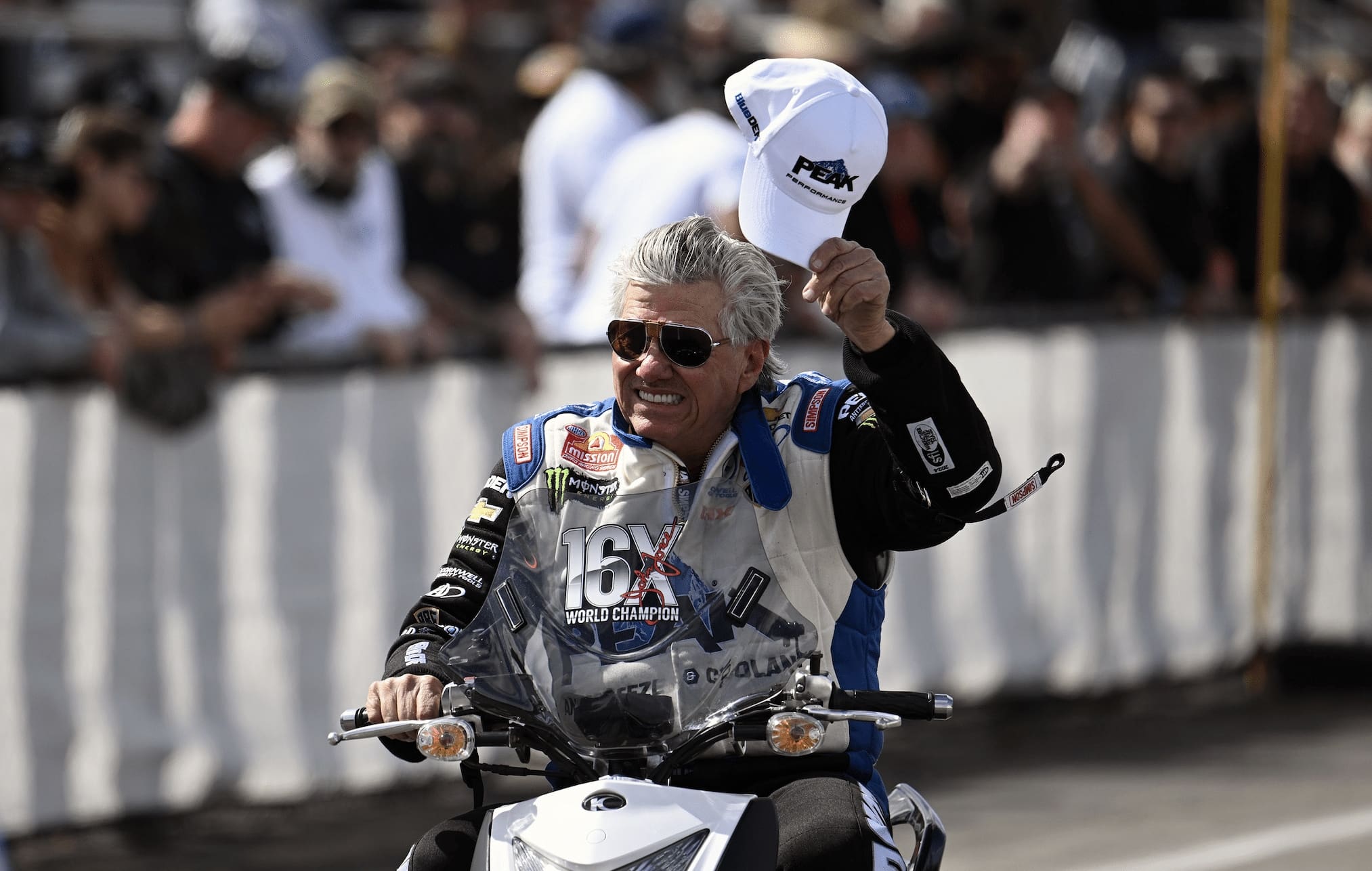
John Force didn’t just win races, he built a whole ecosystem around them.
With 16 NHRA Funny Car championships and 157 career victories, he stands atop the sport’s record book. These numbers only hint at the scope of who John Force is and who he is to drag racing.
This is the story of a driver who helped drag racing grow from gritty weekend grind to big-league entertainment. Turned a one-car hustle into a lasting dynasty and who’s still suiting up in his mid-70s.
Left an Impression Across Generations
Force’s fingerprints are everywhere.
- He pushed for safety after surviving crashes that would end most careers.
- He brought major brands to nitro racing and kept them there.
- He put his daughters in race cars and watched them win.
Through it all he remained the same fast-talking, hard-charging striver who once slept in his truck because hotels weren’t in the budget.
From Leg Braces to the Big Show
Overcoming Early Adversity
Childhood polio put John Force in leg braces, but it also forged the stubbornness that later defined him. Those early battles taught him to fight for everything. When he started racing, it was with borrowed cash and secondhand parts.
The Frontier Days of Funny Car Racing
Back then, Funny Car still felt like a frontier. Racers built their own engines, towed their own rigs, and often went home broke. Force knew that drill.
He worked construction midweek to fund weekends at the strip. When cash ran low, he slept at the track. When parts broke, he fixed them on the spot or borrowed from rivals.
Learning from the Veterans
The first title didn’t come quickly. He burned up engines, missed opportunities, and thought about quitting more than once.
Veterans like Austin Coil and Bernie Fedderly saw the raw material and helped channel it. Teaching clutch setup, track reading, and the mental discipline that separates a contender from a crowd-pleaser.
Those lean years shaped both the racer and the entrepreneur. He learned to stretch dollars, nurture relationships, and treat success as something you maintain, not something you own.
So when the wins and championships finally came, he arrived as more than a driver; he was already a builder.
The Numbers Behind the Legend
Sixteen championships. One hundred fifty-seven wins. Impressive on their own, they’re jaw-dropping over four decades of competition. Force began his title run in 1990 and captured his most recent in 2013, a span that redefined what long-term dominance looks like in the nitro ranks.
Putting the Records in Perspective
To put this in context, Kenny Bernstein finished with 69 wins; Don Prudhomme with 49.
Force more than doubled their combined totals. And he didn’t pad stats against thin fields, he battled those legends head-to-head, then outran the next waves: the Pedregon brothers, Ron Capps, and more.
He has qualified No. 1 and reached finals hundreds of times, collected trophies at tracks across the NHRA tour, and kept evolving as the sport did. On June 2, 2024, at age 75, he won career victory No. 157. This is a world record that underscores both longevity and relevance.
Building John Force Racing: From One Car to an Enterprise
The rise of John Force Racing could anchor a business school case. What started with a scrappy single-car operation grew into a multi-million-dollar program fielding multiple championship-caliber teams.
Strategic Partnerships and Sponsorship
Force figured out early that survival meant more than reaction times. He needed true partners. The breakthrough came when Castrol bet on a driver with more determination than silverware.
That long-running partnership proved a template: deliver performance, deliver marketing value, and show up for dealers, for fans, and for media; until your hand cramps from autographs.
Scaling the Operation
He reinvested. Not only hired, but listened to elite crew chiefs like Austin Coil. He built a state-of-the-art shop in Yorba Linda with dynos, fabrication, and repeatable processes for engines, clutches, data, hospitality, and merch. As the operation expanded to include Robert Hight and Force’s daughters, the program scaled its people, systems, and logistics to match.
Today, JFR is bigger than a race team. It’s a platform designed to win rounds and keep the lights on through competition, merchandise, hospitality, and content.
The lesson is simple: consistency on track is impossible without consistency everywhere else.
The Force Family Effect
Brittany Force: Breaking Barriers in Top Fuel
When Brittany Force won the 2017 Top Fuel championship, it validated the idea that speed and composure could be taught, refined, and passed down.
She became the first woman in 35 years to win the Top Fuel season title, lighting up Pomona and making history.
Ashley Force Hood: Funny Car Pioneer
Ashley Force Hood blazed new ground of her own, becoming the first woman to win a Funny Car national event in 2008; beating her dad in the final.
That moment shifted expectations for what the class could look like.
Expanding the Legacy Beyond Blood
Meanwhile, Robert Hight, John’s son-in-law and JFR president, built his own decorated résumé with multiple championships, proving the Force influence extends beyond bloodlines. The daily knowledge transfer at the shop covers everything from reading a tricky lane to handling sponsors and fans with grace under pressure.
The family’s visibility changed who shows up at the ropes. Young girls see a path. Families follow different JFR drivers together. The sport feels broader because the Force tree has branches everywhere.
Pushing Limits: Innovation and Safety
The 2007 Dallas Crash: A Turning Point
Force’s competitive drive and his crash history produced real change. The devastating 2007 Dallas accident led to compound fractures, mangled fingers, and more. It became a turning point.
During recovery, Force worked with builders and safety experts to strengthen driver compartments, refine restraint systems, and push for updated standards that spread across the category.
Technical Innovation Beyond Safety
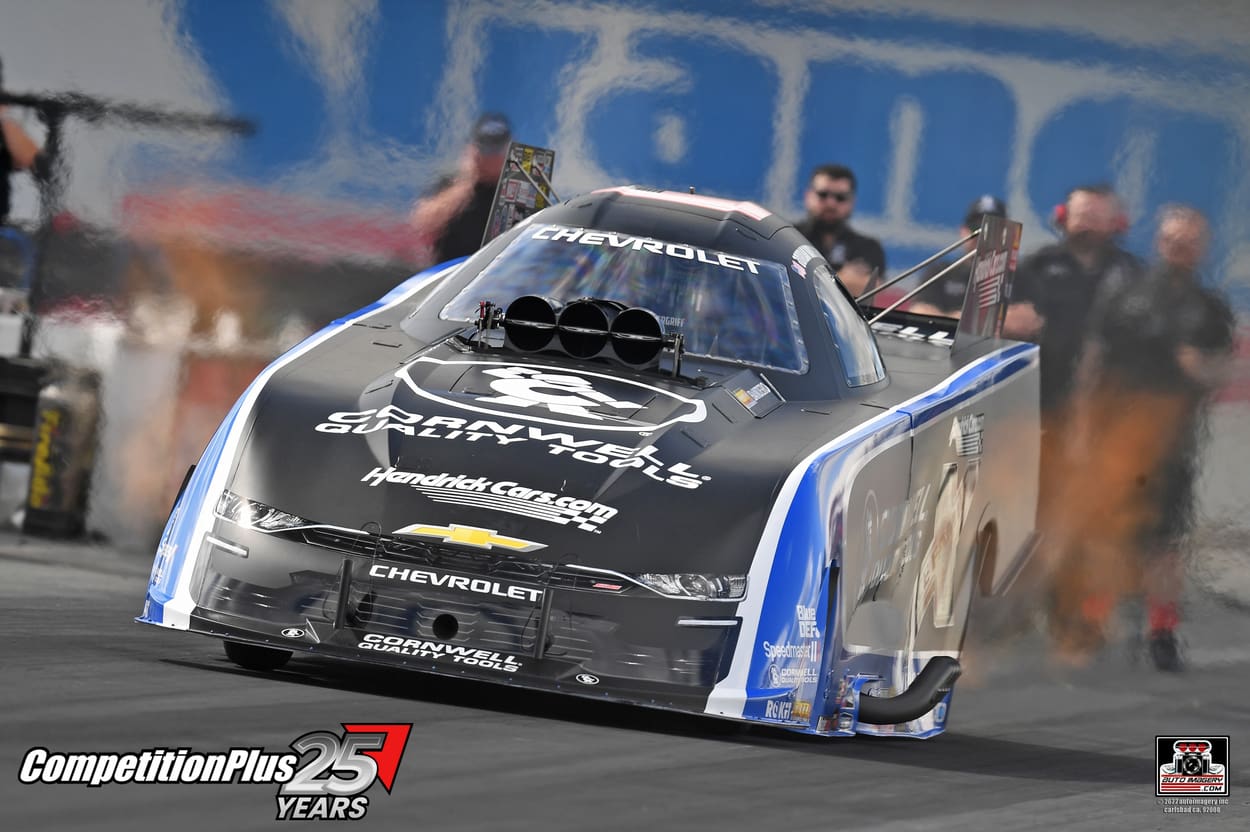
JFR’s technical work reaches well beyond safety. The team helped systematize data acquisition to make sense of a four-second run, refined clutch strategies that improved consistency, and pushed fuel-system and cylinder-head development.
Force earned a reputation for straight talk in NHRA meetings: pragmatic, experienced, and relentless about solutions that protect drivers without dulling the show.
The guiding principle never changes: performance gains aren’t worth it if they compromise survival. That line is drawn in Sharpie.
The Showman: Media, Fans, and the Microphone
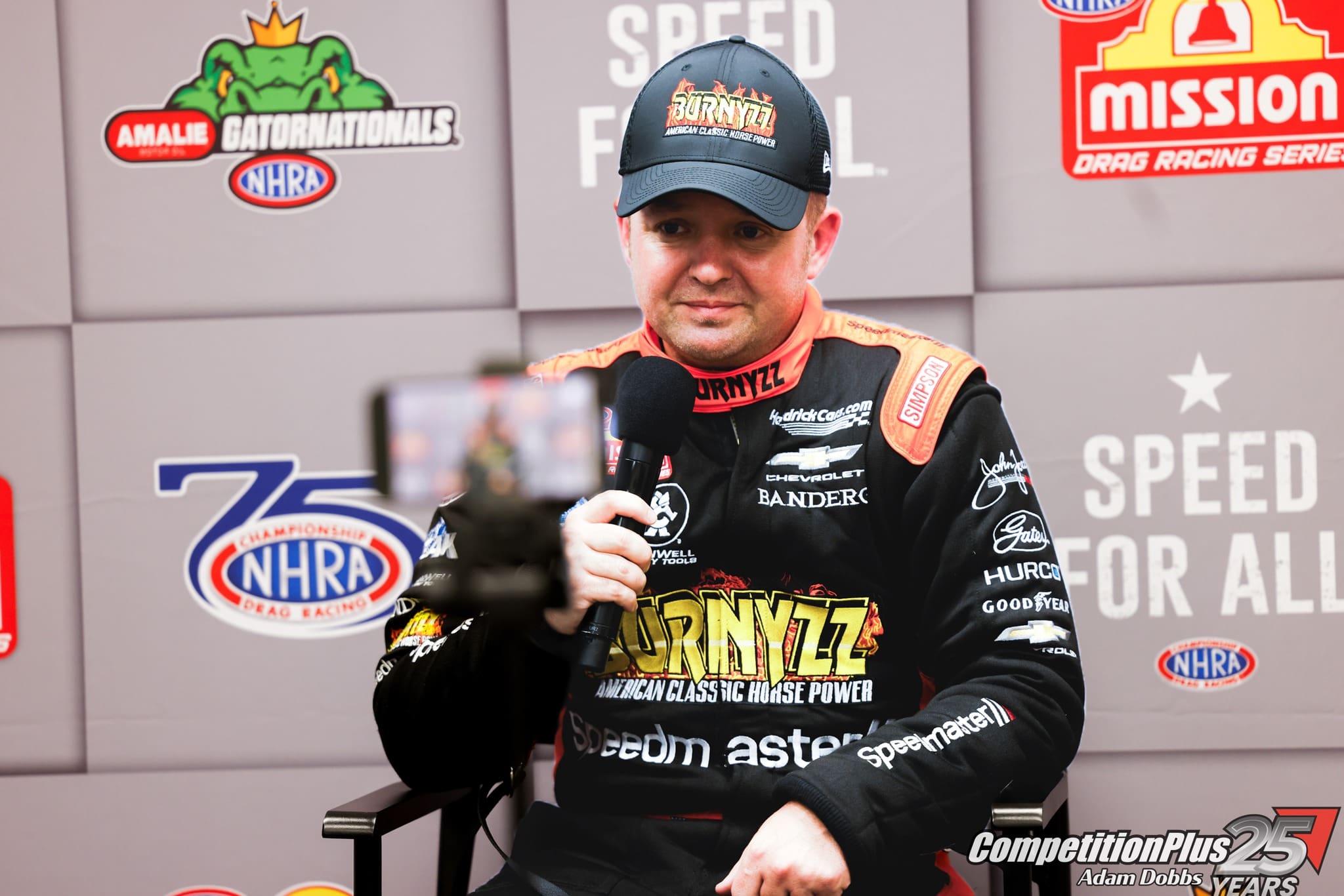
Ask a casual sports fan to name a drag racer and odds are they’ll say John Force. He’s part carnival barker, part philosopher, part stand-up comic, and all heart. Give him a mic and he’ll turn a post-round interview into a story. About winning and losing, about family, about the sound a motor makes when it lets go and you’re still trying to keep it in your lane.
Force’s media instincts scale. He engages on social media, signs for hours, and treats fans like the sport’s engine. Sponsors love the halo: he generates coverage beyond the track and makes outsiders want to see nitro live. Younger drivers study his interviews the way rookies study data logs.
Surviving the Unsurvivable
The comeback from his multiple and devastating crashes was faster than anyone expected. And every lesson learned fed back into the car and the rulebook.
Force has repeatedly turned trauma into progress. He shared information, supported updates, and modeled the hard mental work of climbing back into a car after it’s hurt you. That resilience may be his most instructive trait. The message to younger racers is clear: fear is real; it just doesn’t get to drive.
Still Racing, Still Teaching
Competing in His Mid-70s
Even in his mid-70s, Force refuses to be a nostalgia act.
He won again in 2024, his career victory No. 157, and spent the season trading punches with drivers young enough to be his grandkids.
The reflexes may be a tick different, but the racecraft remains high-end.
Mentoring the Next Generation
His role now stretches beyond his own lane. He mentors across the paddock. And the broader JFR ecosystem keeps evolving, with succession planning, diversified revenue, and strong partnerships built to outlast anyone’s driving career.
Meanwhile, the next generation keeps raising the bar. An example is Austin Prock, whose 2024 run as points leader included a single-season record for No. 1 qualifiers in Funny Car.
Recognition and What Really Matters
Halls of fame from Don Garlits’ museum to national institutions have welcomed Force many times over. The plaques are nice, but he’ll tell you the real honor is respect from peers and the packed grandstands his era helped create.
It’s the rising purses that sponsors helped fund. The safety that better chassis and gear now provide. The broader audience pulled in by characters, families, and stories. That impact is felt every race weekend.
John Force didn’t just stack up wins. He reframed what a nitro program could be: professional, sustainable, family-powered, and open to anyone with the nerve and the work ethic.
The records will stand for a long time, but the mindset he popularized will last even longer.