
Quain Stott retired from Pro Modified more than a decade ago with every intention of slowing down, stepping away, and enjoying a quieter life. That plan lasted exactly as long as it took for drag racing to present him with another challenge.

Stott’s first retirement attempt came in 2013, when he parked his Pro Modified car and believed his competitive days were behind him. Instead, he found himself consumed by a new mission that would redefine his legacy far beyond elapsed times and win lights.

The Southeast Gassers Association began as a solution to a personal problem — Stott had built a period-correct gasser and discovered there was nowhere appropriate to race it. What followed was more than a decade of hands-on promotion, rule enforcement, and historical preservation that reshaped grassroots nostalgia drag racing.

For years, Stott ran himself ragged keeping the series authentic, profitable, and viable. By November 2024, after watching the organization mature into one of the most respected nostalgia series in the country, he finally sold it with the hope of easing into retirement.

That hope, he admits now, was wishful thinking.

“It was, and I didn’t realize how much stuff … I guess my toys is what’s got me spending so much time now because I’ve got so many toys and I’ll get into that in a second,” Stott said. “There’s not many people that could say they made a living racing. And the reason I could do it … And I’ll get to a point here, the reason I could do that was I did all my own work.”

Stott’s career was built on self-reliance. He built his own cars, maintained his own equipment, handled light machine work, assembled transmissions and rear ends, and relied heavily on volunteer help rather than paid crews.

“I never had to pay nobody to do nothing,” Stott said. “I had a whole volunteer crew for the most part. I finally did hire a guy on down the road.”

That independence allowed him to race competitively while quietly investing earnings outside the sport. While many assumed Stott was simply racing for survival, he was methodically building a financial foundation.

“So I invested that money wisely,” Stott said. “Nobody knew that I was investing the money the whole time in land. And then when I sold the Southeast Gasser thing, I sold a bunch of that land that just tripled in value from the time I bought it.”
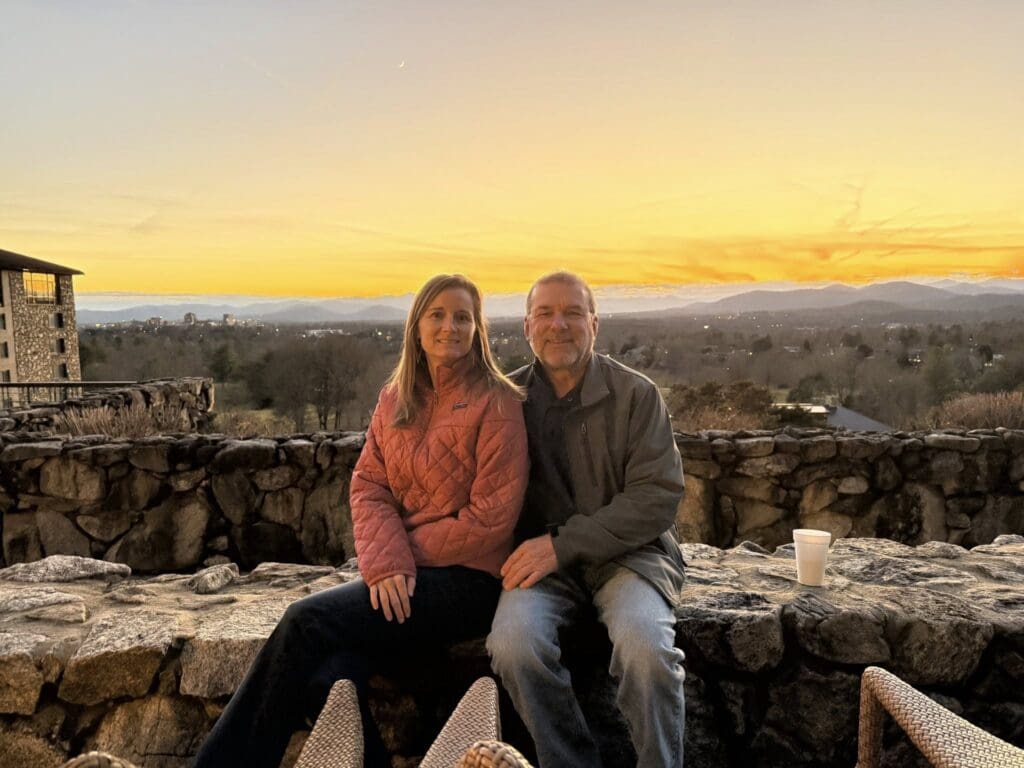

By the time Stott sold the Southeast Gassers, retirement seemed financially secure and logistically possible. He had rental properties, storage buildings, and business interests that provided steady income without requiring him to tow to racetracks every weekend.

Yet those same investments became the very reason he could not slow down.

“So I can’t retire now because of all the investments I made,” Stott said. “Rental properties, car wash, storage buildings. I invested in half … I’m a silent partner in a dredging business.”

That dredging operation unexpectedly placed him at the center of hurricane recovery efforts in North Carolina.

“We did 90% of the cleanup of Lake Lure when this hurricane hit,” Stott said. “So that kept me busy for a little while.”

Instead of reducing his workload, retirement expanded it. Stott found himself juggling business obligations, travel, and a growing list of mechanical projects that filled every available hour.

“So I just have the money now to enjoy life,” Stott said. “But the problem now is I’m a slave to all these toys and some of the businesses I invested in.”

His days now stretch late into the night.

“So I’m busier now, by far more busy now than I was,” he said. “I’m working eight, nine, ten o’clock.”

That schedule includes vacations, business meetings, and long nights in the shop.

“I’ll come back tonight and I’ll work until 10 or 11 o’clock tonight in the shop trying to catch up, get my altered ready,” Stott said.

At the center of that workload is a Fuel Altered project that has quietly become Stott’s next obsession. It checks every box that has defined his career — historical accuracy, mechanical challenge, and personal control.

“It’s been on my bucket list for a long time,” Stott said. “I’ve always been intrigued with Nitro, but I never could make a living with it.”

Practicality always dictated Stott’s racing choices. Running Top Fuel or Funny Car at a national level was never financially realistic while trying to earn a living.

“All my racing, I had to be practical,” he said. “To run a Nitro car, it’s just way too expensive on my budget to make it show a profit.”

Retirement changed that equation.

“Now that I’m retired and I have the money to do it out of my pocket where I don’t have to depend on sponsors,” Stott said, “I said, ‘You know what …’”

What followed was a carefully limited plan — a nostalgia Fuel Altered built to mid-1970s specifications, intentionally restrained to avoid runaway costs.

“When I say nostalgia, I’m keeping it,” Stott said. “I’m shooting for the 1975 era.”

That era matters to Stott not just visually, but philosophically.

“All these Fuel Altered classes they have now is a modern-day Fuel Altered,” he said. “If you remember in what, 1971 or so, NHRA banned the class because they’re so dangerous.”

Stott intends to revisit that moment in time.

“Well, I’m going to be still running one of those that was so dangerous,” he said. “It’s not going to be as fast, but it’s old school.”

There is no formal class for what Stott is building, and that fact sounds familiar to anyone who followed the early days of the Southeast Gassers.

“I’m building this altered with nowhere to race it,” Stott said. “And I have no intention of starting up a Fuel Altered class.”

That declaration is delivered with a knowing pause.

“Exactly,” Stott said when reminded he once said the same thing about gassers. “That’s what I said about the gasser.”

History suggests Stott has a habit of creating solutions when none exist. His affection for time-capsule racing remains unchanged.

“I love going back in history,” he said. “I love building my own time tunnel and that’s what I’m doing.”

That passion became central to his induction into the North Carolina Drag Racing Hall of Fame.

“They said it was what you did with the Southeast Gassers,” Stott said. “To have that and then add to it the fact of what I did to preserve the history of drag racing.”

For now, his Fuel Altered plans are limited to match racing with like-minded competitors running period-correct machinery. Modern cars, he admits, would overwhelm his intentionally restrained setup.

“They’d blow me away,” Stott said.

While the Fuel Altered scratches one itch, Pro Modified unexpectedly reopened another. The call came from Andy Pinkerton, a longtime friend and respected tuner who once worked alongside Stott.

“When he got to needing a driver, he called me,” Stott said.

The opportunity was rooted in friendship, mutual respect, and Stott’s enduring reputation within Pro Modified circles.

“I figured I’m totally forgotten about,” Stott said. “But obviously I haven’t been.”

The arrangement suits Stott perfectly. He will not tune, maintain, or manage the operation. His role is limited to driving — something he rarely experienced earlier in his career.

“All I’m going to do is get in and drive,” Stott said. “Which is something I’ve never been able to do before.”

That shift represents a quiet milestone.

“I feel like I paid my dues to get to do that,” he said.

The contrast between the two projects is not lost on him. While Pro Modified allows him to enjoy driving without responsibility, the Fuel Altered will challenge him in entirely new ways.

“The Fuel Altered tuning is going to be a new thing for me because I’ve never tuned a Nitro,” Stott said. “So I’m going to have a learning curve there.”

Throughout it all, Stott insists he is enjoying racing more now than at any previous point in his career. The difference is autonomy.

“I retired from working,” Stott said. “I’m just not working for money now. I’m working to do what I want to do finally.”

That freedom extends to sponsorship decisions, scheduling, and expectations.

“Now it’s my money,” he said. “I can do it the way I want to do it.”

It also extends to the people sharing the journey. His girlfriend, Heather, has become part of the racing program, embracing the throwback role of backup girl and team member.

“Everything I got is old,” Stott said with a laugh. “Everything I have is old except my girlfriend.”

The humor underscores a deeper truth. Stott understands time is finite, and the window to enjoy these projects is not unlimited.

“I wish I could have started sooner because I’m old now, and I ain’t got a lot of time left,” he said. “So I’m just having a blast.”

Retirement never arrived for Quain Stott. Instead, it simply removed the constraints that once forced him to choose between passion and practicality.

Now, history suggests it is not a matter of if he creates something new in drag racing again — only when.

Share the Insights?

Click here to share the article.

ad space x ad space

ad space x ad space

Competition Plus Team

Since our inception, we have been passionately dedicated to delivering the most accurate, timely, and compelling content in the world of drag racing. Our readers depend on us for the latest news, in-depth features, expert analysis, and exclusive interviews that connect you to the sport’s pulse.

Sign up for our newsletters and email list.

This field is for validation purposes and should be left unchanged.
Name

QUAIN STOTT CAN’T RETIRE FROM DRAG RACING — EVEN WHEN HE TRIES

Quain Stott retired from Pro Modified more than a decade ago with every intention of slowing down, stepping away, and enjoying a quieter life. That plan lasted exactly as long as it took for drag racing to present him with another challenge.

Stott’s first retirement attempt came in 2013, when he parked his Pro Modified car and believed his competitive days were behind him. Instead, he found himself consumed by a new mission that would redefine his legacy far beyond elapsed times and win lights.

The Southeast Gassers Association began as a solution to a personal problem — Stott had built a period-correct gasser and discovered there was nowhere appropriate to race it. What followed was more than a decade of hands-on promotion, rule enforcement, and historical preservation that reshaped grassroots nostalgia drag racing.

For years, Stott ran himself ragged keeping the series authentic, profitable, and viable. By November 2024, after watching the organization mature into one of the most respected nostalgia series in the country, he finally sold it with the hope of easing into retirement.

That hope, he admits now, was wishful thinking.

“It was, and I didn’t realize how much stuff … I guess my toys is what’s got me spending so much time now because I’ve got so many toys and I’ll get into that in a second,” Stott said. “There’s not many people that could say they made a living racing. And the reason I could do it … And I’ll get to a point here, the reason I could do that was I did all my own work.”

Stott’s career was built on self-reliance. He built his own cars, maintained his own equipment, handled light machine work, assembled transmissions and rear ends, and relied heavily on volunteer help rather than paid crews.

“I never had to pay nobody to do nothing,” Stott said. “I had a whole volunteer crew for the most part. I finally did hire a guy on down the road.”

That independence allowed him to race competitively while quietly investing earnings outside the sport. While many assumed Stott was simply racing for survival, he was methodically building a financial foundation.

“So I invested that money wisely,” Stott said. “Nobody knew that I was investing the money the whole time in land. And then when I sold the Southeast Gasser thing, I sold a bunch of that land that just tripled in value from the time I bought it.”

By the time Stott sold the Southeast Gassers, retirement seemed financially secure and logistically possible. He had rental properties, storage buildings, and business interests that provided steady income without requiring him to tow to racetracks every weekend.

Yet those same investments became the very reason he could not slow down.

“So I can’t retire now because of all the investments I made,” Stott said. “Rental properties, car wash, storage buildings. I invested in half … I’m a silent partner in a dredging business.”

That dredging operation unexpectedly placed him at the center of hurricane recovery efforts in North Carolina.

“We did 90% of the cleanup of Lake Lure when this hurricane hit,” Stott said. “So that kept me busy for a little while.”

Instead of reducing his workload, retirement expanded it. Stott found himself juggling business obligations, travel, and a growing list of mechanical projects that filled every available hour.

“So I just have the money now to enjoy life,” Stott said. “But the problem now is I’m a slave to all these toys and some of the businesses I invested in.”

His days now stretch late into the night.

“So I’m busier now, by far more busy now than I was,” he said. “I’m working eight, nine, ten o’clock.”

That schedule includes vacations, business meetings, and long nights in the shop.

“I’ll come back tonight and I’ll work until 10 or 11 o’clock tonight in the shop trying to catch up, get my altered ready,” Stott said.

At the center of that workload is a Fuel Altered project that has quietly become Stott’s next obsession. It checks every box that has defined his career — historical accuracy, mechanical challenge, and personal control.

“It’s been on my bucket list for a long time,” Stott said. “I’ve always been intrigued with Nitro, but I never could make a living with it.”

Practicality always dictated Stott’s racing choices. Running Top Fuel or Funny Car at a national level was never financially realistic while trying to earn a living.

“All my racing, I had to be practical,” he said. “To run a Nitro car, it’s just way too expensive on my budget to make it show a profit.”

Retirement changed that equation.

“Now that I’m retired and I have the money to do it out of my pocket where I don’t have to depend on sponsors,” Stott said, “I said, ‘You know what …’”

What followed was a carefully limited plan — a nostalgia Fuel Altered built to mid-1970s specifications, intentionally restrained to avoid runaway costs.

“When I say nostalgia, I’m keeping it,” Stott said. “I’m shooting for the 1975 era.”

That era matters to Stott not just visually, but philosophically.

“All these Fuel Altered classes they have now is a modern-day Fuel Altered,” he said. “If you remember in what, 1971 or so, NHRA banned the class because they’re so dangerous.”

Stott intends to revisit that moment in time.

“Well, I’m going to be still running one of those that was so dangerous,” he said. “It’s not going to be as fast, but it’s old school.”

There is no formal class for what Stott is building, and that fact sounds familiar to anyone who followed the early days of the Southeast Gassers.

“I’m building this altered with nowhere to race it,” Stott said. “And I have no intention of starting up a Fuel Altered class.”

That declaration is delivered with a knowing pause.

“Exactly,” Stott said when reminded he once said the same thing about gassers. “That’s what I said about the gasser.”

History suggests Stott has a habit of creating solutions when none exist. His affection for time-capsule racing remains unchanged.

“I love going back in history,” he said. “I love building my own time tunnel and that’s what I’m doing.”

That passion became central to his induction into the North Carolina Drag Racing Hall of Fame.

“They said it was what you did with the Southeast Gassers,” Stott said. “To have that and then add to it the fact of what I did to preserve the history of drag racing.”

For now, his Fuel Altered plans are limited to match racing with like-minded competitors running period-correct machinery. Modern cars, he admits, would overwhelm his intentionally restrained setup.

“They’d blow me away,” Stott said.

While the Fuel Altered scratches one itch, Pro Modified unexpectedly reopened another. The call came from Andy Pinkerton, a longtime friend and respected tuner who once worked alongside Stott.

“When he got to needing a driver, he called me,” Stott said.

The opportunity was rooted in friendship, mutual respect, and Stott’s enduring reputation within Pro Modified circles.

“I figured I’m totally forgotten about,” Stott said. “But obviously I haven’t been.”

The arrangement suits Stott perfectly. He will not tune, maintain, or manage the operation. His role is limited to driving — something he rarely experienced earlier in his career.

“All I’m going to do is get in and drive,” Stott said. “Which is something I’ve never been able to do before.”

That shift represents a quiet milestone.

“I feel like I paid my dues to get to do that,” he said.

The contrast between the two projects is not lost on him. While Pro Modified allows him to enjoy driving without responsibility, the Fuel Altered will challenge him in entirely new ways.

“The Fuel Altered tuning is going to be a new thing for me because I’ve never tuned a Nitro,” Stott said. “So I’m going to have a learning curve there.”

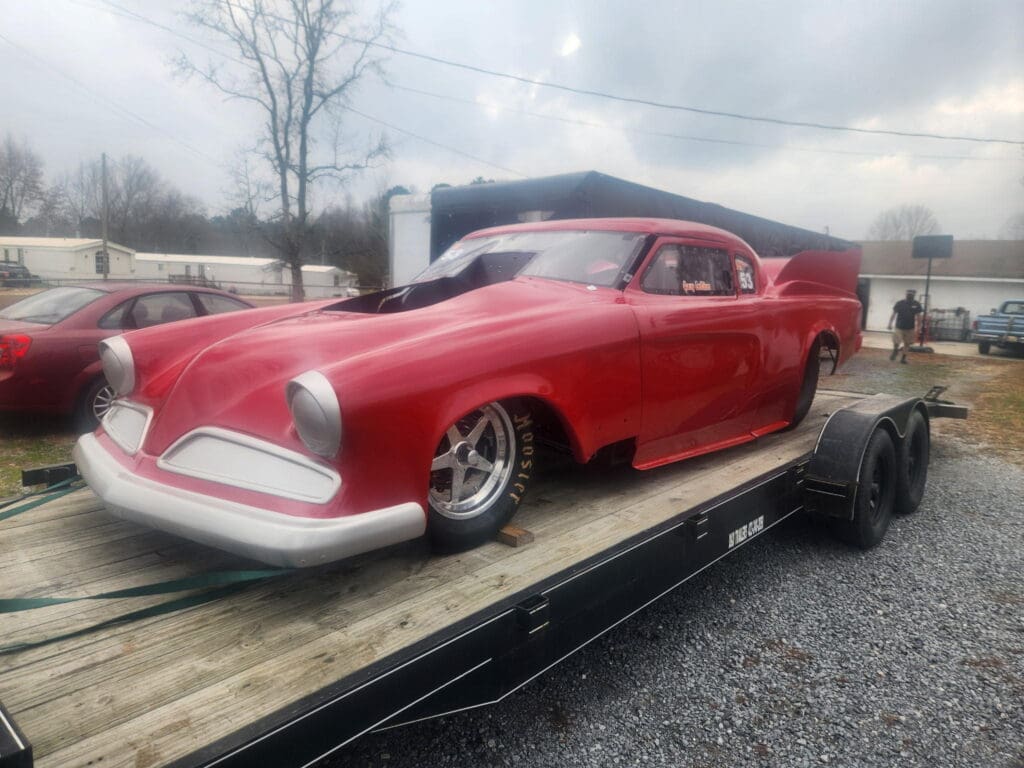
Throughout it all, Stott insists he is enjoying racing more now than at any previous point in his career. The difference is autonomy.

“I retired from working,” Stott said. “I’m just not working for money now. I’m working to do what I want to do finally.”

That freedom extends to sponsorship decisions, scheduling, and expectations.

“Now it’s my money,” he said. “I can do it the way I want to do it.”

It also extends to the people sharing the journey. His girlfriend, Heather, has become part of the racing program, embracing the throwback role of backup girl and team member.

“Everything I got is old,” Stott said with a laugh. “Everything I have is old except my girlfriend.”

The humor underscores a deeper truth. Stott understands time is finite, and the window to enjoy these projects is not unlimited.

“I wish I could have started sooner because I’m old now, and I ain’t got a lot of time left,” he said. “So I’m just having a blast.”

Retirement never arrived for Quain Stott. Instead, it simply removed the constraints that once forced him to choose between passion and practicality.

Now, history suggests it is not a matter of if he creates something new in drag racing again — only when.


Picture of John Doe

John Doe

Lorem ipsum dolor sit amet consectetur adipiscing elit dolor

More Posts

Send Us A Message

Picture of Bobby Bennett
Bobby Bennett
Thank you for joining us on this journey. Your support and trust inspire us every day to deliver the best in drag racing journalism. We are excited about the future and look forward to continuing to serve you with the same dedication and passion that has defined CompetitionPlus.com from the very beginning.

Don’t miss these other exciting stories!

Explore more action packed posts on Competition Plus, where we dive into the latest in Drag Racing News. Discover a range of topics, from race coverage to in-depth interviews, to keep you informed and entertained.