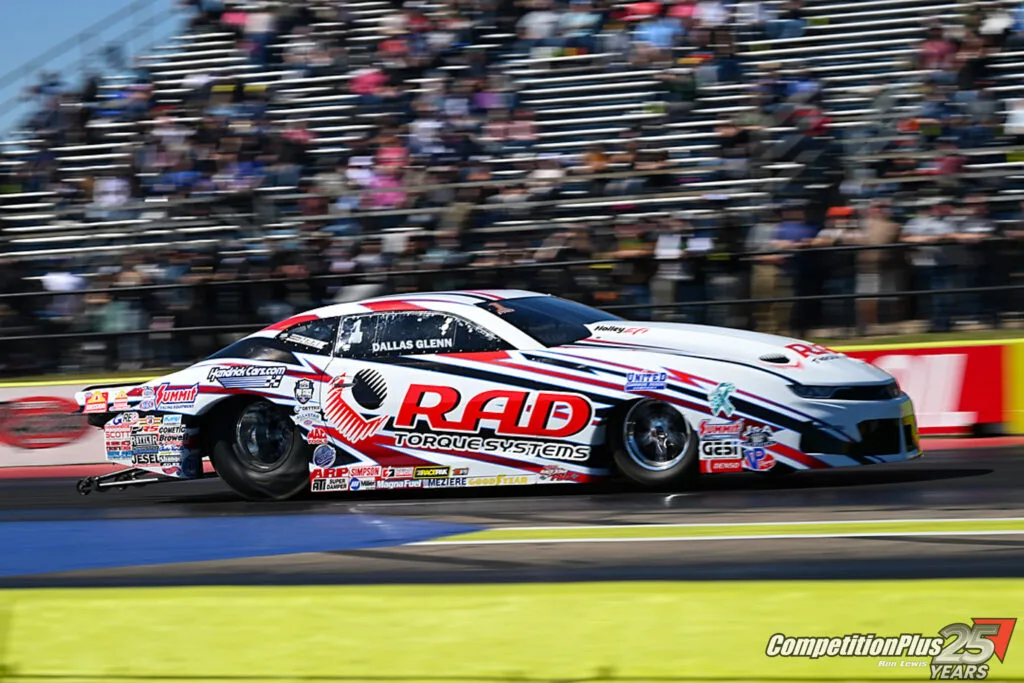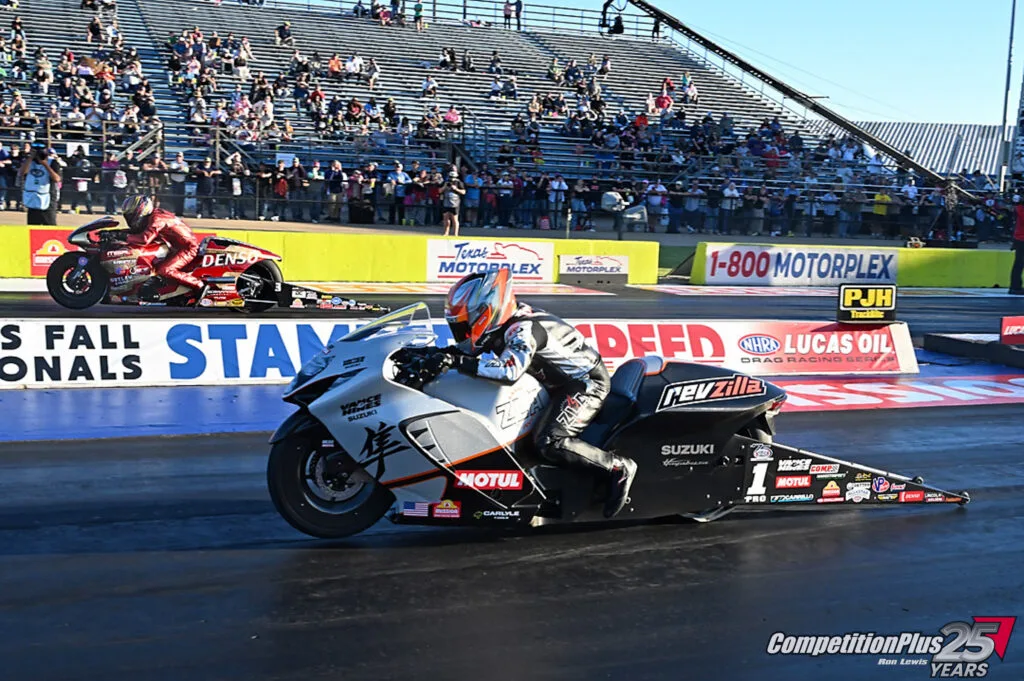


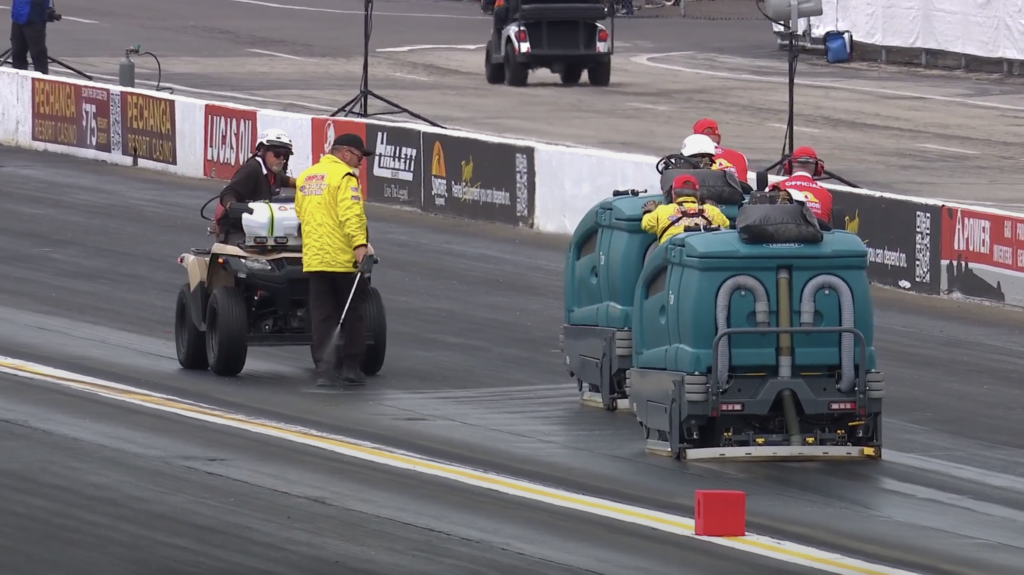
It is the situation no race fan or racer wants to see in modern nitro racing. What looks like a routine oil-down quickly becomes a stalled show, a line of race cars headed back to the pits, and cleanup crews trying to remove gear oil that does not come up easily.

For the grandstands, it is frustration. For NHRA, it is lost momentum. For teams and manufacturers, it is far worse, because a rear-end failure in Top Fuel or Funny Car usually means wrecked parts, lost rounds, and another reminder that these cars never stop testing the limits of what is under them.

Second-generation driveline manufacturer Jeff Stange knows the feeling every time one comes apart. Whether the failed unit came from his company or somewhere else, the aftermath is the same: delays, damage, criticism, and teams trying to calculate what the next few hours will cost.

What Stange also knows is the problem is not simple. There is no magic bad part, no one-button fix, and no easy answer that can be installed before next weekend.

“The problem with Fuel rear ends in general or that class is there’s no other application that you can test in,” Stange said. “We’ve done mechanical tests and we can load it and we can go to the lab and set up some fixtures and try to figure out deflection. That’s all great, but you really can’t test it until you put it in those cars.”

That is the first reality check. These parts do not live on paper. They live in race cars trying to make a four-second pass while applying forces few other machines ever see.

Stange said much of the punishment comes not at launch, but when the clutch comes in hard and shocks the driveline.

“And most of the abuse, in my opinion, on the rear end is when the clutch comes to lock up,” Stange said. “So let’s just say that you have X amount of foot pounds of torque and then all of a sudden the rear end sees a spike, and that spike usually exceeds 10,000 foot pounds of torque in an instant.”

That load is not spread across a dozen happy contact points. Stange said in many combinations, fewer than two teeth are effectively carrying that force at a given moment.

“We never know where that cliff is,” Stange said. “So our philosophy is always to build stuff to get as far away from a cliff as we can without making it heavy.”

That last part matters. If teams could simply install massive steel parts and solve everything with weight, they would. But weight slows race cars, and nobody in nitro racing is interested in slower.
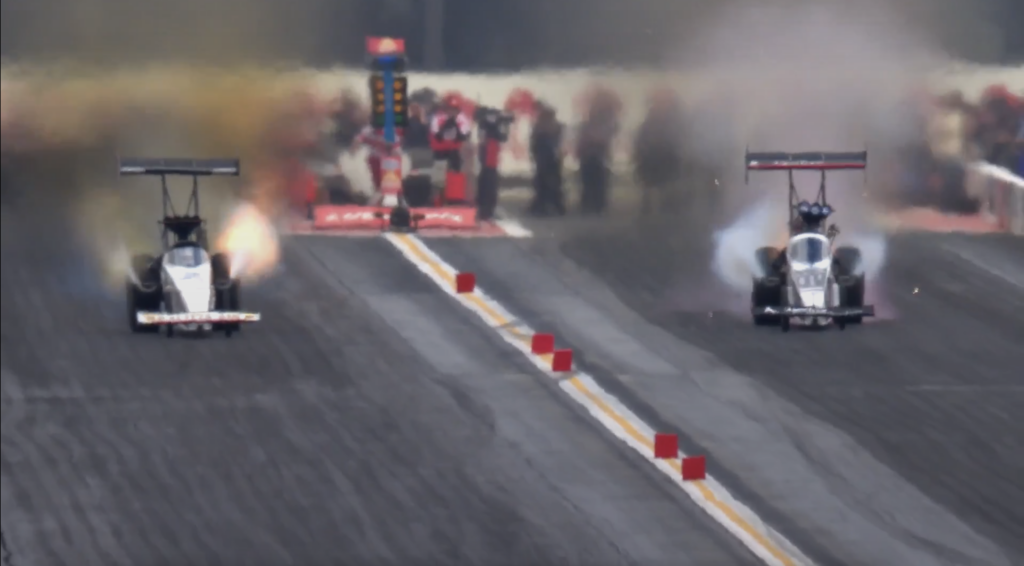
Crew chief Bobby Lagana said many in the pits saw warning signs before the issue became headline material in 2024.

“It was creeping up on us slow and then it just supercharged in 2024,” Lagana said. “The handwriting was on the wall in ’23 or so. US Gear had stopped manufacturing gears and it was hard to keep up. It was a period where gears were short in inventory also.”

That shortage mattered because teams needed fresh parts while performance kept climbing.

“As evidenced by the speeds, everybody’s making more power and the cars are heavier, the cars are stiffer,” Lagana said. “Whether that truly plays a role, I couldn’t tell you for sure, but all of that kind of adds up to taxing the driveline components a little more.”

That is racer-speak for a hard truth: nobody was slowing down to protect parts.

Lagana said his team learned the lesson the expensive way. A low-run-count rear end failed unexpectedly, then more failures followed.

“We ended up breaking three rear ends total in our possession, and it crippled us bad,” Lagana said. “So it was hard on the guys. It’s hard on the team owners. It’s hard on the fans, hard on the race, the NHRA, the Safety Safari.”

Crippled is the right word.

Rear-end failures are not like blowing the blower off the engine, where crews often know the repair list before the car stops rolling. A destroyed rear end can damage multiple systems and hide problems until teardown begins.

“You hate to say you’re prepared to blow the blower off the car,” Lagana said. “When you completely annihilate a rear end, you don’t really know what’s in store, you don’t know what the damage is, you don’t know what’s lurking.”

That uncertainty costs teams time, inventory, and sleep.

Lagana did not soften what it cost competitively. One failure in the Indianapolis final still stings.

“I’ll be honest with you, we broke one in the final at Indy and we were going to win that race,” Lagana said.

Other failures wiped out bonus-round chances and major-event opportunities.

“Those two breakages cost us a taco shootout, a mission shootout, Q4 win, and it cost us a US Nationals win,” Lagana said.

Then came the financial punch.

“So just in loss of income of the wins, you’re talking close to 90 grand,” Lagana said. “And now when you include the damaged parts, the after effects of when the rear end breaks and the motor revs up, it probably cost us quarter million dollars, just those two rear ends alone.”

Quarter-million-dollar mistakes get attention fast.

The standings took a hit, too.

“We also, by losing those rounds, and we also got penalized points, which is a tough thing to stomach because ours was a brand new part,” Lagana said. “It actually cost us three spots entering the countdown.”

Fans see dryers and delays. Teams see points, checks, and inventory disappearing in real time.

“So just a lot of sleepless nights and sick to your stomach moments over just watching the rear ends break,” Lagana said.

That is the human side of a mechanical issue.

Stange knows the public often blames the visible broken gear because it is easy to understand. He said that can miss the real cause.

“I know people are focused on the ring and pinion, but that’s just part of the equation,” Stange said. “It gets to focus because if they see a failure, they see that.”

He said bearings, support structure, housing flex, alignment, and driveline setup all matter. Sometimes the broken gear is the casualty, not the culprit.

“It’s easy to focus in on that, but you also have bearings that are under load, you have set up, you also have a drive line that needs to be right as well,” Stange said.

That is why companies supplying this class have attacked the issue on several fronts.

Stange said a larger 12.75-inch billet live-axle rear end was finalized in 2025 after development began in early 2024. The package uses a fully billet center case, billet spool, side bearings, billet cover, and new billet tubes.

“We introduced a new larger 12.75-inch billet Live Axle in 2025,” Stange said. “It is significantly stronger and stiffer, but is not as light as our existing 12.25-inch platform.”

He said the larger platform creates room to strengthen supporting components while allowing engineers to design without the limitations that come with castings.

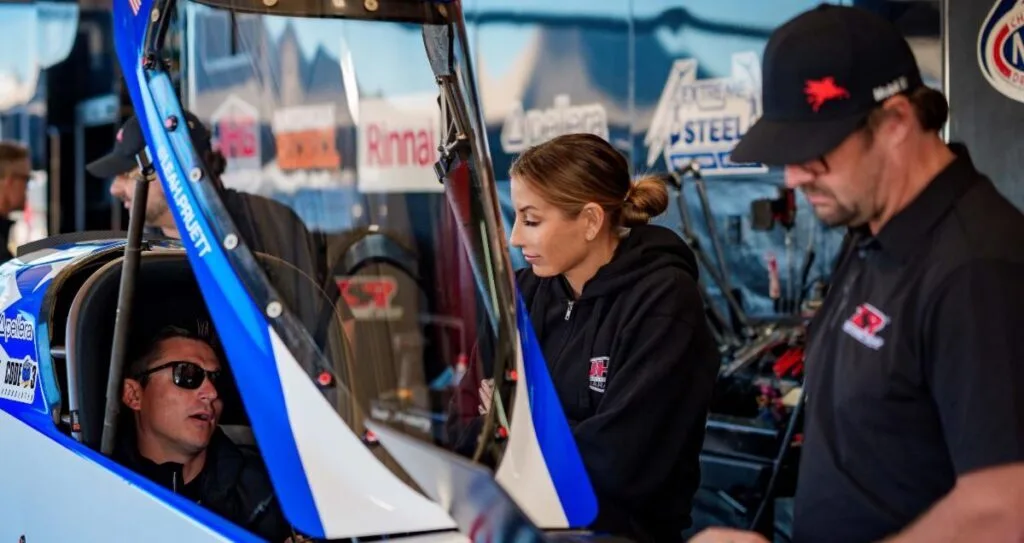
The new rear end has already seen race punishment. Stange said Tony Stewart began using the package in Las Vegas last season, while Leah Pruett has run it throughout the current season, including preseason testing.
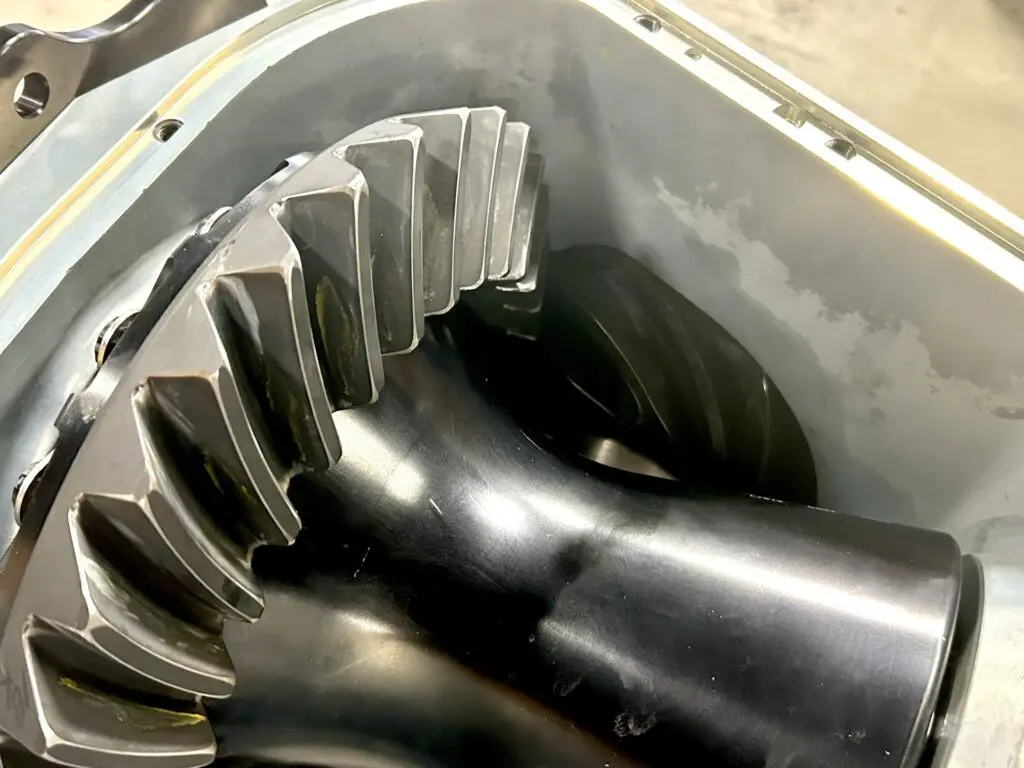
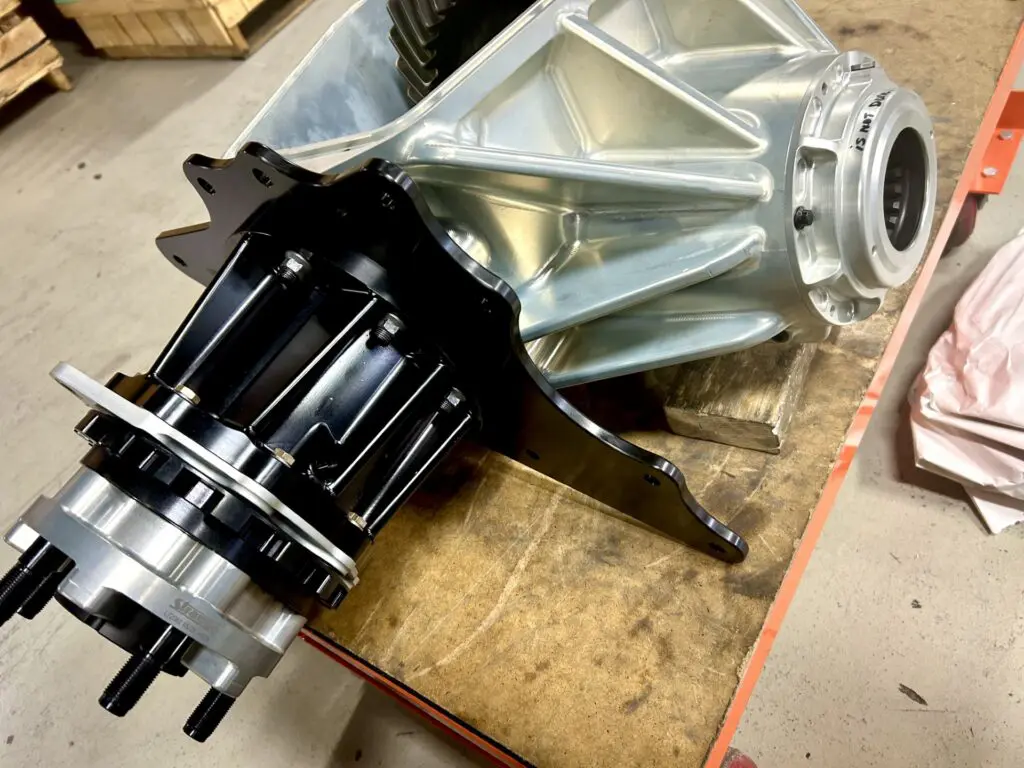
Strange Engineering’s new 12.75-inch billet Live Axle rear end, finalized in 2025, was built as the next step in nitro racing’s constant horsepower arms race. Stronger and stiffer than the current 12.25-inch platform, the all-billet design features a new center case, spool, side bearings, cover, and tubes, while giving engineers more room to strengthen critical components. Already tested under the demands of Tony Stewart and used all season by Leah Pruett, the 12.75 package represents the next chapter in a drivetrain evolution that has continued since the 1960s.

The existing 12.25-inch platform has not been shelved.

Stange said development has continued in parallel with the 12.75 program, including a new generation gear set produced in the United States.

“We spent well over a hundred grand developing 12 1/4 gears domestically,” Stange said. “We are doing everything to our spec to try to get the best gear possible in that class.”

He said five Top Fuel teams, including some of the most abusive combinations in the class, have been using the new package since preseason Gainesville testing in 2026.

“The new generation 12.25 gear set is made in the USA by us,” Stange said. “They have been impressive through Pomona.”

Another production run is scheduled for mid-June, with pre-orders already in place. Stange added that work also continues with Richmond Gear on a new Italian-built option expected later in June.

That kind of development is slow and expensive. A gear set must be designed, built, raced, inspected, revised, and built again. If version one cracks after a handful of events, months are gone.

“By the time we get a gear and we test it … we’ve just lost a half a season,” Stange said.

That is why instant solutions rarely exist in this category.

There is another factor many fans never consider: time of year.

Stange said the first few races and final races of the season can punish rear ends harder than hot summer events because cooler, tighter race tracks allow teams to lean harder on the combination.

“No matter what anybody says, the first three or four races are tremendously worse on a rear end than the middle summer month,” Stange said.

That means a component can look healthy in June and get tortured in Gainesville, Pomona, or the Countdown stretch.

Track prep enters the conversation there, too. Better surfaces mean more grip. More grip can mean more load when the clutch applies power.

Stange stopped short of blaming any one factor because he has watched this cycle for decades.

“So when you say, ‘Have they exceeded the parts?’ They always exceed the parts,” Stange said. “They have since the ’70s, ’60s. And we’re always able to, as a group, kind of adapt to meet that where they’re at.”

That may be the most honest sentence in the entire debate.

Nitro racing has always broken parts. The names change. The price tags grow. The pattern remains the same.

Go faster. Find the weak link. Fix it. Repeat.

Stange said history shows the same pattern repeatedly. A few elite Top Fuel teams usually find the next limit first, then the rest of the class follows before Funny Car combinations eventually catch up.

He traced that progression from Dana 60 units in the early 1970s through 9-inch, 9.5-inch, 10-inch, 10.50-inch, 12-inch, and 12.25-inch combinations.

“We are now ready for 12.75,” Stange said.

Every platform gets pushed through years of upgrades until the sport needs a larger envelope to work with.

“As one of my mentors, Austin Coil, would tell me after we exhausted all options and improvements for a given platform, ‘Mass will save your ass,’” Stange said.

There is also more cooperation here than many realize.

Stange said rival manufacturers talk, compare notes, and help each other because nobody wants to be linked to messy delays or dangerous failures.

“There are no real trade secrets between us because we’re just trying to make our products better and safer,” Stange said.

Lagana made the same point from the team side. He praised suppliers for staying in a niche market that demands constant development and offers limited reward.

“I really commend Jeff,” Lagana said. “Jeff has put a lot of hard work into this. Jeff and his dad, Bob, and they’ve kept Nitro Racing going forever.”

That appreciation is rooted in business reality. Fuel rear-end work is a small slice of the larger aftermarket world.

“For us, honestly, it’s less than 1.5% of my business,” Stange said. “But for us, we do it out of passion.”

Passion is often the hidden fuel in drag racing. It keeps teams rebuilding after midnight, suppliers chasing better answers, and racers willing to trust the next run.

“For us, and I’m sure Steve [Chrisman], when we see those issues, it really turns our stomach,” Stange said. “We do try to work with NHRA and everybody.”

Share the Insights?

Click here to share the article.

ad space x ad space

ad space x ad space

Competition Plus Team

Since our inception, we have been passionately dedicated to delivering the most accurate, timely, and compelling content in the world of drag racing. Our readers depend on us for the latest news, in-depth features, expert analysis, and exclusive interviews that connect you to the sport’s pulse.

Sign up for our newsletters and email list.

This field is for validation purposes and should be left unchanged.
Name

REAR-END REALITY: NITRO RACING FOUND THE NEXT WEAK LINK

It is the situation no race fan or racer wants to see in modern nitro racing. What looks like a routine oil-down quickly becomes a stalled show, a line of race cars headed back to the pits, and cleanup crews trying to remove gear oil that does not come up easily.

For the grandstands, it is frustration. For NHRA, it is lost momentum. For teams and manufacturers, it is far worse, because a rear-end failure in Top Fuel or Funny Car usually means wrecked parts, lost rounds, and another reminder that these cars never stop testing the limits of what is under them.

Second-generation driveline manufacturer Jeff Stange knows the feeling every time one comes apart. Whether the failed unit came from his company or somewhere else, the aftermath is the same: delays, damage, criticism, and teams trying to calculate what the next few hours will cost.

What Stange also knows is the problem is not simple. There is no magic bad part, no one-button fix, and no easy answer that can be installed before next weekend.

“The problem with Fuel rear ends in general or that class is there’s no other application that you can test in,” Stange said. “We’ve done mechanical tests and we can load it and we can go to the lab and set up some fixtures and try to figure out deflection. That’s all great, but you really can’t test it until you put it in those cars.”

That is the first reality check. These parts do not live on paper. They live in race cars trying to make a four-second pass while applying forces few other machines ever see.

Stange said much of the punishment comes not at launch, but when the clutch comes in hard and shocks the driveline.

“And most of the abuse, in my opinion, on the rear end is when the clutch comes to lock up,” Stange said. “So let’s just say that you have X amount of foot pounds of torque and then all of a sudden the rear end sees a spike, and that spike usually exceeds 10,000 foot pounds of torque in an instant.”

That load is not spread across a dozen happy contact points. Stange said in many combinations, fewer than two teeth are effectively carrying that force at a given moment.

“We never know where that cliff is,” Stange said. “So our philosophy is always to build stuff to get as far away from a cliff as we can without making it heavy.”

That last part matters. If teams could simply install massive steel parts and solve everything with weight, they would. But weight slows race cars, and nobody in nitro racing is interested in slower.

Crew chief Bobby Lagana said many in the pits saw warning signs before the issue became headline material in 2024.

“It was creeping up on us slow and then it just supercharged in 2024,” Lagana said. “The handwriting was on the wall in ’23 or so. US Gear had stopped manufacturing gears and it was hard to keep up. It was a period where gears were short in inventory also.”

That shortage mattered because teams needed fresh parts while performance kept climbing.

“As evidenced by the speeds, everybody’s making more power and the cars are heavier, the cars are stiffer,” Lagana said. “Whether that truly plays a role, I couldn’t tell you for sure, but all of that kind of adds up to taxing the driveline components a little more.”

That is racer-speak for a hard truth: nobody was slowing down to protect parts.

Lagana said his team learned the lesson the expensive way. A low-run-count rear end failed unexpectedly, then more failures followed.

“We ended up breaking three rear ends total in our possession, and it crippled us bad,” Lagana said. “So it was hard on the guys. It’s hard on the team owners. It’s hard on the fans, hard on the race, the NHRA, the Safety Safari.”

Crippled is the right word.

Rear-end failures are not like blowing the blower off the engine, where crews often know the repair list before the car stops rolling. A destroyed rear end can damage multiple systems and hide problems until teardown begins.

“You hate to say you’re prepared to blow the blower off the car,” Lagana said. “When you completely annihilate a rear end, you don’t really know what’s in store, you don’t know what the damage is, you don’t know what’s lurking.”

That uncertainty costs teams time, inventory, and sleep.

Lagana did not soften what it cost competitively. One failure in the Indianapolis final still stings.

“I’ll be honest with you, we broke one in the final at Indy and we were going to win that race,” Lagana said.

Other failures wiped out bonus-round chances and major-event opportunities.

“Those two breakages cost us a taco shootout, a mission shootout, Q4 win, and it cost us a US Nationals win,” Lagana said.

Then came the financial punch.

“So just in loss of income of the wins, you’re talking close to 90 grand,” Lagana said. “And now when you include the damaged parts, the after effects of when the rear end breaks and the motor revs up, it probably cost us quarter million dollars, just those two rear ends alone.”

Quarter-million-dollar mistakes get attention fast.

The standings took a hit, too.

“We also, by losing those rounds, and we also got penalized points, which is a tough thing to stomach because ours was a brand new part,” Lagana said. “It actually cost us three spots entering the countdown.”

Fans see dryers and delays. Teams see points, checks, and inventory disappearing in real time.

“So just a lot of sleepless nights and sick to your stomach moments over just watching the rear ends break,” Lagana said.

That is the human side of a mechanical issue.

Stange knows the public often blames the visible broken gear because it is easy to understand. He said that can miss the real cause.

“I know people are focused on the ring and pinion, but that’s just part of the equation,” Stange said. “It gets to focus because if they see a failure, they see that.”

He said bearings, support structure, housing flex, alignment, and driveline setup all matter. Sometimes the broken gear is the casualty, not the culprit.

“It’s easy to focus in on that, but you also have bearings that are under load, you have set up, you also have a drive line that needs to be right as well,” Stange said.

That is why companies supplying this class have attacked the issue on several fronts.

Stange said a larger 12.75-inch billet live-axle rear end was finalized in 2025 after development began in early 2024. The package uses a fully billet center case, billet spool, side bearings, billet cover, and new billet tubes.

“We introduced a new larger 12.75-inch billet Live Axle in 2025,” Stange said. “It is significantly stronger and stiffer, but is not as light as our existing 12.25-inch platform.”

He said the larger platform creates room to strengthen supporting components while allowing engineers to design without the limitations that come with castings.

The new rear end has already seen race punishment. Stange said Tony Stewart began using the package in Las Vegas last season, while Leah Pruett has run it throughout the current season, including preseason testing.

Strange Engineering’s new 12.75-inch billet Live Axle rear end, finalized in 2025, was built as the next step in nitro racing’s constant horsepower arms race. Stronger and stiffer than the current 12.25-inch platform, the all-billet design features a new center case, spool, side bearings, cover, and tubes, while giving engineers more room to strengthen critical components. Already tested under the demands of Tony Stewart and used all season by Leah Pruett, the 12.75 package represents the next chapter in a drivetrain evolution that has continued since the 1960s.

The existing 12.25-inch platform has not been shelved.

Stange said development has continued in parallel with the 12.75 program, including a new generation gear set produced in the United States.

“We spent well over a hundred grand developing 12 1/4 gears domestically,” Stange said. “We are doing everything to our spec to try to get the best gear possible in that class.”

He said five Top Fuel teams, including some of the most abusive combinations in the class, have been using the new package since preseason Gainesville testing in 2026.

“The new generation 12.25 gear set is made in the USA by us,” Stange said. “They have been impressive through Pomona.”

Another production run is scheduled for mid-June, with pre-orders already in place. Stange added that work also continues with Richmond Gear on a new Italian-built option expected later in June.

That kind of development is slow and expensive. A gear set must be designed, built, raced, inspected, revised, and built again. If version one cracks after a handful of events, months are gone.

“By the time we get a gear and we test it … we’ve just lost a half a season,” Stange said.

That is why instant solutions rarely exist in this category.
There is another factor many fans never consider: time of year.

Stange said the first few races and final races of the season can punish rear ends harder than hot summer events because cooler, tighter race tracks allow teams to lean harder on the combination.

“No matter what anybody says, the first three or four races are tremendously worse on a rear end than the middle summer month,” Stange said.

That means a component can look healthy in June and get tortured in Gainesville, Pomona, or the Countdown stretch.

Track prep enters the conversation there, too. Better surfaces mean more grip. More grip can mean more load when the clutch applies power.

Stange stopped short of blaming any one factor because he has watched this cycle for decades.

“So when you say, ‘Have they exceeded the parts?’ They always exceed the parts,” Stange said. “They have since the ’70s, ’60s. And we’re always able to, as a group, kind of adapt to meet that where they’re at.”

That may be the most honest sentence in the entire debate.

Nitro racing has always broken parts. The names change. The price tags grow. The pattern remains the same.

Go faster. Find the weak link. Fix it. Repeat.
Stange said history shows the same pattern repeatedly. A few elite Top Fuel teams usually find the next limit first, then the rest of the class follows before Funny Car combinations eventually catch up.

He traced that progression from Dana 60 units in the early 1970s through 9-inch, 9.5-inch, 10-inch, 10.50-inch, 12-inch, and 12.25-inch combinations.

“We are now ready for 12.75,” Stange said.

Every platform gets pushed through years of upgrades until the sport needs a larger envelope to work with.

“As one of my mentors, Austin Coil, would tell me after we exhausted all options and improvements for a given platform, ‘Mass will save your ass,’” Stange said.

There is also more cooperation here than many realize.

Stange said rival manufacturers talk, compare notes, and help each other because nobody wants to be linked to messy delays or dangerous failures.

“There are no real trade secrets between us because we’re just trying to make our products better and safer,” Stange said.

Lagana made the same point from the team side. He praised suppliers for staying in a niche market that demands constant development and offers limited reward.

“I really commend Jeff,” Lagana said. “Jeff has put a lot of hard work into this. Jeff and his dad, Bob, and they’ve kept Nitro Racing going forever.”

That appreciation is rooted in business reality. Fuel rear-end work is a small slice of the larger aftermarket world.

“For us, honestly, it’s less than 1.5% of my business,” Stange said. “But for us, we do it out of passion.”

Passion is often the hidden fuel in drag racing. It keeps teams rebuilding after midnight, suppliers chasing better answers, and racers willing to trust the next run.

“For us, and I’m sure Steve [Chrisman], when we see those issues, it really turns our stomach,” Stange said. “We do try to work with NHRA and everybody.”


Picture of John Doe

John Doe

Lorem ipsum dolor sit amet consectetur adipiscing elit dolor

More Posts

Send Us A Message

Picture of Bobby Bennett
Bobby Bennett
Thank you for joining us on this journey. Your support and trust inspire us every day to deliver the best in drag racing journalism. We are excited about the future and look forward to continuing to serve you with the same dedication and passion that has defined CompetitionPlus.com from the very beginning.

Don’t miss these other exciting stories!

Explore more action packed posts on Competition Plus, where we dive into the latest in Drag Racing News. Discover a range of topics, from race coverage to in-depth interviews, to keep you informed and entertained.