It was 1965 when my photographic journey in drag racing truly began. I had been going to races in 1963 and 1964, but 1965 was different because I finally had a 35mm camera and the chance to get up close to the cars.
At the time, most events in Northern California were run during the day. That worked fine for me because I was still learning the basics and trying to understand how to make a photograph count.
My first real night race came later that year at Fontana. I was already in Southern California for the Hot Rod Magazine event at Riverside, and Fontana ran Saturday night, which opened the door to a completely different world.
The colors, the sounds, and the smells hit all at once. For a 17-year-old kid from Northern California, it was overwhelming in the best way possible.
I didn’t have a photo pass that night, so I watched from the stands. Even then, I remember thinking no wonder night racing had such a hold on Southern California fans.
What I didn’t know was that things were about to change back home. In 1966, Fremont Raceway made the move to night racing during the summer months.
That created a problem for me. I was still trying to figure out daylight photography, and now I had to learn how to shoot race cars in the dark.
It came down to a simple choice. Learn or go get a job at the new GM plant in Fremont.
Money was tight, so there were no expensive strobes like the Southern California photographers used. I relied on a $10 fan flash and a supply of flash bulbs, and I started learning how to use whatever light I could find.
Available light became an art form. I began to understand that night photography wasn’t just about exposure, it was about feel.
Like anything else, it was trial and error. I worked to develop a style that captured what drag racing looked like and what it felt like under the lights.
Black-and-white film was the starting point. The goal was to master it at night before moving on to color, which was more expensive and less forgiving.
I learned from other photographers along the way. Ted Stewart explained how to “push” film and how higher ASA could work in low light.
Using the right developer mattered just as much as what happened at the track. Panning with a slower shutter speed became essential to capture motion.
And no, there was no motor drive. It was all single-shot photography.
It was one frame at a time, which meant every shot had to count.
Color photography at night brought a new challenge. Jere Alhadeff helped me understand how to push color slide film and make it work under the lights.
From there, it became about experimenting. Different lenses, different light sources, and different approaches all came into play.
To me, it was like painting. The cars were the subject, and the film was the canvas.
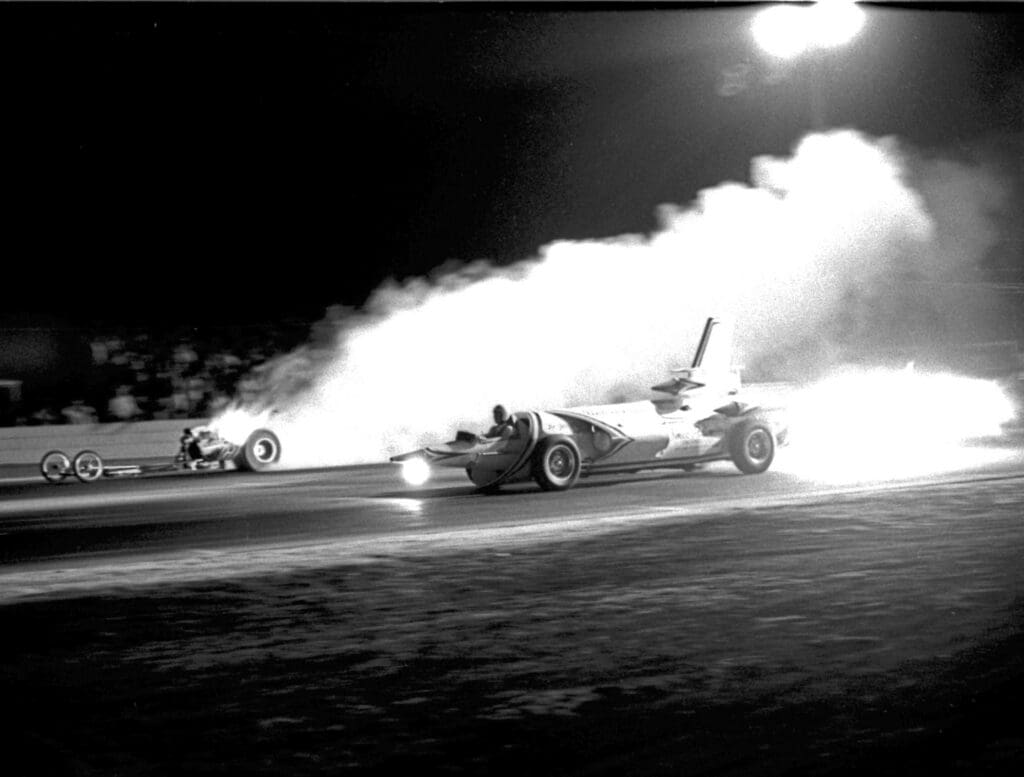
JD Zink vs. John Edmunds – Fremont, 1966
One of the hardest drag racing subjects to photograph at night were jet cars. Compensating for the light coming from the afterburner was tricky. If I got the balance right, then it would look like this photo I took in 1966 at Fremont. No flash, handheld pan photo of JD Zink driving the “Untouchable” jet car vs John “The Black Knight” Edmunds driving the Waters & Edmunds AA/FD. Now every night at Fremont was a learning experience.
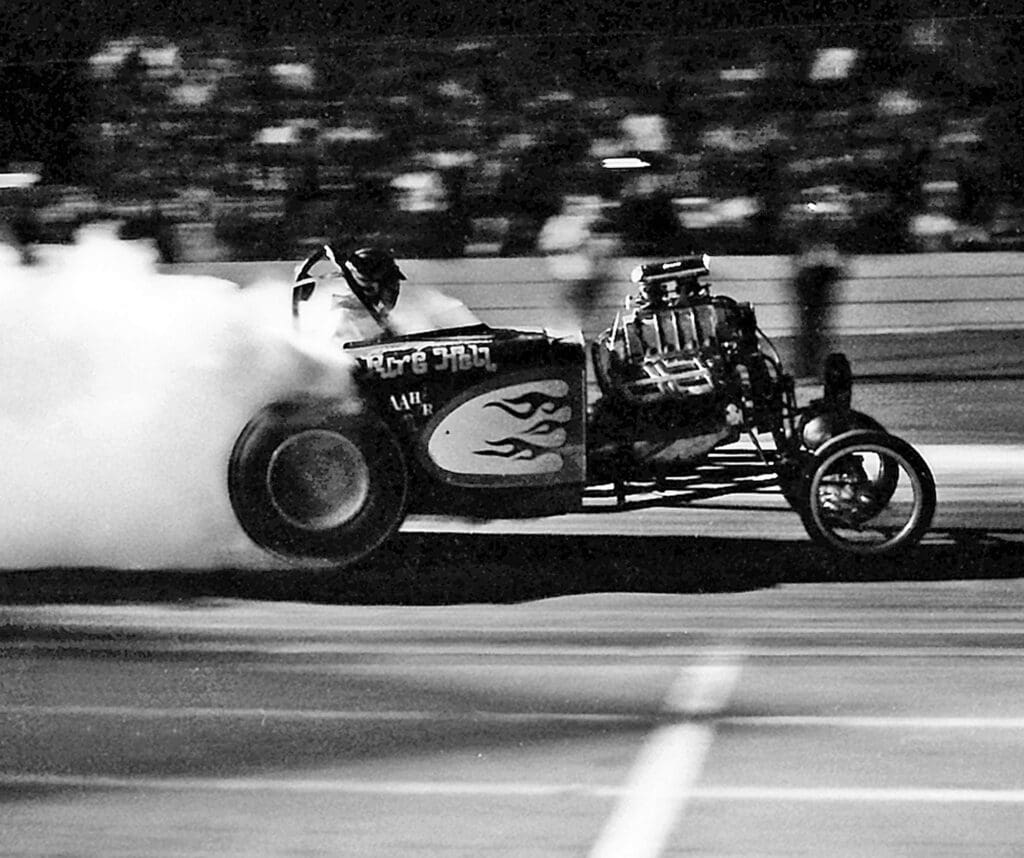
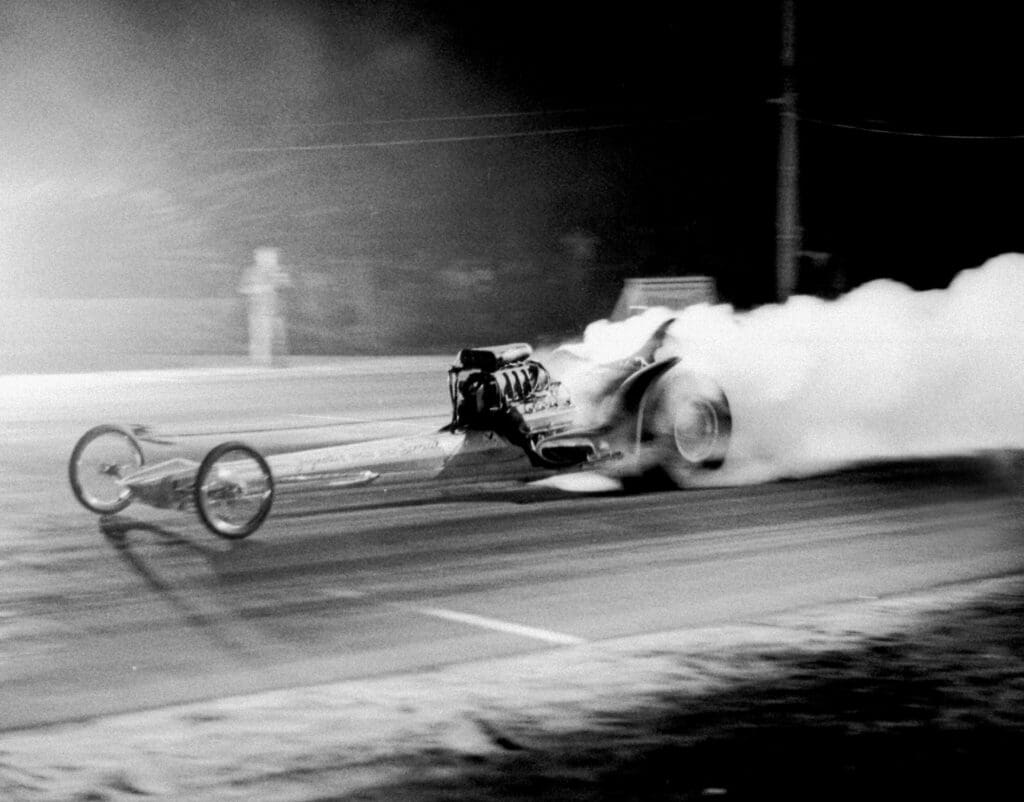
Dale Emery – “Pure Hell” AA/FA, 1966
This photo of Dale “The Snail” Emery in Rich Guasco’s “Pure Hell” AA/FA has a nice feel to it. It also was taken in 1966 when I’d just started to learn about the limits of B&W films at night.
Don Tognotti – “Bushwacker” AA/FD, 1966
I got lucky on this photo because of another light source highlighting the car from the other side of the racetrack. Again, this was shot at Fremont in 1966. The subject was Don Tognotti’s “Bushwacker” AA/FD with Jack “Mosquito” Martin at the controls.
Gary Ormsby – “Cheetah” AA/FD
No tripod here, handheld up close and personal of Gary Ormsby driving the “Cheetah” AA/FD at Fremont. I liked the way the flames exited the headers and how they reflected off Gary’s goggles. Yeah, it was loud shooting this but worth it.
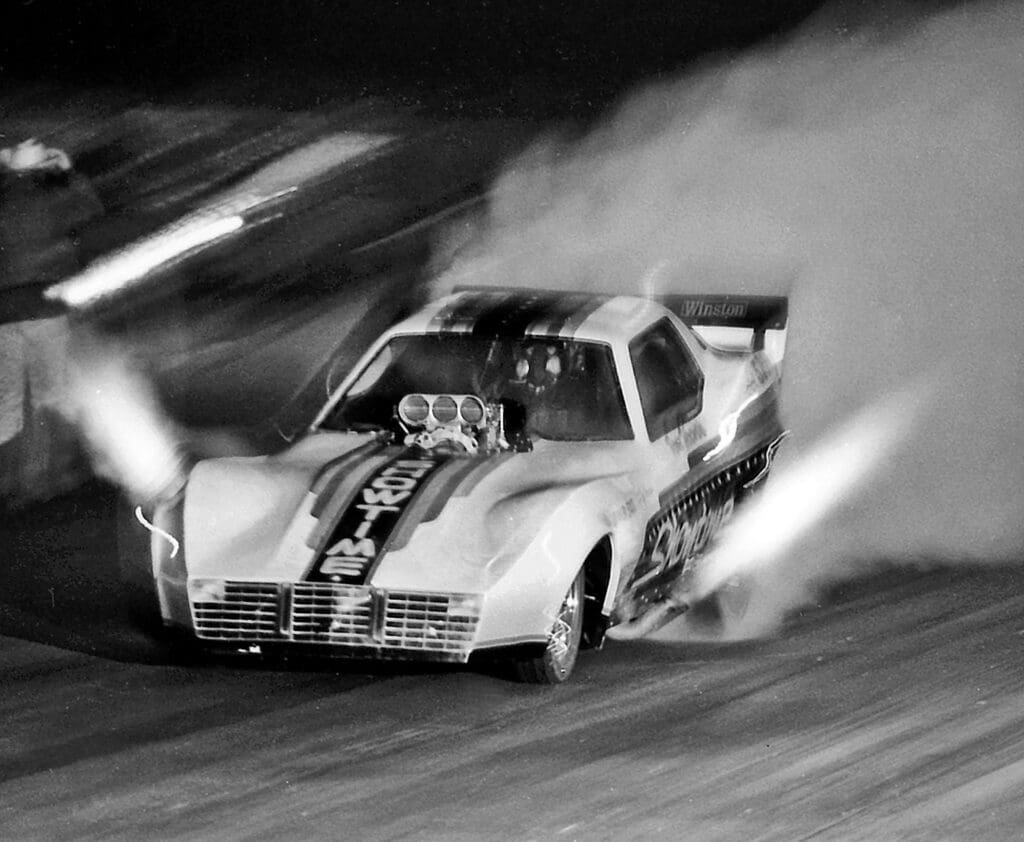
Tom Hoover – “Showtime” Corvette AA/FC, OCIR 1982
Playing with a telephoto lens and a flash produced this image of Tom Hoover driving his “Showtime” Corvette AA/FC at OCIR in 1982. Of course, we’re talking about the balance of film speed, shutter speed and strobe light for the correct results, all those were done manually, no handheld computers like the new cameras available.
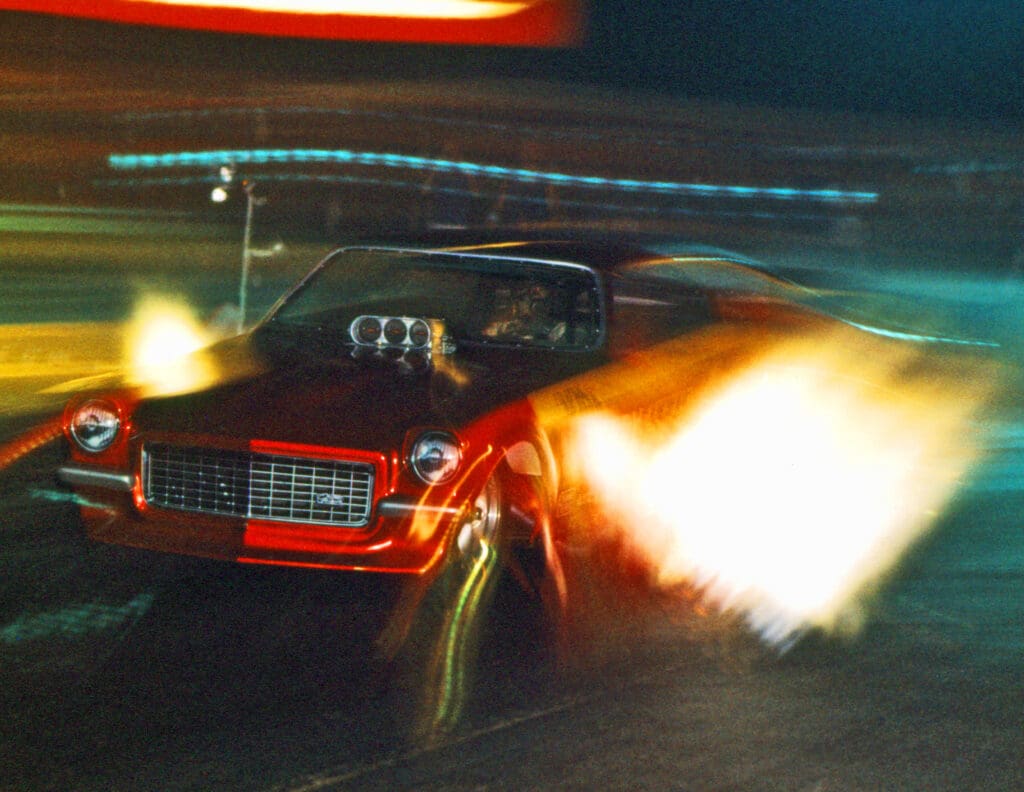
Jim Dunn – Dunn & Reath AA/FC, OCIR 1972
Something different is what I was getting back in 1972. And you couldn’t get any more different than this image of Jim Dunn driving the Dunn & Reath AA/FC at OCIR. Color at night could be very difficult but very rewarding if done right.
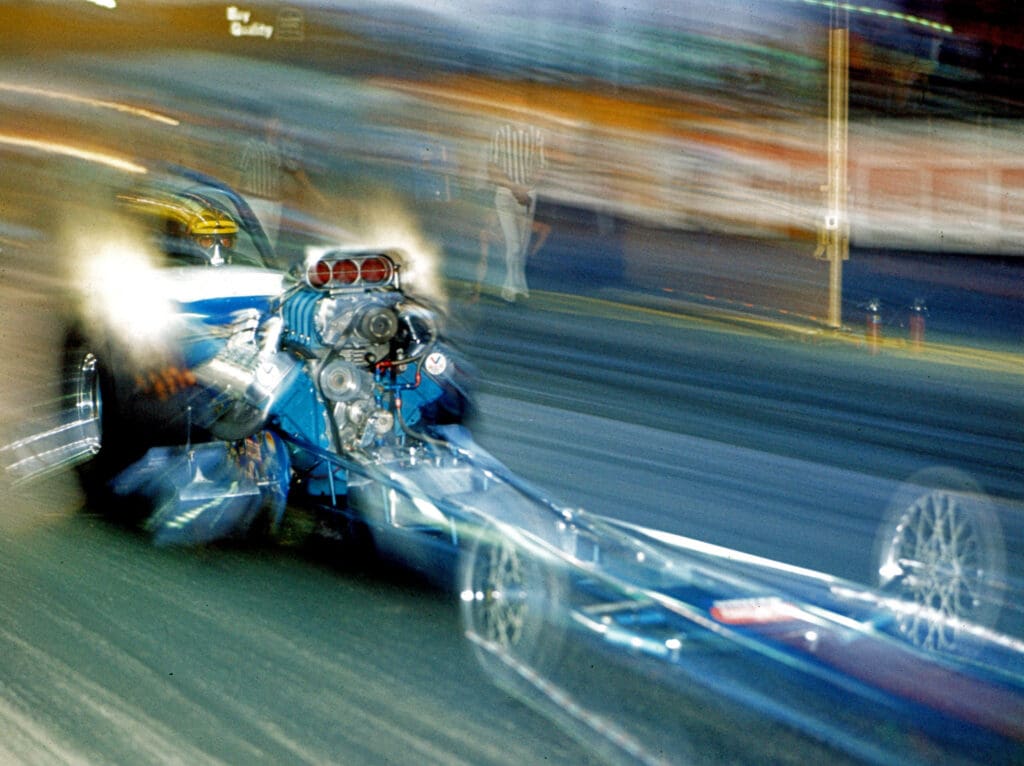
Norm Reis – AA/FD, Lions 1971
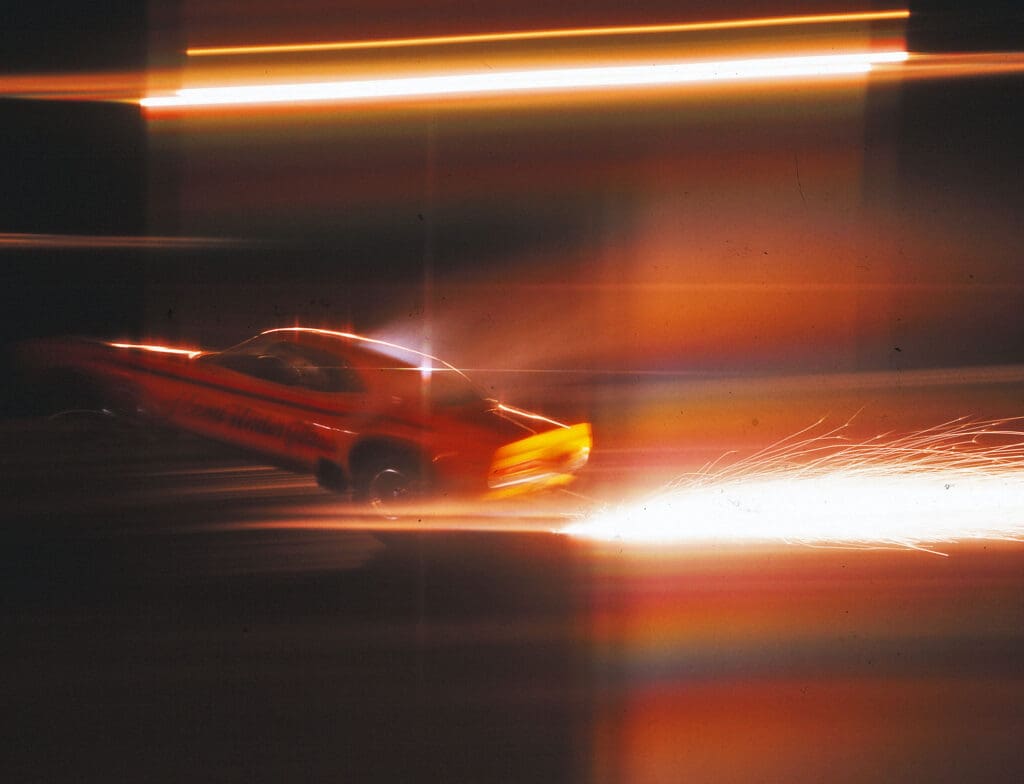
Playing with slow shutter speeds can and did produce that “arty” image on film for me. This photo of Norm Reis driving his AA/FD at Lions in 1971 has a great “feel” to it. Action, motion and flames, what more could I ask for from a drag race image?
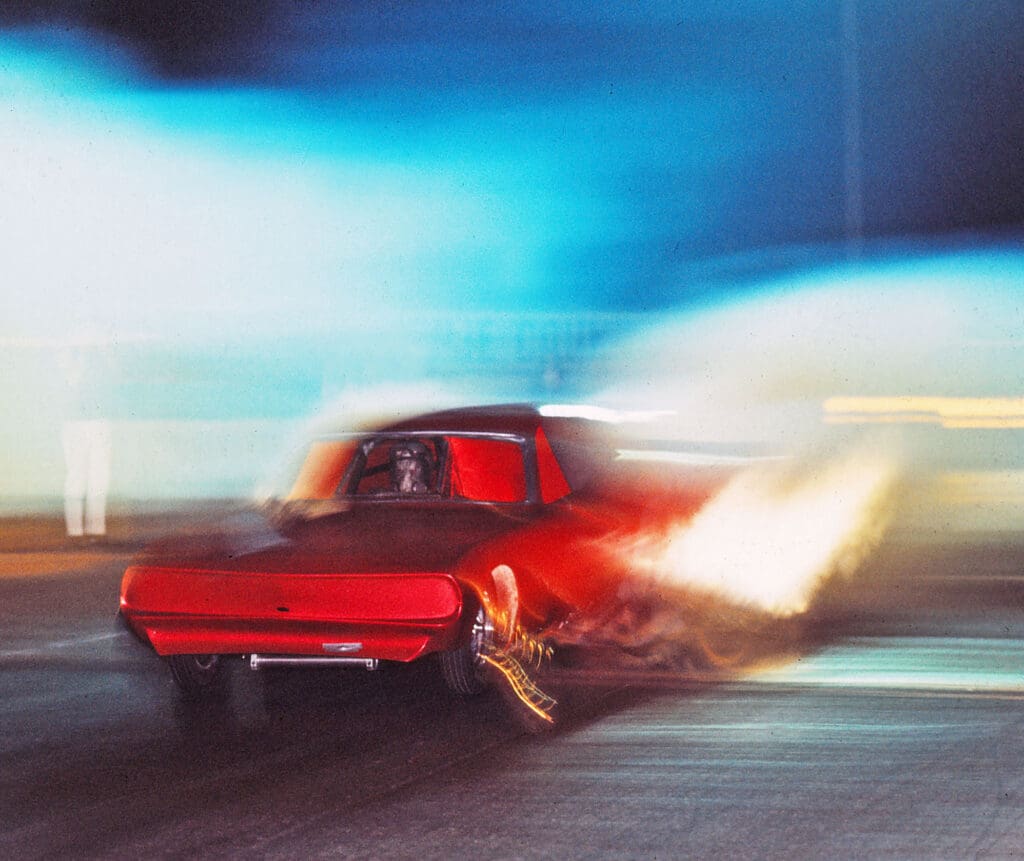
Pat Foster – Setzer Vega Funny Car
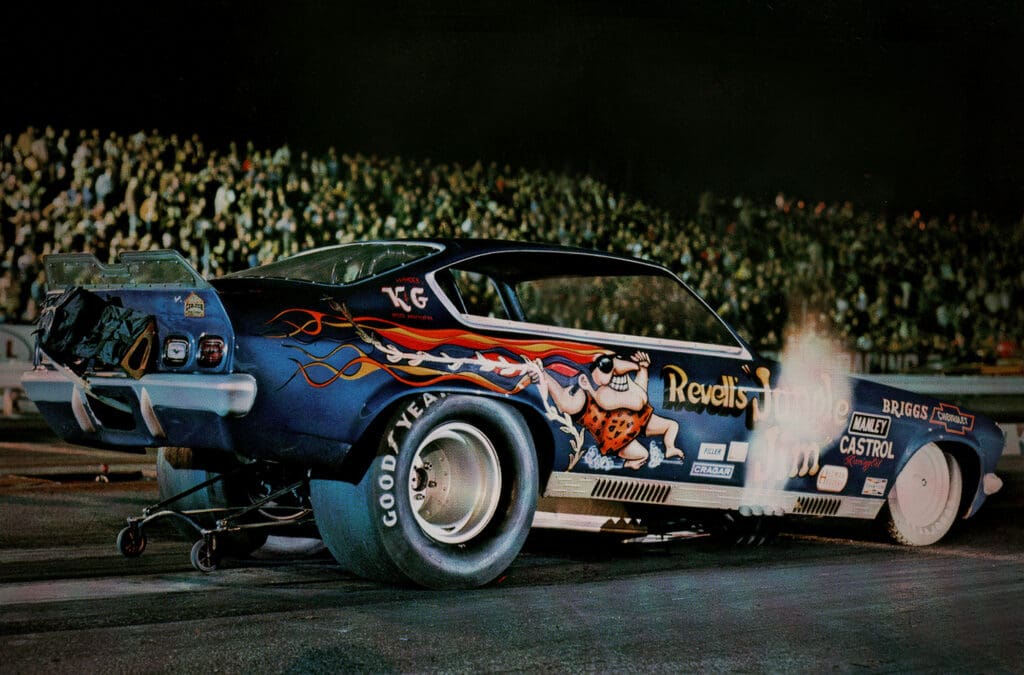
Funny Cars were fun to photograph at night. Barry Setzer’s Vega with Pat Foster driving made a great subject matter for my “Creature of the Night” images. The candy red Vega always was looking great night or day.
Toby Ermentrout – “Hemi Under Glass,” OCIR
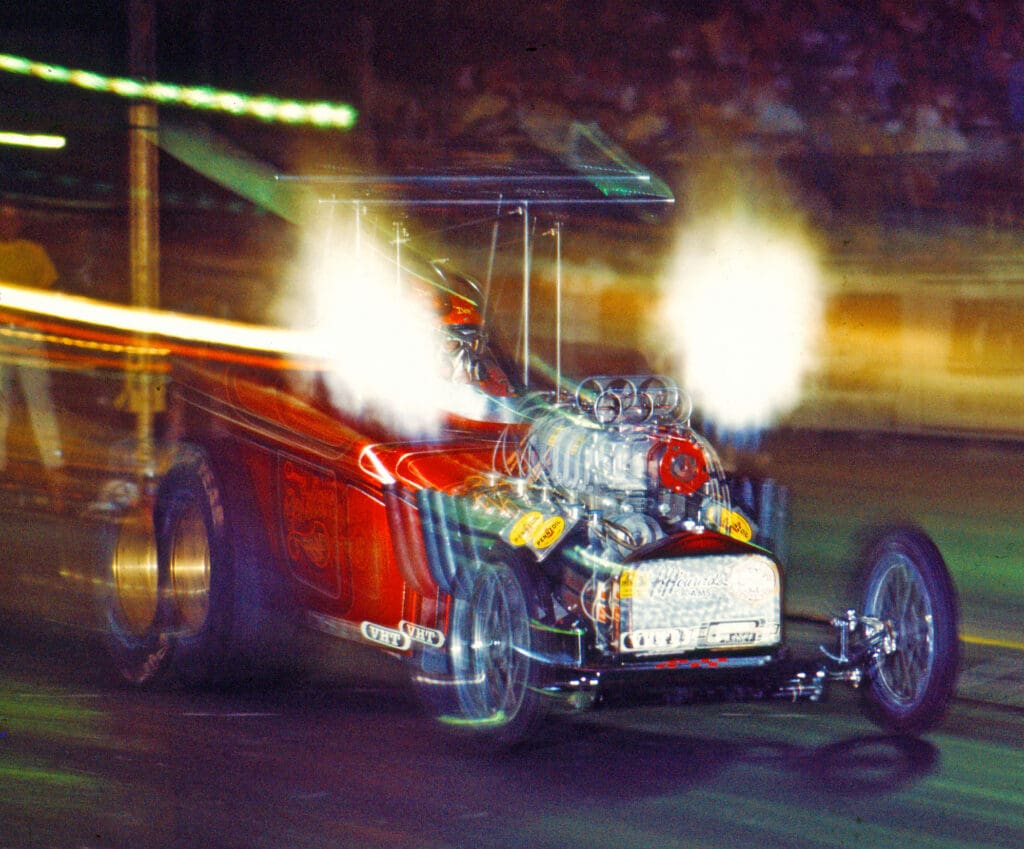
Nothing like a Fuel Altered at night or day, these 98-inch wheelbase cars gave fans and photographers a thrill night or day whenever they raced down the 1320. This is Dennis Geisler driving his “Instant T” AA/FA at Lions. For me I can “feel” the excitement in this image. This is the style I tried to develop to bring out the feel of drag racing at night.
Dennis Geisler – “Instant T” AA/FA
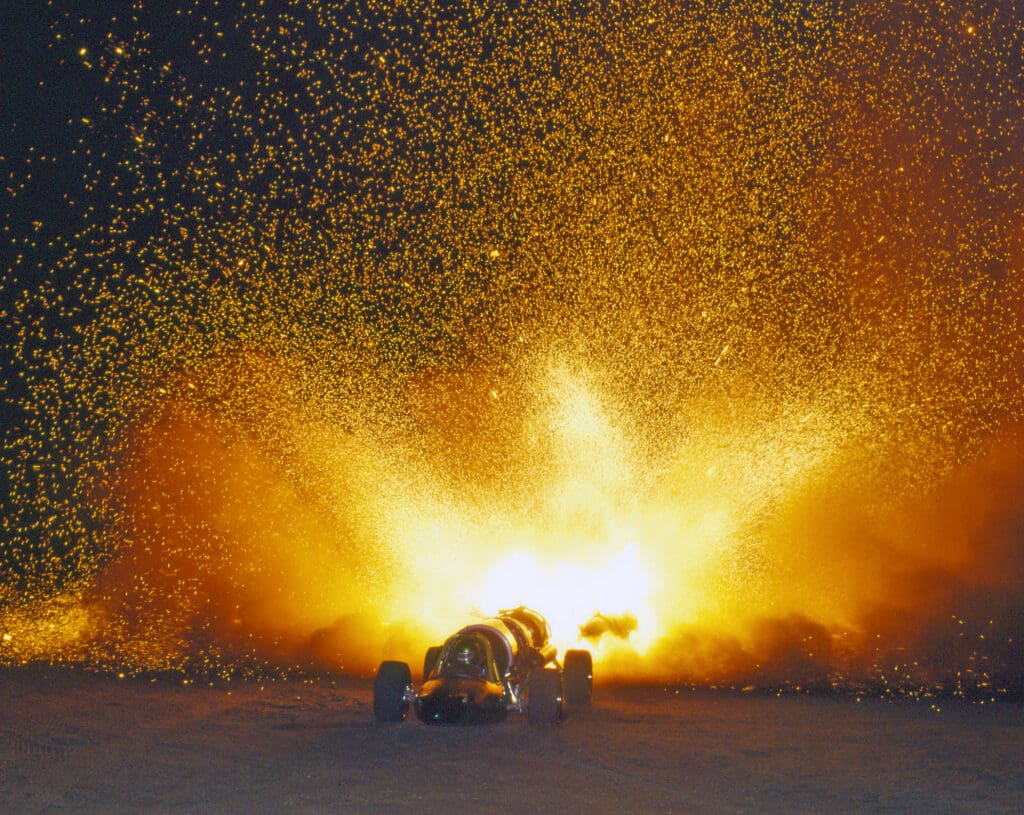
This image was a real challenge to get on film. It’s Doug Rose and his “Green Mamba” jet car at Atco, NJ. Doug and his jet are burning Japanese wrecked cars that are chained to the back of the jet car. Those sparks you see aren’t sparks, they’re pieces of red-hot molten metal. Yes, this was a one and done type of photo and how I shot it worked out for me.
Doug Rose – “Green Mamba” Jet Car, Atco
This would be a standard camera on a tripod photograph of “Jungle Jim” Liberman and his Vega AA/FC at OCIR. An easy photo to shoot? Not really. Quite a lot of things must be done to get an image like this correctly. The position of the camera, the light source behind you and of course the timing of the car staging. All this must fall into place to produce an image like this one with nice crowd and header flames.
“Jungle Jim” Liberman – Vega AA/FC, OCIR
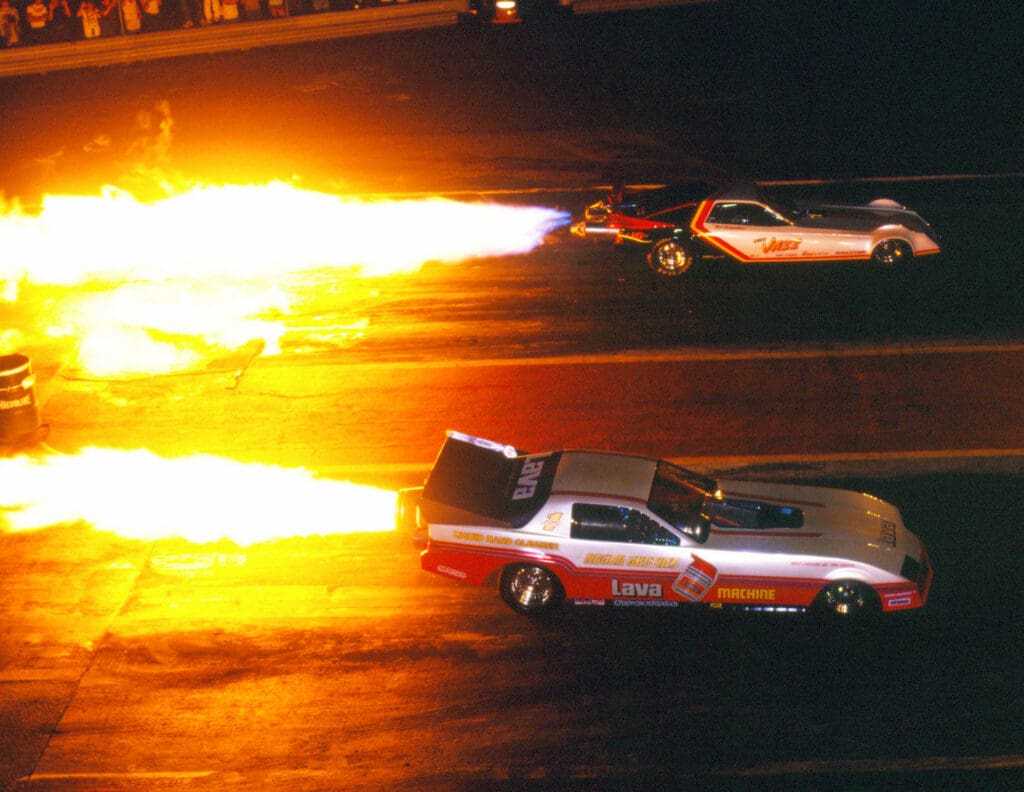
Like I’ve stated before jet cars can be a real challenge to photograph at night. Here at Englishtown, NJ, not one but two jet Funny Cars square off at night. Roger Gustin and his Lava Machine racing Bob Beaulieu and his “The Jazz.” This was shot from the top of the tower at E-Town, which was the correct choice to capture a great image of jet Funny Cars at night.
Roger Gustin vs. Bob Beaulieu – Englishtown
Like I’ve stated before jet cars can be a real challenge to photograph at night. Here at Englishtown, NJ, not one but two jet Funny Cars square off at night. Roger Gustin and his Lava Machine racing Bob Beaulieu and his “The Jazz.” This was shot from the top of the tower at E-Town, which was the correct choice to capture a great image of jet Funny Cars at night.
Don Garlits – Dallas, 1971 / Carl Olson – Tulsa
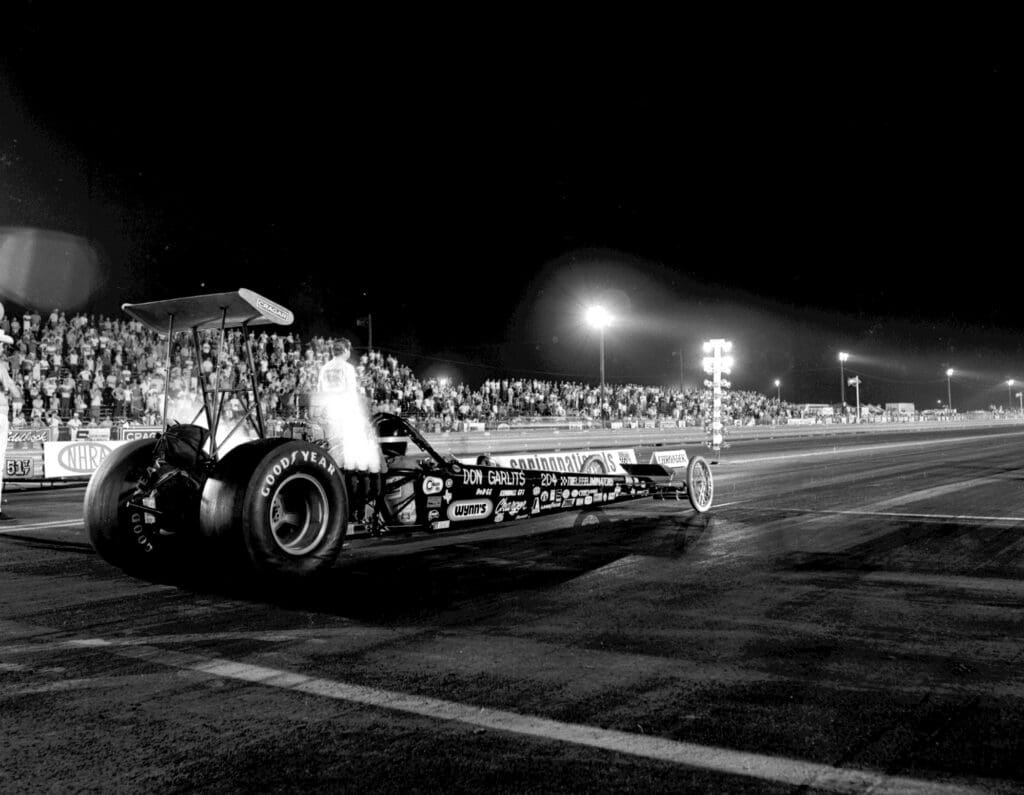
Garlits at Dallas in 1971, nice header flames and a huge crowd in the background. A very nice “mood” image. Then there’s Carl Olson [below] driving the Kuhl & Olson Top Fuel dragster at Tulsa, Oklahoma with the headers nicely lit and a nitro haze filling the night air.
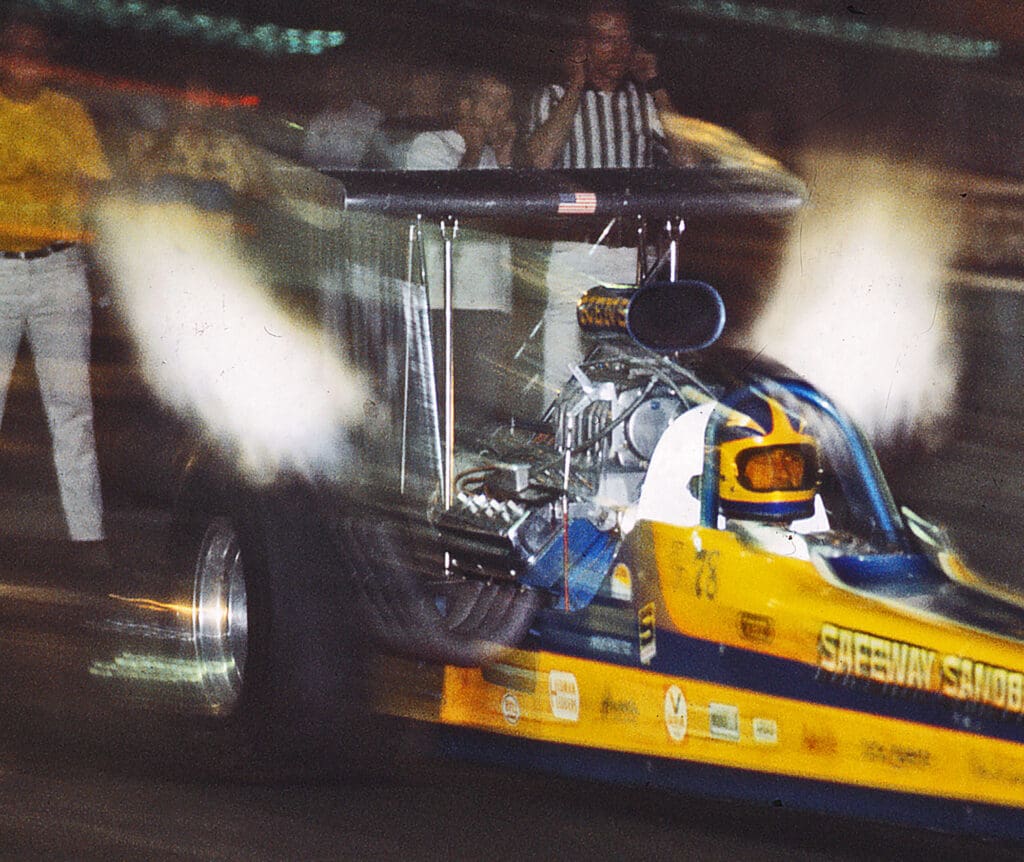
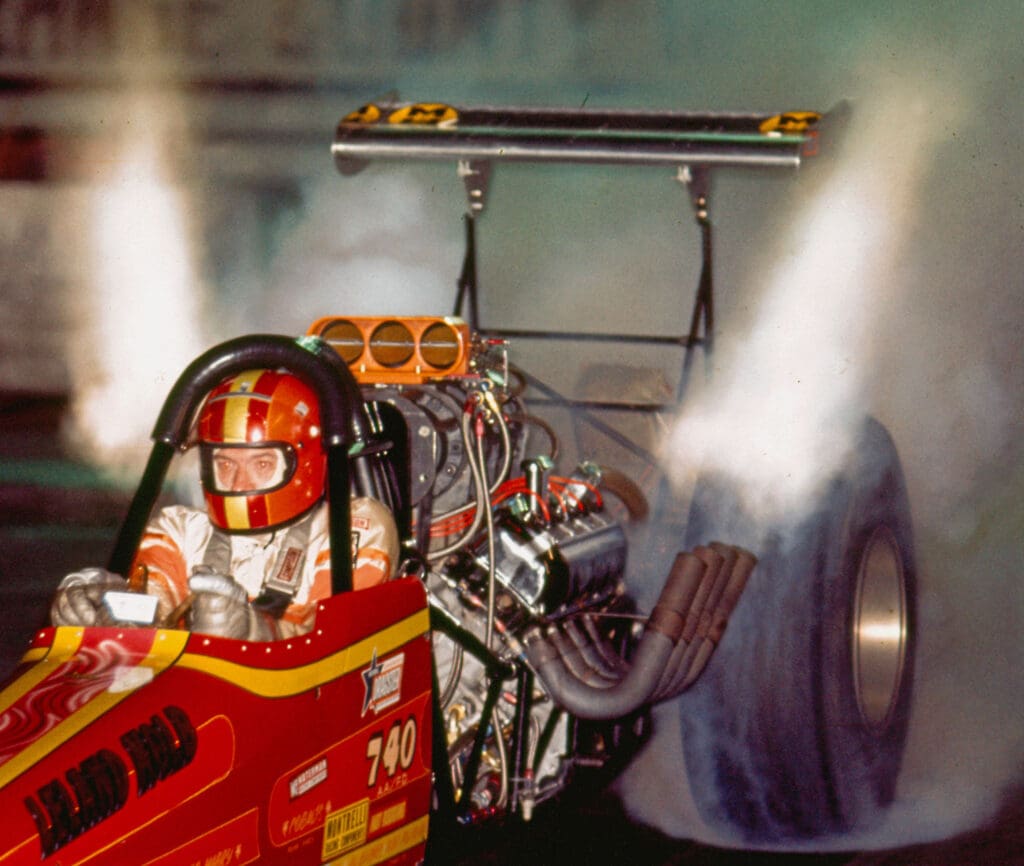
Walt Rhoades – Lions, 1972 / Leland Kolb – OCIR, 1973
Up close and personal with Walt “Wally Gator” Rhoades driving the Safeway Sandblasting Top Fuel dragster at Lions in 1972. Then there’s Leland Kolb driving his Top Fuel dragster at OCIR 1973. Both of these images have a great nighttime feel for me that only a nitro-burning car can have at night.
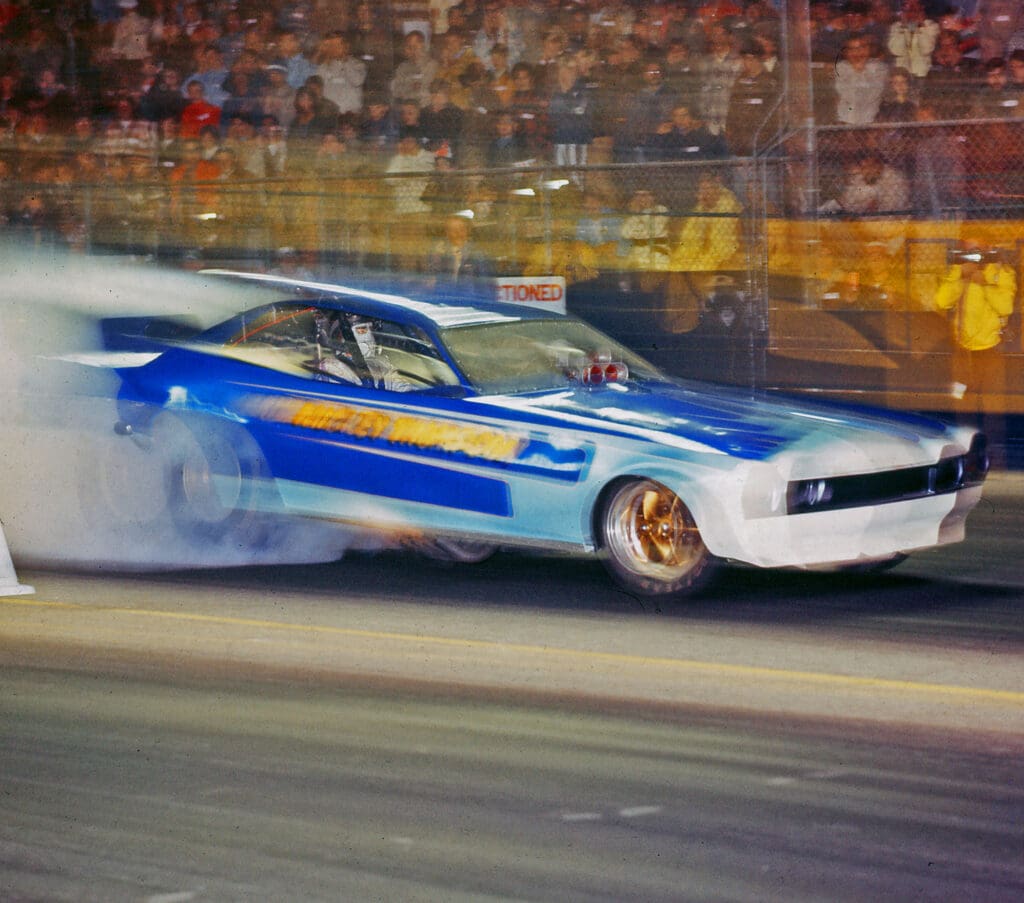
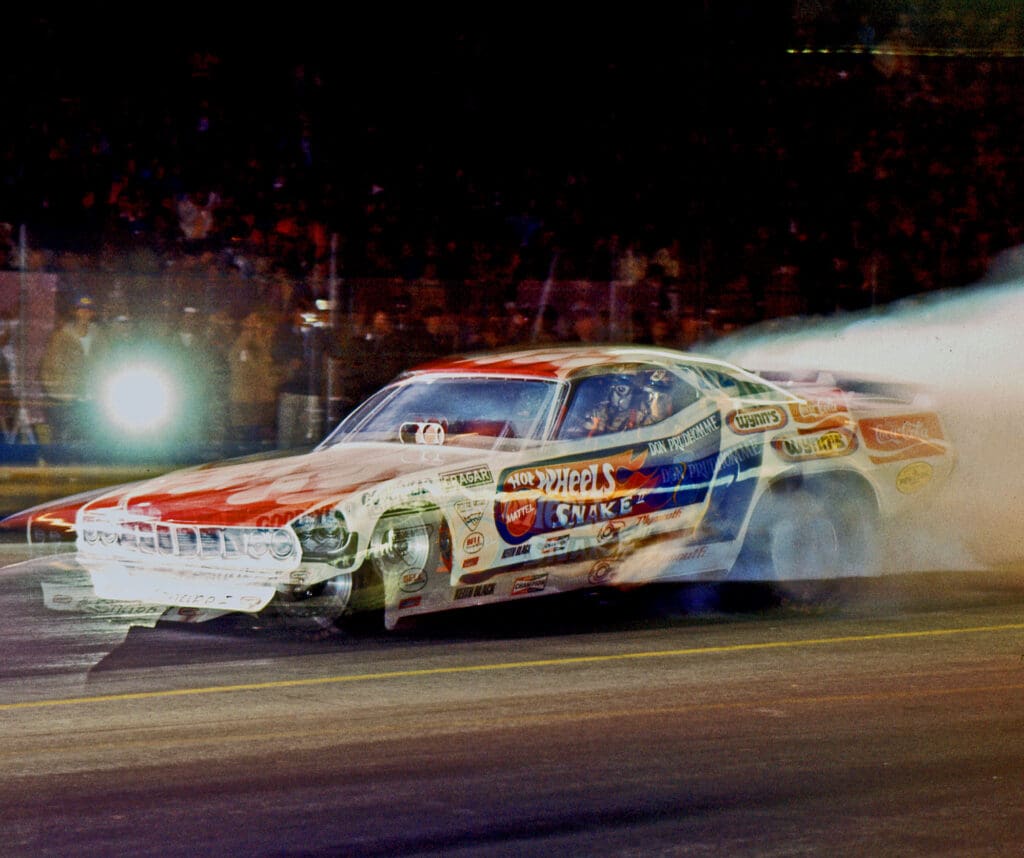
Dale Pulde & Don Prudhomme – Lions & Irwindale
Utilizing a strobe and slow shutter speed with Funny Cars can produce some rather bizarre images. Dale Pulde driving Mickey Thompson’s Pinto AA/FC at Lions and Don Prudhomme driving his Hot Wheels AA/FC at Irwindale. Those are two prime examples of “painting” with color film at night.