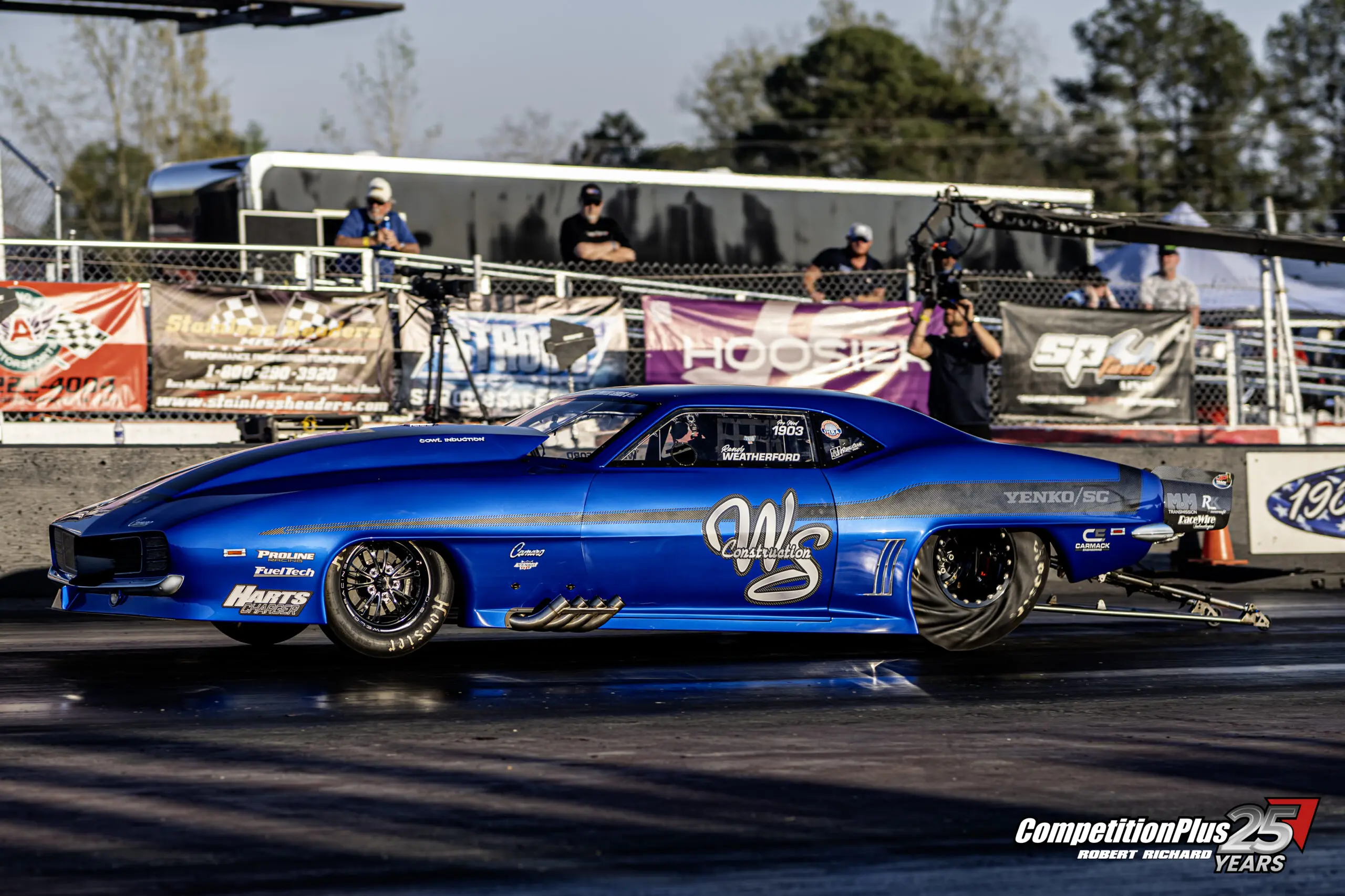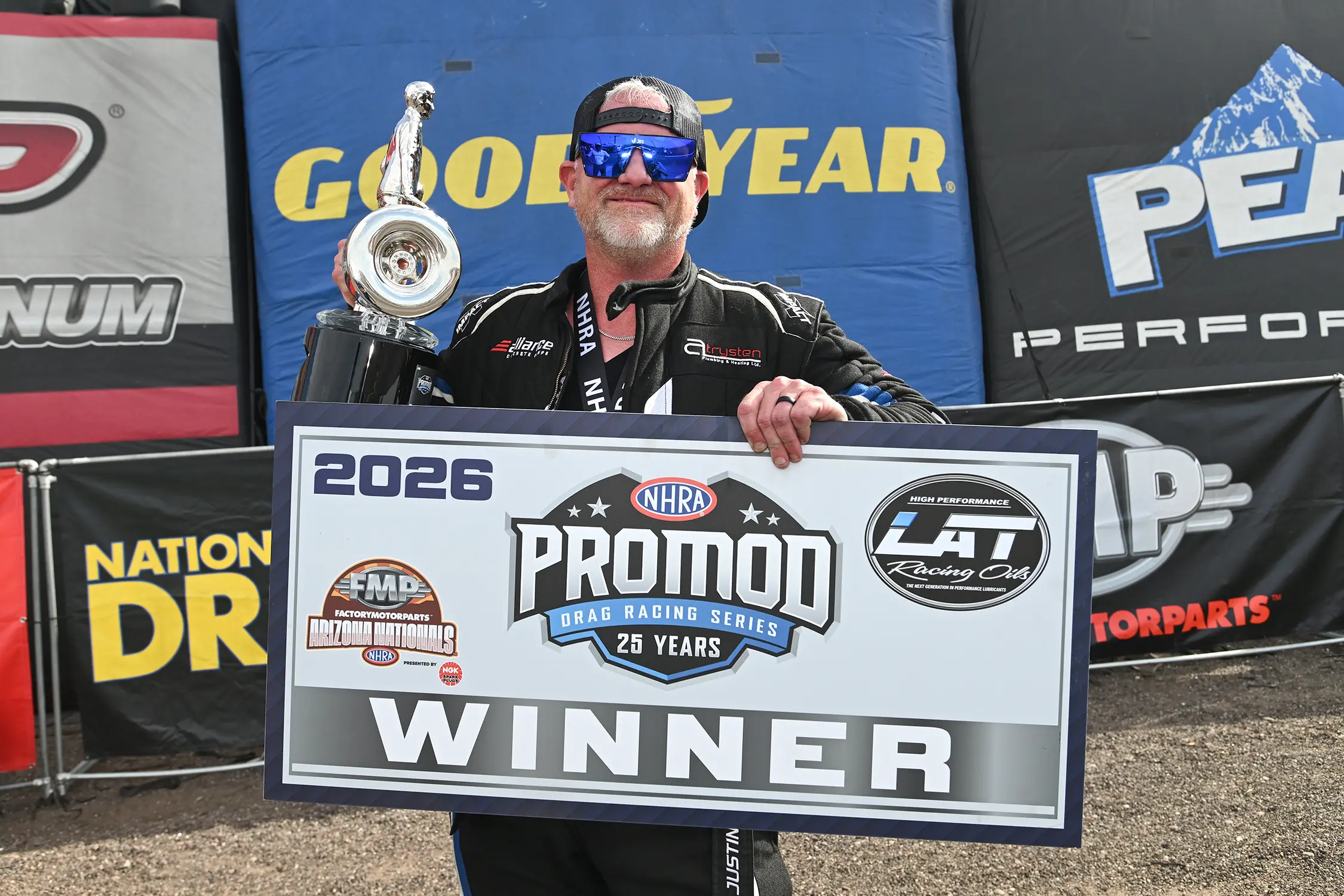

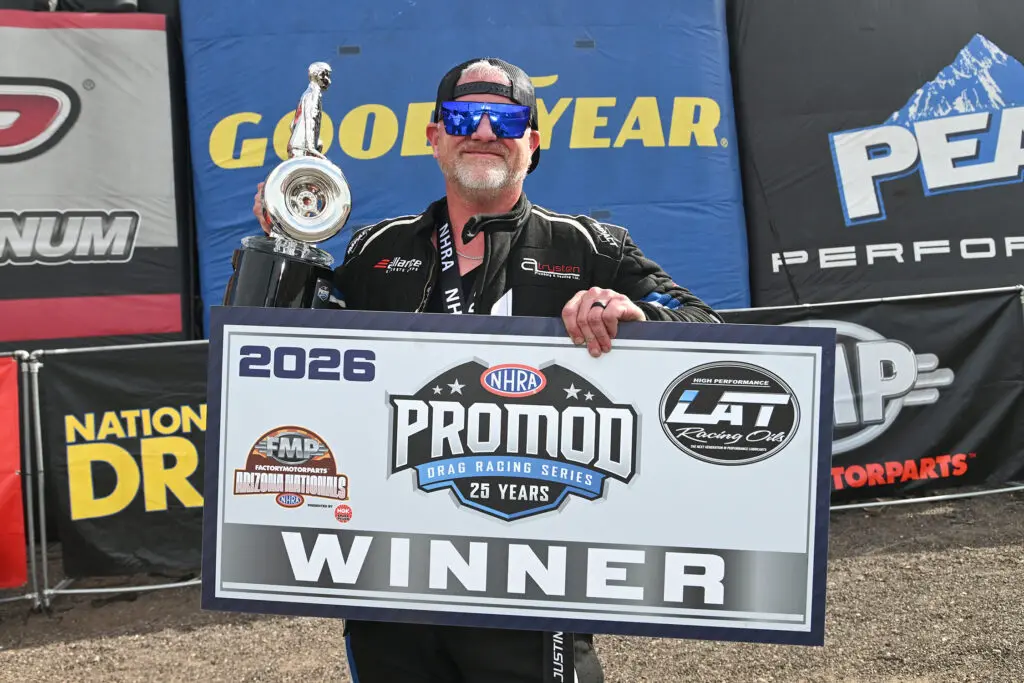
When Justin Bond’s career is complete, and the Pro Modified driver looks back at his career wins, it will be race No. 7 that he will likely remember the most. It won’t be because it was the fastest or cleanest, but because he had no business being in the car.

“On February the 26th, I got driven over by one of the dragsters that I own,” Bond said. “On the starting line in Orlando. And I fractured both of my ankles.”

The incident wasn’t a racing accident, but a mistake during a team outing that escalated in seconds and changed the trajectory of his season. It left Bond with injuries that should have sidelined him well beyond the NHRA Arizona Nationals.

“I went to Orlando where me and my entire team, like everybody on the crew, including our social media person, we were all racing in the [NHRA Division 2] points meet,” Bond said. “I made a mistake and I hit the reset button on the delay box and the young lady driving the car, wasn’t her fault, but the starting line enhancer was activated.”

“When I hit the reset button, the starting line enhancer shut and the car drove me over,” he continued. “I heard the motor rev up and I tried to get out of the way and I just couldn’t fast enough.”

The aftermath was immediate and sobering, even if Bond initially tried to downplay it. It took only a few steps for him to realize the damage was more than he could walk off.

“It drove me over and I guess I stood up and I thought I was going to walk it off and I made a few paces and I wasn’t going to walk it off,” Bond said. That realization marked the beginning of a recovery that would define everything that followed.
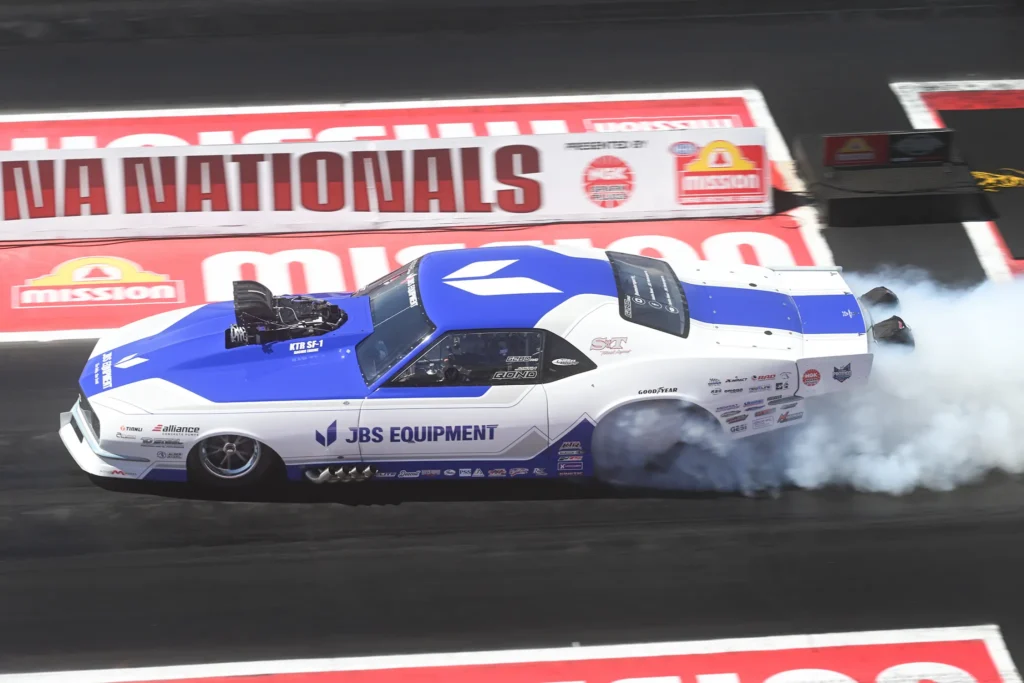

Bond’s return to competition was not gradual, nor was it comfortable. It was accelerated by necessity and driven by a mindset that prioritized participation over preservation.

“I was one week on crutches and I went and seen my surgeon and they made me take x-rays standing up with my weight on my feet, and he said that the fractures weren’t opening and then I needed to start moving my ankles and get on them,” Bond said. “So I went to rehab. Every day I went to physiotherapy, and then on the weekends I went to the swimming pool.”

The process demanded immediate mobility in injured joints, forcing Bond to rebuild strength under constant discomfort. It was less about returning to race shape and more about regaining basic function.

“I worked really hard to even be able to walk,” he said. That effort made what happened next possible, even if it didn’t make it logical.

Bond chose to race in Phoenix, fully aware that pain would be part of every decision he made in the car. It was a calculated risk rooted in experience and a willingness to adapt.

“I was in an extreme amount of pain all weekend driving the car,” Bond said. “But it wasn’t like … for example, if there was an emergency, I could have moved. It would just be painful, but it wasn’t like my legs were broken off.”

That distinction mattered, because in Pro Modified, control and reaction are everything. In Phoenix, Bond had to compete while knowing one of his primary advantages had been compromised.

“I’m not sure if it was because the pain I was in or if there’s something wonky in the car, but my lights were from .074 to .084. I couldn’t get any better,” Bond said. “And normally speaking, that type of reaction time won’t win you a race.”

Under normal circumstances, those numbers would lead to an early exit. Against a field that included proven winners and a two-time champion in the final, they should have been a liability too large to overcome.

Instead, Bond shifted his approach from performance-driven to situational. He stopped racing the clock and started racing his opponent, managing each round with calculated intent.

That adjustment became the difference between surviving and advancing. It turned a compromised weekend into a controlled one.

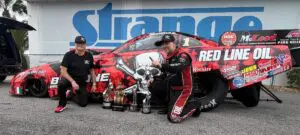
Bond defeated Nick Januik, Stan Shelton, and Gainesville winner Derek Menholt to reach the winner’s circle, navigating one of the most competitive ladders of the early season. Menholt, despite the loss, remained the points leader after two races.

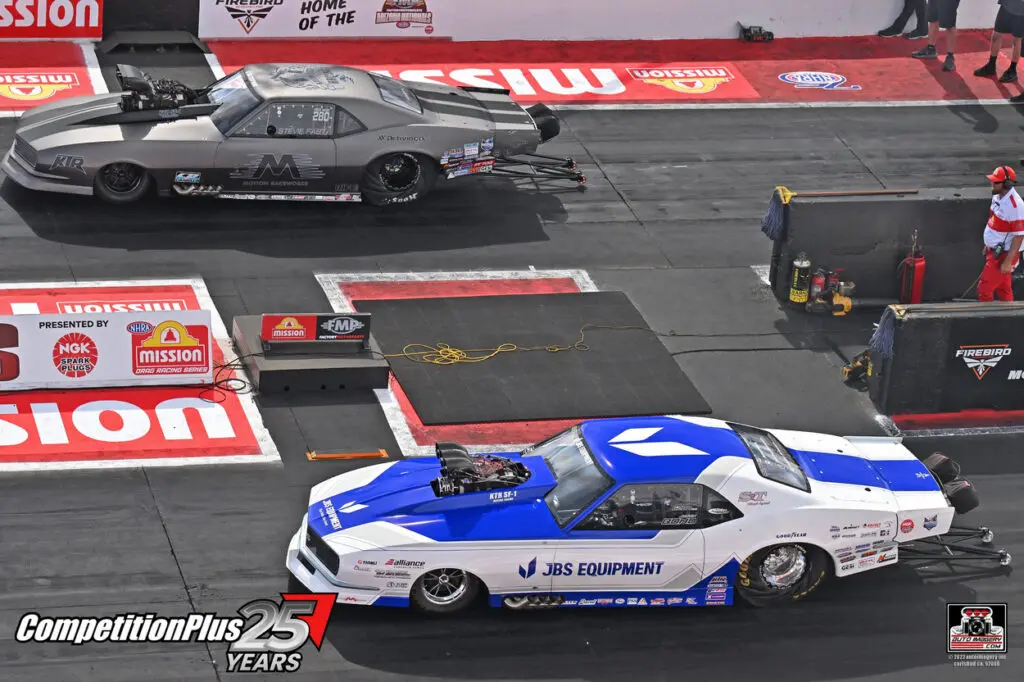
In the final, Bond faced Stevie “Fast” Jackson, a two-time NHRA world champion making his 23rd career final-round appearance. Jackson had already defeated J.R. Gray, Mike Stavrinos, and No. 1 qualifier Lyle Barnett to reach the championship round.

On paper, the matchup favored Jackson, especially given Bond’s physical limitations. But drag racing rarely unfolds on paper when pressure enters the equation.

Bond created that pressure before the race even started. He altered his staging routine in a move designed to disrupt Jackson’s rhythm and force a mistake.

“In the final, we tuned it up pretty good, and didn’t actually need it,” Bond said. “My staging plan worked. I never go in first, and this time I went in first, tried to rush him and he was rushed.”

Jackson went red, ending the race instantly, but Bond still delivered his strongest run of eliminations with a 5.736-second pass at 251.81 mph. It was both confirmation of his car’s capability and validation of his approach.

The win marked Bond’s first of the season and seventh of his career, but it carried weight beyond the statistic. It was the product of adaptation, endurance, and an understanding of how to win without being at full strength.

“It’s just been a major marathon to be here,” Bond said. “I don’t deserve it, but I’m sure happy we did it.”

“This one is for my guys. I’ve got so many people to thank and this is a big one for us,” he added. “I just had a really awesome car, and it’s the guys. We weren’t always the low of the round this particular event, but we were just racing smart and racing our opponent, racing the racetrack.”

For Bond, the motivation to return wasn’t rooted in proving anything to anyone else. It came from a long-standing belief about what drag racing is supposed to demand.

“Well, for me, my biggest reason why I drag race is because of the challenge of it,” he said. “It doesn’t come easy, and that’s why I do it.”

That philosophy explains why Phoenix wasn’t treated as a setback scenario, but as another problem to solve. It also explains why the outcome feels larger than a single event victory.

Bond has no plans to step away as he continues his recovery. “No, no. No, no. I’m going to rehab all the time and we’re going to continue racing,” he said.

Share the Insights?

Click here to share the article.

ad space x ad space

ad space x ad space

Competition Plus Team

Since our inception, we have been passionately dedicated to delivering the most accurate, timely, and compelling content in the world of drag racing. Our readers depend on us for the latest news, in-depth features, expert analysis, and exclusive interviews that connect you to the sport’s pulse.

Sign up for our newsletters and email list.

This field is for validation purposes and should be left unchanged.
Name

RUN OVER, REBUILT, AND REWARDED — JUSTIN BOND TURNS PAIN INTO DEFINING PRO MODIFIED WIN

When Justin Bond’s career is complete, and the Pro Modified driver looks back at his career wins, it will be race No. 7 that he will likely remember the most. It won’t be because it was the fastest or cleanest, but because he had no business being in the car.

“On February the 26th, I got driven over by one of the dragsters that I own,” Bond said. “On the starting line in Orlando. And I fractured both of my ankles.”

The incident wasn’t a racing accident, but a mistake during a team outing that escalated in seconds and changed the trajectory of his season. It left Bond with injuries that should have sidelined him well beyond the NHRA Arizona Nationals.

“I went to Orlando where me and my entire team, like everybody on the crew, including our social media person, we were all racing in the [NHRA Division 2] points meet,” Bond said. “I made a mistake and I hit the reset button on the delay box and the young lady driving the car, wasn’t her fault, but the starting line enhancer was activated.”

“When I hit the reset button, the starting line enhancer shut and the car drove me over,” he continued. “I heard the motor rev up and I tried to get out of the way and I just couldn’t fast enough.”

The aftermath was immediate and sobering, even if Bond initially tried to downplay it. It took only a few steps for him to realize the damage was more than he could walk off.

“It drove me over and I guess I stood up and I thought I was going to walk it off and I made a few paces and I wasn’t going to walk it off,” Bond said. That realization marked the beginning of a recovery that would define everything that followed.
Bond’s return to competition was not gradual, nor was it comfortable. It was accelerated by necessity and driven by a mindset that prioritized participation over preservation.

“I was one week on crutches and I went and seen my surgeon and they made me take x-rays standing up with my weight on my feet, and he said that the fractures weren’t opening and then I needed to start moving my ankles and get on them,” Bond said. “So I went to rehab. Every day I went to physiotherapy, and then on the weekends I went to the swimming pool.”

The process demanded immediate mobility in injured joints, forcing Bond to rebuild strength under constant discomfort. It was less about returning to race shape and more about regaining basic function.

“I worked really hard to even be able to walk,” he said. That effort made what happened next possible, even if it didn’t make it logical.

Bond chose to race in Phoenix, fully aware that pain would be part of every decision he made in the car. It was a calculated risk rooted in experience and a willingness to adapt.

“I was in an extreme amount of pain all weekend driving the car,” Bond said. “But it wasn’t like … for example, if there was an emergency, I could have moved. It would just be painful, but it wasn’t like my legs were broken off.”
That distinction mattered, because in Pro Modified, control and reaction are everything. In Phoenix, Bond had to compete while knowing one of his primary advantages had been compromised.

“I’m not sure if it was because the pain I was in or if there’s something wonky in the car, but my lights were from .074 to .084. I couldn’t get any better,” Bond said. “And normally speaking, that type of reaction time won’t win you a race.”

Under normal circumstances, those numbers would lead to an early exit. Against a field that included proven winners and a two-time champion in the final, they should have been a liability too large to overcome.

Instead, Bond shifted his approach from performance-driven to situational. He stopped racing the clock and started racing his opponent, managing each round with calculated intent.

That adjustment became the difference between surviving and advancing. It turned a compromised weekend into a controlled one.

Bond defeated Nick Januik, Stan Shelton, and Gainesville winner Derek Menholt to reach the winner’s circle, navigating one of the most competitive ladders of the early season. Menholt, despite the loss, remained the points leader after two races.

In the final, Bond faced Stevie “Fast” Jackson, a two-time NHRA world champion making his 23rd career final-round appearance. Jackson had already defeated J.R. Gray, Mike Stavrinos, and No. 1 qualifier Lyle Barnett to reach the championship round.

On paper, the matchup favored Jackson, especially given Bond’s physical limitations. But drag racing rarely unfolds on paper when pressure enters the equation.

Bond created that pressure before the race even started. He altered his staging routine in a move designed to disrupt Jackson’s rhythm and force a mistake.

“In the final, we tuned it up pretty good, and didn’t actually need it,” Bond said. “My staging plan worked. I never go in first, and this time I went in first, tried to rush him and he was rushed.”
Jackson went red, ending the race instantly, but Bond still delivered his strongest run of eliminations with a 5.736-second pass at 251.81 mph. It was both confirmation of his car’s capability and validation of his approach.

The win marked Bond’s first of the season and seventh of his career, but it carried weight beyond the statistic. It was the product of adaptation, endurance, and an understanding of how to win without being at full strength.

“It’s just been a major marathon to be here,” Bond said. “I don’t deserve it, but I’m sure happy we did it.”

“This one is for my guys. I’ve got so many people to thank and this is a big one for us,” he added. “I just had a really awesome car, and it’s the guys. We weren’t always the low of the round this particular event, but we were just racing smart and racing our opponent, racing the racetrack.”

For Bond, the motivation to return wasn’t rooted in proving anything to anyone else. It came from a long-standing belief about what drag racing is supposed to demand.

“Well, for me, my biggest reason why I drag race is because of the challenge of it,” he said. “It doesn’t come easy, and that’s why I do it.”

That philosophy explains why Phoenix wasn’t treated as a setback scenario, but as another problem to solve. It also explains why the outcome feels larger than a single event victory.

Bond has no plans to step away as he continues his recovery. “No, no. No, no. I’m going to rehab all the time and we’re going to continue racing,” he said.


Picture of John Doe

John Doe

Lorem ipsum dolor sit amet consectetur adipiscing elit dolor

More Posts

Send Us A Message

Picture of Bobby Bennett
Bobby Bennett
Thank you for joining us on this journey. Your support and trust inspire us every day to deliver the best in drag racing journalism. We are excited about the future and look forward to continuing to serve you with the same dedication and passion that has defined CompetitionPlus.com from the very beginning.

Don’t miss these other exciting stories!

Explore more action packed posts on Competition Plus, where we dive into the latest in Drag Racing News. Discover a range of topics, from race coverage to in-depth interviews, to keep you informed and entertained.