The odds were stacked against South Georgia Motorsports Park before the first raindrop ever hit the property. Wildfires around the county had everyone watching the sky, and when the rain finally came to a drought-starved area, it helped the land, but did nothing for drag racing.
By sunrise Saturday, the forecast had turned ugly. With rain chances near 95 percent through much of the afternoon, NHRA’s announcement that gates would be closed until noon felt like the kind of message people get before a washout.
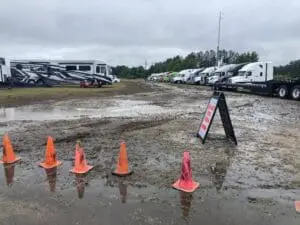
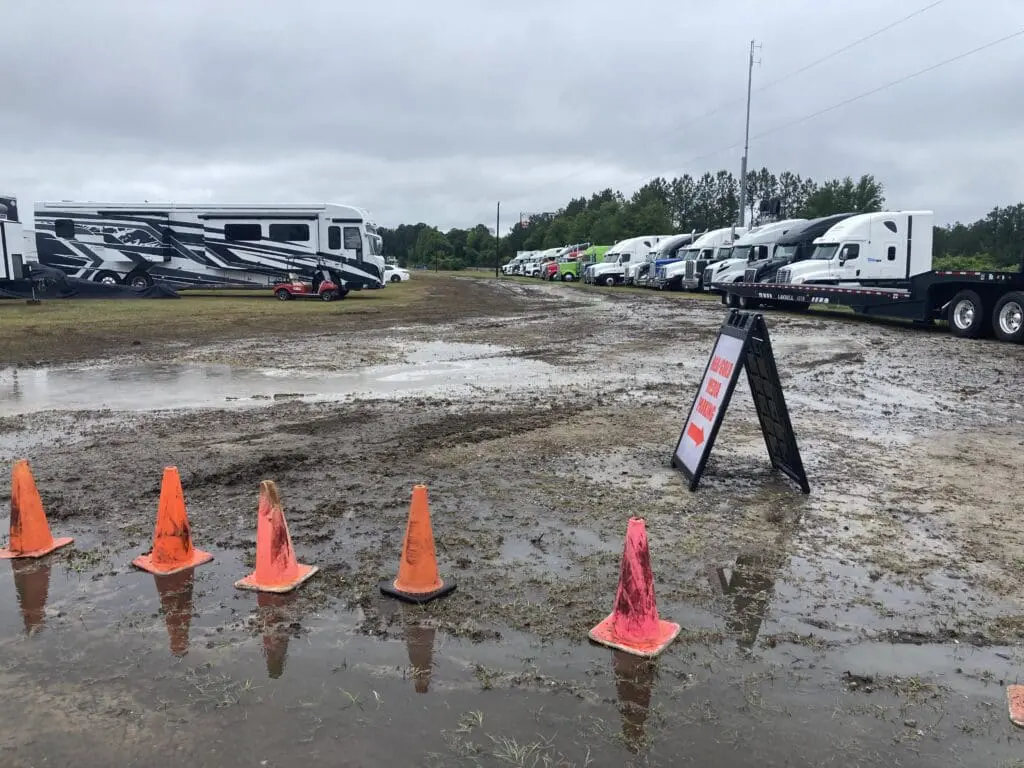
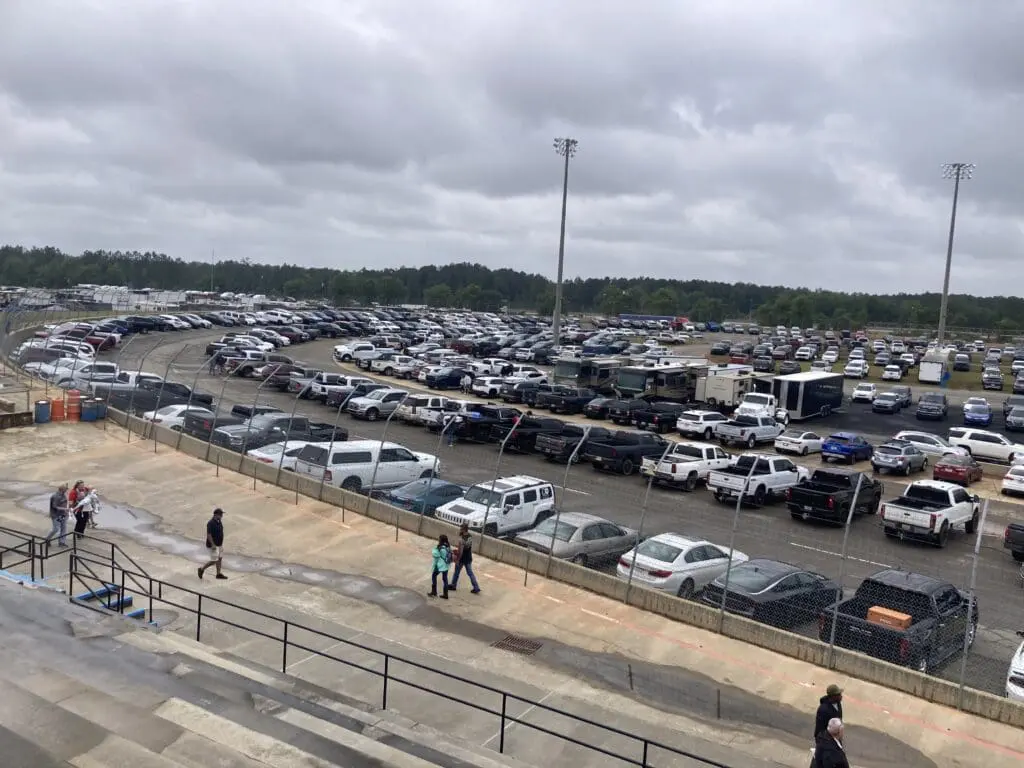
When gates opened to welcome the most optimistic of fans, they were rerouted to adjacent adjacent oval track and infield as make-do parking lots. At the same time, the Safety Safari attacked a soaked racing surface with the commitment for racing to kick off at
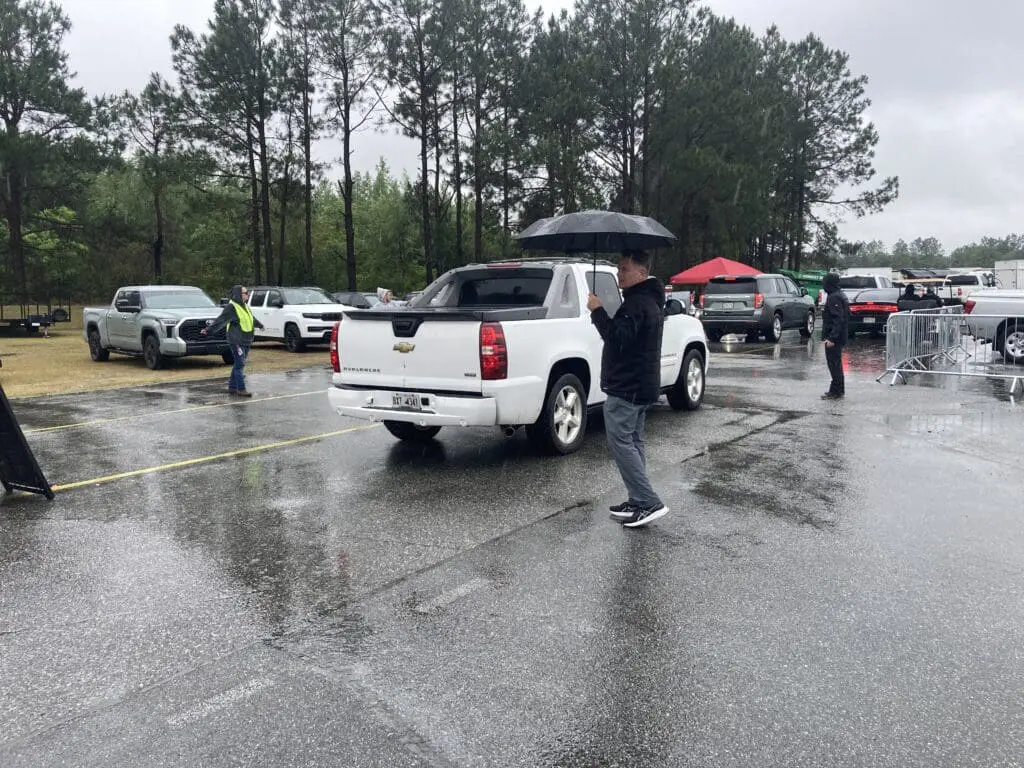
Then the facility offered a scene veteran racers would recall and appreciate. Glen Cromwell was out in traffic lanes, waving cars through mud and confusion, looking less like a modern executive and more like the late Bill Bader Sr. in his hands-on IHRA days.
That told the story better than any statement could. Titles were useless at that moment. Bodies willing to work were what mattered.
When reminded that running a national event probably did not include directing traffic in flooded fields, Cromwell laughed.
“Not at all,” Cromwell said. “I expected 75-degree weather and sunny.”
Asked why he volunteered to take on an impromptu role, Cromwell answered the only way the moment allowed. “We’re all team players here at the NHRA, and we do everything we can to make sure that our stakeholders have a great experience here because we know here at the NHRA it’s about having a great experience.”
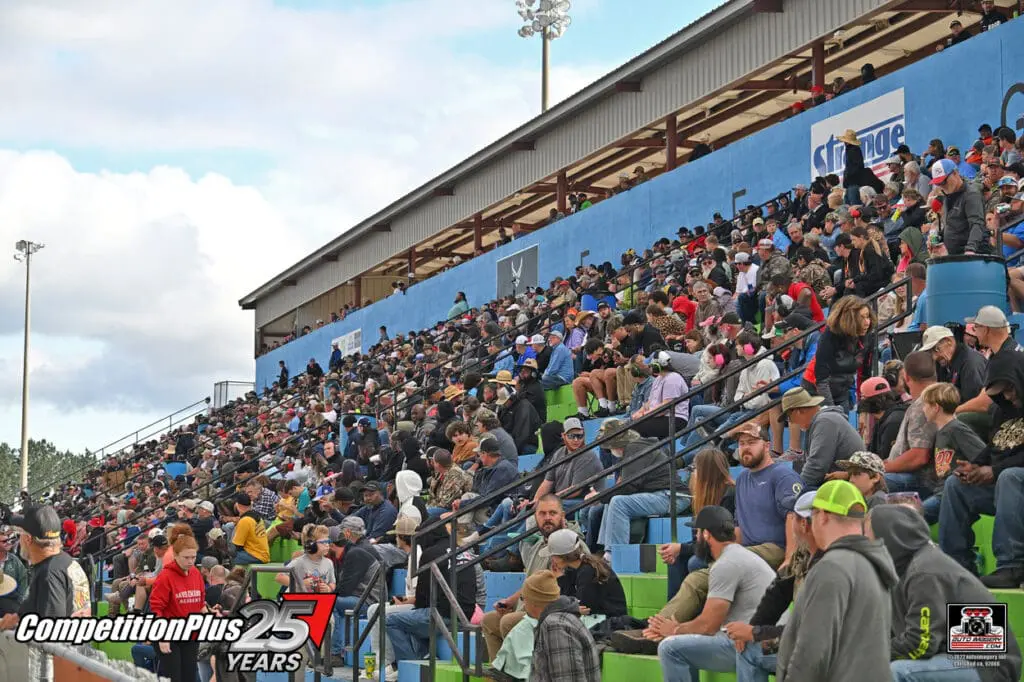
Within two hours, the oval track and infield were packed. What looked dead in the morning had a pulse by afternoon, and fans kept rolling in.
That loyalty did not go unnoticed. Veteran Funny Car driver J.R. Todd said the Valdosta crowd earned respect before the lone pro qualifying session took place.
“Day like today, when it rains all day, you come out and qualify hours later than you’re supposed to and you still see a nice crowd, good crowd all day,” Todd said. “How cool is that for you [fans], as well?”
Todd said he saw it early. “I was surprised. It was nine, 10 o’clock in the morning, it’s raining pretty good. There was traffic out front of the pit area. Fans rolling out like, ‘Man, these people are dedicated.’ Then sure enough, they hung around. It’s awesome.”
He said the response reminded him of NHRA’s early runs into New England. “The fans were so appreciative and thank you for being there,” he said. “It’s like, ‘No, thank you for having us here.’ That’s how the fans are here.”
Todd said the sport should not fear new territory. “It’s cool to experience that and have a new fanbase. I wouldn’t be opposed to trying to go to new facilities every year just to reach new fans like we have here.”
That mattered to track owner Raul Torres and everyone who had spent months getting the facility prepared for the Southern Nationals. South Georgia Motorsports Park did not stumble into a national event. It clawed its way there.
CompetitionPlus previously detailed the workload. Buildings were cleaned up, systems upgraded, grounds improved, and infrastructure expanded in a race against the calendar.
Then Saturday arrived with flooded lots, standing water, and a shutdown area that looked like it had lost a bar fight. Plenty of people figured the day would be a washout.
Nobody working on site carried themselves that way. They moved too fast and too hard for people planning to lose.
You could see it everywhere, from the gate to the starting line.
Veteran track specialist Kurt Johnson knew exactly what the task required.
“First, you got to get dry on top and bottom,” Johnson said. “So underneath the rubber and on top of the rubber. And sometimes that involves scraping it, which they’ve scraped out 60 feet. They might end up scraping a little bit further.
“From there, they pretty much try to just use air because if we drive stuff on it, it’s stickier on the top than it is on the bottom right now because of the water and it pulls it up. So the less they drive on it, like right now, they just got blowers out on it. They’re doing it right.”
Johnson pointed to another problem fans rarely consider.
“And then get the top end dry ’cause usually your racetrack will dry completely by the time you got the top end dry. We can’t race until the top end’s dry anyhow. So the less stuff we put on the racetrack, the better.”
The sand trap had turned into a quagmire. Water pooled there, adding another chore to a day full of them.
“It’s a team effort,” Johnson said. “I mean, every one of them’s out there doing something. Other things, they had to drain the sand trap. There’s little things that, because this place never had an event like this, never had to deal with it, but the top end runs into the sand trap. It turned into a lake.”
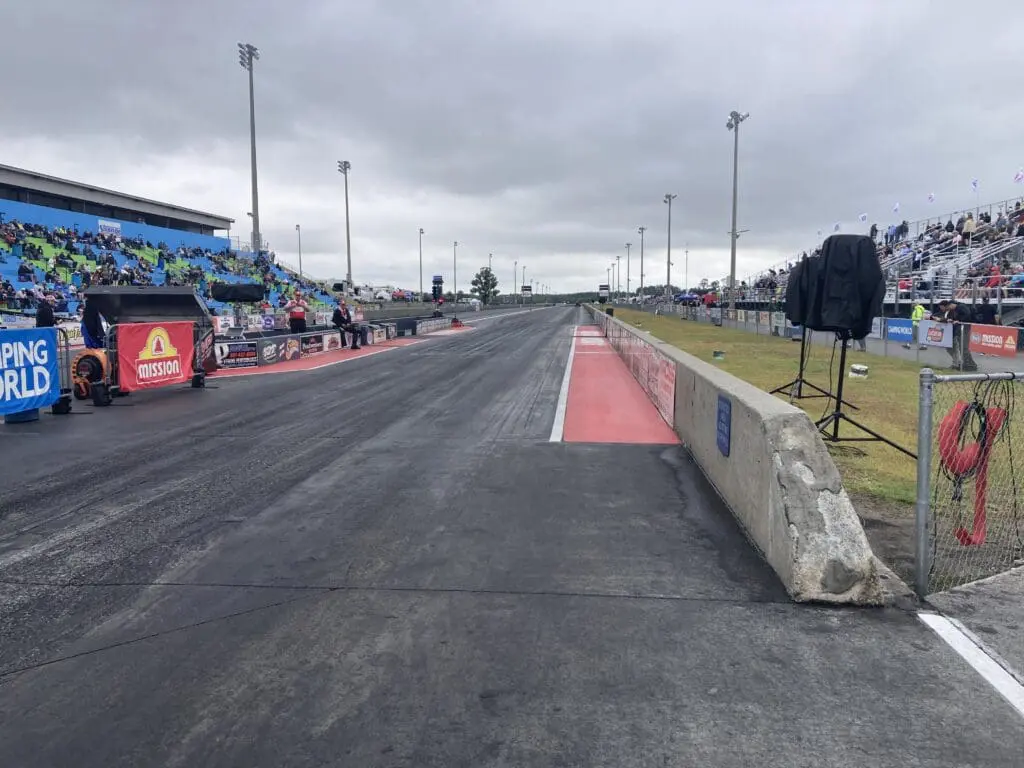
Johnson gave credit where it belonged. “NHRA, Larry Crisp, they cut trenches out in there and got the water out of the sand trap. And it was a team effort. They’ve kicked ass. I mean, I think it’s been kind of two hours and they’re about there.”
For racers, the issue was simple. They needed a fair racetrack and a safe one. Nothing else mattered.
Johnson said the timeline alone was impressive. “With the amount of rain we got, yeah, two to four hours. And that’s a good number.”
When asked if finishing a session would count as a miracle, Johnson first pointed to the people doing the work. “No, I don’t think it’s a miracle. I mean, I think they know what they’re doing and they’re doing it methodically.”
Still, he knew what they were up against. Rain, flooding, and lost time had squeezed the margin to almost nothing.
“The odds were stacked against us,” Johnson said.
That was the line with which no one could argue. People who know racetracks best doubted it could be done, then watched one get worked back into shape.
NHRA and the Safety Safari worked for ownership, for racers, and for fans who had bought tickets and believed they would see something worth staying to see.
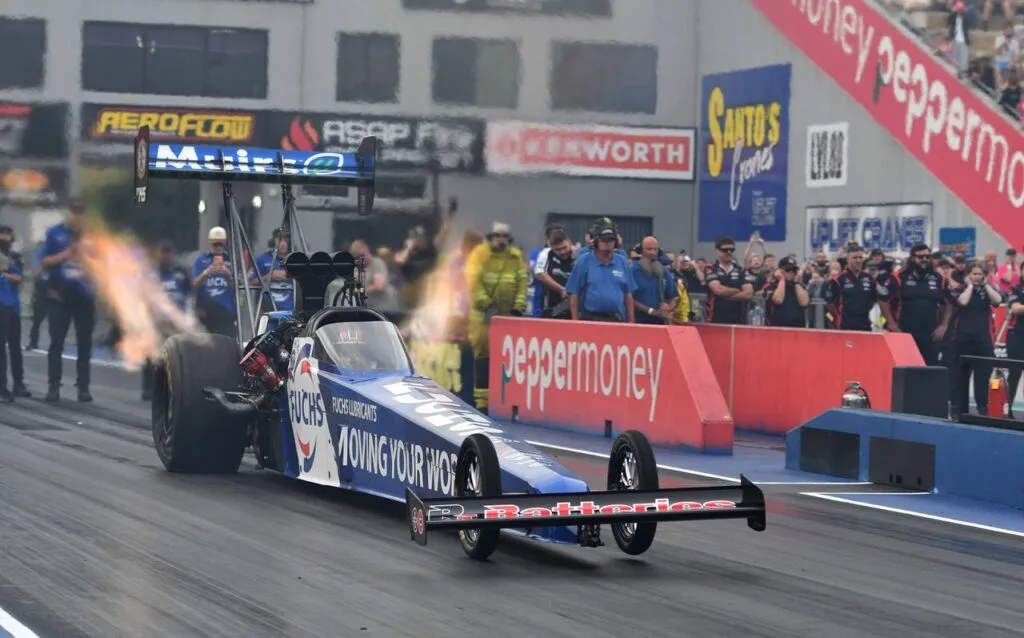
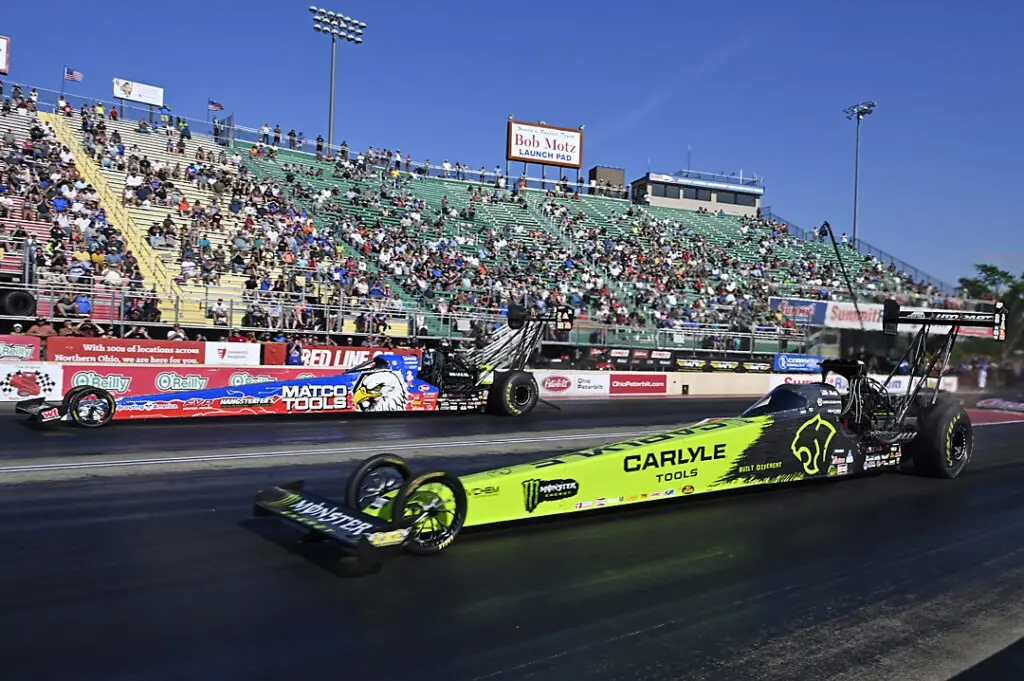
The first Top Fuel dragsters rolled into the staging lanes at 5:30 p.m. Fifteen minutes later, Will Smith fired his Bluebird-sponsored dragster to open the third qualifying session of the weekend.
What looked impossible Saturday morning turned out to be possible after all. Racers in Top Fuel, Funny Car, and Pro Stock had their day back – and so did the fans.
As evening settled over South Georgia Motorsports Park, Torres gave the crowd the closing remarks it had earned.
“I just wanted to thank every last person that stuck around eight, nine hours today while the rain passed. The good Lord knows our community needed the rain more than we needed the sun. We wanted three days of racing but, hey, priorities first. Now he’s given us a beautiful, beautiful evening here at South Georgia Motorsports Park.”