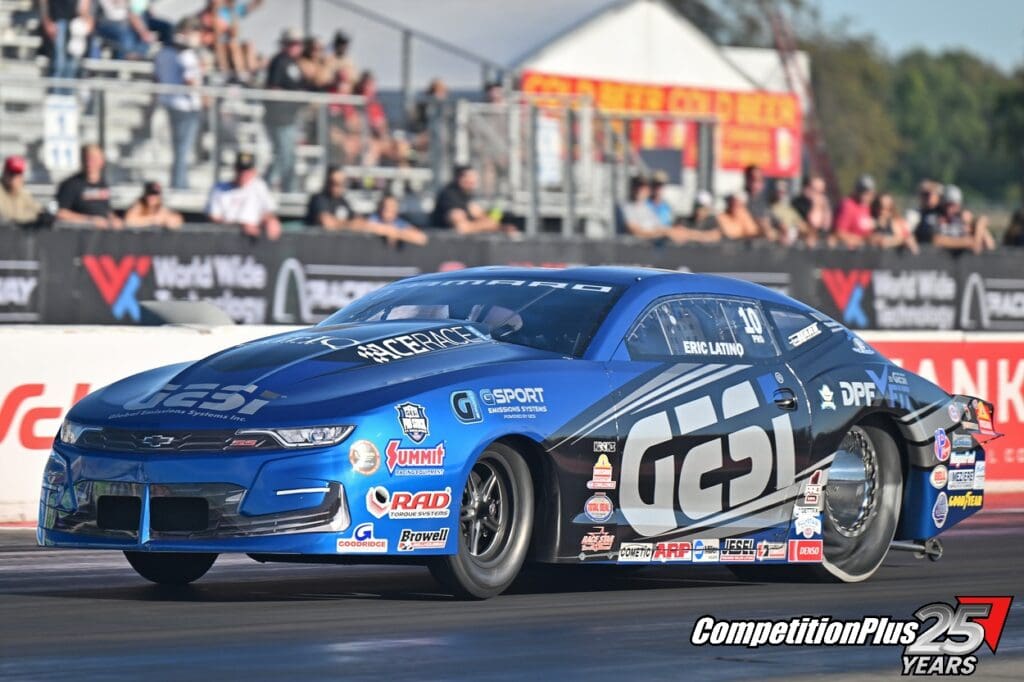
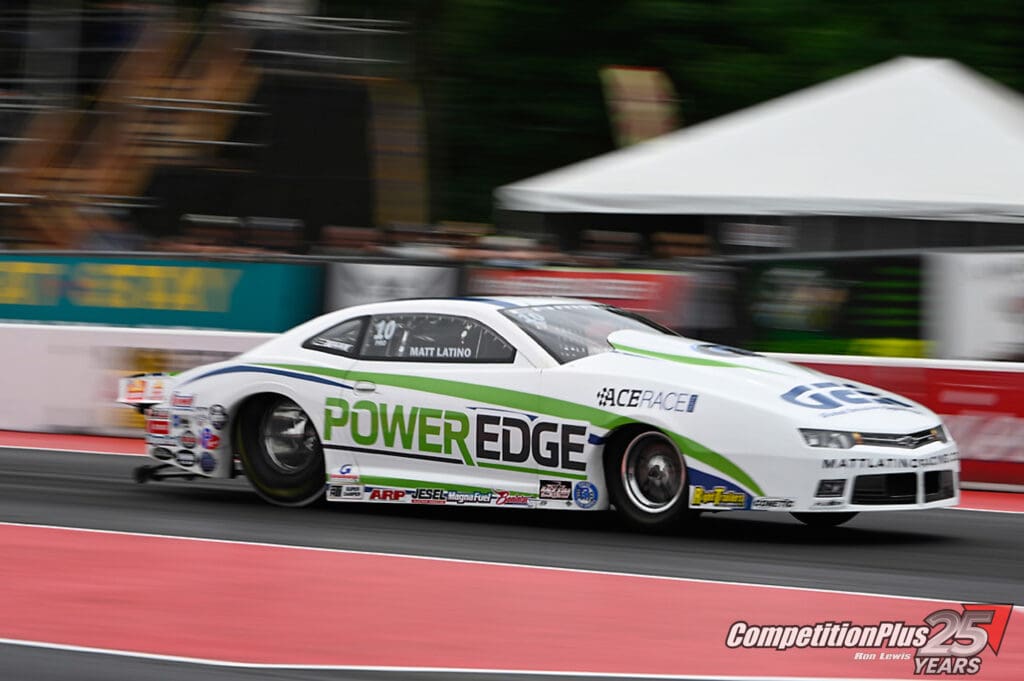
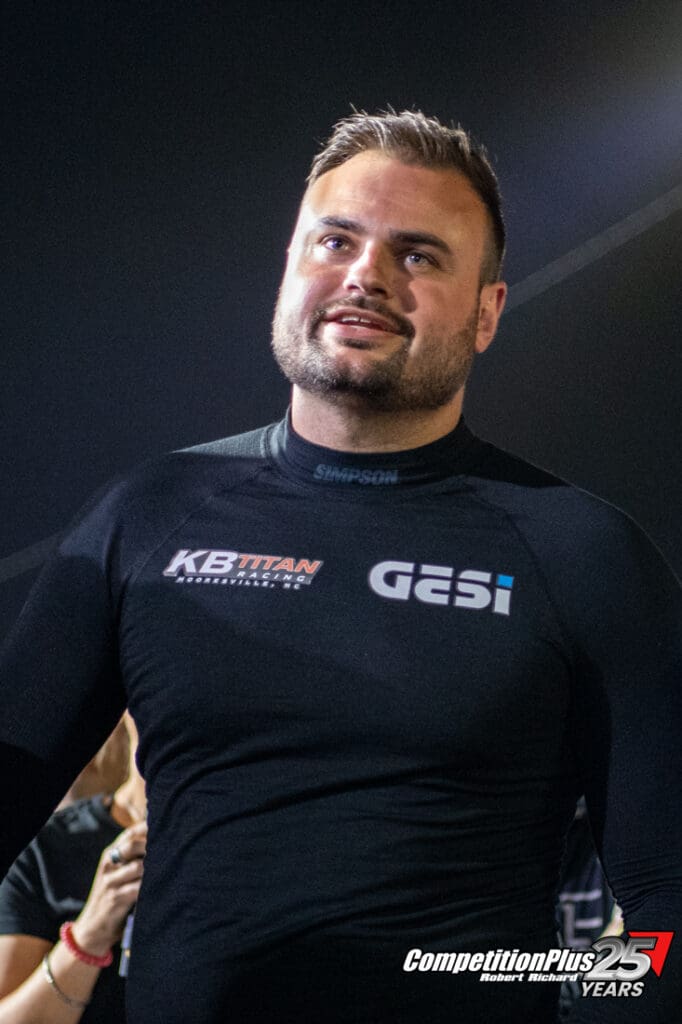
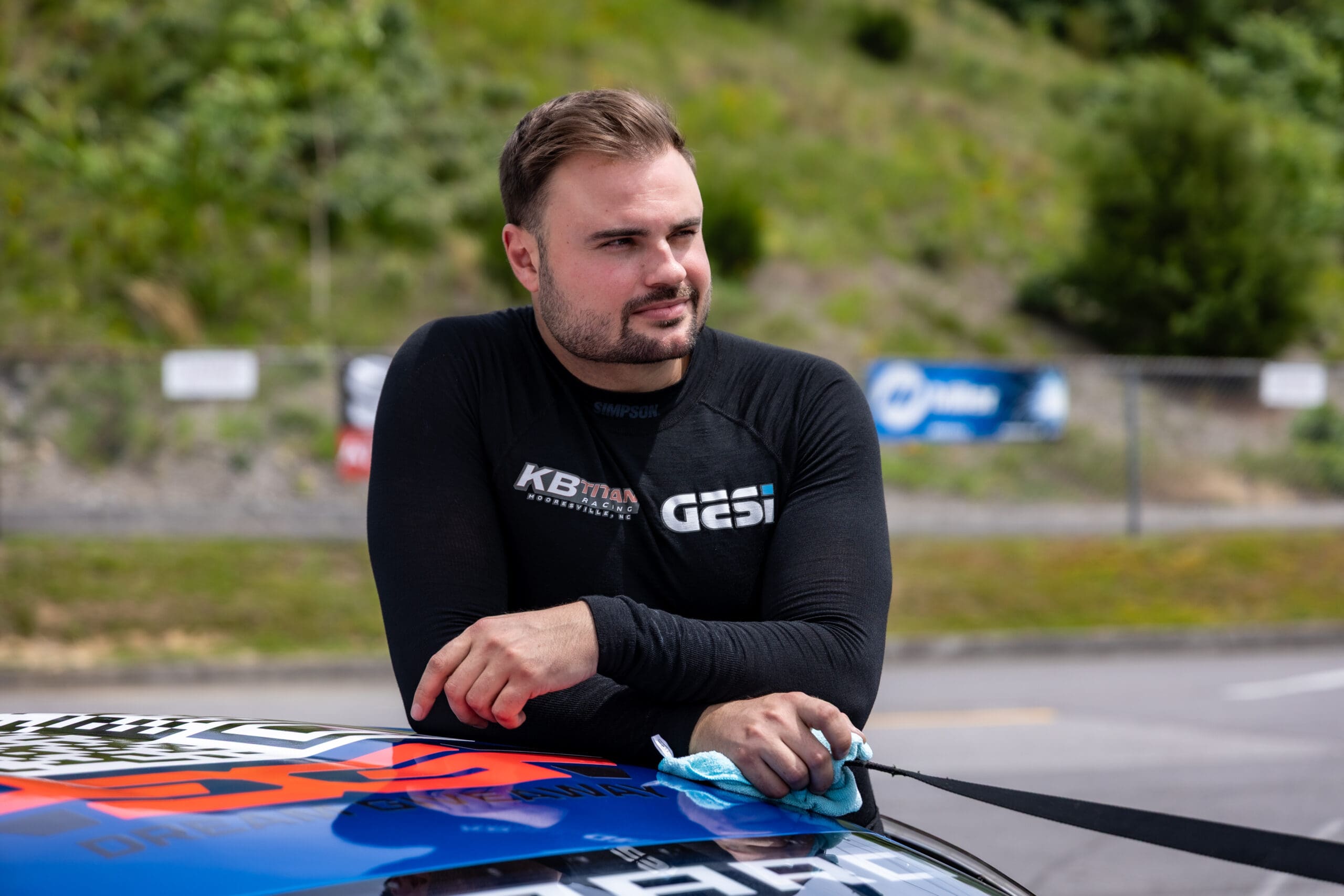
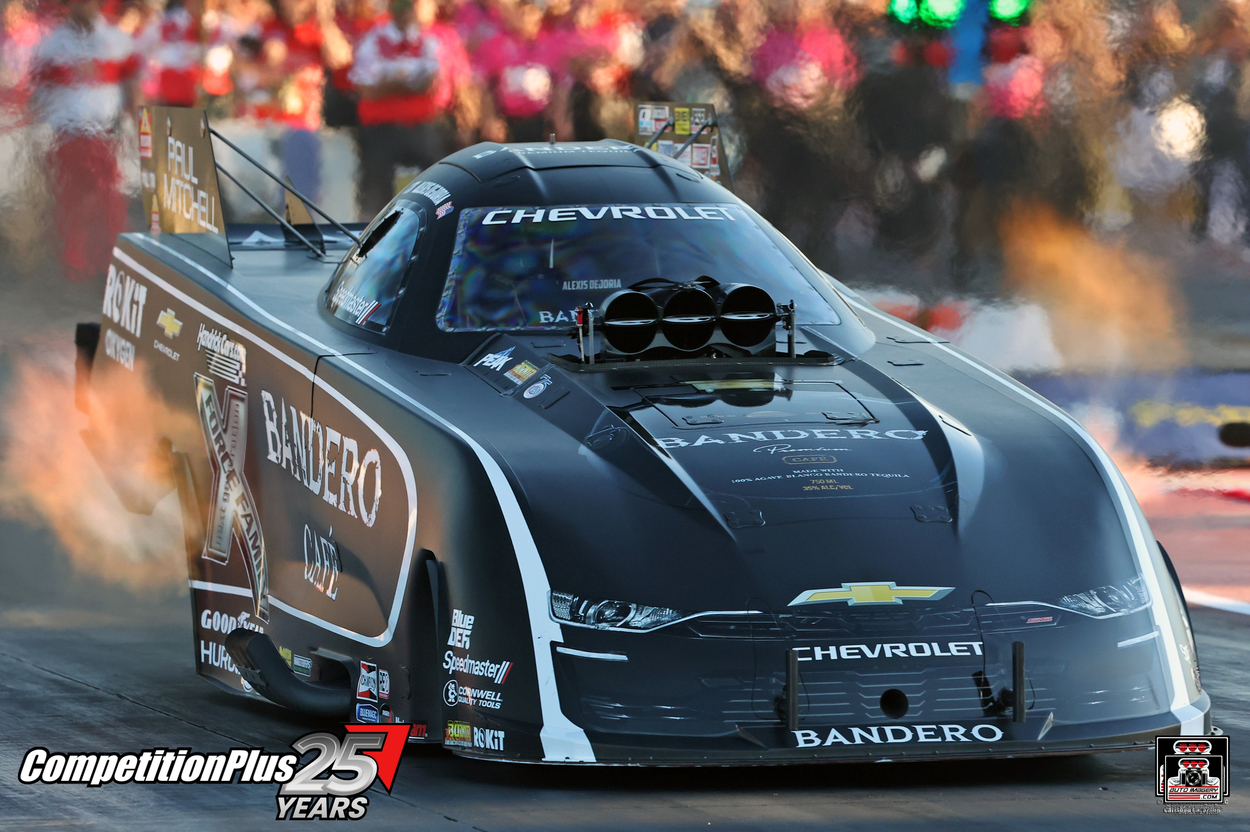
Matt Latino was standing in line for a rental car in Cancun, trying to squeeze in a family vacation before the calendar flips fully to race mode. Those free days are likely gone as Latino prepares for his first full NHRA Pro Stock season in 2026, a milestone reached through preparation rather than inheritance.


Latino enters the year coming off a rookie campaign that quietly put him among the most productive newcomers in the class. He won nine rounds in 13 races, reached the semifinals once, and finished the season as a legitimate Rookie of the Year finalist.
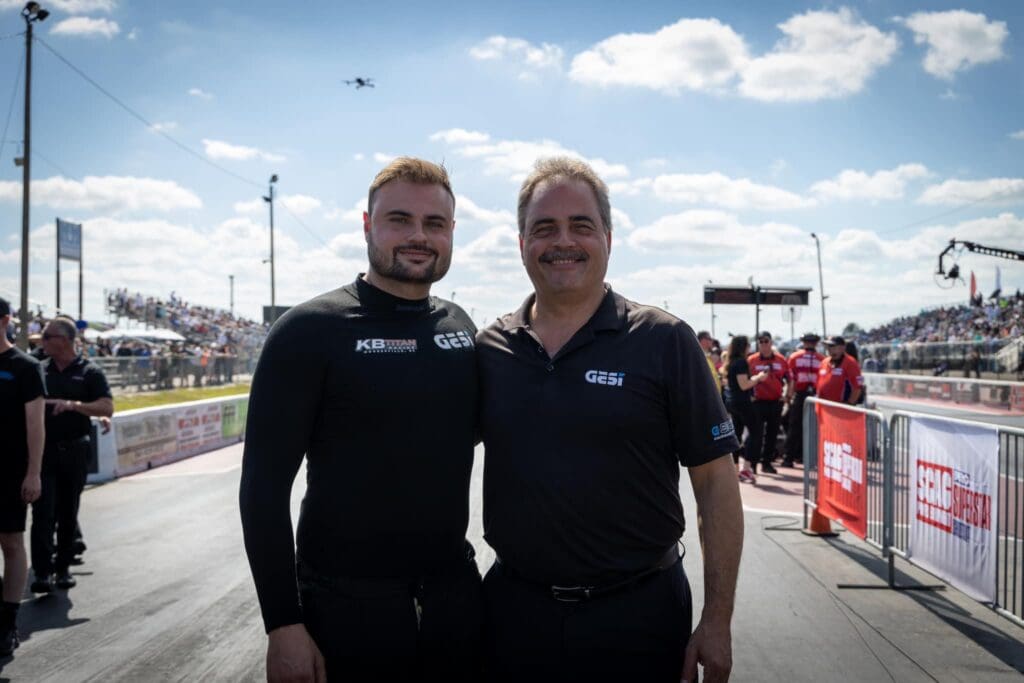
The numbers mattered, but the context mattered more. Latino arrived in Pro Stock determined to be evaluated on performance, not pedigree, even as the son of KB Titan Racing principal Eric Latino.
“I don’t know if I’d call myself a seasoned veteran, but I think I’ve definitely gotten enough wheel time to be confident,” Matt Latino said. “And I think I’m going to be a bit of a threat going into 2026 race season as a full-time pro stock racer.”
That confidence grew from exposure rather than entitlement. Latino’s rookie season provided the repetitions necessary to understand a category where thousandths of a second and minor adjustments determine outcomes.
The transition from rookie to sophomore mindset came with a lesson that extended beyond the driver’s seat. Latino said learning when to trust the car and the people around it became foundational.
“I’d say trust the car and trust your team,” he said. “Starting this whole thing, there’s always, you’re always skeptical about everything and getting comfortable in the car and what’s going on.”
Latino acknowledged that skepticism faded as results followed. Running alongside established championship-caliber teammates reinforced that the equipment and preparation were sound.
“And I’ve learned now that I’ve got the best team,” he said. “I’ve got the same car everyone else has.”
The comfort that comes with experience, he said, is paired with caution. Pro Stock’s depth requires respect for every opponent in the field.
“But I’ve also learned not to underestimate anyone,” Latino said.
.
The equipment equation changes in 2026, and Latino knows it. His rookie season came in the oldest car in the team’s rotation, a reality that shaped both expectations and approach.
“I think it’s going to make a pretty big difference,” he said. “It was the oldest race car we have.”
Latino explained that his 2025 car carried older bodywork and fewer updates, creating a measurable disadvantage. In a category where margins are razor thin, that gap was real.
“So I had probably a .01 or .02 disadvantage in the car,” he said. “So now going into this season with the exact same stuff that everyone else has, I’m certainly more confident.”
The shift to equal equipment removes variables. Latino said it also raises expectations, internally and externally, as he prepares to compete weekly with the established front of the field.
“I think I’m going to be at that same level as the big dogs out there,” he said.
Even with older equipment, Latino rejects the notion that his rookie success was car-driven. He credits involvement and attention to detail as much as horsepower.
“Well, I don’t know if it’s a matter of the car,” he said. “I mean, there’s a lot to drive in these things too.”
Latino described himself as a participant rather than a passenger. He stays engaged in the process and studies the smallest details that separate winning runs from early exits.
“I see what goes into driving these cars and what a difference can make,” he said. “So you just touch the chip or you just short that gear team just a tiny little bit and it makes a difference.”
That mindset, he said, accelerated his learning curve. It also reinforced accountability behind the wheel.
“I’m pretty proud to say I’ve done a great job driving the car,” Latino said.
Latino believes the limitations of his rookie-season equipment ultimately sharpened his skill set. Winning without a performance cushion forced him to lean on reaction time and execution.
“I did just that,” he said. “Most of my round wins in 2025 were won on holeshots.”
That reality shaped his confidence. If he was going to win, it would come from precision rather than advantage.
“So I think that was the best way for me to get the acclimated to the car quickly and get competitive as a driver,” Latino said.
The competitive environment inside KB Titan Racing also influenced that approach. Teammates may share data, but they also share the same ladder.
“As much as these guys are my teammates, I’m also competing against them,” he said.
Latino said the experience reinforced why he wanted to build his career independently. He entered Pro Stock with personal funding goals and personal expectations.
“I didn’t want to go out there and be someone’s kid or the son of a driver,” he said. “I wanted to go out there with my own funding, with my own sponsors, and prove that I can do this no matter what I’m driving.”
That philosophy guided his 2025 plan, which required sponsorship support for every appearance. The approach remains unchanged heading into 2026.
“That is the case,” Latino said. “And I can confidently say that I’m running all 20 races.”
He listed returning partners Fast Diesel Solutions, Power Edge, Ace Race Parts, and CDS, along with additional sponsors yet to be announced. The result is a fully funded season without family checks.
“I don’t have a multimillion dollar trust fund,” he said. “I’m doing this myself.”
Latino said the funding model works because he approaches sponsorship as a business relationship rather than a logo placement. Experience helped, but results off the track mattered more than qualifying positions.
“You could not even qualify for these races,” he said. “It’s what you’re offering for your sponsor as a value.”
That value comes through structured hospitality and targeted engagement. Latino ensures sponsors interact with customers and clients aligned with their goals.
“We’ll make sure that we bring people in their demographic, in their market, into our pit,” he said.
The commitment extends beyond promises. Latino said accountability is part of the agreement.
“I’ll even go as far as say, ‘If you don’t get results, I’ll give you your money back,’” he said.
That confidence paid dividends. Every sponsor from his rookie season returned, a result Latino views as proof of concept.
“They’ve seen value, they’ve seen results,” he said. “So certainly keeping the sponsors that I was able to get this year has been helpful.”
Latino’s background in business development plays into that approach. He acknowledges his experience favors the marketing side, at least for now.
“Well, I’ve only been driving for a year, but I’ve been a business development manager for 10,” he said.
Asked whether he is a better marketer or driver, Latino chose neither. Balance, he said, is the goal.
“So I guess we’re going to have to give it a year or so and see what happens with the driving side of things,” he said.
That dual focus shapes his offseason. The vacation in Cancun was less indulgence than necessity before months of travel, testing, and competition begin.
“If I don’t go on vacation now and take my family on vacation in January or February, that’s pretty much it until next year,” Latino said.
A full season means 20 races and preseason testing layered into an already demanding schedule. The quiet moments are limited.
“It’s going to be a busy season,” he said.
When Latino returns from vacation, the work resumes immediately. For a driver intent on building his own lane in Pro Stock, momentum matters, and 2026 offers no shortage of opportunity.