

When you’re the driver who puts your team in position to win $1 million,you had better understand your role.
At Darana Raceway on Saturday night, Top Fuel driver Tripp Tatum role wasn’t making reaction times or keeping a dragster in the groove. It was heading straight to the team’s cooler after collecting a $150,000 payday and mixing drinks for the crew responsible for putting him there.
Before Tatum ever made it to the winner’s circle following the opening IHRA Triple Crown event, he was already behind the bar taking care of business. The driver who had just secured the richest payday of his career was taking drink orders from the same crew that helped make it happen.
“They made me the mixologist,” Tatum said with a serious look on his face. “Yeah, it’s a little bit surreal feeling right now. It won’t hit me for a while, but I’m on Cloud Nine.”
The drinks didn’t last long, and neither did the celebration. Reality set in quickly because Tatum is now the only Top Fuel driver eligible for the Triple Crown’s $1 million bonus, a possibility that feels far more real today than it did when he unloaded in Ohio.
The funny part is Tatum never arrived talking about a million dollars. His objective was considerably less ambitious, he just wanted to qualify for all three races and see what happened from there.
If round wins came with it that would be great. If a trophy and a big check followed, even better. Somewhere between that modest goal and the final round Saturday night, he found himself standing in front of the richest opportunity of his drag racing career.
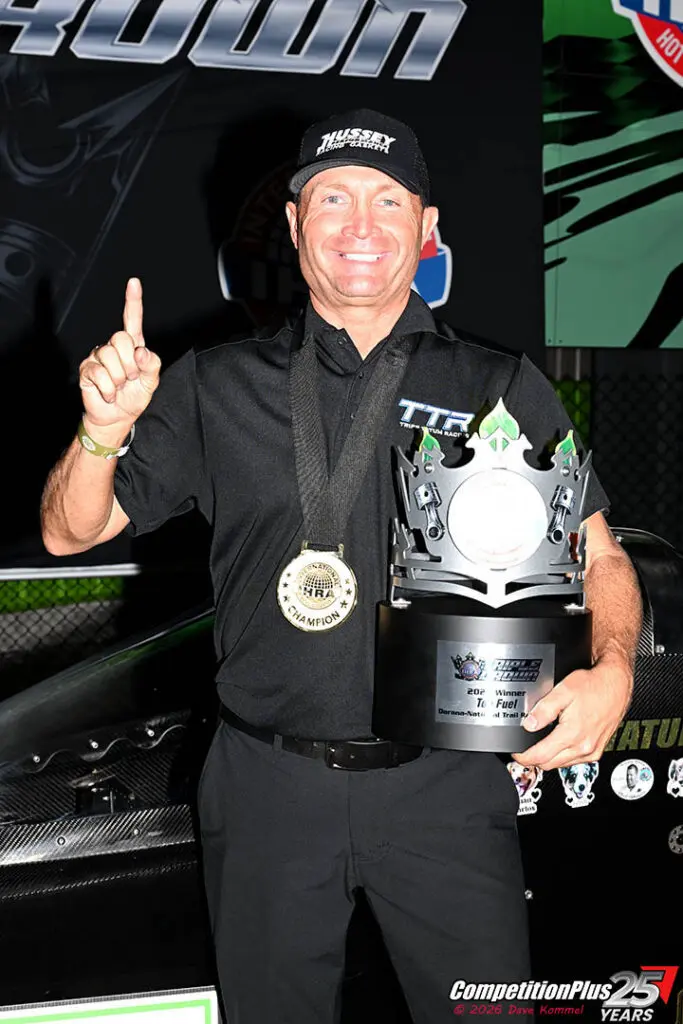
And it’s a victory that didn’t come easy.
Tatum qualified second, then spent eliminations working through a tough Top Fuel ladder assembled with blue collar hitters. He defeated Chuck Loftin in the quarterfinals with a 3.822-second pass before outrunning Jasmine Salinas in the semifinals with a 3.770 at 329.43 mph.
The semifinal victory carried extra significance because Salinas entered the weekend as one of the favorites and arrived with momentum. Tatum knew exactly what kind of challenge was waiting in the opposite lane.
“Yeah, I guess you can make your own luck, but look, Jasmine, she’s come a long way,” Tatum said. “She’s tough now. And that was a tough round. I know what that car has done and can do.”
Waiting in the final was Gary Pritchett, one of Tatum’s closest friends in the sport. Friendship doesn’t mean much when drag racers come to the stafring line, and both racers knew exactly what was at stake.
Pritchett gained the advantage at the starting line, leaving first with a .033 reaction time to Tatum’s .041. By the finish line, none of that mattered as Tatum charged to an IHRA record-setting 3.764-second run at 328.47 mph while Pritchett encountered trouble near the top end and slowed to a 3.859 at 274.39 mph.
The win delivered the largest payday of Tatum’s Top Fuel career. It also reinforced something he already believed about the people around him. While many race winners spend victory interviews talking about their personal challenges, Tatum spent most of his discussing everyone else.
“All these guys did a really good job, couldn’t have done it without them,” Tatum said. “Bob Lagana coming to help out this weekend, Aaron Brook’s helping out, Tony Shortall coming to help out.”
“My guy, Donnie Bender, is my only guy at the shop that pretty much puts this entire car together. Same with Shortall helps there too. And obviously a lot of influence from the Laganas and CAPCO.”
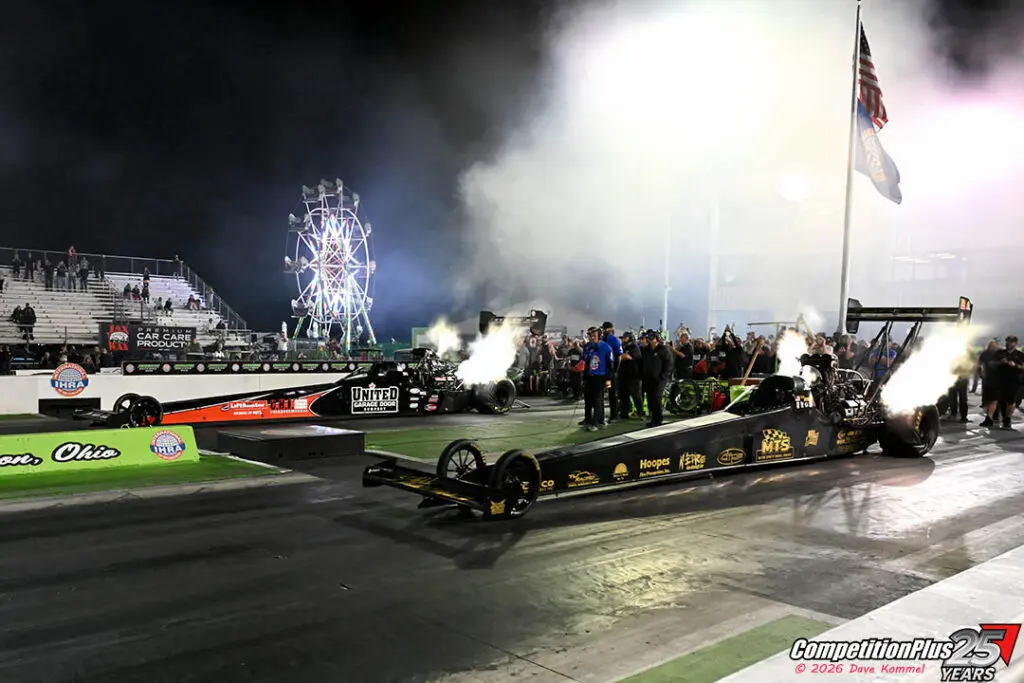
For Tatum, that’s how his operation functions. In an era where many Top Fuel teams travel with extensive personnel and resources, Tatum’s operation still feels blue-collar.
The people working on the car are the same people who spend long hours at the shop, load the trailer and solve problems when nobody is paying attention. That’s why Tatum was more comfortable talking about them than he was talking about himself.
“Yeah, I’m very lucky and blessed to be in this position,” Tatum said. “And it’s a lot of it, well, most of it’s because of them.”
That attitude explains why Tatum seemed almost uncomfortable discussing the million-dollar bonus. Most racers would embrace the conversation, but Tatum has spent enough years in drag racing to understand how quickly fortunes change.
“To me, it’s one round at a time, one everything at a time,” Tatum said. “I’ll start worrying about or being on that maybe after the next race. You got to win the next one to even think about that.”
He came into Columbus not expecting much.
“I’ve told everybody, lots of people,” Tatum said. “My goal is just to qualify all three of them. And if I do that and I win any rounds or get lucky enough to win a race or anything like that, that’s just big bonus.”
One weekend you’re loading the trailer after a loss. The next you’re standing in the winner’s circle holding the biggest check of your career.
“I don’t know,” Tatum said when asked how he balances it all. “Just keep on marching forward. And I’m obviously sick in the head because I keep doing this. We all are because we love it so much.”
The next stop will determine whether the million-dollar conversation grows louder, but Tatum already knows what he’d do if the seven-figure check eventually arrives.
“It would help a lot,” Tatum said. “And I would be just the dummy that’ll put it all right back into it.”