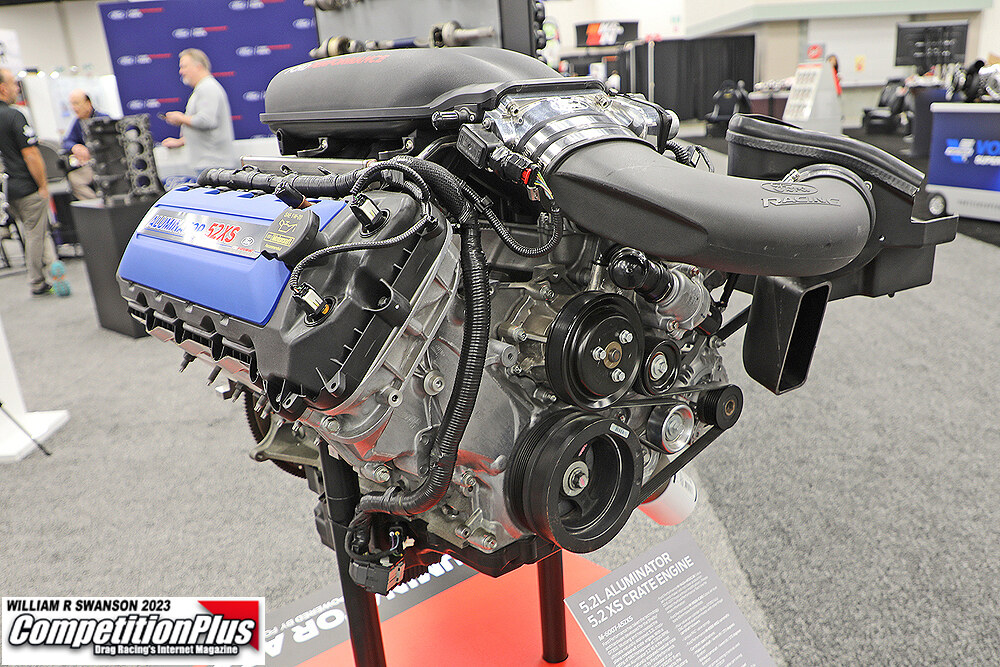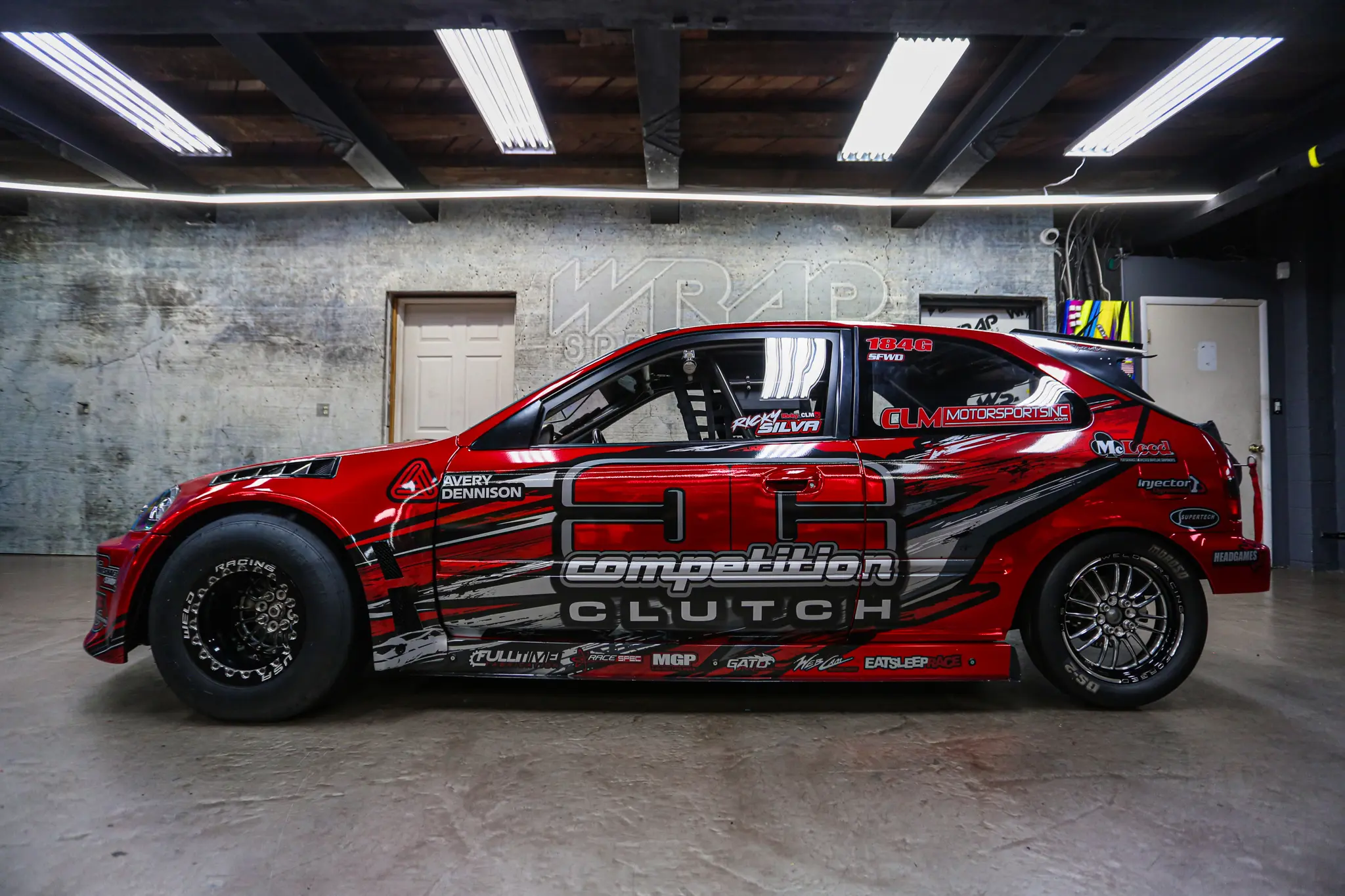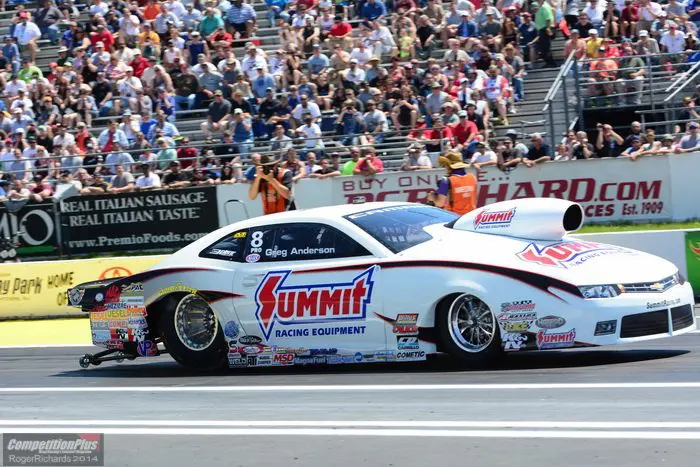

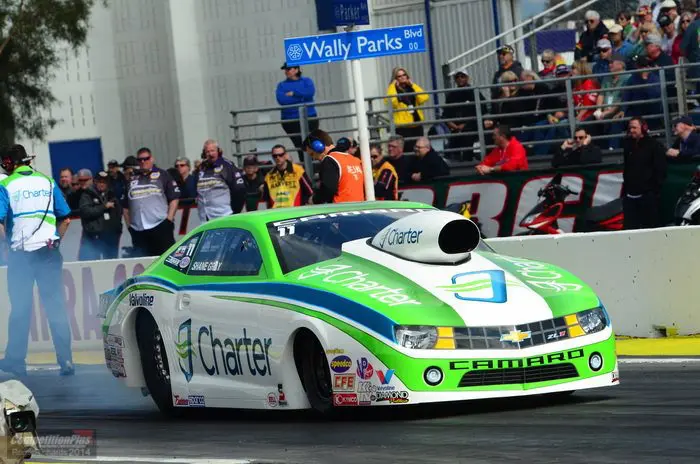
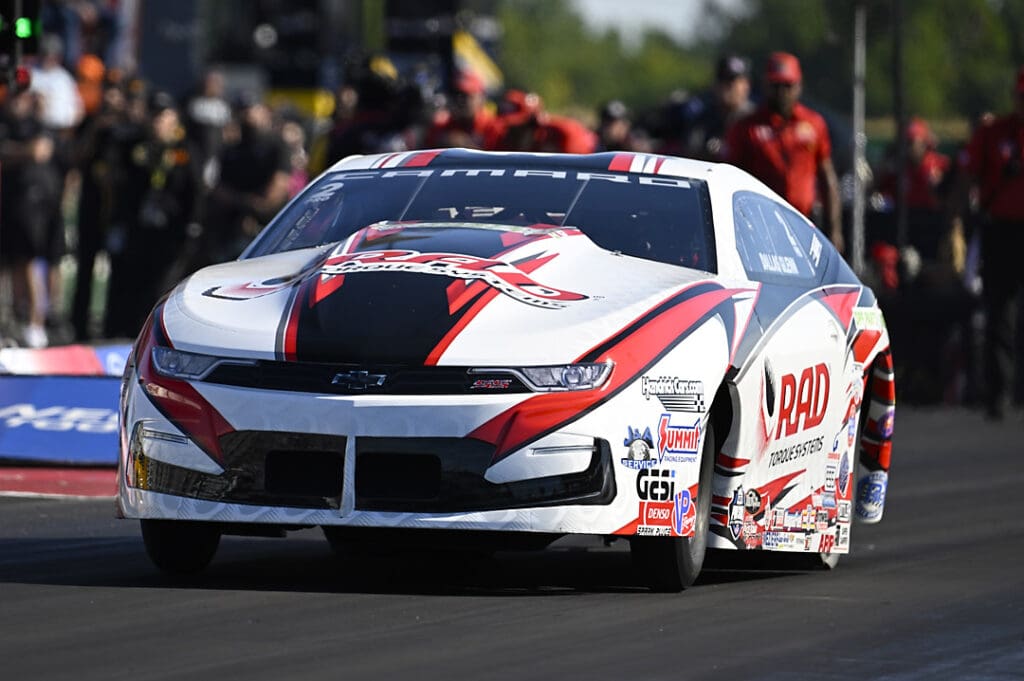
The great flat hood experiment of 2016 is over. NHRA announced Wednesday that hood scoops will return to Pro Stock beginning in the 2027 season, along with a shift to dual, top-mounted 4-barrel-style throttle bodies replacing the current single forward-facing unit.
Electronic Fuel Injection will remain in place, but the revised configuration is designed to improve tuning consistency, reduce variation between teams, and control long-term costs. The decision follows extensive discussions with teams, engine builders, and crew chiefs, with a majority supporting the change.
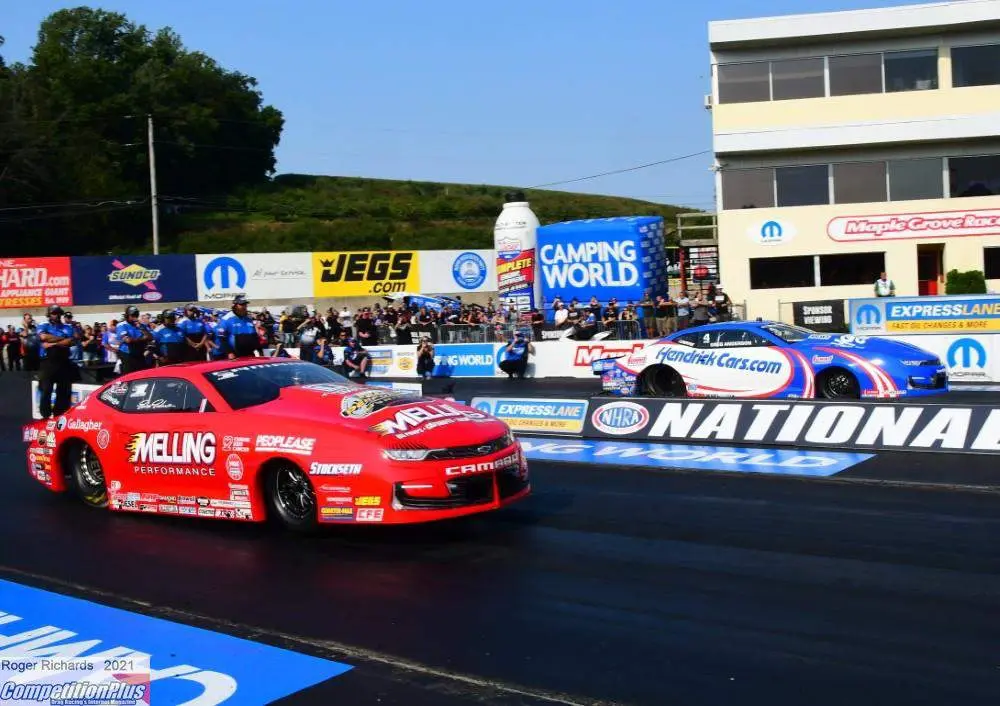
The announcement comes a decade after NHRA transitioned Pro Stock to EFI and flat hoods in 2016, a move intended to align the category more closely with production-based technology. That shift, while modern in concept, introduced technical challenges that teams have continued to address.
NHRA Director of Engineering Clinton Snead said the current air-entry configuration has created complications that affect both performance and parity. The revised setup is intended to simplify those variables.
“The general feeling among competitors and stakeholders is the current low/front air-entry setup makes the engines more difficult to tune and creates more variation from car to car than it should,” Snead said. “By adding the hood scoop and top-mounted/dual throttle bodies, it should eliminate those issues, which should help all teams, but especially the smaller and lower-budget teams.”
Snead added that the move reflects both technical and fan-driven considerations. The return of hood scoops restores a familiar visual element long associated with Pro Stock.
“We’re excited about the return of hood scoops and the addition of dual throttle bodies in Pro Stock,” Snead said. “There was considerable momentum from teams, racers and engine builders to make this move, and we believe this should draw added interest from fans as well, returning to more of the classic look fans have associated with the category.
“The class is in a strong place as far as overall participation, and we’re confident this move will only continue to add to the depth and interest in Pro Stock.”
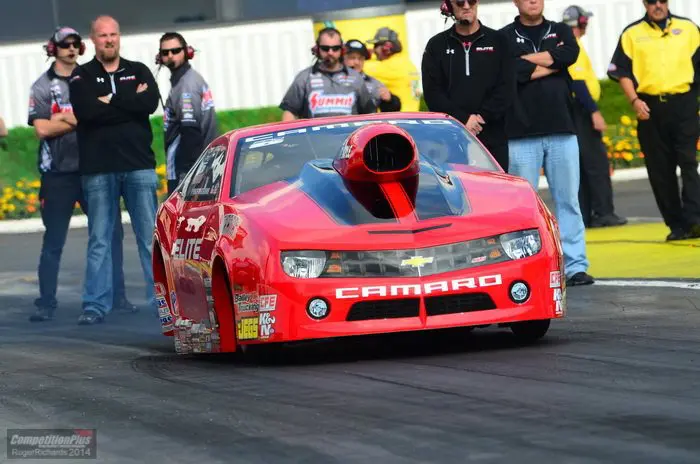


Under the 2027 rules package, hood scoops will be required but subject to limited measurement guidelines, similar to previous specifications. The throttle body configuration will be governed by dimensional rules, allowing teams to build their own units or partner with outside suppliers.
NHRA will also loosen restrictions on manifolds and air inlets, opening the door for additional development while maintaining competitive balance. Officials expect the changes to improve efficiency and potentially enhance elapsed-time performance.
The adjustments represent a hybrid approach, combining the current EFI system with a revised air-entry design. That approach reflects feedback from teams that have worked through the current configuration since its introduction.
The forward-facing throttle body system, while innovative, has proven sensitive to airflow variations. Those differences have translated into tuning challenges that can impact consistency across the field.
By moving to a top-mounted dual throttle body setup and reintroducing hood scoops, NHRA aims to create a more stable and repeatable tuning environment. That stability is viewed as critical in a category decided by narrow performance margins.
The 2016 transition to EFI marked one of the most significant changes in Pro Stock history. It was also not without precedent, as NHRA had explored EFI concepts as early as the mid-1980s in an effort to modernize the category.
That earlier exploration never fully materialized, but it laid the groundwork for the eventual shift decades later. When EFI was implemented in 2016, it brought both technological advancement and a new set of challenges.
Teams adapted to the system, but the learning curve extended beyond initial expectations. Differences in airflow management and tuning sensitivity created a wider range of outcomes between teams.
In a class defined by precision, those variables carried increased importance. Even small inconsistencies could produce measurable performance differences.
The 2027 changes are intended to address those concerns without abandoning the EFI platform. Instead, NHRA is modifying the surrounding components to improve how the system functions in competition.
SIDEBAR – HOW WE GOT TO WHERE WE ARE IN PRO STOCK
Just ask a casual drag racing fan what they think of today’s current NHRA Pro Stock, and chances are you will get one of these answers.
“Nothing stock, nothing relatable, never watch them. Best time to go check out the sportsman pits.”
“Park a Pro Stock car next to the factory-produced equivalent, and that’ll answer the question as far as I’m concerned.”
“More like Pro Camaro. Need to swap it out with Pro Mod on the national tour.”
CompetitionPlus.com posed this very question on its Facebook page.
Participation in Pro Stock has remained strong in recent seasons, a factor NHRA cited in evaluating the timing of the change. Officials believe the revised rules will build on that foundation.
The visual return of hood scoops is also expected to resonate with fans who associate the design with the category’s identity. While performance remains the priority, presentation continues to play a role in fan engagement.
From a technical standpoint, the ability for teams to develop their own throttle body solutions introduces another layer of competition. Engine builders will have increased flexibility within defined parameters.
That balance between innovation and regulation has long been a defining element of Pro Stock. The updated rules attempt to preserve that balance while addressing current concerns.
NHRA officials emphasized that the changes were driven by input from across the category. The collaborative process reflects an effort to align technical direction with competitor needs.
Pro Stock has historically evolved through cycles of innovation and adjustment. Major rule changes have often been followed by refinements as teams and officials evaluate their impact.
The move to EFI in 2016 represented modernization. The 2027 update represents a recalibration of that approach.
Rather than replacing the current system, NHRA is refining it. The combination of EFI with a revised air-entry configuration reflects a measured step forward.
In that sense, the category is not reversing course, but refining it based on experience. The adjustments acknowledge both the benefits and limitations of the current setup.
And as Pro Stock prepares for the 2027 season, the expectation is that the changes will deliver a more consistent, competitive, and recognizable version of the class moving forward.