

The recent NHRA Southern Nationals at South Georgia Motorsports Park presented challenges that often resulted in lane choice determining races. Some called it a one-lane blacktop. Others saw something familiar.

That’s the part getting lost in the reaction out of Valdosta. This wasn’t foreign to the sport. For a long time, it was the sport.

Al Segrini came up in an era where finishing the run wasn’t assumed. It was demanded.

“Quite a few, back in the day,” Segrini admitted. “They didn’t have the prep that they have now. Shoot, they let you run down the return road, you probably haven’t a better shot at it.”

The complaints carry weight in today’s context. But they don’t land the same when viewed through a time when track prep meant one application and a handshake.

“[The old IHRA] Bristol always had that bump in the right lane,” Segrini said. “That always unloaded the car. If you got that right lane, more or less, you better be ready, because you’re going to have to drive that bastard.”

Lane choice wasn’t strategy back then. It was survival math.

“Oh, yeah,” Segrini said. “If you got lane choice, that’s why it was important to get lane choice, because the other guy had to screw up royally for you to beat him. You know what I’m saying? But, no, the way they prep them now is unbelievable after these oildowns. I can’t believe the cars still go down the track. Sometimes it’s better than the lane they just fixed.”

What showed up in South Georgia wasn’t new. The difference is what drivers expect to be given.

Segrini doesn’t dismiss the challenge. He just measures it against a time when the job didn’t stop at the starting line.

“You got to remember back on the Match Race day, you didn’t get paid unless you made the three runs,” Segrini said. “So you go to a track, like you go to Lebanon Valley and they had no lights. They had a car that’s parked on the end with the headlights on. You were waiting for the headlights, because after you threw the quarter mile, no lights. It was dark like going and running into a closet. So you just went and looked for those lights because that tells you where it is.”

That wasn’t an outlier. That was Tuesday night.

“Then Long Island was another one,” he continued. “You run there on Tuesday nights, Match Racing. And some nights you couldn’t see the half-track because the fog came in. Said, ‘Don’t worry, when you get to the half-track, you’ll be able to see the finish line.’”

And sometimes the warning came before the run, not after.

“There were some crazy tracks we went to,” Segrini said. “I went to one track in Ohio. Me and Emery had a Match Race with a Jegs car and the Black Magic car. And the guy comes in and has a meeting with us. ‘Whatever you guys do, shut off at half-track. Don’t run these things out the back because I don’t have enough stopping and there’s a cliff back there.’ ‘Oh, that’s good to know.’ Says, ‘You won’t get paid if you go beyond the half-track.’”
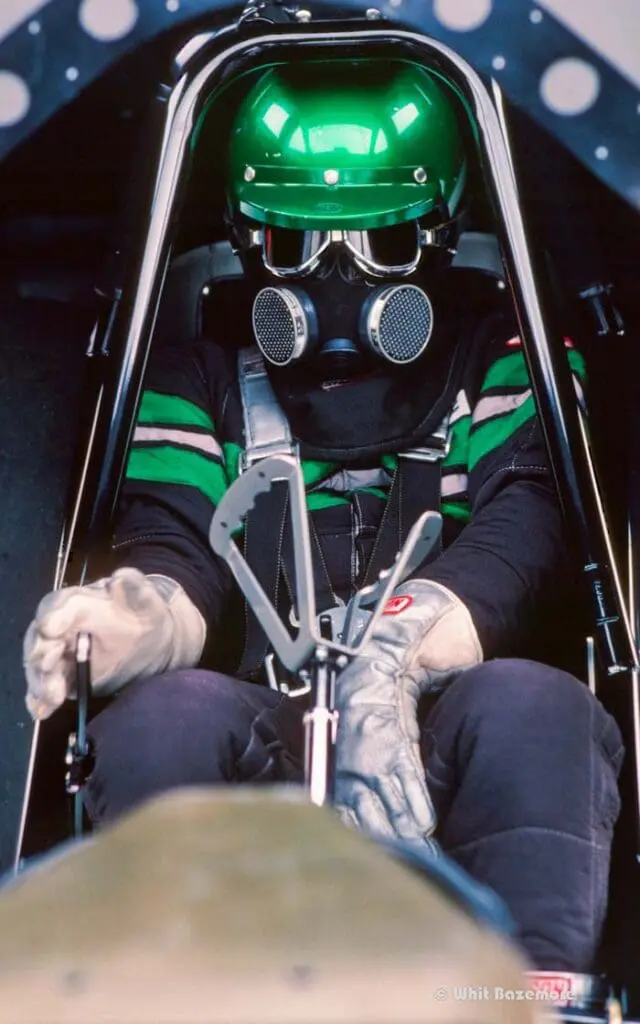
That kind of environment didn’t reward perfection. It demanded completion.

“No s***,” Segrini said. “Jeez, it’s funny, the old Jack Doyle up in New England was my home track. And he would always say to me, get in the final round, they’d come up say to you, be all bent over and. And he goes, ‘Al, you ain’t flogging a dead horse up here trying to get paid, are you?’ I said, ‘No s***. No, sir, Jack. I’ll make my run.’ ‘Okay, just checking with you. Because a lot of guys that drag them up there and they knew they could only probably start it, and do a burnout, and then they’re going to shut it off.’”

That pressure shaped how drivers approached the car. The job was simple. The margin wasn’t.

“So I’m saying, I’ll look it, this is very simple,” Segrini said. “It’s very simple. So all the driver has to do is three things in this sport, three. If you can remember three things, you won’t get in any trouble. Number one is that you have to leave on time. That’s your job, to get ahead of that guy on the starting line. So leave on time. Number two is keep it in the groove. There’s a groove down there, eight feet wide. You’re going to stay in that groove the whole run. That’s number two. And the third is make good decisions. If you’re racing a guy, and you see the guy pull away from you, and he’s three cars out, and pulling away, your brain should automatically say, ‘I’m not going faster than him because he’s ahead of me.’ So shut it the f*** off.”

There wasn’t a crew chief scrolling data looking for answers. The driver was the answer.

“When you talk about the good old days that good old days, the driver was the computer,” Segrini said. “There was no computers. The driver was the computer. He had to open a valve, close the valve, get it out to half-track, reach down between your legs, pull the lever to shift it. There’s no buttons, no air, no nothing. You have to reach down and manually put it in high gear. Then go back up on the steering wheel and steer it. And then when you get to the lights, you got to put the chute out and shut the fuel off.”

When the run was over, the guesswork began.

“Then you get back and the crew guys say, ‘What did it do?’ He said, ‘Well, it was lazy here. It made a good move here. It didn’t do this here.’ And he had to figure out what the hell you’re trying to tell him.”

Today, there’s no guessing.

“Now they go to the computer, they know if the driver s*** himself,” Segrini said. “They probably got a thing under his ass. So, ‘Oh, I see you s*** yourself at about a second into the run.’”

Track prep followed the same pattern. Basic, limited, and often untouched once the day started.

“That’s it,” Segrini said. “Then if they had an oil down or something, they’d have to do that. But there was no, before the pros come out, they dragged the track, then they put down the tire machine, then they put down glue. There was none of that stuff. To realize how hard it was for these drivers to get these things down the track, you know what I’m saying?”

Even something as simple as shifting demanded precision that didn’t forgive mistakes.

“You shifted these things with old days, you run them to half-track before you even think about reaching down to grab that lever,” Segrini said. “Then you click it in that high gear at the half-track. And when you clicked it in, the RPMs are up, everything’s hauling ass. Time you snap that thing and the guy’s beside you, he’s gone. He ain’t there no more. It’s the time you click it and you go by him like he stops Because it’s waiting for a gear.”

The ones who could do that anywhere stood apart.

“I would say, number one, my number one choice for a seat-of-the-pants driver is Dale Pulde back in the day,” Segrini said. “Dale Pulde, number one. I’d say, secondly, the Snake was good too. Snake was damn good. But there was other guys like Paul Smith. Paul Smith was a hell of a seat-of-the-pants driver. He could get down a dirt road. Jungle could get down a dirt road.”

They didn’t need ideal conditions. They didn’t wait for them.

“And I would say Pulde’s a seat-of-the-pants, good driver,” Segrini said. “Beadle could get the car down the other end, he was pretty handy. But Billy Meyer in his day, for a young guy, he was pretty good. Billy’s problem was didn’t know when to shut it off. That’s why he had all those fires.”

The sport didn’t hand them anything. It asked them to finish what they started.

“When you ran as a match racer, it’s three-run deals,” Segrini said. “You didn’t make the runs, you didn’t get paid.”

As Segrini sees it. Dale Pulde was the best at getting a car down the track in any condition.

Share the Insights?

Click here to share the article.

ad space x ad space

ad space x ad space

Competition Plus Team

Since our inception, we have been passionately dedicated to delivering the most accurate, timely, and compelling content in the world of drag racing. Our readers depend on us for the latest news, in-depth features, expert analysis, and exclusive interviews that connect you to the sport’s pulse.

Sign up for our newsletters and email list.

This field is for validation purposes and should be left unchanged.
Name

WHEN EVERY RUN HAD TO COUNT: AL SEGRINI ON ONE-LANE TRACKS AND WHY TODAY’S DRIVERS HAVE IT EASIER

The recent NHRA Southern Nationals at South Georgia Motorsports Park presented challenges that often resulted in lane choice determining races. Some called it a one-lane blacktop. Others saw something familiar.

That’s the part getting lost in the reaction out of Valdosta. This wasn’t foreign to the sport. For a long time, it was the sport.

Al Segrini came up in an era where finishing the run wasn’t assumed. It was demanded.

“Quite a few, back in the day,” Segrini admitted. “They didn’t have the prep that they have now. Shoot, they let you run down the return road, you probably haven’t a better shot at it.”

The complaints carry weight in today’s context. But they don’t land the same when viewed through a time when track prep meant one application and a handshake.

“[The old IHRA] Bristol always had that bump in the right lane,” Segrini said. “That always unloaded the car. If you got that right lane, more or less, you better be ready, because you’re going to have to drive that bastard.”

Lane choice wasn’t strategy back then. It was survival math.

“Oh, yeah,” Segrini said. “If you got lane choice, that’s why it was important to get lane choice, because the other guy had to screw up royally for you to beat him. You know what I’m saying? But, no, the way they prep them now is unbelievable after these oildowns. I can’t believe the cars still go down the track. Sometimes it’s better than the lane they just fixed.”

What showed up in South Georgia wasn’t new. The difference is what drivers expect to be given.

Segrini doesn’t dismiss the challenge. He just measures it against a time when the job didn’t stop at the starting line.

“You got to remember back on the Match Race day, you didn’t get paid unless you made the three runs,” Segrini said. “So you go to a track, like you go to Lebanon Valley and they had no lights. They had a car that’s parked on the end with the headlights on. You were waiting for the headlights, because after you threw the quarter mile, no lights. It was dark like going and running into a closet. So you just went and looked for those lights because that tells you where it is.”

That wasn’t an outlier. That was Tuesday night.

“Then Long Island was another one,” he continued. “You run there on Tuesday nights, Match Racing. And some nights you couldn’t see the half-track because the fog came in. Said, ‘Don’t worry, when you get to the half-track, you’ll be able to see the finish line.’”

And sometimes the warning came before the run, not after.

“There were some crazy tracks we went to,” Segrini said. “I went to one track in Ohio. Me and Emery had a Match Race with a Jegs car and the Black Magic car. And the guy comes in and has a meeting with us. ‘Whatever you guys do, shut off at half-track. Don’t run these things out the back because I don’t have enough stopping and there’s a cliff back there.’ ‘Oh, that’s good to know.’ Says, ‘You won’t get paid if you go beyond the half-track.’”

That kind of environment didn’t reward perfection. It demanded completion.

“No s***,” Segrini said. “Jeez, it’s funny, the old Jack Doyle up in New England was my home track. And he would always say to me, get in the final round, they’d come up say to you, be all bent over and. And he goes, ‘Al, you ain’t flogging a dead horse up here trying to get paid, are you?’ I said, ‘No s***. No, sir, Jack. I’ll make my run.’ ‘Okay, just checking with you. Because a lot of guys that drag them up there and they knew they could only probably start it, and do a burnout, and then they’re going to shut it off.’”

That pressure shaped how drivers approached the car. The job was simple. The margin wasn’t.

“So I’m saying, I’ll look it, this is very simple,” Segrini said. “It’s very simple. So all the driver has to do is three things in this sport, three. If you can remember three things, you won’t get in any trouble. Number one is that you have to leave on time. That’s your job, to get ahead of that guy on the starting line. So leave on time. Number two is keep it in the groove. There’s a groove down there, eight feet wide. You’re going to stay in that groove the whole run. That’s number two. And the third is make good decisions. If you’re racing a guy, and you see the guy pull away from you, and he’s three cars out, and pulling away, your brain should automatically say, ‘I’m not going faster than him because he’s ahead of me.’ So shut it the f*** off.”

There wasn’t a crew chief scrolling data looking for answers. The driver was the answer.
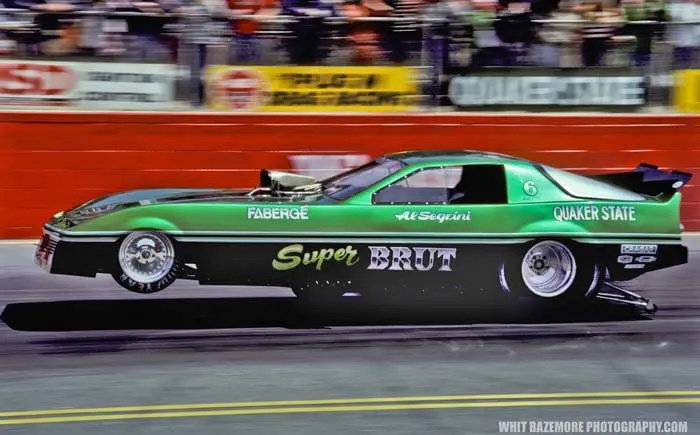
“When you talk about the good old days that good old days, the driver was the computer,” Segrini said. “There was no computers. The driver was the computer. He had to open a valve, close the valve, get it out to half-track, reach down between your legs, pull the lever to shift it. There’s no buttons, no air, no nothing. You have to reach down and manually put it in high gear. Then go back up on the steering wheel and steer it. And then when you get to the lights, you got to put the chute out and shut the fuel off.”

When the run was over, the guesswork began.

“Then you get back and the crew guys say, ‘What did it do?’ He said, ‘Well, it was lazy here. It made a good move here. It didn’t do this here.’ And he had to figure out what the hell you’re trying to tell him.”

Today, there’s no guessing.

“Now they go to the computer, they know if the driver s*** himself,” Segrini said. “They probably got a thing under his ass. So, ‘Oh, I see you s*** yourself at about a second into the run.’”

Track prep followed the same pattern. Basic, limited, and often untouched once the day started.

“That’s it,” Segrini said. “Then if they had an oil down or something, they’d have to do that. But there was no, before the pros come out, they dragged the track, then they put down the tire machine, then they put down glue. There was none of that stuff. To realize how hard it was for these drivers to get these things down the track, you know what I’m saying?”
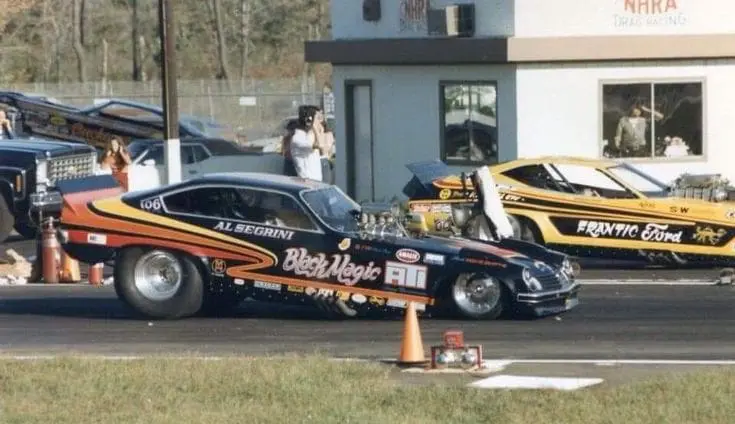

Even something as simple as shifting demanded precision that didn’t forgive mistakes.

“You shifted these things with old days, you run them to half-track before you even think about reaching down to grab that lever,” Segrini said. “Then you click it in that high gear at the half-track. And when you clicked it in, the RPMs are up, everything’s hauling ass. Time you snap that thing and the guy’s beside you, he’s gone. He ain’t there no more. It’s the time you click it and you go by him like he stops Because it’s waiting for a gear.”

The ones who could do that anywhere stood apart.

“I would say, number one, my number one choice for a seat-of-the-pants driver is Dale Pulde back in the day,” Segrini said. “Dale Pulde, number one. I’d say, secondly, the Snake was good too. Snake was damn good. But there was other guys like Paul Smith. Paul Smith was a hell of a seat-of-the-pants driver. He could get down a dirt road. Jungle could get down a dirt road.”

They didn’t need ideal conditions. They didn’t wait for them.

“And I would say Pulde’s a seat-of-the-pants, good driver,” Segrini said. “Beadle could get the car down the other end, he was pretty handy. But Billy Meyer in his day, for a young guy, he was pretty good. Billy’s problem was didn’t know when to shut it off. That’s why he had all those fires.”

The sport didn’t hand them anything. It asked them to finish what they started.

“When you ran as a match racer, it’s three-run deals,” Segrini said. “You didn’t make the runs, you didn’t get paid.”
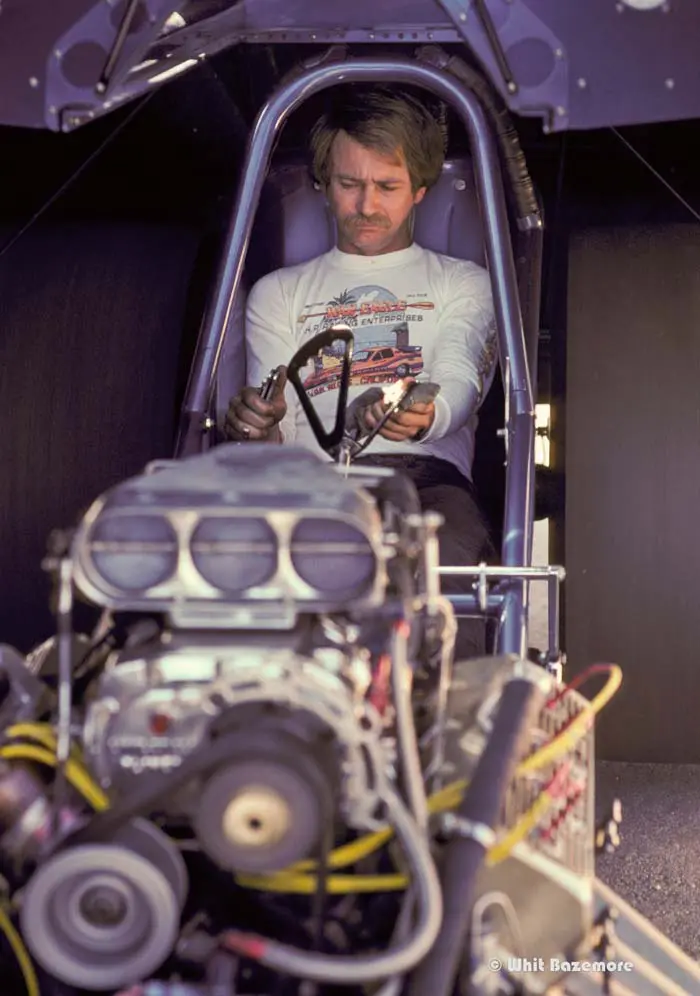

As Segrini sees it. Dale Pulde was the best at getting a car down the track in any condition.
Picture of John Doe

John Doe

Lorem ipsum dolor sit amet consectetur adipiscing elit dolor

More Posts

Send Us A Message

Picture of Bobby Bennett
Bobby Bennett
Thank you for joining us on this journey. Your support and trust inspire us every day to deliver the best in drag racing journalism. We are excited about the future and look forward to continuing to serve you with the same dedication and passion that has defined CompetitionPlus.com from the very beginning.

Don’t miss these other exciting stories!

Explore more action packed posts on Competition Plus, where we dive into the latest in Drag Racing News. Discover a range of topics, from race coverage to in-depth interviews, to keep you informed and entertained.