
One of last season’s hottest debates in nitro racing centered on Funny Car body tethers; the hardware meant to keep body parts out of the grandstands when engines explode. Few argued with the purpose, but plenty questioned the side effects when the same body stayed attached during a violent engine failure with a driver still inside the car.
 
That conversation did not stay limited to coffee cups and pit stools. It followed racers through the second half of the season, especially after high-profile explosions renewed questions about whether the current answer was also creating a new problem.
 
That was enough for Tim Wilkerson. If something nags at him long enough, he usually tries to build his own answer.
 
Wilkerson teamed with chassis builder Murf McKinney over the offseason to rethink how a Funny Car body should react when a nitro engine comes apart. Two weeks ago in Pomona, California, they got the kind of test nobody wants and everybody studies.
 
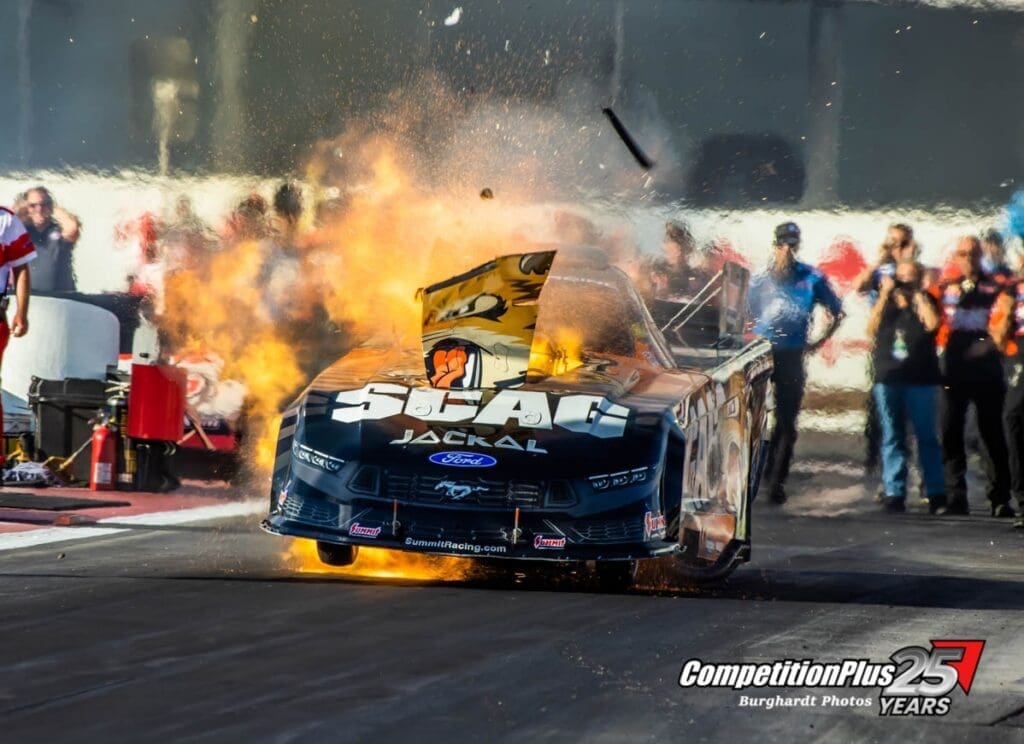
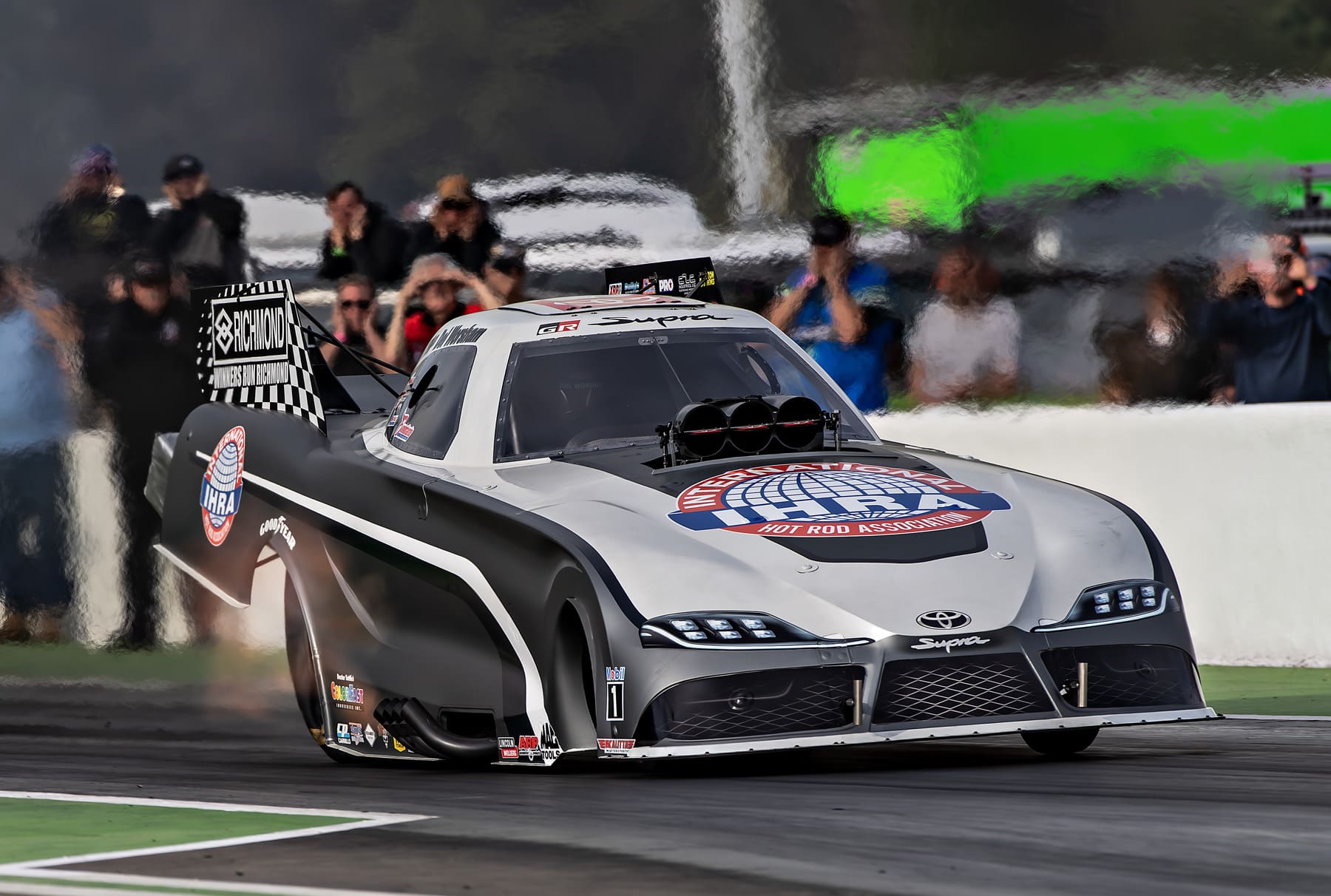
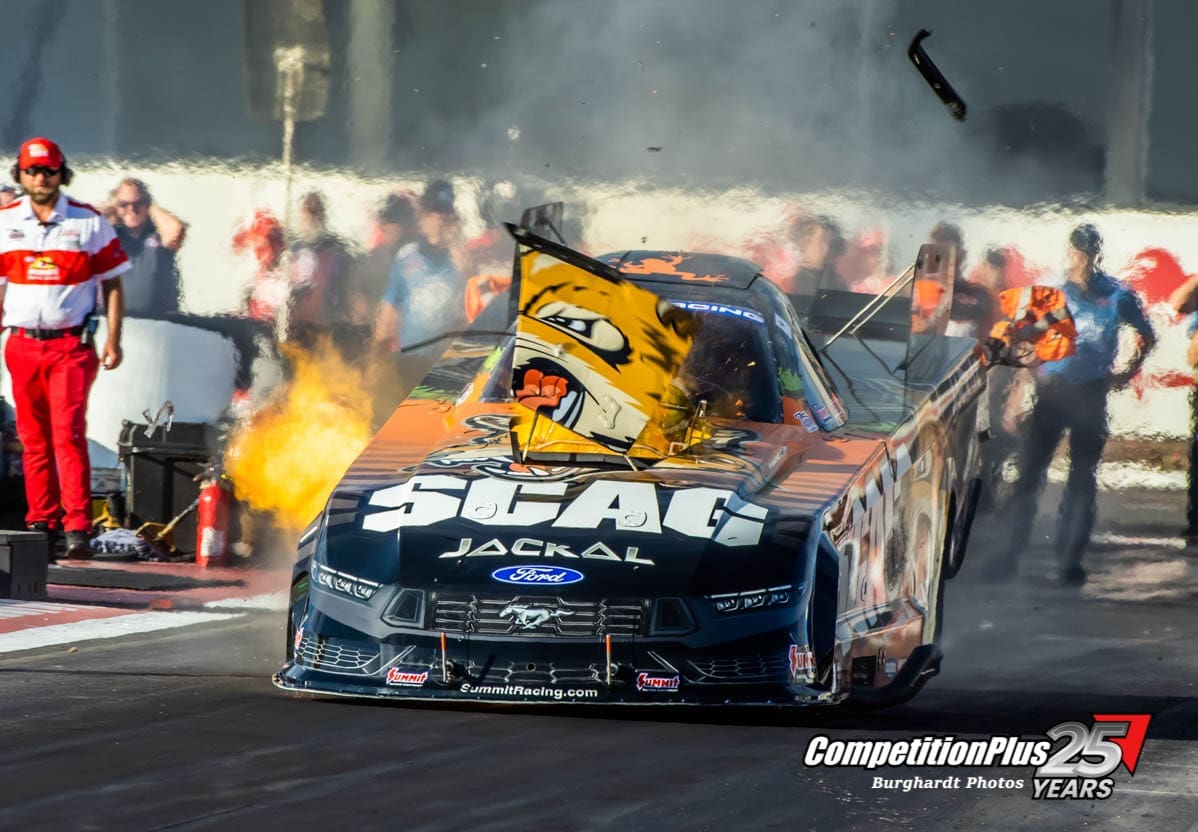
Wilkerson’s Funny Car exploded. When the smoke cleared, the body remained in far better shape than many Funny Car shells after similar incidents, the front end survived, and the post-run inspection gave the team something rare after a blast — encouragement.
 
“Well, I think our burst panel assembly worked better than the tethers because the front latches still did not quite give up like I would like to see them give up,” Wilkerson said. “They still held on. But not being double sheer, they actually let it flex. It didn’t ruin any of that stuff. Didn’t break the front end. The body’s negotiably not bad at all. So I’m pretty excited about that.”
 
That sounds like Wilkerson in his full element: part racer, part fabricator, part field engineer. He has long been one of drag racing’s most hands-on thinkers, the kind who studies broken parts as seriously as reaction times.


Pomona showed him one thing quickly: the concept worked, but not enough.
 
The body did not suffer the kind of total destruction many teams expect after an engine lets go. But Wilkerson said the front latches still held more than he wanted, meaning the controlled release he envisioned was only halfway there.
 
“So I talked to NHRA about it because what happens is when you step on the gas, you think about it, the car tries to drive up underneath the body,” Wilkerson said. “So I need to make that latch even junkier than I made it because it didn’t break it. It just moved the bar just a little bit. So I need to make it so it breaks it.”
 
While Wilkerson believes that sounds backward until you understand race cars. In many forms of racing, the smartest part on the vehicle is the one designed to fail first.
 
A sacrificial piece can redirect force, save expensive components, and sometimes spare the driver from absorbing the worst of a mechanical disaster. In Wilkerson’s case, he wants the latch to surrender before other pieces do.
 
“But it did, knock on wood, it really did a lot what I thought it would do,” Wilkerson said. “So I’m optimistic about it, put it that way.”
 
That optimism matters because Funny Car teams know how expensive these moments become. One explosion can wipe out a body, damage the chassis, consume parts inventory, and erase valuable race-weekend momentum.
The challenge now is balance.
 
Build the latch too stout and it refuses to let go when the car needs relief. Build it too soft and it can become a liability under normal race loads at more than 330 mph.
 
“We didn’t wound them enough,” Wilkerson said. “Yeah, no doubt about it. And I was afraid of that, but that’s what NHRA, Joey and I talked about in depth and that’s kind of what he wanted to do.”
 
That line also offered a glimpse into how safety improvements usually happen in NHRA. Not with dramatic public announcements, but with racers, officials, and builders debating details few outsiders ever notice.
 
Wilkerson made clear the process was collaborative, even when opinions differed.
 
“He didn’t want me to do what I need to do,” Wilkerson said. “But we talked about it some more and I said, ‘Okay, I see what you’re trying to do.’ So we’ll see. I got Murph working on it.”
 
That may be the healthiest sign of all. The sanctioning body listened, the racer tested, and the builder is already refining the next version.
 
Then there was the body itself, which may have delivered the strongest evidence.
Funny Car bodies after explosions are often reduced to twisted fiberglass and repair bills. Wilkerson said this one was nowhere near that.
 
“Yeah. Oh, yeah. No, I probably could have ran it if I’d have worked on it just a little bit because it just had a couple of cracks around where the injector scoop is at,” he said.
 
That sentence should get every crew chief’s attention. If the shell survives, it usually means the force went somewhere better than it used to.
 
Now the body is back with McKinney, where the next round of changes is already underway. That is where many of drag racing’s best ideas are born — not in headlines, but in race trailers, fabrication shops, and long nights spent staring at damaged parts.
 
“But it wasn’t bad,” Wilkerson said. “So Murph’s got it now and he’s going to tune it up and we looked at where it broke and looked at where it violated the scoop. It was interesting if nothing else.”

Share the Insights?

Click here to share the article.

ad space x ad space

ad space x ad space

Competition Plus Team

Since our inception, we have been passionately dedicated to delivering the most accurate, timely, and compelling content in the world of drag racing. Our readers depend on us for the latest news, in-depth features, expert analysis, and exclusive interviews that connect you to the sport’s pulse.

Sign up for our newsletters and email list.

This field is for validation purposes and should be left unchanged.
Name

WILKERSON’S NEW FUNNY CAR TETHER SYSTEM PASSES FIRST REAL TEST

One of last season’s hottest debates in nitro racing centered on Funny Car body tethers; the hardware meant to keep body parts out of the grandstands when engines explode. Few argued with the purpose, but plenty questioned the side effects when the same body stayed attached during a violent engine failure with a driver still inside the car.
 
That conversation did not stay limited to coffee cups and pit stools. It followed racers through the second half of the season, especially after high-profile explosions renewed questions about whether the current answer was also creating a new problem.
 
That was enough for Tim Wilkerson. If something nags at him long enough, he usually tries to build his own answer.
 
Wilkerson teamed with chassis builder Murf McKinney over the offseason to rethink how a Funny Car body should react when a nitro engine comes apart. Two weeks ago in Pomona, California, they got the kind of test nobody wants and everybody studies.
 
Wilkerson’s Funny Car exploded. When the smoke cleared, the body remained in far better shape than many Funny Car shells after similar incidents, the front end survived, and the post-run inspection gave the team something rare after a blast — encouragement.
 
“Well, I think our burst panel assembly worked better than the tethers because the front latches still did not quite give up like I would like to see them give up,” Wilkerson said. “They still held on. But not being double sheer, they actually let it flex. It didn’t ruin any of that stuff. Didn’t break the front end. The body’s negotiably not bad at all. So I’m pretty excited about that.”
 
That sounds like Wilkerson in his full element: part racer, part fabricator, part field engineer. He has long been one of drag racing’s most hands-on thinkers, the kind who studies broken parts as seriously as reaction times.


Pomona showed him one thing quickly: the concept worked, but not enough.
 
The body did not suffer the kind of total destruction many teams expect after an engine lets go. But Wilkerson said the front latches still held more than he wanted, meaning the controlled release he envisioned was only halfway there.
 
“So I talked to NHRA about it because what happens is when you step on the gas, you think about it, the car tries to drive up underneath the body,” Wilkerson said. “So I need to make that latch even junkier than I made it because it didn’t break it. It just moved the bar just a little bit. So I need to make it so it breaks it.”
 
While Wilkerson believes that sounds backward until you understand race cars. In many forms of racing, the smartest part on the vehicle is the one designed to fail first.
 
A sacrificial piece can redirect force, save expensive components, and sometimes spare the driver from absorbing the worst of a mechanical disaster. In Wilkerson’s case, he wants the latch to surrender before other pieces do.
 
“But it did, knock on wood, it really did a lot what I thought it would do,” Wilkerson said. “So I’m optimistic about it, put it that way.”
 
That optimism matters because Funny Car teams know how expensive these moments become. One explosion can wipe out a body, damage the chassis, consume parts inventory, and erase valuable race-weekend momentum.

The challenge now is balance.
 
Build the latch too stout and it refuses to let go when the car needs relief. Build it too soft and it can become a liability under normal race loads at more than 330 mph.
 
“We didn’t wound them enough,” Wilkerson said. “Yeah, no doubt about it. And I was afraid of that, but that’s what NHRA, Joey and I talked about in depth and that’s kind of what he wanted to do.”
 
That line also offered a glimpse into how safety improvements usually happen in NHRA. Not with dramatic public announcements, but with racers, officials, and builders debating details few outsiders ever notice.
 
Wilkerson made clear the process was collaborative, even when opinions differed.
 
“He didn’t want me to do what I need to do,” Wilkerson said. “But we talked about it some more and I said, ‘Okay, I see what you’re trying to do.’ So we’ll see. I got Murph working on it.”
 
That may be the healthiest sign of all. The sanctioning body listened, the racer tested, and the builder is already refining the next version.
 
Then there was the body itself, which may have delivered the strongest evidence.
Funny Car bodies after explosions are often reduced to twisted fiberglass and repair bills. Wilkerson said this one was nowhere near that.
 
“Yeah. Oh, yeah. No, I probably could have ran it if I’d have worked on it just a little bit because it just had a couple of cracks around where the injector scoop is at,” he said.
 
That sentence should get every crew chief’s attention. If the shell survives, it usually means the force went somewhere better than it used to.
 
Now the body is back with McKinney, where the next round of changes is already underway. That is where many of drag racing’s best ideas are born — not in headlines, but in race trailers, fabrication shops, and long nights spent staring at damaged parts.
 
“But it wasn’t bad,” Wilkerson said. “So Murph’s got it now and he’s going to tune it up and we looked at where it broke and looked at where it violated the scoop. It was interesting if nothing else.”

Picture of John Doe

John Doe

Lorem ipsum dolor sit amet consectetur adipiscing elit dolor

More Posts

Send Us A Message

Picture of Bobby Bennett
Bobby Bennett
Thank you for joining us on this journey. Your support and trust inspire us every day to deliver the best in drag racing journalism. We are excited about the future and look forward to continuing to serve you with the same dedication and passion that has defined CompetitionPlus.com from the very beginning.

Don’t miss these other exciting stories!

Explore more action packed posts on Competition Plus, where we dive into the latest in Drag Racing News. Discover a range of topics, from race coverage to in-depth interviews, to keep you informed and entertained.