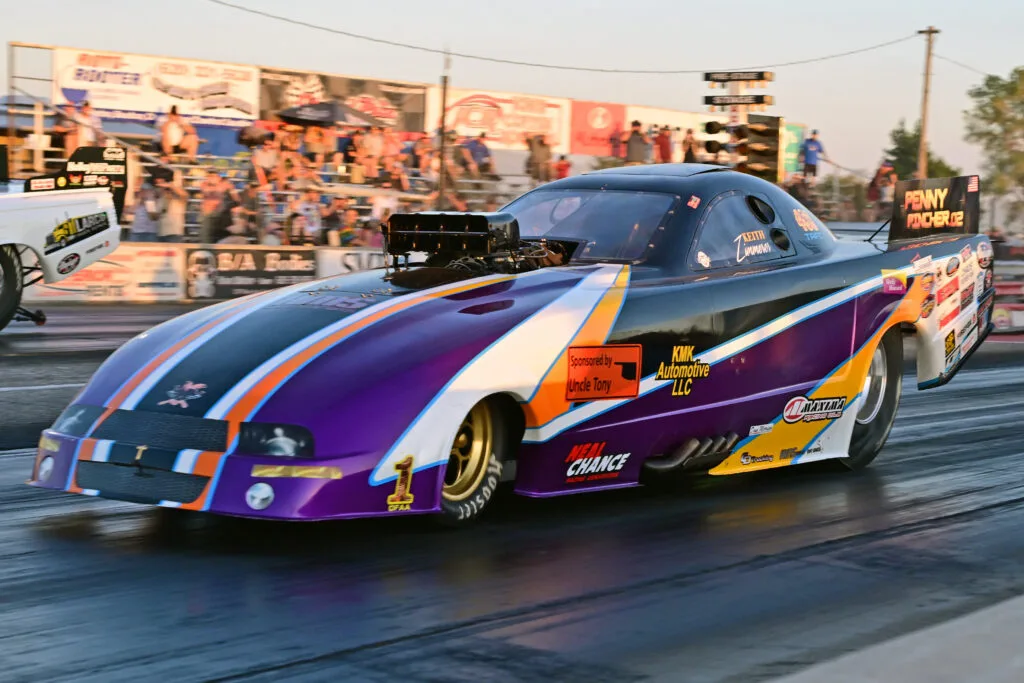
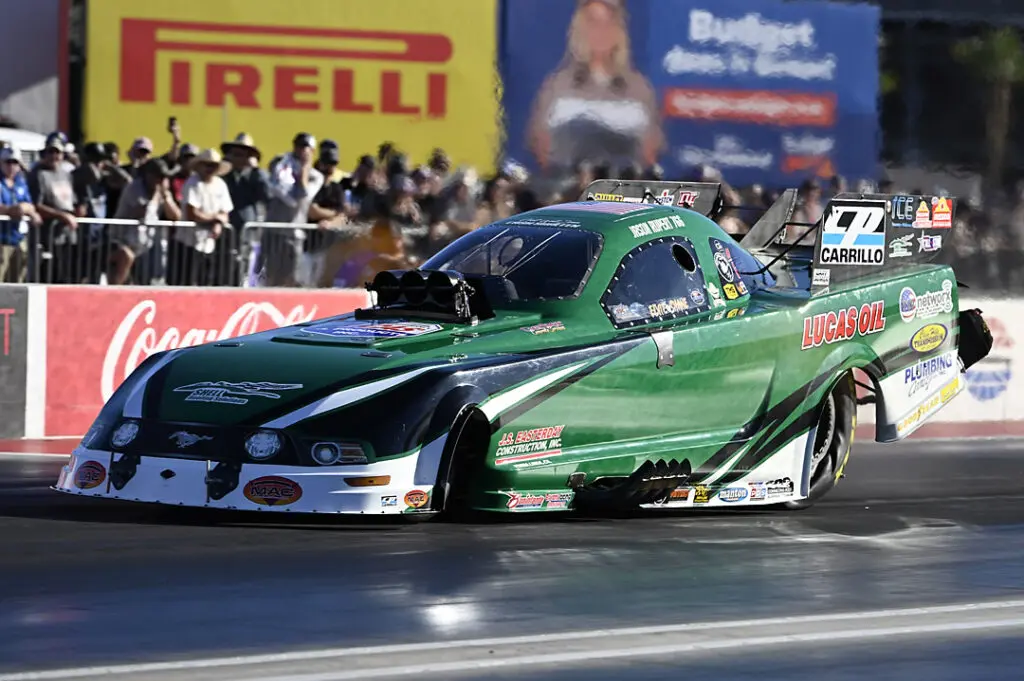


The scoreboards at The Strip at Las Vegas Motor Speedway told one story. Jason Rupert’s 3.992-second run at 322.11 mph fell short of Austin Prock’s winning 3.895 at 334.65 mph during Sunday’s first round of eliminations at the NHRA Nevada Nationals. But in reality, that race wasn’t about numbers. It was about grit, resolve, and a deep belief that heart can sometimes do what horsepower can’t.
Rupert’s run — his quickest of the weekend — came after qualifying 16th out of 22 entries in one of the most stacked Funny Car fields of the season. On paper, his independently funded, small-team operation had no business being there. But the Anaheim Hills, Calif., racer made the field when six others didn’t, then gave the championship leader all he could handle for 1,000 feet.
“I mean, the struggle is real,” Rupert said, smiling as he looked at his car parked in the pits afterward. “When I was watching Jim Dunn’s car from the top end and he smoked the tires, that was pretty emotional. Because I know what that’s like — fighting to make it all work, doing everything you can with what you’ve got.”
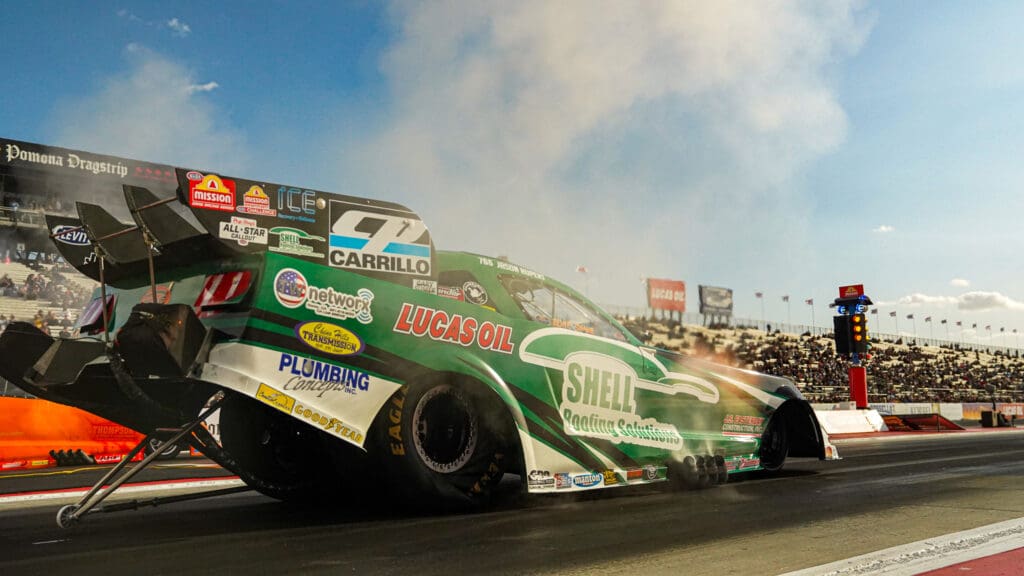
Rupert, a past NHRA Heritage Series champion, has spent most of his career racing without the safety net of corporate funding. His Funny Car team runs lean — a small crew, limited parts, and a trailer that hauls dreams as much as equipment. While powerhouse operations roll in with full-time crews and pallets of spare engines, Rupert’s team makes every gasket, clutch disc, and cylinder head count.
“I don’t want to go broke,” he said matter-of-factly. “So I have to play it smart. Rahn [Tobler] and the team are doing an outstanding job keeping me safe, keeping all our motor parts in the motor, and doing the best we can with what we have.”
That “what we have” attitude has long been Rupert’s trademark. Whether tuning his nostalgia Funny Car or now fighting against multimillion-dollar organizations, his approach hasn’t changed — run smart, stay safe, and squeeze every bit of performance out of what’s available. “I’ve learned that it’s better to make ten smart runs than one wild one that breaks everything you own,” he said. “We don’t have the luxury of throwing money at the car. So every decision we make has to count.”

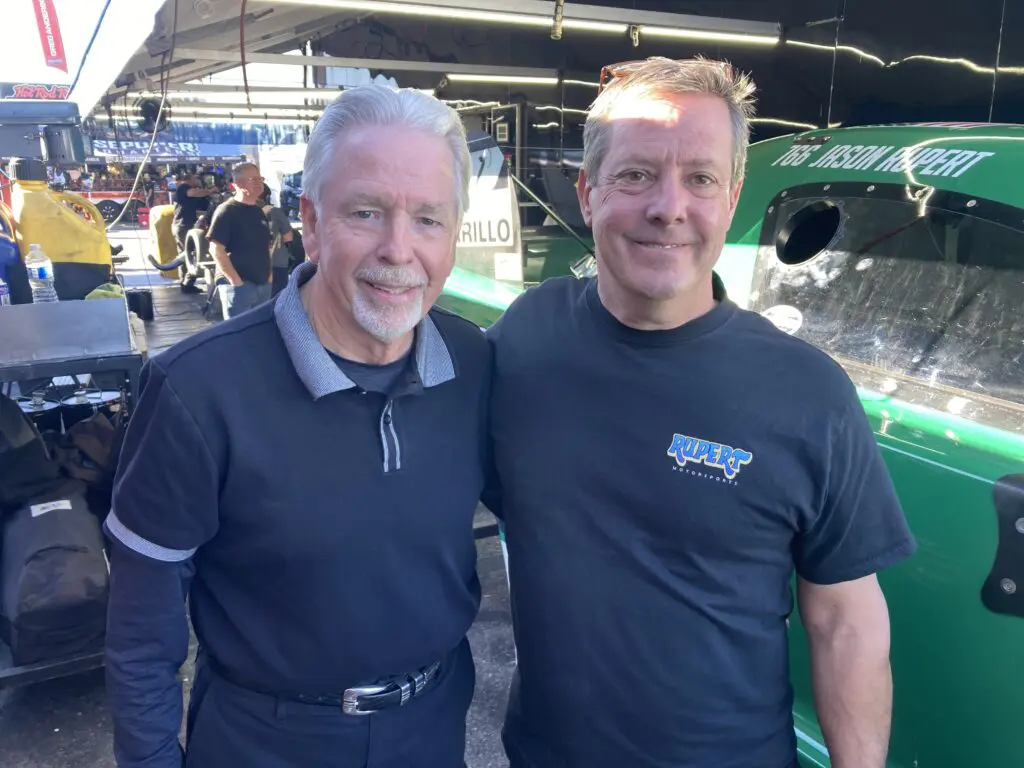
If Rupert represents the fight, then crew chief Rahn Tobler represents the foundation. The championship-winning tuner, who guided legends like Shirley Muldowney, Ron Capps, and Jack Beckman to success, has spent the last three seasons lending his expertise — and patience — to Rupert’s underdog operation. “He brought years and years of Top Fuel knowledge with him,” Rupert said. “Some of the stuff we were doing, we thought it was the right way, but he basically groomed us and turned us into a damn good team.”
Tobler’s presence has given the program legitimacy and stability. While the team lacks resources, they’ve built something money can’t buy — consistency. “We’re finishing our third full year together, and the team has learned a lot,” Tobler said. “Jason’s more consistent now in his driving than he’s ever been. The only problem is he doesn’t get to do it often enough. Usually it’s three months between races, so it’s hard to stay in rhythm.”
Even with long breaks, Tobler says the results speak for themselves. “This car doesn’t blow up. Stuff doesn’t fall off it. We’re not shut off on the starting line. That’s something I’m proud of,” he said. “These people do this because they want to, not because they’re getting rich doing it. They sacrifice time with their families, and they give everything they have. That makes me want to work even harder.”
Rupert’s 4.025-second, 312.21 mph qualifying effort placed him just inside the bump spot at Las Vegas. While it wasn’t headline-grabbing, it was symbolic — a small-team racer earning a lane among the elite. “I don’t think people realize what it takes just to qualify,” Rupert said. “We’re not throwing 100 clutch discs at this thing every weekend. We’re trying to stretch parts, stretch fuel, and still make good runs. You line up against guys like Austin [Prock] or Matt Hagan or Bob Tasca, and you know they’ve got four times the budget — but you can’t think
about that when you’re strapped in. You’ve got to focus on your job.”
His round-one race against Prock, the reigning champion, proved exactly that. Rupert launched first, leading at 60 feet before Prock powered past. The margin of victory was just 0.074 seconds — roughly 35 feet. For Rupert, that was a moral win. “We ran our best number of the weekend, kept it straight, didn’t hurt a thing, and gave the champ a clean race,” he said. “That’s a good day for a team like ours.”
Racing independently at the highest level comes with trade-offs — personal, financial, and emotional. Rupert knows them all. “There’s no paycheck in this,” he said. “I’ve got to work to race. Every dollar that goes into this car comes from somewhere else in my life. That’s what people forget — these big teams have budgets, we have sacrifices.”


Despite the financial strain, Rupert says his motivation has never wavered. “I do this because I love it. I grew up around Funny Cars. My dad [Frank Rupert] raced. It’s in my blood. You can’t buy that kind of drive. You either have it, or you don’t.”
Tobler sees the same thing. “Jason does this because he loves it,” he said. “He’s got that old-school mentality. It reminds me of the way drag racing used to be — before everything got so corporate. It’s refreshing.”
For Rupert, victory is defined differently. It’s not about hoisting trophies; it’s about proving that determination can still find a place in professional drag racing. “Getting here, qualifying, and making good, clean runs — that’s success for us,” he said. “I’m proud of our guys. We’re fighting the fight every time we show up. We may not have all the bells and whistles, but we’ve got heart.”
As the team packed up in Las Vegas, the camaraderie in Rupert’s pit said it all — smiles, laughter, and the kind of satisfaction that comes from knowing they earned their place. “When Rahn says we need something, we get it,” Rupert said, grinning. “We don’t have everything, but we’ve got enough to make it count. And that’s good enough for me.”
For a racer like Jason Rupert, the scoreboard isn’t the story. The story is the fight — a small team standing tall in a sport built for giants, proving once again that you don’t need a million-dollar budget to have the heart of a champion.