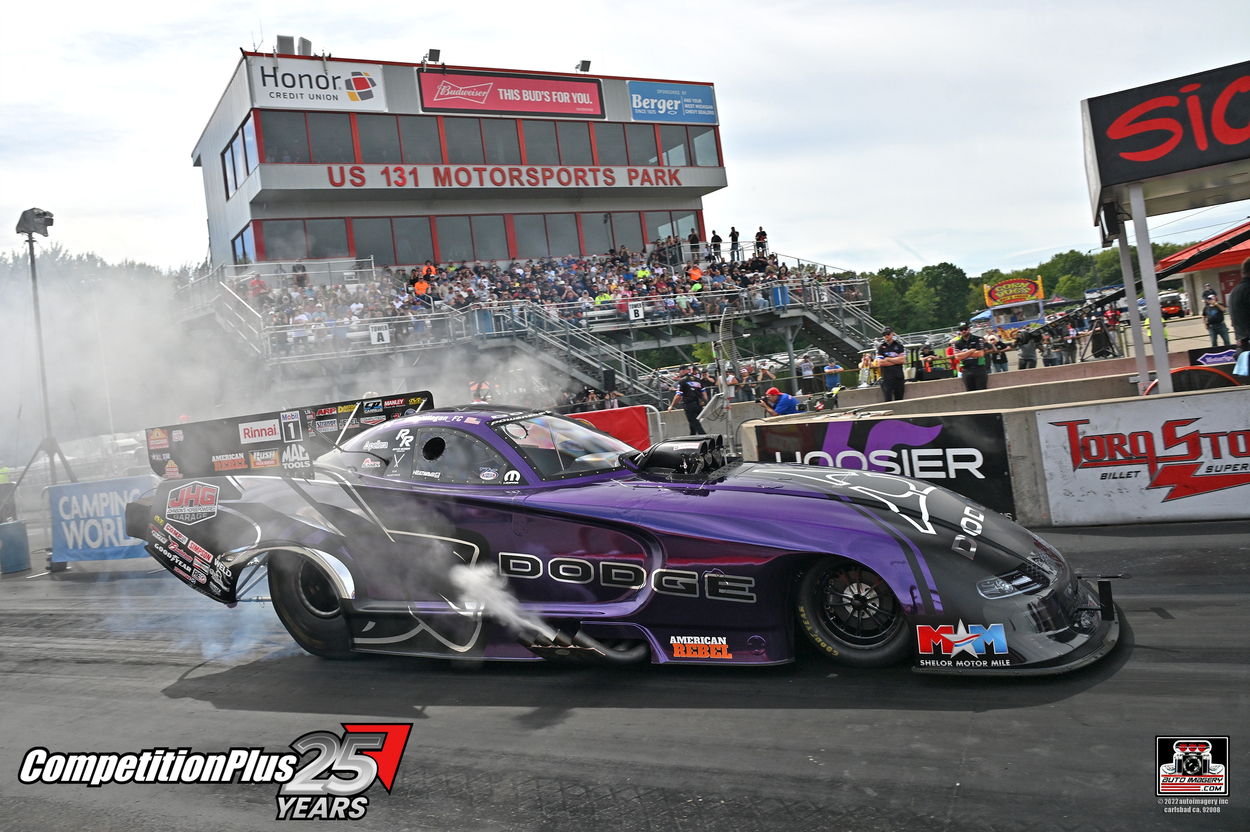
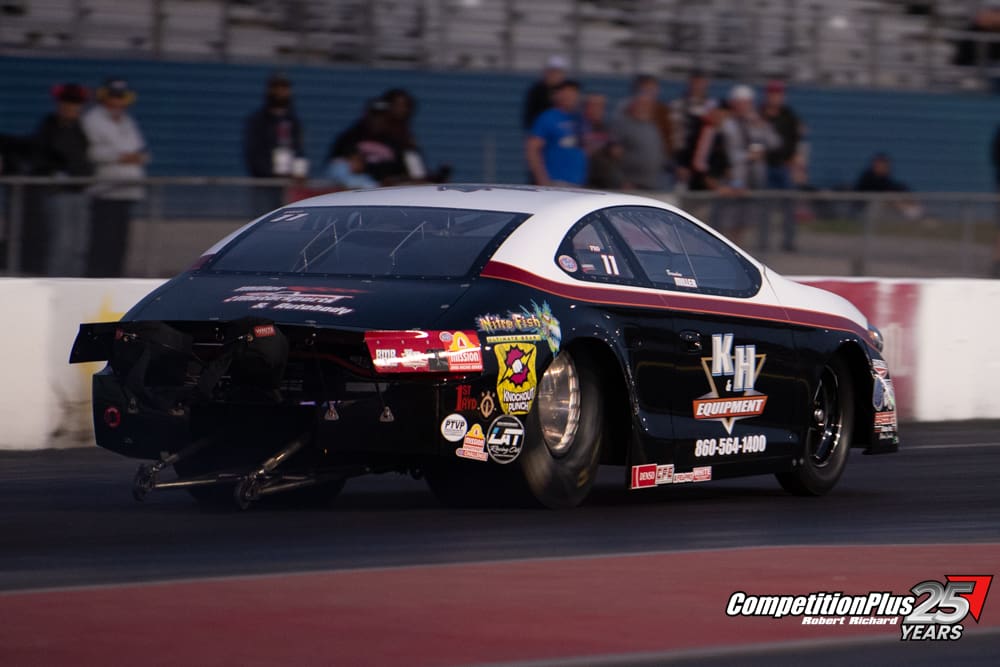

NHRA has introduced a series of Pro Stock rule changes aimed at increasing manufacturer participation and improving competitive balance, opening the door for Ford- and Dodge-powered combinations to gain a fair opportunity in one of drag racing’s most technical categories.

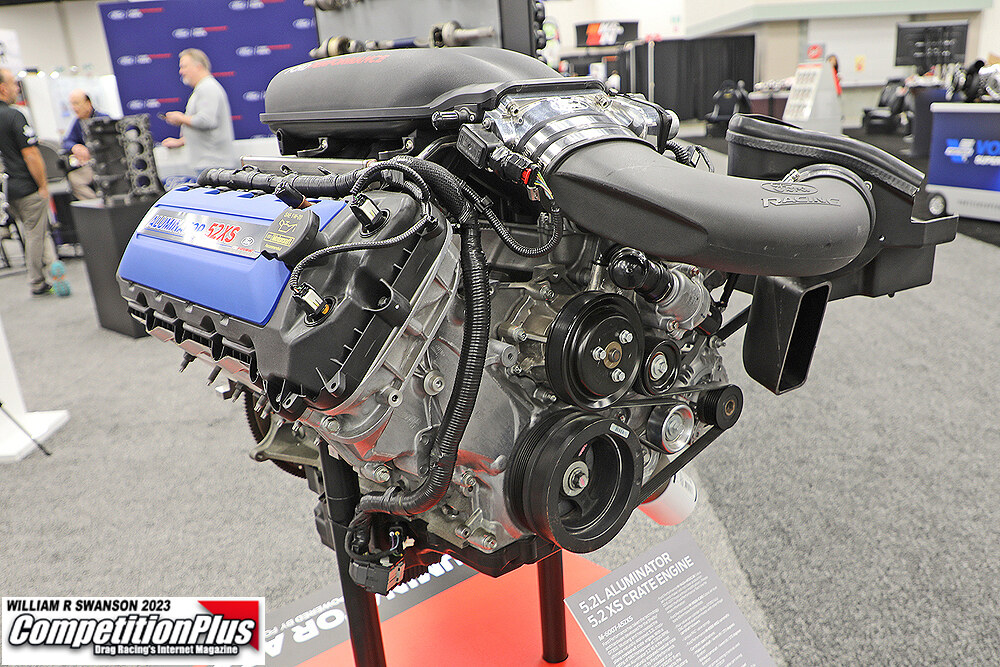
Beginning at this week’s NHRA 4-Wide Nationals, Ford- and Dodge-powered entries using matching manufacturer body styles will be permitted to compete with an 11,000-rpm engine limit. That figure is 500 rpm higher than the current limit for Chevrolet DRCE combinations, which make up the majority of today’s Pro Stock field.

The move follows an earlier announcement that hood scoops will return to Pro Stock competition in 2027, along with revised throttle body specifications. Together, the changes mark one of the most notable rules shifts in the category in recent years.

For much of the last decade, Pro Stock has relied heavily on Chevrolet-based engine combinations, even in cars carrying Ford or Dodge body styles. The new package is designed to encourage teams with Ford and Mopar equipment to consider entering or returning to the class.

Chevrolet’s foothold did not happen overnight. Years of steady development, available parts, proven combinations, and the confidence that comes with repeatable performance gradually made the DRCE platform the preferred choice for many teams trying to survive in an increasingly expensive category.

That practical decision also came with a cost. A class once built on visible manufacturer rivalries slowly became more uniform, with much of the variety existing on the outside of the cars rather than under the hood.

The latest changes were posted on NHRA.com rather than distributed through a traditional media release, a rollout that led some within the sport to question why one of the category’s most significant competition adjustments in years arrived so quietly.

Former NHRA Pro Stock champion Allen Johnson, one of the category’s most accomplished Mopar racers, said the added rpm directly addresses a long-standing issue Dodge teams faced in the electronic fuel injection era.

“Dad’s doing the engines for the Millers, and he’s been working really hard on that program again, got him all fired up,” Johnson said. “And we knew the RPMs is what killed the Dodges more than fuel injections. So at Gainesville, after the race they tested and NHRA allowed them to, or change the box to allow them to turn, I think 10:8, and it was worth three and a half hundreds, boom.”

In a class where hundredths of a second separate qualifiers from spectators, Johnson said gains of that size can change the outlook of an entire weekend.

Johnson said the adjustment could make Dodge combinations more competitive, though he stopped short of suggesting it would immediately bring him back for a full-season return.

“I don’t know that he’s going to be as fast as KB in the league or to be able to get in fricking field,” Johnson said. “It may be worth .04, so I don’t know any Fords out there. I don’t remember if they even had an RPM issue, but I don’t know that it’d bring me back out to run a full season. I don’t think I want to do that, you never know.”

Johnson also said the planned return of hood scoops could reconnect the class with longtime fans who viewed their removal as a break from tradition.

“I think it’ll make a lot of people happy,” Johnson said. “That hood scoop is… I don’t know why they took that away to begin with. I felt like it just ruined it for the fan base.”

To many longtime followers, hood scoops were more than just a style statement. They were part of the identity of Pro Stock, a visible reminder that these were factory-shaped race cars still carrying some connection to the machines fans drove and rooted for.

He added that manufacturer variety remains central to the category’s appeal.

“But more than that, the Camaro infestation did it,” Johnson said. “And then I think if you get a Ford and a Dodge out there and make them competitive, I think it’d be back where it needs to be.”

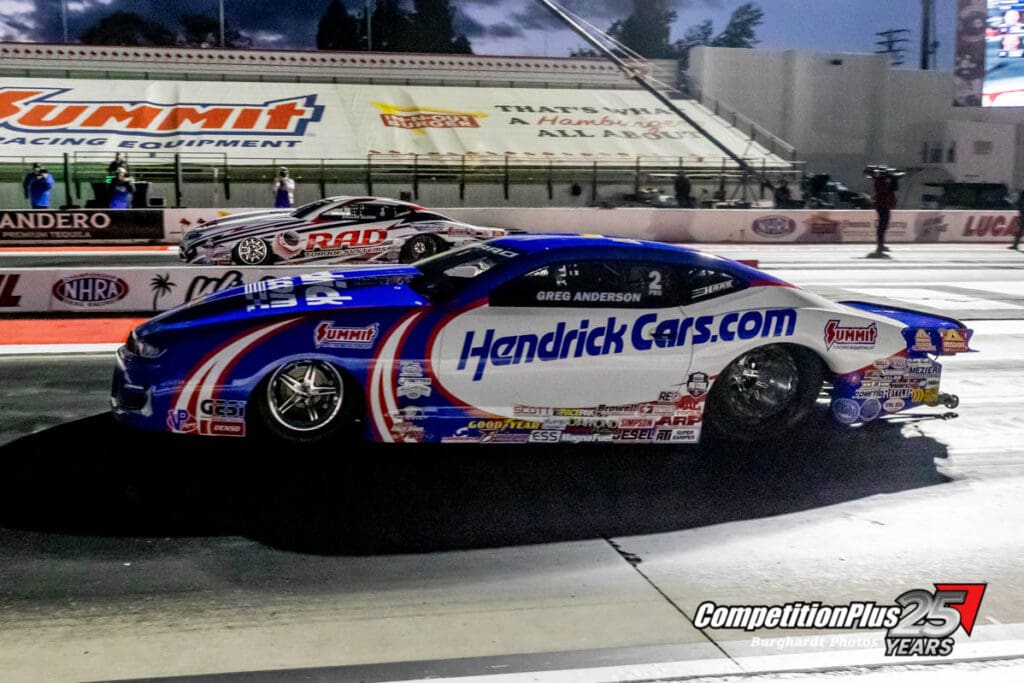
While NHRA’s recent rule changes have drawn attention, many within the category credit Richard Freeman with doing as much as anyone to strengthen modern Pro Stock by helping make top-level technology and competitive combinations more accessible to racers outside the traditional powerhouse teams.

Freeman, whose programs have fielded winning cars and customer engines for multiple teams, said rule changes can help at the margins, but the larger challenge has always been the difficulty of competing in Pro Stock at a high level.

“I don’t think it makes a difference,” Freeman said of the Ford and Dodge adjustments. “There’s only, what, two Mopars in the country?”

He added that if the changes help current Dodge teams, he sees no downside.

“If it helps them, then so be it,” Freeman said. “You know what I’m saying, I don’t think it’s a negative either way.”

Freeman also dismissed the idea that manufacturer involvement is likely to return in the old sense of the term.

“Well, the manufacturers ain’t coming back,” Freeman said. “They don’t care about a car. They don’t even make cars.”

Instead, Freeman said the more realistic value of rule adjustments may be helping independent racers and aftermarket companies already invested in the category.

“So I think it’s more of a move to maybe help streamline the aftermarket guys,” Freeman said.

Robert Patrick, a former Ford Pro Stock racer whose family owns Purvis Ford, said the latest changes caught his attention because he still has engines and equipment capable of returning to competition.

“I’m definitely interested in hearing what they got to say and what they come up with there,” Patrick said. “I still got two engines here and I’ve sold one of them, but I’ve still got two motors. And I mean, I still got enough stuff here that I could race. I mean, we could do something with this stuff. I mean, it just depends on what they come up with.”

Patrick said not every earlier Ford combination relied on 11,000-rpm capability, meaning other adjustments such as weight breaks could carry equal value.

“But here’s the thing, not all the Ford stuff was 11,000,” Patrick said. “My stuff, the stuff that we did, the motors that we did are 10-5 [rpm]  engines. We have a smaller port than what a lot of the Chrysler stuff were running.”

He also said manufacturer identity still matters to racers who supported Ford efforts during earlier eras of Pro Stock.

“I was happy to see a Ford, a Mustang over there doing good,” Patrick said. “But as a diehard Ford guy, it really didn’t excite me because I knew it wasn’t a Ford engine in that car.”

Patrick said he would welcome the opportunity to see a true Ford-powered effort return and even suggested a family future in the category.

“I’d love to see a Ford over there running,” Patrick said. “I’m not going to lie and say I wouldn’t. I’d love to be able to put a program together and maybe put my daughter in a car. That’s what I’m  interested in doing is put something together and find a sponsorship for my daughter to race and in a Ford over there.”

Freeman also offered a blunt reminder about why Pro Stock fields are never easy to build, regardless of the rulebook.

“The reason though people don’t run Pro Stock is it’s so hard,” Freeman said. “I mean, people will talk all they want on the internet. People don’t do this because it’s f****** hard. It’s real f****** hard.”

What happens next will determine whether the changes are remembered as a meaningful reset or simply an encouraging first step. In Pro Stock, rules can create opportunity, but racers still have to decide the opportunity is worth the investment.

Whether the latest changes produce immediate new entries remains to be seen, but reaction from racers and builders suggests NHRA’s latest Pro Stock reset has already reached the audience it was intended to attract.

“And then I think if you get a Ford and a Dodge out there and make them competitive,” Johnson said, “I think it’d be back where it needs to be.”

Share the Insights?

Click here to share the article.

ad space x ad space

ad space x ad space

Competition Plus Team

Since our inception, we have been passionately dedicated to delivering the most accurate, timely, and compelling content in the world of drag racing. Our readers depend on us for the latest news, in-depth features, expert analysis, and exclusive interviews that connect you to the sport’s pulse.

Sign up for our newsletters and email list.

This field is for validation purposes and should be left unchanged.
Name

NHRA RULE CHANGES AIM TO GIVE FORD, DODGE A FAIR OPPORTUNITY IN PRO STOCK

NHRA has introduced a series of Pro Stock rule changes aimed at increasing manufacturer participation and improving competitive balance, opening the door for Ford- and Dodge-powered combinations to gain a fair opportunity in one of drag racing’s most technical categories.

Beginning at this week’s NHRA 4-Wide Nationals, Ford- and Dodge-powered entries using matching manufacturer body styles will be permitted to compete with an 11,000-rpm engine limit. That figure is 500 rpm higher than the current limit for Chevrolet DRCE combinations, which make up the majority of today’s Pro Stock field.

The move follows an earlier announcement that hood scoops will return to Pro Stock competition in 2027, along with revised throttle body specifications. Together, the changes mark one of the most notable rules shifts in the category in recent years.

For much of the last decade, Pro Stock has relied heavily on Chevrolet-based engine combinations, even in cars carrying Ford or Dodge body styles. The new package is designed to encourage teams with Ford and Mopar equipment to consider entering or returning to the class.

Chevrolet’s foothold did not happen overnight. Years of steady development, available parts, proven combinations, and the confidence that comes with repeatable performance gradually made the DRCE platform the preferred choice for many teams trying to survive in an increasingly expensive category.

That practical decision also came with a cost. A class once built on visible manufacturer rivalries slowly became more uniform, with much of the variety existing on the outside of the cars rather than under the hood.

The latest changes were posted on NHRA.com rather than distributed through a traditional media release, a rollout that led some within the sport to question why one of the category’s most significant competition adjustments in years arrived so quietly.

Former NHRA Pro Stock champion Allen Johnson, one of the category’s most accomplished Mopar racers, said the added rpm directly addresses a long-standing issue Dodge teams faced in the electronic fuel injection era.

“Dad’s doing the engines for the Millers, and he’s been working really hard on that program again, got him all fired up,” Johnson said. “And we knew the RPMs is what killed the Dodges more than fuel injections. So at Gainesville, after the race they tested and NHRA allowed them to, or change the box to allow them to turn, I think 10:8, and it was worth three and a half hundreds, boom.”

In a class where hundredths of a second separate qualifiers from spectators, Johnson said gains of that size can change the outlook of an entire weekend.

Johnson said the adjustment could make Dodge combinations more competitive, though he stopped short of suggesting it would immediately bring him back for a full-season return.

“I don’t know that he’s going to be as fast as KB in the league or to be able to get in fricking field,” Johnson said. “It may be worth .04, so I don’t know any Fords out there. I don’t remember if they even had an RPM issue, but I don’t know that it’d bring me back out to run a full season. I don’t think I want to do that, you never know.”

Johnson also said the planned return of hood scoops could reconnect the class with longtime fans who viewed their removal as a break from tradition.

“I think it’ll make a lot of people happy,” Johnson said. “That hood scoop is… I don’t know why they took that away to begin with. I felt like it just ruined it for the fan base.”

To many longtime followers, hood scoops were more than just a style statement. They were part of the identity of Pro Stock, a visible reminder that these were factory-shaped race cars still carrying some connection to the machines fans drove and rooted for.

He added that manufacturer variety remains central to the category’s appeal.

“But more than that, the Camaro infestation did it,” Johnson said. “And then I think if you get a Ford and a Dodge out there and make them competitive, I think it’d be back where it needs to be.”
While NHRA’s recent rule changes have drawn attention, many within the category credit Richard Freeman with doing as much as anyone to strengthen modern Pro Stock by helping make top-level technology and competitive combinations more accessible to racers outside the traditional powerhouse teams.

Freeman, whose programs have fielded winning cars and customer engines for multiple teams, said rule changes can help at the margins, but the larger challenge has always been the difficulty of competing in Pro Stock at a high level.

“I don’t think it makes a difference,” Freeman said of the Ford and Dodge adjustments. “There’s only, what, two Mopars in the country?”

He added that if the changes help current Dodge teams, he sees no downside.

“If it helps them, then so be it,” Freeman said. “You know what I’m saying, I don’t think it’s a negative either way.”

Freeman also dismissed the idea that manufacturer involvement is likely to return in the old sense of the term.

“Well, the manufacturers ain’t coming back,” Freeman said. “They don’t care about a car. They don’t even make cars.”

Instead, Freeman said the more realistic value of rule adjustments may be helping independent racers and aftermarket companies already invested in the category.

“So I think it’s more of a move to maybe help streamline the aftermarket guys,” Freeman said.

Robert Patrick, a former Ford Pro Stock racer whose family owns Purvis Ford, said the latest changes caught his attention because he still has engines and equipment capable of returning to competition.

“I’m definitely interested in hearing what they got to say and what they come up with there,” Patrick said. “I still got two engines here and I’ve sold one of them, but I’ve still got two motors. And I mean, I still got enough stuff here that I could race. I mean, we could do something with this stuff. I mean, it just depends on what they come up with.”

Patrick said not every earlier Ford combination relied on 11,000-rpm capability, meaning other adjustments such as weight breaks could carry equal value.

“But here’s the thing, not all the Ford stuff was 11,000,” Patrick said. “My stuff, the stuff that we did, the motors that we did are 10-5 [rpm]  engines. We have a smaller port than what a lot of the Chrysler stuff were running.”

He also said manufacturer identity still matters to racers who supported Ford efforts during earlier eras of Pro Stock.

“I was happy to see a Ford, a Mustang over there doing good,” Patrick said. “But as a diehard Ford guy, it really didn’t excite me because I knew it wasn’t a Ford engine in that car.”

Patrick said he would welcome the opportunity to see a true Ford-powered effort return and even suggested a family future in the category.

“I’d love to see a Ford over there running,” Patrick said. “I’m not going to lie and say I wouldn’t. I’d love to be able to put a program together and maybe put my daughter in a car. That’s what I’m  interested in doing is put something together and find a sponsorship for my daughter to race and in a Ford over there.”

Freeman also offered a blunt reminder about why Pro Stock fields are never easy to build, regardless of the rulebook.

“The reason though people don’t run Pro Stock is it’s so hard,” Freeman said. “I mean, people will talk all they want on the internet. People don’t do this because it’s f****** hard. It’s real f****** hard.”

What happens next will determine whether the changes are remembered as a meaningful reset or simply an encouraging first step. In Pro Stock, rules can create opportunity, but racers still have to decide the opportunity is worth the investment.

Whether the latest changes produce immediate new entries remains to be seen, but reaction from racers and builders suggests NHRA’s latest Pro Stock reset has already reached the audience it was intended to attract.

“And then I think if you get a Ford and a Dodge out there and make them competitive,” Johnson said, “I think it’d be back where it needs to be.”


Picture of John Doe

John Doe

Lorem ipsum dolor sit amet consectetur adipiscing elit dolor

More Posts

Send Us A Message

Picture of Bobby Bennett
Bobby Bennett
Thank you for joining us on this journey. Your support and trust inspire us every day to deliver the best in drag racing journalism. We are excited about the future and look forward to continuing to serve you with the same dedication and passion that has defined CompetitionPlus.com from the very beginning.

Don’t miss these other exciting stories!

Explore more action packed posts on Competition Plus, where we dive into the latest in Drag Racing News. Discover a range of topics, from race coverage to in-depth interviews, to keep you informed and entertained.