

For decades, the formula for building a fast vintage Mopar race car has been largely unchanged. Start with a traditional big- or small-block Mopar, perhaps a second-generation Hemi, add a carburetor or two, and keep refining and wringing it out for ever-more performance. It’s a recipe that has worked for generations and one that racers have followed religiously in everything from Super Stock to bracket racing competition.
Over the last several years, however, a growing number of racers have started asking a different question: what happens when modern Gen 3 Hemi technology is applied to those same cars?
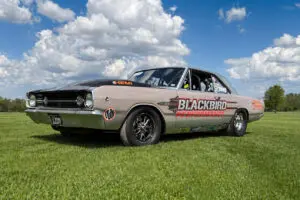
Among the most convincing answers currently running down a dragstrip belongs to Mike Schaefer and his 1968 Dodge Dart.
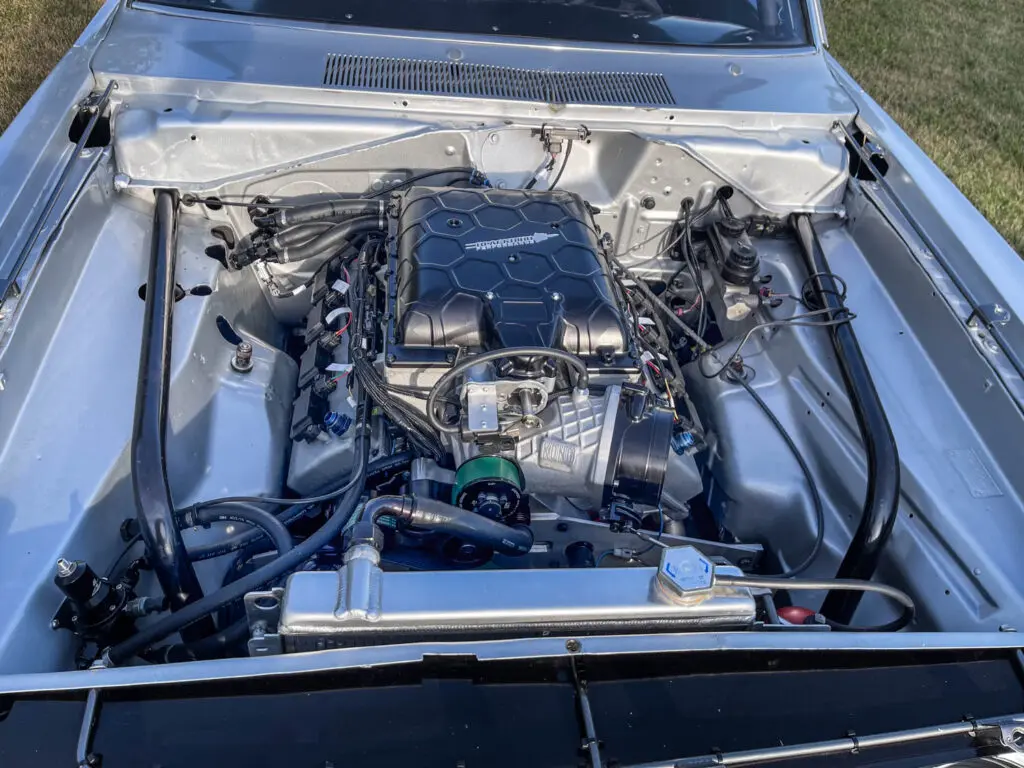
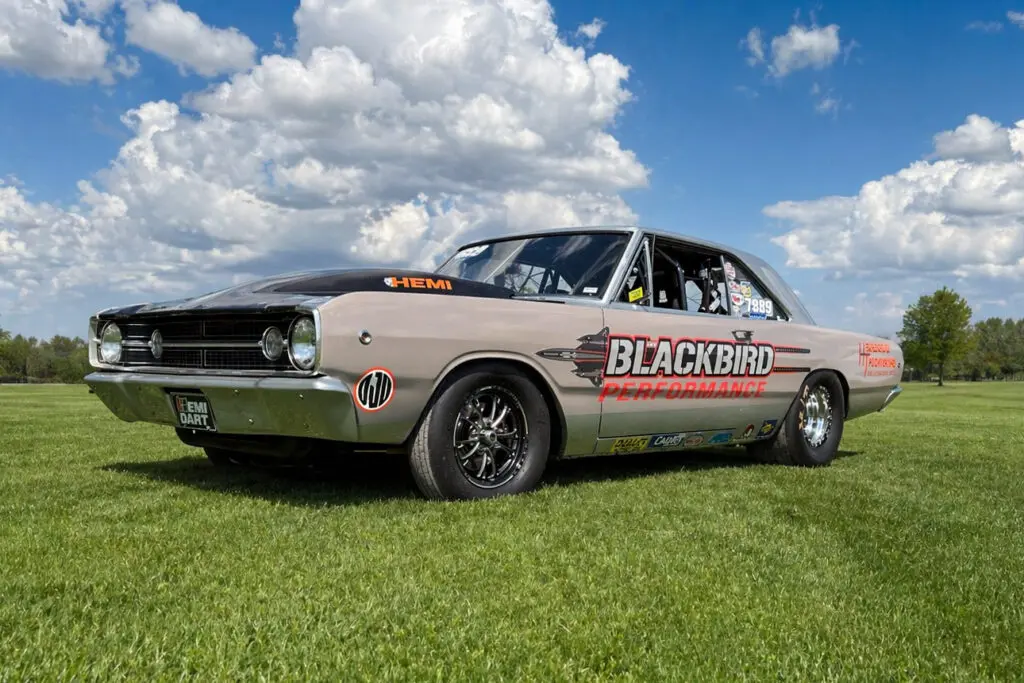
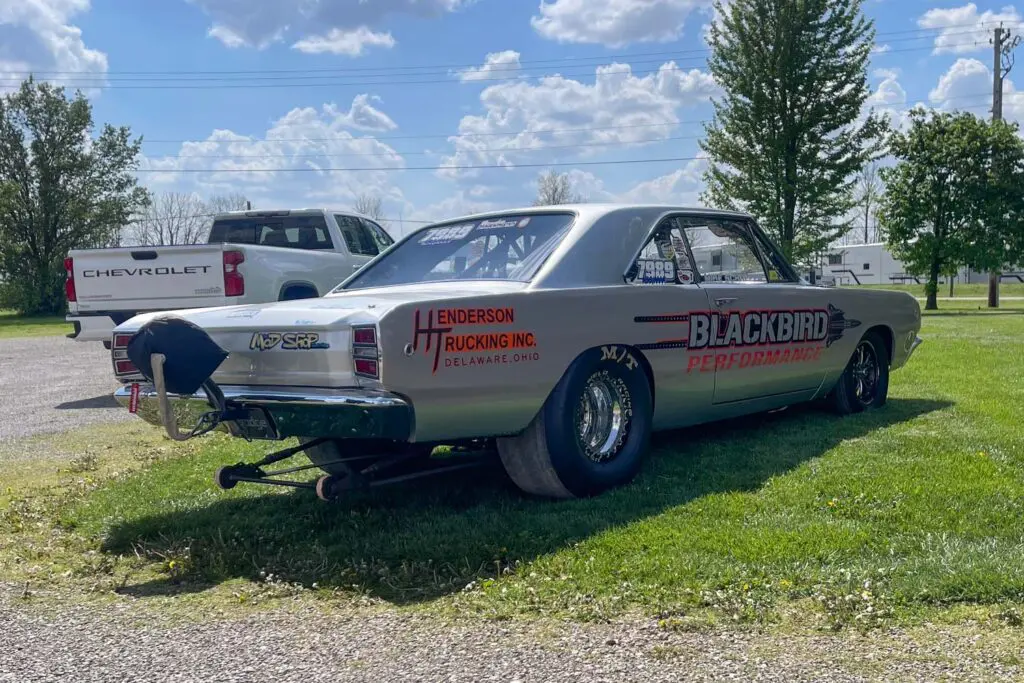
From a distance, the car looks exactly like the kind of Mopar race car enthusiasts have admired for decades in NHRA Super Stock racing. It retains its stock K-member, factory-style front suspension, torsion bars, and the overall appearance of a modern-day Super Stock A/H (Hemi) machine. There are no big dinner-table spoilers, no carbon-fiber bodywork, and nothing about the Dart suggests it should be capable of dipping into the sevens. Yet that’s precisely what it has done.
Powered by a Blackbird Performance Race Spec 1300 Gen 3 Hemi combination, Schaefer’s Dart has already recorded a best of 7.98 seconds and continues to get quicker and faster with further tweaking, all while teaching Mike a completely different approach to making horsepower.
“I love it. It’s really put fire back into our racing program,” Schaefer says of the Race Spec 1300 platform from Blackbird Performance. “It’s just a wonderful piece.”
Like many longtime Mopar racers, Schaefer didn’t arrive at the Gen 3 platform by accident. He had spent years racing traditional Hemi combinations and understood exactly what was required to make them fast. His previous Gen II Hemi combination had run into the 8.50s and represented everything racers have come to expect from a serious naturally aspirated Chrysler race engine.
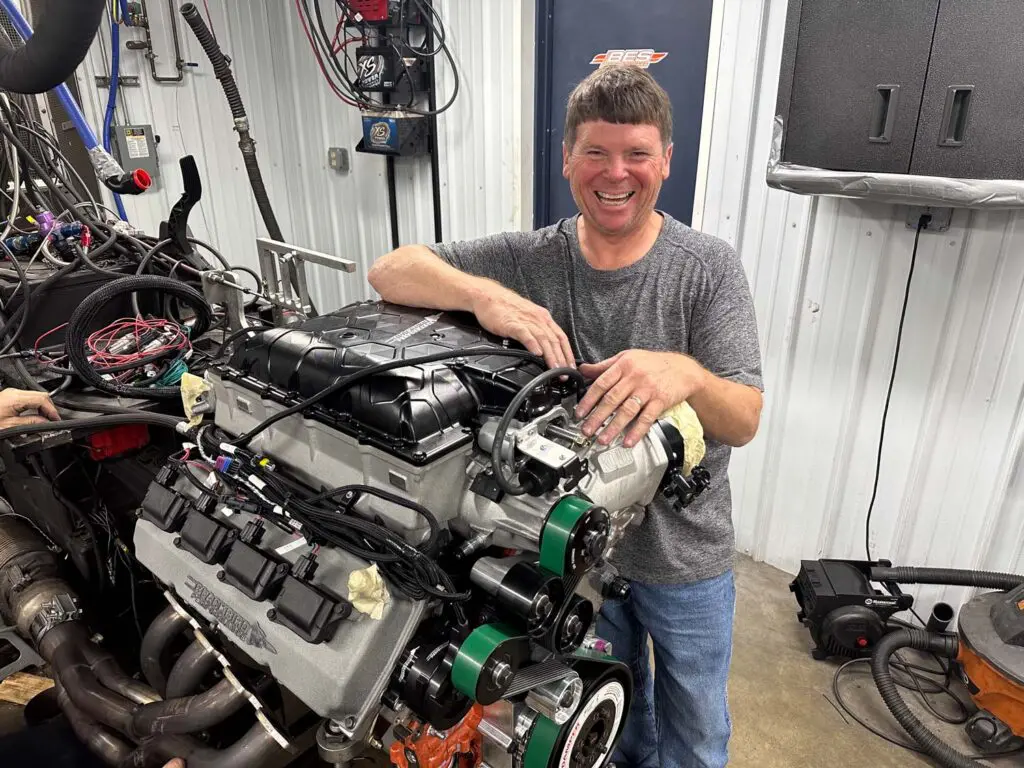
But the opportunity to work with Geoff Turk and Blackbird Performance was a chance to try something different. Turk has spent years developing performance combinations around the Gen 3 Hemi architecture and has become one of the platform’s most visible advocates. While much of the aftermarket initially focused on late-model street cars, Blackbird recognized the potential for the engine in dedicated race applications, as well.
“People still think of these as production-based engines,” Turk says, “but when you put the right parts together and understand the calibration side of it, they’re capable of incredible things.”
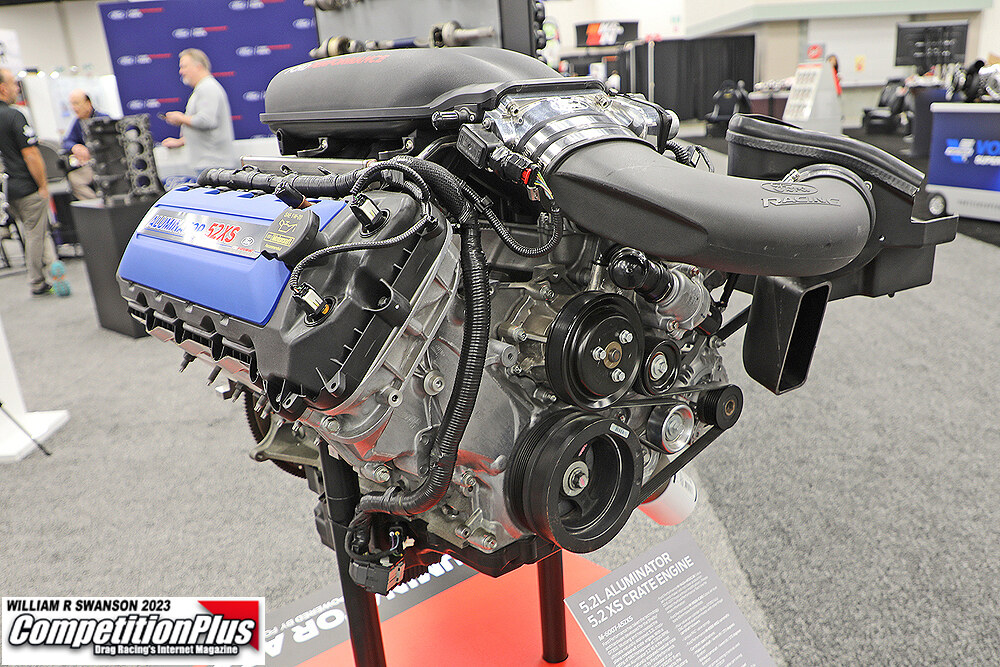
For Schaefer’s Dart, that meant one of Blackbird’s Race Spec 1300 combinations, a supercharged package capable of producing approximately 1,300 horsepower while retaining the consistency and reliability that have become trademarks of the Gen 3 platform. It didn’t take long to produce the results that Turk knew it was capable of.
The car itself remains surprisingly traditional despite the modern powerplant. Schaefer purchased the Dart and built it around the concept of a modern Super Stock-style Hemi car. The stock front suspension architecture remains in place, while a four-link rear suspension and fabricated 9-inch rearend help manage the power. AFCO Big Gun double-adjustable shocks occupy all four corners. Behind the late-model mill is a Coan Powerglide and torque converter combination.
Unlike some of the more traditional race engines, the Gen 3 combination requires remarkably little attention between outings, neither from a tuning nor a maintenance perspective.
“You don’t take the hood off. You plug the computer in,” Schaefer explains. “There’s no valve maintenance, no carburetors, no constantly chasing things. Once you get the chassis working, the motor just does its job.”
Turk was confident in the combination from the beginning. In fact, he jokes that he may have been a little too confident.

Trackside support was included in the engine package cost to help Schaefer work through the inevitable learning curve of integrating the modern Gen 3 Hemi into his racecar. Early on, Schaefer was struggling to get the car where he thought it should be. Turk knew something in the combination wasn’t right, so he convinced Schaefer to let him join him for a Mopar race in Norwalk, Ohio, to have a closer look.
“I told him if we couldn’t get it figured out, I’d give him his thirty grand back, and he could keep the engine. He asked what happens if I do get it running right, and I told him he had to give me thirty grand more. I was kidding, of course,” Turk says with a laugh. “That’s how confident I was that we could get it running much quicker.”
“So we’re there at this race and half of the Nostalgia Super Stock guys are giving him a hard time about making the switch to this modern engine. The other half are like, ‘how cool is that,’ and ‘look how nice it fits in there,’” Turk shares.
“We looked at the data and figured out the problem and started adjusting from there,” Turk adds. The Dart immediately started responding, running 8.40s — quicker than Mike had ever been — at over 165 mph. And it’s only been up from there.
“I was expecting if it ran anything better than my Gen II Hemi, I’d be ecstatic. The first time out it went 8.40, and from there it’s escalated into a monster,” Schaefer says. “It has so much power that you have to practically kill it to get it off the starting line and then ramp it back in. You’re not fighting the engine, you’re fighting the chassis.”
That’s not a complaint. If anything, it’s a showcase of how quickly the Dart has progressed. In roughly 30 passes, the combination has developed into one of the quickest Gen 3 Hemi-powered vintage Mopars in the country. Schaefer believes the car has considerably more performance left in it, particularly when given the opportunity to run on a premium racing surface capable of handling the power. Turk believes the car can run 7.70s with some more laps and fine-tuning of the Holley Terminator X EFI system.

For Turk, projects like Schaefer’s Dart represent exactly what Blackbird Performance’s Race Spec engine program was created to accomplish. Beyond making horsepower, the goal was to create combinations capable of delivering serious performance while allowing racers to spend more time racing and less time working on their engines.
For Schaefer, the success of the Dart has also reinforced a belief he holds about the future of vintage Mopar racing. Through efforts like the new G3 Muscle Comp category that he and the Nostalgia Drag Racing League (NDRL) are forming, he hopes more racers begin experimenting with modern Gen 3 Hemi combinations in classic Chrysler platforms.
If his Dart is any indication, that future appears to be arriving pretty quickly.