


Last year, racers left Bristol talking about what the track wouldn’t let them do.
This year, they were talking about what it finally would.
That contrast, more than any elapsed time or qualifying number, became one of the defining stories of the PDRA Thunder Valley Throwdown.
Twelve months after competitors battled a racing surface that produced one frustrating pass after another, Bristol Dragway unveiled a rebuilt strip that immediately transformed the quality of competition and renewed confidence throughout the pits.
For racers, crew chiefs and officials, the difference was obvious long before eliminations ever began.
One year ago, the conversation centered on survival. Pair after pair rolled to the starting line only to shake the tires violently or shut the engines off before reaching full power, leaving teams chasing problems they often couldn’t tune around because the racing surface dictated the outcome.
It wasn’t simply an inconvenience.
It became one of the few blemishes on one of drag racing’s most recognizable facilities, a track capable of drawing fans by the thousands but unable to consistently reward the quickest doorslammer race cars in the sport.
Bristol Dragway officials knew it.
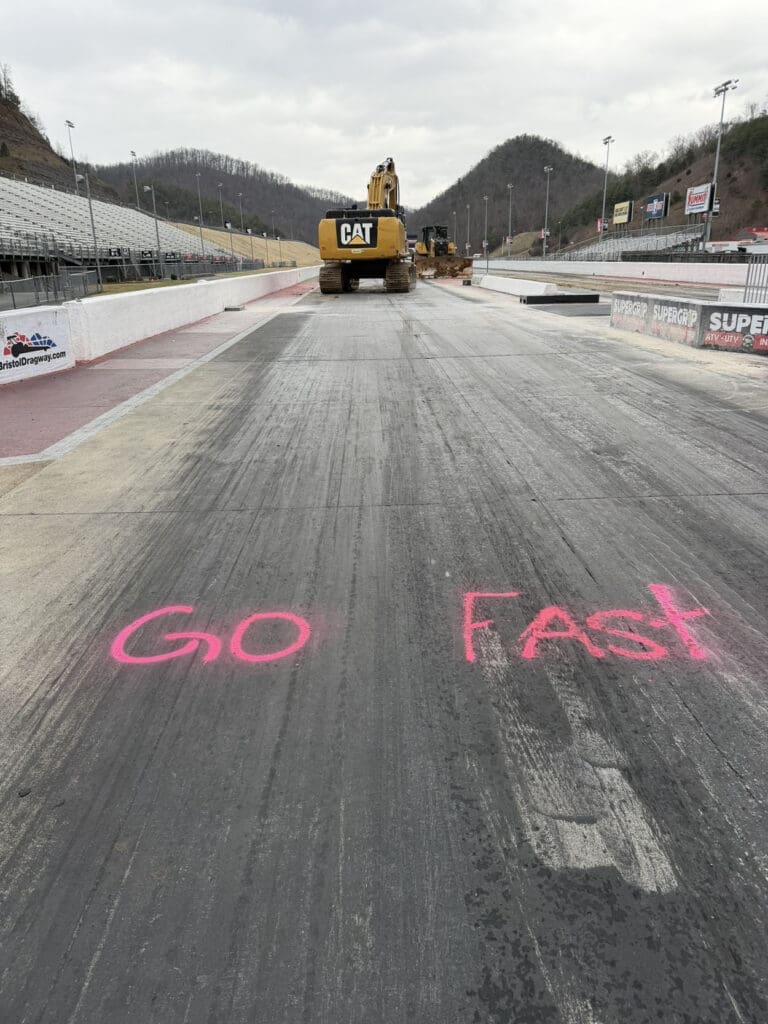
During the offseason, the facility completed the next phase of a major reconstruction project, replacing the aging launch area with a new concrete racing surface after installing fresh asphalt in the top end following the 2025 season. The work addressed decades of wear that had gradually made the starting line increasingly difficult for the high-horsepower combinations competing in PDRA competition.
By the time racers arrived this weekend, they found a racetrack that barely resembled the one they fought a year earlier.
Tyler Crossnoe, the PDRA’s Director of Racing Operations, didn’t need to watch race cars make a pass before recognizing the transformation.
“Oh yeah, immediate,” Crossnoe said. “I came down a couple of weeks ago just working on parking map really, and walked out, looked at the racetrack, walked back, never even walked to it. I said, ‘We’re in good shape, it’s going to be a completely different race.’ And so far it has been. It’s been great, and I’m really looking forward to the… Now. I want to get it on night session, now I want to see what it does on that. That’d be fun.”
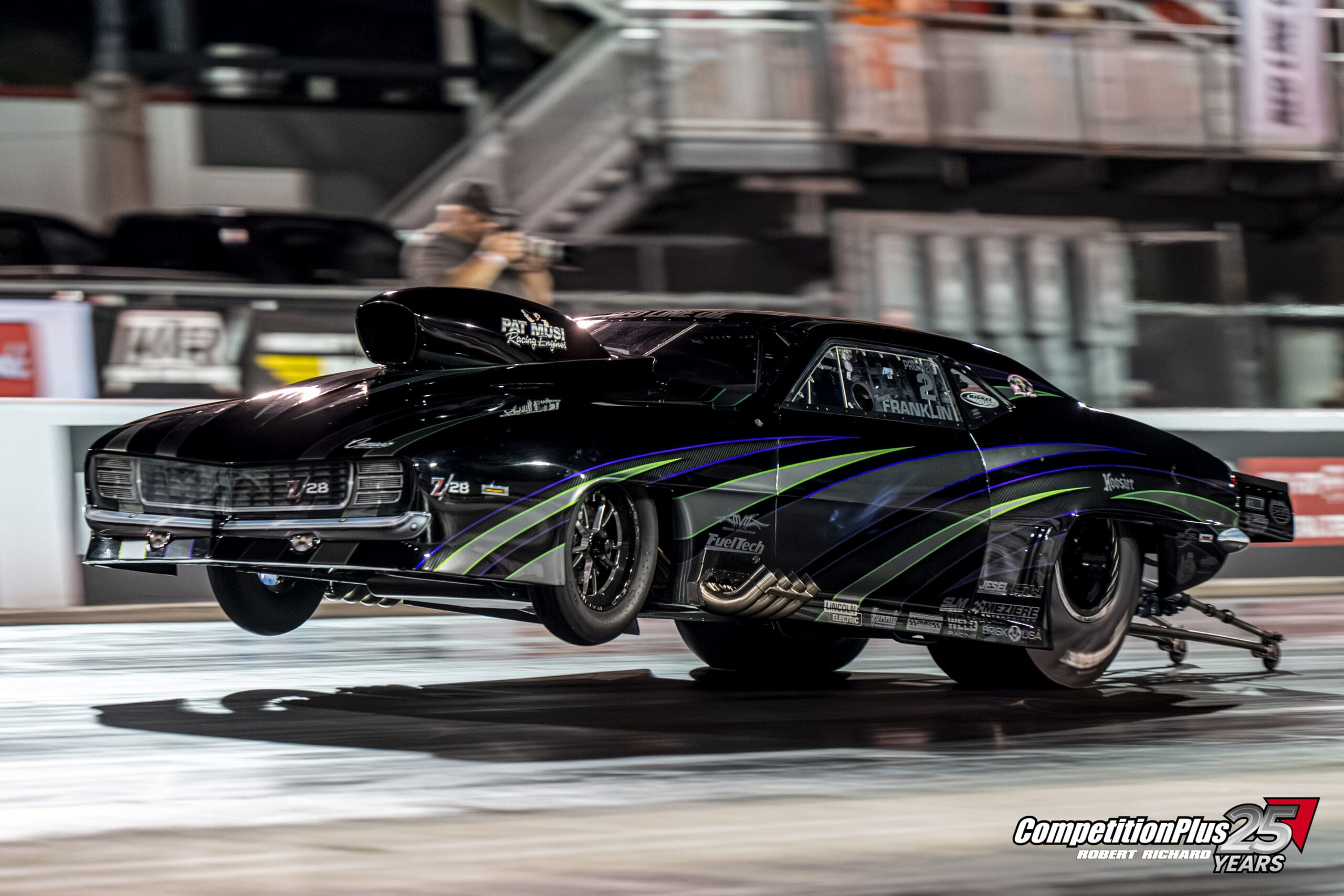
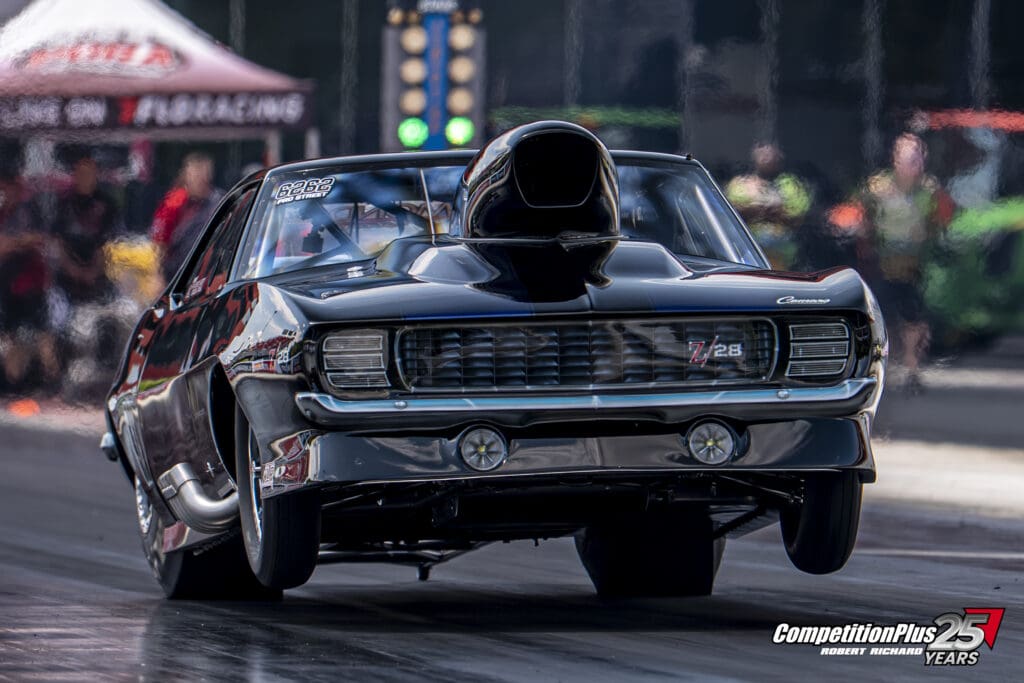
The surface delivered top performances from the PDRA’s defending series champions as lightning lit up the sky in the distance.
Crossnoe credited the Bristol staff and Speedway Motorsports leadership for committing to the project instead of trying to squeeze another season out of an aging surface.
“Yeah, you got to give a big thank you to everybody here at Bristol,” Crossnoe said. “SMI, everybody from top to bottom that made the decisions to do what they did. Last season they put the asphalt in from top end to 700 feet, this winter they came in, full concrete racing surface. Not perfect, but way better than what we had in the past. I know that it needs some time to cure, just like all of them do. It needs time to cure, give it another six months, I know they’ll make the next step, and then it’ll be probably top five racing surface in the country. And let’s be honest, that’s the only thing that Bristol’s been missing for years.”
Crossnoe, who has worked in the track prep arena for years, knows a good surface when he sees it. He knows the difference between a facility with great infrastructure and one capable of producing consistent racing under changing weather conditions. Bristol already possessed the grandstands, fan appeal and history. The surface hadn’t kept pace with modern race cars producing more power than ever before.
The improvements showed themselves almost immediately.
Instead of crews making wholesale changes to compensate for unpredictable conditions, the track began reacting the way experienced tuners expected it to react. The racing surface became another variable to manage instead of the obstacle everyone feared.
Crossnoe said even Mother Nature cooperated more this year than it had a season ago.
“Yeah, it was tough,” Crossnoe said of last year’s event. “Had a tough atmospheric weather conditions last year too, with rain and all that humidity that was in the air and all that. So far it’s been warm, don’t get me wrong, but now the racetrack’s reacting just like another one would. So, all the bumps are gone, it’s a lot smoother, the tunnels aren’t near as effecting as they used to be. So, we’re excited, looking forward to many more years here at Bristol.”
While racers judged the surface by elapsed times and consistency, Bristol Dragway General Manager Jimmy Owens watched something different.
He watched race cars stay in their lanes.
“Very pleased with it,” Owens said. “We had Pro Stock, Pro Mod bikes. They all loved it. Fuel guys are our fuel guys. No major complaints there. Naturally anything can be improved, so that’s what we’ll work on from here on out. But overall, very, very pleased with the surface.”
Owen admitted there was little mystery about what had plagued the facility a year earlier.
The track had reached the point where repairs could no longer replace reconstruction.
“Yeah,” Owen said. “A year ago we were just, let’s just keep it together long enough to get done with the year and we’ll do something with it. And that’s what we did. And efforts of everybody involved were just phenomenal. And again, couldn’t be more pleased with it.”
The problems weren’t isolated to one section of concrete or one troublesome lane.
Years of racing, changing weather and constant use had gradually taken their toll until finding a clean place for some of the quickest race cars in the world to launch became increasingly difficult.
“It’s kind of the same stuff that was with NHRA,” Owens said. “It was just the surface was 20 years old and it had been beat on for 20 years and in the weather for 20 years. So it just had those issues. You had some spall and some cracks around the expansion joints and stuff like that. And these cars, it just give them a fit. Trying to pick a good place on the starting line was kind of, there wasn’t many, is a short story of it.”
Track operators rarely celebrate straight, uneventful runs. Those are usually the moments no one notices because nothing dramatic happened.
For Owens, however, that was exactly the point.
“Yeah, makes the track operator’s life a lot easier when they go straight down the racetrack,” Owens said.




















NHRA’S COUNTDOWN PROBLEM DIDN’T START WITH SHAWN REED, BUT HIS CASE EXPOSED IT