
Some call it an incomplete season. Others call it an embarrassment. Either way, four IHRA professional point leaders were left with a championship question nobody expected to be asking when the 2026 season began: Does leading the standings when the series disappears make you a world champion?Some call it an incomplete season. Others call it an embarrassment. Either way, four IHRA professional point leaders were left with a championship question nobody expected to be asking when the 2026 season began: Does leading the standings when the series disappears make you a world champion?
Gary Pritchett was leading Top Fuel. Del Worsham was No. 1 in Funny Car, Jason Harris sat atop Pro Mod and Johnny Pluchino led Mountain Motor Pro Stock when IHRA canceled the remainder of its 2026 professional season.
Under the usual logic of championship racing, finishing a season atop the standings means you’re the champion. IHRA’s abbreviated 2026 season created a different question because nobody expected the championship to end when it did.
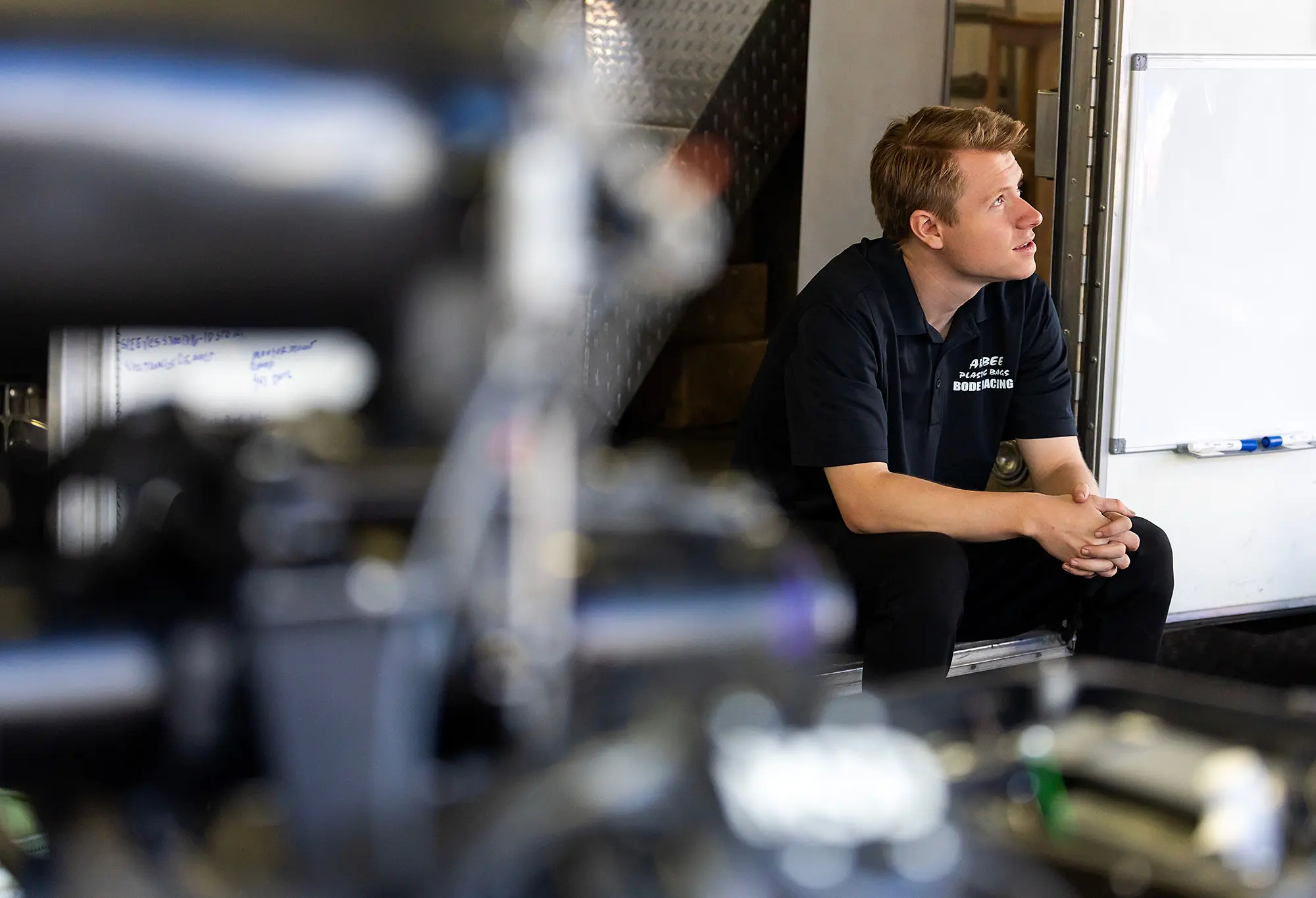
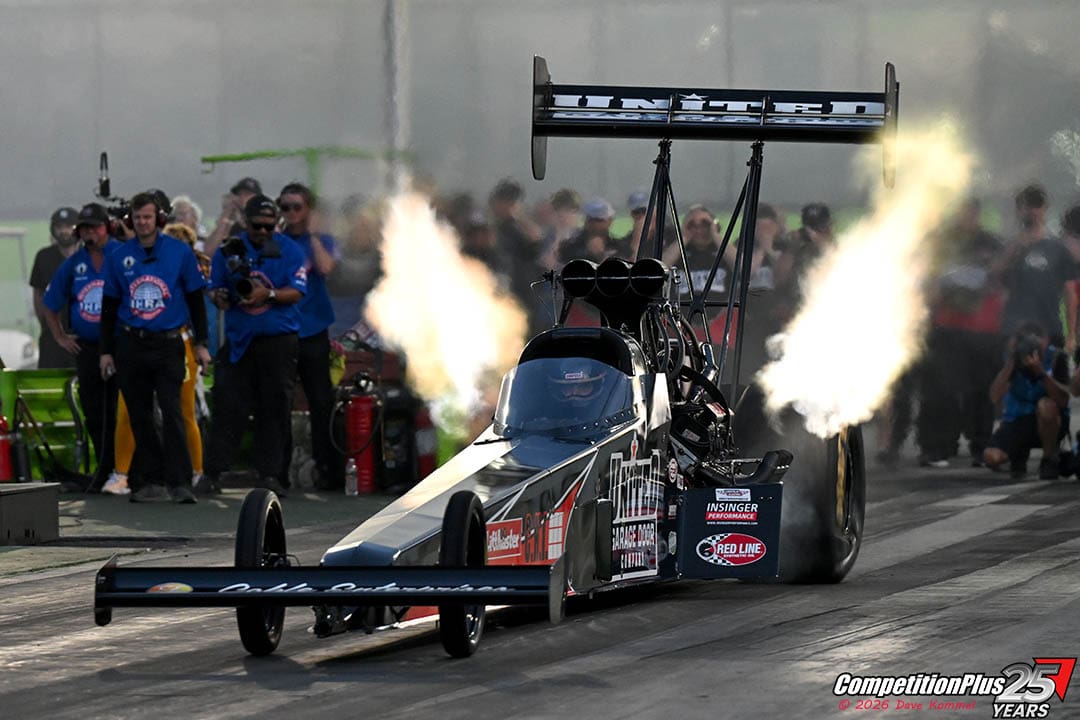
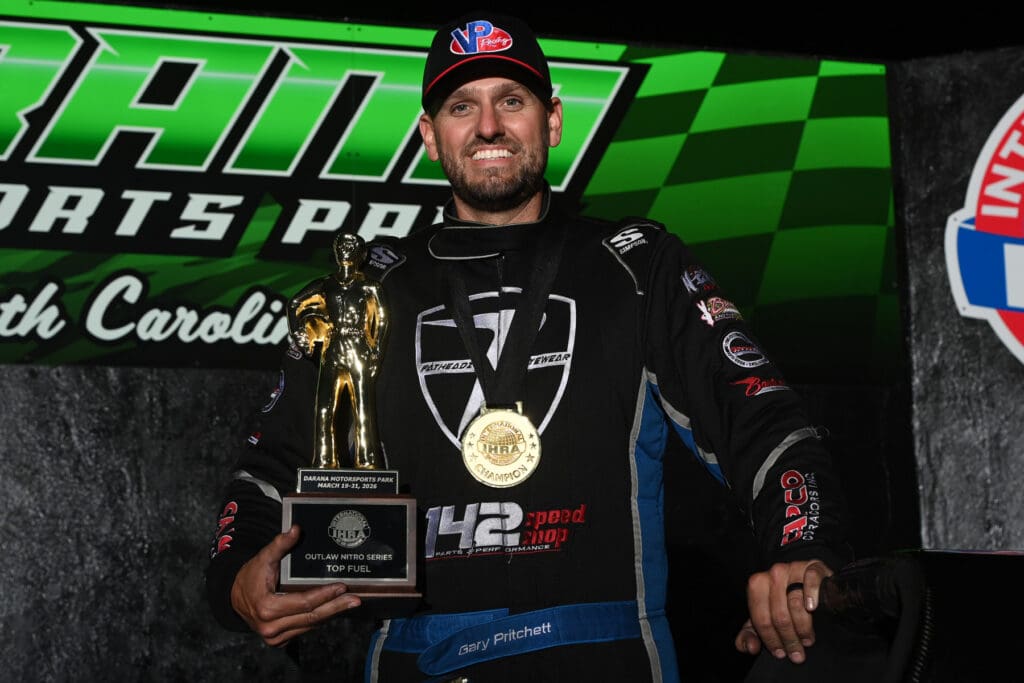
Pritchett can make as strong an argument as anybody. His Doug Foley-owned Top Fuel team reached the final round every time it raced during the abbreviated season and had built a commanding points advantage when the schedule disappeared.
“We feel like we got cut short,” Pritchett said. “That was one of the big things Doug Foley and I and the team talked about was we didn’t want to get cut short of such a great season that we had.”
The operation was getting stronger rather than hanging onto something it had found early. Pritchett believed the pieces were coming together for a legitimate championship run.
“We started running really well, we started working together great as a team and it felt like all the stars were aligning,” Pritchett said.
The situation is particularly difficult to reconcile with what IHRA announced in January. The sanctioning body rolled out a 2026 professional racing package carrying a $13.6 million point and purse program, presenting its Outlaw Nitro Series as an alternative capable of putting substantial money directly into racers’ hands.
IHRA advertised $200,000 championships in Top Fuel and Funny Car and $100,000 titles in Pro Mod and Mountain Motor Pro Stock. Those numbers became part of the package racers considered when deciding whether to participate in the new series.
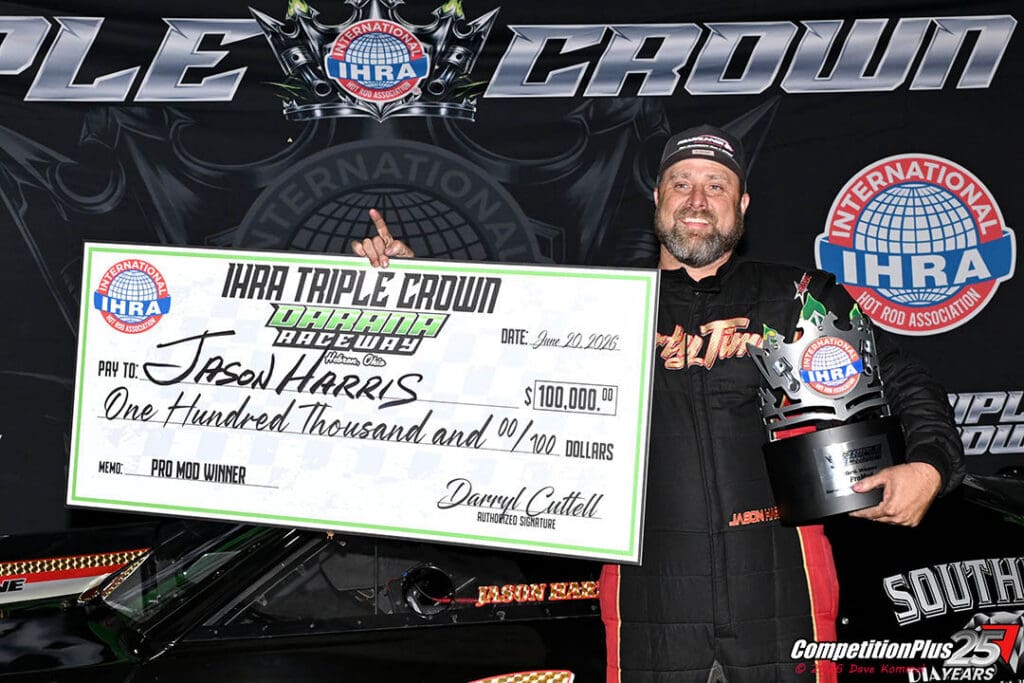
There was also the Triple Crown, three standalone races carrying substantial purses and a potential $1 million bonus for any professional driver sweeping all three. Those events were separate from the championship standings, but they were a major part of the financial package IHRA used to attract racers.
What began as one of the most ambitious purse structures drag racing had seen in years unraveled before the championship could reach its intended conclusion.
IHRA managed to complete only a handful of points-earning professional events before reducing its schedule, citing concerns over whether certain facilities would be ready to host races. Questions followed because at least one track removed from the schedule had already hosted a major event earlier in the season.
The reductions did not save the season. IHRA eventually canceled the remainder of the professional series altogether, leaving championship races unrun and Pritchett, Worsham, Harris and Pluchino stranded atop their respective standings.
The cars stopped racing and the points stopped accumulating, but IHRA had not publicly announced how it would handle the four racers sitting atop the standings. Questions also remained among competitors about the financial fallout from the Triple Crown program.
Pritchett knows what the standings say. He also knows what a championship is supposed to feel like, and those are two very different things.
“Correct, if you want to say that,” Pritchett said when asked whether being the points leader when the season ended technically made him champion. “There’s people that will probably say that you’re not but we were number one when it went away and we are the world champ. There’s not a banquet or we’re not being crowned the world champ so it doesn’t really feel like you’re a world champ.”
Pritchett has been part of championship teams before. He understands the difference between leading a series and surviving the entire schedule with the most points.
“And you really wanted to go down and say you were an IHRA world champ,” Pritchett said. “It doesn’t feel right. I’ve been a world champ on teams multiple times in NHRA and you know what that feeling is like.”
That is the uncomfortable truth running through IHRA’s stranded point leaders.
Doug Foley’s Top Fuel operation was perhaps the best example. With Pritchett driving, Foley watched his team build a commanding lead.
Foley could make the same championship argument as Pritchett but he won’t.
“No. I mean, it’s unfinished business,” Foley said. “I think you have to look at it and say, yes, we still had multiple races left. And was there a chance for another team to sneak in there and steal it away from us? Yeah. I mean, if we had finished a complete season, probably so, but you got to look at four races in four final rounds and think we were pretty strong.”
The loss goes beyond another line in a racing résumé. Foley saw the championship as an opportunity for Pritchett, his crew and a smaller independent operation to enjoy something that rarely comes easily at the professional level.
“I told him as each race that go by and that we were holding a points lead and even extending it, that he would probably be the first one that I’ve ever seen that could come out of the box and win the championship on his first year,” Foley said. “And it was going to be exciting. There’s no doubt about it.”
An advertised six-figure payday was not just trophy money; after bonuses and other obligations, it represented an opportunity to reinvest in equipment for another season. Those plans now belong to the same unfinished category as the championship itself.
Multiple teams told CompetitionPlus.com they built their 2026 programs around the schedule and purse structure IHRA announced before the season. That meant buying parts, committing personnel, arranging transportation and, in some cases, selling sponsorship packages tied to races that were later removed from the calendar.
Several teams also said they placed substantial parts orders in anticipation of a full season and expected purse money to help offset those expenditures. Much of that inventory cannot simply be returned because the season disappeared.
The problem becomes even more severe for smaller operations. Potential race and championship earnings were part of the financial equation that made committing to the series possible in the first place.
There were also problems away from the racetrack as others confirmed. Sponsors had purchased exposure connected to specific events, leaving teams to either find another way to deliver that value or have uncomfortable conversations about money already committed.
By then, the financial impact wasn’t limited to races disappearing from the calendar. Multiple teams told CompetitionPlus.com they had already spent money preparing for events that would never be run, while the status of the advertised championship payouts remained unclear.
Whether the stranded points leaders have a legal right to the advertised championship money is considerably less clear.
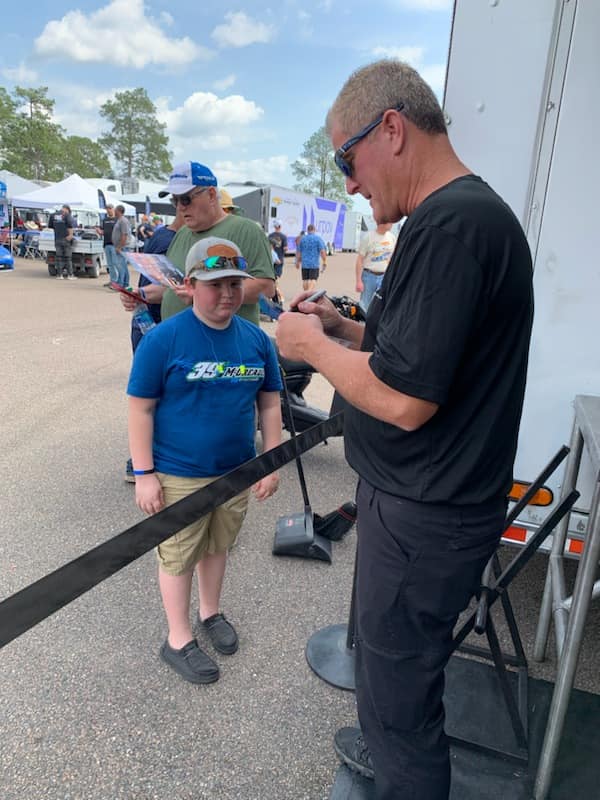
Attorney Edd Harney, known throughout the sport as The Drag Race Lawyer, said he sees no easy legal avenue because there apparently was no contract between IHRA and its racers. He said legal concepts such as detrimental reliance could be considered, but proving a viable claim and ultimately collecting on it could be extremely difficult.
Harney also said he has seen nothing indicating IHRA intended to defraud its competitors.
“I’ve seen nothing that I have read or seen from IHRA’s perspective that there was any intent to defraud,” Harney said. “Kind of my view of it looks to be somebody that wanted to heavily get involved in the sport, maybe got a bit over their skis, and then when their money source dried up, they didn’t quite have the money to support the promises that they tried to make.”
That leaves the points leaders in an unusual position; championships they aren’t comfortable claiming and advertised championship money whose status remains uncertain.
Nobody understands the first part of that equation quite like Del Worsham.
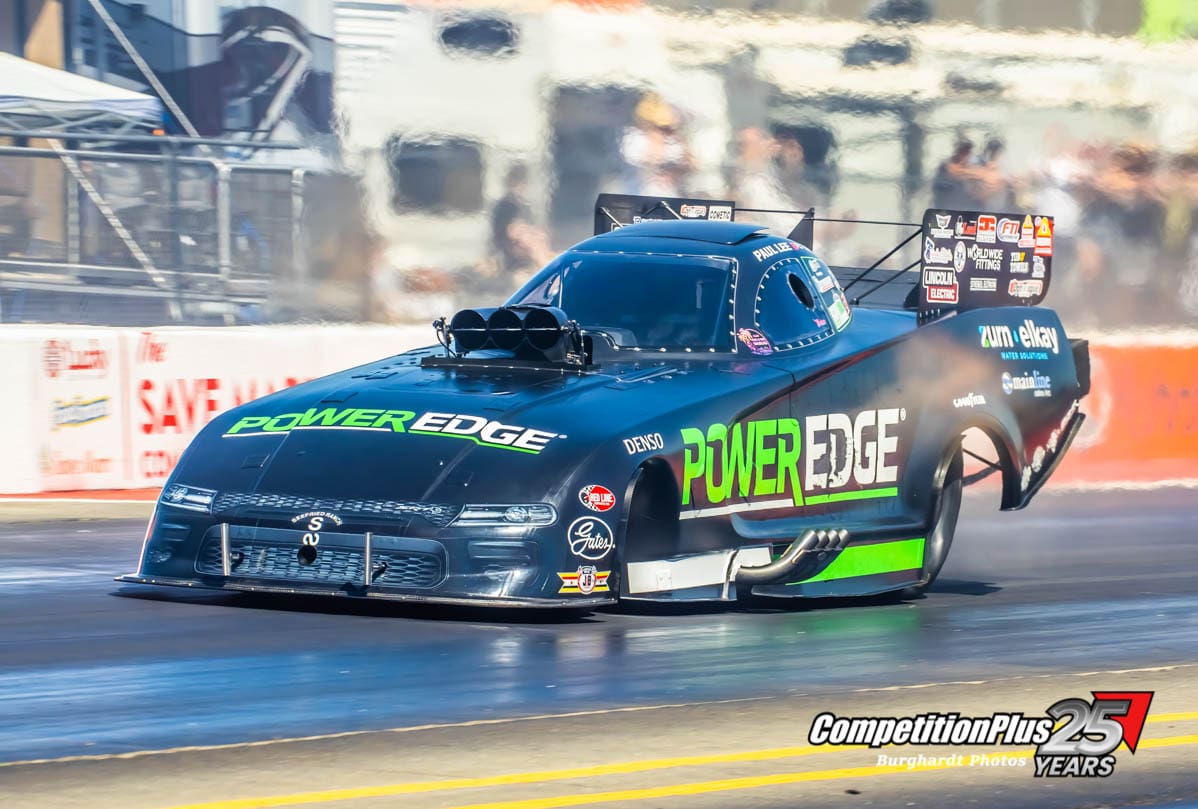
Worsham was declared the IHRA Funny Car champion in 1992 after the sanctioning body canceled the remainder of its nitro Funny Car season. It became his first career world championship, although hardly in the fashion he envisioned.
More than three decades later, Worsham again found himself leading an IHRA Funny Car championship when the schedule disappeared.
“It was an abbreviated season, so I don’t know if we could really count it better or not,” Worsham said. “We were leading the points, but we just didn’t finish it, so I don’t know if. It doesn’t really seem to affect me either way. I don’t really have any thoughts on it.”
At least 1992 came with formal acknowledgment. There was a banquet, a trophy and something that made an unusual championship official.
“In 1992 I got to celebrate it because I did go to the IHRA championship banquet, but it didn’t pay anything,” Worsham admitted. “They gave me a trophy for it at least. This time it doesn’t appear there would be anything but it’s tough man the whole thing’s tough I don’t even know it’s just it’s a bummer the whole thing went down the way it did.”
For Worsham, the bigger disappointment is another racing program disappearing after teams reorganized their seasons around it.
“It’s disheartening and it’s sad,” Worsham said. “We were all geared up for it and had a plan, for this year and everybody had a plan for it and it just didn’t get to didn’t get to finish it out.
“So we’re having to we’re having to modify our plans and what we do and how we do it. As much as it was exciting when it came out and how much we were all in love with it, it’s that it’s just it feels that much on the other side of it that disheartening and sad that it didn’t go through.”

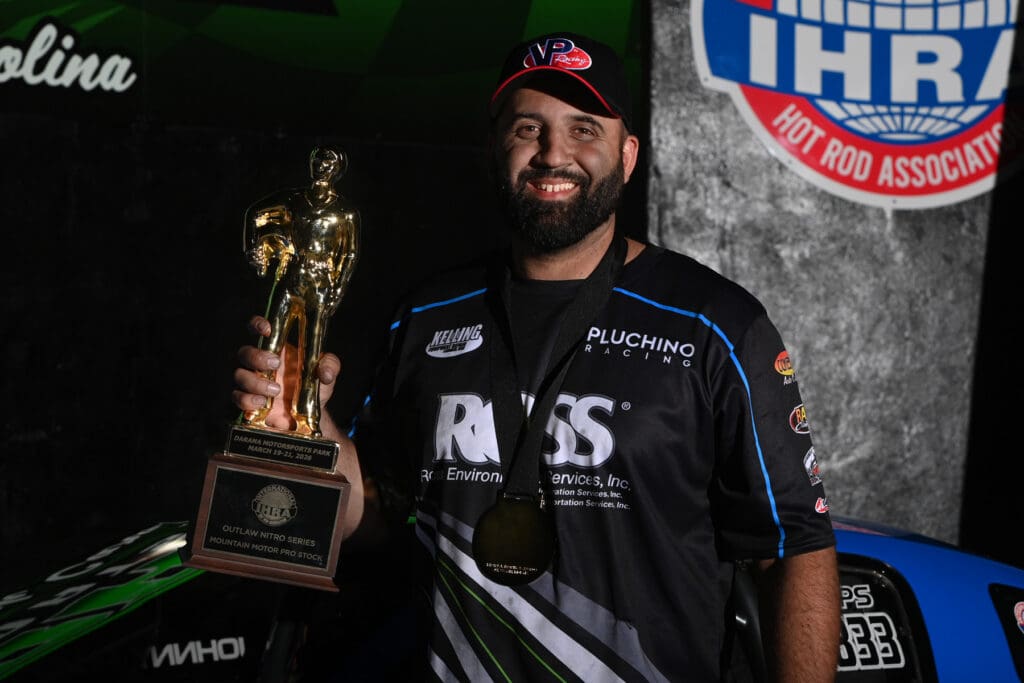
Johnny Pluchino understands the strange distinction, too.
Pluchino was leading the Mountain Motor Pro Stock standings when IHRA pulled the plug, but he has no interest in adding another title to his record because a points sheet says he can.
“I’m not calling myself a world champion,” Pluchino said. “I could see that logic, but I don’t really want to take credit for something that’s not done, and well, I think this year was a toss up with it being incomplete.”
That does not lessen what he lost. Pluchino and his team prepared for a championship season, raced themselves into the lead and then had the opportunity to finish it removed.
“It was heartbreaking for me and my team, for everybody who’s put so much effort into this year,” Pluchino said. “We were so excited about 2026, so when things unfolded, to be in the spot we were in, we really worked hard on being prepared for the season.”
Pluchino believed his team had put itself exactly where it needed to be. The championship remained unfinished, but the work required to contend for it was very real.
“We knew how competitive it would be and we came out and just had a hell of a start to the season where we really felt like it was our deal to lose, and it just got taken out from under us, so I think heartbreaking is the best word to describe it,” Pluchino said.
He can find one positive in the wreckage. The cars that were built, the teams that assembled and the competition produced before the cancellation demonstrated there was still a place for the categories IHRA brought together.
“I think the only positive I could take away is that a lot of guys built stuff and we showed the strength of our class again,” Pluchino said. “As long as we stick together, that we can be as entertaining as really any class out there and have as good of racing as anybody is able to, so that was a positive, but it created a lot of hurdles as well.”

Jason Harris had the Pro Mod points lead when the schedule came to an abrupt end. Whether he could have held it through the remaining races is a question the cancellation left unanswered.
That may ultimately become the defining contradiction of IHRA’s 2026 professional season. Four racers ended it where every racer wants to be, and none of them got there the way they wanted.
For a few months, the program worked well enough to make its disappearance hurt.
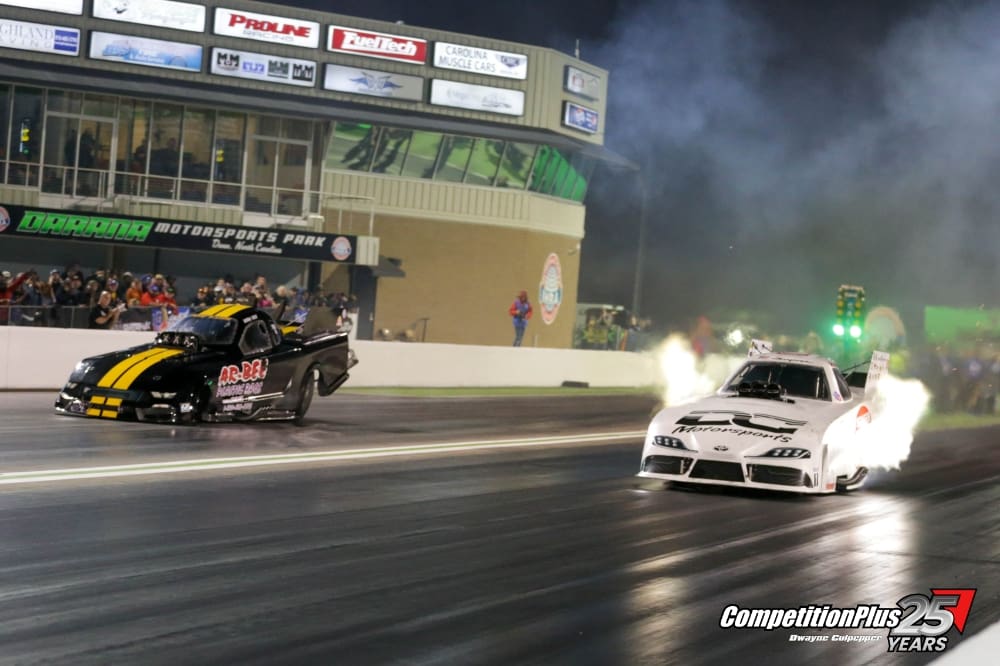
Pritchett remembers arriving at the Triple Crown event and seeing fans coming through the gates, strong fields in the staging lanes and legitimate competition across the professional categories. It looked like the promises were beginning to become something tangible.
“And you just go up to the start line and you see it and you see like, ‘Here it is. This guy, they did it,’” Pritchett said. “The fans were starting to come. The racing was unbelievable in every class and it just felt great and it felt like you had somewhere else to race and it was there.”
Then, within days, the outlook changed.
“And then a couple of days later, you find out it’s going away,” Pritchett said. “That would be the disheartening part about it.”
For Pritchett, whatever arguments remain about titles, points or money cannot change what happened to something he believed drag racing needed.
“It was great while it lasted,” Pritchett said. “There was a lot online that was talked about, I stayed out of all that because it was great for drag racing and then when it went away, it’s bad for drag racing. Not just your sanctioning bodies, it was just great as a whole. That’s all I’ll say.”